New Jersey Grant of Conservation Ristriction/Easement
What is this form?
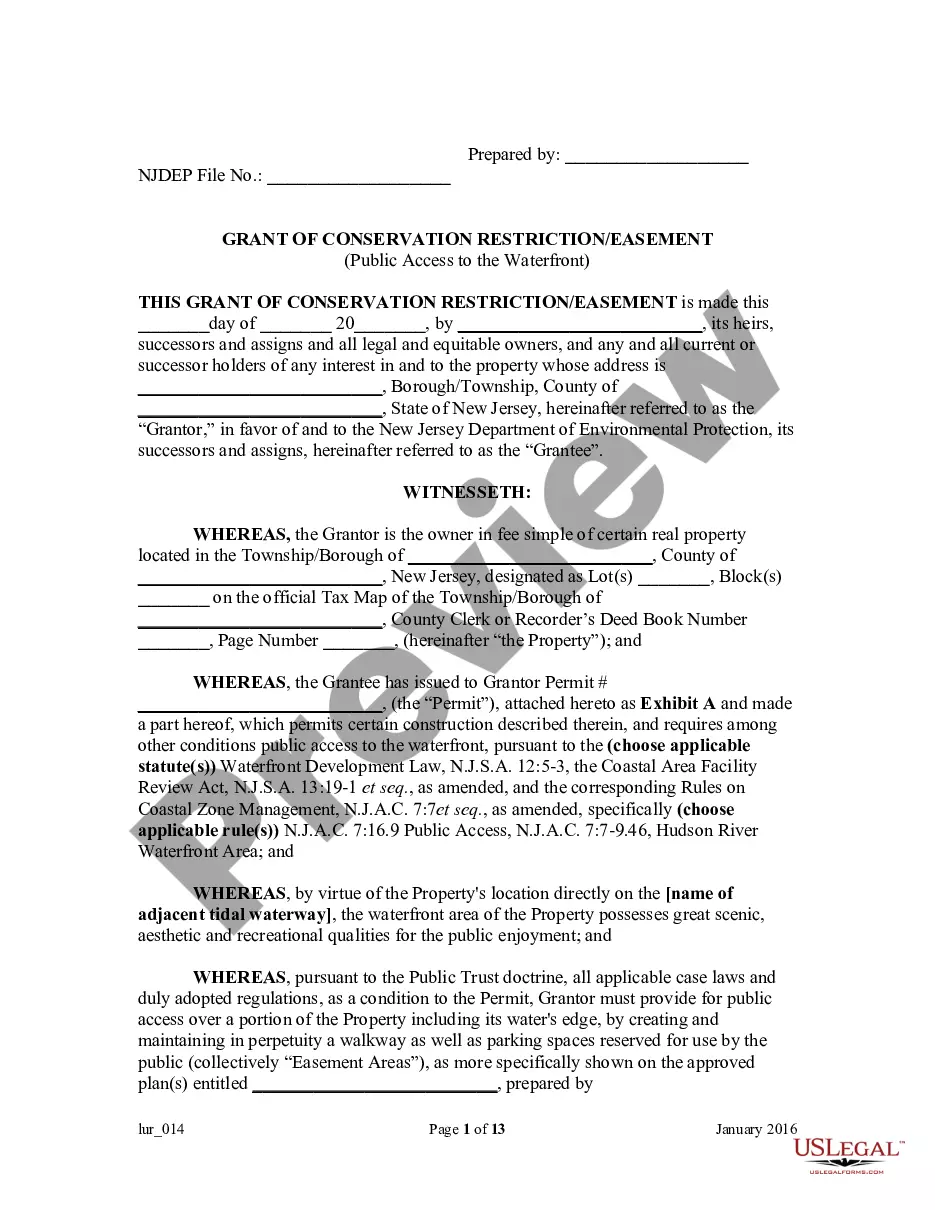
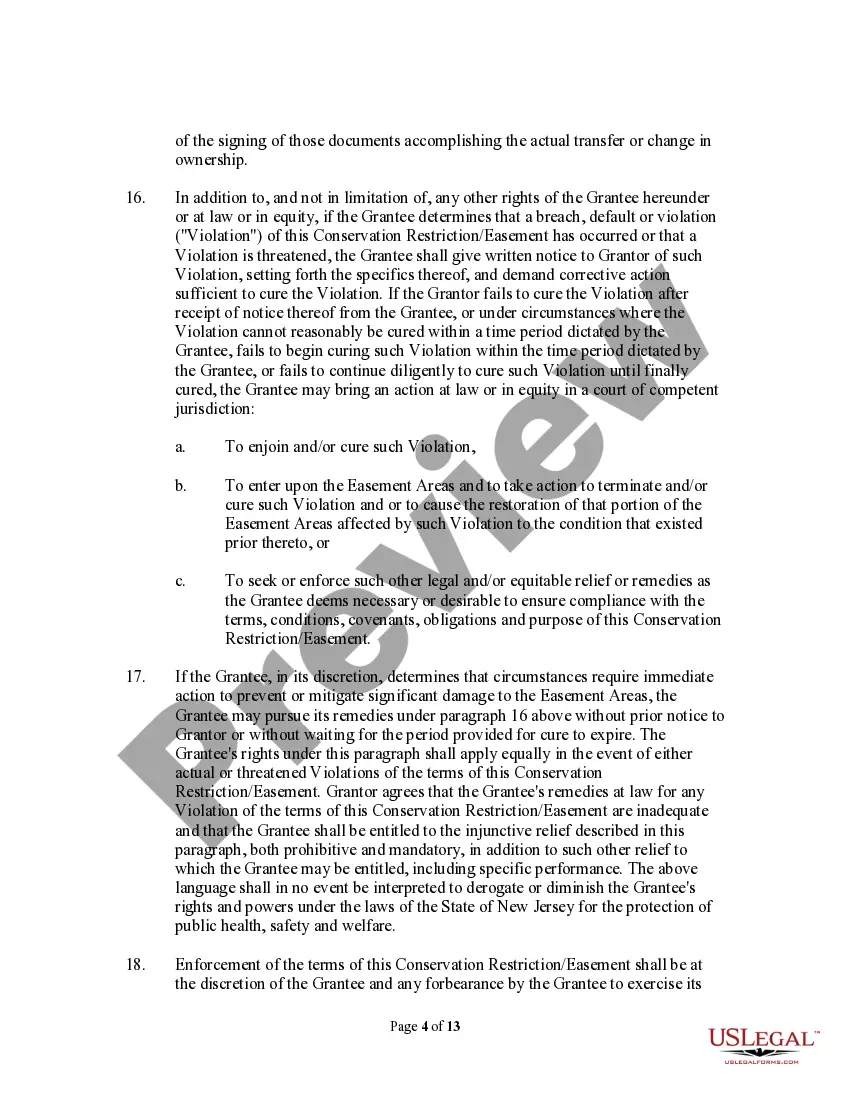
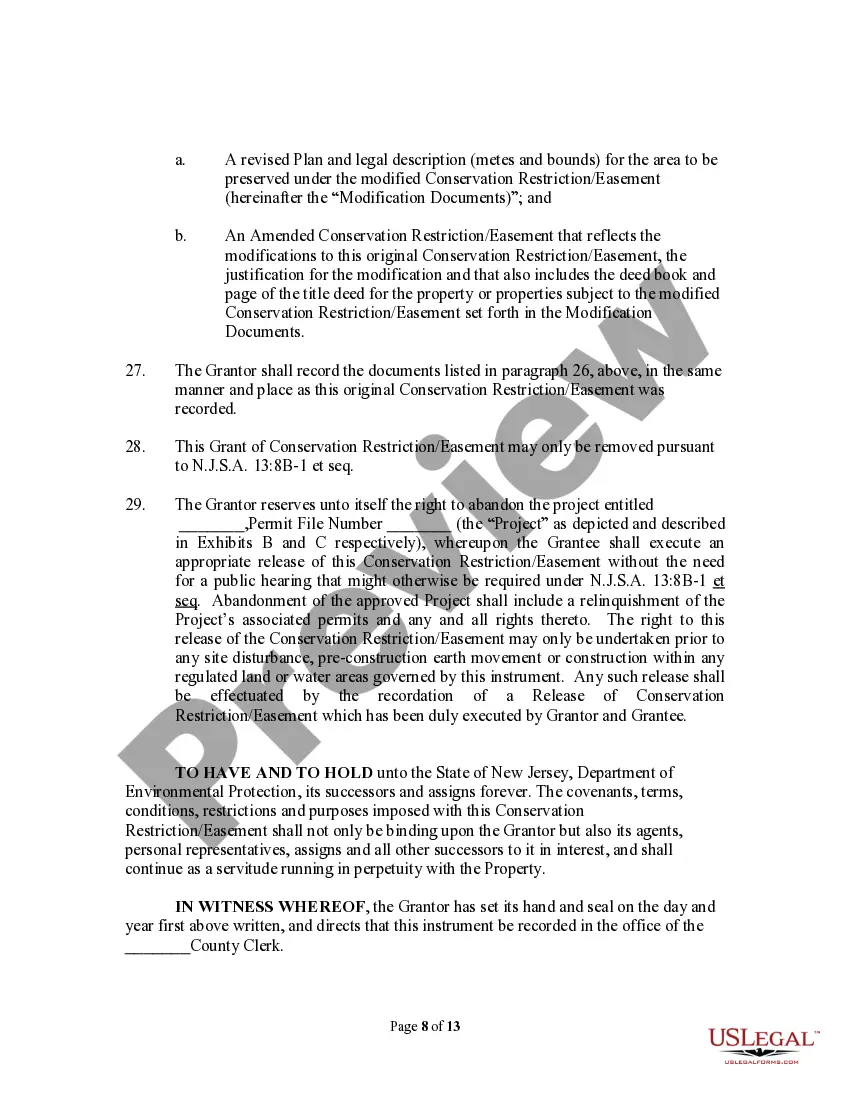
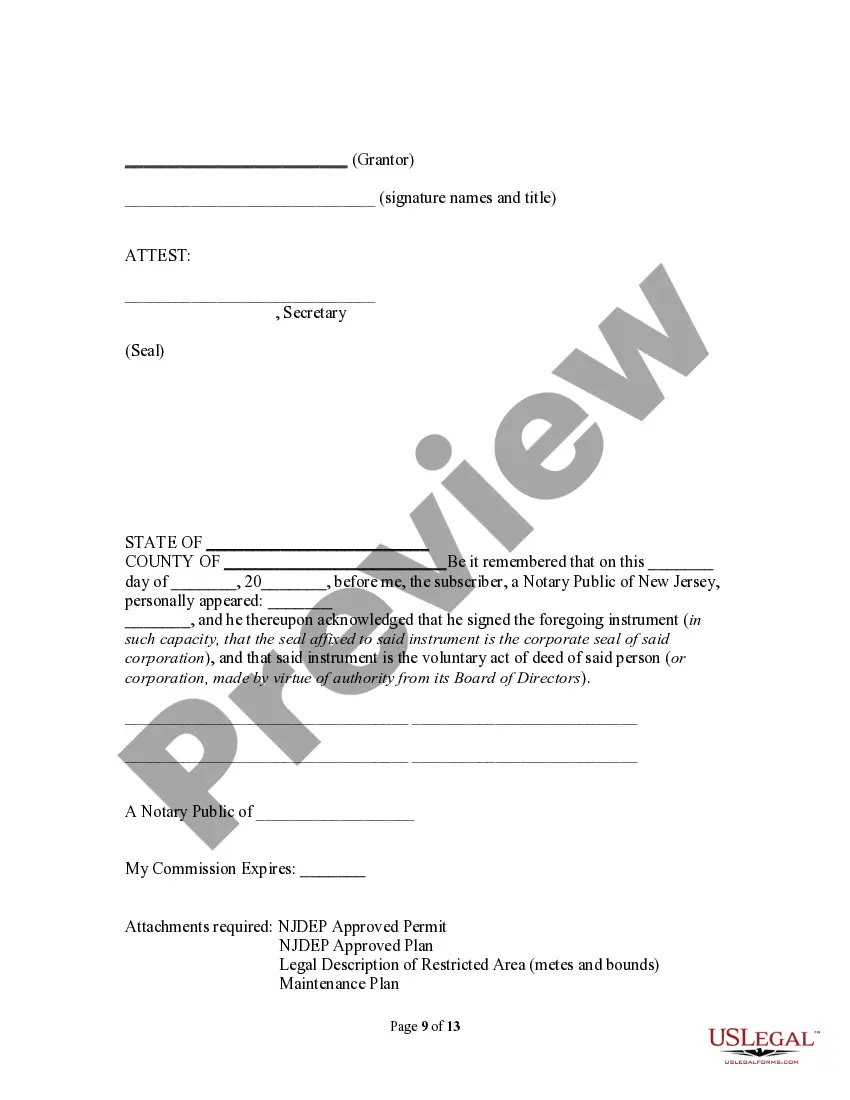
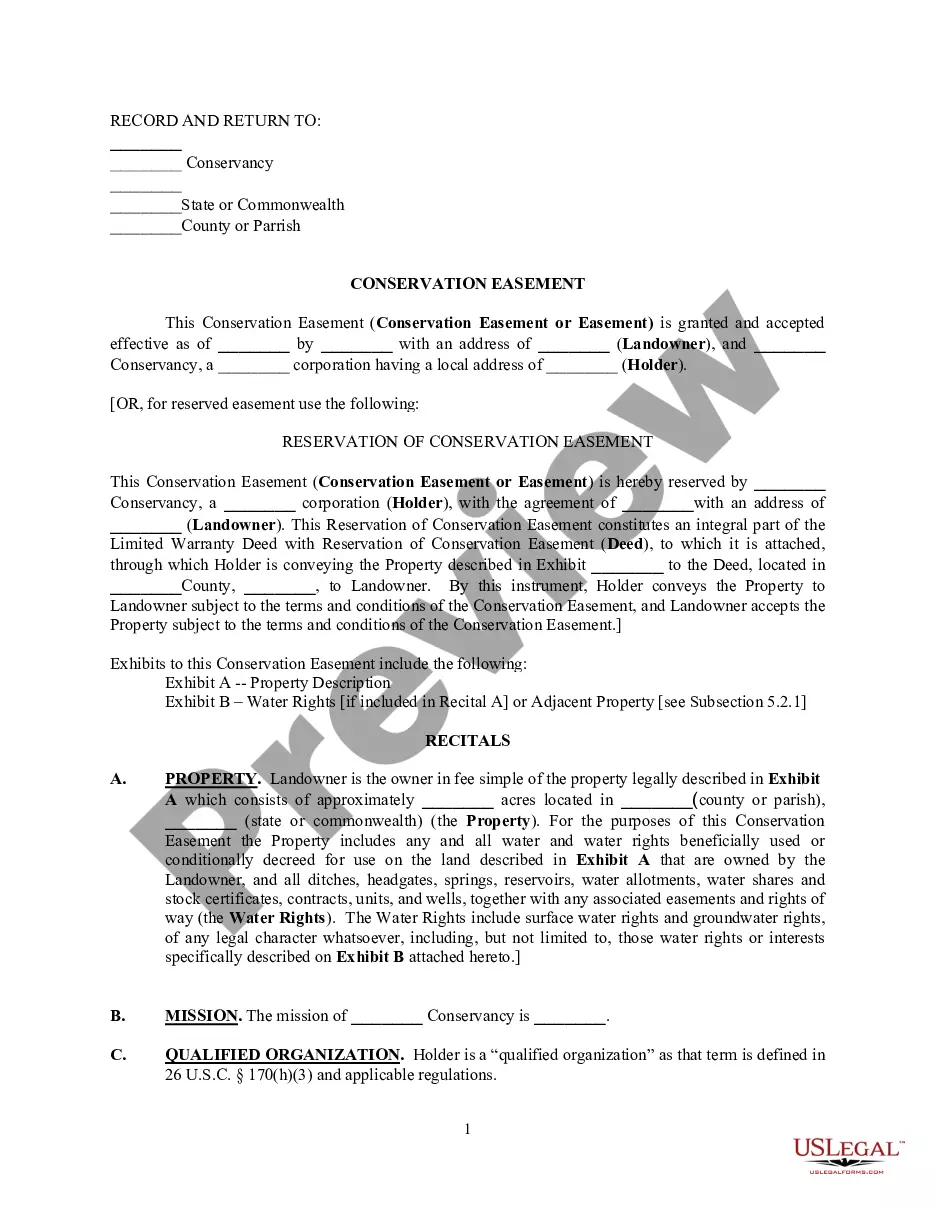
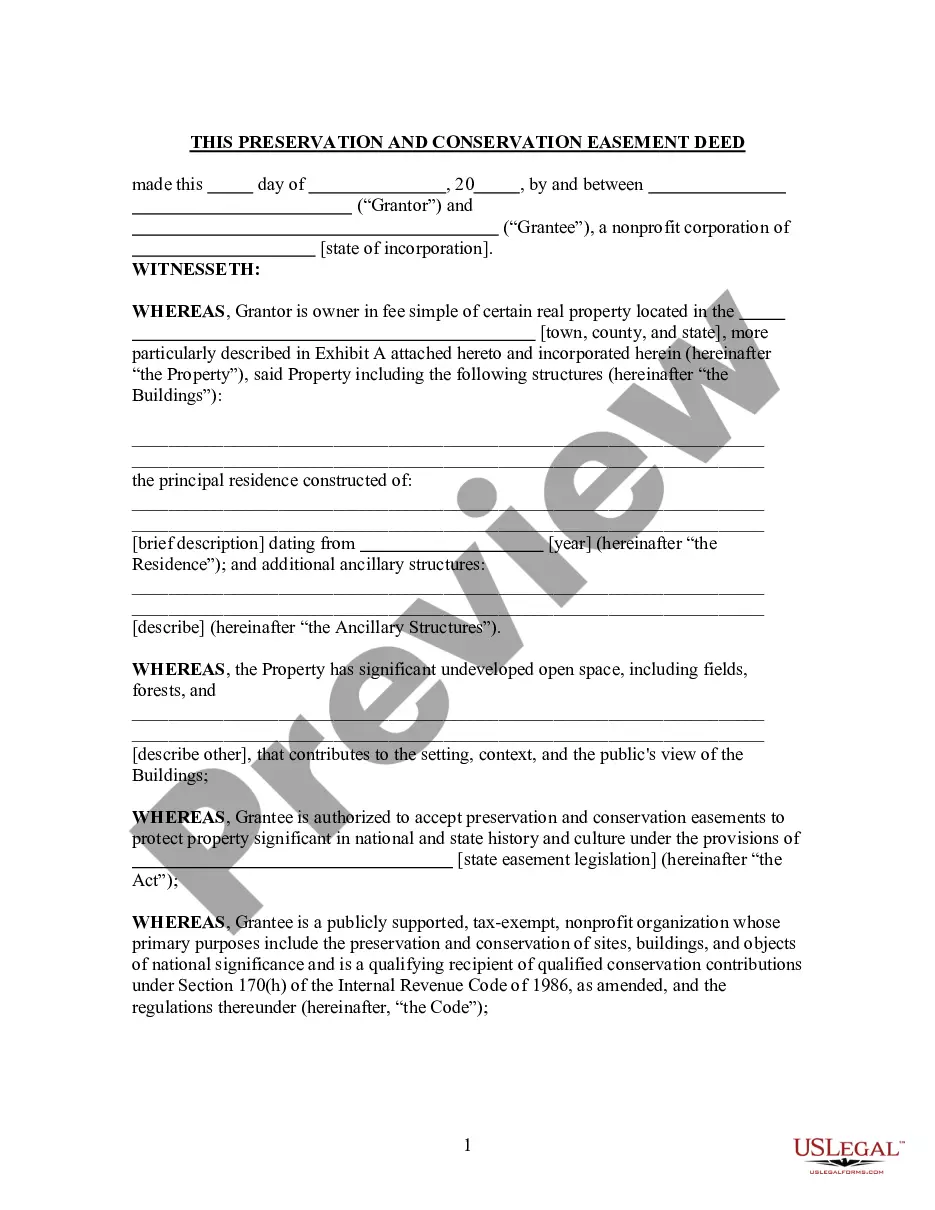
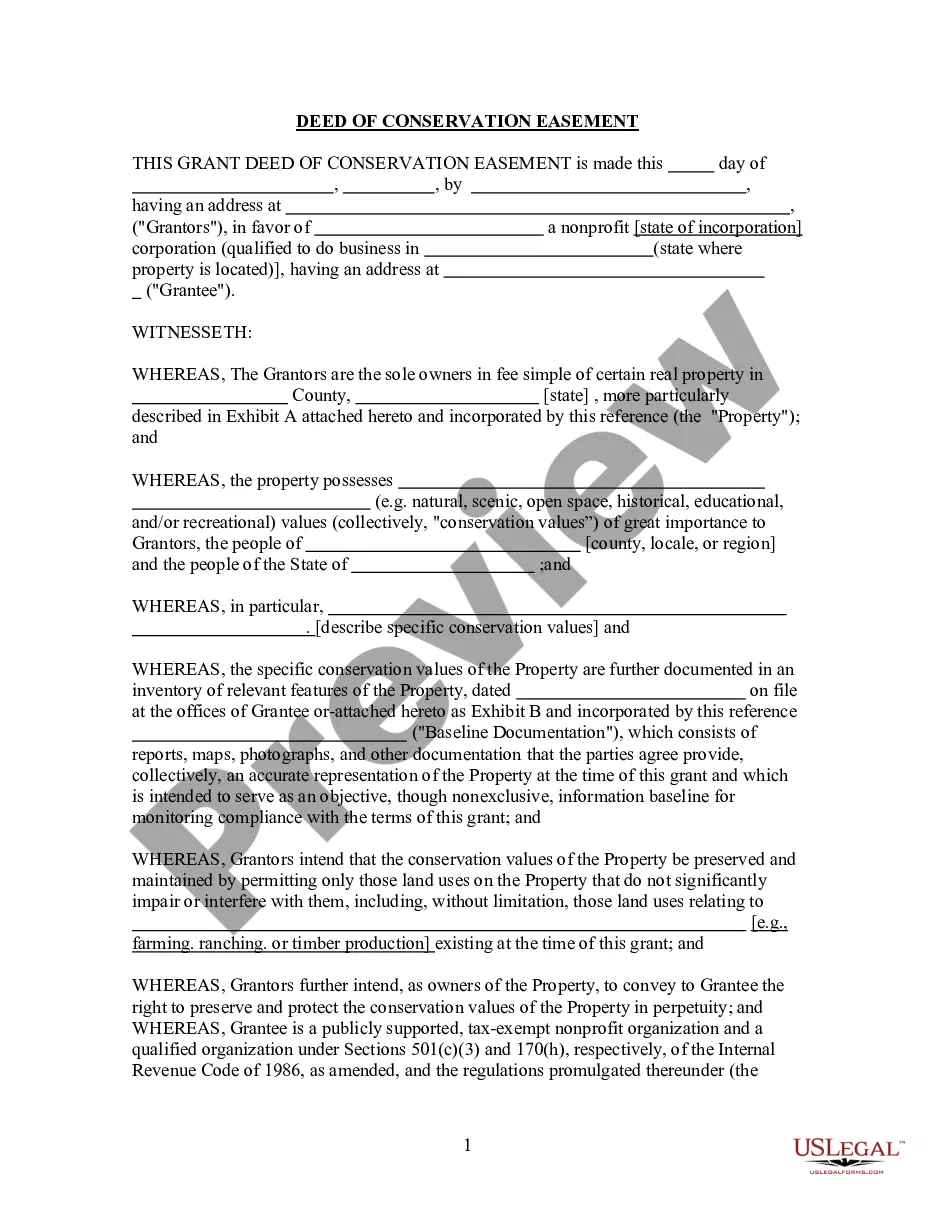
The Grant of Conservation Restriction/Easement is a legal agreement allowing a property owner to convey specific limited rights to use a tract of land to another party, typically for the purpose of preserving public access and environmental protections. This form is particularly crucial for property owners who have waterfront areas and want to ensure that these spaces are accessible to the public while maintaining their ownership rights. Unlike a typical easement, it focuses on conservation and public enjoyment rather than full transfer of property rights.
Key components of this form
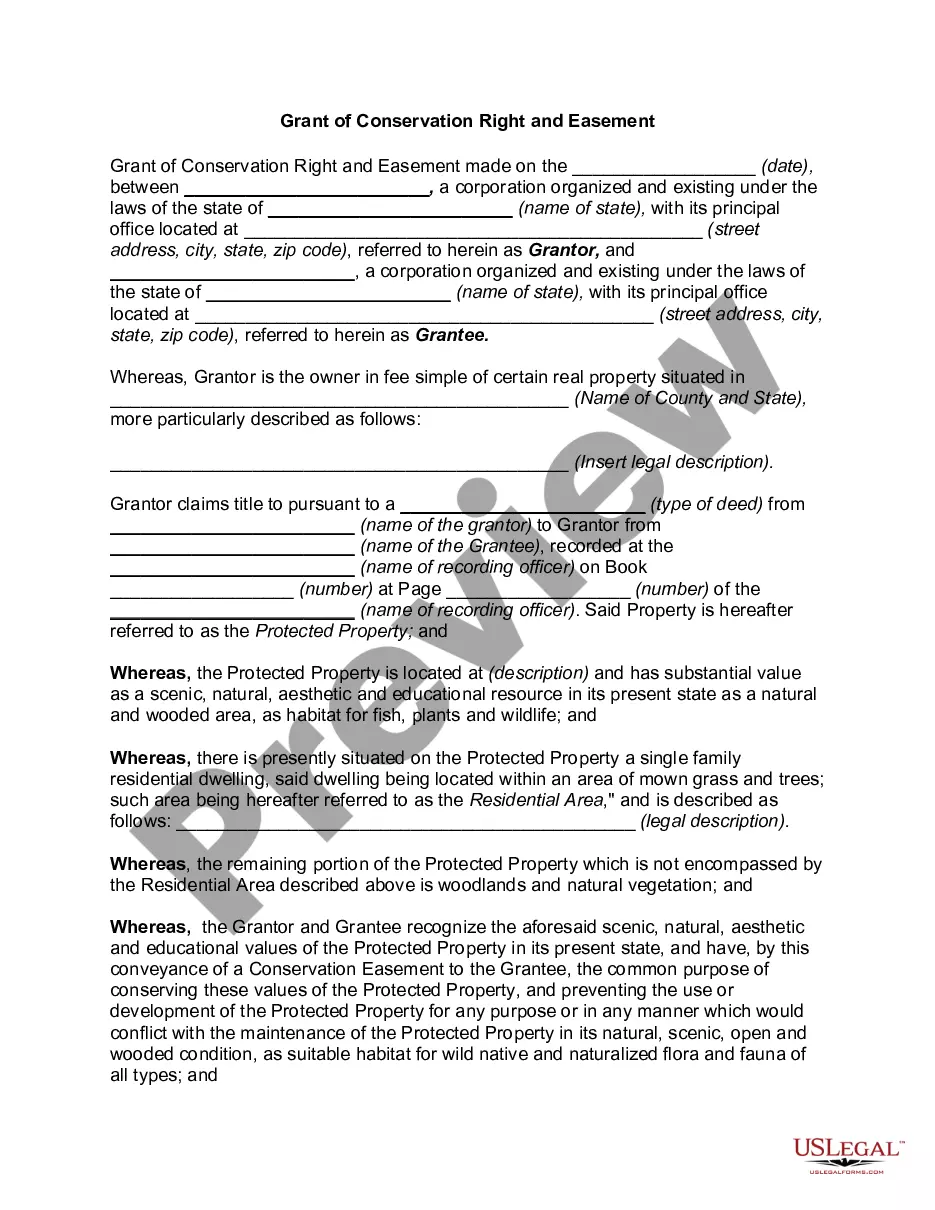
- Grantor and Grantee identification, including property details.
- Description of the easement area and its intended use for public access.
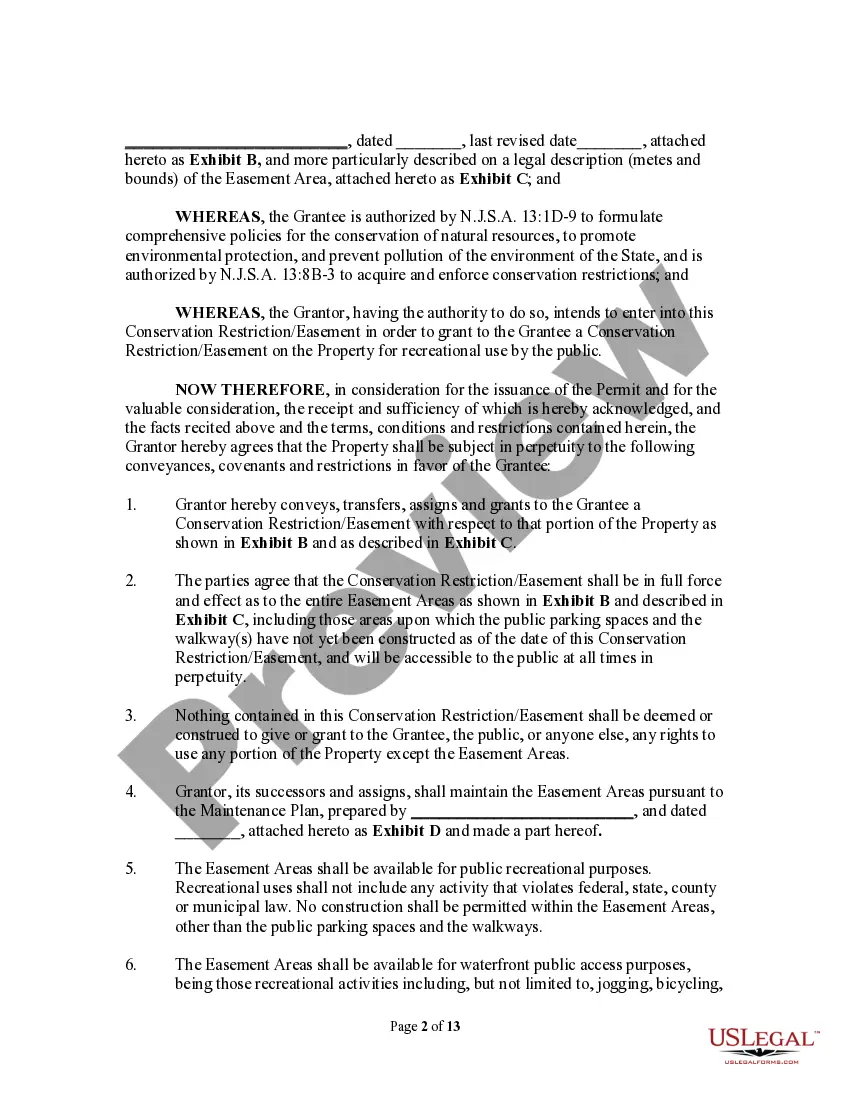
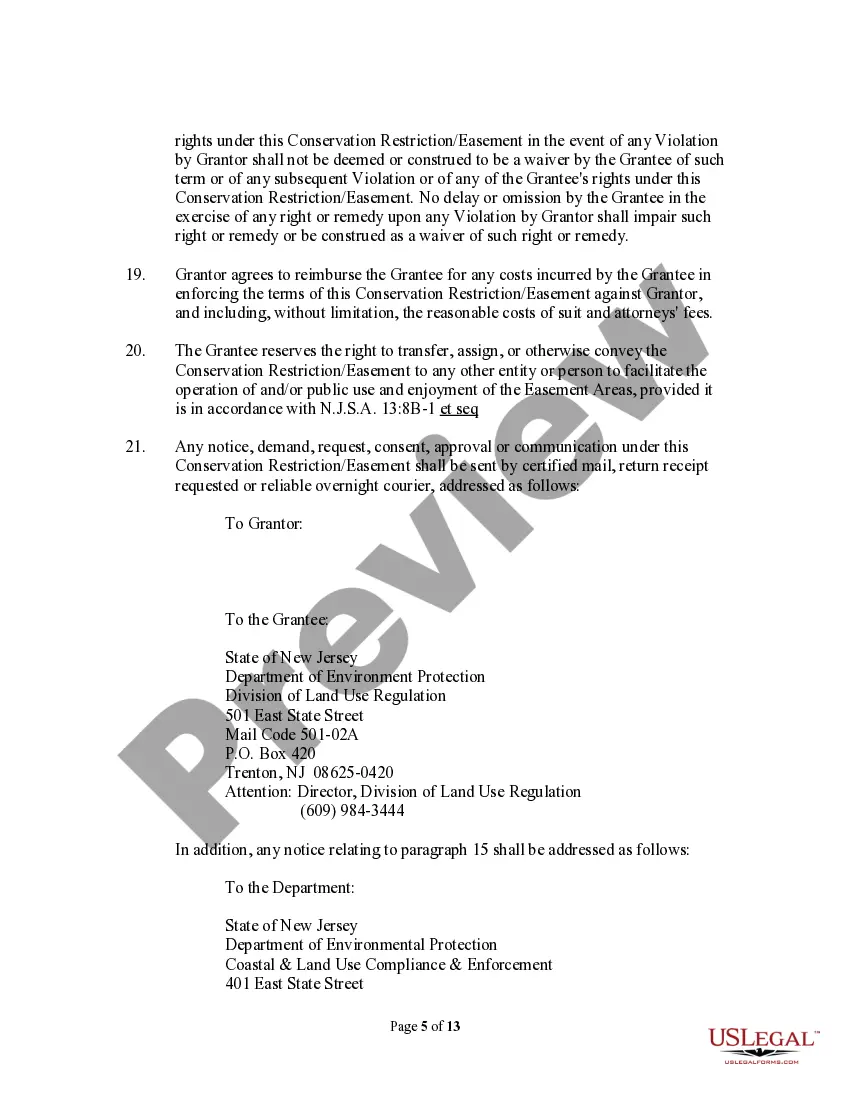
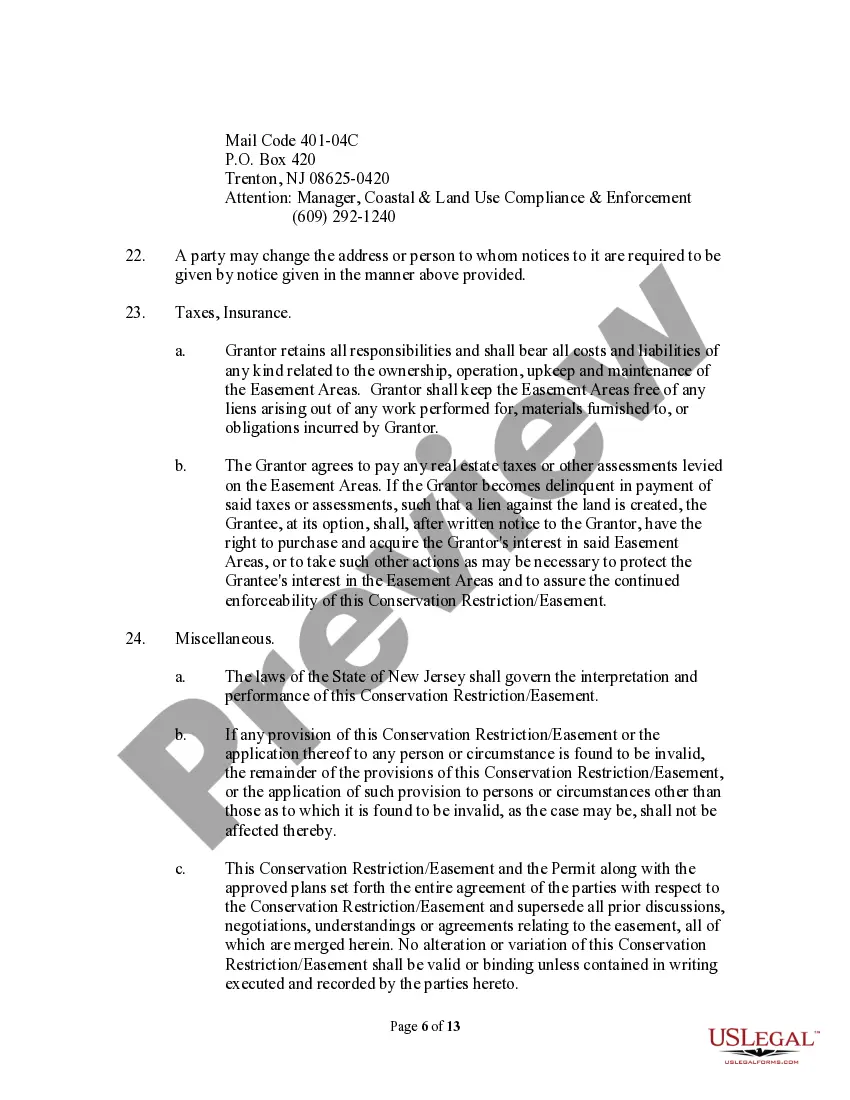
- Requirements for maintenance and upkeep of the easement area.
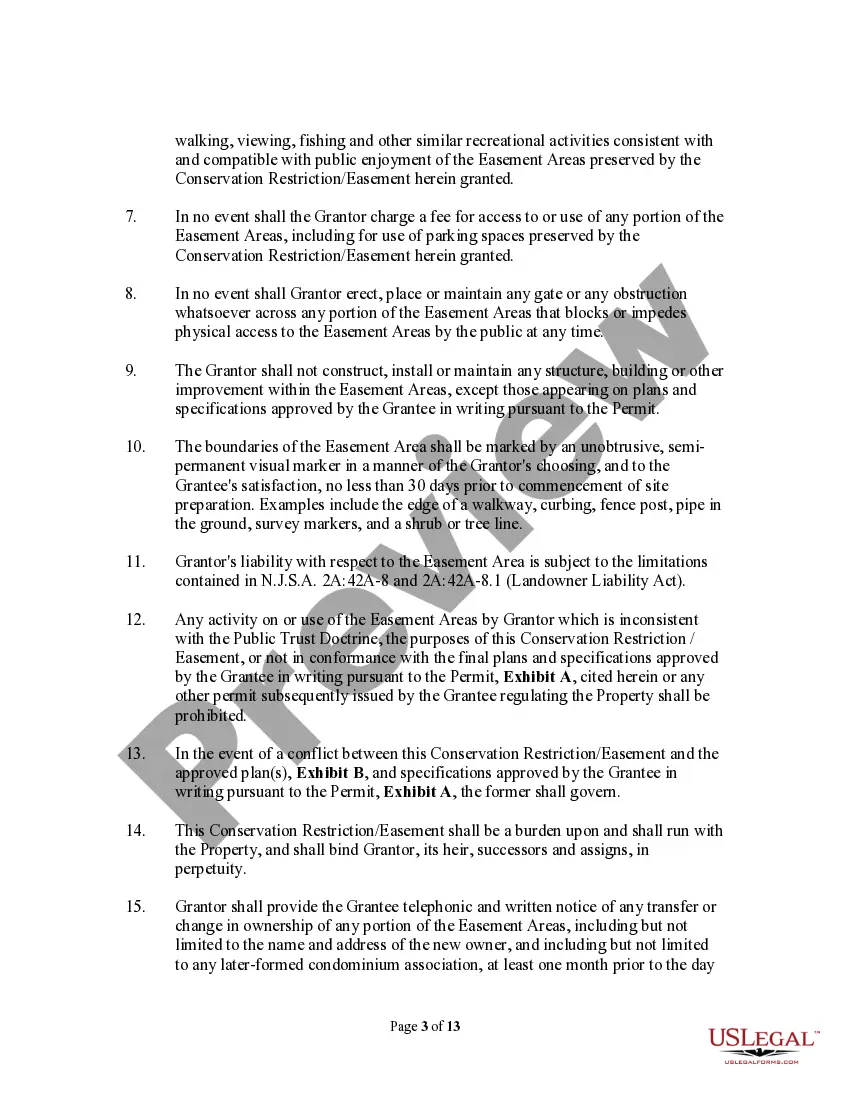
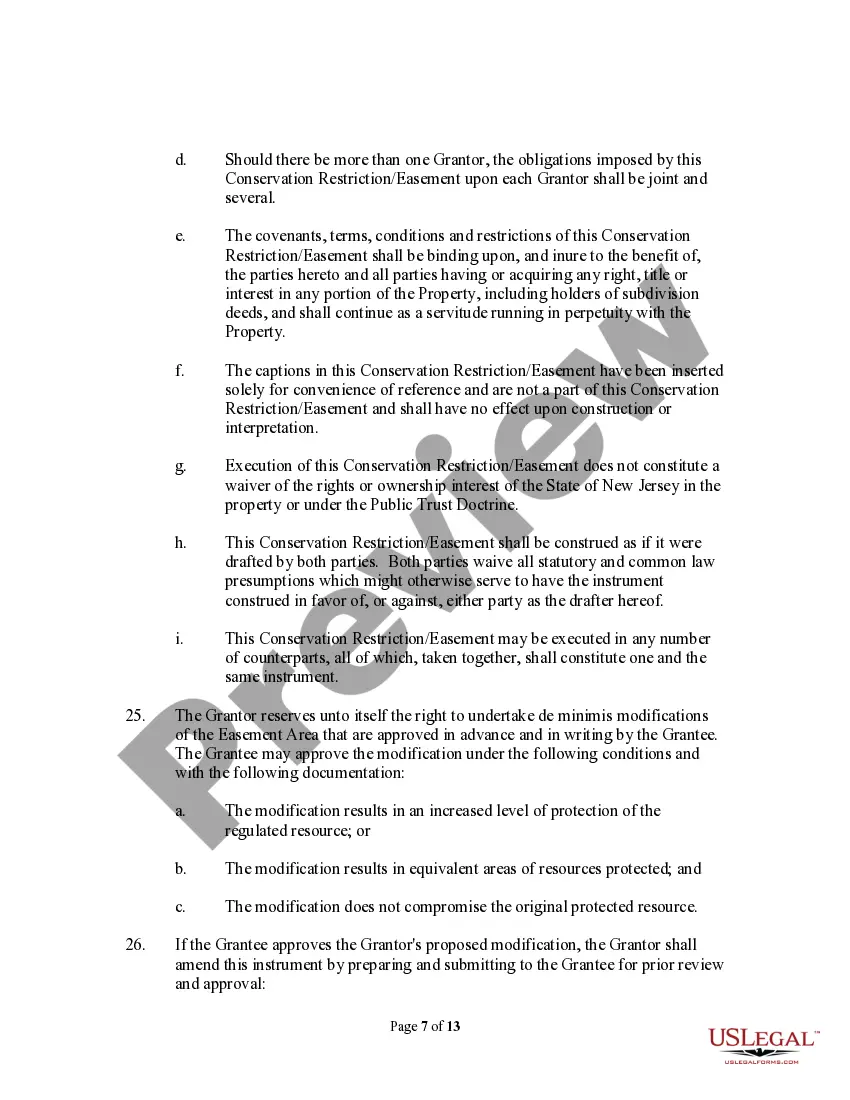
- Restrictions on the use and modifications of the easement area.
- Procedures for resolving violations of the conservation terms.

When this form is needed
This form should be used when a property owner wishes to grant a conservation easement that ensures public access to waterfront areas. It is particularly useful when applying for permits that require public access as a condition for development or construction. Additionally, this form is necessary for the properties located adjacent to waterways, where public recreational use is intended.
Who this form is for
- Property owners who wish to secure public access to their waterfront land.
- Developers seeking permits that mandate public access provisions.
- Environmental organizations advocating for the conservation of public spaces.
- Legal representatives managing property or easement agreements.
How to complete this form
- Identify and enter the names of the Grantor (property owner) and the Grantee (New Jersey Department of Environmental Protection).
- Provide a detailed description of the property and its tax identification details.
- Select applicable statutes and rules related to public access and conservation from the provided options.
- Define the easement area, including plans and legal descriptions, in the relevant attached exhibits.
- Complete all signatures and notarization, ensuring proper recording according to New Jersey laws.
Is notarization required?
Yes, this form must be notarized to be legally valid. US Legal Forms offers integrated online notarization services that are available 24/7, allowing you to complete the notarization process securely via video call without the need for travel.
Get your form ready online
Our built-in tools help you complete, sign, share, and store your documents in one place.
Make edits, fill in missing information, and update formatting in US Legal Forms—just like you would in MS Word.
Download a copy, print it, send it by email, or mail it via USPS—whatever works best for your next step.
Sign and collect signatures with our SignNow integration. Send to multiple recipients, set reminders, and more. Go Premium to unlock E-Sign.
If this form requires notarization, complete it online through a secure video call—no need to meet a notary in person or wait for an appointment.
We protect your documents and personal data by following strict security and privacy standards.

Make edits, fill in missing information, and update formatting in US Legal Forms—just like you would in MS Word.

Download a copy, print it, send it by email, or mail it via USPS—whatever works best for your next step.

Sign and collect signatures with our SignNow integration. Send to multiple recipients, set reminders, and more. Go Premium to unlock E-Sign.

If this form requires notarization, complete it online through a secure video call—no need to meet a notary in person or wait for an appointment.

We protect your documents and personal data by following strict security and privacy standards.
Common mistakes
- Failing to accurately identify the property and easement areas, leading to legal ambiguities.
- Omitting required exhibits such as approved permits and maintenance plans.
- Not adhering to the specific formatting and procedural requirements mandated by New Jersey state law.
- Neglecting to ensure all parties' signatures are obtained and notarized, if necessary.
Why use this form online
- Convenience of downloading and completing the form at your own pace.
- Editability allows for easy adjustments according to your specific property and needs.
- Access to professionally drafted forms ensures compliance with legal standards.
- Secure storage and retrieval options simplify managing your legal documents.
Looking for another form?
Form popularity
FAQ
A conservation easement is a voluntary, legal agreement that permanently limits uses of the land in order to protect its conservation values. Also known as a conservation restriction or conservation agreement, a conservation easement is one option to protect a property for future generations.
A conservation easement (or restriction, as it is called in Massachusetts) is a legal agreement between a landowner (the grantor) and a private conservation organization or public agency (the grantee or holder).
Conservation easements offer effective and flexible protection, and are one of the most frequently used tools for conserving private land. This voluntary legal agreement protects the land by permanently limiting some uses that would compromise the conservation values or the landowners' goals for the property.
A conservation easement is a legal agreement between a landowner and a land trust or government agency, that permanently limits uses of the land in order to protect its conservation values. It allows landowners to continue to own and use their land, and they can also sell it or pass it on to heirs.
A conservation easement is a permanent agreement between a landowner and a qualified conservation group. The easement document specifies: The purpose of permanent protection, including the natural, cultural, historic and scenic attributes of the land.
Conservation Restrictions A conservation restriction or CR (also known as a conservation easement outside of Massachusetts) is a legal agreement that extinguishes the development rights of the land forever, but does not alter the ownership of the land.
Most conservation easements are permanent and bind all future landowners (including heirs). Conservation easement holders and farmers may not always share a common vision. Conservation easements can reduce the property's overall value, making the land worth less for future sales.