New Jersey Revocable Living Trust for Husband and Wife with No Children
About this form
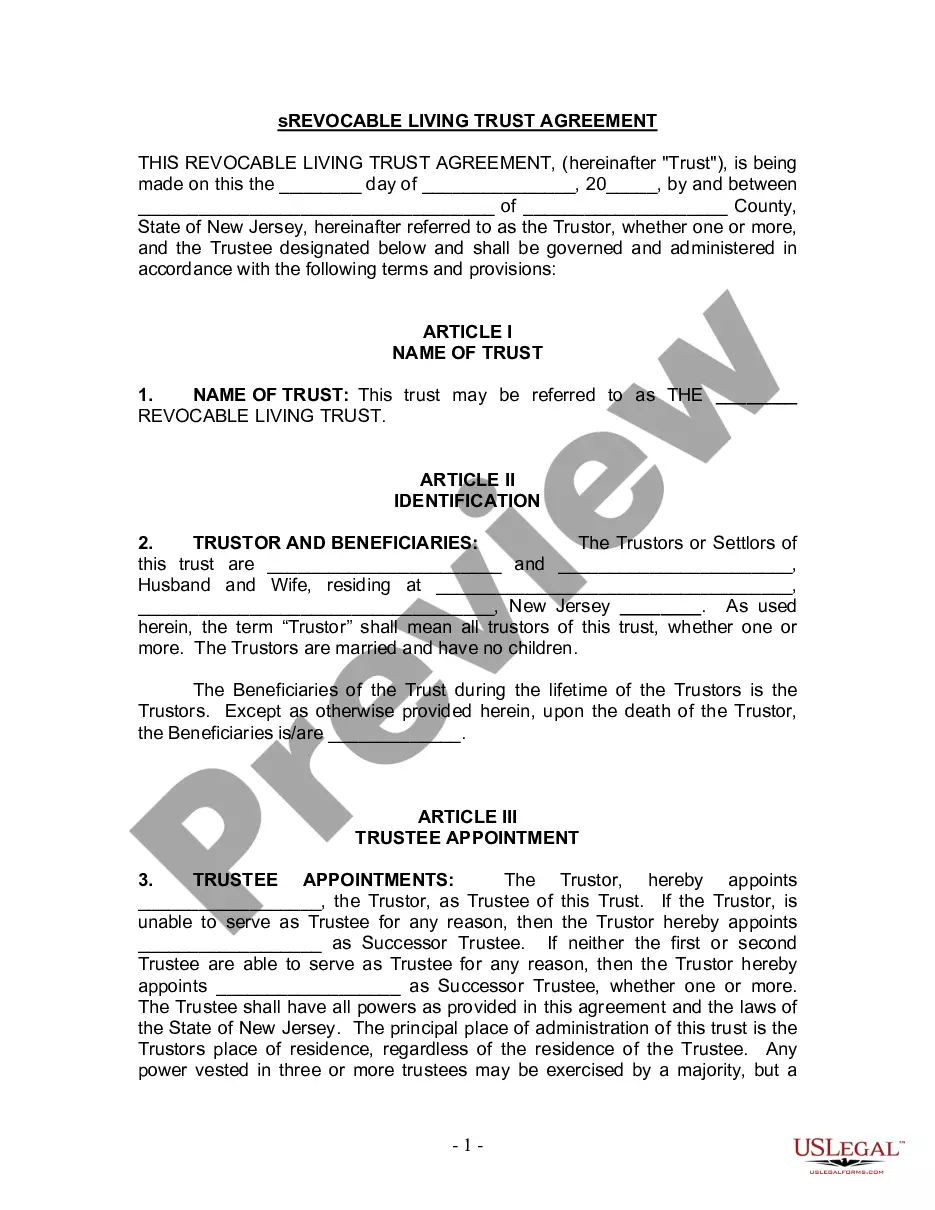
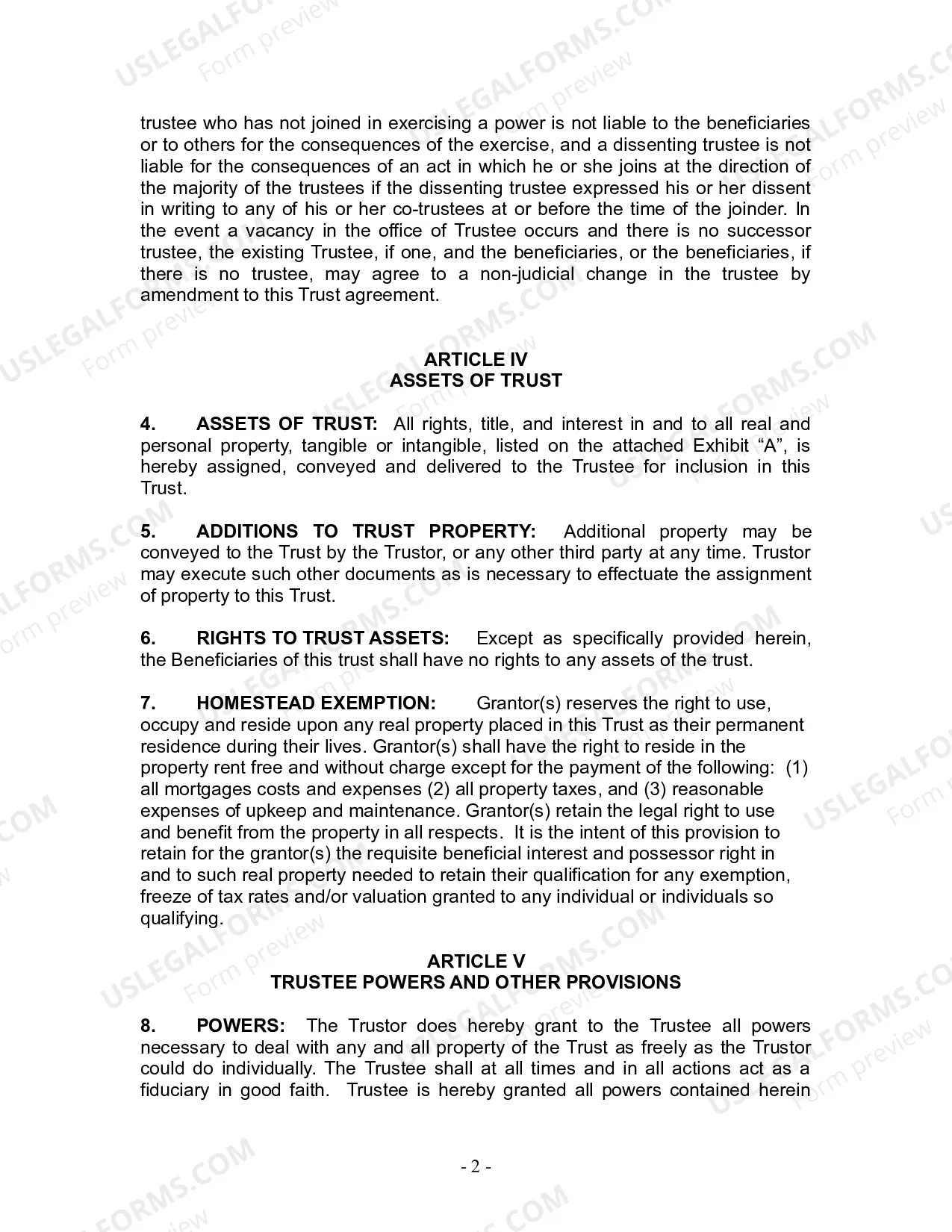
This Revocable Living Trust for Husband and Wife with No Children is a legal document designed to facilitate estate planning for married couples without children. Unlike a will, this trust enables the couple to manage their assets during their lifetime and allows for seamless transitioning of those assets after death, bypassing probate. The trust allows the couple to retain control over their property while ensuring that their wishes are followed regarding asset distribution upon their passing.
Key components of this form
- Identification of Trustors and Trustee: Designate yourself and your spouse as the trust creators and manage the trust jointly.
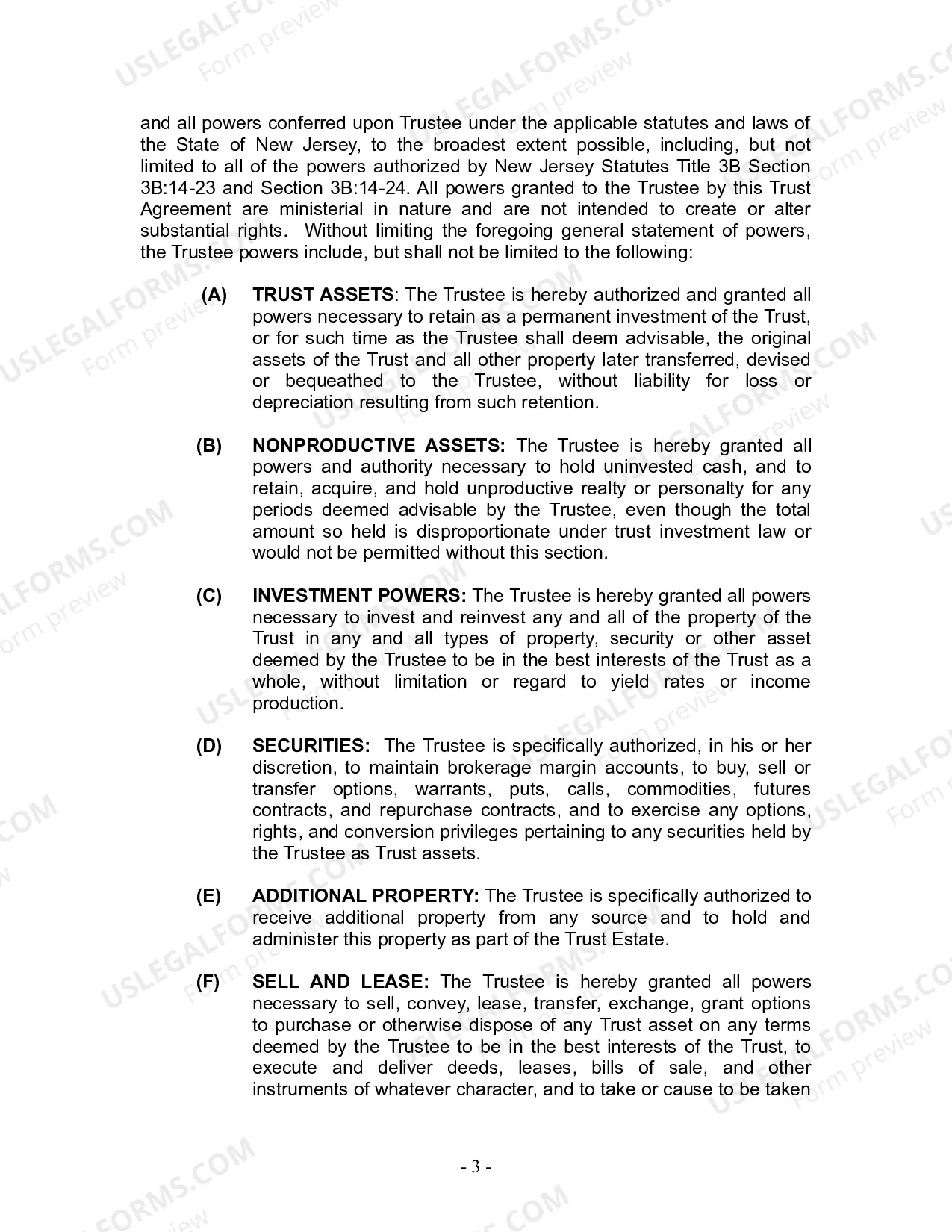
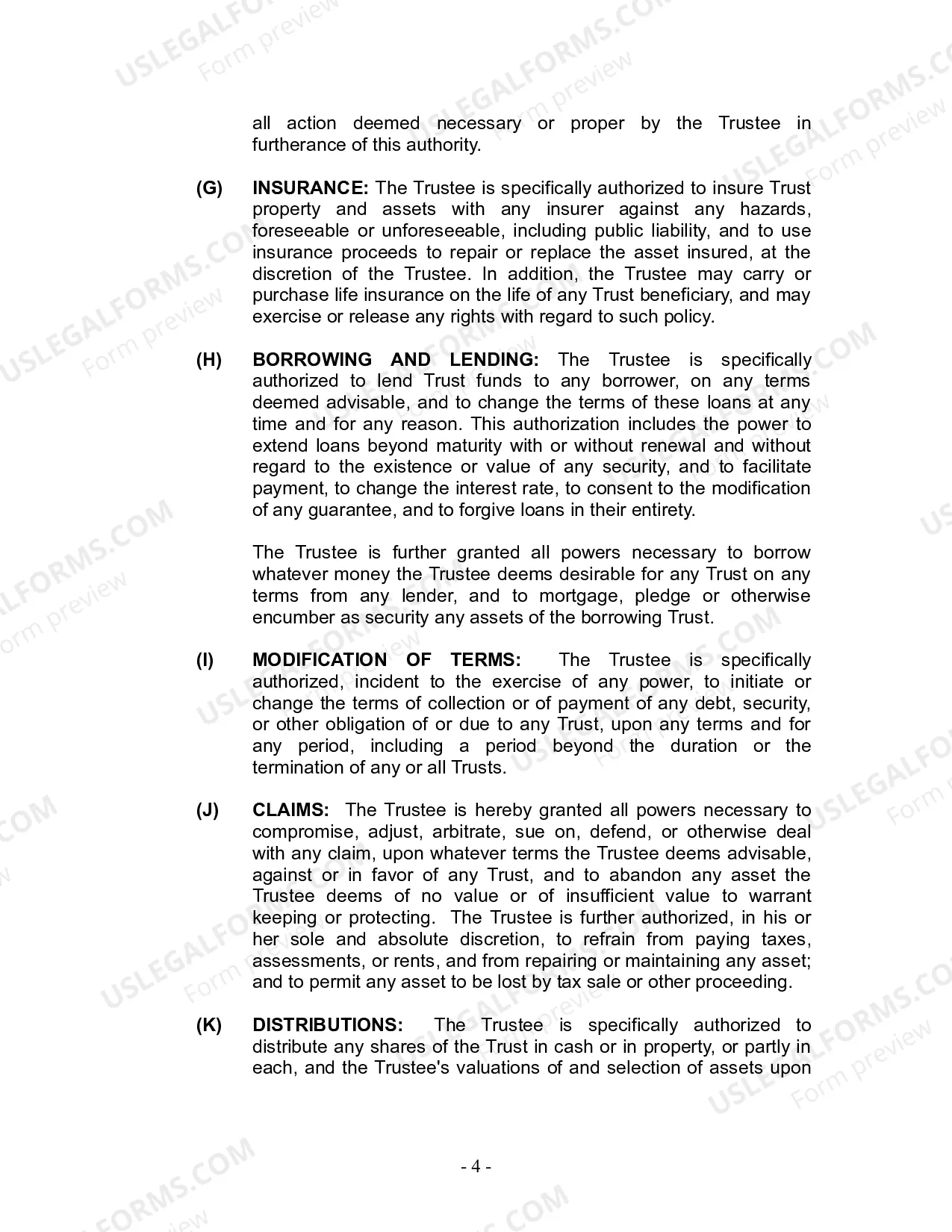
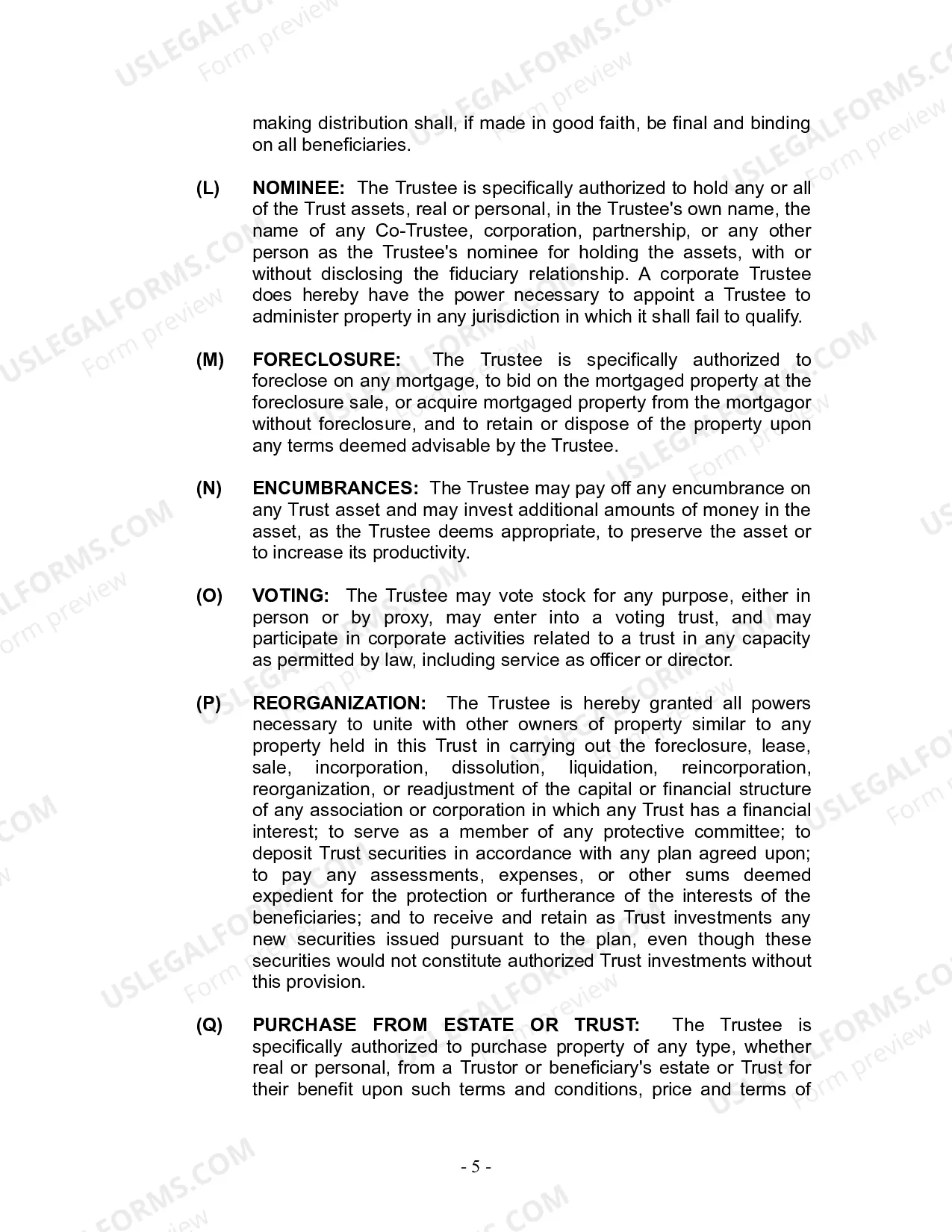
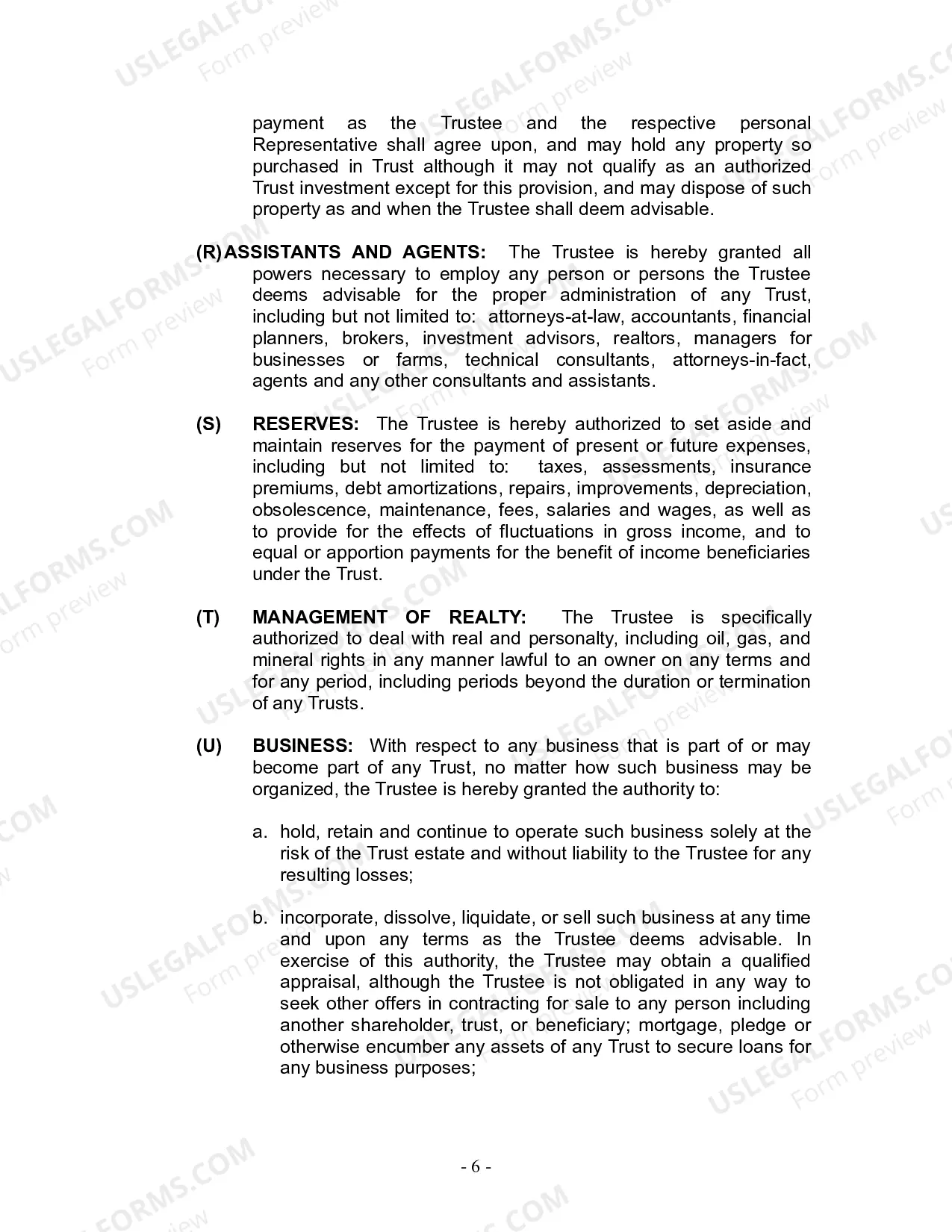
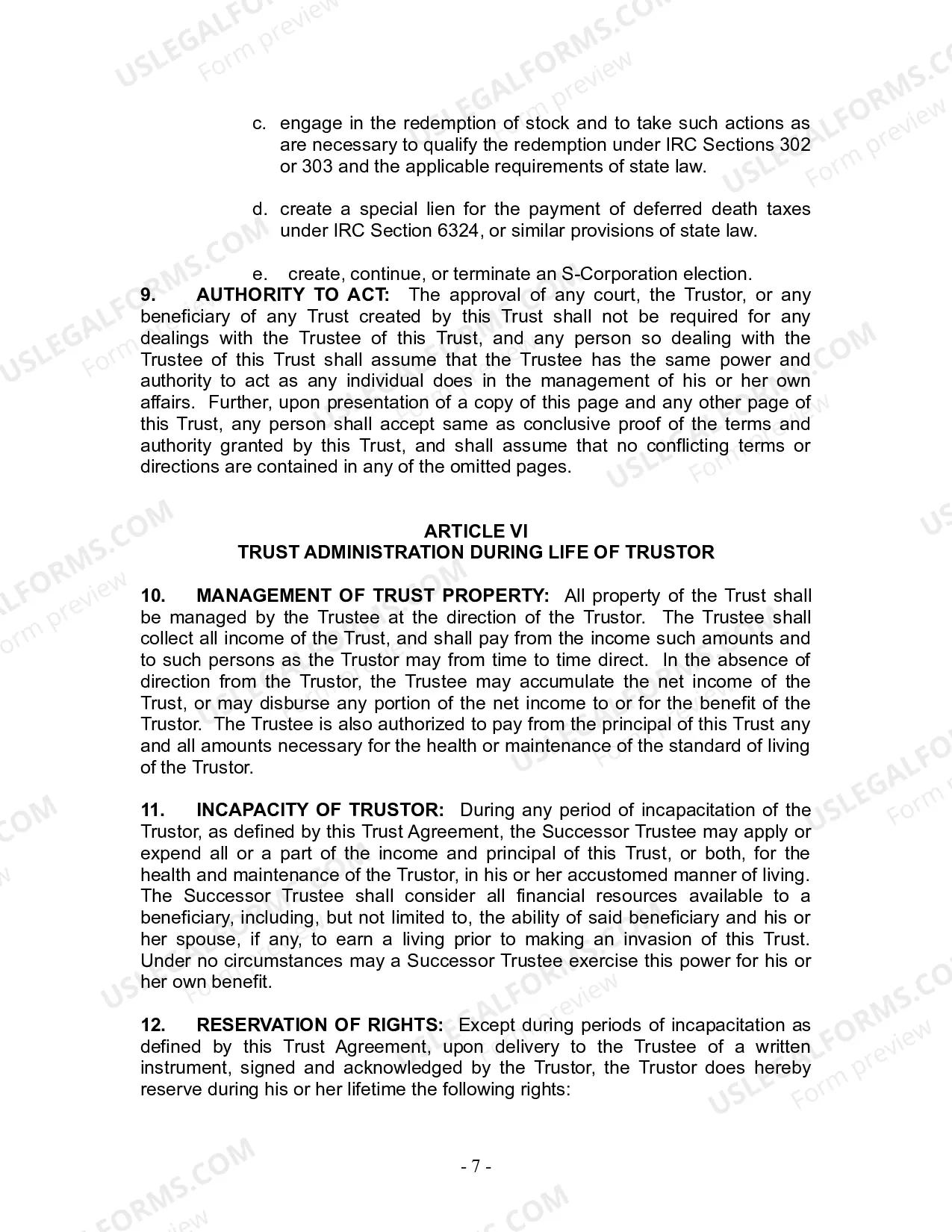
- Trustee Powers: Outline the powers granted to the trustee, allowing them to manage assets effectively.
- Asset Management: Specify which assets are included in the trust and detail how additional properties may be added.
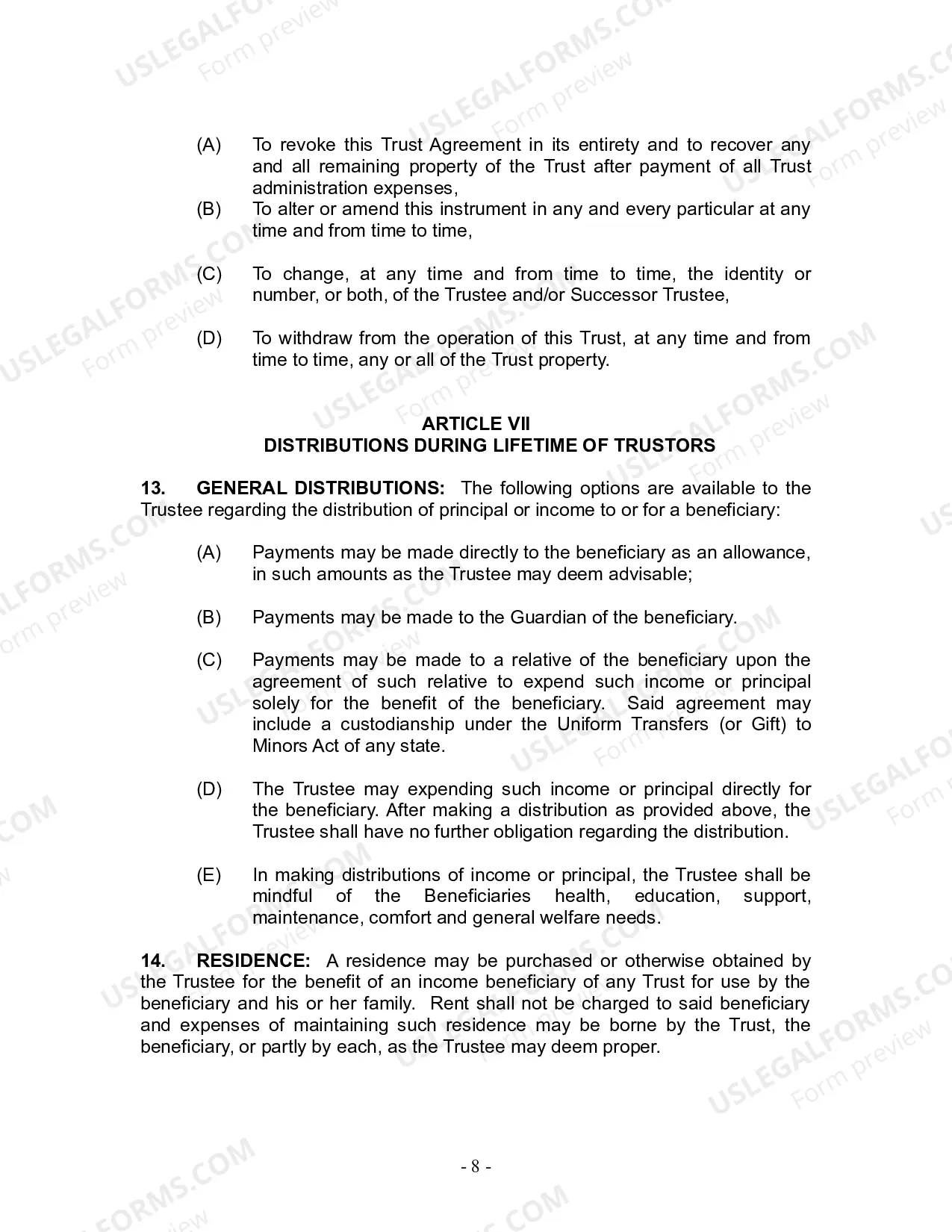
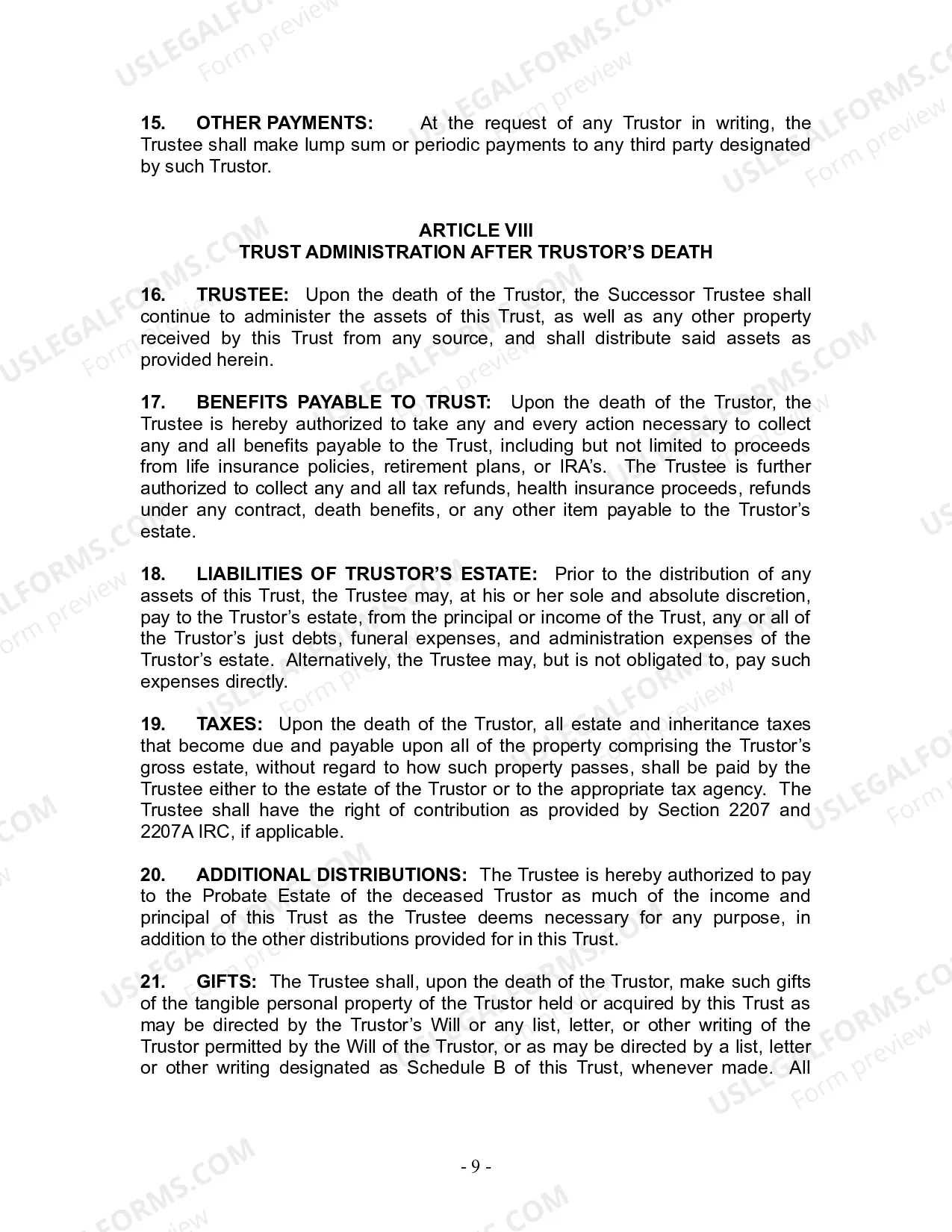
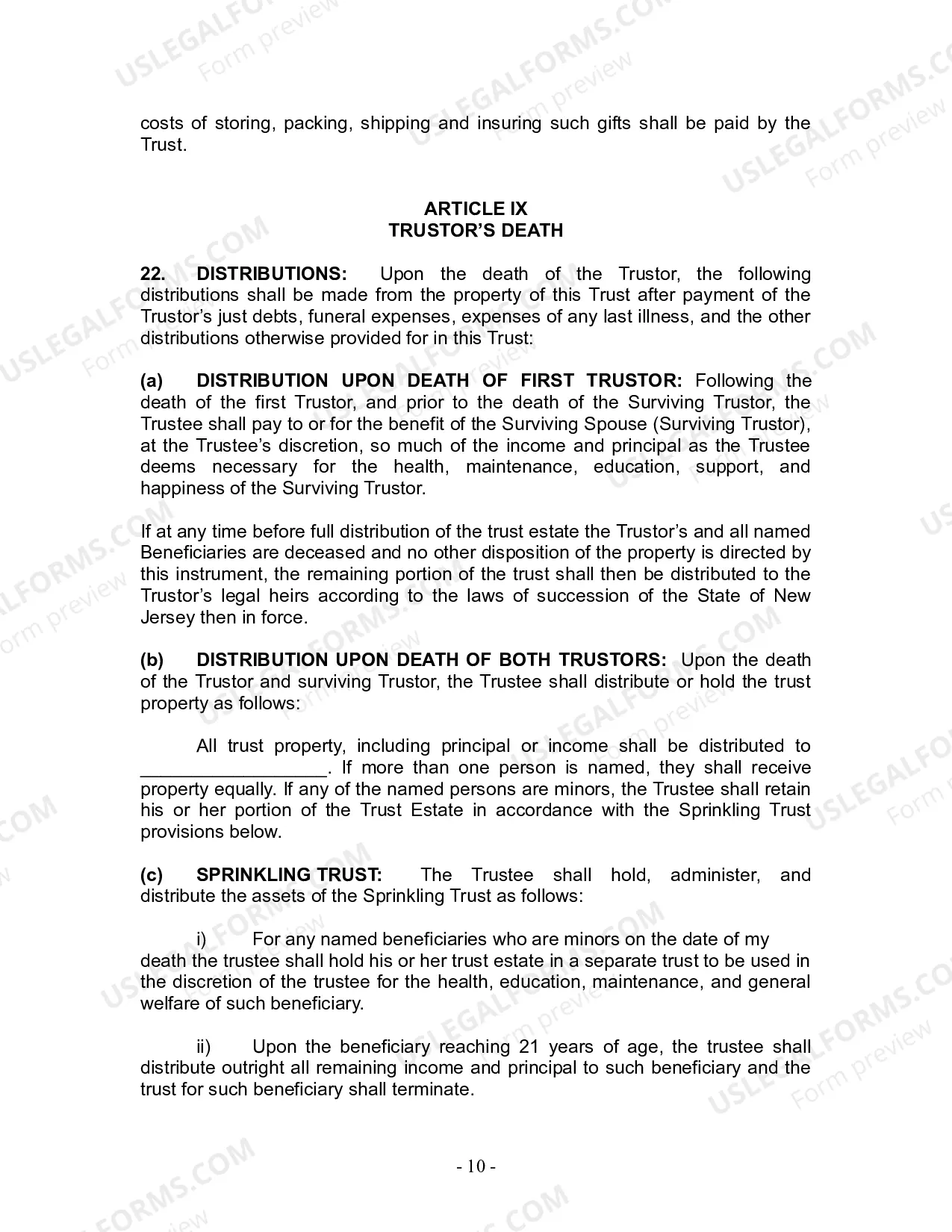
- Distribution Details: Clearly define how and when the assets will be distributed upon the death of the Trustors.
- Successor Trustee Provisions: Designate a successor trustee to manage the trust if the original trustee is unable to do so.





Common use cases
This form is beneficial in several scenarios, including when a married couple seeks to manage their assets while alive and ensure they are passed on according to their wishes after their death. It is ideal for couples without children, simplifying the estate planning process and avoiding the complexities of probate. Additionally, it can be employed if the couple wants to retain control of their property while still preparing for future uncertainties.
Who this form is for
- Married couples without children looking for effective estate planning solutions.
- Couples wanting to maintain control over their assets during their lifetimes.
- Individuals wishing to simplify the transfer of assets after death to avoid probate.
How to prepare this document
- Identify the parties involved: Enter the names of both spouses as Trustors and the designated Trustee.
- Assign a name to the trust: Choose a name for the trust to differentiate it from other trusts.
- List the assets: Clearly specify all assets being transferred into the trust.
- Designate a Successor Trustee: Identify an individual who will take over management of the trust if both Trustors are unable to do so.
- Sign and notarize the agreement: Ensure both Trustors sign the trust document and have it notarized to validate it legally.
Does this document require notarization?
Yes, this form must be notarized to be legally valid. US Legal Forms offers integrated online notarization services, ensuring that you can complete this process securely via video call without the need to travel.
Get your form ready online
Our built-in tools help you complete, sign, share, and store your documents in one place.
Make edits, fill in missing information, and update formatting in US Legal Forms—just like you would in MS Word.
Download a copy, print it, send it by email, or mail it via USPS—whatever works best for your next step.
Sign and collect signatures with our SignNow integration. Send to multiple recipients, set reminders, and more. Go Premium to unlock E-Sign.
If this form requires notarization, complete it online through a secure video call—no need to meet a notary in person or wait for an appointment.
We protect your documents and personal data by following strict security and privacy standards.

Make edits, fill in missing information, and update formatting in US Legal Forms—just like you would in MS Word.

Download a copy, print it, send it by email, or mail it via USPS—whatever works best for your next step.

Sign and collect signatures with our SignNow integration. Send to multiple recipients, set reminders, and more. Go Premium to unlock E-Sign.

If this form requires notarization, complete it online through a secure video call—no need to meet a notary in person or wait for an appointment.

We protect your documents and personal data by following strict security and privacy standards.
Avoid these common issues
- Failing to list all assets in the trust, which can lead to unintended probate of certain assets.
- Not updating the trust after significant life events, such as changes in financial status or after acquiring new assets.
- Neglecting to appoint a Successor Trustee, leaving the trust in limbo if both spouse trustees are unable to fulfill their duties.
Benefits of using this form online
- Convenience: Access the form online at any time, allowing you to complete it at your own pace.
- Editability: Easily make changes to the form as your circumstances or preferences evolve.
- Reliability: Trust in forms drafted by licensed attorneys to ensure compliance with legal standards.
Legal use & context
- Establishes a legally binding agreement for asset management.
- Avoids the probate process upon death, facilitating quicker asset distribution.
- Ensures the trustor's wishes are honored regarding asset distribution.
Key takeaways
- This trust facilitates efficient asset management and distribution without probate.
- It is specifically tailored for married couples without children, recognizing their unique estate planning needs.
- Proper completion and notarization are essential for the trust's legality and effectiveness.
Looking for another form?
Form popularity
FAQ
Paperwork. Setting up a living trust isn't difficult or expensive, but it requires some paperwork. Record Keeping. After a revocable living trust is created, little day-to-day record keeping is required. Transfer Taxes. Difficulty Refinancing Trust Property. No Cutoff of Creditors' Claims.
The trust in no way protects your assets, so that reasoning is simply false. You should put your vehicles into your trust in order to avoid probate. Only those assets held by the trust will avoid probate.
Houses and other real estate (even if they're mortgaged) stock, bond, and other security accounts held by brokerages (but think about naming a TOD beneficiary instead) small business interests (stock in a closely held corporation, partnership interests, or limited liability company shares)
Sure you can write your own revocable living trust. In fact, you can do it better than a lot of the attorneys. First you have to ascertain that you really want a trust.
When you create a DIY living trust, there are no attorneys involved in the process.It is also possible to choose a company, such as a bank or a trust company, to be your trustee. You'll also need to choose your beneficiary or beneficiaries, the person or people who will receive the assets in your trust.
Houses and other real estate (even if they're mortgaged) stock, bond, and other security accounts held by brokerages (but think about naming a TOD beneficiary instead) small business interests (stock in a closely held corporation, partnership interests, or limited liability company shares)
When Should You Put a Bank Account into a Trust?More specifically, you can hold up to $166,250 of real or personal property outside a trust and avoid full probate in California. However, if you have more than $166,250 in a bank account, you should consider transferring it into your trust.
The process of funding your living trust by transferring your assets to the trustee is an important part of what helps your loved ones avoid probate court in the event of your death or incapacity. Qualified retirement accounts such as 401(k)s, 403(b)s, IRAs, and annuities, should not be put in a living trust.
Decide on the type of trust you want to form. Take stock of your property. Pick a trustee. Create the trust document, either using an online program or with the help of a lawyer. Go to a notary public and sign the document. Fund the trust.