New Jersey Warranty Deed from Two Individuals / Husband and Wife to Two Individuals / Husband and Wife
Understanding this form
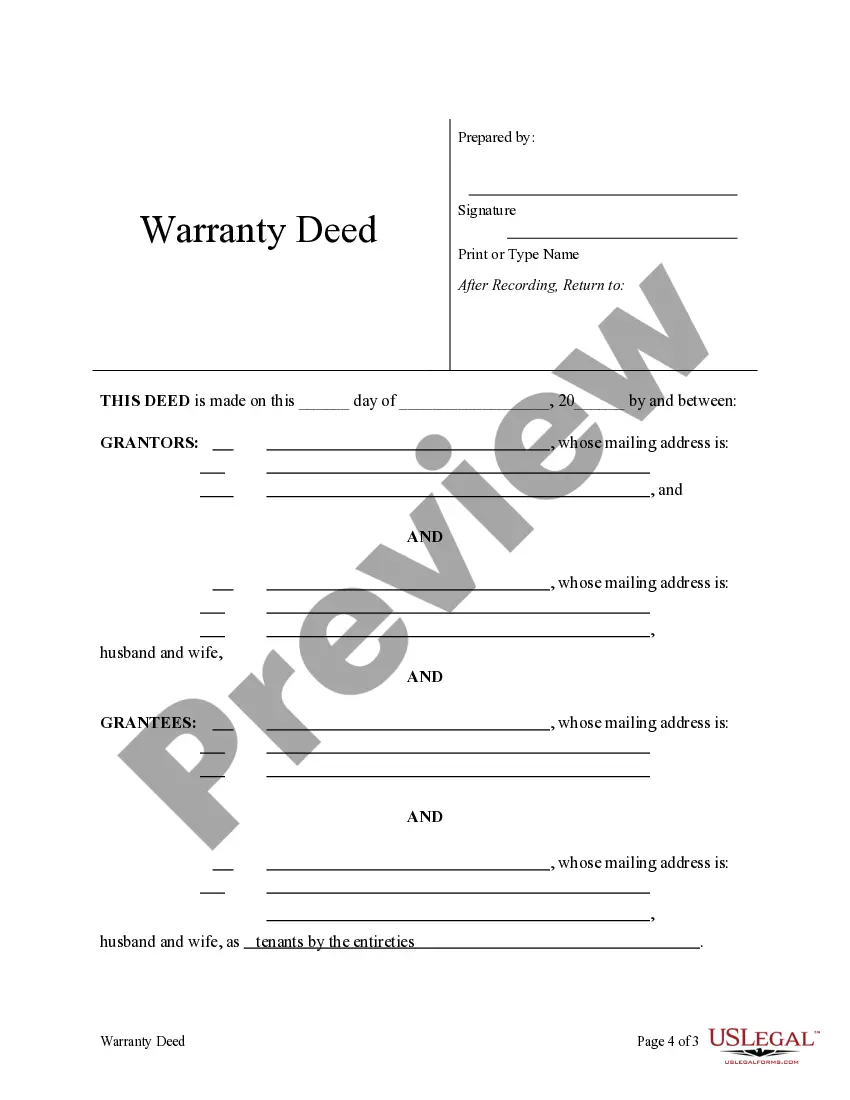
This Warranty Deed allows two individuals or a married couple (Grantors) to transfer ownership of a property to another two individuals or a married couple (Grantees). This legal document ensures that the Grantors convey the property while guaranteeing its title against any claims. Unlike a quitclaim deed, a warranty deed provides a full guarantee of ownership and freedom from liens or encumbrances.
Form components explained
- Identification of Grantors and Grantees
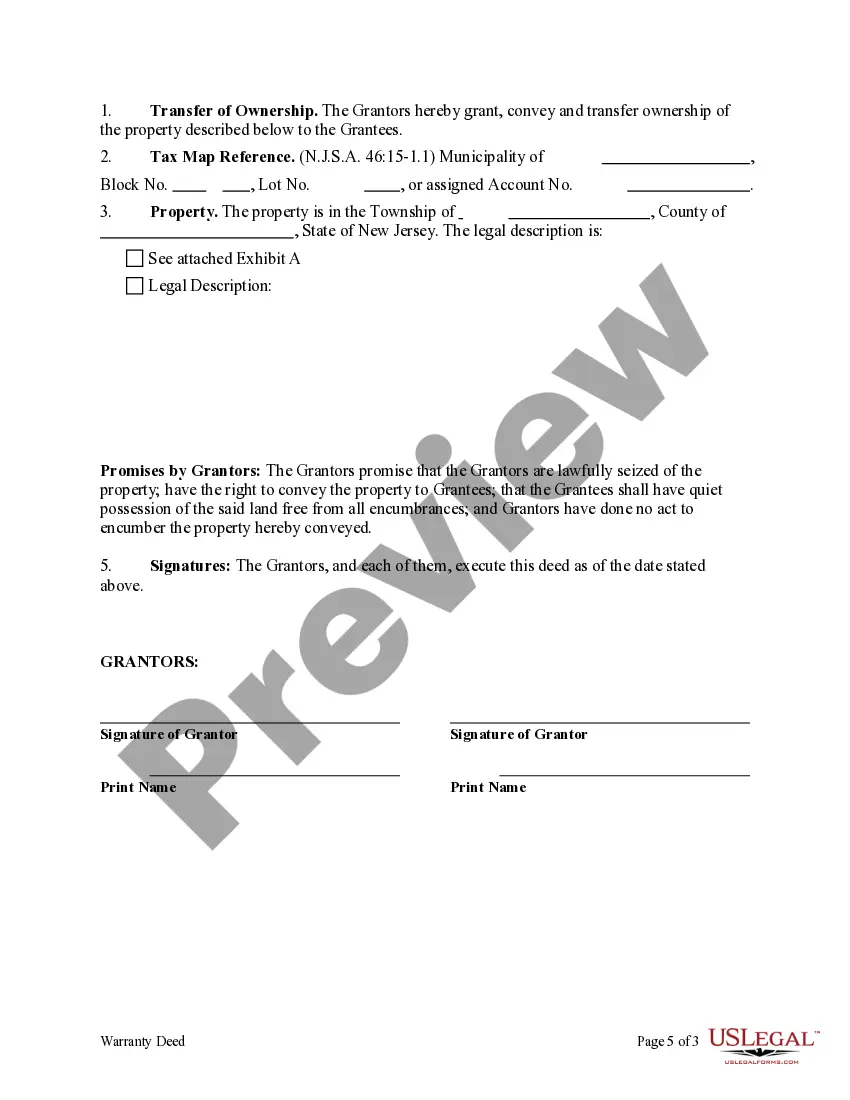
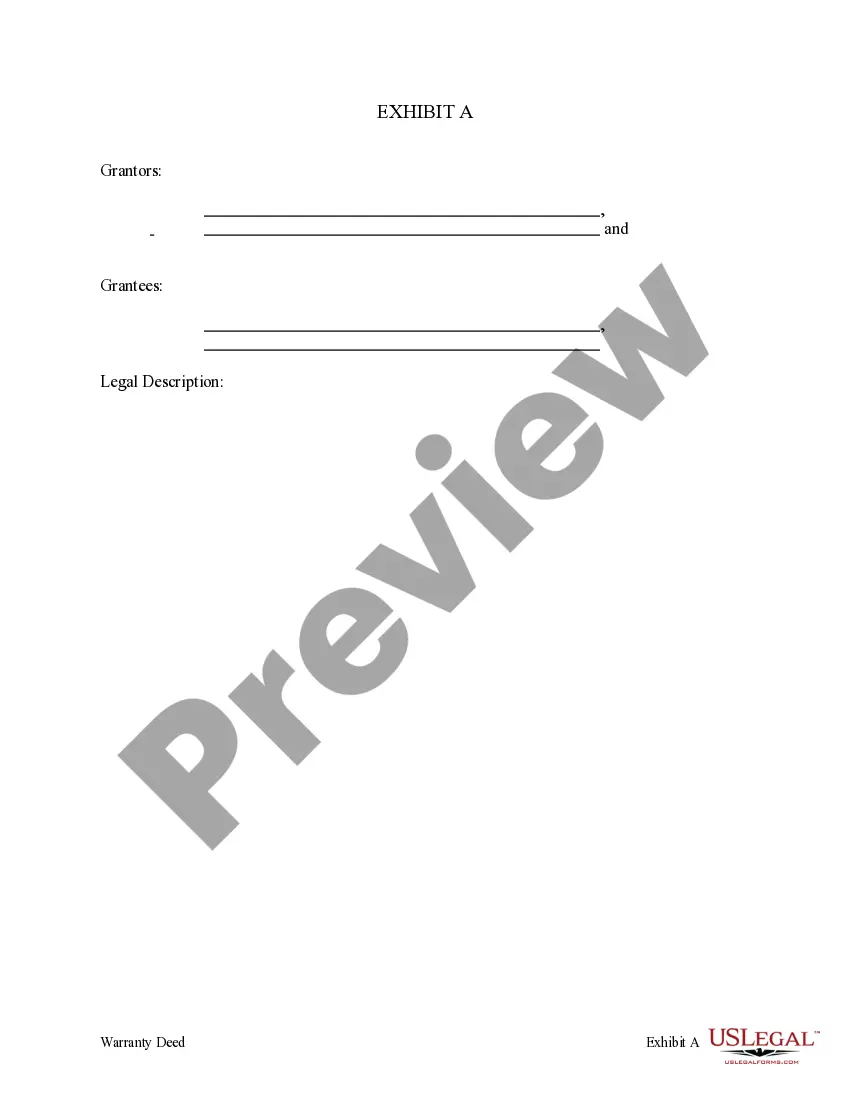
- Description of the property being transferred
- Legal warranties made by the Grantors
- Signature fields for both Grantors
- Provisions for how Grantees will hold the property





When to use this form
This Warranty Deed form is useful when a husband and wife or two individual co-owners intend to transfer property ownership to another couple or two individuals. It is commonly used in real estate transactions, when changing the title of the property due to personal reasons such as gift, sale, or inheritance.
Who this form is for
- Married couples transferring property between each other or to another couple
- Two individuals co-owning property wishing to convey it to another pair of individuals
- Homeowners looking to document changes in ownership in a legally binding manner
How to prepare this document
- Identify the full names and addresses of the Grantors and the Grantees.
- Provide a detailed description of the property being transferred.
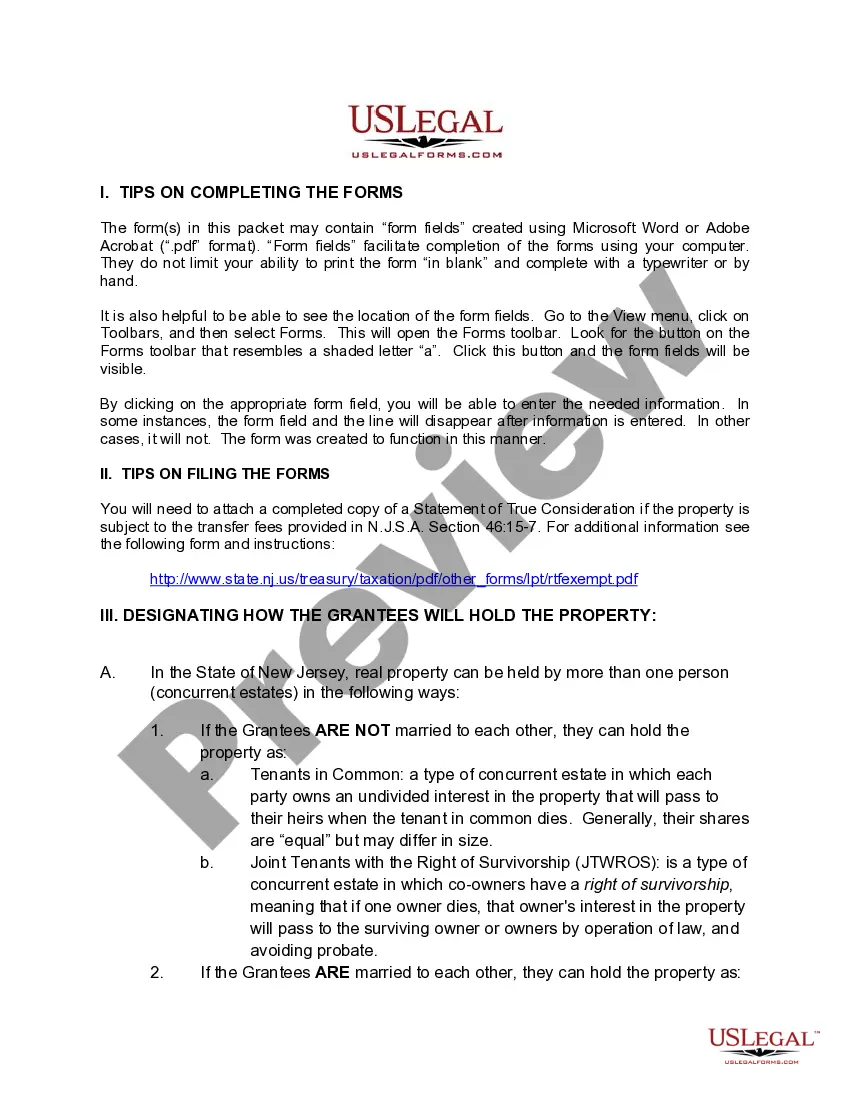
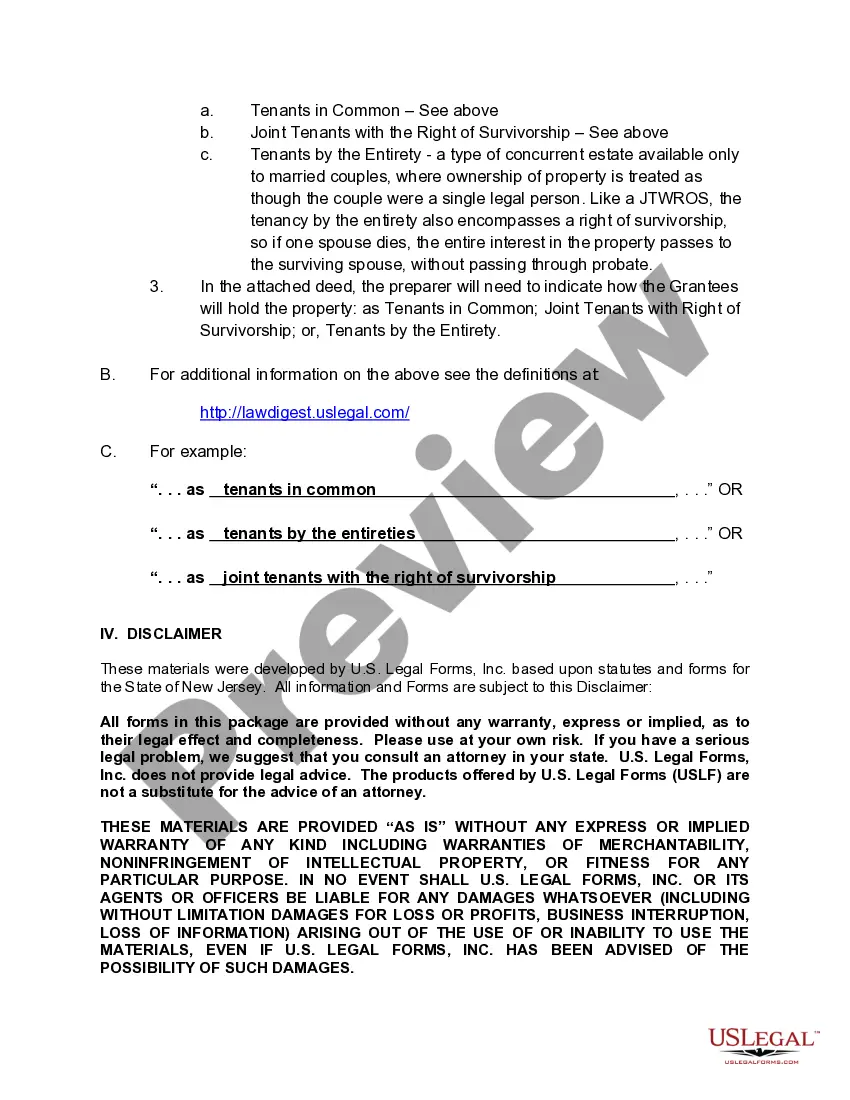
- Select how the Grantees will hold the property (e.g., Tenants in Common, Joint Tenants with Right of Survivorship, or Tenants by the Entirety).
- Ensure all Grantors sign the document in the designated fields.
- Review the completed form for accuracy before filing.
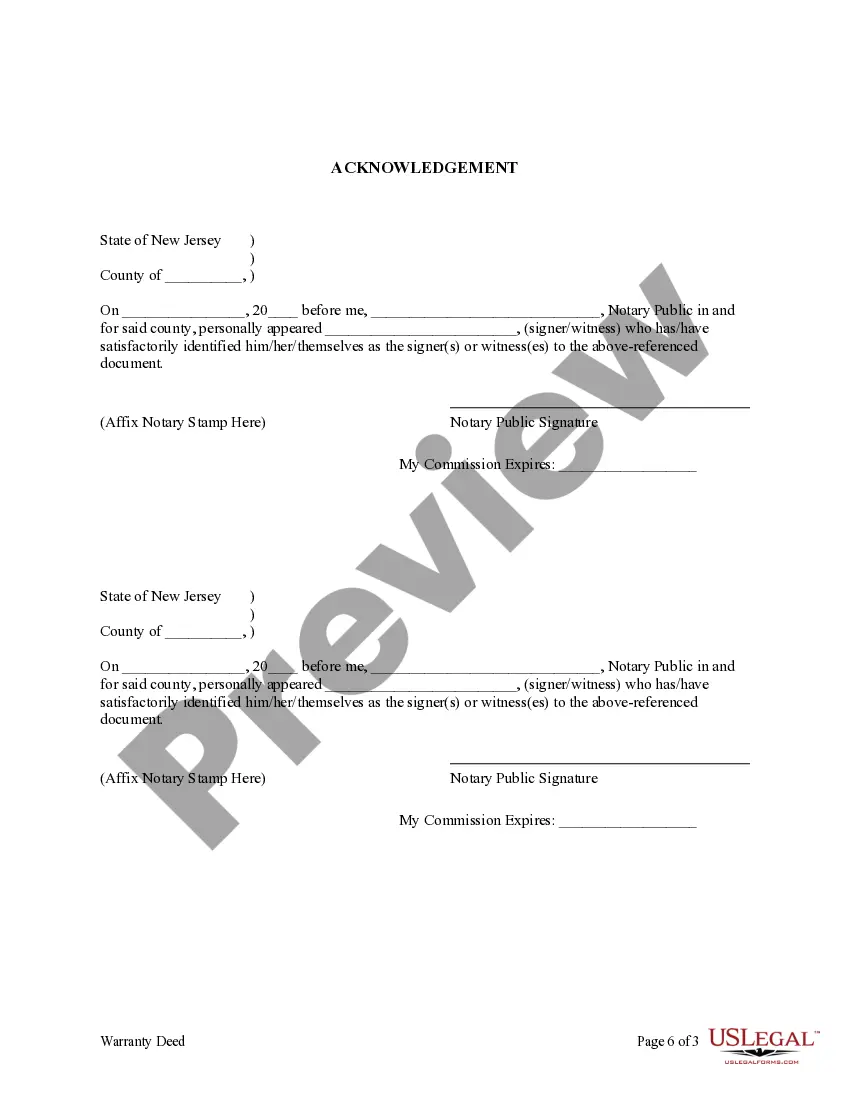
Does this document require notarization?
This form does not typically require notarization unless specified by local law. However, it is advisable to have the signatures notarized to enhance the document's acceptance and legality, especially when filing with governmental agencies.
Get your form ready online
Our built-in tools help you complete, sign, share, and store your documents in one place.
Make edits, fill in missing information, and update formatting in US Legal Forms—just like you would in MS Word.
Download a copy, print it, send it by email, or mail it via USPS—whatever works best for your next step.
Sign and collect signatures with our SignNow integration. Send to multiple recipients, set reminders, and more. Go Premium to unlock E-Sign.
If this form requires notarization, complete it online through a secure video call—no need to meet a notary in person or wait for an appointment.
We protect your documents and personal data by following strict security and privacy standards.

Make edits, fill in missing information, and update formatting in US Legal Forms—just like you would in MS Word.

Download a copy, print it, send it by email, or mail it via USPS—whatever works best for your next step.

Sign and collect signatures with our SignNow integration. Send to multiple recipients, set reminders, and more. Go Premium to unlock E-Sign.

If this form requires notarization, complete it online through a secure video call—no need to meet a notary in person or wait for an appointment.

We protect your documents and personal data by following strict security and privacy standards.
Typical mistakes to avoid
- Failing to identify all Grantors and Grantees correctly.
- Not including a complete legal description of the property.
- Omitting necessary signatures from all Grantors.
- Not specifying how the Grantees will hold the property.
- Not attaching required documents, such as a Statement of True Consideration, if applicable.
Advantages of online completion
- Convenient access to legally vetted documents at any time.
- Edit and customize your Warranty Deed easily on your computer.
- Instant download means you can complete the form as soon as you need it.
- Peace of mind knowing the form complies with state laws.
Looking for another form?
Form popularity
FAQ
This is called recording your deed. When done properly, a deed is recorded anywhere from two weeks to three months after closing.
Once a quit claim deed has been completed and filed with the County Clerk's Office, the title will officially pass from the grantor to the grantee. The only way to reverse a quit claim deed is to go to court and prove that the grantor was forced to sign the document under duress.
First, so long as you own the property you purchased, you are obligated to pay its property taxes. One way to get a warranty deed to the property you acquired via a foreclosure where you got a quit claim deed for it is to simply deed the property to yourself or a trust that you created as a grant (warranty) deed.
A quitclaim deed only transfers the grantor's interests in a piece of real estate.A warranty deed contains a guarantee that the grantor has legal title and rights to the real estate. A quitclaim deed offers little to no protection to the grantee. It offers the least amount of protection out of any other type of deed.
The drawback, quite simply, is that quitclaim deeds offer the grantee/recipient no protection or guarantees whatsoever about the property or their ownership of it. Maybe the grantor did not own the property at all, or maybe they only had partial ownership.
Once you sign a quitclaim deed and it has been filed and recorded with the County Clerks Office, the title has been officially transferred and cannot be easily reversed. In order to reverse this type of transfer, it would require your spouse to cooperate and assist in adding your name back to the title.
A person who signs a quitclaim deed to transfer property they do not own results in no title at all being transferred since there is no actual ownership interest. The quitclaim deed only transfers the type of title you own.
A warranty deed, also known as a general warranty deed, is a legal real estate document between the seller (grantor) and the buyer (grantee). The deed protects the buyer by pledging that the seller holds clear title to the property and there are no encumbrances, outstanding liens, or mortgages against it.