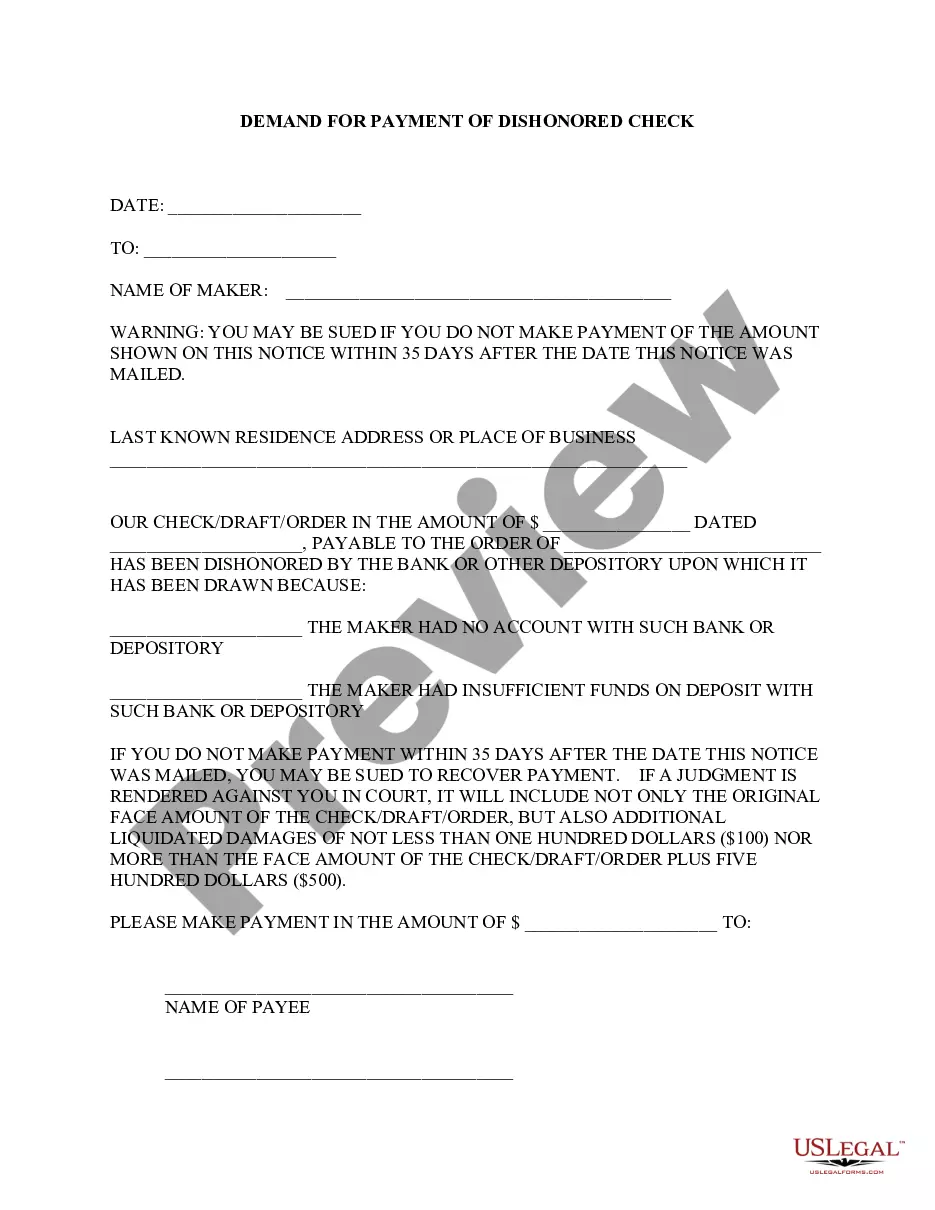
New Jersey Demand For Payment of Dishonored Check
Overview of this form
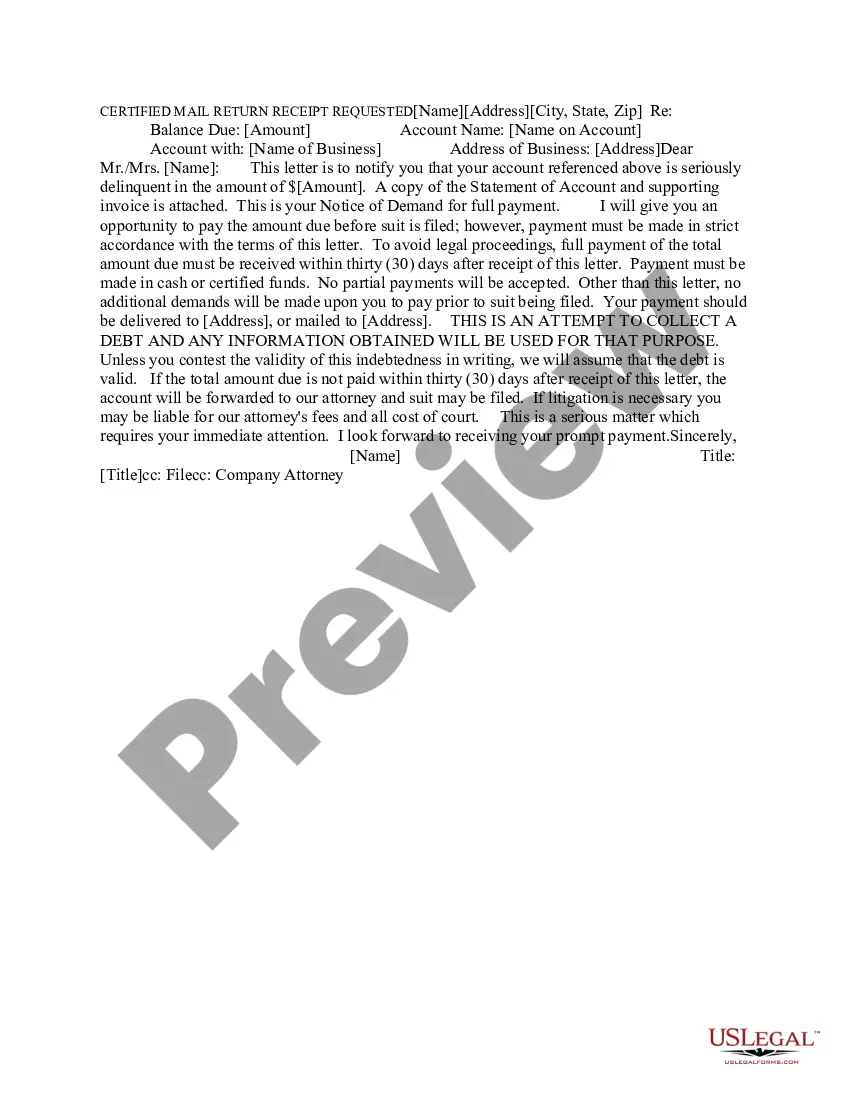
The Demand for Payment of Dishonored Check is a formal notice issued to a person who has written a check that has not been honored due to insufficient funds. This form alerts the maker of the check that they have thirty-five days to settle the debt before further legal action is taken. Unlike other collection notices, this demand is specifically for dishonored checks and outlines the consequences of non-payment clearly.
Key components of this form
- Date of notice issuance.
- Name of the maker (the person who wrote the check).
- Amount of the dishonored check.
- Reason for dishonor (e.g., insufficient funds).
- Warning about potential legal action and damages.
- Instructions for making payment.


When to use this document
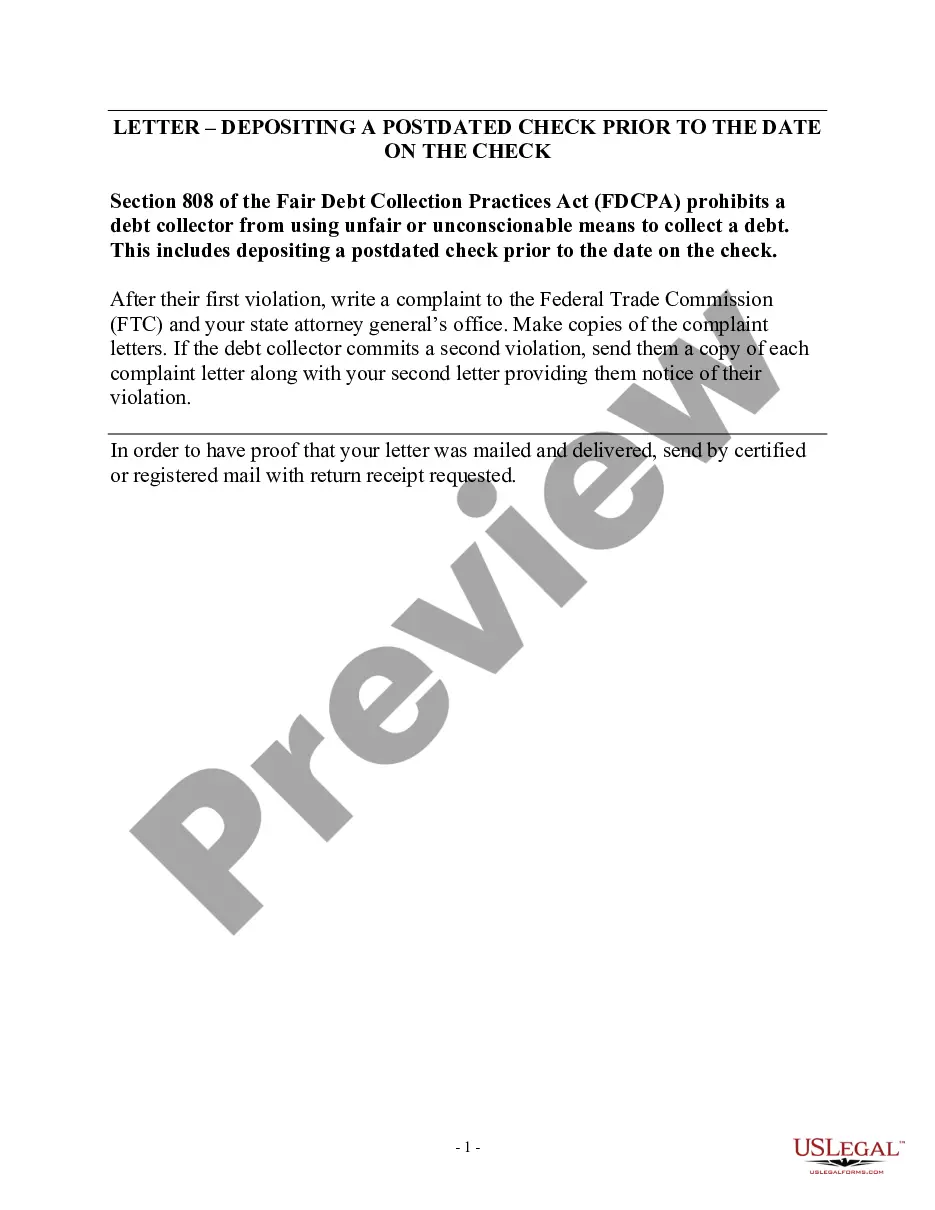
This form should be used when a check that you have written has been returned due to insufficient funds or if there is no account associated with it. It serves as a warning to the maker of the check, providing them a specific timeframe to make payment before a lawsuit is considered. It is particularly useful in small claims situations where you seek to recover funds quickly and efficiently.
Who needs this form
This form is intended for individuals or businesses who have received a dishonored check. It is useful for anyone who needs to formally request payment from a check writer before pursuing further legal actions. Potential users include:
- Businesses accepting checks as payment.
- Individuals owed money for services rendered.
- Freelancers seeking compensation for completed work.
- Landlords collecting rent payments.
Steps to complete this form
- Enter the date on which you are sending the notice.
- Fill in the name of the check maker and their last known address.
- Specify the amount of the dishonored check and its date.
- Indicate the reason for dishonor (e.g., insufficient funds).
- Clearly state the amount due and provide instructions for payment.
Notarization requirements for this form
This form does not typically require notarization to be legally valid. However, some jurisdictions or document types may still require it. US Legal Forms provides secure online notarization powered by Notarize, available 24/7 for added convenience.
Get your form ready online
Our built-in tools help you complete, sign, share, and store your documents in one place.
Make edits, fill in missing information, and update formatting in US Legal Forms—just like you would in MS Word.
Download a copy, print it, send it by email, or mail it via USPS—whatever works best for your next step.
Sign and collect signatures with our SignNow integration. Send to multiple recipients, set reminders, and more. Go Premium to unlock E-Sign.
If this form requires notarization, complete it online through a secure video call—no need to meet a notary in person or wait for an appointment.
We protect your documents and personal data by following strict security and privacy standards.

Make edits, fill in missing information, and update formatting in US Legal Forms—just like you would in MS Word.

Download a copy, print it, send it by email, or mail it via USPS—whatever works best for your next step.

Sign and collect signatures with our SignNow integration. Send to multiple recipients, set reminders, and more. Go Premium to unlock E-Sign.

If this form requires notarization, complete it online through a secure video call—no need to meet a notary in person or wait for an appointment.

We protect your documents and personal data by following strict security and privacy standards.
Common mistakes to avoid
- Failing to include accurate details about the check.
- Not providing clear payment instructions.
- Missing the deadline for sending the notice.
Why complete this form online
- Easy access to the form in a downloadable format.
- Editable to cater to your specific situation.
- Quick turnaround for your demand process without needing to visit an attorney in person.
Legal use & context
- This form is enforceable in court if the recipient does not respond within the required timeframe.
- Failure to pay may result in additional liquidated damages beyond the original check amount.
- It is crucial to retain proof of sending this notice for future legal proceedings.
Main things to remember
- The Demand for Payment of Dishonored Check is an essential tool for debt recovery.
- It provides a clear framework for notifying a check writer about insufficient funds.
- Proper use of this form can help avoid lengthy legal disputes.
Looking for another form?
Form popularity
FAQ
Writing a bad check is considered a wobbler crime in California, meaning it can be charged as either a misdemeanor or felony depending on circumstances of the crime. If the value of the check was under $450, the offense is generally charged as a misdemeanor. If the amount is over $450, you can be charged with a felony.
As defined under California Penal Code Section 476a, writing a check while knowing that funds are insufficient can be charged as a misdemeanor offense that can result in sentence of up to one year in county jail.
Writing bad checks can lead to several theft charges, but with the help of a skilled defense attorney, you can work to reduce or even dismiss charges.
A bad check valued at $200 or more is an indictable offense (felony) in NJ.
Whether you write or receive a bounced check also called a nonsufficient funds, or NSF, check it will cost you.If you receive and deposit a check that bounces, you'll owe a fee to your bank for returning the check, in addition to having the headache of recovering the money you're due.
Under criminal penalties, you can be prosecuted and even arrested for writing a bad check.This can be seen as a felony in many states, especially when the checks are for more than $500. It's important to note that provision is made for accidents, because bookkeeping mistakes do happen.
As defined under California Penal Code Section 476a, writing a check while knowing that funds are insufficient can be charged as a misdemeanor offense that can result in sentence of up to one year in county jail.
Write a letter to the person who passed you the bad check. Inform him that they need to pay the check in full plus any resulting fees. Give them 7 to 10 days to pay the debt in full. Send the letter certified so you have proof it was received.
Legal TroubleIf you don't clear things up quickly, you may face civil (you have to pay fines) or criminal (you face potential jail time) penalties. Criminal charges can go on your criminal record, might eventually result in jail time, and are likely to come with higher fines.