New Jersey Drainage Contract for Contractor
What is this form?
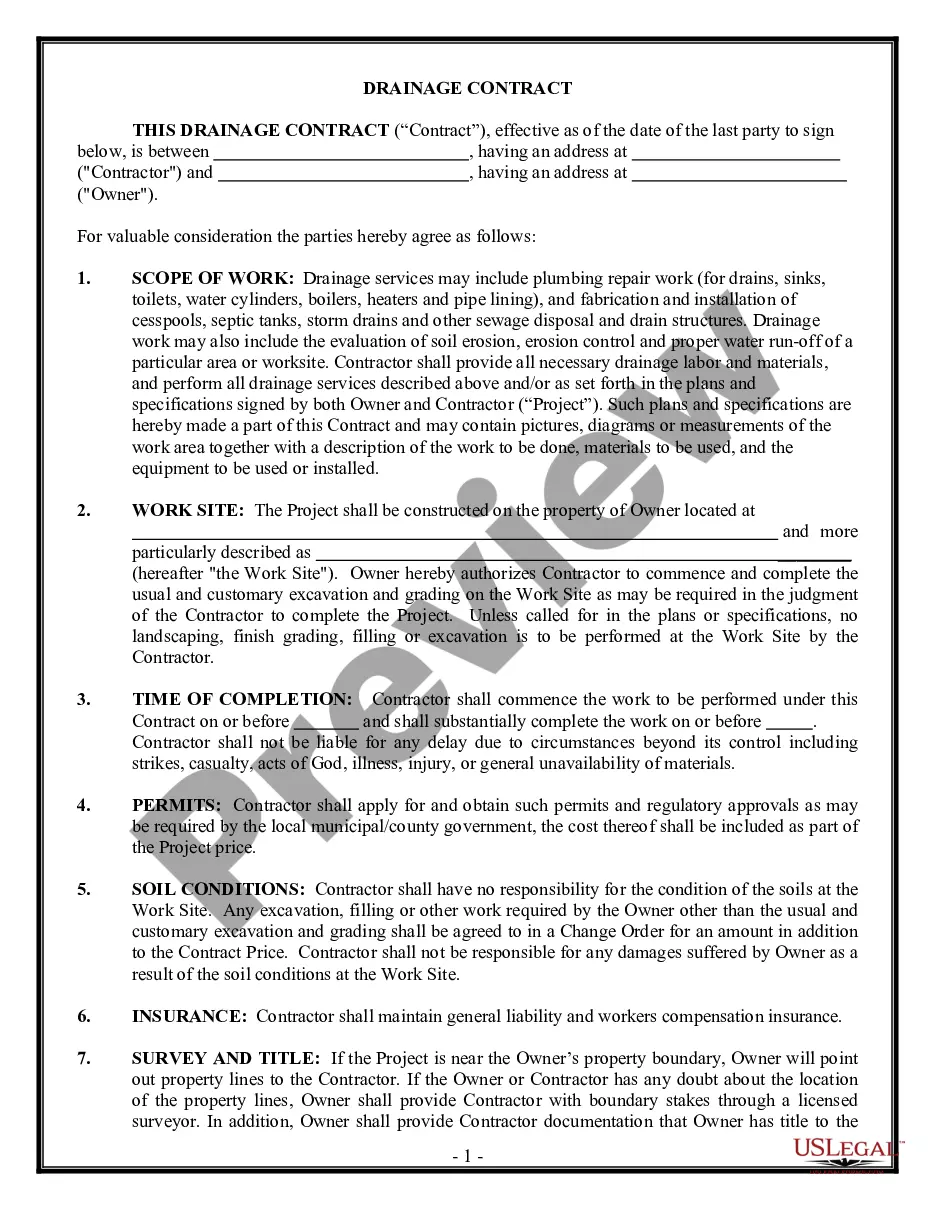
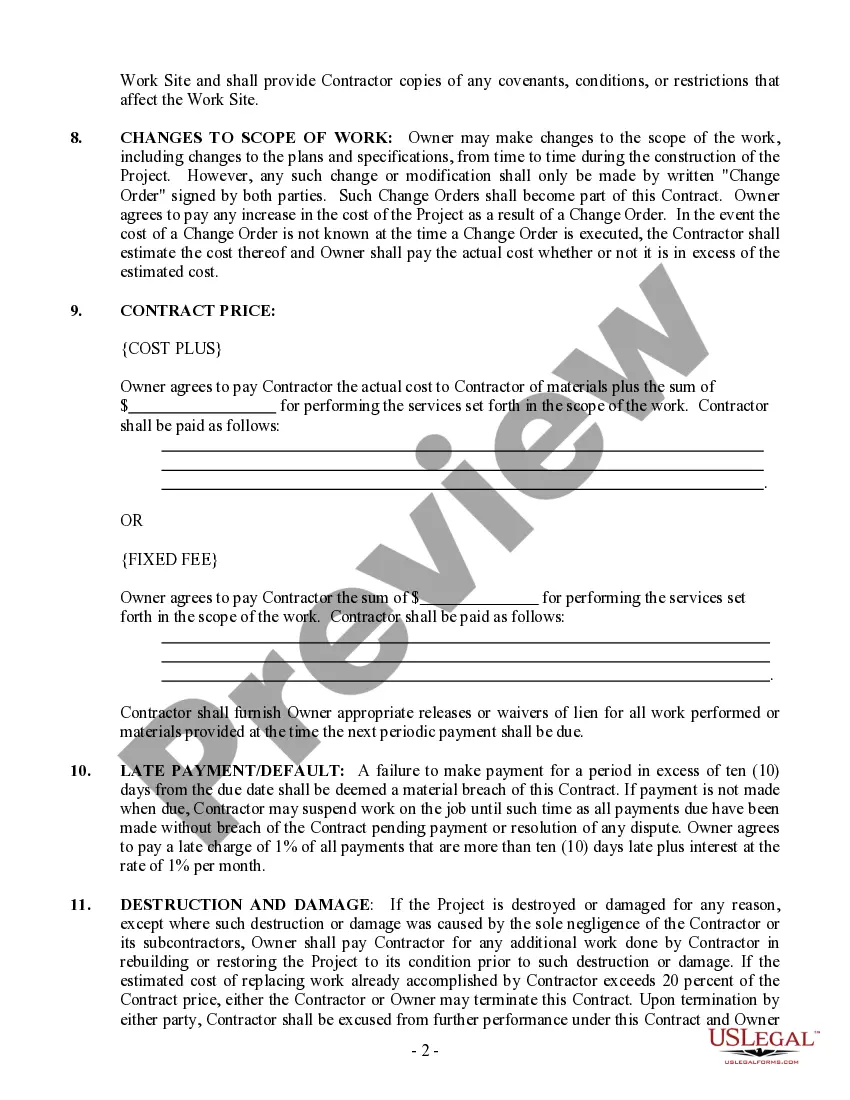
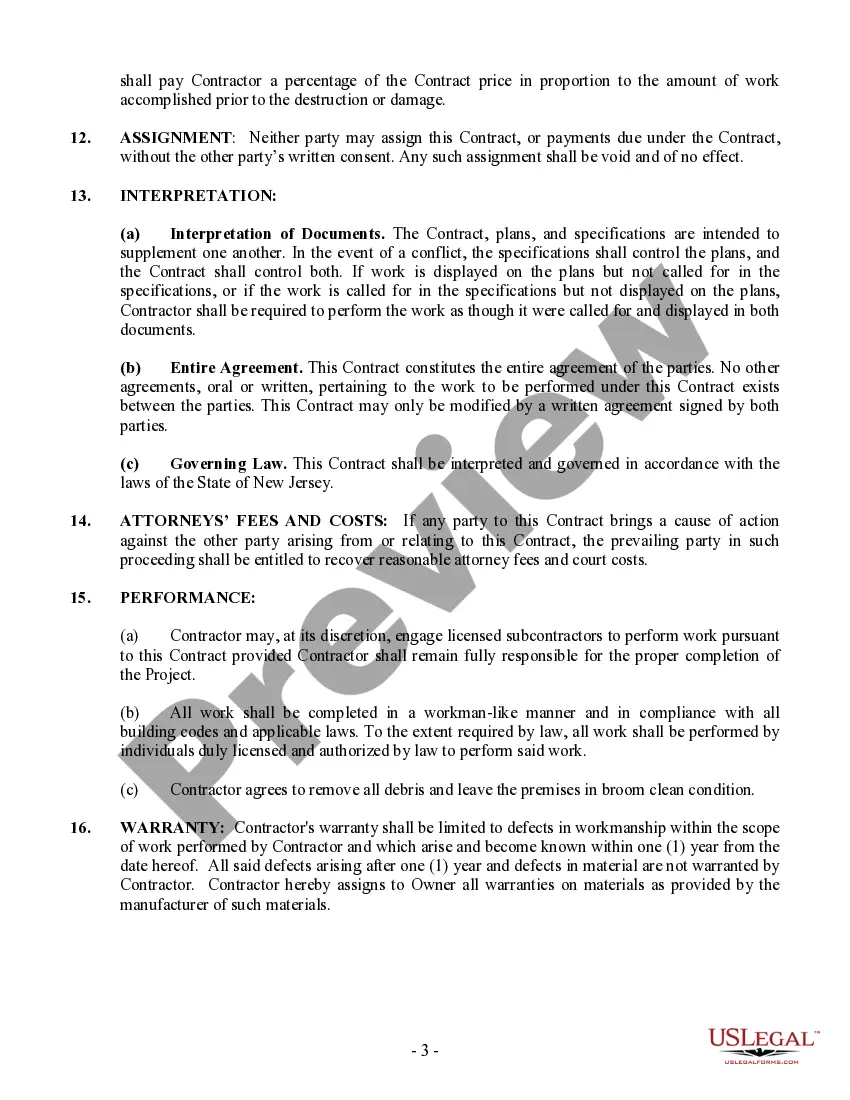
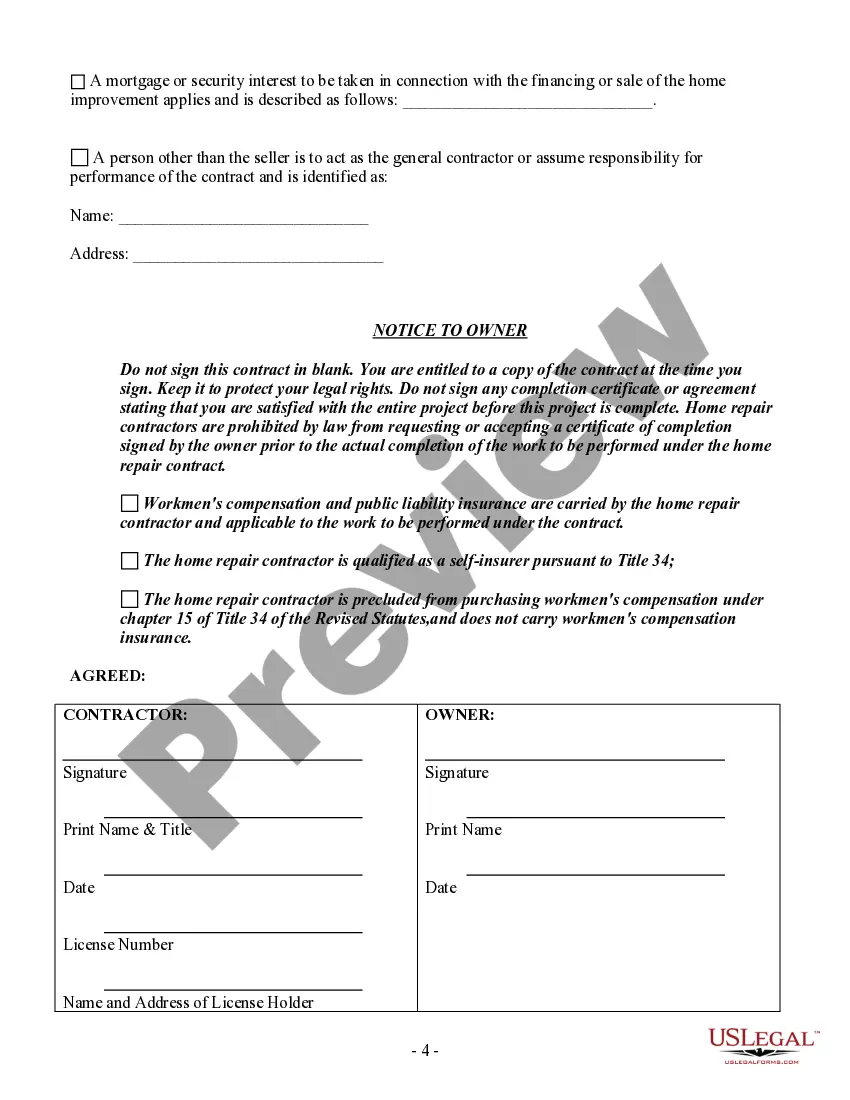
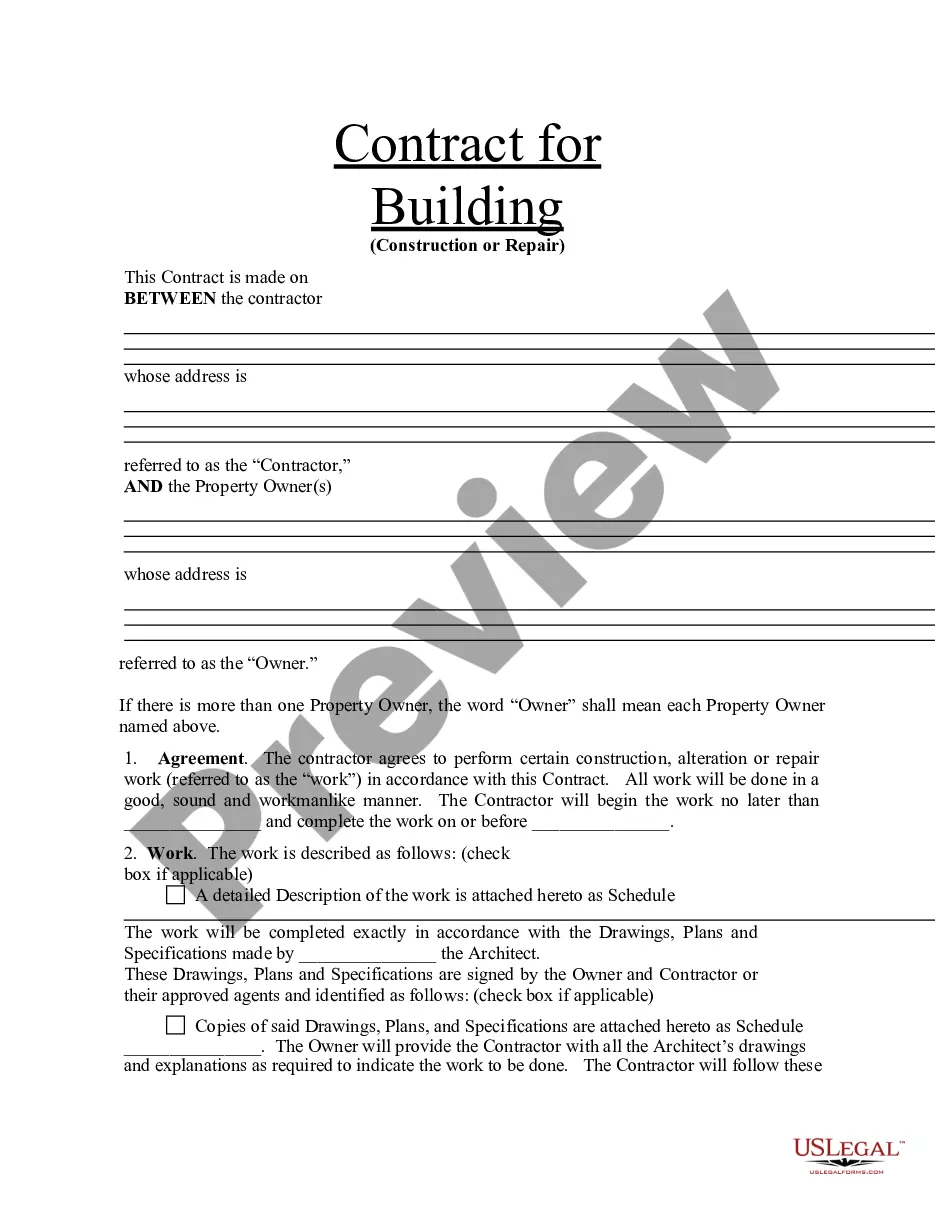
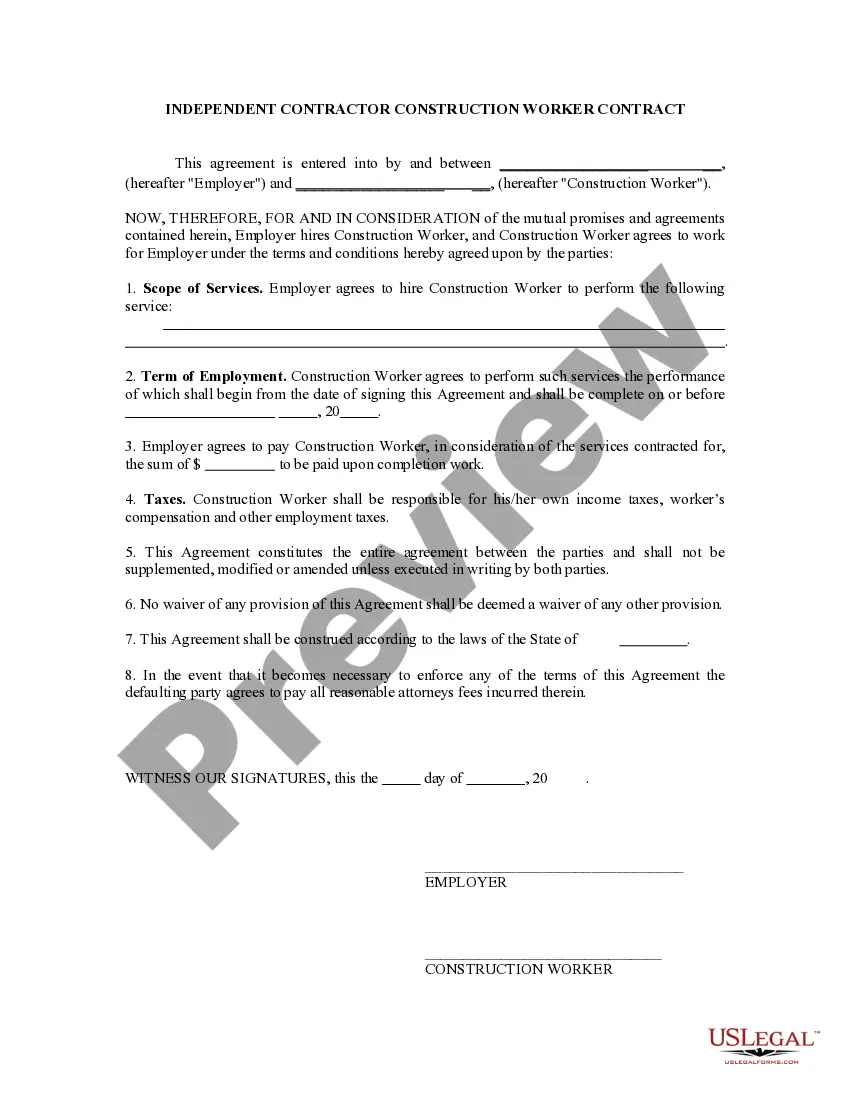
The Drainage Contract for Contractor is a legal agreement designed for use between drainage contractors and property owners. This contract outlines the terms of the drainage project, including payment arrangements (either cost plus or fixed fee), as well as essential aspects such as change orders, work site information, warranty, and insurance. It is specifically crafted to comply with New Jersey law, ensuring that both parties are protected and clear about their responsibilities.
Key parts of this document
- Work Site: Details about the property where the project will occur.
- Permits: Obligation of the contractor to obtain necessary permits for the project.
- Soil Conditions: Clarification that the contractor is not responsible for soil conditions.
- Insurance: Requirements for the contractor's general liability and workers' compensation insurance.
- Changes to Scope of Work: Process for making changes to the project scope, requiring written change orders.
- Warranty: Details on the contractor's warranty for workmanship defects.


When to use this document
This form should be used when a property owner hires a drainage contractor to perform work on their property. It is applicable for both residential and commercial projects, particularly when there is a need to clarify financial arrangements, work scope, and legal obligations of both parties. It is crucial for ensuring that all parties understand their rights and responsibilities, especially in complex drainage projects that may involve permissions and specialized work.
Who should use this form
- Property owners looking to hire a drainage contractor.
- Drainage contractors seeking to establish clear agreements with property owners.
- Individuals involved in projects requiring drainage work on residential or commercial properties.
- Home improvement professionals who require a formal contract for drainage-related projects.
Steps to complete this form
- Identify the parties involved: fill in the names and addresses of the contractor and the property owner.
- Specify the work site: enter the address of the property where drainage work will be performed.
- Outline the project specifics: provide detailed descriptions of the work being contracted.
- Detail financial arrangements: choose between cost plus or fixed fee payment structures and note any required payment schedules.
- Sign the agreement: ensure both parties review and sign the document to make it legally binding.
Notarization guidance
Notarization is generally not required for this form. However, certain states or situations might demand it. You can complete notarization online through US Legal Forms, powered by Notarize, using a verified video call available anytime.
Get your form ready online
Our built-in tools help you complete, sign, share, and store your documents in one place.
Make edits, fill in missing information, and update formatting in US Legal Forms—just like you would in MS Word.
Download a copy, print it, send it by email, or mail it via USPS—whatever works best for your next step.
Sign and collect signatures with our SignNow integration. Send to multiple recipients, set reminders, and more. Go Premium to unlock E-Sign.
If this form requires notarization, complete it online through a secure video call—no need to meet a notary in person or wait for an appointment.
We protect your documents and personal data by following strict security and privacy standards.

Make edits, fill in missing information, and update formatting in US Legal Forms—just like you would in MS Word.

Download a copy, print it, send it by email, or mail it via USPS—whatever works best for your next step.

Sign and collect signatures with our SignNow integration. Send to multiple recipients, set reminders, and more. Go Premium to unlock E-Sign.

If this form requires notarization, complete it online through a secure video call—no need to meet a notary in person or wait for an appointment.

We protect your documents and personal data by following strict security and privacy standards.
Common mistakes to avoid
- Not specifying the exact work to be done, leading to misunderstandings.
- Failing to confirm whether any permits are required before starting the project.
- Leaving payment terms vague, which can cause disputes later on.
- Not including provisions for changes in project scope and associated costs.
- Overlooking the need for both parties to sign the contract.
Why use this form online
- Immediate access: Download the form instantly for immediate use.
- Editability: Easily fill out the necessary fields to suit your specific project.
- Reliability: The contract is drafted by licensed attorneys to ensure legal compliance and enforceability.
- Convenience: Complete the contract at your own pace without the need for in-person meetings.
Legal use & context
- This contract helps protect both contractors and property owners by outlining obligations and responsibilities.
- It establishes a clear framework for managing changes to the scope of work, improving project efficiency.
- By adhering to New Jersey laws, the contract enhances its enforceability in case of disputes.
Main things to remember
- The Drainage Contract is essential for establishing legal relationships in drainage projects.
- It is compliant with New Jersey laws, ensuring appropriate legal standards.
- Correct completion of this form can help avoid common disputes between property owners and contractors.
Looking for another form?
Form popularity
FAQ
New Drain Pipe Cost Per Linear Foot The price of new drain pipes runs $0.50 to $20 per linear foot. Plumbers usually markup materials by 25% to 50%, totaling a material price range of $0.75 to $30 per foot not including labor.
Nearly every book or web site on container gardening recommends placing coarse material at the bottom of containers for drainage. The materials most often recommended for this practice are sand, gravel, pebbles, and pot shards.
The average cost to install a trench drain is $30 to $150 per linear foot, depending on the grate and channel material (plastic, metal, or concrete). Trench drains are set into driveways, patios, concrete slabs, or between pavers with a flush grate surface that catches water in a channel.
The average cost to repair a broken drain pipe is between $400 and $1,500, with most homeowners paying around $600 for a pipe repairing project.
The trench should be about 18 inches deep and 9 to 12 inches wide. French drains need to have a slope of at least 1 percent, so the force of gravity will work for you. This means that the drain should slope down a total of at least one inch for every 10 feet of pipe.
The terms rhyme, they both involve trenches, and French drains aren't really French. The defining difference is very simple, however: Trench drains are surface structures while French drains are subsurface ones. Let's look at how they both work to keep water flowing offsite.
Trench Drains and Lawn Drainage Besides, the water could flow to your house and cause structural damage. A well-designed perimeter trench drain system works very well in such cases by both draining your lawn and preventing excess water from entering the main structure of your home.
Reduce Your Watering Schedule. Extend Your Downspout. Dig a Creek Bed or Swale. Construct a Rain Garden. Install a French Drain and/or Dry Well.