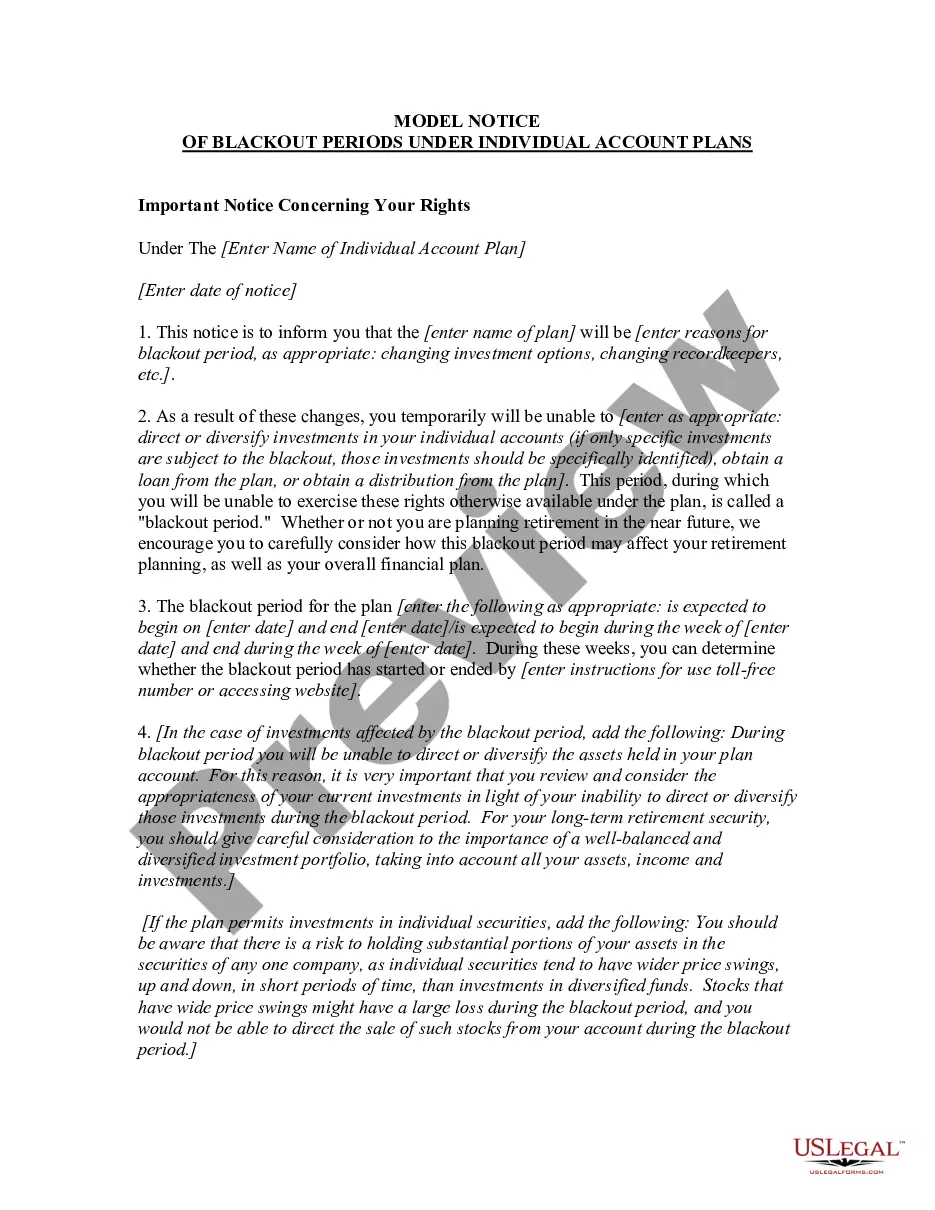
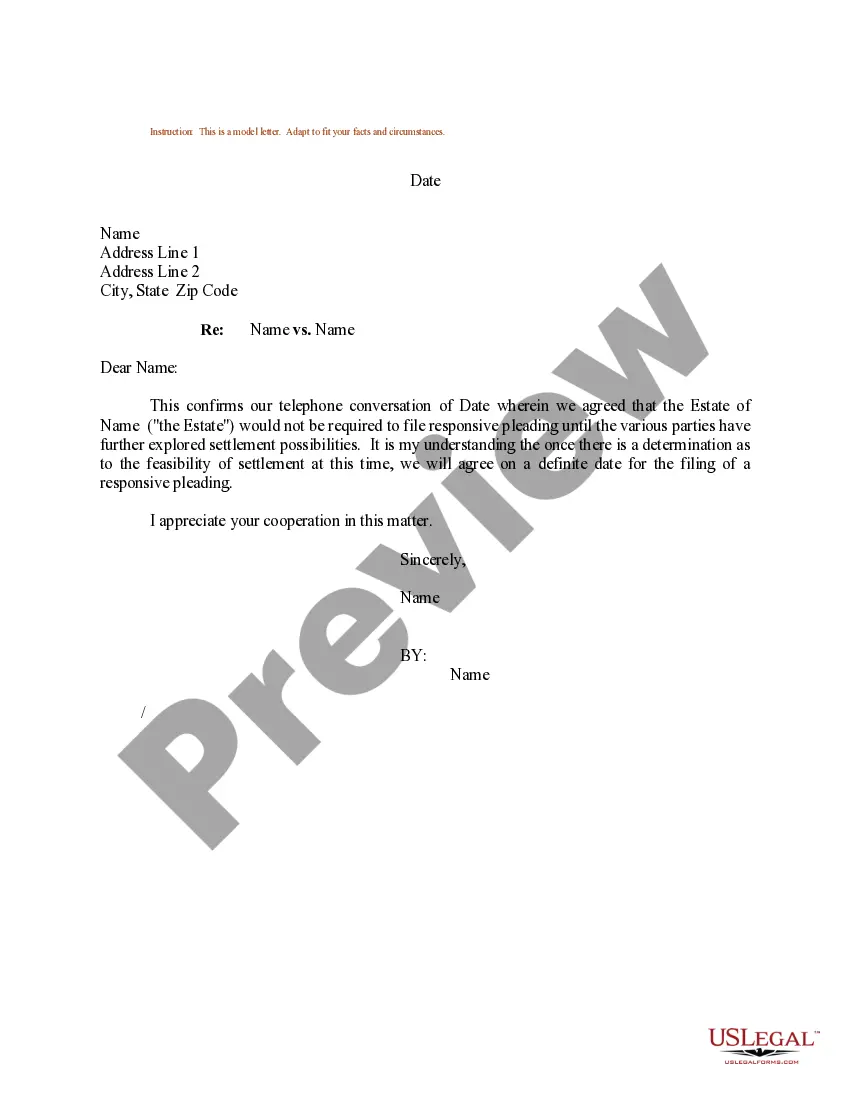
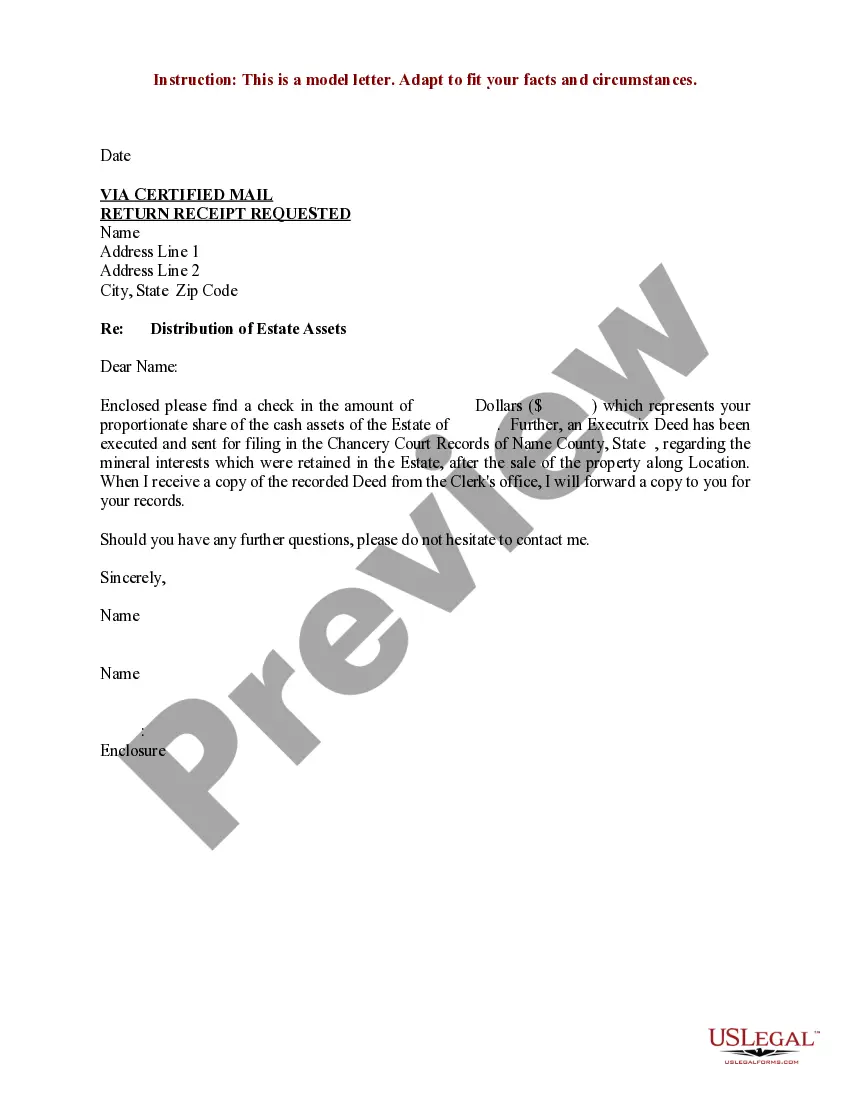
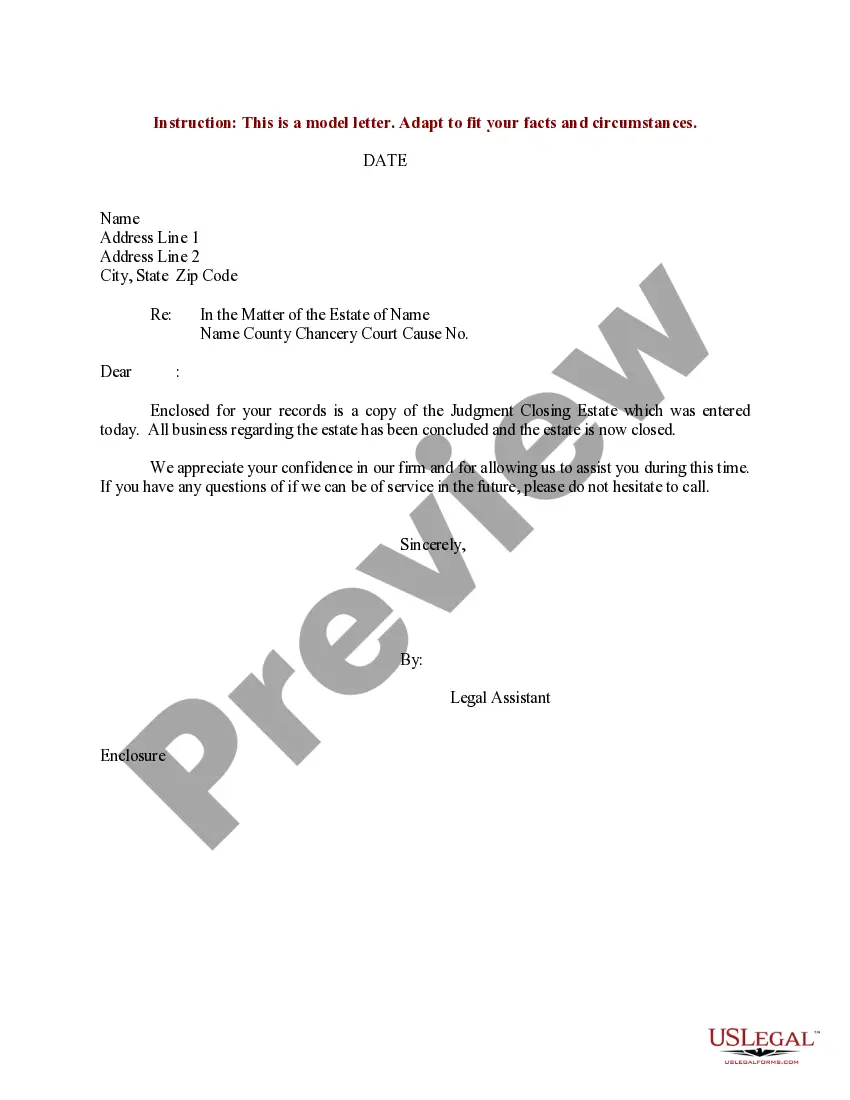
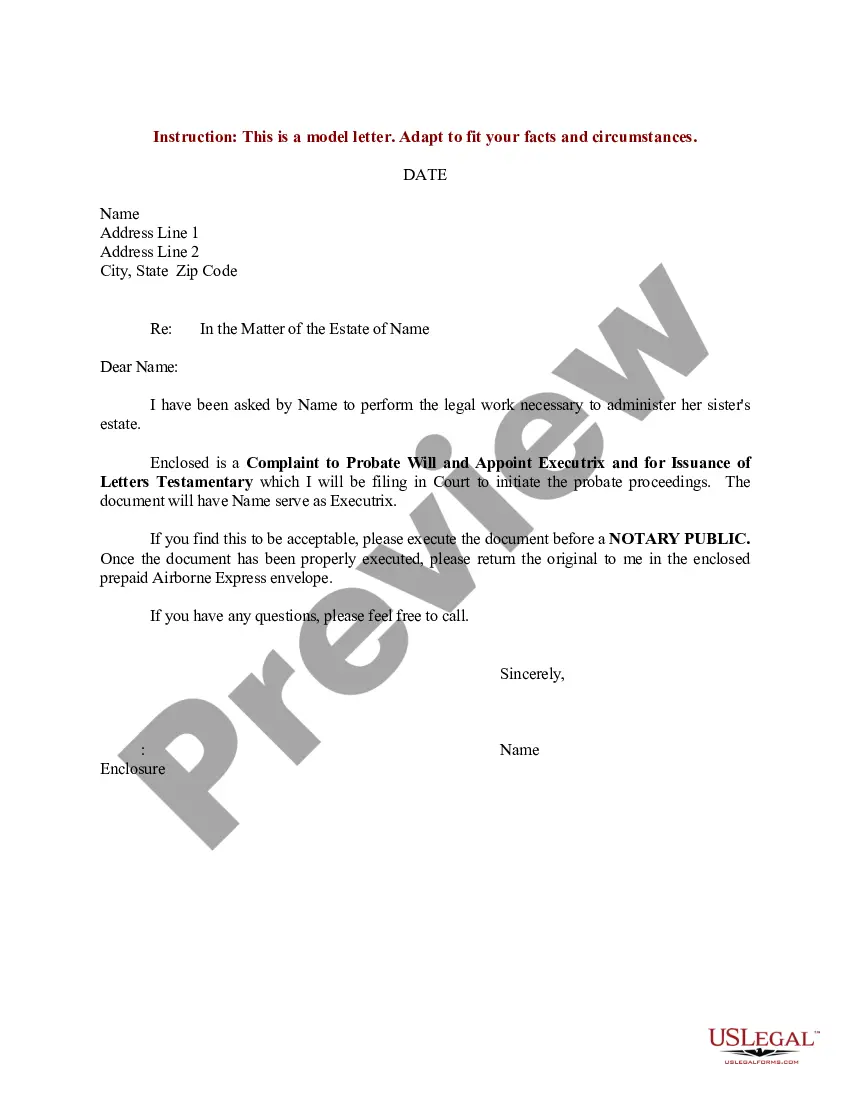
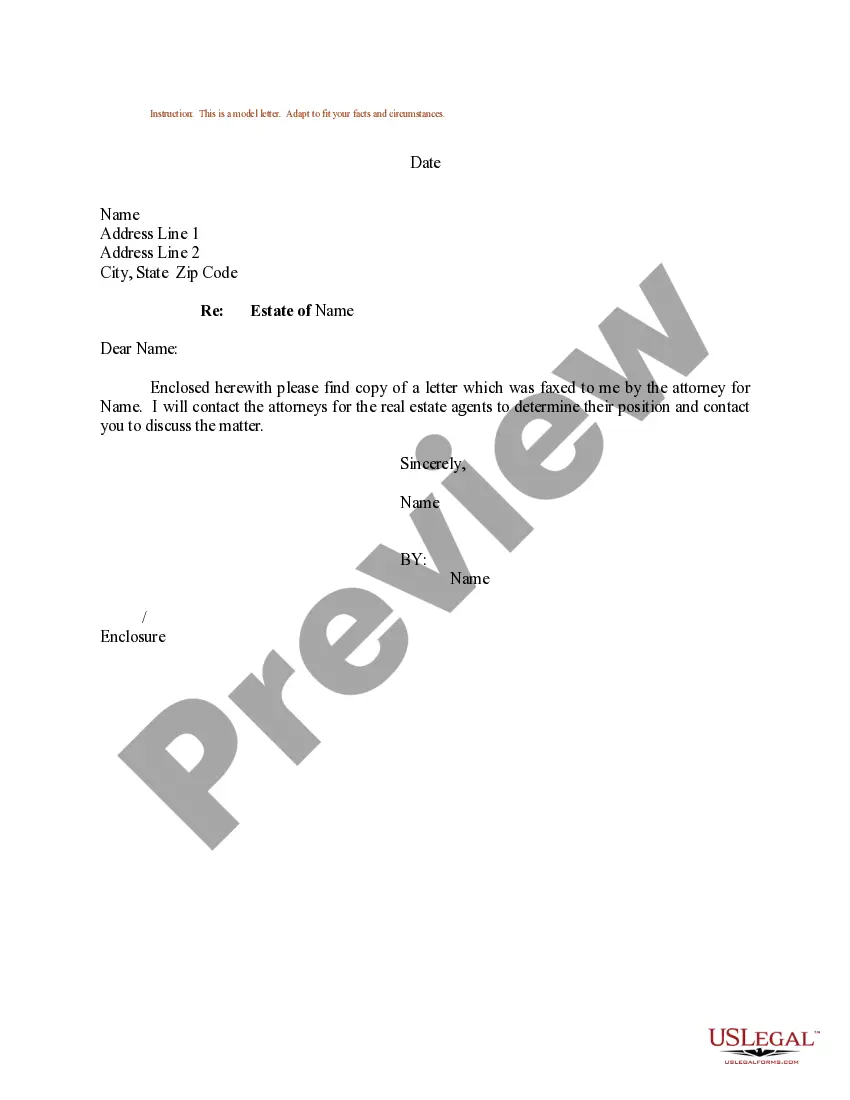
New Hampshire Sample Letter for Estate Settlement
Description

Get your form ready online
Our built-in tools help you complete, sign, share, and store your documents in one place.
Make edits, fill in missing information, and update formatting in US Legal Forms—just like you would in MS Word.
Download a copy, print it, send it by email, or mail it via USPS—whatever works best for your next step.
Sign and collect signatures with our SignNow integration. Send to multiple recipients, set reminders, and more. Go Premium to unlock E-Sign.
If this form requires notarization, complete it online through a secure video call—no need to meet a notary in person or wait for an appointment.
We protect your documents and personal data by following strict security and privacy standards.

Make edits, fill in missing information, and update formatting in US Legal Forms—just like you would in MS Word.

Download a copy, print it, send it by email, or mail it via USPS—whatever works best for your next step.

Sign and collect signatures with our SignNow integration. Send to multiple recipients, set reminders, and more. Go Premium to unlock E-Sign.

If this form requires notarization, complete it online through a secure video call—no need to meet a notary in person or wait for an appointment.

We protect your documents and personal data by following strict security and privacy standards.
Looking for another form?






How to fill out Sample Letter For Estate Settlement?
You may devote hours online searching for the legitimate record format that fits the federal and state requirements you require. US Legal Forms provides thousands of legitimate varieties which can be reviewed by experts. You can actually download or print the New Hampshire Sample Letter for Estate Settlement from my assistance.
If you currently have a US Legal Forms accounts, you may log in and then click the Download button. Next, you may complete, revise, print, or indication the New Hampshire Sample Letter for Estate Settlement. Each and every legitimate record format you get is yours forever. To have another backup associated with a bought form, visit the My Forms tab and then click the corresponding button.
If you use the US Legal Forms site initially, follow the straightforward directions under:
- Initially, make sure that you have selected the proper record format for the area/metropolis that you pick. See the form description to ensure you have picked the right form. If available, take advantage of the Preview button to look with the record format at the same time.
- If you wish to find another model of the form, take advantage of the Search area to get the format that suits you and requirements.
- Upon having discovered the format you would like, click on Get now to proceed.
- Select the prices prepare you would like, enter your credentials, and register for an account on US Legal Forms.
- Complete the financial transaction. You can utilize your bank card or PayPal accounts to fund the legitimate form.
- Select the structure of the record and download it to your gadget.
- Make adjustments to your record if possible. You may complete, revise and indication and print New Hampshire Sample Letter for Estate Settlement.
Download and print thousands of record layouts using the US Legal Forms website, which offers the most important collection of legitimate varieties. Use specialist and state-certain layouts to take on your company or specific needs.
Form popularity
FAQ
CLOSING THE ESTATE You must file it, along with a filing fee, with the Circuit Court Probate Division for its approval. Once the final account is accepted by the court, you should make the final distribution of assets.
Creditors have a certain time frame, typically six months from the date of appointment of the executor or administrator, to file their claims for payment. If the estate has enough assets, the debts are paid. If not, creditors are generally paid on a pro-rata basis.
Form NHJB-2145-Pe, a Petition for Estate Administration, opens a case in New Hampshire's probate system. If the affiant has not yet been appointed the administrator of the estate and there is no other application, this will make the affiant an administrator.
In New Hampshire, probate can take at least six months to allow creditors to file claims against the estate. On average, the probate process can take up to a year and a half. During the NH probate process, heirs are not able to access the money their loved ones wanted them to have.
Before the terms of a will can be accepted, the will must be proven in probate court. Probate is the court-supervised process of distributing the estate of a deceased person. A New Hampshire will must be filed with the probate court within 30 days of the decedent's death.
New Hampshire does not recognize an affidavit specifically suited to settling small estates per se; however, certain estates may be closed without the accounting, inventorying, and fiduciary bonds usually required when distributing a decedent's property and assets.
The Estate Settlement Timeline: There is no specific deadline for this in New Hampshire law, but it is generally best to do so within 30 days to prevent unnecessary delays in the probate process.
CLOSING THE ESTATE You must file it, along with a filing fee, with the Circuit Court Probate Division for its approval. Once the final account is accepted by the court, you should make the final distribution of assets.
General Information: A creditor of an estate is a person or entity (business or organization) to whom the decedent owed money. ?Decedent? is the term used to refer to the person who died.