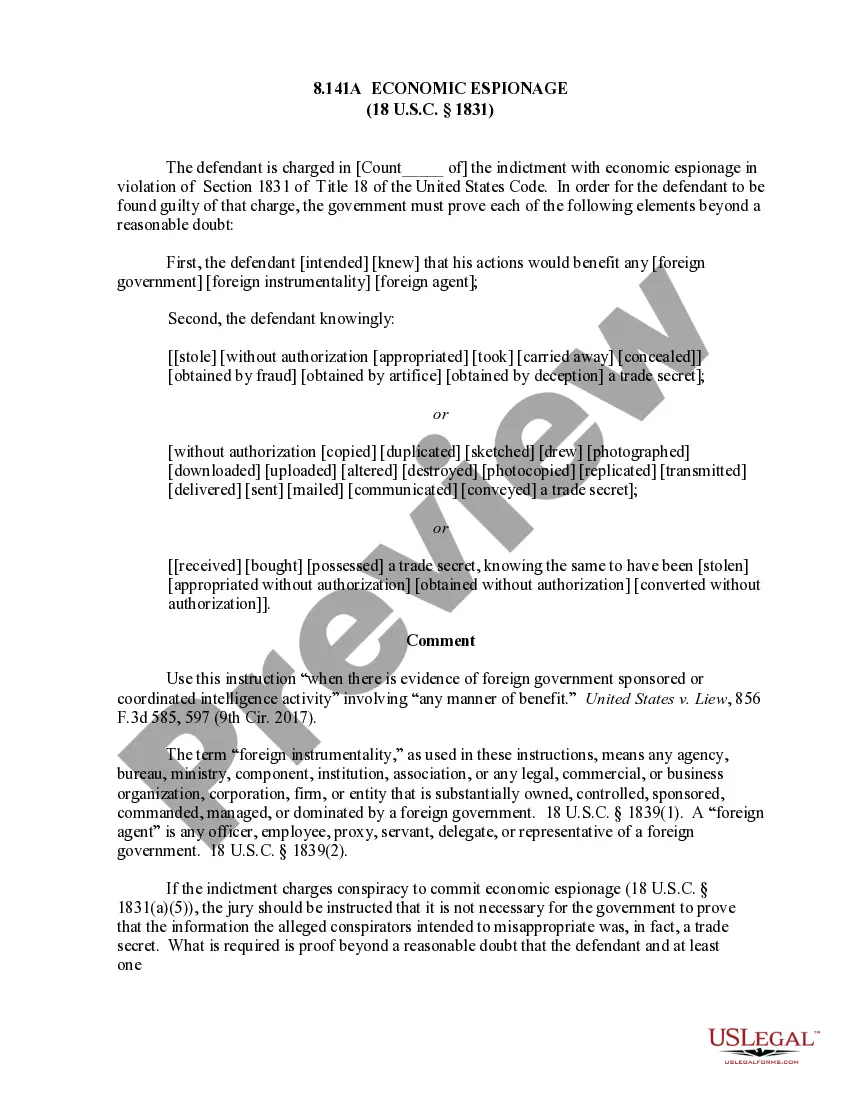
New Hampshire Exclusive License Agreement between Individual Inventor and Corporation
Description
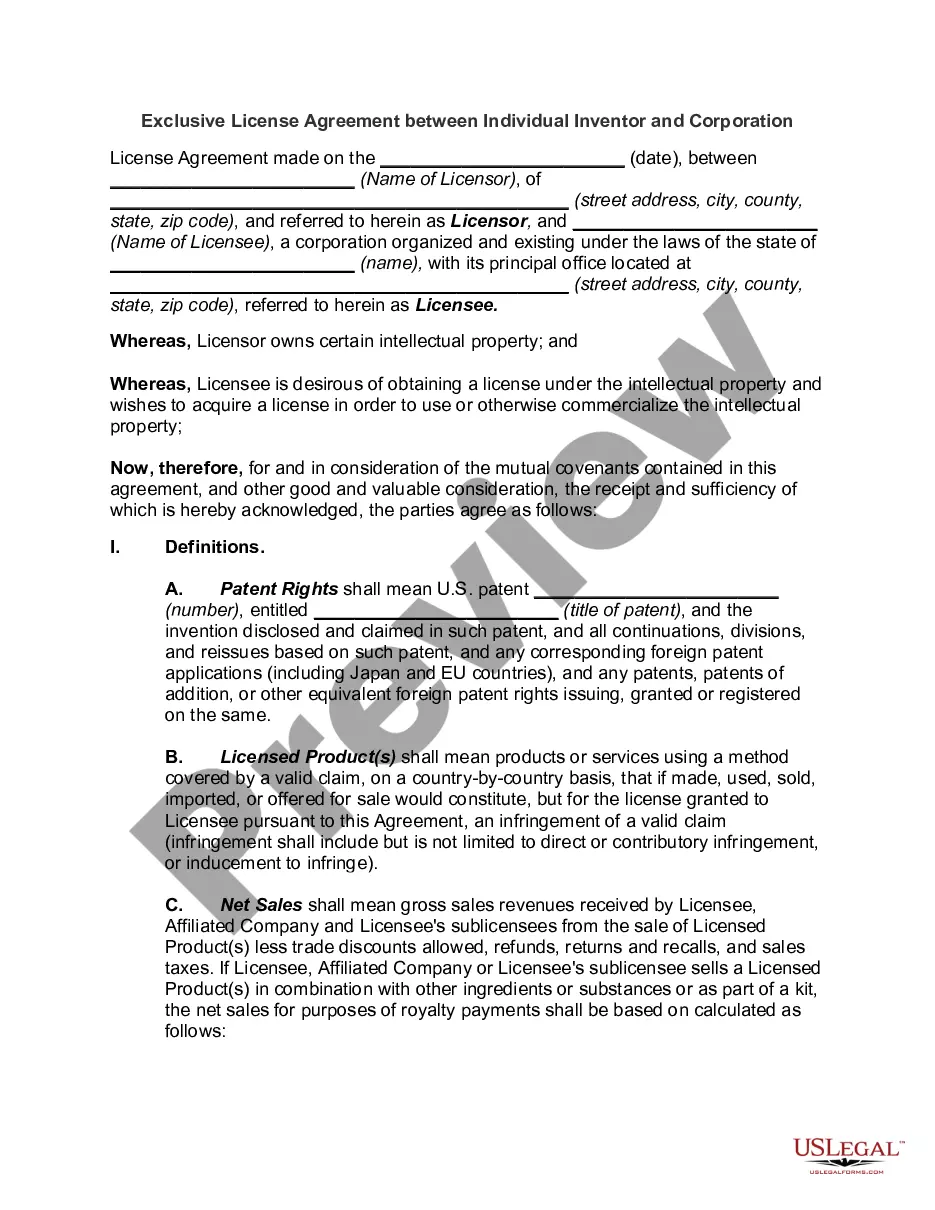


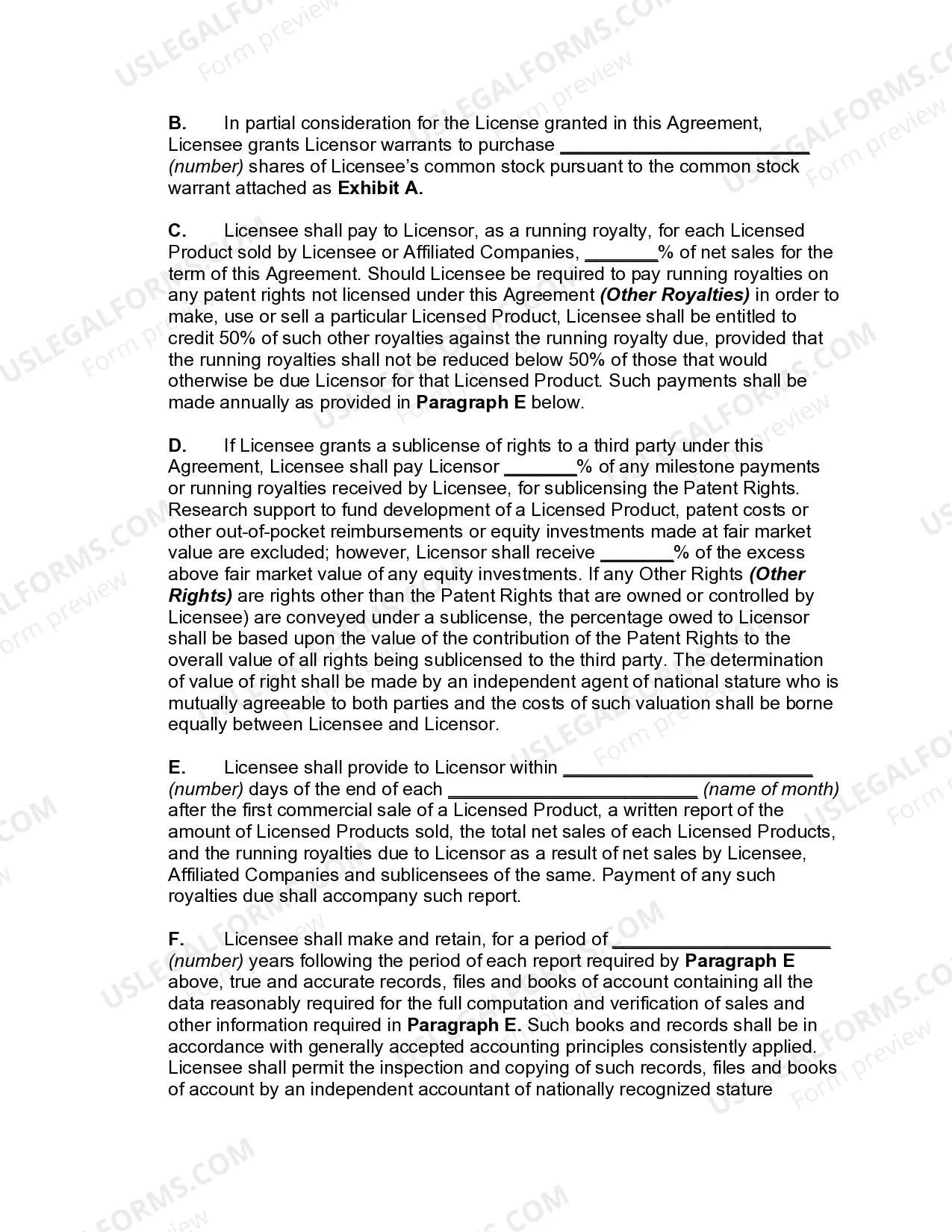
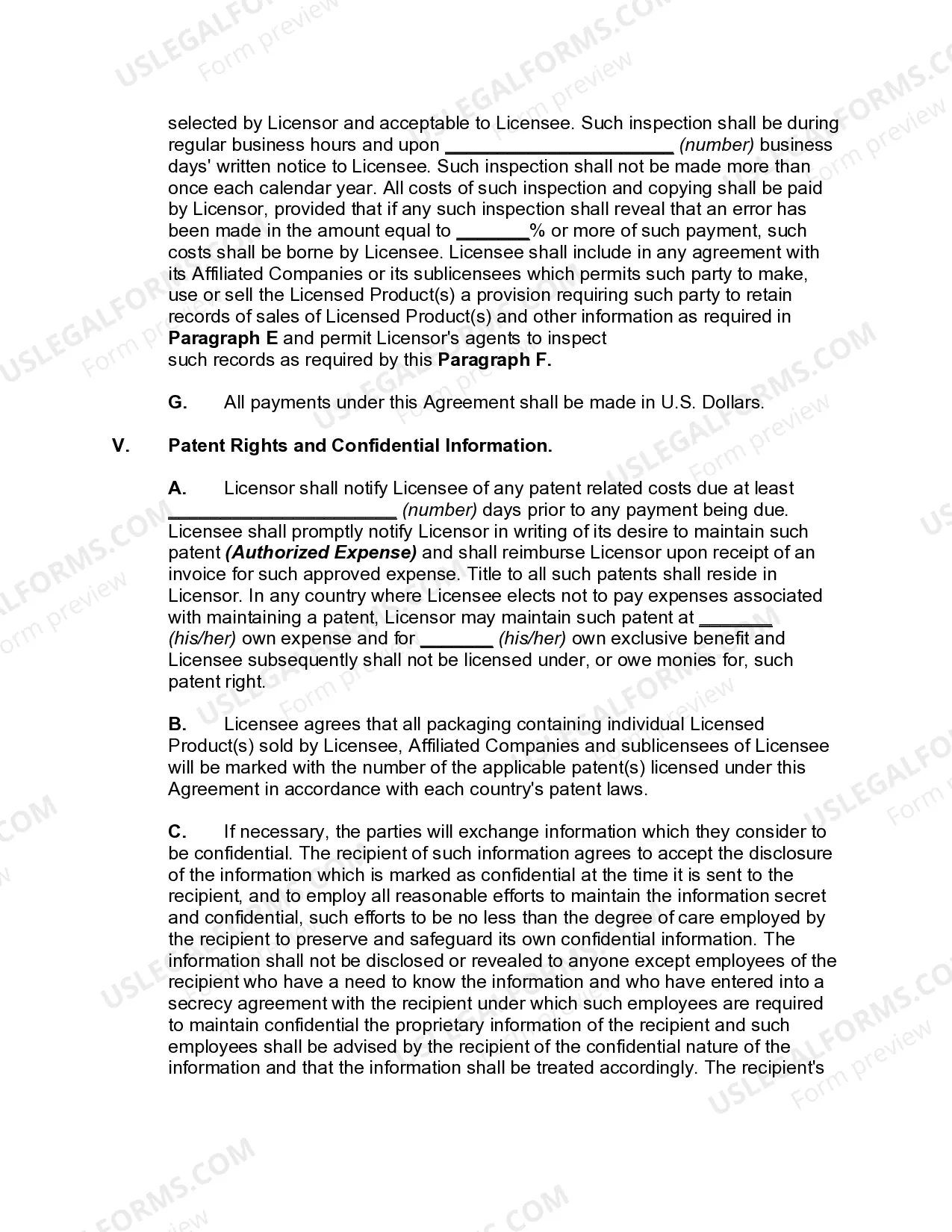




How to fill out Exclusive License Agreement Between Individual Inventor And Corporation?
Finding the correct legal document format can be challenging. Clearly, there are numerous templates available online, but how do you locate the legal document you require.
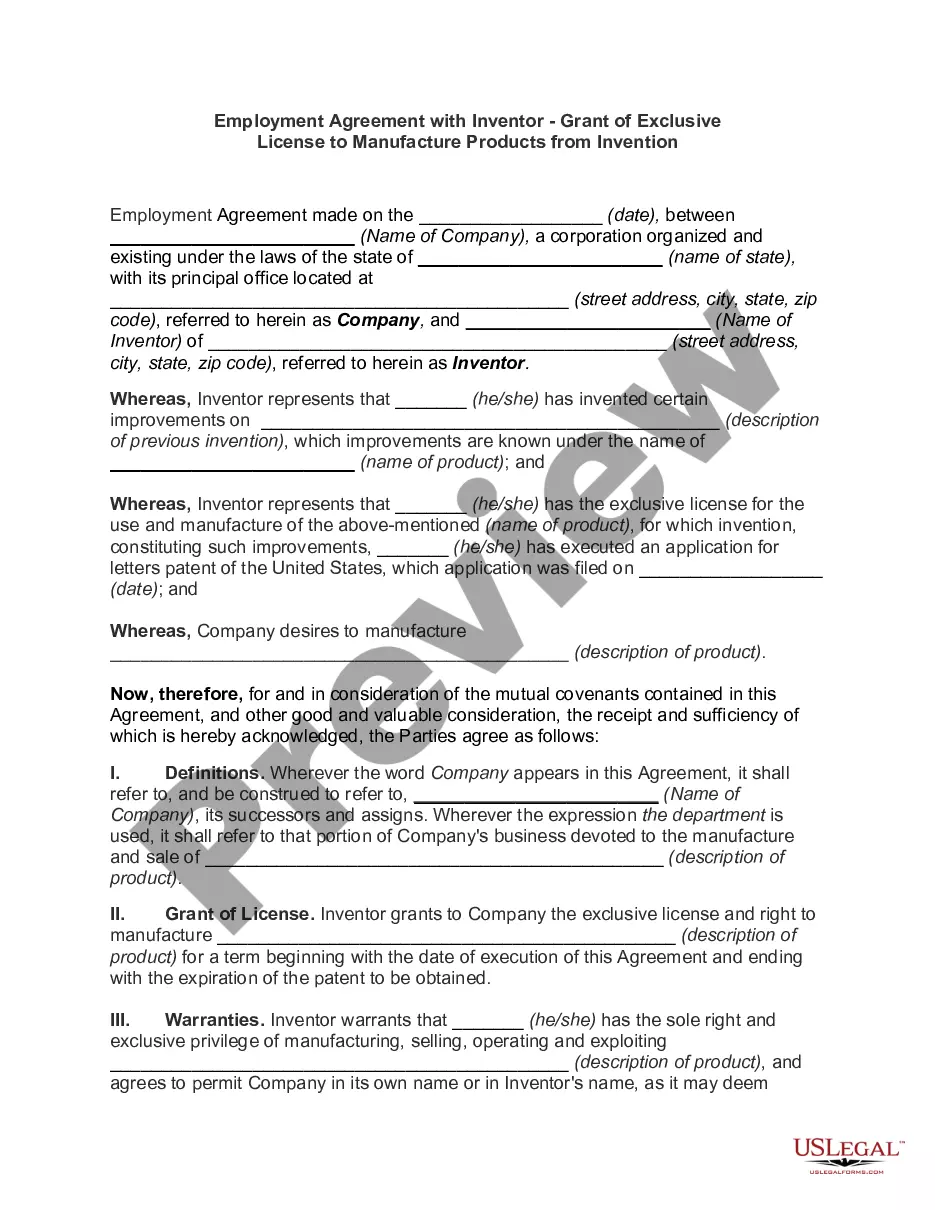
Utilize the US Legal Forms website. The service offers a multitude of templates, including the New Hampshire Exclusive License Agreement between Individual Inventor and Corporation, which you can use for both business and personal purposes.
All of the forms are verified by experts and comply with state and federal regulations.
If the form does not meet your requirements, utilize the Search field to find the appropriate document.
- If you are already registered, Log In to your account and click the Download button to obtain the New Hampshire Exclusive License Agreement between Individual Inventor and Corporation.
- Use your account to browse through the legal documents you have previously purchased.
- Go to the My documents section of your account to retrieve another copy of the document you need.
- If you are a new user of US Legal Forms, here are simple instructions for you to follow.
- First, ensure you have selected the correct form for your state/region.
- You can review the form using the Preview button and read the form description to confirm it is the right one for you.
Form popularity
FAQ
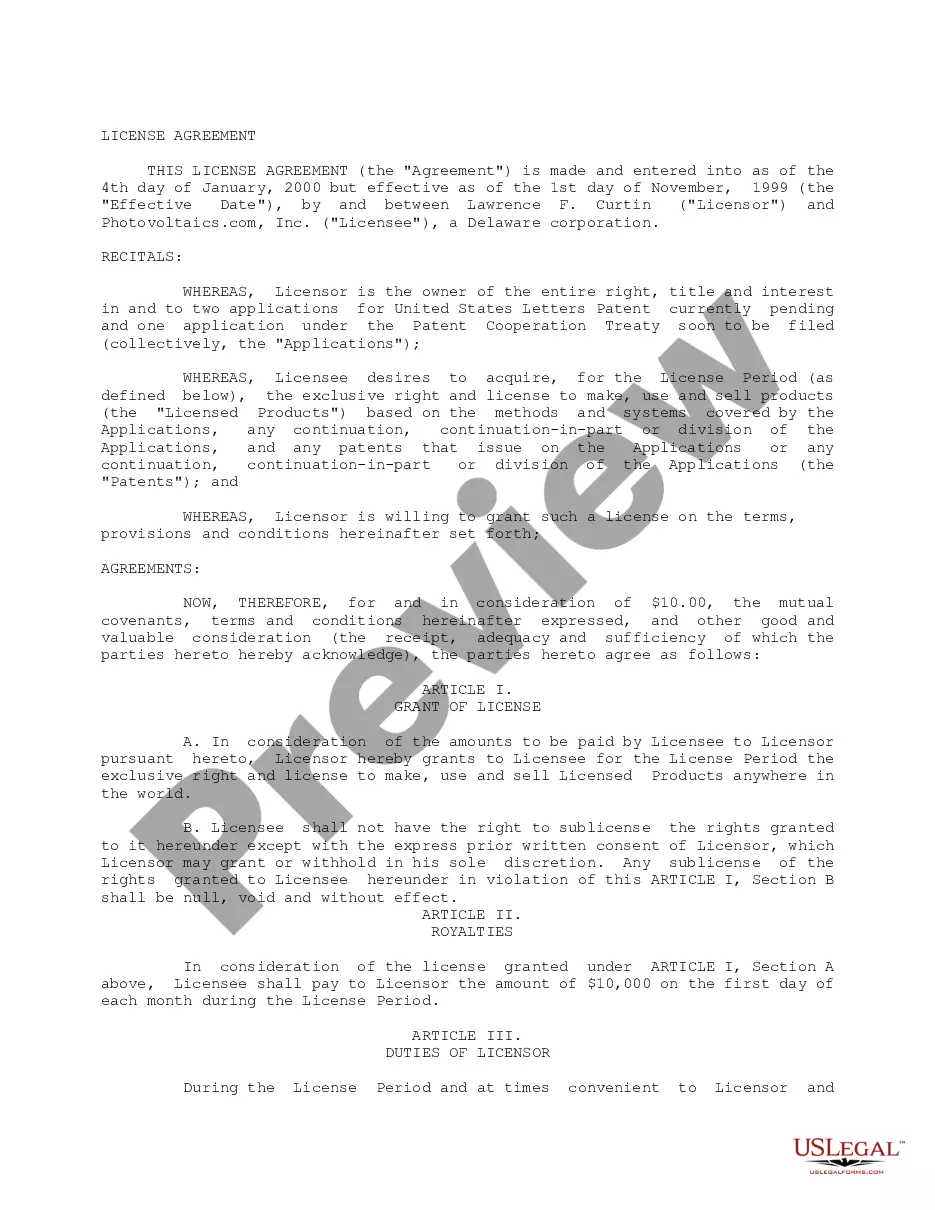
The two main types of licensing agreements are exclusive and non-exclusive agreements. An exclusive agreement ensures that only one party, such as in a New Hampshire Exclusive License Agreement between Individual Inventor and Corporation, holds the rights to use the licensed material. Conversely, a non-exclusive agreement allows multiple parties to use the same rights simultaneously.
If the employee was hired for the specific purpose of inventing a defined product or process, the invention belongs to the employer. General inventions made at the employer's expense but not at the employer's specification are often not the property of the employer.
Practitioners and licensing executives often refer to three basic types of voluntary licenses: non-exclusive, sole, and exclusive. A non-exclusive licence allows the licensor to retain the right to use the licensed property and the right to grant additional licenses to third parties.
Although the employer is afforded a nonexclusive license to use the invention without paying royalties to the employee, the invention actually is owned by the employee. This employee has the right to exploit it commercially, typically by selling or licensing it to other users.
Patents and the Employment Relationship: Who Owns Them? The general rule is that, in the absence of an agreement to the contrary, an employer is entitled to a nonexclusive license to use an invention devised by an employee while he or she was working for the employer.
Patents. A patent is an exclusive right granted for an invention. Generally speaking, a patent provides the patent owner with the right to decide how - or whether - the invention can be used by others.
Patent: A grant from the government giving an inventor the exclusive right or privilege to make, use, or sell his or her invention, as well as any logical embodiments of the invention, for a period of time (14 years if it is a design patent, which may be renewed, or 20 years from time of application which may also be
Types of licensing agreement The unique feature of this type of agreement is that even the licensor is excluded to use or exploit the licensed property during the term of the agreement. Copyright, trademark and patent licenses are the best examples of an exclusive license agreement.
Employers typically own intellectual property developed by their employees, but there is room for negotiation. Intellectual property rights can be a concern for employees regarding works created or developed within the workplace context.
Under the law, the general rule is that the copyright in and to the work product of an individual employee or independent contractor is owned by that individual unless an exception applies.