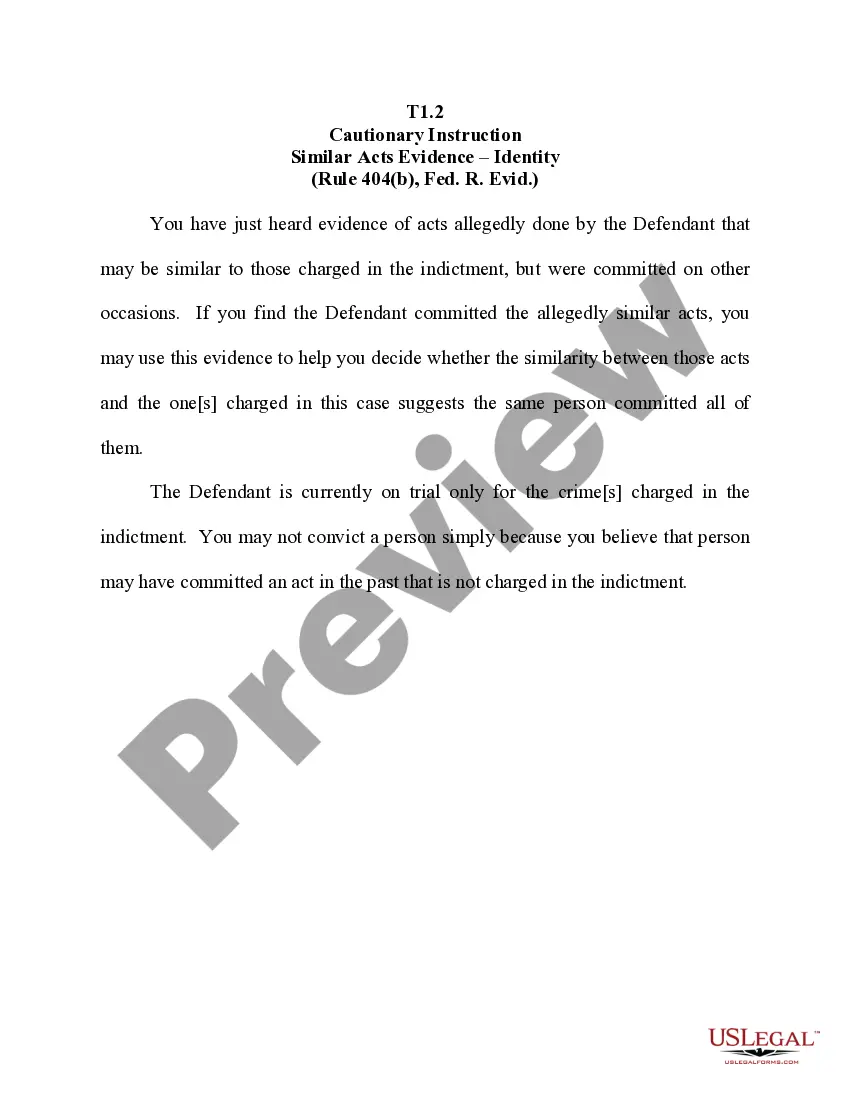
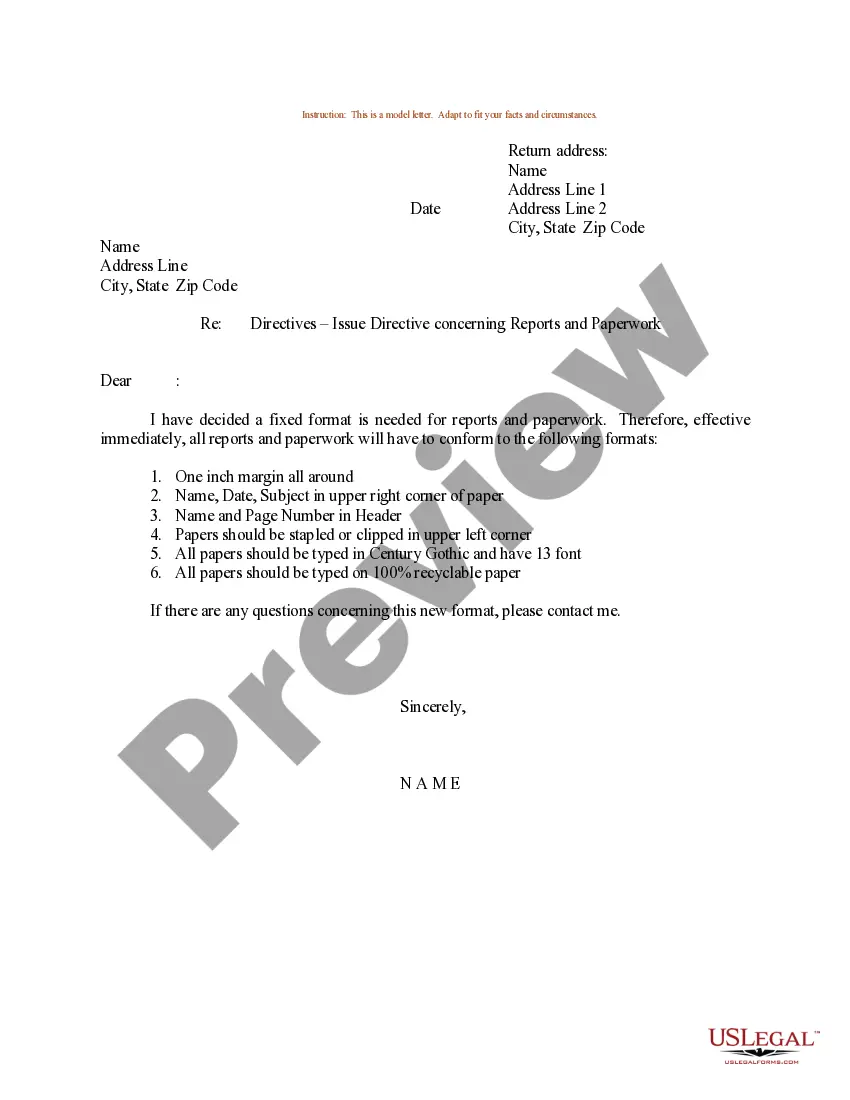
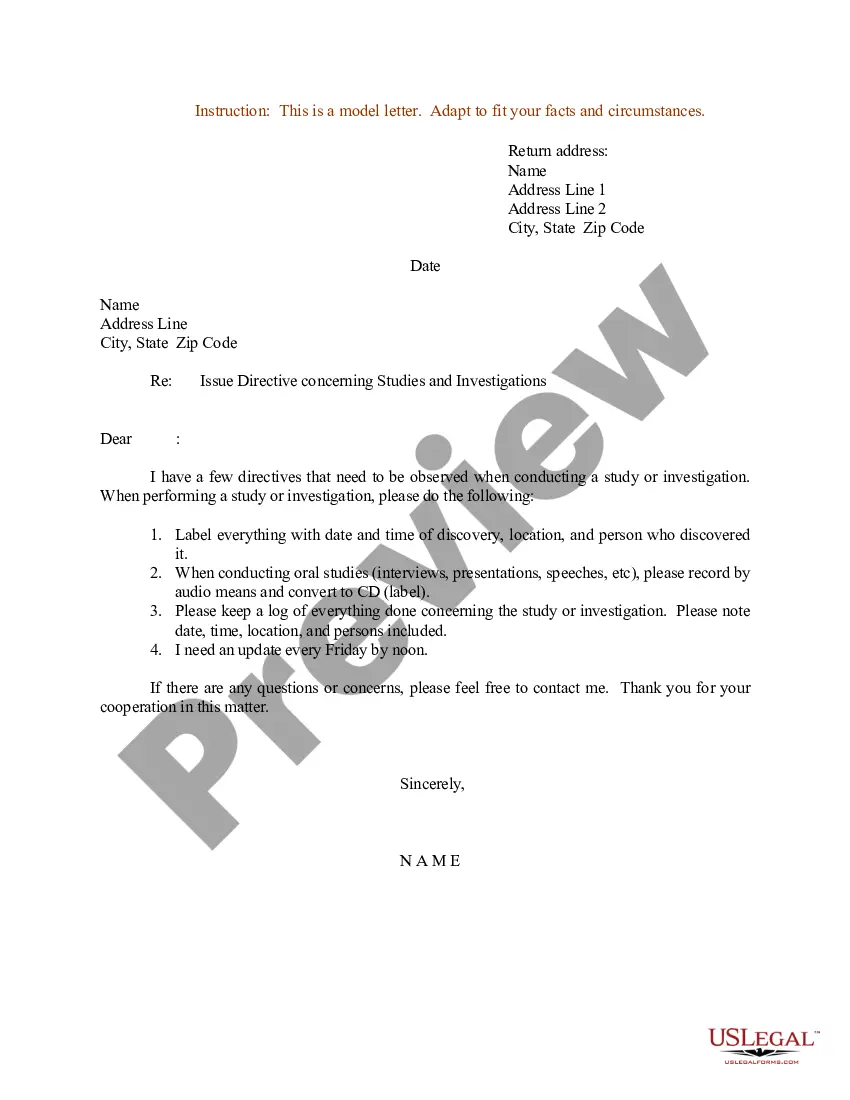
New Hampshire Sample Letter for Directive - Reports and Paperwork
Description
Get your form ready online
Our built-in tools help you complete, sign, share, and store your documents in one place.
Make edits, fill in missing information, and update formatting in US Legal Forms—just like you would in MS Word.
Download a copy, print it, send it by email, or mail it via USPS—whatever works best for your next step.
Sign and collect signatures with our SignNow integration. Send to multiple recipients, set reminders, and more. Go Premium to unlock E-Sign.
If this form requires notarization, complete it online through a secure video call—no need to meet a notary in person or wait for an appointment.
We protect your documents and personal data by following strict security and privacy standards.

Make edits, fill in missing information, and update formatting in US Legal Forms—just like you would in MS Word.

Download a copy, print it, send it by email, or mail it via USPS—whatever works best for your next step.

Sign and collect signatures with our SignNow integration. Send to multiple recipients, set reminders, and more. Go Premium to unlock E-Sign.

If this form requires notarization, complete it online through a secure video call—no need to meet a notary in person or wait for an appointment.

We protect your documents and personal data by following strict security and privacy standards.
Looking for another form?





How to fill out Sample Letter For Directive - Reports And Paperwork?
You can spend hours online searching for the legal document template that satisfies the federal and state requirements you need.
US Legal Forms offers a vast selection of legal forms that are vetted by professionals.
You can conveniently download or print the New Hampshire Sample Letter for Directive - Reports and Paperwork from the service.
If available, use the Review button to examine the document template as well.
- If you already possess a US Legal Forms account, you can Log In and then click the Obtain button.
- Then, you can complete, edit, print, or sign the New Hampshire Sample Letter for Directive - Reports and Paperwork.
- Each legal document template you acquire is yours for life.
- To obtain another copy of the purchased form, navigate to the My documents tab and click the appropriate button.
- If you are using the US Legal Forms website for the first time, follow the straightforward instructions below.
- First, ensure that you have selected the correct document template for the county/city of your choice.
- Check the form description to confirm that you have selected the right form.
Form popularity
FAQ
Complete An Advance Health Care Directive Form. Have it notarized or signed by two witnesses who are not your power of attorney. Give a copy to your doctor, power of attorney and family. If necessary, complete a Provider Orders for Life Sustaining Treatment (POLST) Form.
A personal directive is a legal document you make in case you cannot make your own personal decisions in the future. A personal directive: is optional, voluntary and highly recommended.
Additionally, when you are ready to fill out your advance directive, your health care team might be able to help.The living will.Durable power of attorney for health care/Medical power of attorney.POLST (Physician Orders for Life-Sustaining Treatment)Do not resuscitate (DNR) orders.Organ and tissue donation.
A specific and common example of an advance directive is a do not resuscitate order (or DNR), which guides care only if your heart stops beating (cardiac arrest) or you are no longer breathing.
What to Include in Your Advance Directive. The name and contact information of your healthcare agent or proxy. Answers to specific questions about your preferences for care if you become unable to speak for yourself. The forms and questions asked vary a bit from state to state.
The most common types of advance directives are the living will and the durable power of attorney for health care (sometimes known as the medical power of attorney).
Some of the choices you may put in your directive are:The person you want to be your health agent and make decisions about your health care for you.Your goals, values and preferences about health care.The types of medical treatment you want or don't want.Where you would like to receive care.More items...
Making Your Advance Care Wishes Known. There are two main elements in an advance directivea living will and a durable power of attorney for health care. There are also other documents that can supplement your advance directive.
What to Include in Your Advance Directive. The name and contact information of your healthcare agent or proxy. Answers to specific questions about your preferences for care if you become unable to speak for yourself. The forms and questions asked vary a bit from state to state.
Advance directives generally fall into three categories: living will, power of attorney and health care proxy.