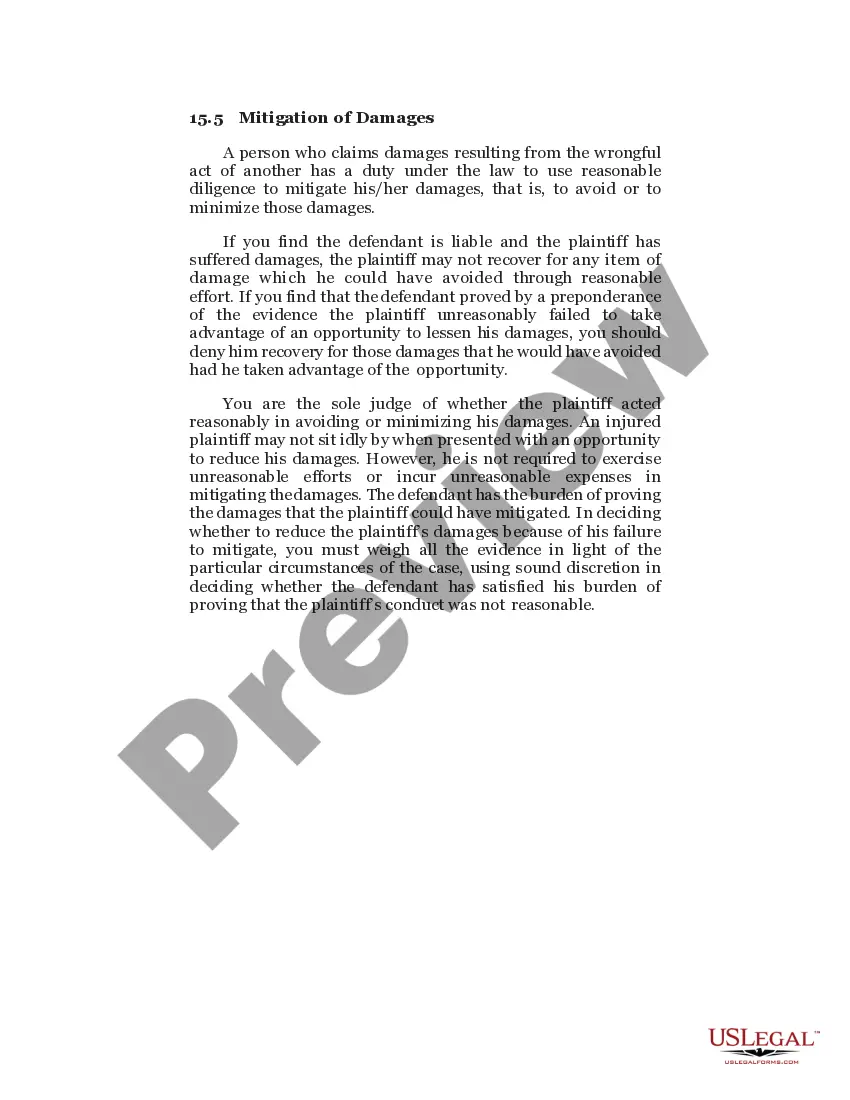
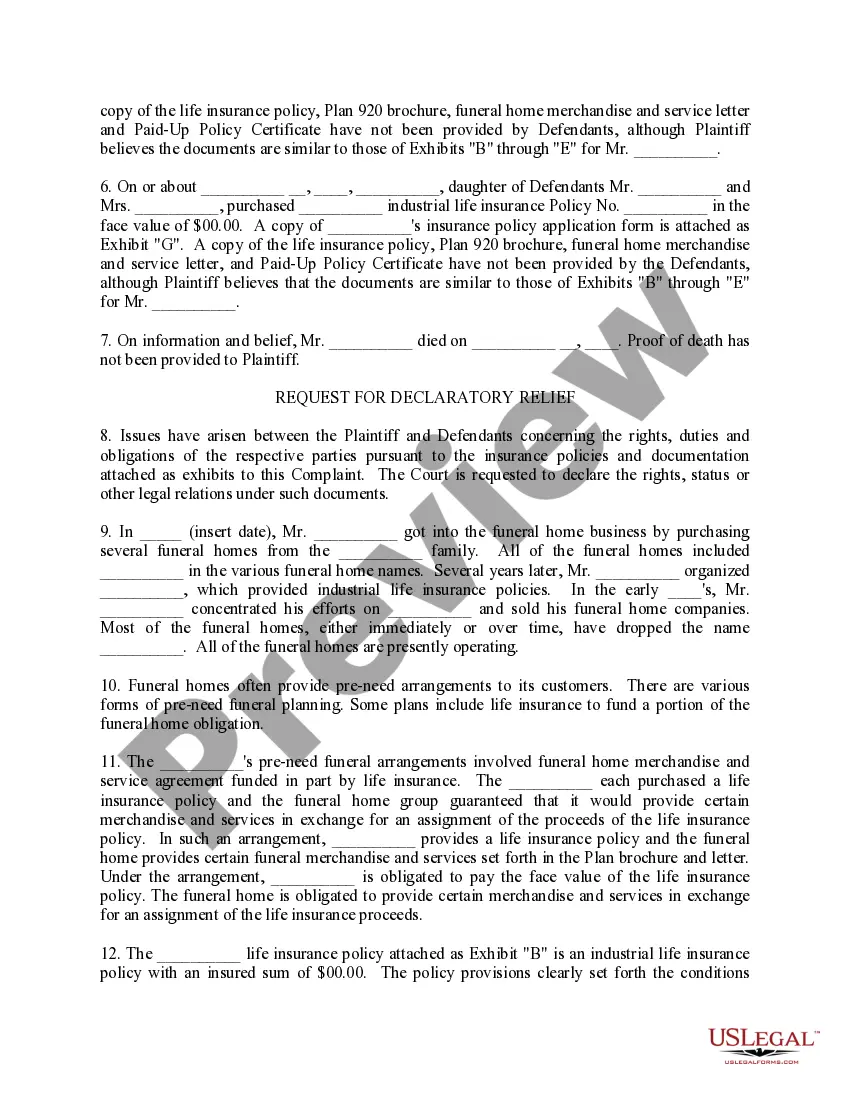
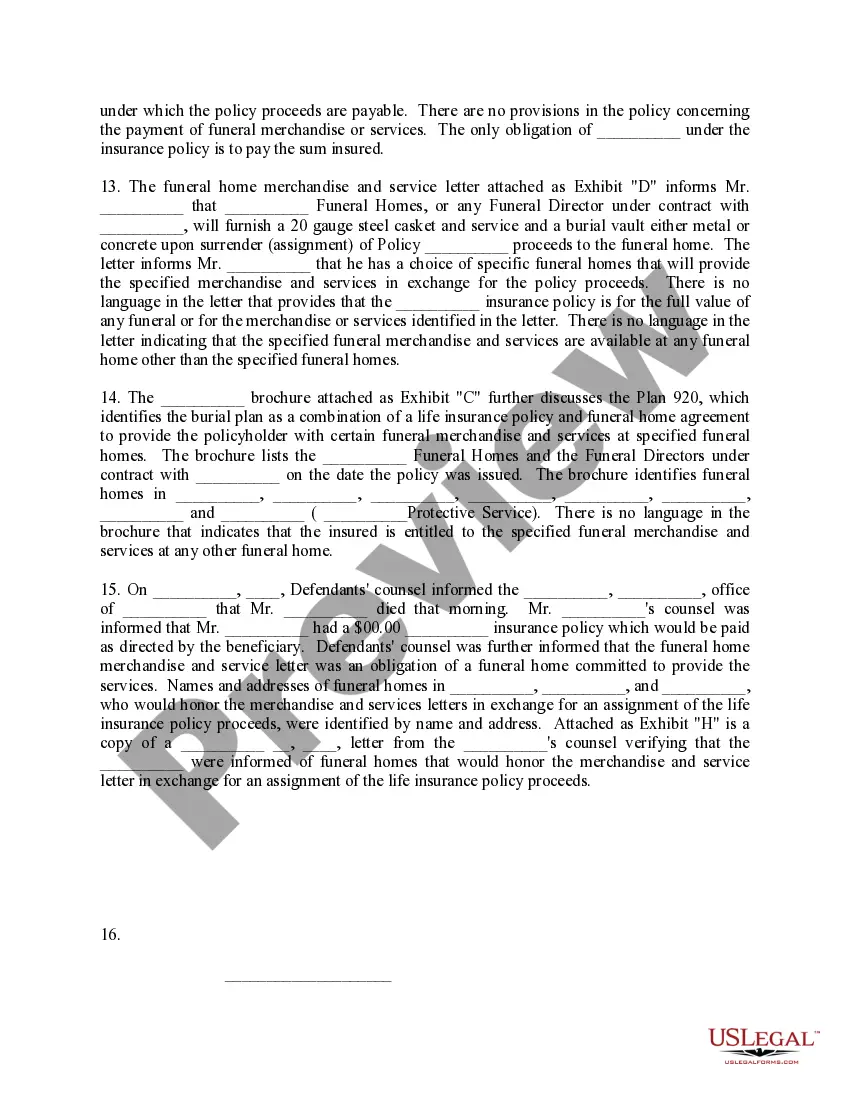
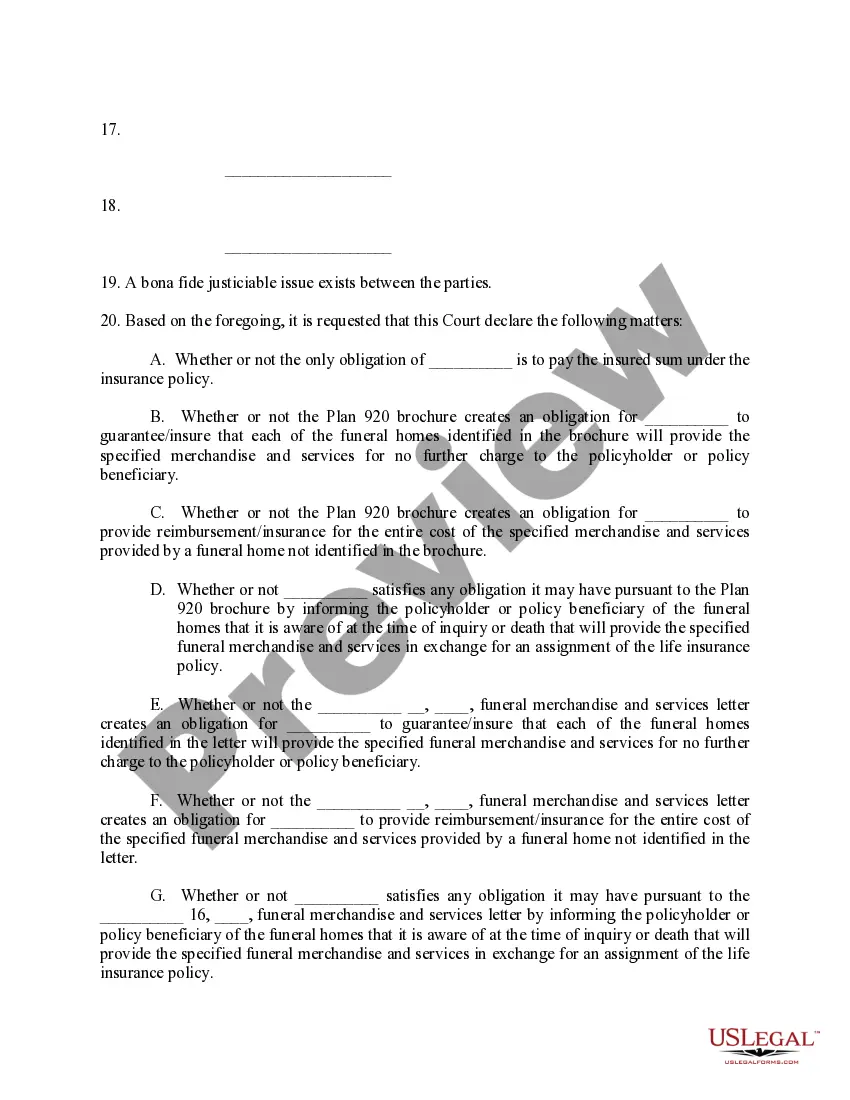
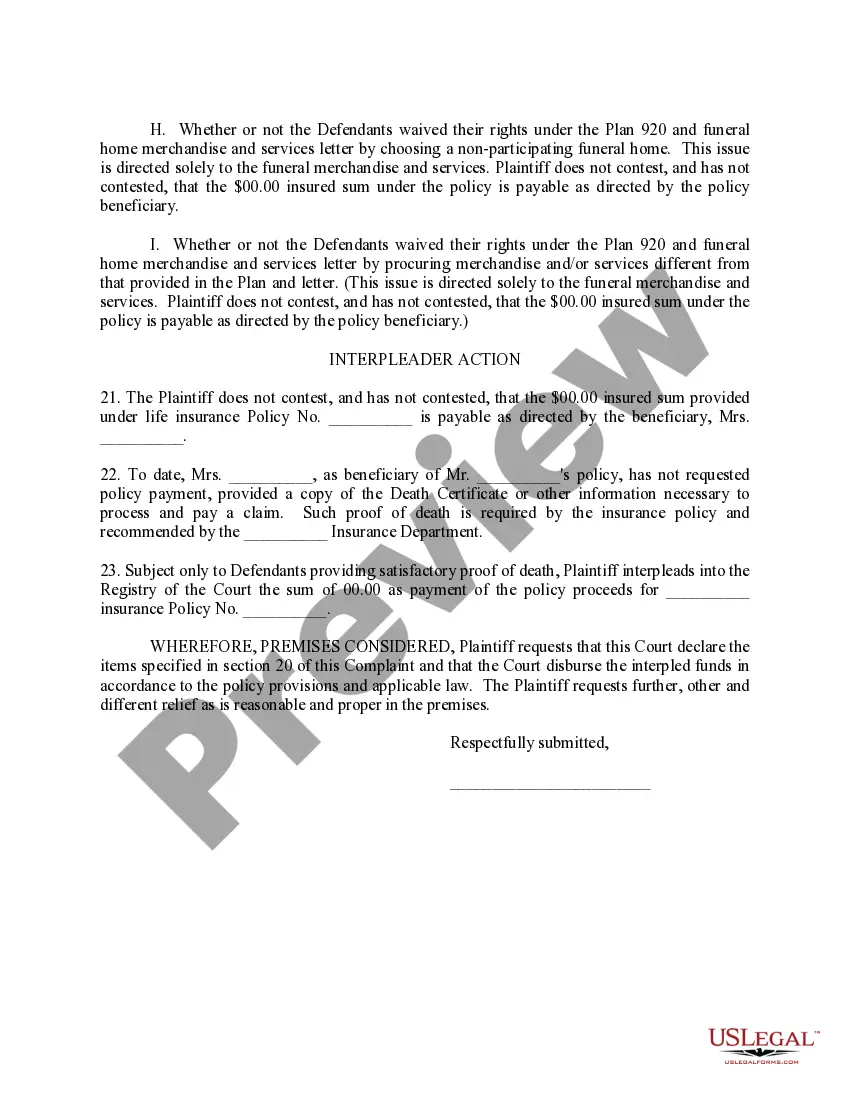
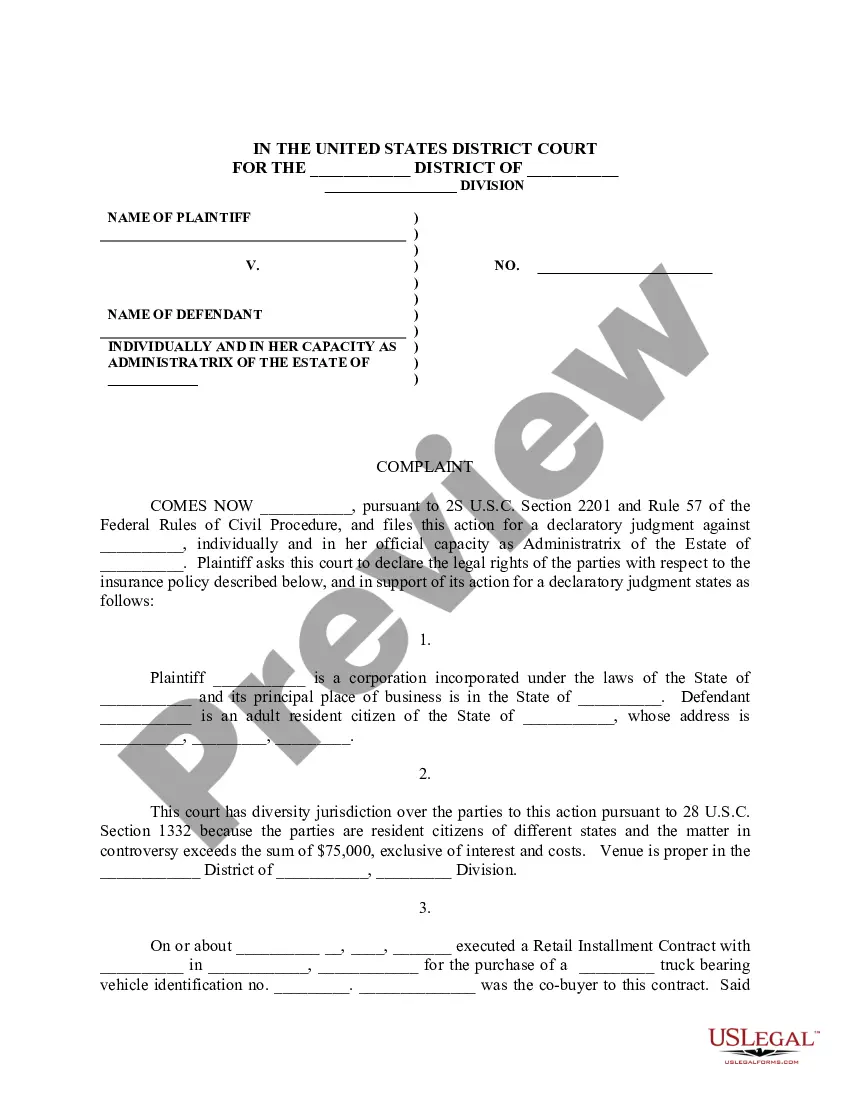
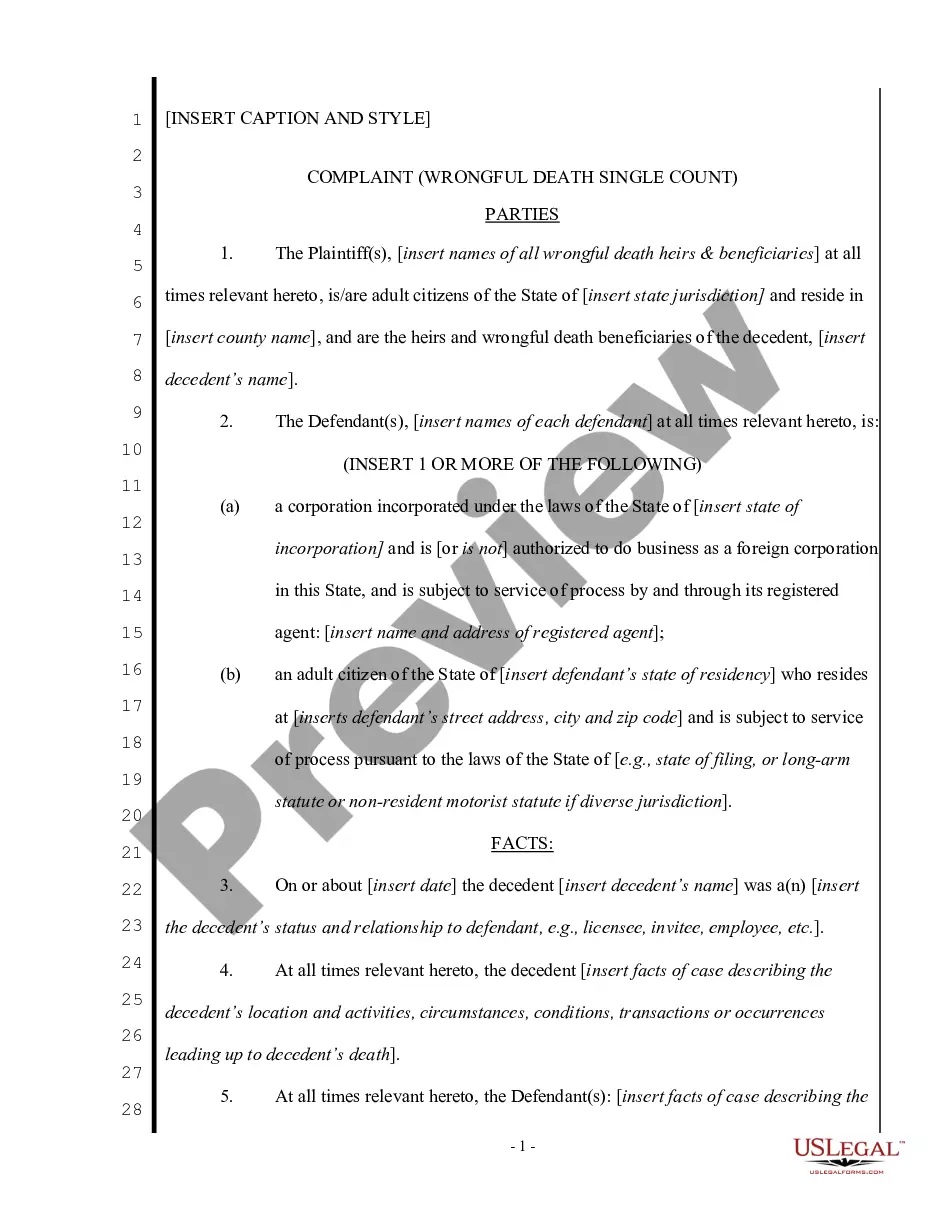
New Hampshire Complaint for Declaratory Judgment and Interpleader Action or Burial Policy
Description


Get your form ready online
Our built-in tools help you complete, sign, share, and store your documents in one place.
Make edits, fill in missing information, and update formatting in US Legal Forms—just like you would in MS Word.
Download a copy, print it, send it by email, or mail it via USPS—whatever works best for your next step.
Sign and collect signatures with our SignNow integration. Send to multiple recipients, set reminders, and more. Go Premium to unlock E-Sign.
If this form requires notarization, complete it online through a secure video call—no need to meet a notary in person or wait for an appointment.
We protect your documents and personal data by following strict security and privacy standards.

Make edits, fill in missing information, and update formatting in US Legal Forms—just like you would in MS Word.

Download a copy, print it, send it by email, or mail it via USPS—whatever works best for your next step.

Sign and collect signatures with our SignNow integration. Send to multiple recipients, set reminders, and more. Go Premium to unlock E-Sign.

If this form requires notarization, complete it online through a secure video call—no need to meet a notary in person or wait for an appointment.

We protect your documents and personal data by following strict security and privacy standards.
Looking for another form?





How to fill out Complaint For Declaratory Judgment And Interpleader Action Or Burial Policy?
US Legal Forms - one of the largest collections of legal documents in the country - offers a diverse selection of legal document templates that you can download or print. By using the website, you can find thousands of forms for business and personal purposes, organized by categories, states, or keywords.
You can access the most recent versions of forms such as the New Hampshire Complaint for Declaratory Judgment and Interpleader Action or Burial Policy within moments. If you already have an account, Log In and obtain the New Hampshire Complaint for Declaratory Judgment and Interpleader Action or Burial Policy from your US Legal Forms library. The Download button will appear on every form you view. You can access all previously acquired forms from the My documents section of your account.
If you want to use US Legal Forms for the first time, here are straightforward instructions to get started: Make sure you have selected the correct form for your city/state. Click the Review button to check the form's content. Review the form description to ensure you have chosen the right one. If the form does not meet your requirements, utilize the Search box at the top of the page to find one that does. If you are satisfied with the form, confirm your choice by clicking the Purchase now button. Then, select your preferred pricing plan and provide your details to create an account. Complete the transaction. Use your credit card or PayPal account to finalize the transaction. Select the format and download the form to your device. Make adjustments. Fill out, edit, print, and sign the downloaded New Hampshire Complaint for Declaratory Judgment and Interpleader Action or Burial Policy. Each format you added to your account has no expiration date and is yours permanently. Therefore, if you wish to download or print another copy, simply go to the My documents section and click on the form you need.
- Access the New Hampshire Complaint for Declaratory Judgment and Interpleader Action or Burial Policy with US Legal Forms, one of the most extensive libraries of legal document templates.
- Utilize a wide array of professional and state-specific templates that cater to your business or personal needs and requirements.
Form popularity
FAQ
Those four types are 1) intrusion on a person's seclusion or solitude; 2) public disclosure of embarrassing private facts about a person; 3) publicity that places a person in a false light in the public eye; and 4) appropriation, for the defendant's advantage, of the person's name or likeness.
A WMC victim could potentially allege any of these four types of invasion of privacy. (a) One who intentionally intrudes, physically or otherwise, (b) upon the solitude or seclusion of another or his private affairs or concerns, (c) the intrusion is highly offensive to a reasonable person.
Another example is that an escrow holder in a real estate transaction holds a deposit and the parties are arguing about whether one or the other should receive the deposit back. In such cases, the escrow holder will often file an interpleader action.
Invasion of privacy involves the infringement upon an individual's protected right to privacy through a variety of intrusive or unwanted actions. Such invasions of privacy can range from physical encroachments onto private property to the wrongful disclosure of confidential information or images.
The right of privacy is invaded when there is: unreasonable intrusion upon the seclusion of another, appropriation of the other's name or likeness, unreasonable publicity given to the other's private life, and.
An individual's right to live free from governmental intrusion in private or personal information is natural, essential, and inherent. [Art.] 3.