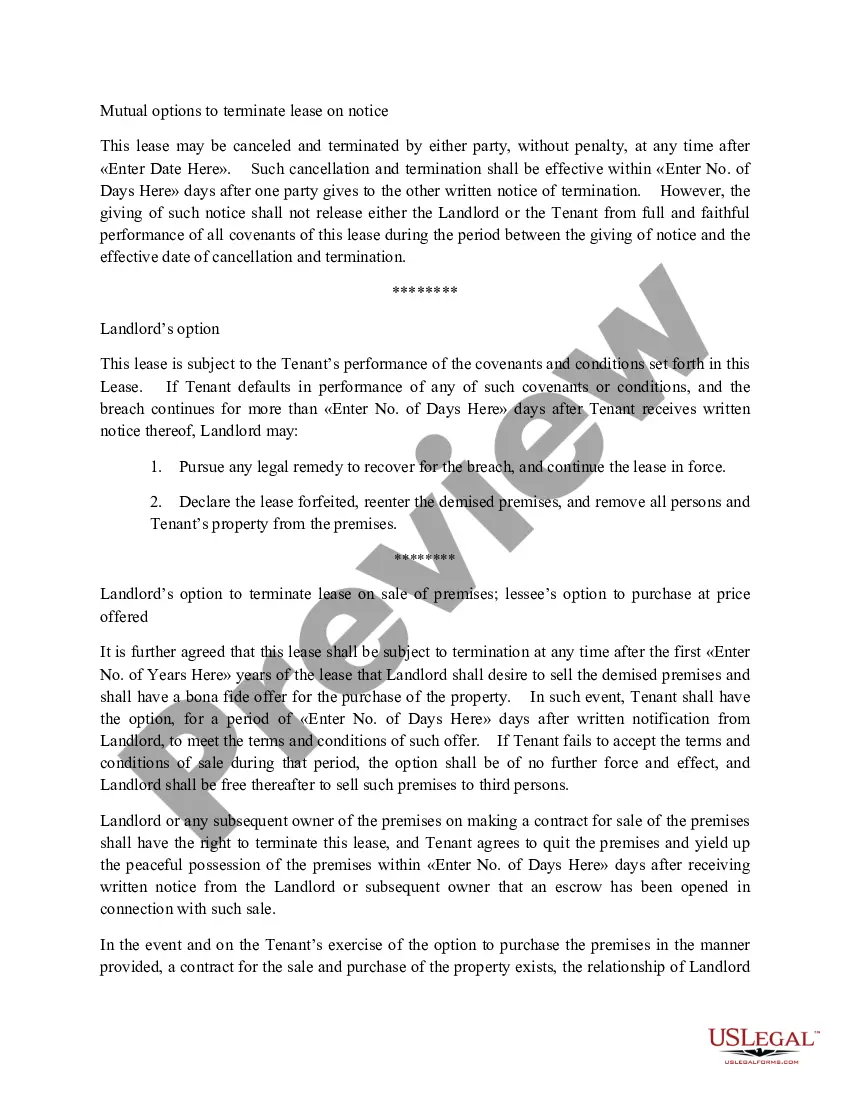
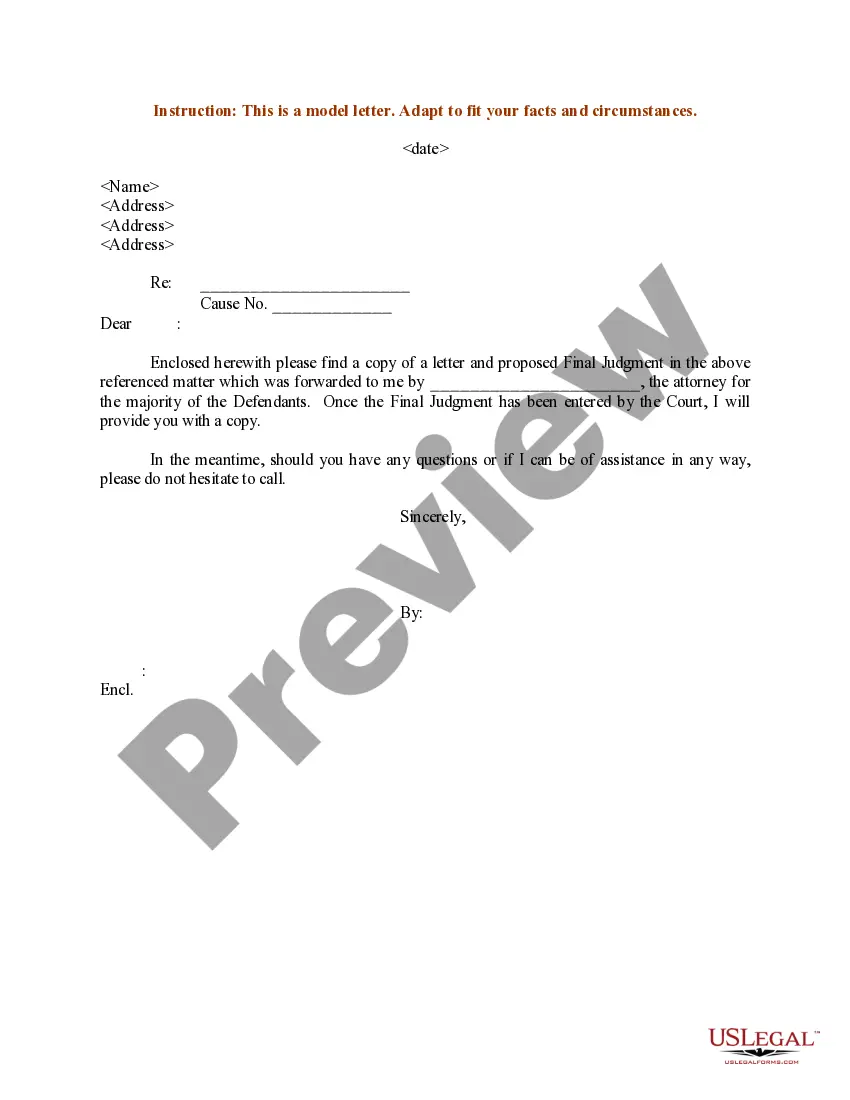
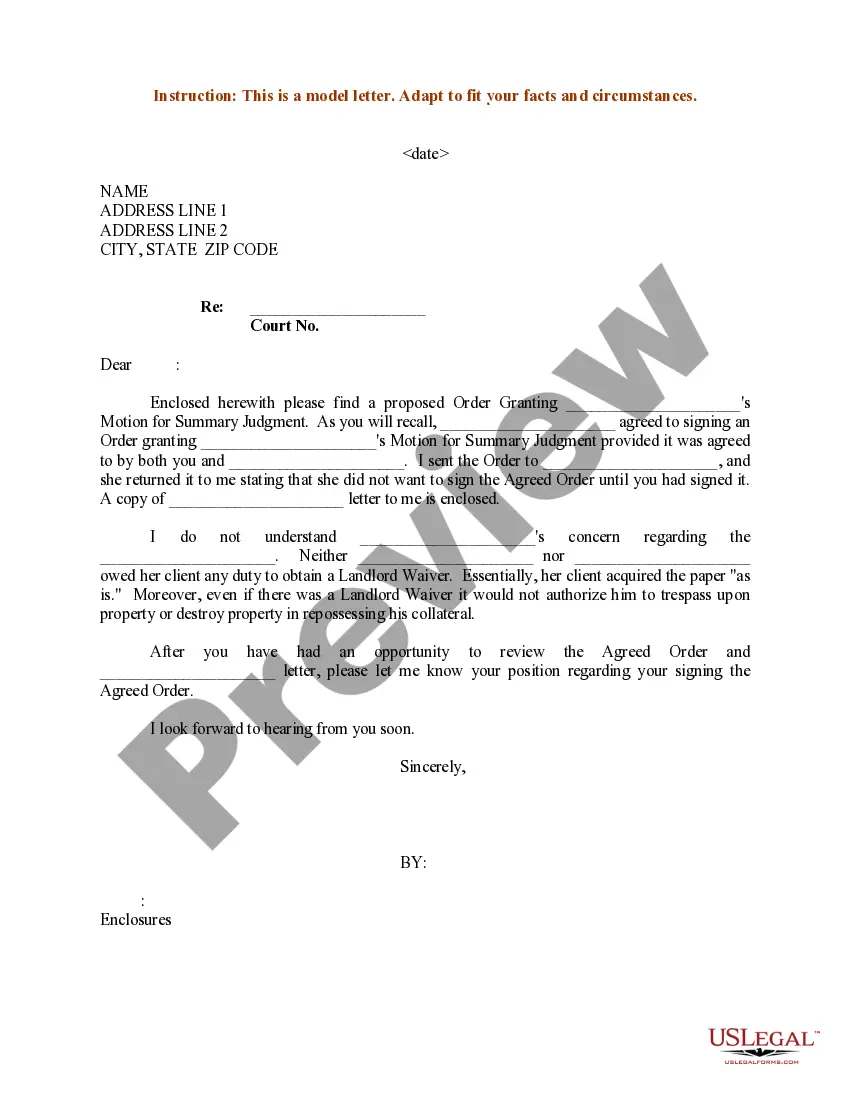
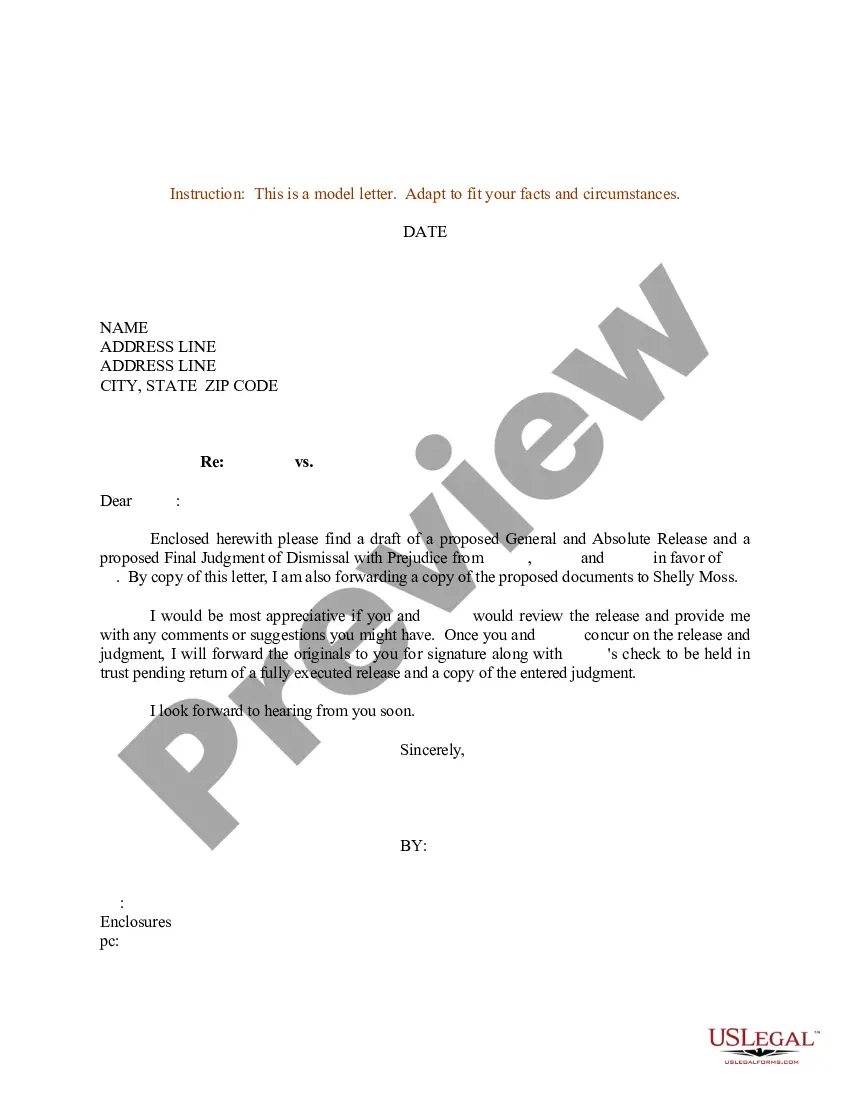
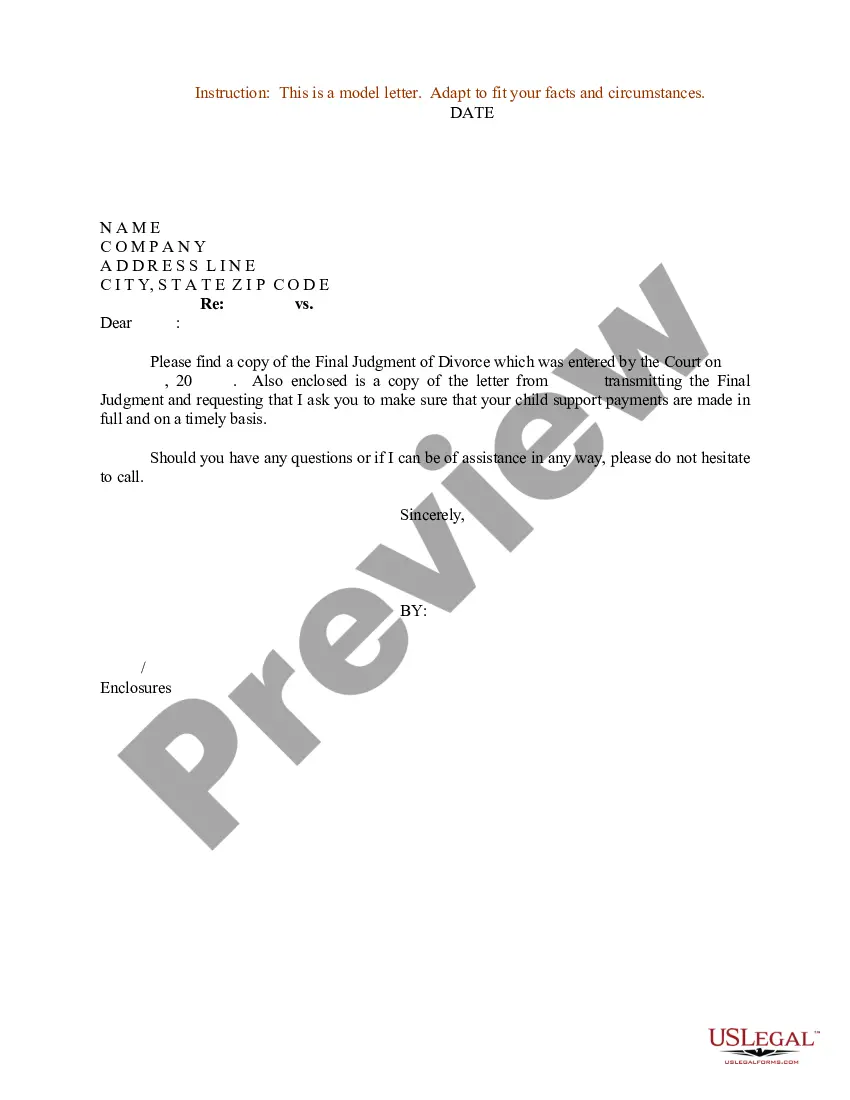
New Hampshire Sample Letter for Proposed Final Judgment
Description


Get your form ready online
Our built-in tools help you complete, sign, share, and store your documents in one place.
Make edits, fill in missing information, and update formatting in US Legal Forms—just like you would in MS Word.
Download a copy, print it, send it by email, or mail it via USPS—whatever works best for your next step.
Sign and collect signatures with our SignNow integration. Send to multiple recipients, set reminders, and more. Go Premium to unlock E-Sign.
If this form requires notarization, complete it online through a secure video call—no need to meet a notary in person or wait for an appointment.
We protect your documents and personal data by following strict security and privacy standards.

Make edits, fill in missing information, and update formatting in US Legal Forms—just like you would in MS Word.

Download a copy, print it, send it by email, or mail it via USPS—whatever works best for your next step.

Sign and collect signatures with our SignNow integration. Send to multiple recipients, set reminders, and more. Go Premium to unlock E-Sign.

If this form requires notarization, complete it online through a secure video call—no need to meet a notary in person or wait for an appointment.

We protect your documents and personal data by following strict security and privacy standards.
Looking for another form?



How to fill out Sample Letter For Proposed Final Judgment?
US Legal Forms - one of the largest collections of legal documents in the United States - provides a variety of legal document templates that you can download or print.
By using the website, you can obtain thousands of forms for business and personal purposes, organized by type, state, or keywords. You can find the latest versions of forms such as the New Hampshire Sample Letter for Proposed Final Judgment in moments.
If you already have a monthly subscription, Log In and download the New Hampshire Sample Letter for Proposed Final Judgment from the US Legal Forms library. The Download option will appear on every form you view. You have access to all previously acquired forms in the My documents section of your account.
Process the transaction. Use a Visa or Mastercard or PayPal account to complete the transaction.
Select the format and download the form to your device. Edit. Fill out, modify, print, and sign the acquired New Hampshire Sample Letter for Proposed Final Judgment. Each template you add to your account has no expiration date and is yours forever. So, if you wish to download or print another copy, simply go to the My documents section and click on the form you need. Access the New Hampshire Sample Letter for Proposed Final Judgment with US Legal Forms, the most extensive collection of legal document templates. Utilize thousands of professional and state-specific templates that meet your business or personal needs and requirements.
- Ensure you have chosen the correct form for your city/state.
- Click on the Preview option to review the form's content.
- Check the form details to confirm that you have selected the right document.
- If the form does not meet your requirements, use the Search field at the top of the screen to find one that does.
- If you are satisfied with the form, confirm your selection by clicking on the Buy now button.
- Next, choose the payment plan you prefer and provide your information to register for an account.
Form popularity
FAQ
Rule 9. Answers; Defenses; Forms of Denials. (a) An Answer or other responsive pleading shall be filed with the court within 30 days after the person filing said pleading has been served with the pleading to which the Answer or response is made.
Summary judgment is granted when the facts can be decided upon without needing to go to trial, where the opposing party would lose due to a lack of evidence. If it's not clear that there is no more evidence, then summary judgment must be denied.
Civil rights cases concluded in U.S. district courts, by disposition, 1990?2006. From a tactical perspective, there are two basic types of summary-judgment motions. One requires a full evidentiary presentation, and the other requires only a more limited, targeted one.
Rule 19 contemplates the transfer of whole cases, or of particular proceedings in cases, even in the absence of a related pending case or proceeding in the county to which transfer is sought.
Stated differently, to successfully defend against summary judgment the non-moving party (you) should seek to demonstrate that indeed there are material facts in dispute. Alternatively, the non-moving party (you) can argue that the undisputed facts support a judgment as a matter of law in your favor.
If it appears to the Court at any time that any Motion for summary judgment or affidavit has not been presented in good faith or has been presented solely for the purpose of delay, the Court shall forthwith order the Party and/or the Attorney presenting it to pay to the other Party the amount of the reasonable expenses ...
Depositions. (a) A party may take as many depositions as necessary to adequately prepare a case for trial so long as the combined total of deposition hours does not exceed 20 unless otherwise stipulated by counsel or ordered by the court for good cause shown.