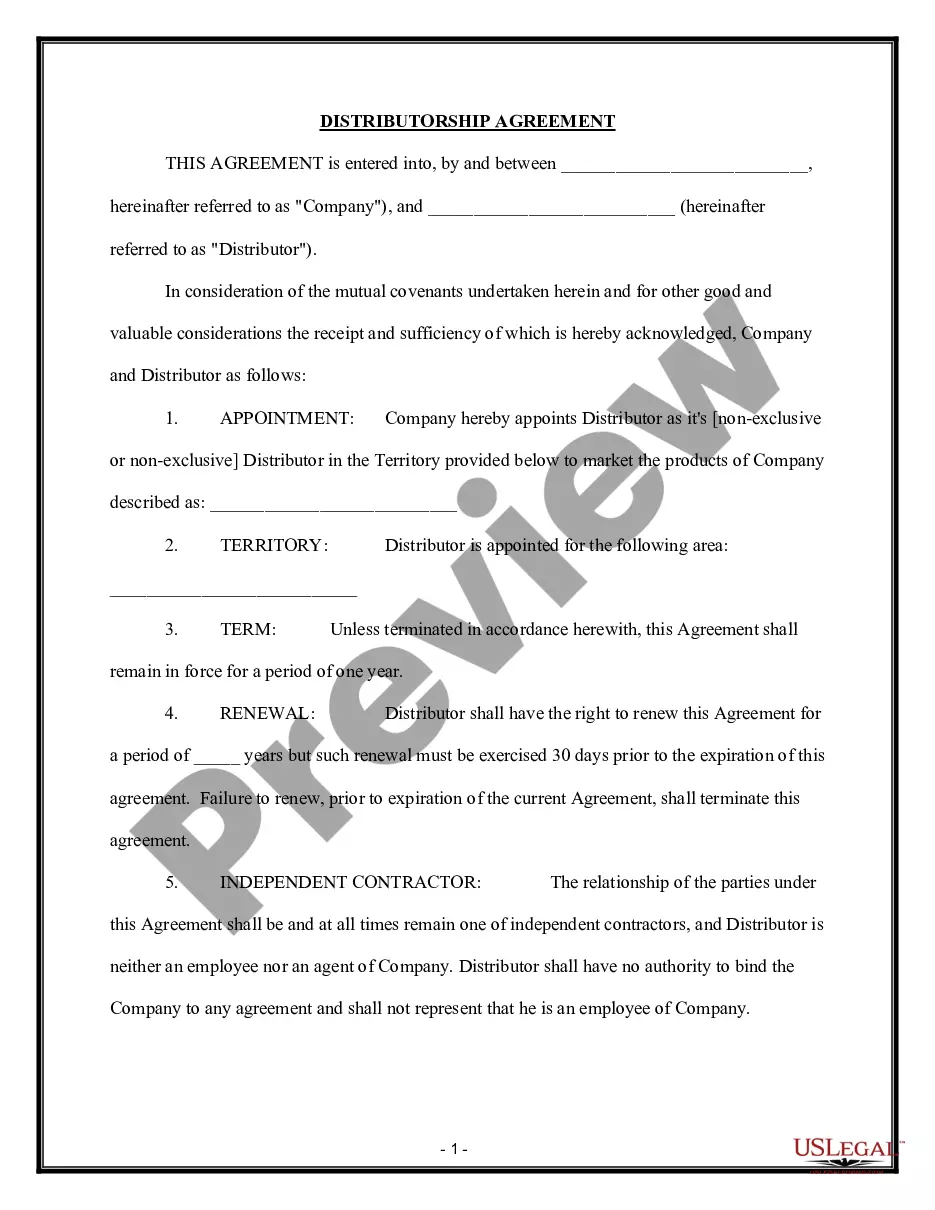
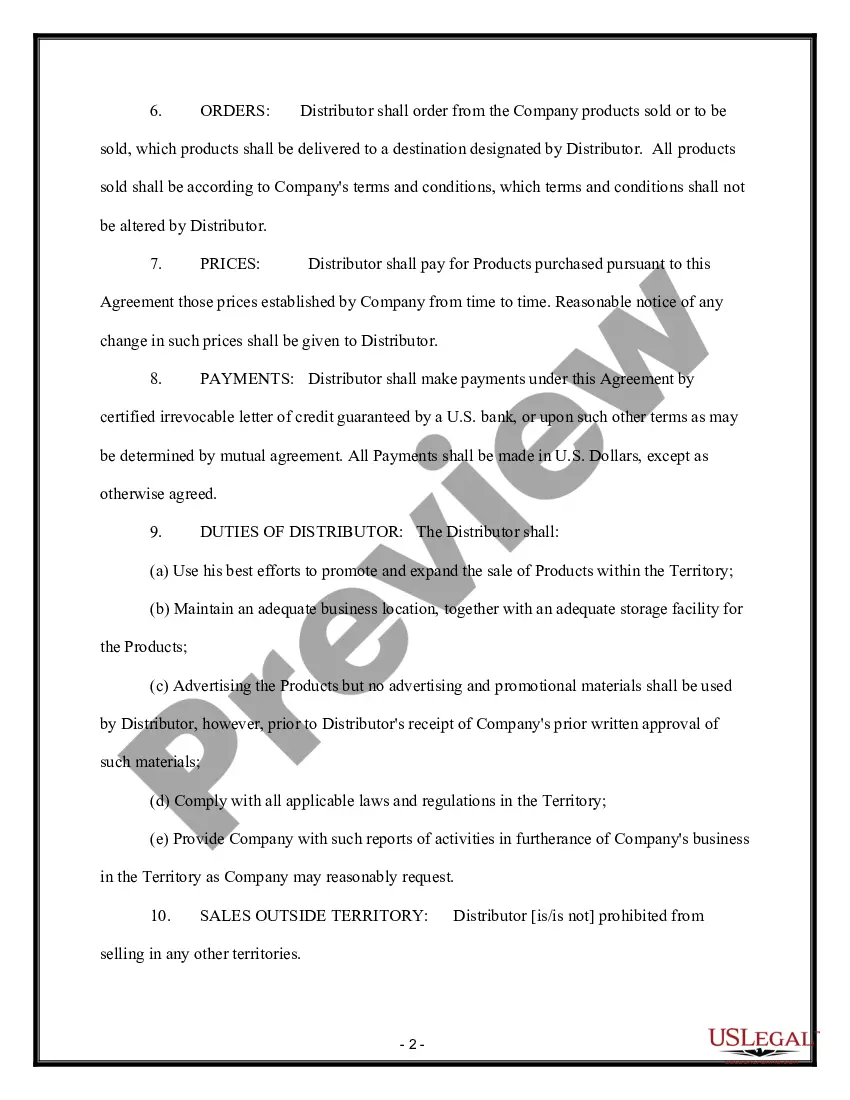
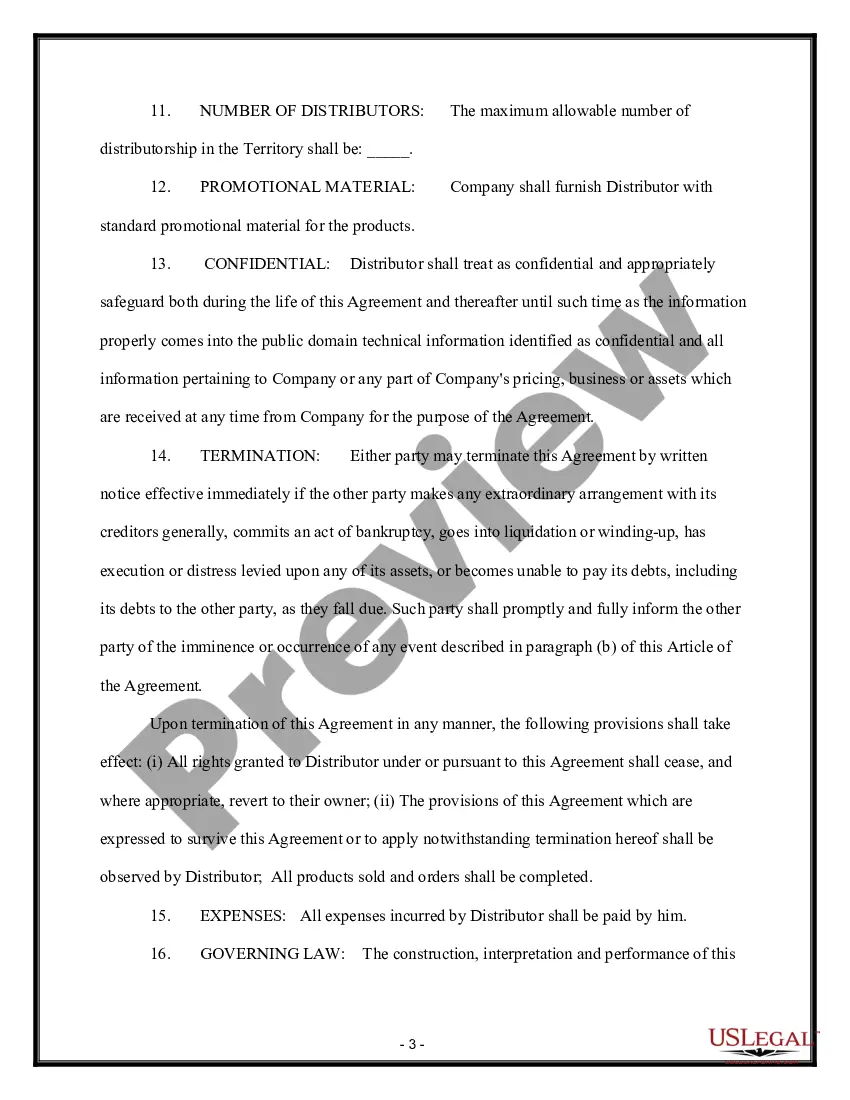
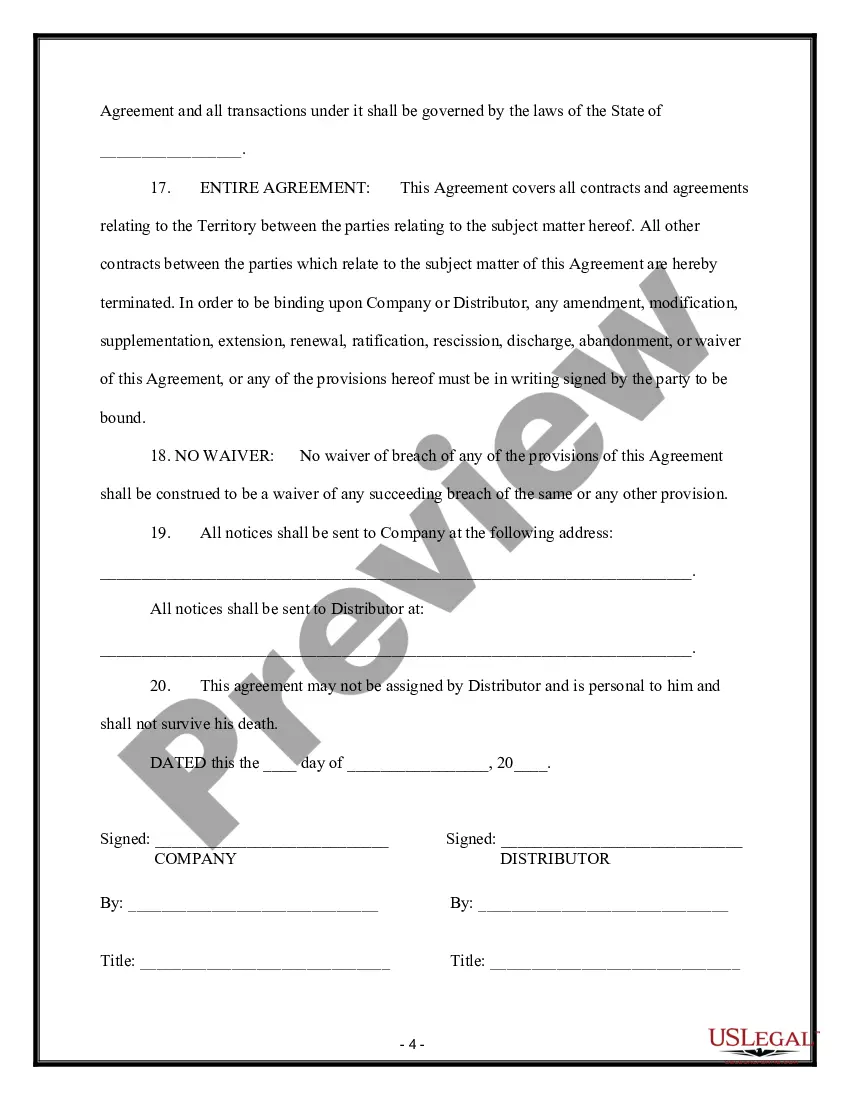
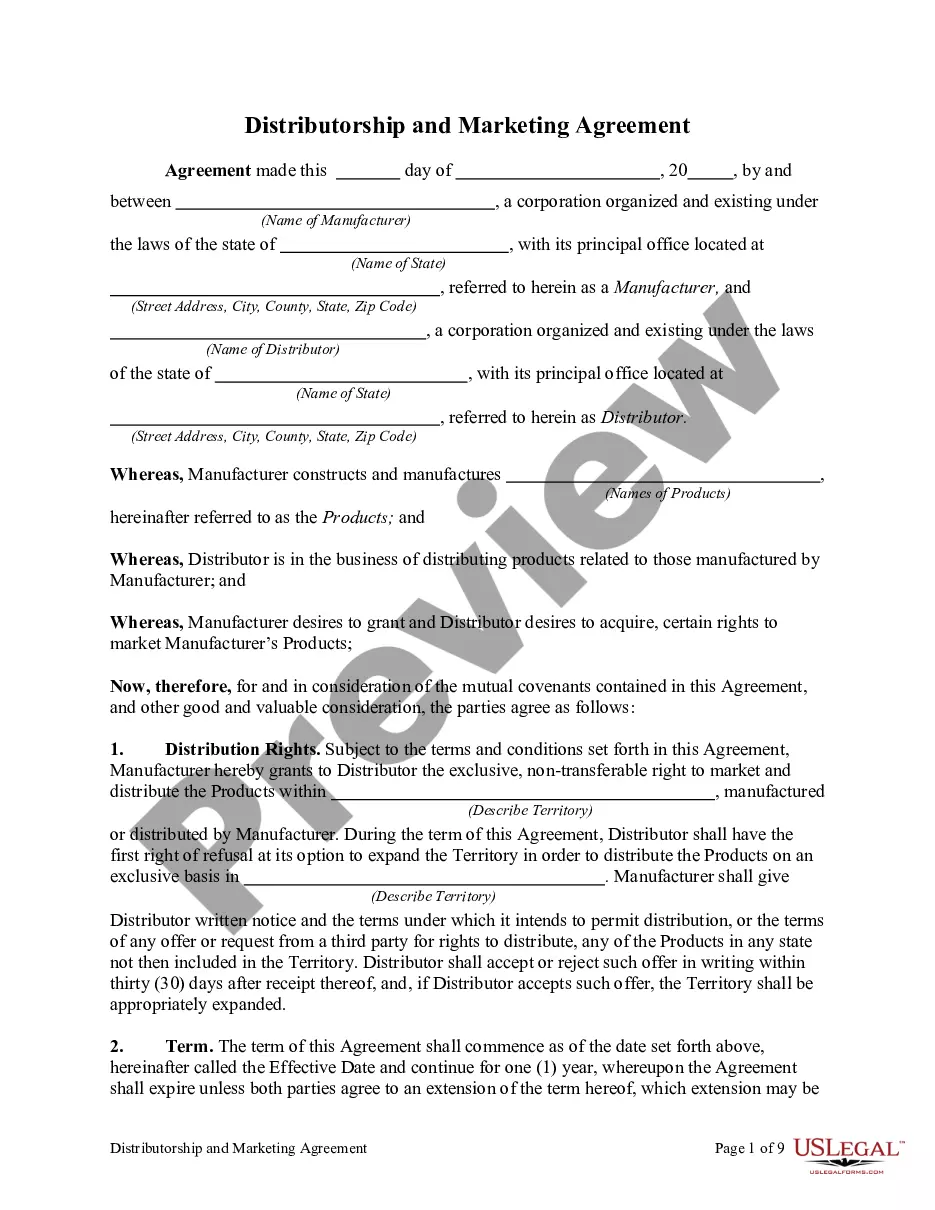
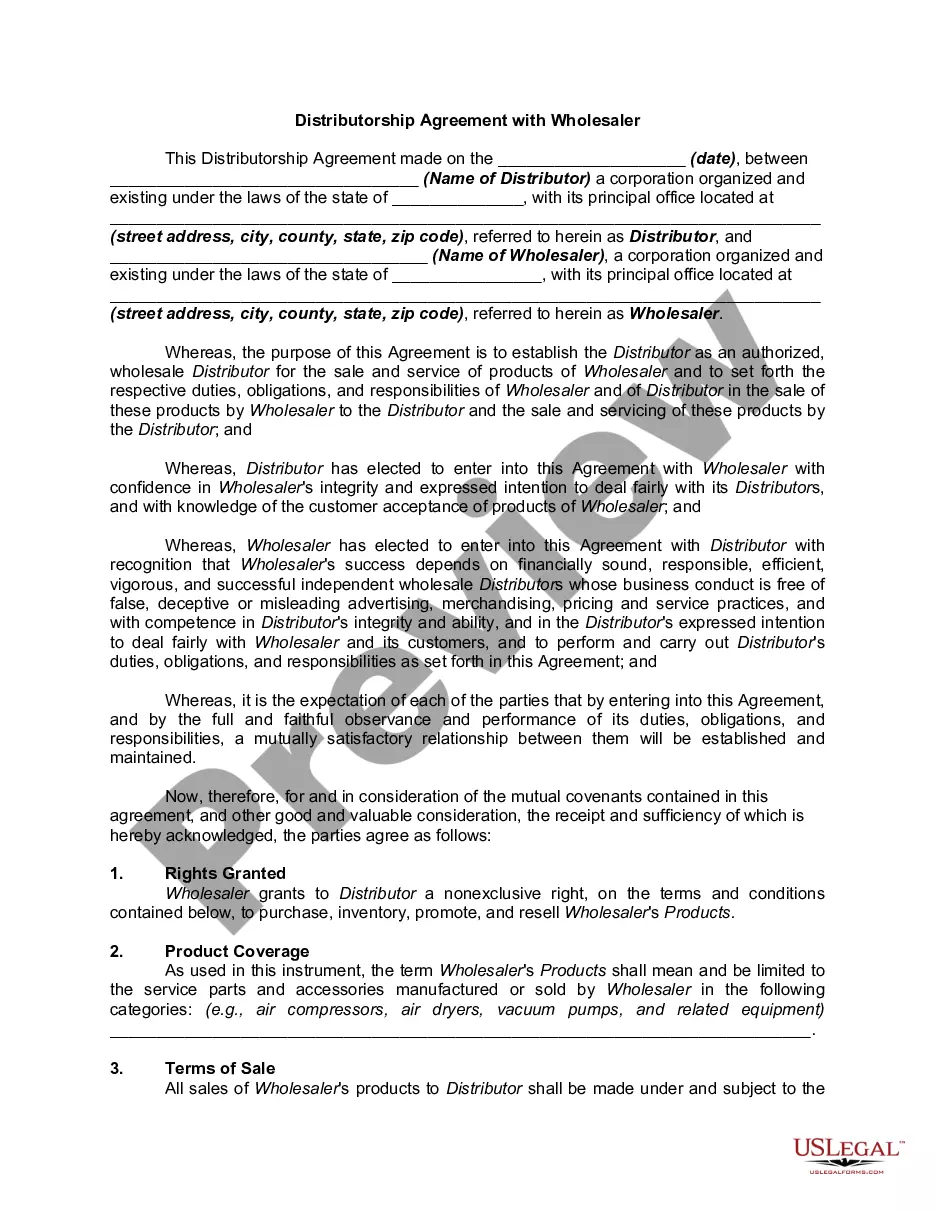
New Hampshire Distributorship Agreement
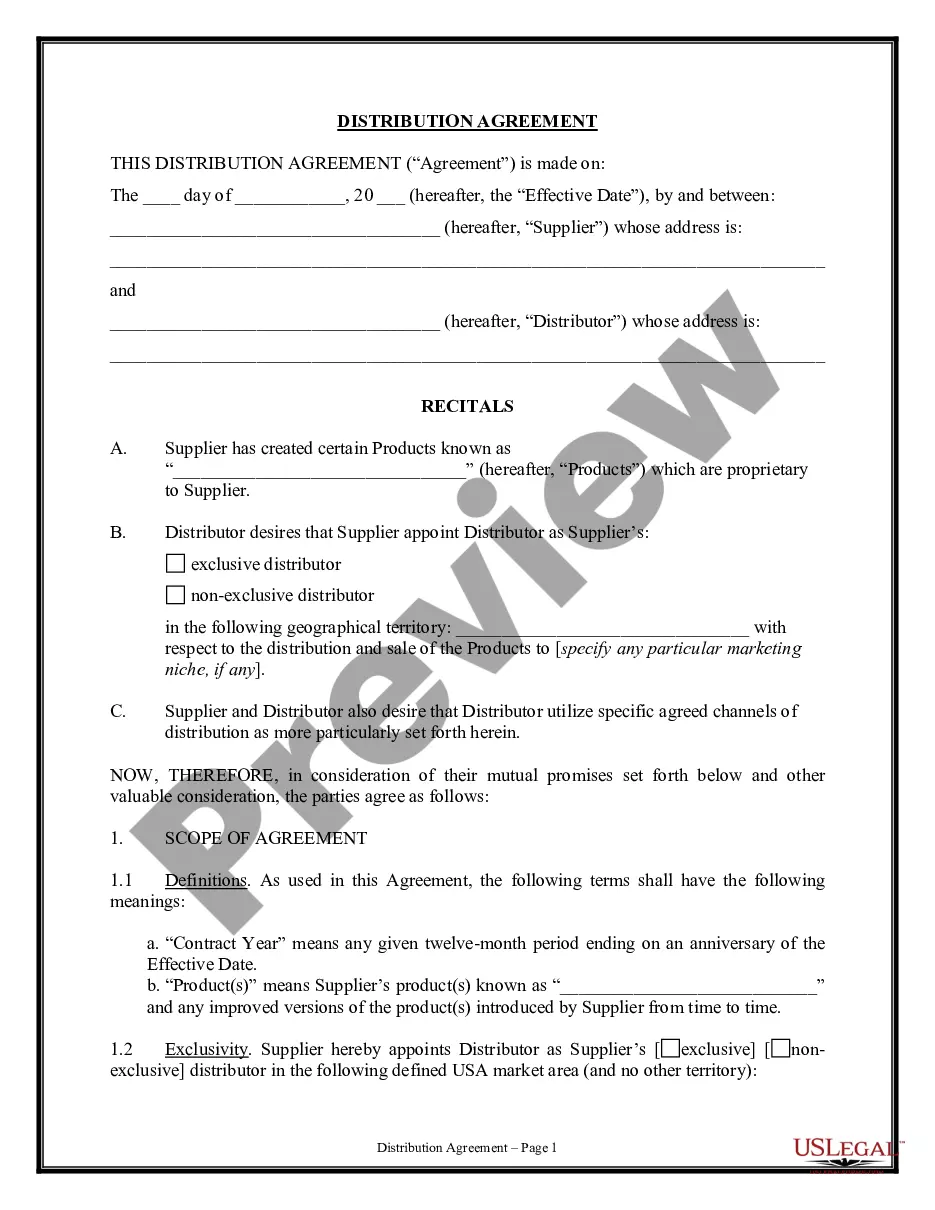
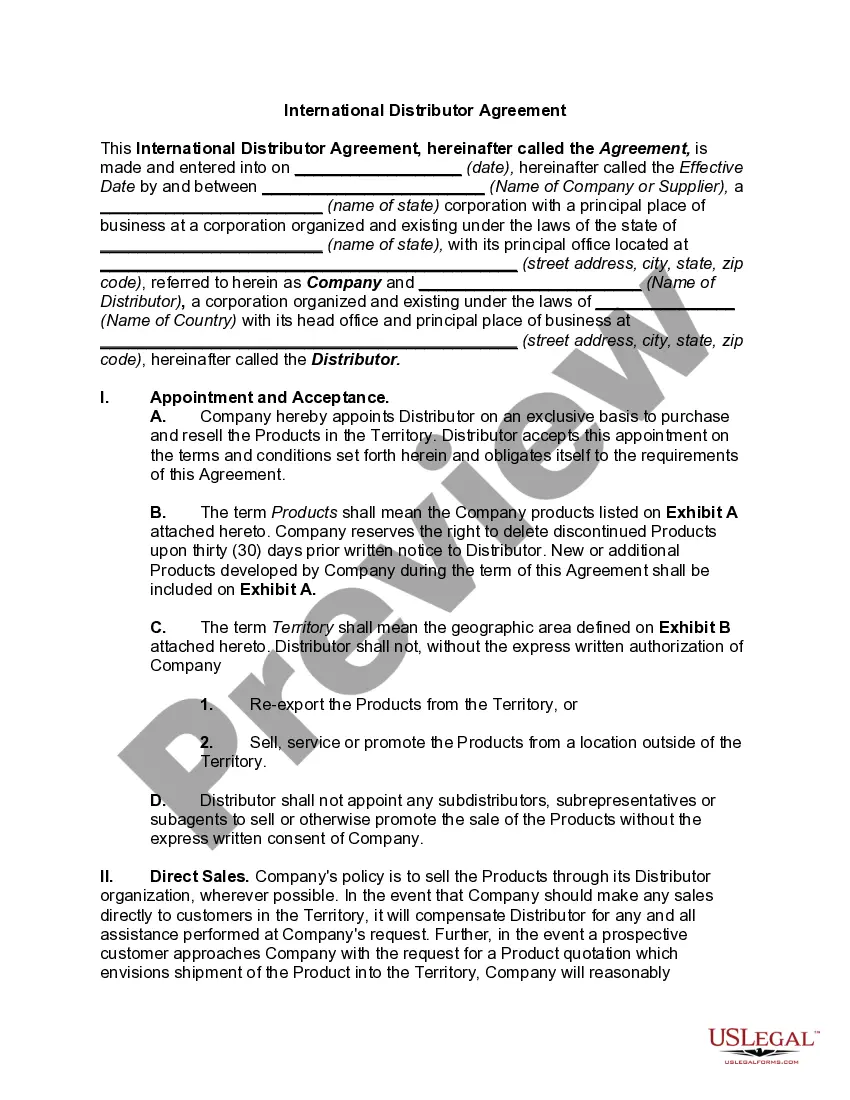
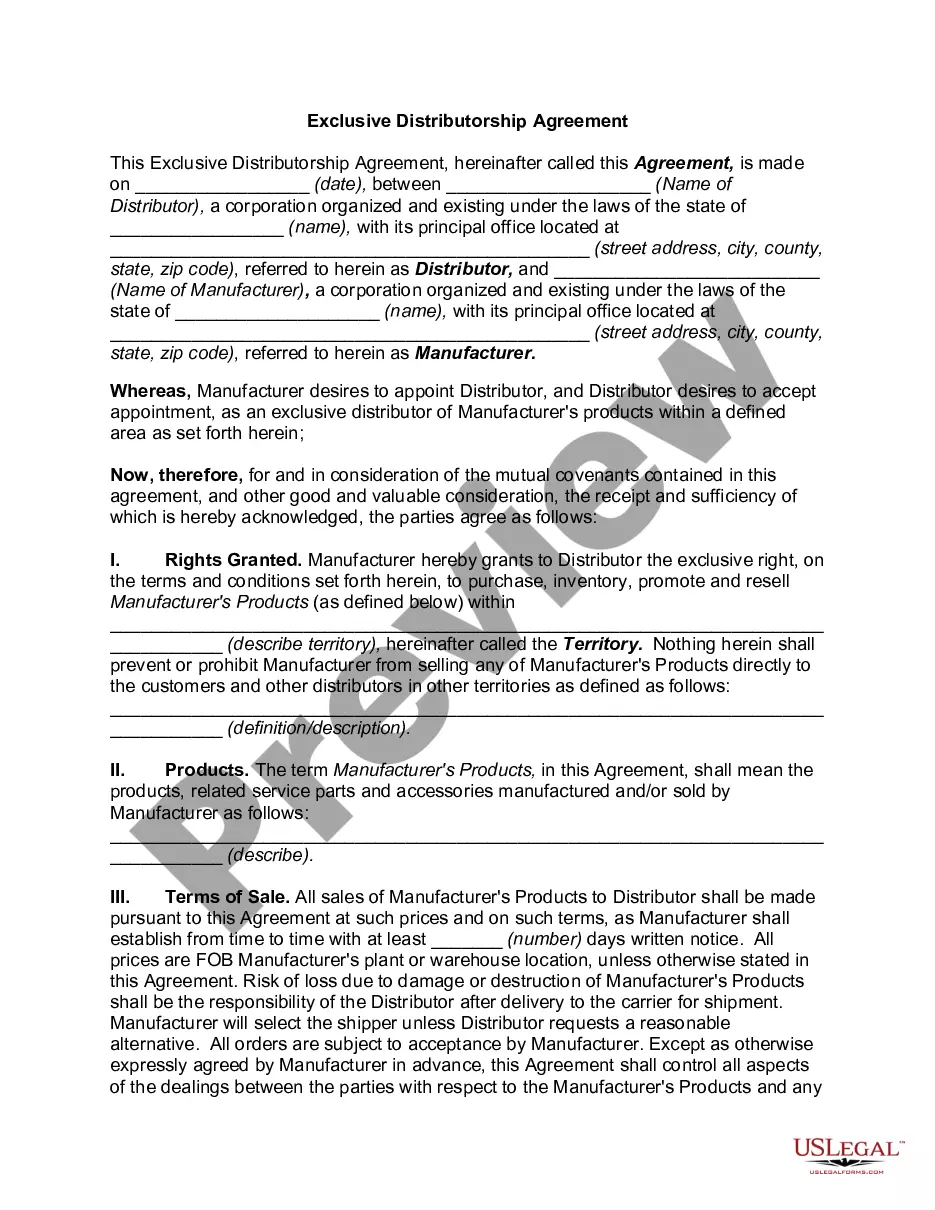
Description
Get your form ready online
Our built-in tools help you complete, sign, share, and store your documents in one place.
Make edits, fill in missing information, and update formatting in US Legal Forms—just like you would in MS Word.
Download a copy, print it, send it by email, or mail it via USPS—whatever works best for your next step.
Sign and collect signatures with our SignNow integration. Send to multiple recipients, set reminders, and more. Go Premium to unlock E-Sign.
If this form requires notarization, complete it online through a secure video call—no need to meet a notary in person or wait for an appointment.
We protect your documents and personal data by following strict security and privacy standards.

Make edits, fill in missing information, and update formatting in US Legal Forms—just like you would in MS Word.

Download a copy, print it, send it by email, or mail it via USPS—whatever works best for your next step.

Sign and collect signatures with our SignNow integration. Send to multiple recipients, set reminders, and more. Go Premium to unlock E-Sign.

If this form requires notarization, complete it online through a secure video call—no need to meet a notary in person or wait for an appointment.

We protect your documents and personal data by following strict security and privacy standards.
Looking for another form?

How to fill out Distributorship Agreement?
Selecting the finest authentic document template can be a challenge.
Of course, there are numerous templates available online, but how do you find the authentic form you need.
Utilize the US Legal Forms website.
If you are a new user of US Legal Forms, here are simple instructions for you to follow: Firstly, ensure you've selected the correct form for your area/state. You can review the document using the Preview button and check the document details to confirm it’s suitable for your needs.
- The service offers thousands of templates, including the New Hampshire Distributorship Agreement, suitable for both business and personal purposes.
- All documents are reviewed by experts and comply with federal and state regulations.
- If you are already registered, Log In to your account and click the Download button to retrieve the New Hampshire Distributorship Agreement.
- Use your account to review the legitimate forms you may have previously downloaded.
- Visit the My documents section of your account to download another copy of the document you need.
Form popularity
FAQ
A verbal agreement can be binding in New Hampshire, but proving the terms can be challenging. For business relationships, such as those governed by a New Hampshire Distributorship Agreement, it is advisable to have written documentation. Written agreements provide clarity on expectations and protect both parties in case of disputes.
In New Hampshire, the statute of limitations for most written contracts is three years from the time of breach. This rule is essential for businesses to understand, especially when dealing with distributor agreements or sales contracts. A well-drafted New Hampshire Distributorship Agreement can help avoid potential disputes by clearly outlining terms and obligations.
Starting a business in New Hampshire requires a few key elements. You will need a unique business name, a business structure, and to register with the state. Additionally, securing permits or licenses may be necessary, depending on your industry. A New Hampshire Distributorship Agreement can also be crucial for establishing clear terms of operation and relationship with distributors.
To set up a business in New Hampshire, begin by selecting your business structure, whether it's an LLC, corporation, or sole proprietorship. Then, file the necessary paperwork with the state's Secretary of State and secure any required licenses or permits. Finally, consider drafting a New Hampshire Distributorship Agreement to define your relationships with partners and distributors, ensuring everyone's roles are clear.
New Hampshire is often considered a favorable state to start a business due to its business-friendly climate and lack of a sales tax. Entrepreneurs appreciate the straightforward registration process and the supportive local communities. Additionally, having a New Hampshire Distributorship Agreement in place can enhance your business's stability and growth potential, as it outlines important terms with your suppliers or distributors.
To register yourself as a small business in New Hampshire, you need to choose a business name and check its availability. Next, you will file your business formation documents with the New Hampshire Secretary of State. Depending on your business structure, you might also need to obtain local permits and licenses. Utilizing a New Hampshire Distributorship Agreement can provide clarity on your obligations and rights as a business owner.
To obtain a dealer license in New Hampshire, you must first gather the necessary documentation, including proof of business location and a background check. Next, you will need to submit your application to the New Hampshire Department of Safety, along with the applicable fees. It’s also a good idea to consult resources like US Legal Forms, which can guide you through the process and help you prepare a New Hampshire Distributorship Agreement if you plan to distribute products as a dealer.
A distributor agreement is a legal contract between a manufacturer and a distributor that outlines the terms of product distribution. This agreement specifies the responsibilities of each party, payment terms, and territory rights. It is essential for establishing a mutually beneficial relationship and ensuring compliance with state laws. For those interested, drafting a solid New Hampshire Distributorship Agreement is crucial to protecting your business interests.
A distributor purchases products in bulk from manufacturers and sells them to retailers or directly to consumers. In contrast, a dealer typically buys products from a distributor or manufacturer but sells them directly to customers. Therefore, while both roles are pivotal in the supply chain, a distributor operates on a larger scale and often focuses on distribution logistics. Understanding these roles can help you establish a clearer New Hampshire Distributorship Agreement.
Distributor agreements, such as a New Hampshire Distributorship Agreement, create a framework for businesses to sell products. They outline responsibilities concerning sales, marketing, and distribution within designated territories. Such agreements foster cooperation between manufacturers and distributors to achieve mutual goals. Using a platform like uslegalforms can simplify the creation of these agreements, ensuring compliance with local laws.