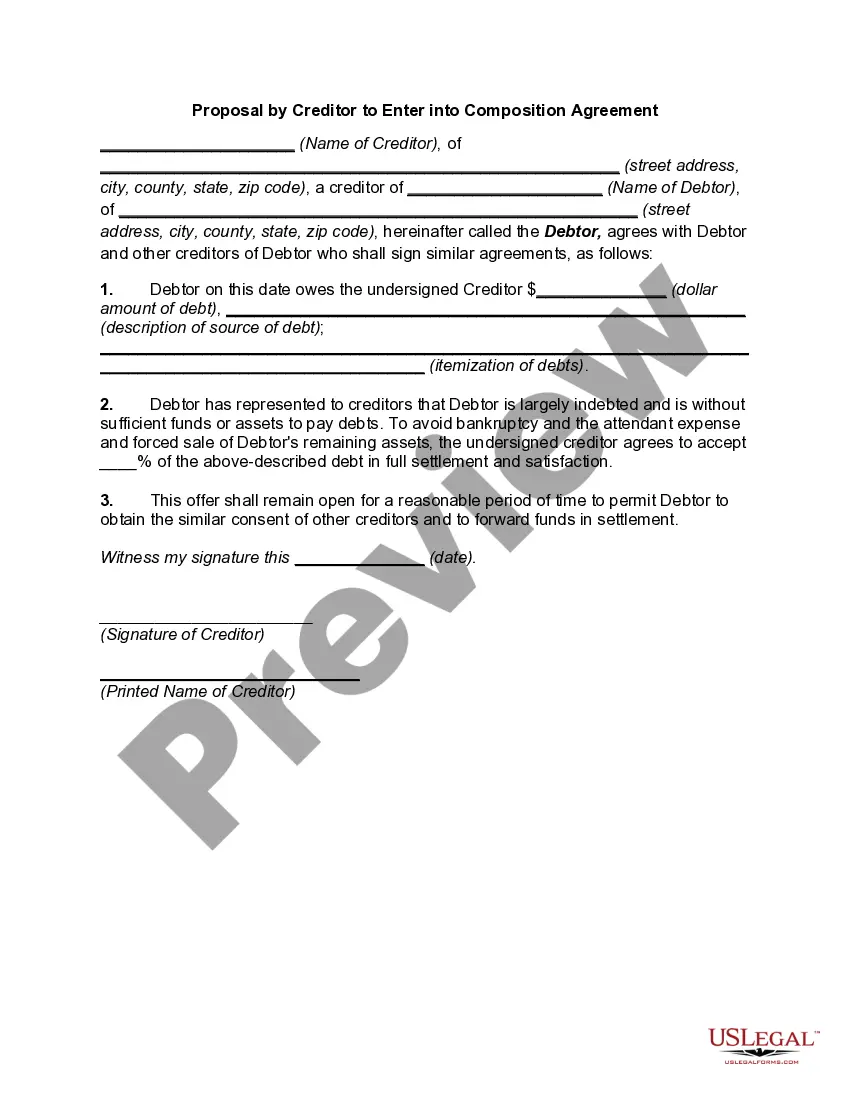
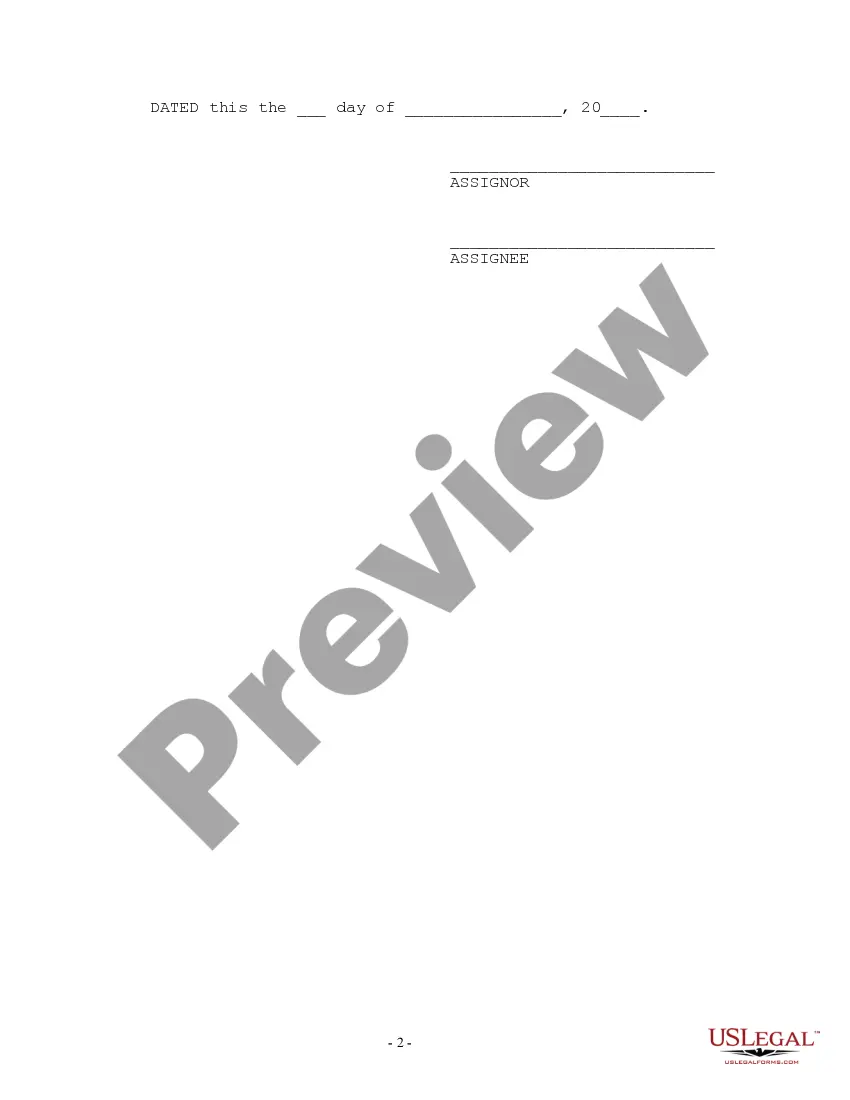
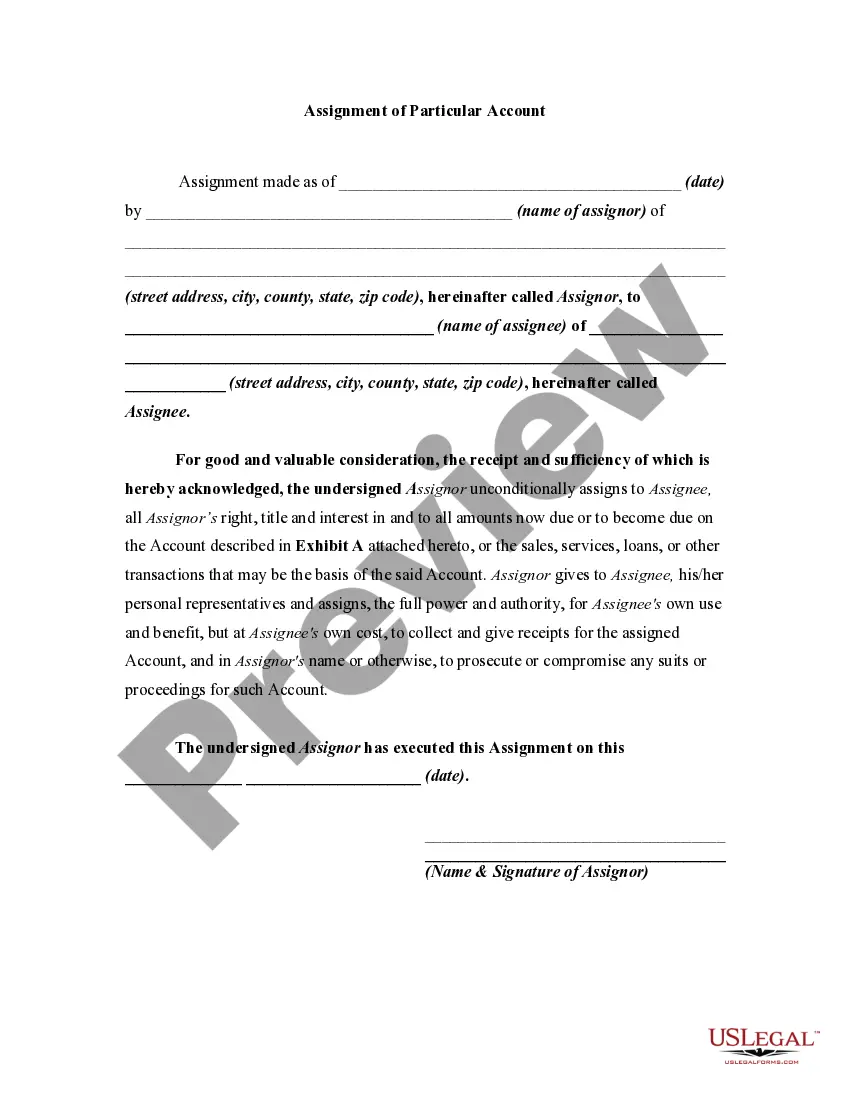
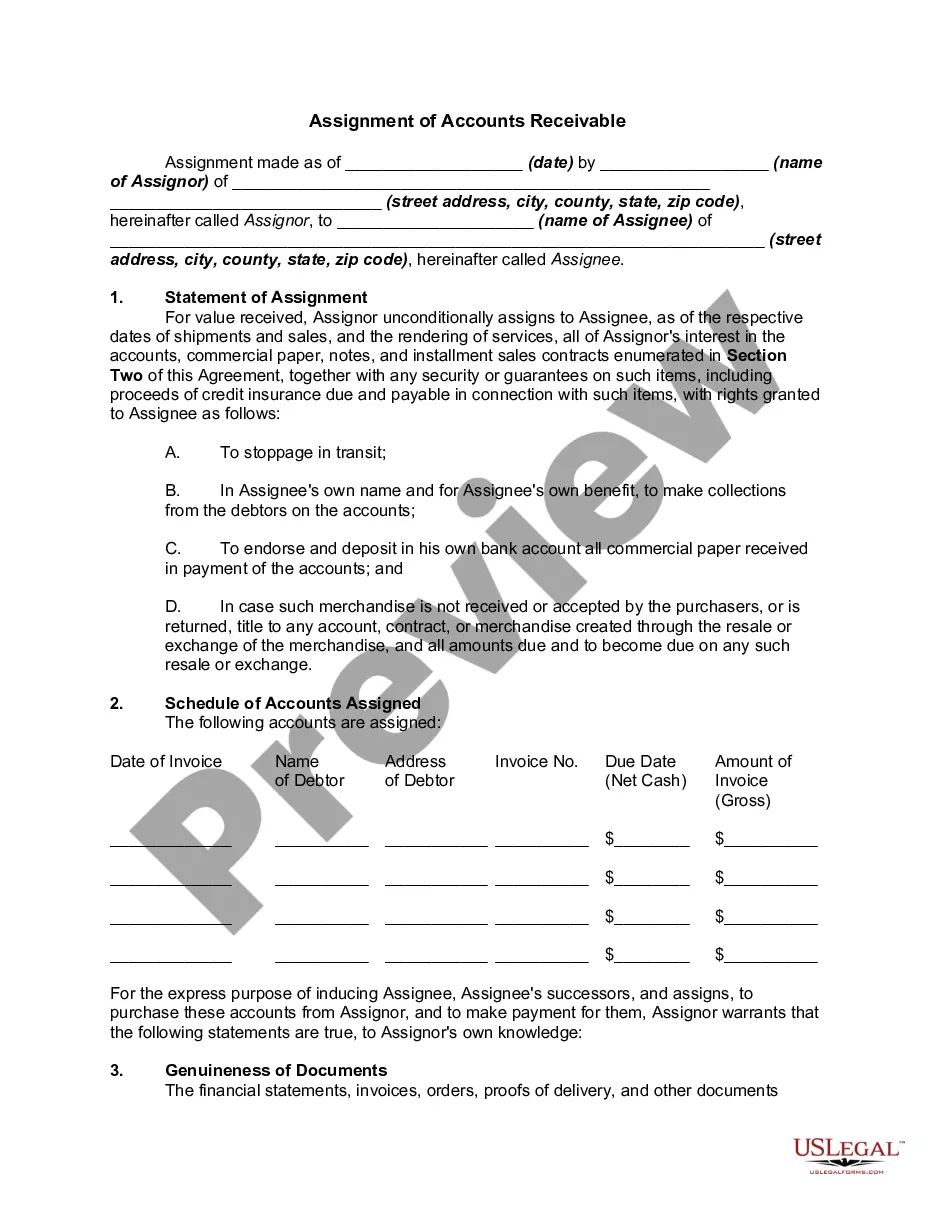
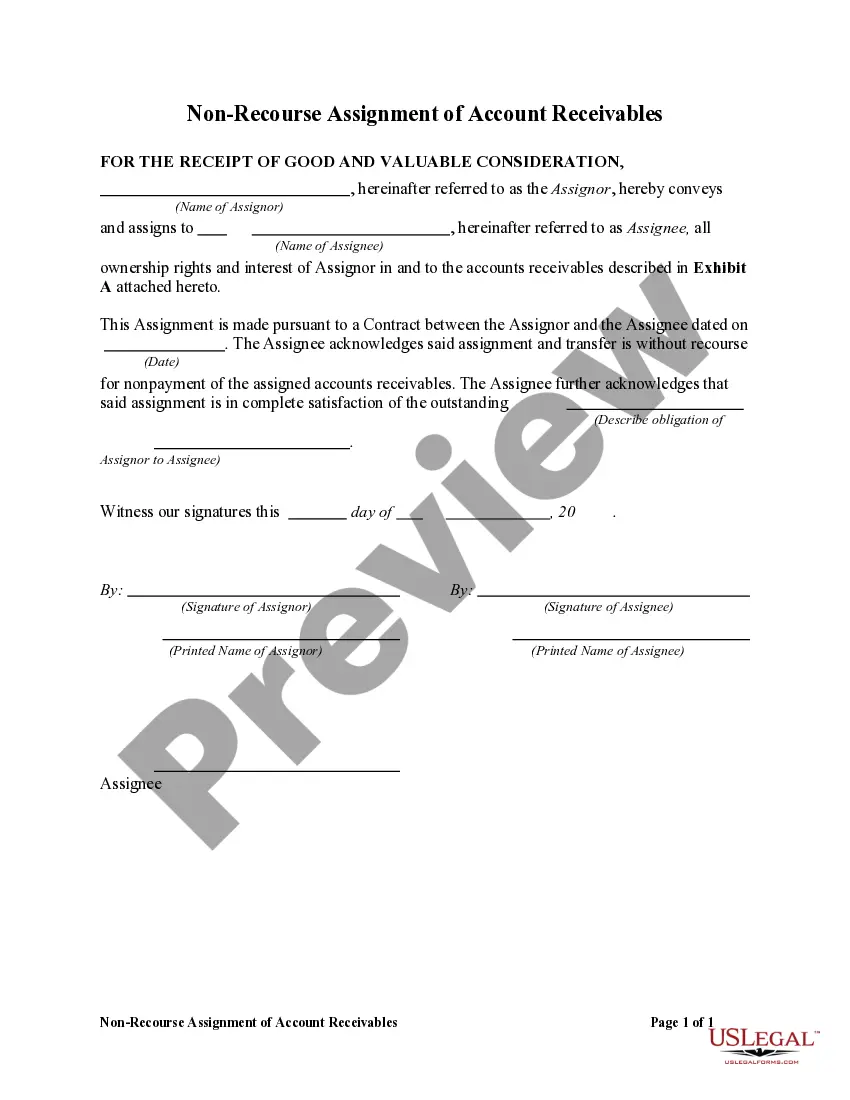
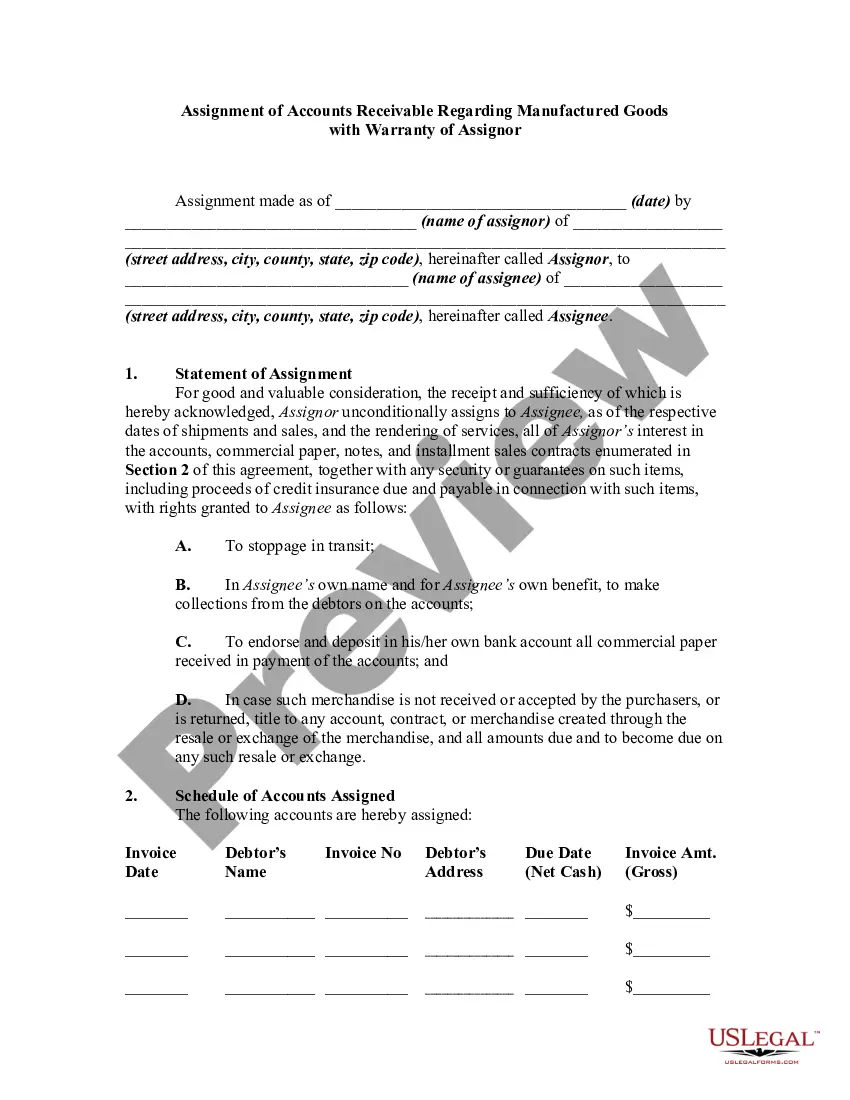
This form is an Assignment of Accounts Receivable. The assignor conveys all interest in the accounts listed on the Attachment included in the form. The accounts represent all outstanding accounts of the assignor from the sale of products or services.
New Hampshire Accounts Receivable - Assignment
Category:
State:
Multi-State
Control #:
US-00400
Format:
Word;
Rich Text
Instant download
Description
Free preview


Get your form ready online
Our built-in tools help you complete, sign, share, and store your documents in one place.
Built-in online Word editor
Make edits, fill in missing information, and update formatting in US Legal Forms—just like you would in MS Word.
Export easily
Download a copy, print it, send it by email, or mail it via USPS—whatever works best for your next step.
E-sign your document
Sign and collect signatures with our SignNow integration. Send to multiple recipients, set reminders, and more. Go Premium to unlock E-Sign.
Notarize online 24/7
If this form requires notarization, complete it online through a secure video call—no need to meet a notary in person or wait for an appointment.
Store your document securely
We protect your documents and personal data by following strict security and privacy standards.

Make edits, fill in missing information, and update formatting in US Legal Forms—just like you would in MS Word.

Download a copy, print it, send it by email, or mail it via USPS—whatever works best for your next step.

Sign and collect signatures with our SignNow integration. Send to multiple recipients, set reminders, and more. Go Premium to unlock E-Sign.

If this form requires notarization, complete it online through a secure video call—no need to meet a notary in person or wait for an appointment.

We protect your documents and personal data by following strict security and privacy standards.
Looking for another form?



How to fill out Accounts Receivable - Assignment?
It is feasible to invest time online searching for the sanctioned document template that aligns with the state and federal regulations you require.
US Legal Forms provides countless legal templates that are reviewed by professionals.
You can download or print the New Hampshire Accounts Receivable - Assignment from the service.
If available, utilize the Preview option to review the document template as well. If you wish to find another version of the form, use the Lookup field to locate the template that meets your needs and specifications. Once you have found the template you require, click on Buy now to proceed. Choose the pricing plan you want, enter your details, and sign up for an account on US Legal Forms. Complete the transaction. You can use your credit card or PayPal account to purchase the legal form. Select the format of the document and download it to your device. Make modifications to your file if needed. You can fill out, edit, sign, and print the New Hampshire Accounts Receivable - Assignment. Obtain and print thousands of document templates using the US Legal Forms Website, which offers the largest selection of legal forms. Utilize professional and state-specific templates to address your business or personal needs.
- If you possess a US Legal Forms account, you can Log In and click on the Acquire option.
- After that, you can fill out, modify, print, or sign the New Hampshire Accounts Receivable - Assignment.
- Every legal document template you obtain is yours permanently.
- To obtain another copy of any purchased form, visit the My documents tab and click on the corresponding option.
- If you are using the US Legal Forms website for the first time, follow the simple instructions below.
- First, ensure you have chosen the correct document template for the state/region of your choice.
- Read the form description to confirm you have selected the right template.
Form popularity
FAQ
Unassigned accounts receivable are generally classified as current assets. They represent amounts that are expected to be collected within a year, unlike noncurrent assets, which are expected to be collected over a longer period. In the context of New Hampshire Accounts Receivable - Assignment, distinguishing between assigned and unassigned receivables is essential for financial clarity. This knowledge helps businesses manage their resources more efficiently.
To obtain accounts receivable in New Hampshire, you can start by reviewing your invoices and payment terms with clients. Ensure that you have clear documentation of services rendered or products provided. Utilizing a platform like USLegalForms can streamline this process by offering templates to create clear agreements. This helps maintain transparency and makes it easier to track outstanding payments.
The 5 C's of accounts receivable management include Character, Capacity, Capital, Conditions, and Collateral. These factors help you evaluate your customers' creditworthiness and payment reliability. By understanding these elements, you can make informed decisions on extending credit and managing accounts. For effective tracking and management, consider using US Legal Forms for your New Hampshire Accounts Receivable - Assignment needs.
Assignment of receivables would mean sale of the lease rentals, not the asset. In that case, the leased asset still remains the property of the assignor ? that is, the assignor has retained the residual interest in the asset. However, it would be different if the lessor sells the asset that has been leased out.
What are the journal entries for assigning Accounts Receivable as collateral for a loan? The entry to record assignment of Accounts Receivable as collateral would be a credit to cash, and a debit to assign Accounts Receivable. The cash account is debited because the company gave up the assigned receivables.
Accounts receivable factoring is a source of debt financing available to businesses that sell on credit terms. The borrower assigns or sells its accounts receivable (or specific invoices) in exchange for cash today.
Accounts Receivable are amounts due from customers from the sale of services or merchandise on credit. They are usually due in 30 ? 60 days. They are classified on the Balance Sheet as current assets.
Firstly, factoring is a financial service of selling and purchasing, which implies consideration, unlike assignment, which may take place either with or without consideration. In addition, non-matured or future accounts receivable can be subject to factoring.
Assignment of accounts receivable is a lending agreement whereby the borrower assigns accounts receivable to the lending institution. In exchange for this assignment of accounts receivable, the borrower receives a loan for a percentage, which could be as high as 100%, of the accounts receivable.
However, pledging is general because all accounts receivable serve as collateral security for the loan. On the other hand, assignment is specific because specific accounts receivable serve as collateral security for the loan. Assignment may be done either on a nonnotification or notification basis.