New Hampshire Quitclaim Deed from Individual to Individual
Overview of this form
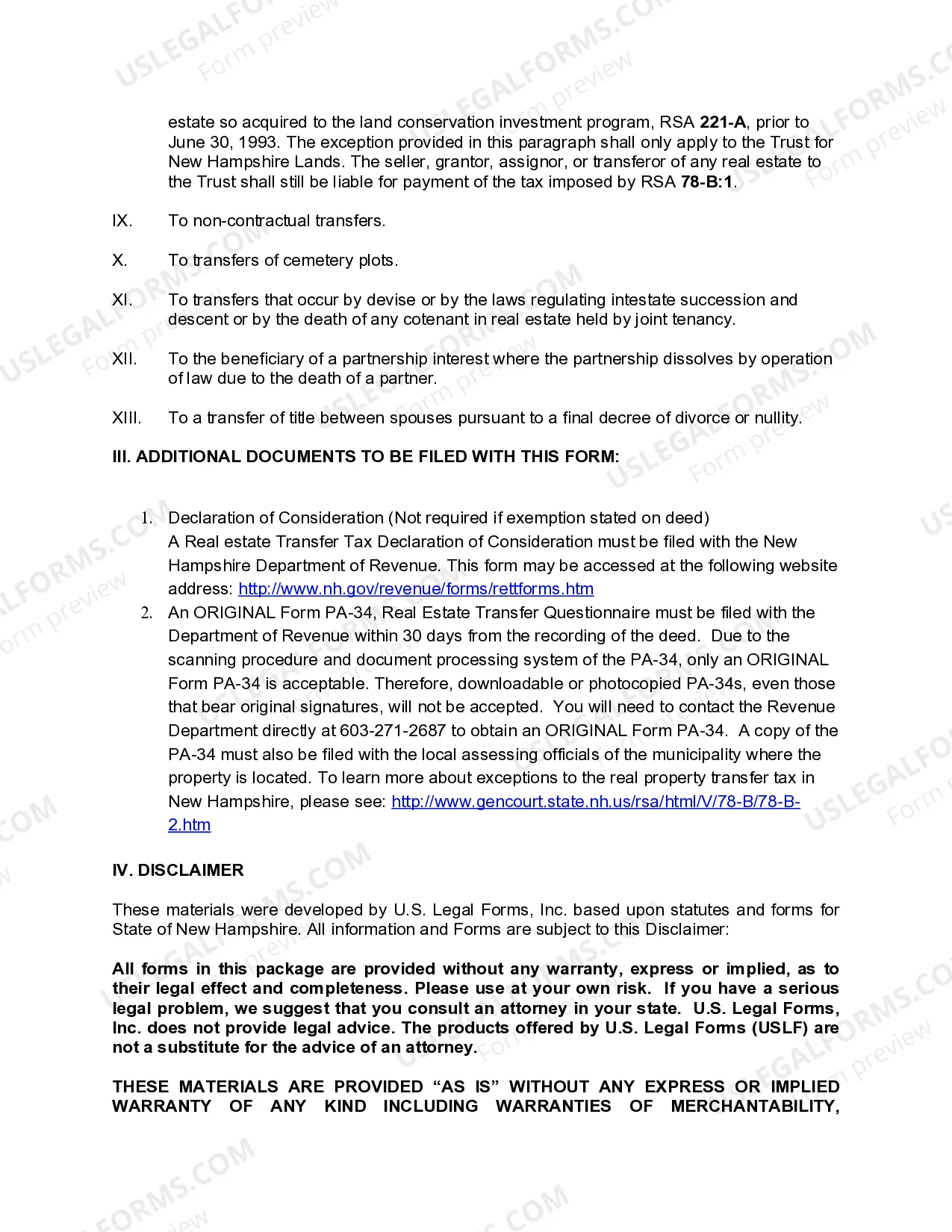
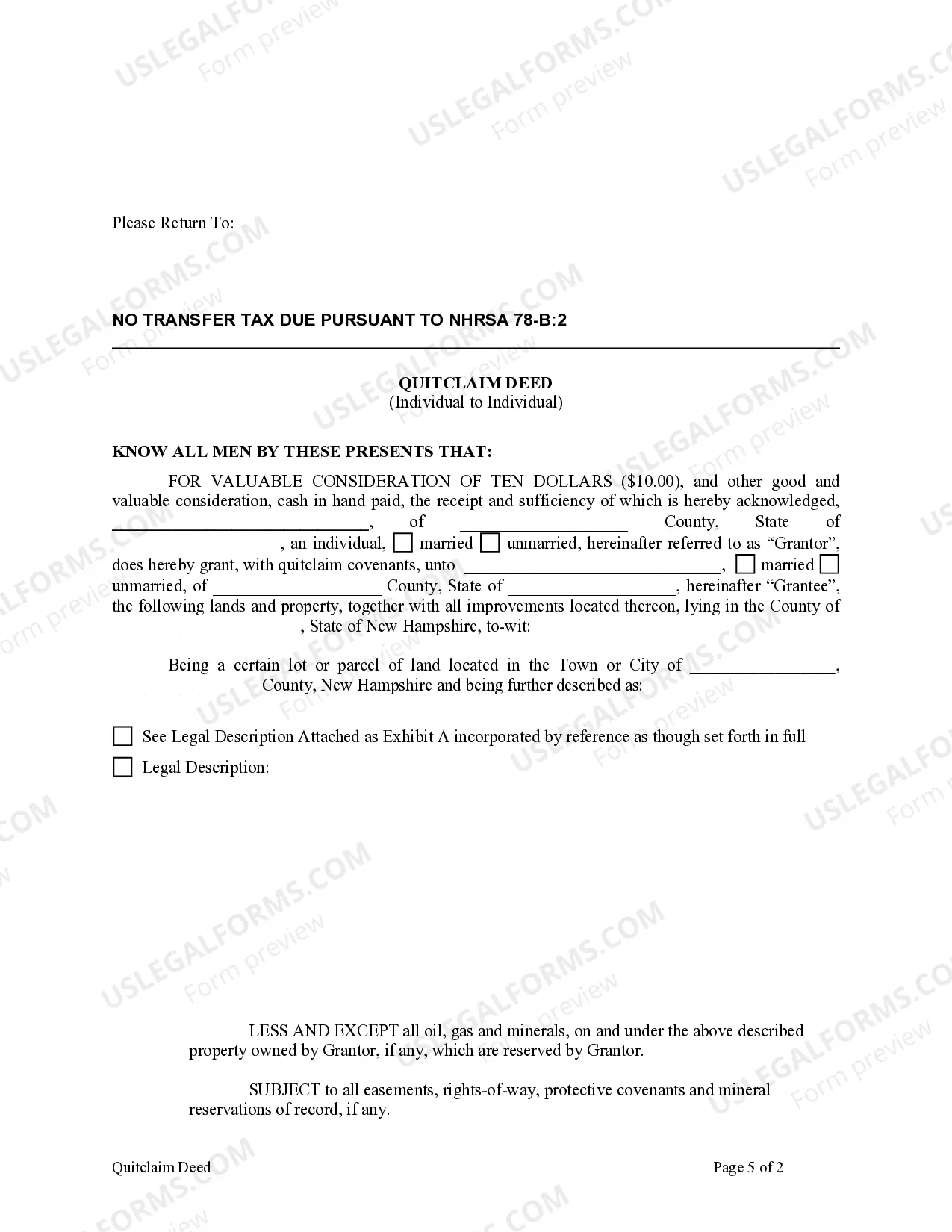
The Quitclaim Deed from Individual to Individual is a legal document that allows one individual (the Grantor) to transfer their ownership interest in a specified property to another individual (the Grantee). Unlike other types of deeds, a quitclaim deed provides no warranties about the title of the property, meaning it does not guarantee that the Grantor holds clear title. This type of deed is often used in simple property transfers between individuals, such as family members or friends, where the parties trust each other and may not require a formal title search.
Key parts of this document
- Identification of the Grantor and Grantee, including names and addresses.
- A legal description of the property being transferred.
- Statement of the Grantor conveying their interest in the property, excluding any reserved rights such as oil, gas, and mineral rights.
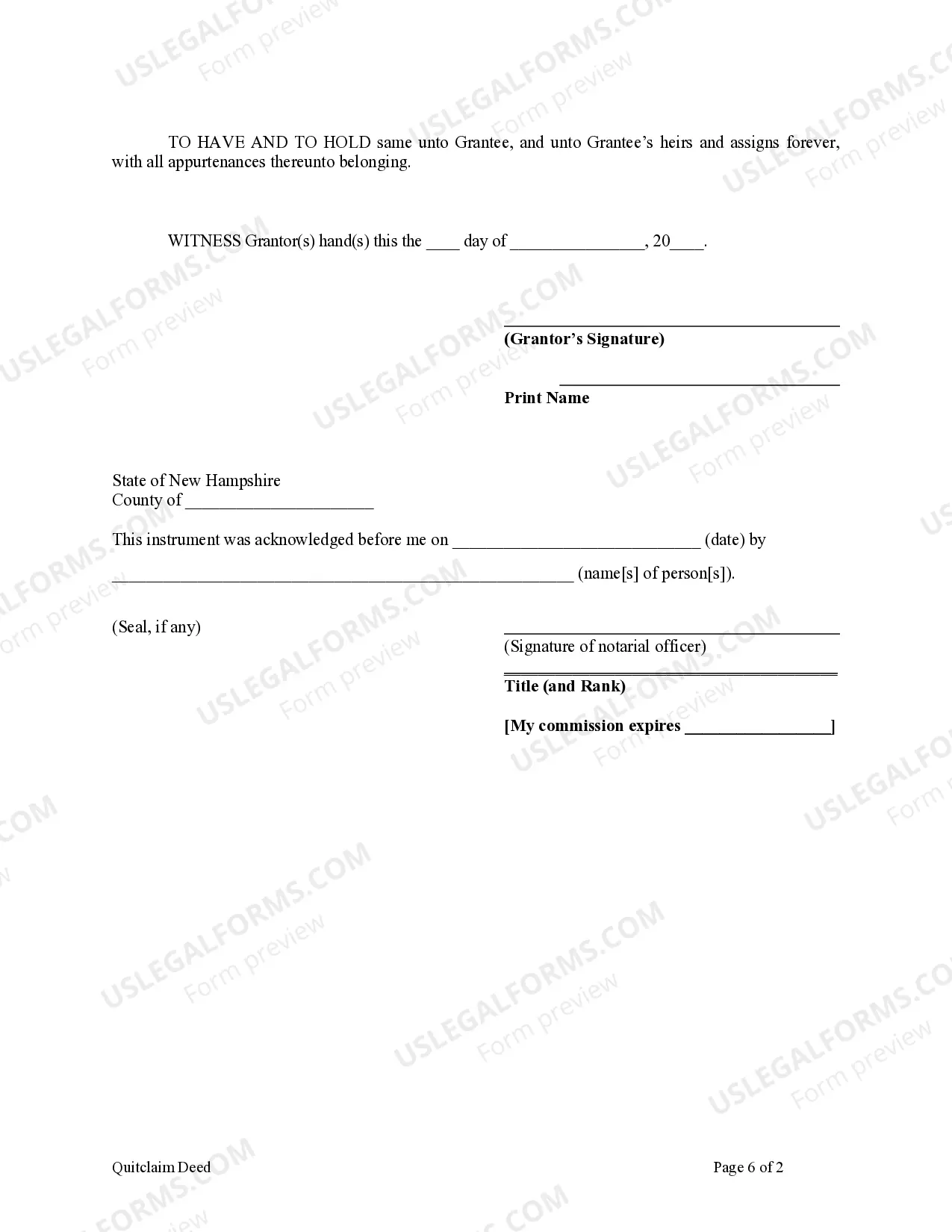
- Date of the transfer.
- Signature of the Grantor, along with witness requirements if applicable.







Situations where this form applies
This quitclaim deed is typically used when the Grantor wants to transfer their rights to a property without implying any warranties or guarantees. Common scenarios include transferring property between family members during estate planning, resolving disputes, or facilitating straightforward property transactions where the parties have a mutual understanding and trust.
Who should use this form
This form is ideal for:
- Individuals looking to transfer property ownership to another individual.
- Family members or friends facilitating a property transfer without a sale.
- Parties who are comfortable with the inherent risks associated with a quitclaim deed, as there are no guarantees regarding the property's title.
Completing this form step by step
- Identify the Grantor by writing their full name and address in the designated field.
- Specify the Grantee by completing their name and address.
- Provide a complete legal description of the property to ensure clarity in the transfer.
- Include any reservations, such as rights to minerals, if applicable.
- Finalize the document by dating it and having the Grantor sign it.
Does this document require notarization?
This form must be notarized to be legally valid. US Legal Forms provides secure online notarization powered by Notarize, allowing you to complete the process through a verified video call.
Mistakes to watch out for
- Failing to include a complete legal description of the property, which is critical for a valid transfer.
- Not confirming the identities of the Grantor and Grantee, leading to potential disputes.
- Overlooking local recording requirements, which may necessitate additional documents or fees.
Why use this form online
- The convenience of completing the form from anywhere without needing to visit an attorney.
- Editable fields which allow you to ensure accurate completion of the form without errors.
- Access to templates drafted by licensed attorneys, providing peace of mind regarding legal compliance.
Form popularity
FAQ
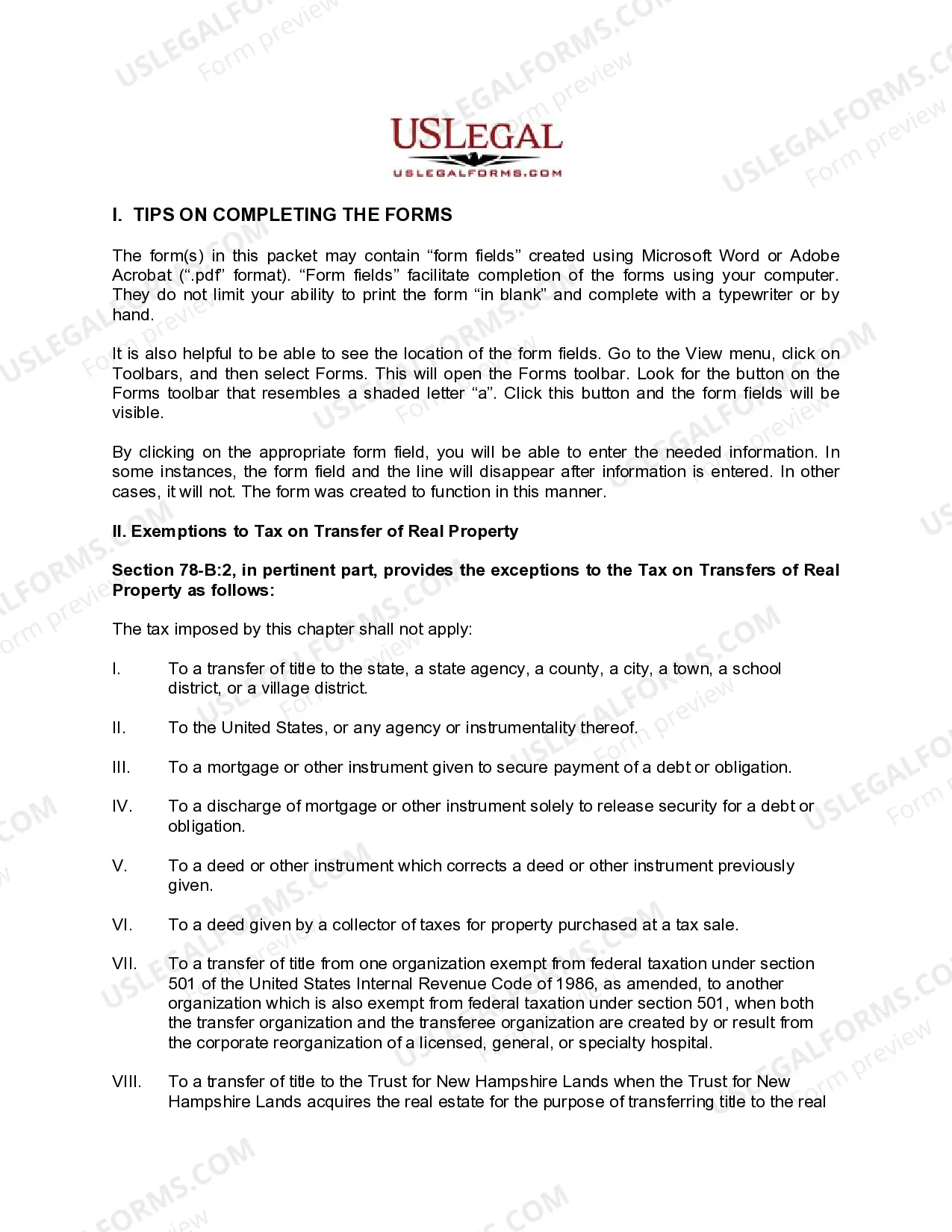
If you own your own home, you are free to gift or sell an interest in the real property to someone else.You'll need to transfer an interest by writing up another deed with the person's name on it. In California, you can use either a grant deed, a quitclaim deed or an interspousal deed, depending on your circumstances.
Yes, you can use a Quitclaim Deed to transfer a gift of property to someone. You must still include consideration when filing your Quitclaim Deed with the County Recorder's Office to show that title has been transferred, so you would use $10.00 as the consideration for the property.
Signing - According to New Hampshire Law (§ 477:3) the Grantor must sign the quit claim deed in the presence of a Notary Public. Recording - Once notarized, the quit claim deed must be filed with the County Recorder's Office in the city or county where the property is located.
Quitclaim deeds are most often used to transfer property between family members. Examples include when an owner gets married and wants to add a spouse's name to the title or deed, or when the owners get divorced and one spouse's name is removed from the title or deed.
The drawback, quite simply, is that quitclaim deeds offer the grantee/recipient no protection or guarantees whatsoever about the property or their ownership of it. Maybe the grantor did not own the property at all, or maybe they only had partial ownership.
Signing - According to New Hampshire Law (§ 477:3) the Grantor must sign the quit claim deed in the presence of a Notary Public. Recording - Once notarized, the quit claim deed must be filed with the County Recorder's Office in the city or county where the property is located.
But you might be wondering if an owner can transfer a deed to another person without a real estate lawyer. The answer is yes. Parties to a transaction are always free to prepare their own deeds.A quitclaim deed, for example, is far simpler than a warranty deed.
A person who signs a quitclaim deed to transfer property they do not own results in no title at all being transferred since there is no actual ownership interest. The quitclaim deed only transfers the type of title you own.
Once you sign a quitclaim deed and it has been filed and recorded with the County Clerks Office, the title has been officially transferred and cannot be easily reversed. In order to reverse this type of transfer, it would require your spouse to cooperate and assist in adding your name back to the title.