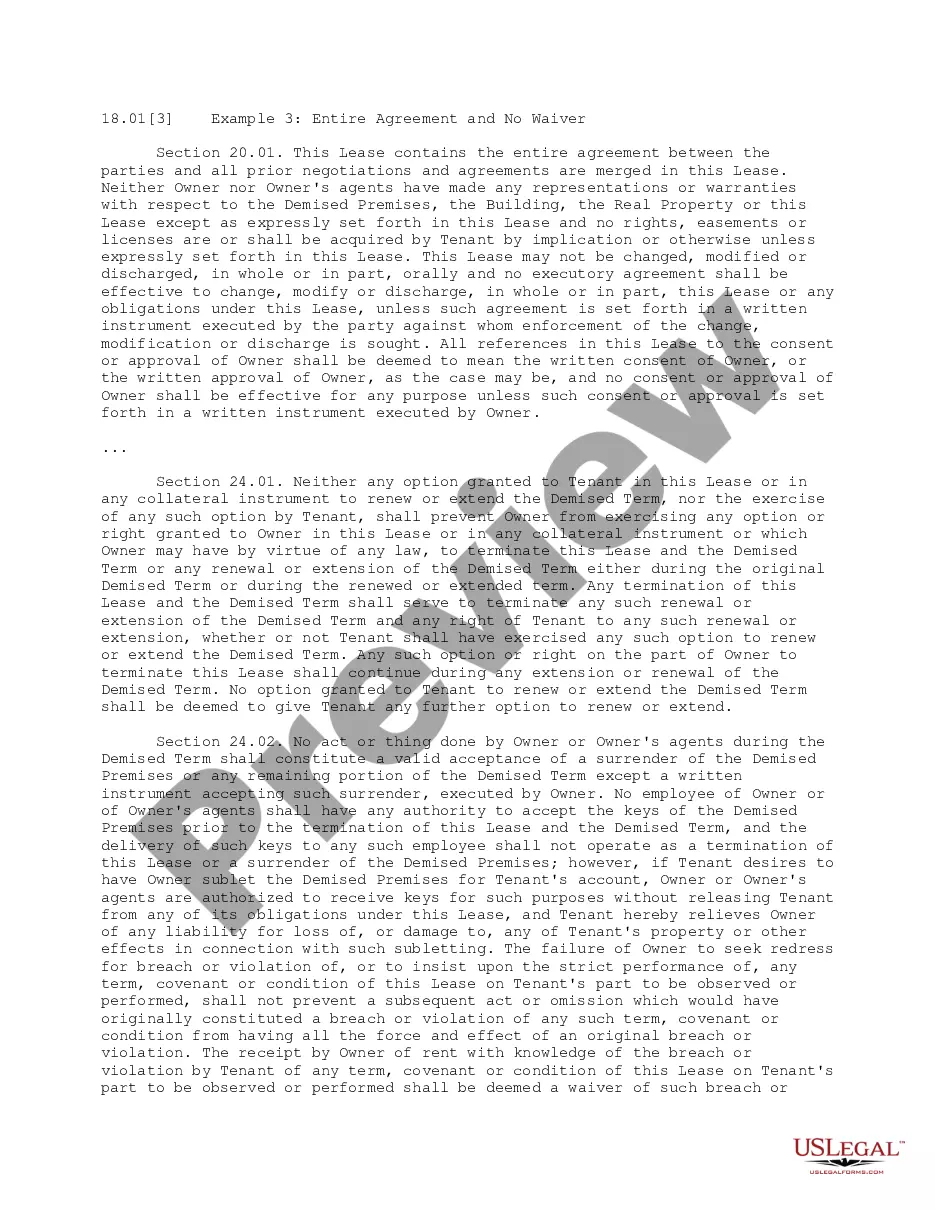
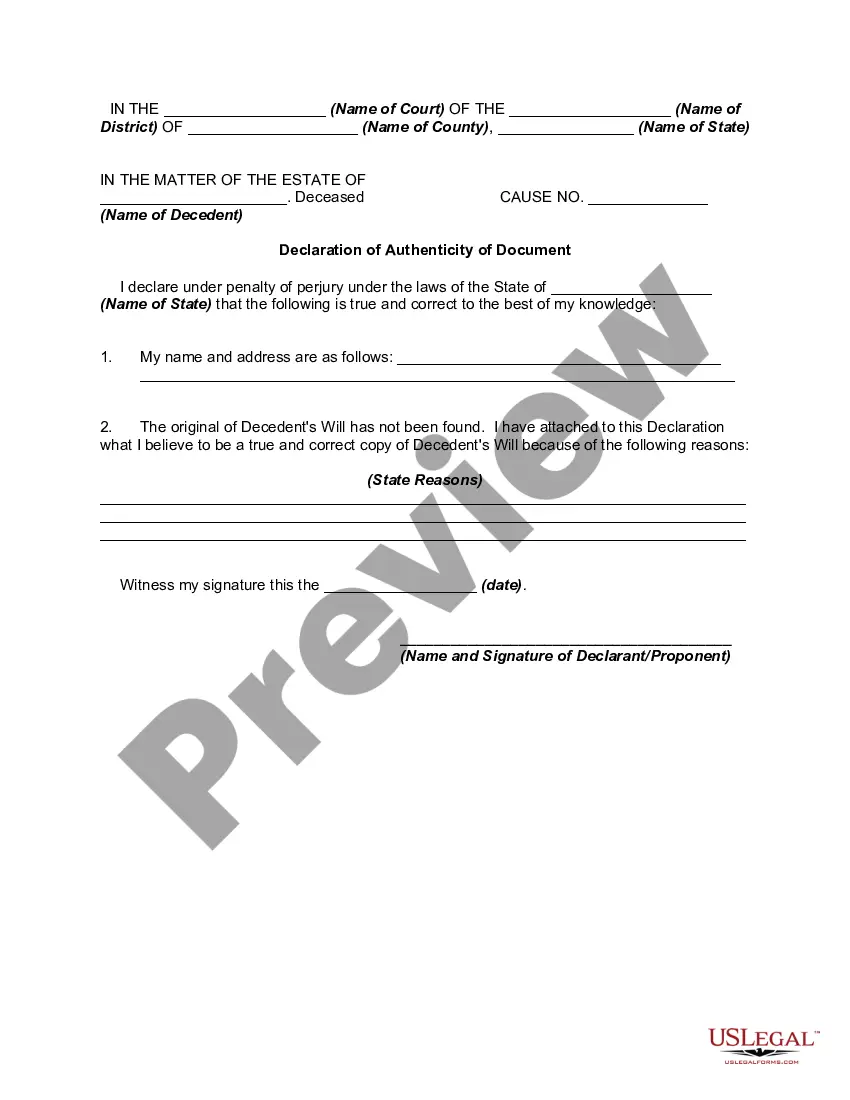
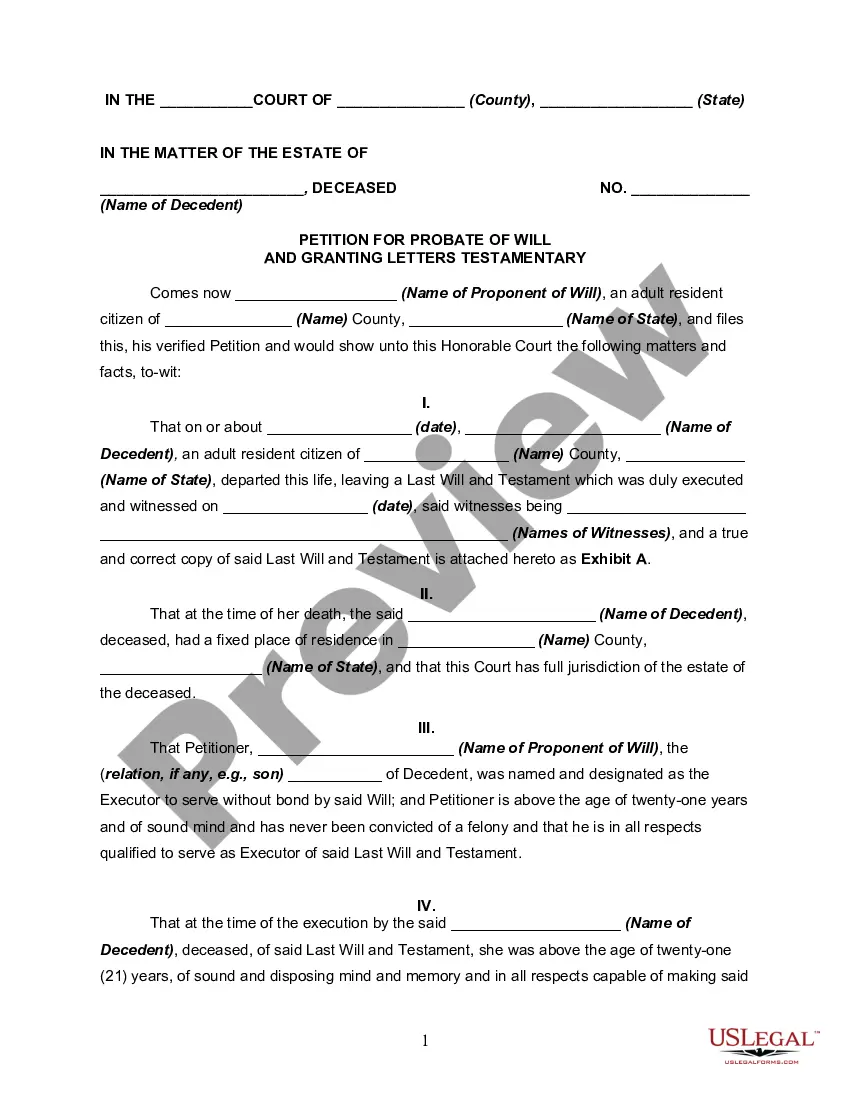
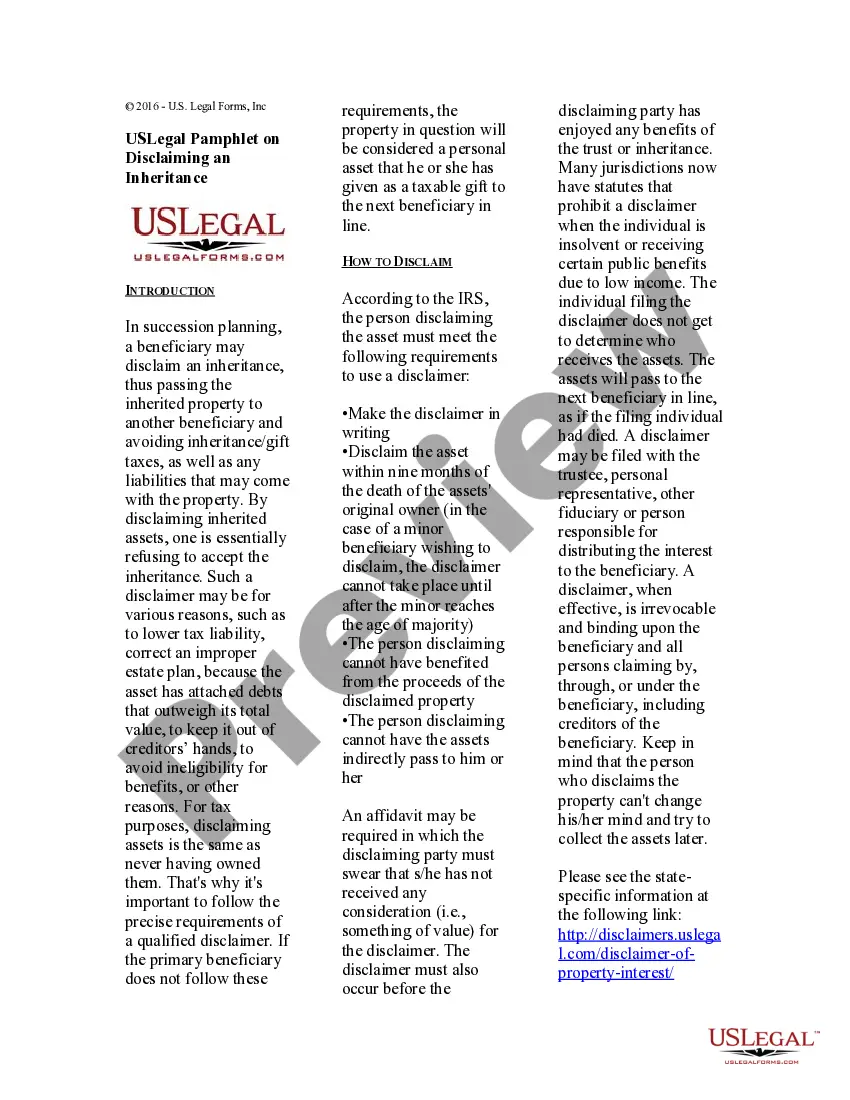
This pamphlet provides an overview on dealing with a lost will of a deceased person. Topics covered include suggestions for locating the will, how to probate a copy of a lost will, and how to prove the contents of a lost will.
Nebraska USLegal Pamphlet on Lost Wills
Instant download
Description
Free preview
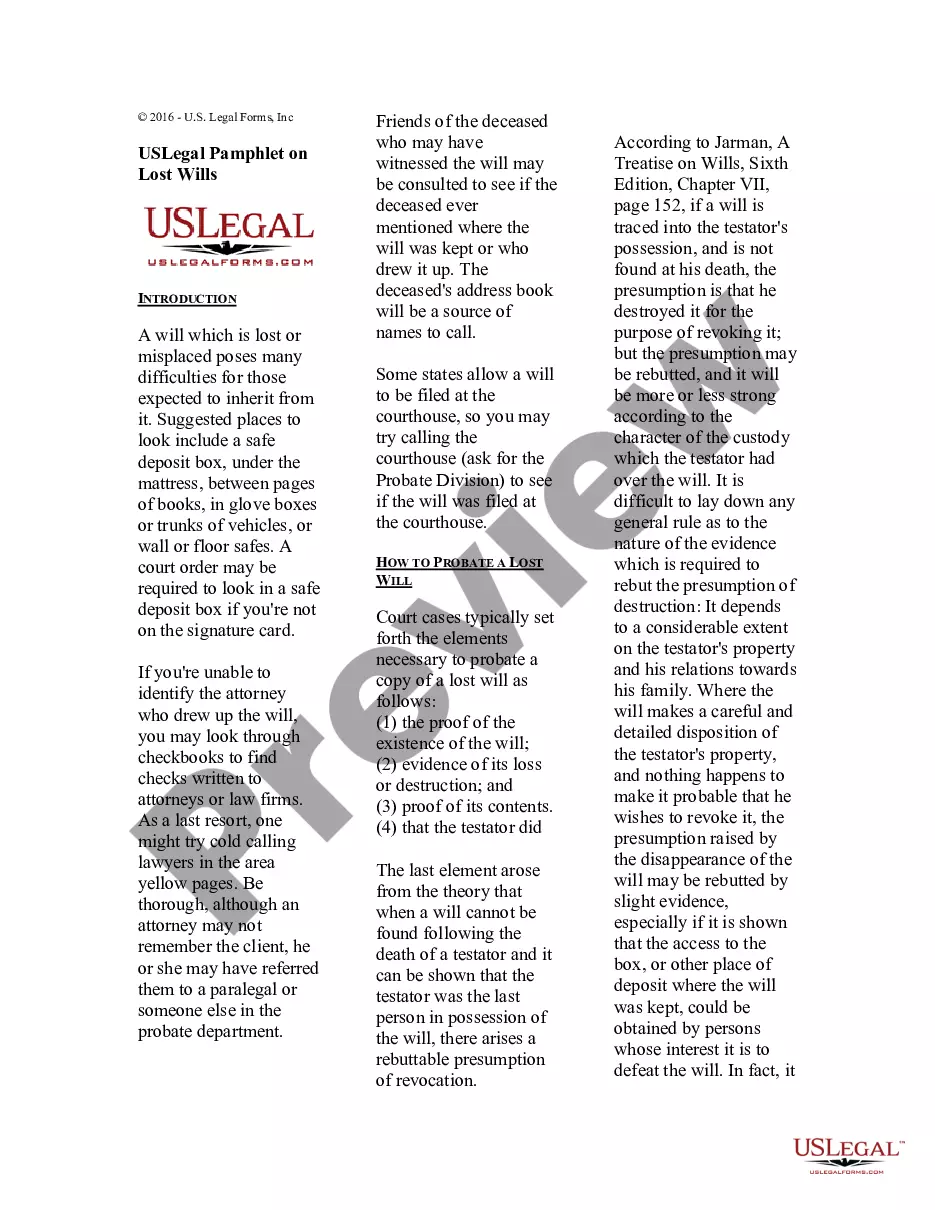
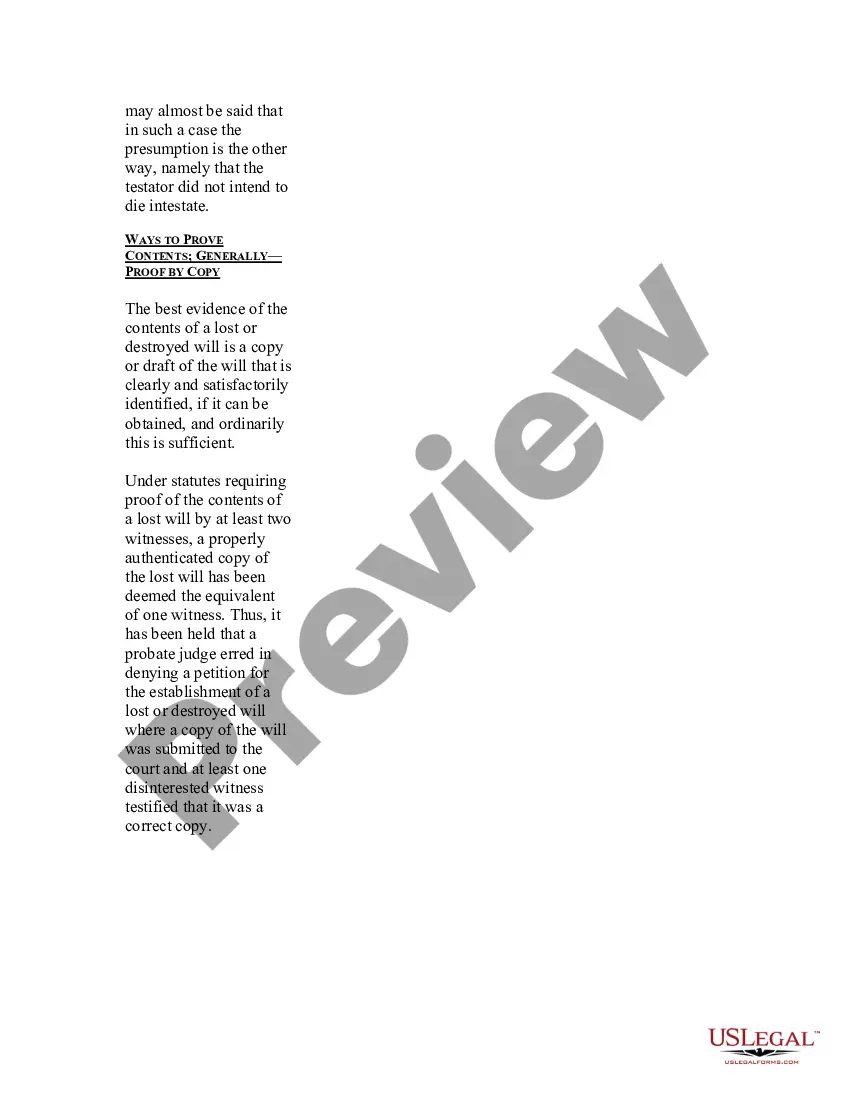
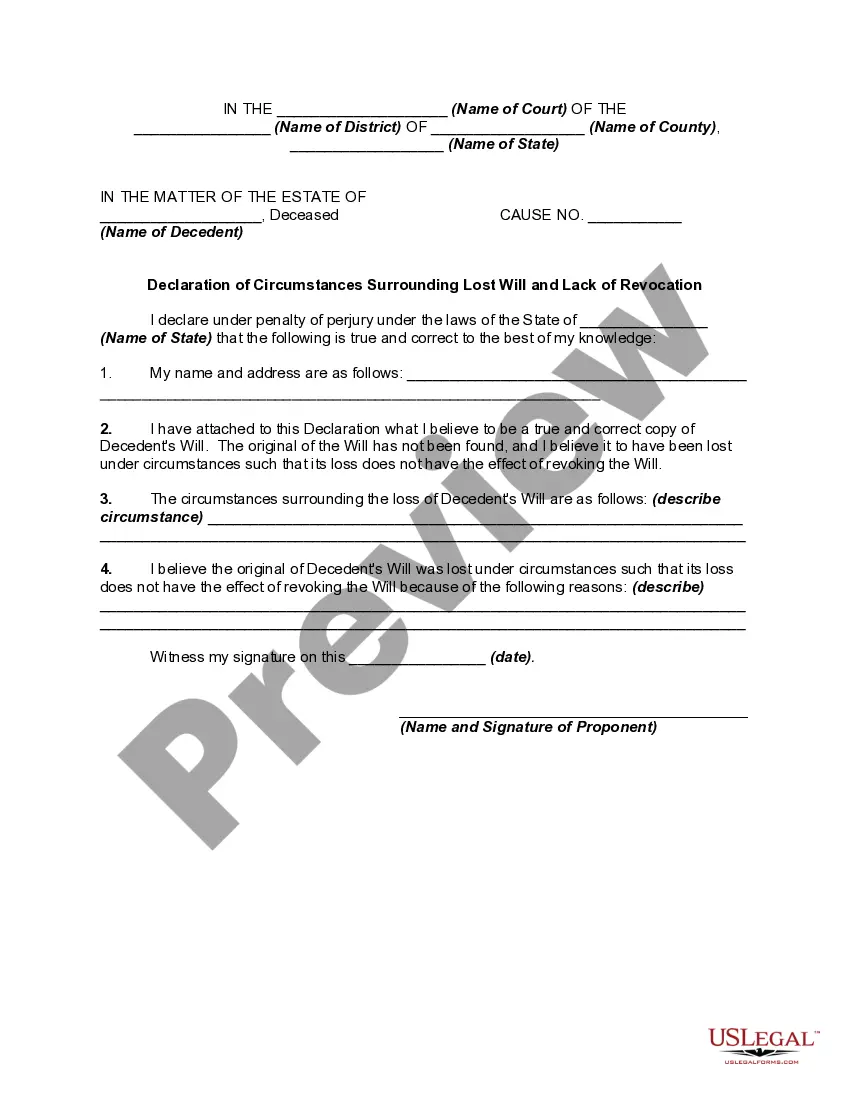
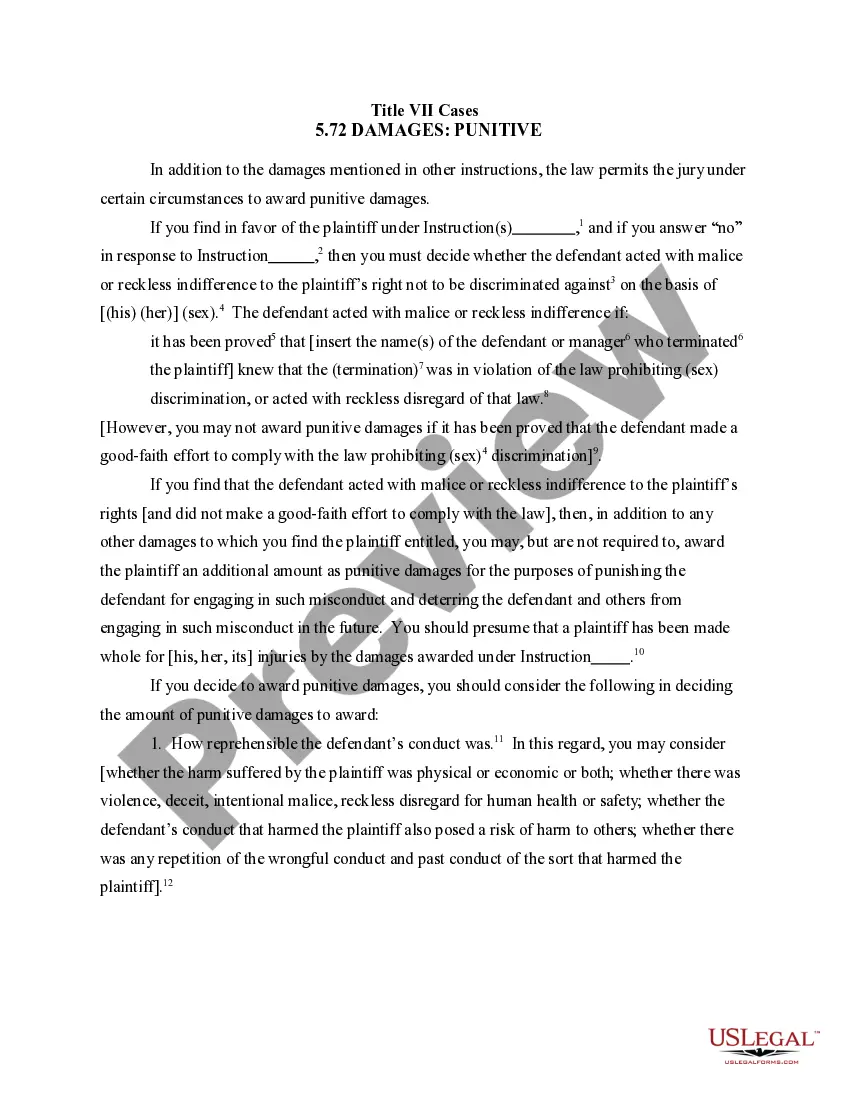

How to fill out USLegal Pamphlet On Lost Wills?
Are you currently in a situation where you require documents for both business or personal purposes almost every day.
There are numerous legal document templates available online, but finding ones you can trust is challenging.
US Legal Forms provides thousands of template forms, such as the Nebraska USLegal Pamphlet on Lost Wills, which are designed to meet federal and state regulations.
Once you find the right form, click Buy now.
Select the pricing plan you want, fill out the required information to create your account, and pay for your order with your PayPal or credit card.
- If you are already familiar with the US Legal Forms website and have an account, simply Log In.
- Then, you can download the Nebraska USLegal Pamphlet on Lost Wills template.
- If you do not have an account and wish to start using US Legal Forms, follow these steps.
- Obtain the form you need and ensure it is for the correct city/region.
- Utilize the Review button to examine the form.
- Check the description to confirm you have selected the correct form.
- If the form is not what you’re looking for, use the Search field to find the form that suits your needs and specifications.
Form popularity
FAQ
Yes, Nebraska does recognize holographic wills, which are handwritten wills without witnesses. However, these wills must meet specific requirements to be valid, such as being signed by the testator. The Nebraska USLegal Pamphlet on Lost Wills offers guidance on how to ensure your holographic will is legally binding. It is always wise to consult legal resources to avoid complications later on.
To obtain a copy of a will in Nebraska, you can contact the probate court in the county where the deceased person lived. Often, you can request documents through their website or by visiting in person. The Nebraska USLegal Pamphlet on Lost Wills details the steps involved in this process and provides necessary forms to streamline your request. Utilizing the resources from USLegalForms can make this task much easier.
Not all wills need to be recorded in Nebraska. However, recording a will can provide legal protection and ensure it is accessible when needed. The Nebraska USLegal Pamphlet on Lost Wills explains the benefits of recording a will, including how it can simplify the probate process. If a will is lost, having it recorded can serve as a reference, which is why many individuals choose to take this step.
Yes, in Nebraska, wills become public record once they are filed with the court after a person's death. This means that anyone can access and view the contents of a will, which may not be ideal for every individual. Understanding this aspect of wills is important for effective estate planning. For more information on how to protect your documents, refer to the Nebraska USLegal Pamphlet on Lost Wills.
One of the biggest mistakes people make with wills is failing to keep them updated. Life events such as marriage, divorce, or the birth of children can significantly change your estate planning needs. Additionally, not properly storing your will can lead to issues, especially if it gets lost. The Nebraska USLegal Pamphlet on Lost Wills provides guidance on how to address these challenges and ensure your wishes are honored.
In most counties in Nebraska probate records have been kept by the county judge. They include wills, fee books, claim registers, legacy records, inheritance records, probate ticklers, and dockets. They are available at the county courthouses. The Family History Library has microfilms of many county probate records.
A will must be filed with the court in Nebraska regardless of whether probate is necessary. The court has the job of validating the will and handling any issues if an heir contests it. If the estate requires probate, it is often opened at the same time as when the will is filed.
To make a will self-proved in Nebraska, the testator and witnesses must sign a self proving affidavit before a notary public. An affidavit is a sworn statement, and a notary public is an officer of the court. Therefore, an affidavit before a notary public is like making a statement in court.
Nebraska Will Laws at a Glance As is the case in other states, testators must be at the age of majority (19 in Nebraska) and be "of sound mind" in order to draft a valid will. Also, at least two witnesses must sign the will after having either witnessed the signing or the testator's acknowledgment of signing the will.