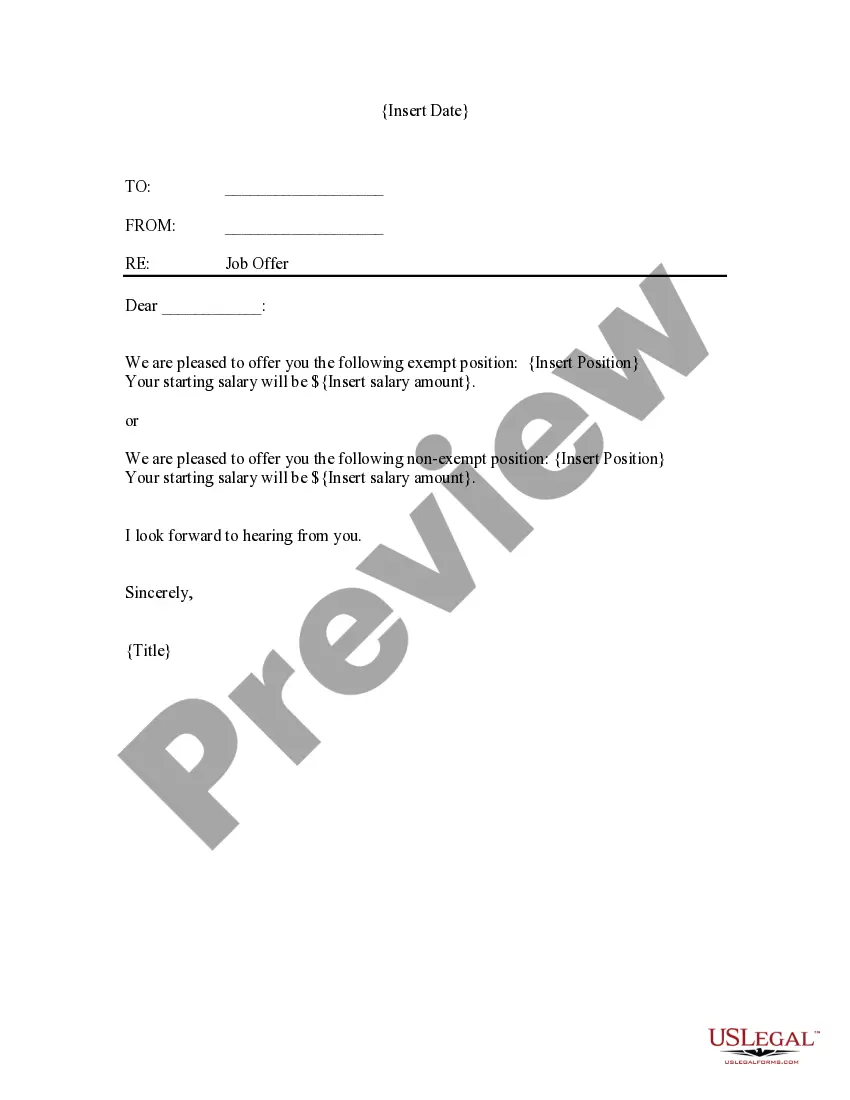
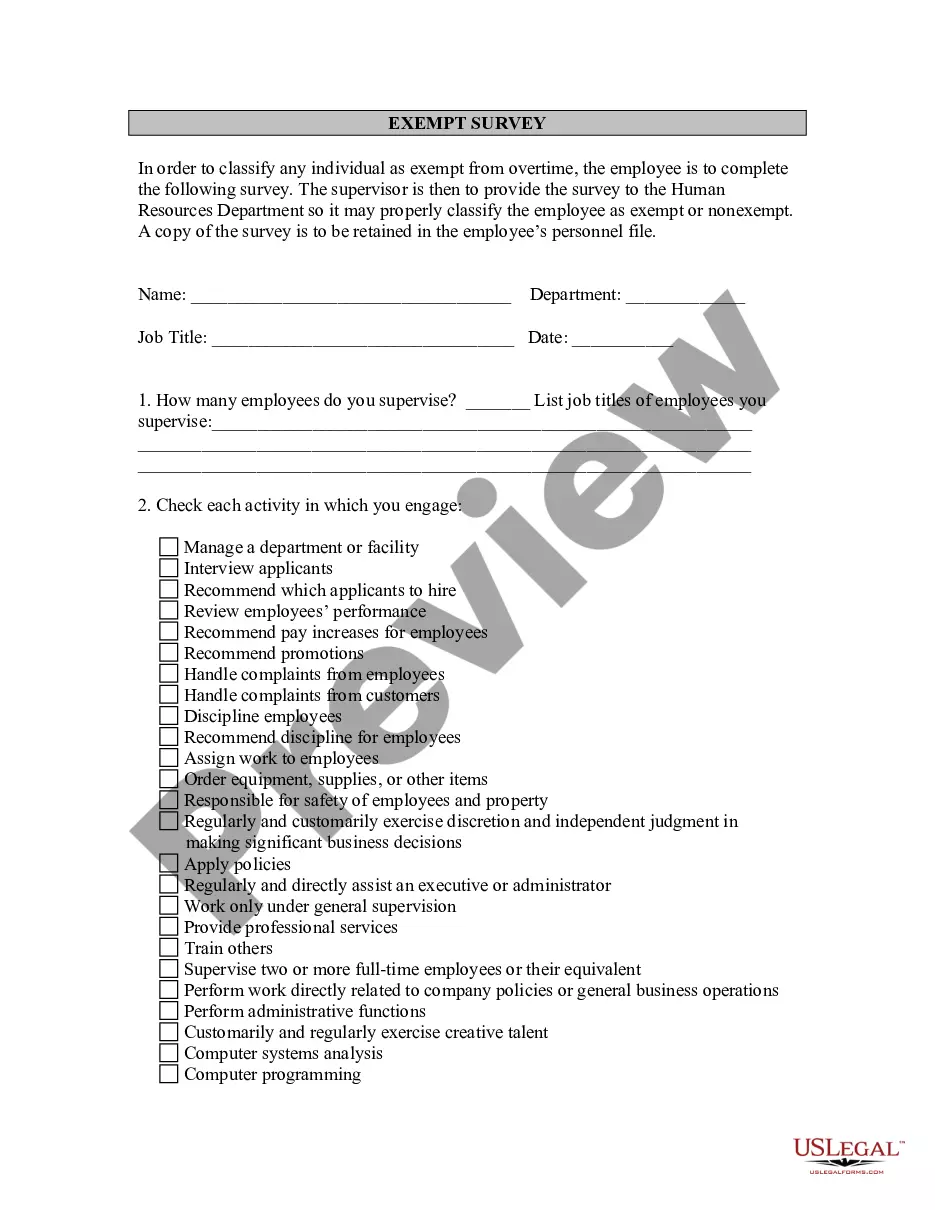
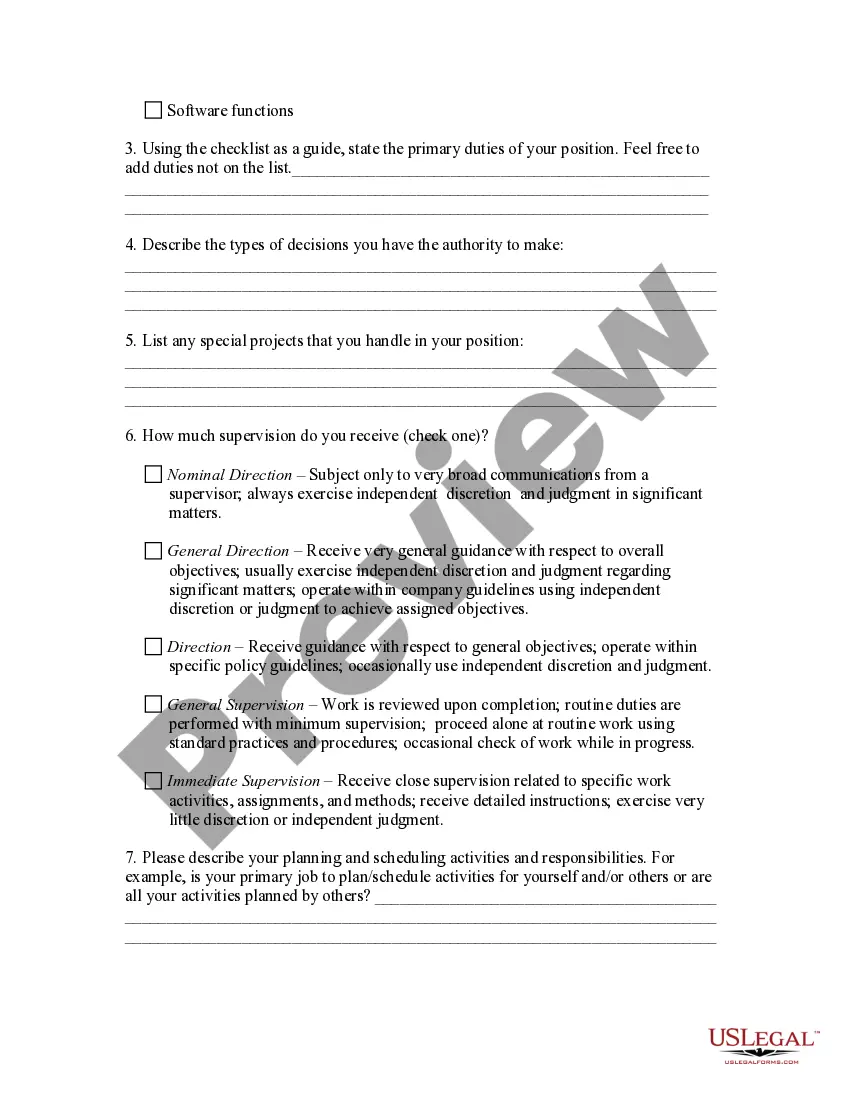
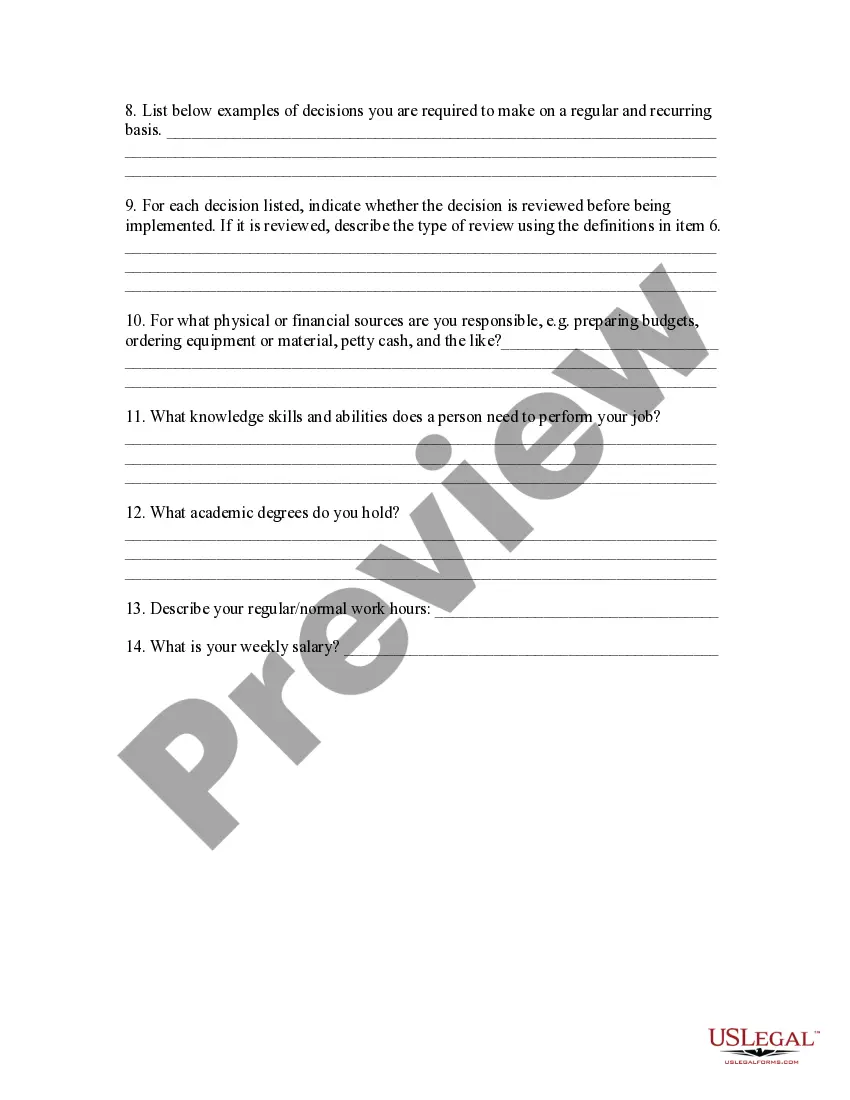
Nebraska Exempt Survey
Description
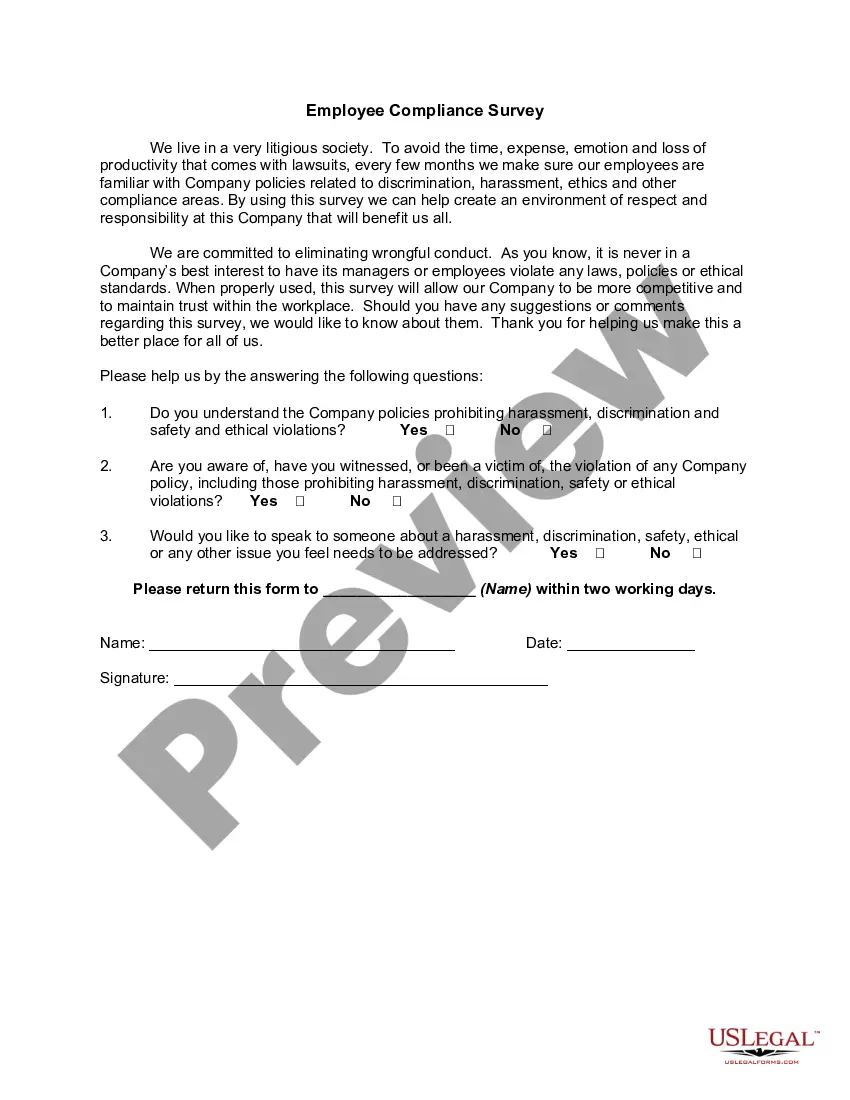
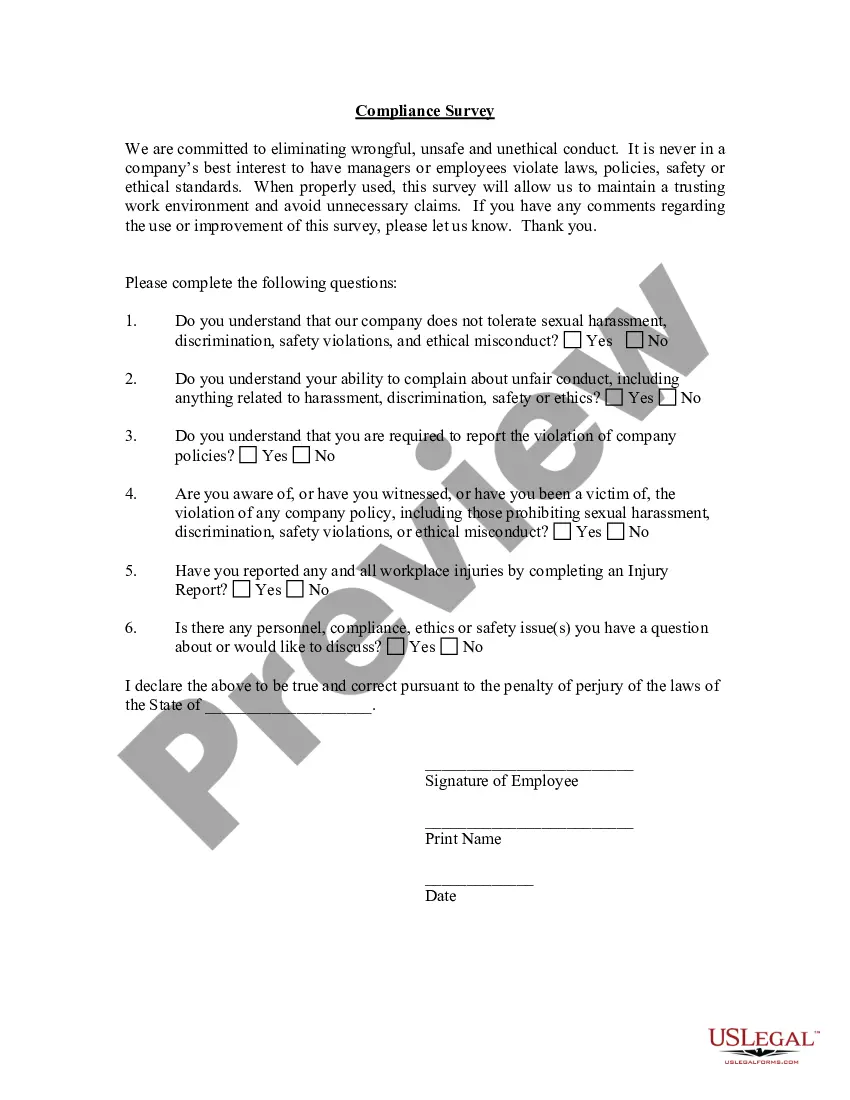
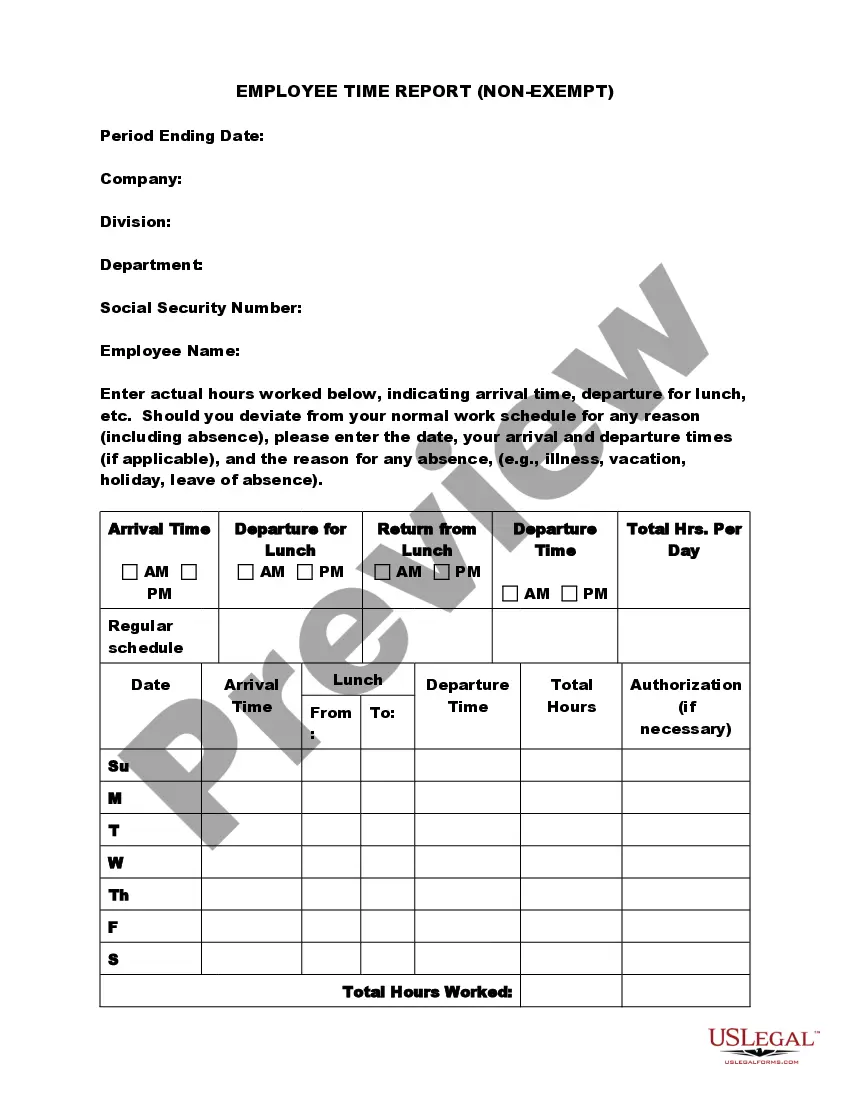
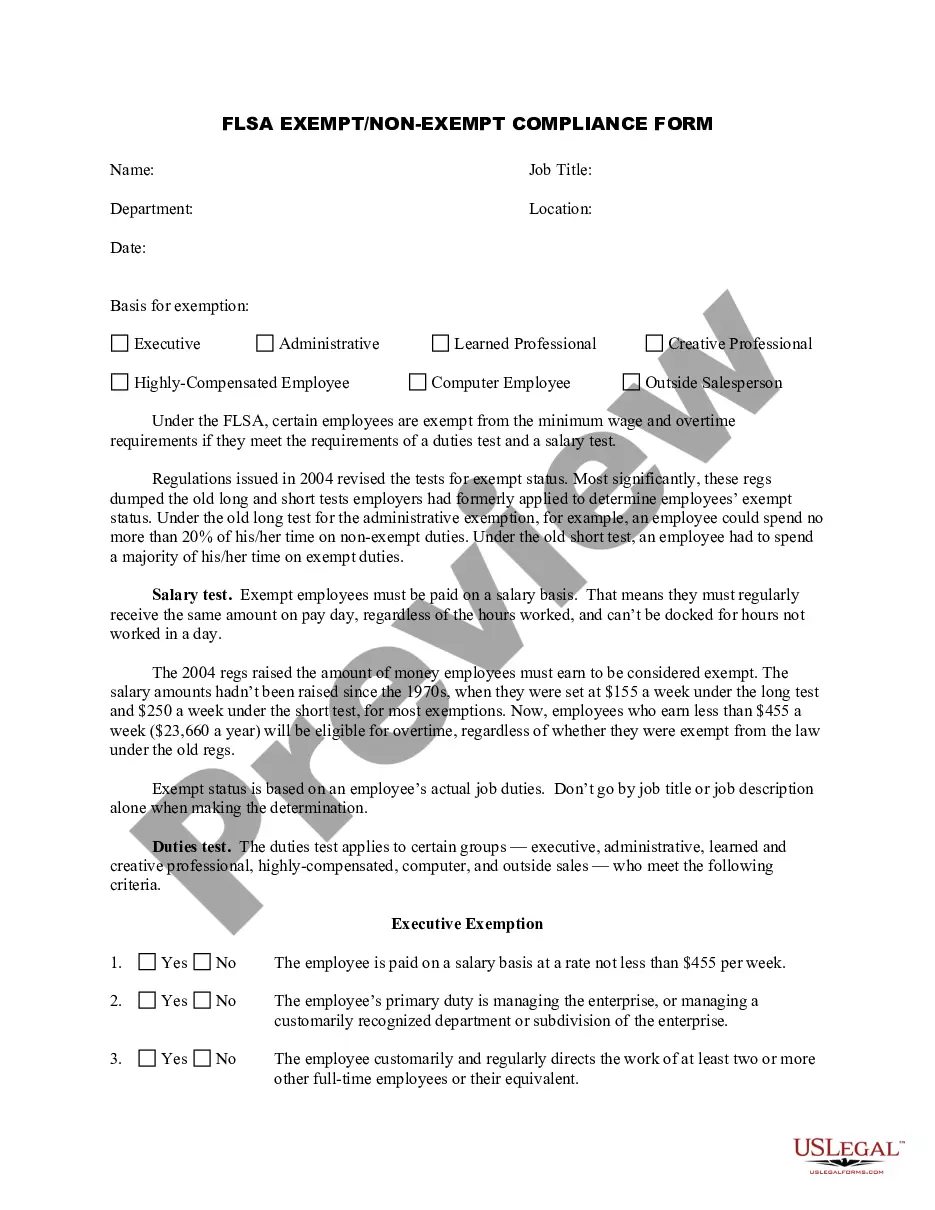
Get your form ready online
Our built-in tools help you complete, sign, share, and store your documents in one place.
Make edits, fill in missing information, and update formatting in US Legal Forms—just like you would in MS Word.
Download a copy, print it, send it by email, or mail it via USPS—whatever works best for your next step.
Sign and collect signatures with our SignNow integration. Send to multiple recipients, set reminders, and more. Go Premium to unlock E-Sign.
If this form requires notarization, complete it online through a secure video call—no need to meet a notary in person or wait for an appointment.
We protect your documents and personal data by following strict security and privacy standards.

Make edits, fill in missing information, and update formatting in US Legal Forms—just like you would in MS Word.

Download a copy, print it, send it by email, or mail it via USPS—whatever works best for your next step.

Sign and collect signatures with our SignNow integration. Send to multiple recipients, set reminders, and more. Go Premium to unlock E-Sign.

If this form requires notarization, complete it online through a secure video call—no need to meet a notary in person or wait for an appointment.

We protect your documents and personal data by following strict security and privacy standards.
Looking for another form?







How to fill out Exempt Survey?
Finding the appropriate legal document template can be a challenge.
Certainly, there are numerous templates accessible online, but how can you acquire the legal format you require.
Utilize the US Legal Forms website.
If you are a new user of US Legal Forms, here are straightforward steps for you to follow: First, ensure you have selected the correct form for your area/region. You can preview the form using the Review button and read the form description to ensure it is suitable for your needs.
- The service provides thousands of templates, including the Nebraska Exempt Survey, suitable for business and personal purposes.
- All templates are reviewed by experts and comply with state and federal regulations.
- If you are already registered, Log In to your account and click the Download button to access the Nebraska Exempt Survey.
- Use your account to review the legal templates you have previously purchased.
- Head to the My documents section of your account to obtain an additional copy of the document you require.
Form popularity
FAQ
Personal property is all property other than real property and franchises. Recovery Period. The recovery period is the federal Modified Accelerated Cost Recovery System (MACRS) recovery period over which the Nebraska adjusted basis of property will be depreciated for property tax purposes.
Personal Property - Any property other than real estate. The distinguishing factor between personal property and real property is that personal property is movable and not fixed permanently to one location, such as land or buildings.
2756 The maximum exempt value of the homestead is the greater of $40,000 or 100% of the county average assessed value of a single family residential property in the county. In this case, the maximum exempt amount is $75,000 ($75,000 x 100% = $75,000, which is greater than $40,000).
Real property includes: all lots and land; buildings, improvements, and fixtures (except trade fixtures); and mobile homes that are used for residential, office, commercial, or agricultural purposes.
Traditional Goods or Services Goods that are subject to sales tax in Nebraska include physical property, like furniture, home appliances, and motor vehicles. Medicine, groceries, and gasoline are all tax-exempt. Some services in Nebraska are subject to sales tax.
To be eligible, the maximum assessed value on the homestead is $110,000 or 225% of the average assessed value of single family residential property in the county, whichever is greater. The exempt value will be reduced by 10% for every $2,500 that the assessed value exceeds the maximum value.
The homestead exemption provides relief from property taxes by exempting all or a portion of the taxable value of the residence. The State of Nebraska reimburses counties and other governmental subdivisions for the property taxes lost due to homestead exemptions.
To expand homestead tax exemption program to additional elderly and disabled Nebraskans and veterans. The bill increases the maximum eligible income from $28,500 to $46,900 for partial exemptions to married claimants older than 65.
A surviving spouse of a decedent who was domiciled in this state is entitled to a homestead allowance of seven thousand five hundred dollars for a decedent who dies before January 1, 2011, and twenty thousand dollars for a decedent who dies on or after January 1, 2011.
In Nebraska, a homestead exemption is available to the following groups of persons: 2022 Persons over the age of 65; 2022 Qualified disabled individuals; or 2022 Qualified disabled veterans and their widow(er)s. Some categories are subject to household income limitations and residence valuation requirements.