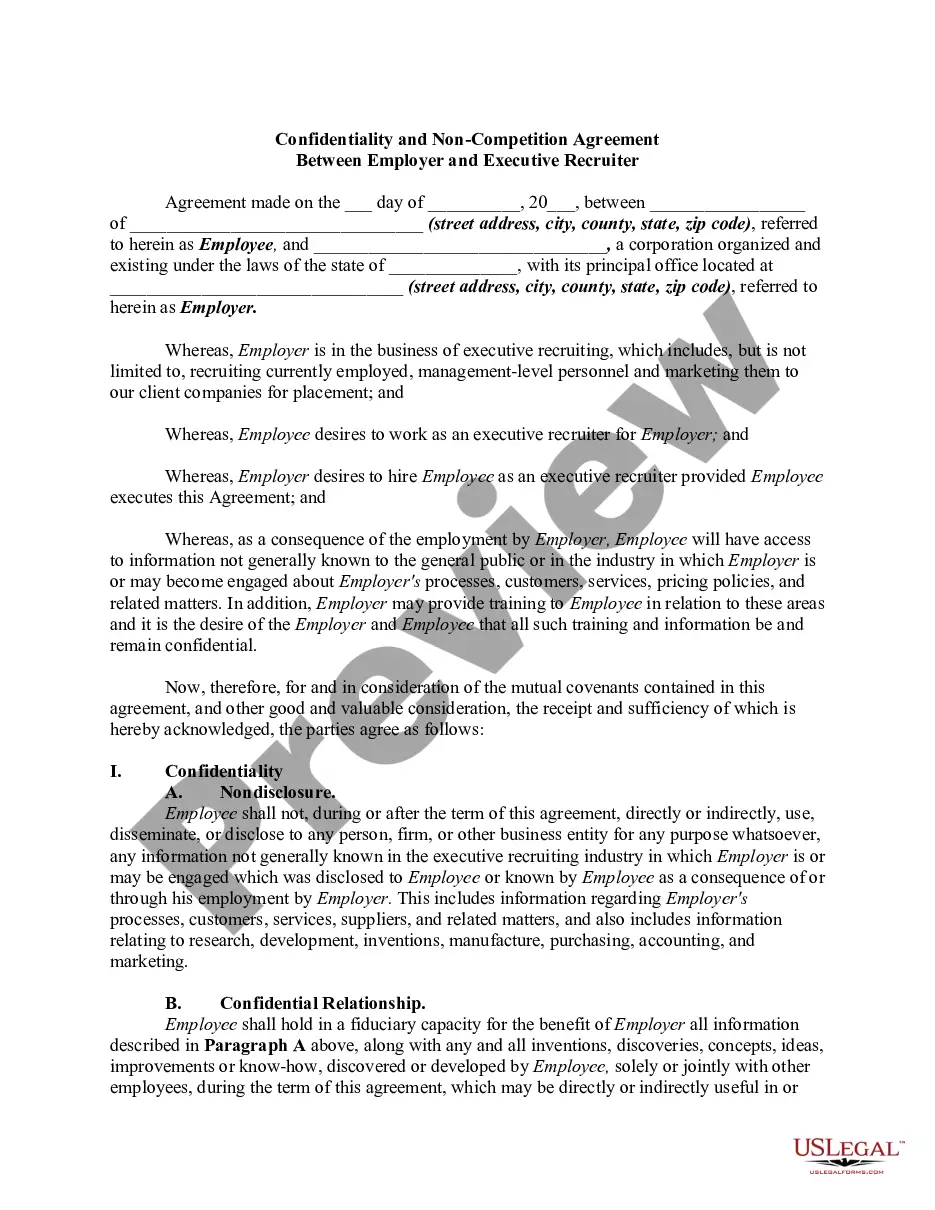
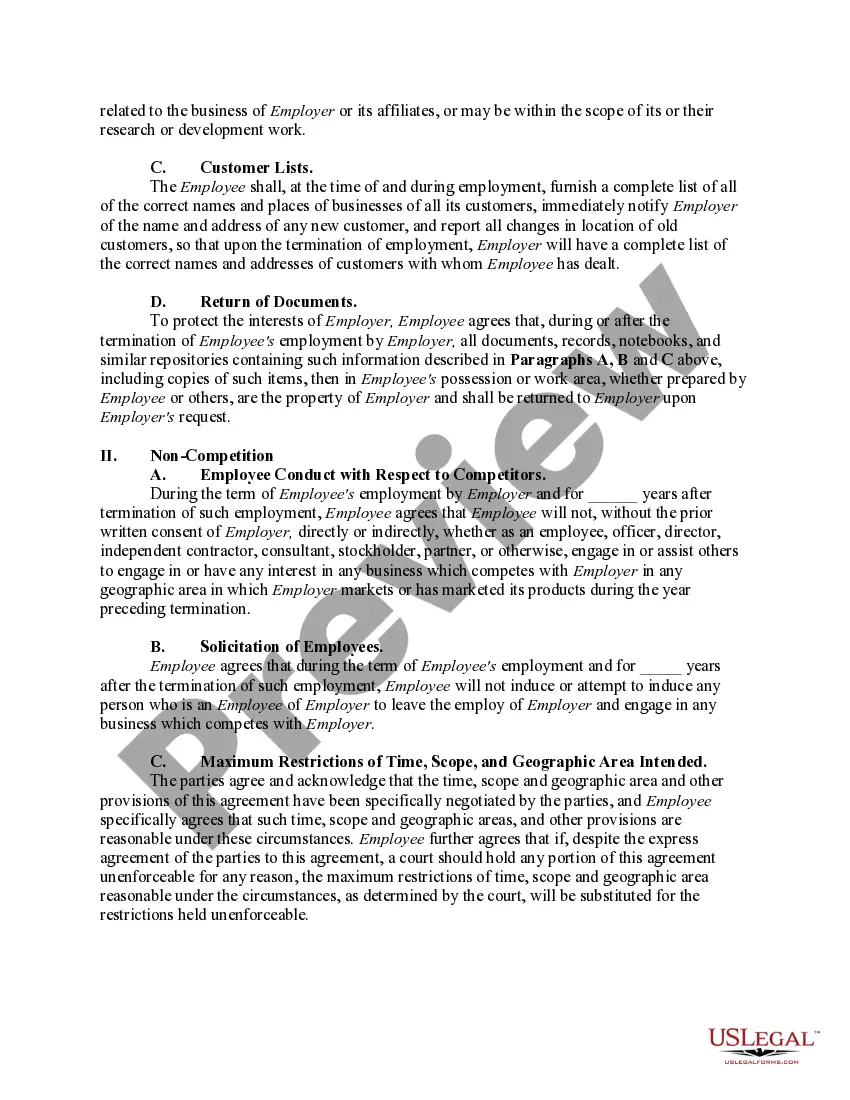
Nebraska Confidentiality and Noncompetition Agreement Between Employer and Executive Recruiter
Description
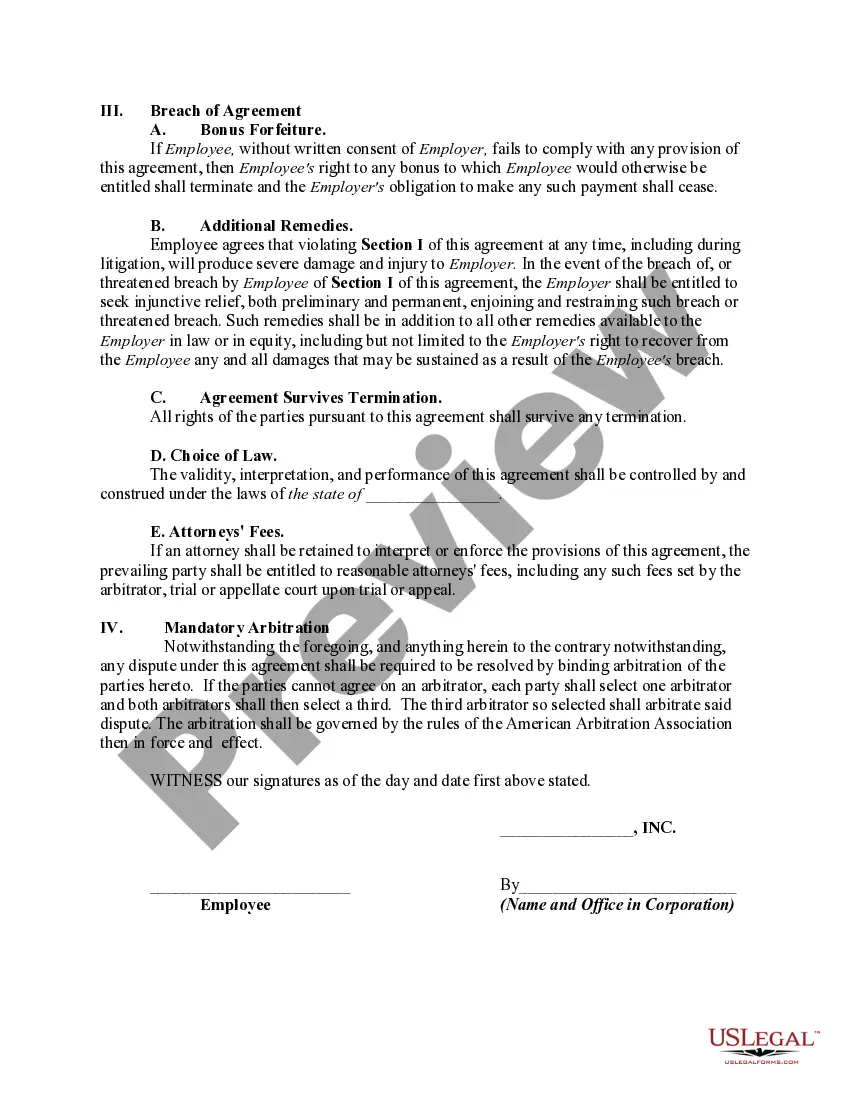
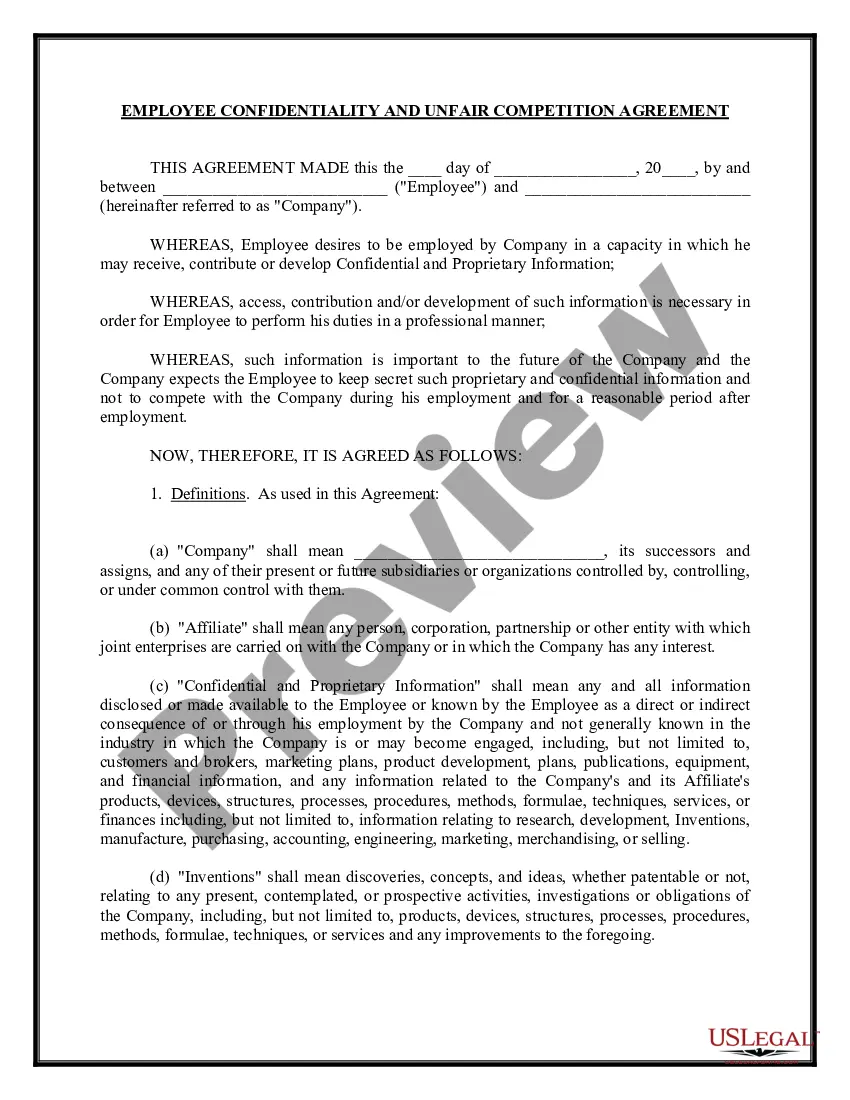
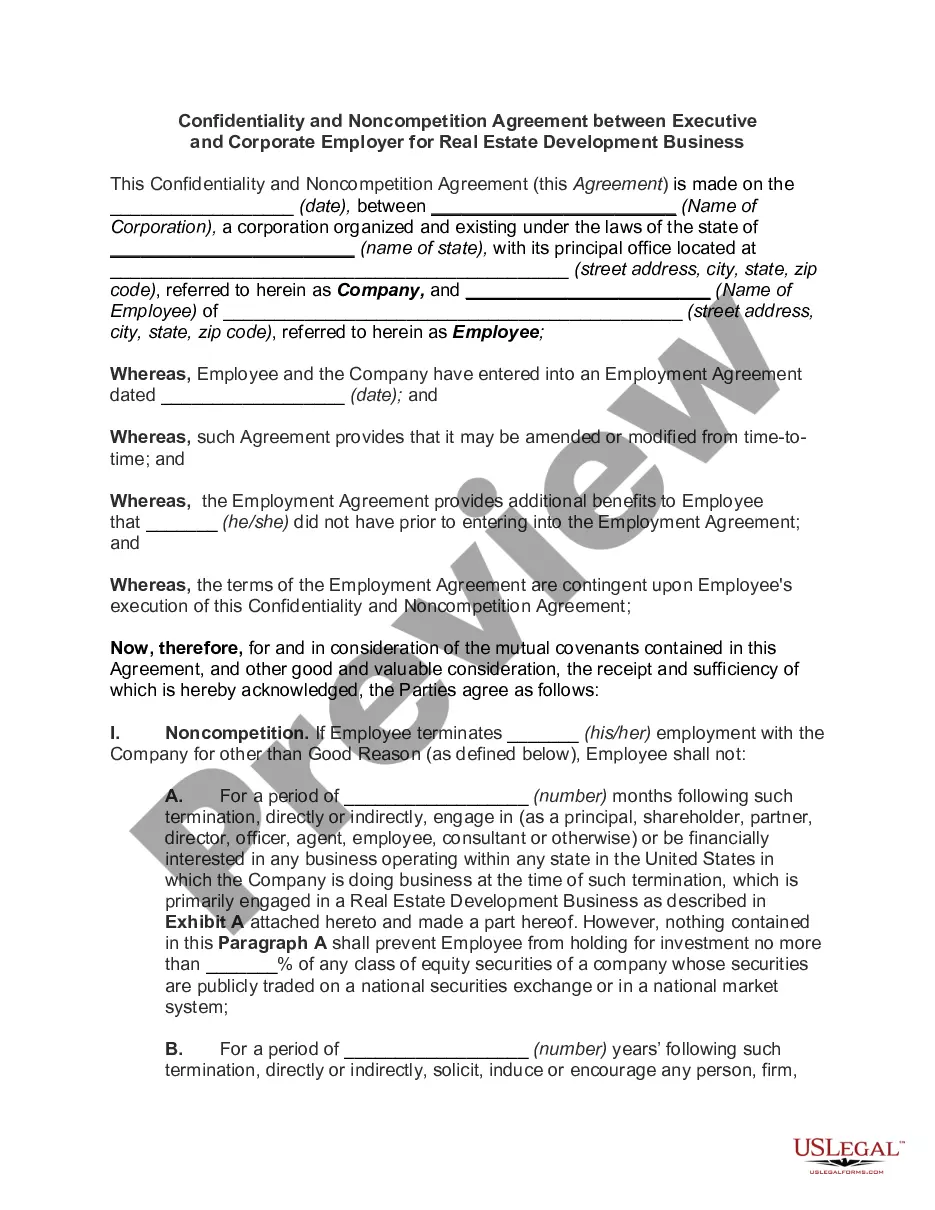
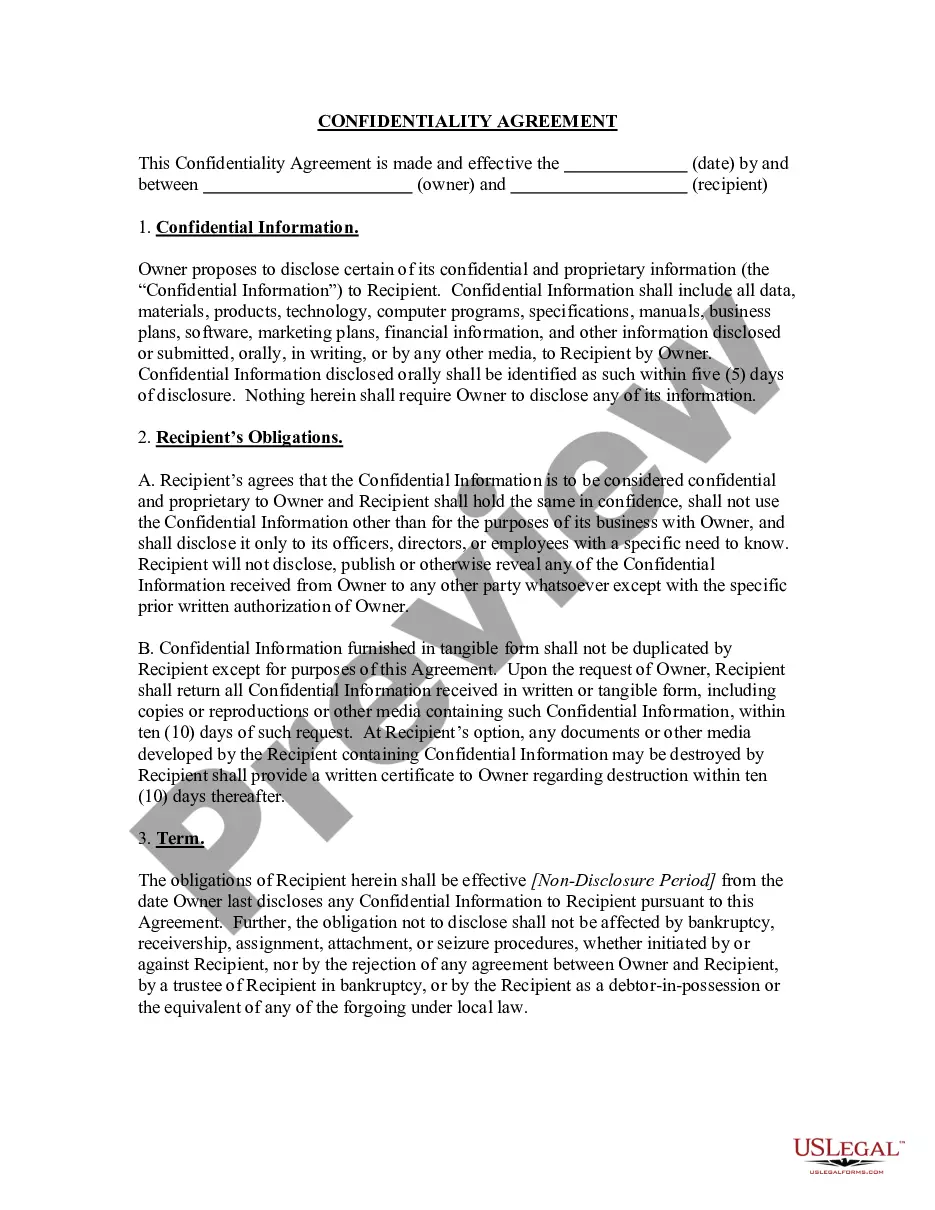
How to fill out Confidentiality And Noncompetition Agreement Between Employer And Executive Recruiter?
If you need to obtain, acquire, or print legal document templates, utilize US Legal Forms, the largest collection of legal documents available online.
Make the most of the site’s user-friendly and convenient search feature to locate the documents you require.
Various templates for commercial and personal purposes are organized by categories and states, or keywords.
Step 4. Once you have located the form you need, click the Buy now button. Choose your pricing plan and enter your details to create an account.
Step 5. Complete the transaction. You can use your credit card or PayPal account to process the payment.
- Use US Legal Forms to access the Nebraska Confidentiality and Noncompetition Agreement Between Employer and Executive Recruiter in just a few clicks.
- If you are an existing US Legal Forms user, Log In to your account and click on the Download button to find the Nebraska Confidentiality and Noncompetition Agreement Between Employer and Executive Recruiter.
- You can also retrieve documents you previously acquired from the My documents section of your account.
- If you are using US Legal Forms for the first time, follow the steps below.
- Step 1. Confirm that you have chosen the form for the correct city/state.
- Step 2. Utilize the Preview option to review the content of the form. Don’t forget to read through the description.
- Step 3. If you are not satisfied with the document, use the Search feature at the top of the screen to find other versions of the legal document template.
Form popularity
FAQ
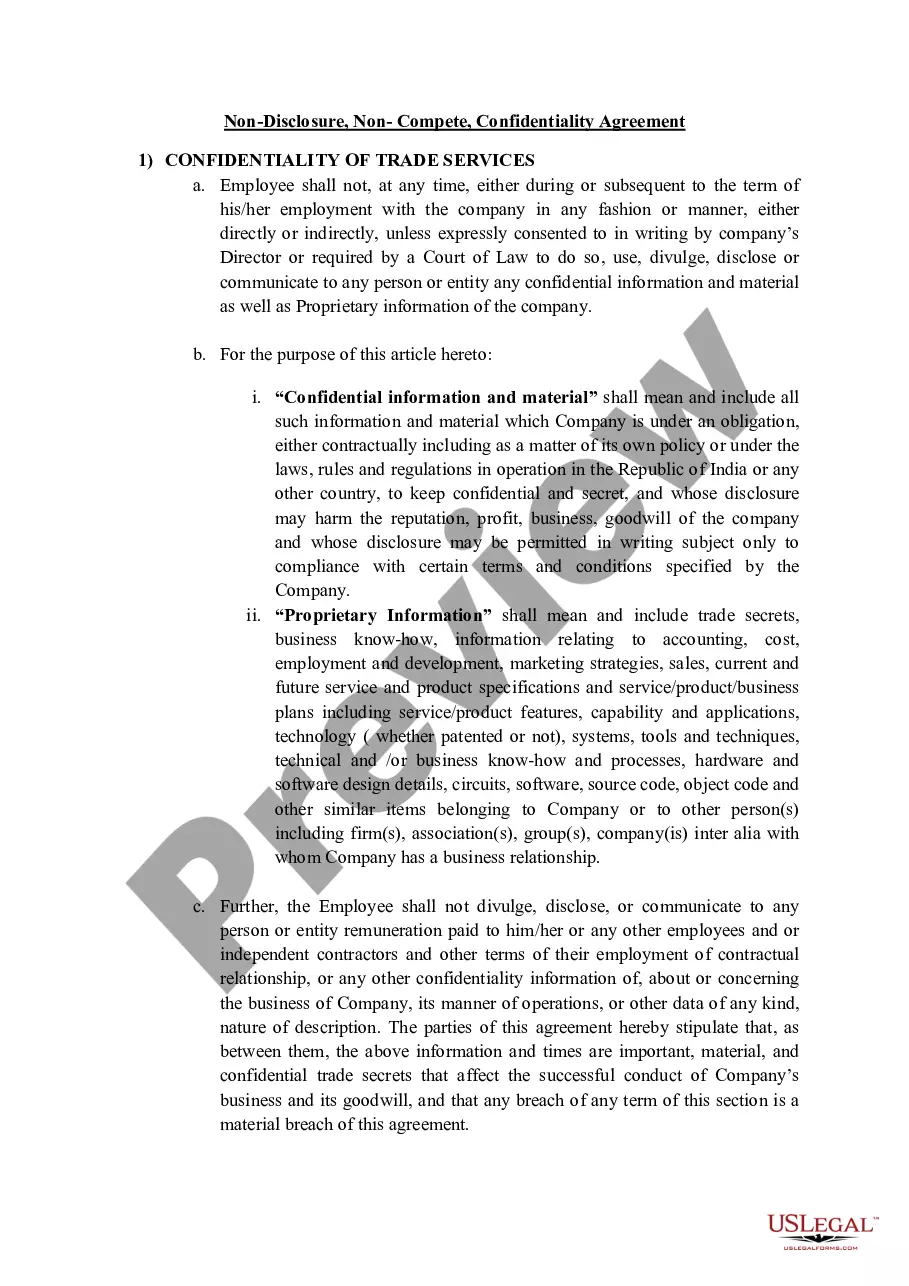
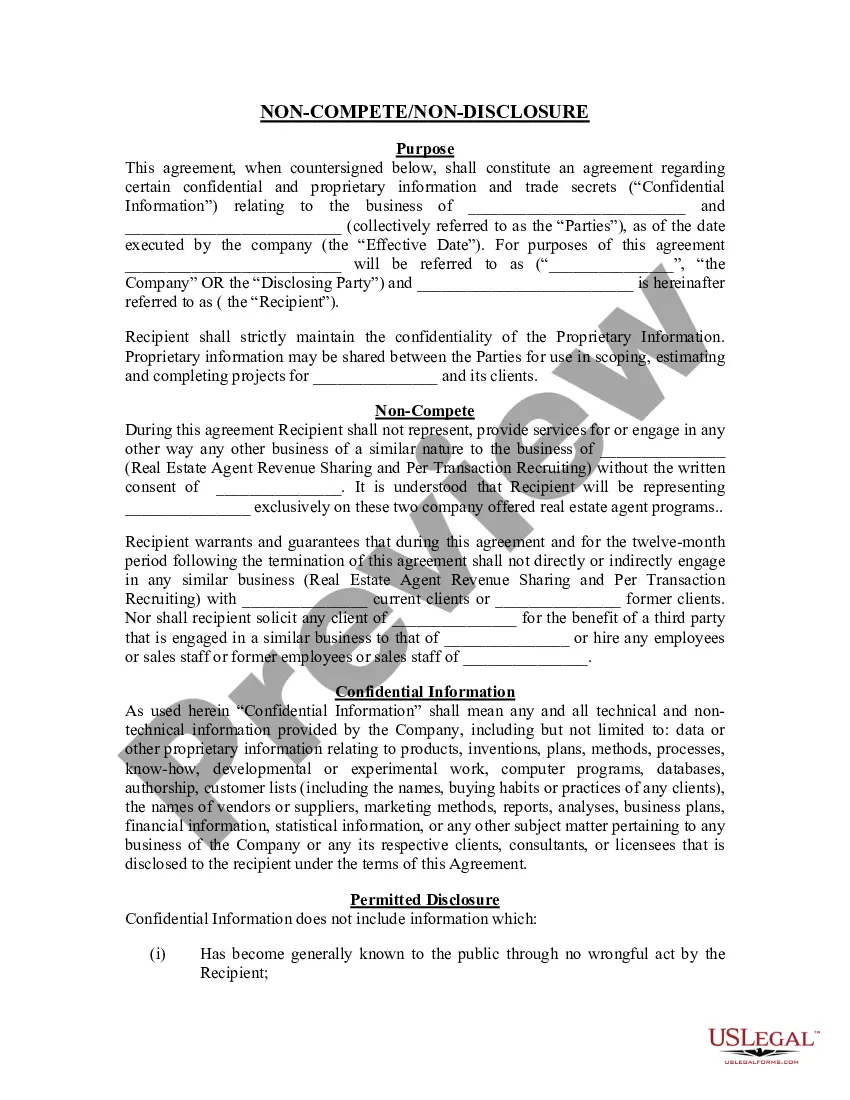
The primary distinction between a Non-Compete Agreement (NCA) and a Non-Disclosure Agreement (NDA) lies in their purpose. An NCA prevents individuals from competing against a business after leaving, while an NDA focuses on confidentiality regarding proprietary information. Understanding such differences can help both employers and recruiters effectively draft a Nebraska Confidentiality and Noncompetition Agreement Between Employer and Executive Recruiter to serve their interests competently.
Similar to the previous mention, the most recognized acronym for a non-compete agreement is also NCA. Employers and employees alike utilize this abbreviation when discussing restrictive covenants in contracts. Many choose to employ the Nebraska Confidentiality and Noncompetition Agreement Between Employer and Executive Recruiter for its structured and clear approach to agreements.
The acronym commonly used for a non-compete agreement is NCA, which stands for Non-Compete Agreement. This designation is frequently encountered in legal contexts and documents. In the realm of human resources or recruiting, you might refer to the Nebraska Confidentiality and Noncompetition Agreement Between Employer and Executive Recruiter, often ensuring a clear understanding of expectations.
compete is a legal agreement that prohibits an employee from working in competing business ventures for a certain time following their employment. It ensures that sensitive information or trade secrets remain confidential and not used against the original employer. The Nebraska Confidentiality and Noncompetition Agreement Between Employer and Executive Recruiter encapsulates these principles, protecting both parties involved.
compete agreement is often referred to as a noncompetition clause or covenant. This legal document restricts an individual or entity from engaging in trade or employment within a specified field for a defined period after leaving a position. The Nebraska Confidentiality and Noncompetition Agreement Between Employer and Executive Recruiter serves a similar purpose, aiming to protect business interests.
The common acronym for a non-compete agreement is NCA. In the context of Nebraska confidentiality and noncompetition agreements between employers and executive recruiters, NCAs play a significant role in protecting sensitive information and business interests. When professionals engage with these agreements, they create a secure environment that fosters trust and compliance. You can find useful resources and templates on USLegalForms to help navigate the complexities of NCAs.
Yes, Nebraska is a blue pencil state when it comes to the enforcement of confidentiality and noncompetition agreements. This means that courts in Nebraska can modify contracts to make them enforceable, as long as the original intent of the agreement remains intact. For those navigating Nebraska confidentiality and noncompetition agreements between employers and executive recruiters, understanding this concept is crucial. You can use USLegalForms to access templates that comply with Nebraska's laws and practices.
The most common restrictive covenant is the non-compete agreement, which prevents employees from joining competitors after leaving a job. This type of covenant aims to safeguard business interests and sensitive information. Understanding the nuances of the Nebraska Confidentiality and Noncompetition Agreement Between Employer and Executive Recruiter can help you navigate these common restrictions effectively.
The enforceability of a non-compete in Nebraska depends on its reasonableness and the business interests it seeks to protect. Courts evaluate the duration, geography, and the nature of the restriction when determining enforceability. It's vital to understand the elements of the Nebraska Confidentiality and Noncompetition Agreement Between Employer and Executive Recruiter to ensure compliance and awareness of your rights.
An example of a restrictive covenant is a non-compete agreement that prevents an employee from working for a rival company for a specified time after leaving their current job. These agreements aim to protect trade secrets and proprietary information. The Nebraska Confidentiality and Noncompetition Agreement Between Employer and Executive Recruiter often outlines such examples and provides clarity on their implications.