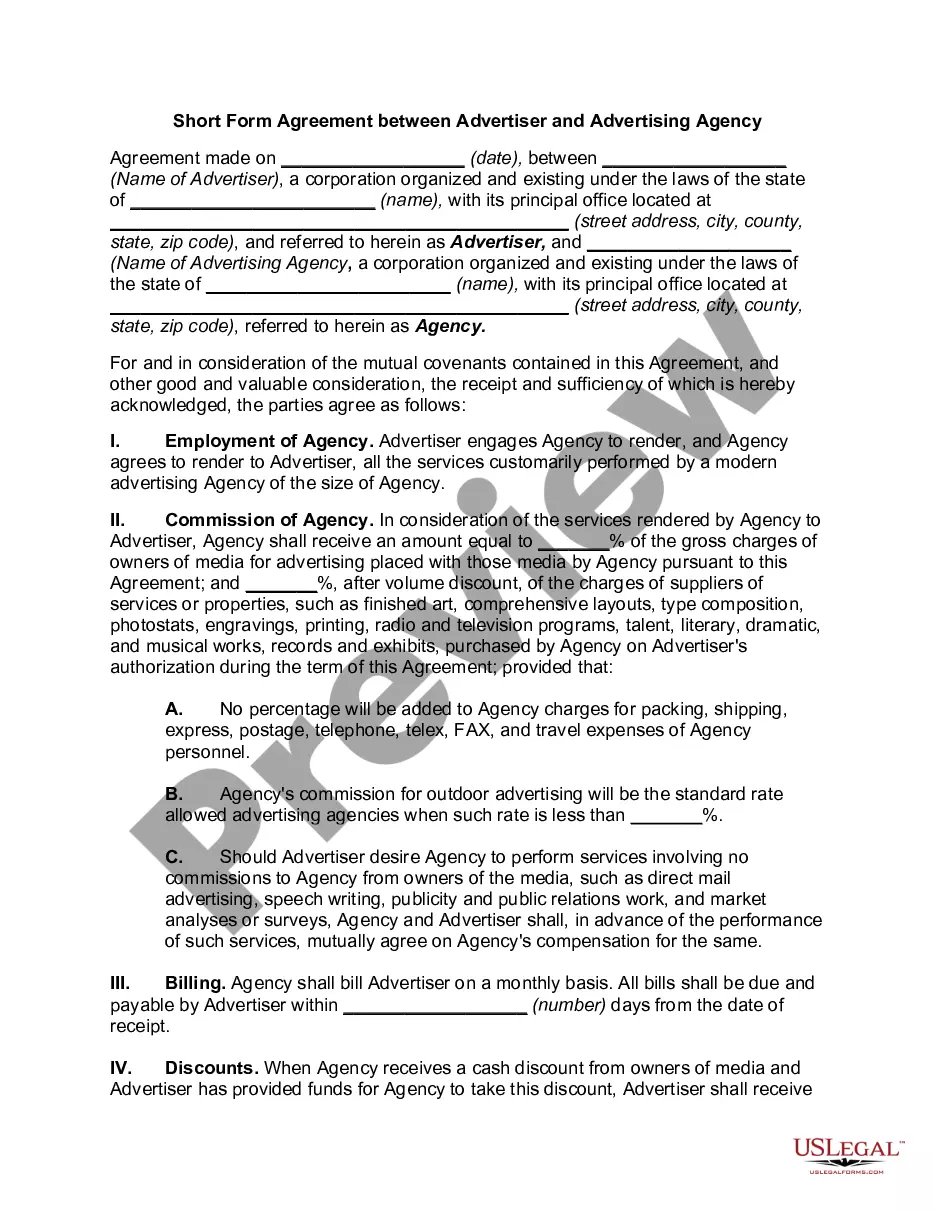
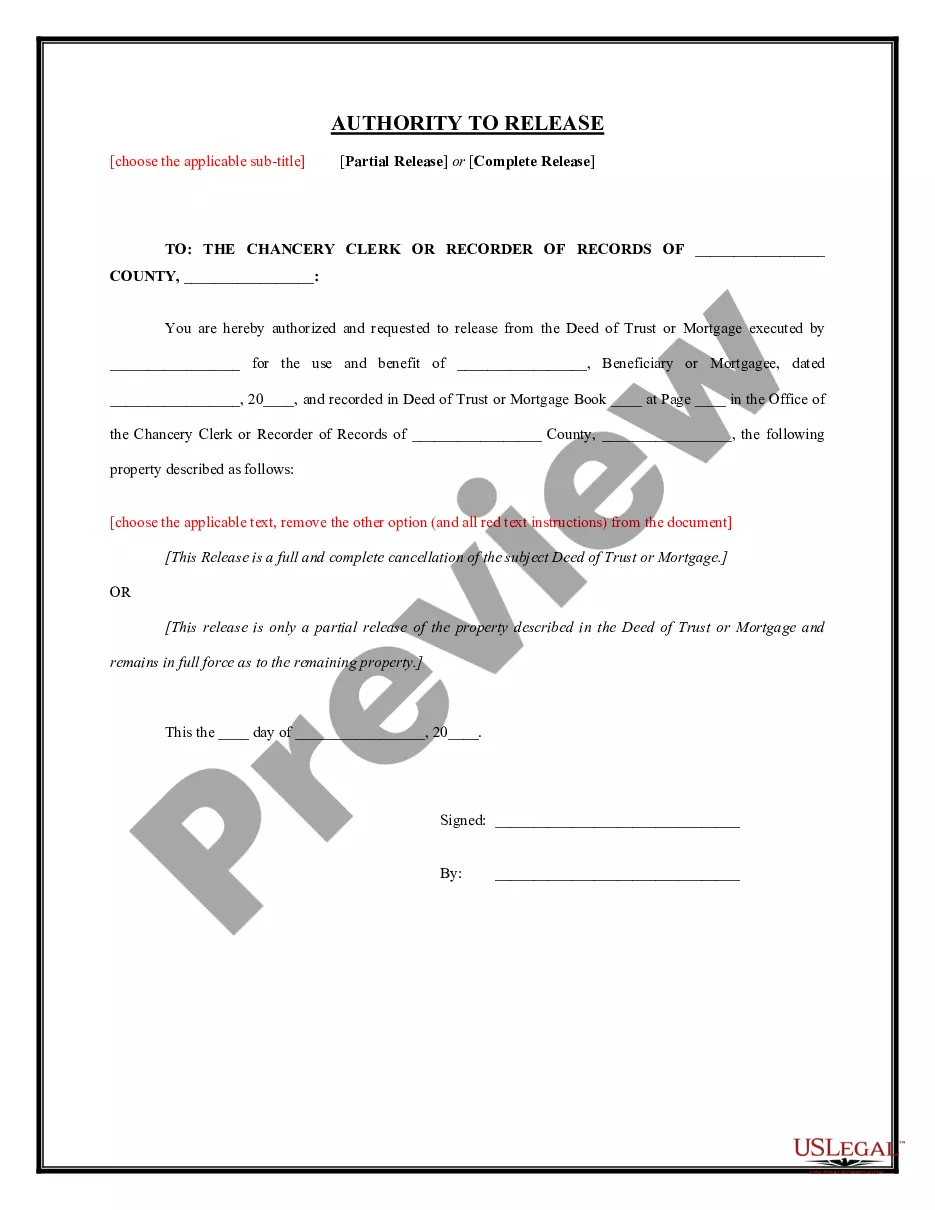
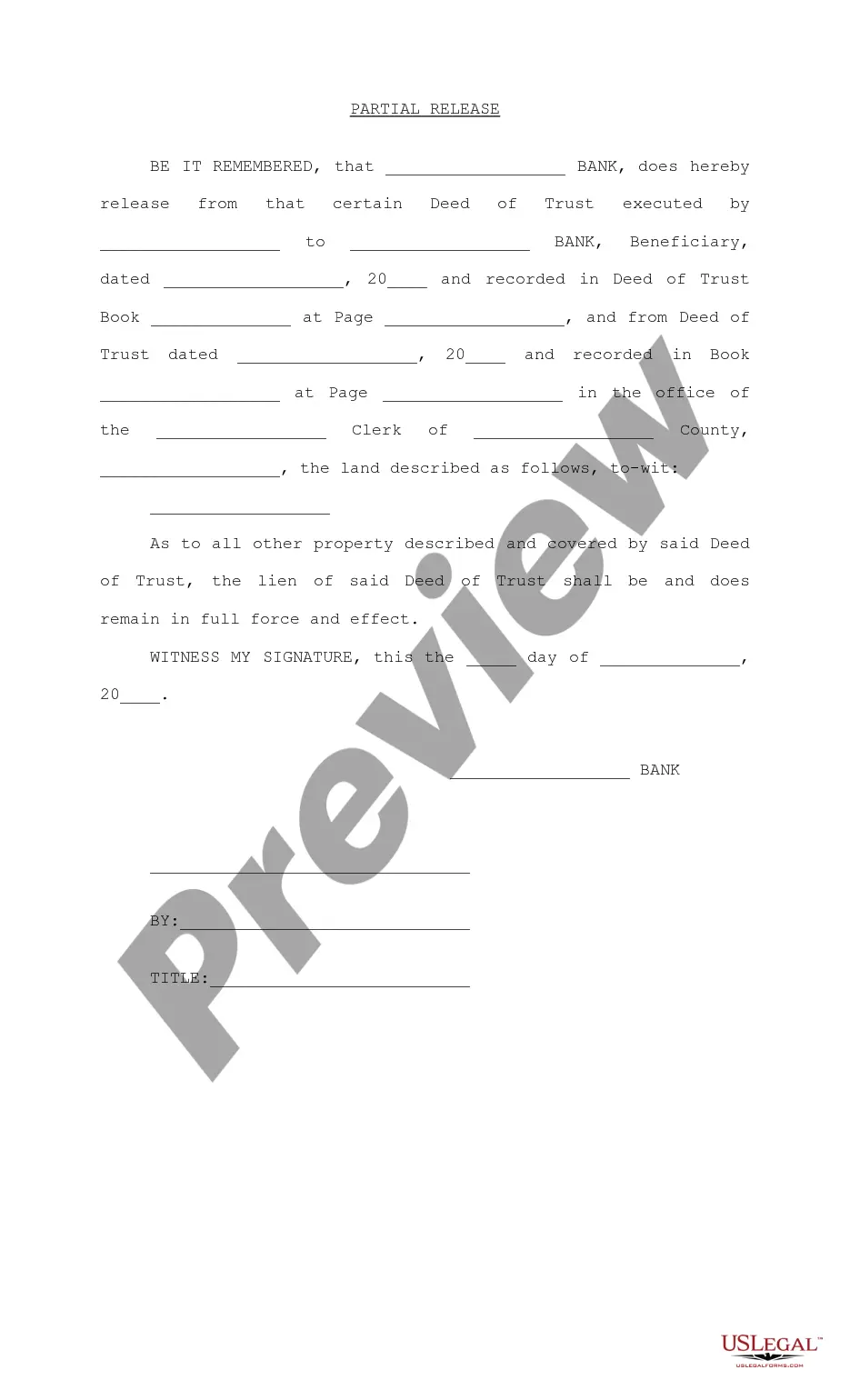
This form is an Authority to Release. The county clerk is authorized and requested to release from a deed of trust a parcel of land to the executor of the estate. The form must be signed in the presence of a notary public.
Nebraska Authority to Release of Deed of Trust
State:
Multi-State
Control #:
US-00186
Format:
Word;
Rich Text
Instant download
Description
Free preview

How to fill out Authority To Release Of Deed Of Trust?
If you desire to be thorough, obtain, or produce legal document templates, utilize US Legal Forms, the most extensive compilation of legal forms available online.
Employ the site's straightforward and user-friendly search to find the documents you need.
Various templates for commercial and personal purposes are organized by categories and jurisdictions, or keywords.
Step 4. Once you have found the form you need, click the Purchase now button. Select the payment plan you prefer and enter your details to register for an account.
Step 5. Process the transaction. You can use your credit card or PayPal account to complete the purchase.
- Use US Legal Forms to locate the Nebraska Authority to Release of Deed of Trust with just a few clicks.
- If you are already a US Legal Forms user, Log In to your account and click the Download button to retrieve the Nebraska Authority to Release of Deed of Trust.
- You can also access forms you previously downloaded in the My documents section of your account.
- If you are using US Legal Forms for the first time, follow the steps outlined below.
- Step 1. Make sure you have chosen the form for your specific city/state.
- Step 2. Use the Preview option to review the form’s content. Don't forget to read through the summary.
- Step 3. If you are not satisfied with the form, use the Search bar at the top of the screen to find alternative versions of the legal form template.
Form popularity
FAQ
To remove someone from a deed of trust, you typically need to obtain a release or consent from the lender. This process usually requires that the debt obligation is satisfied or that the parties agree to the change. Once you secure the necessary documentation, you can file it with the county recorder's office to update the deed. The Nebraska Authority to Release of Deed of Trust can assist you in understanding the steps involved.
In Nebraska, a Power of Attorney (POA) must be notarized to be valid. Notarization serves to confirm the identity of the person signing the document and ensures that the document meets legal requirements. If you're dealing with a deed of trust, having a properly notarized POA can simplify the release process. The Nebraska Authority to Release of Deed of Trust can help you understand these requirements.
Releasing a deed of trust in Nebraska requires specific steps to ensure compliance with local laws. You must obtain a release document from your lender, indicating that the obligation secured by the deed of trust is satisfied. After securing this document, you should file it with the county recorder to update public records. The Nebraska Authority to Release of Deed of Trust can provide guidance throughout this process.
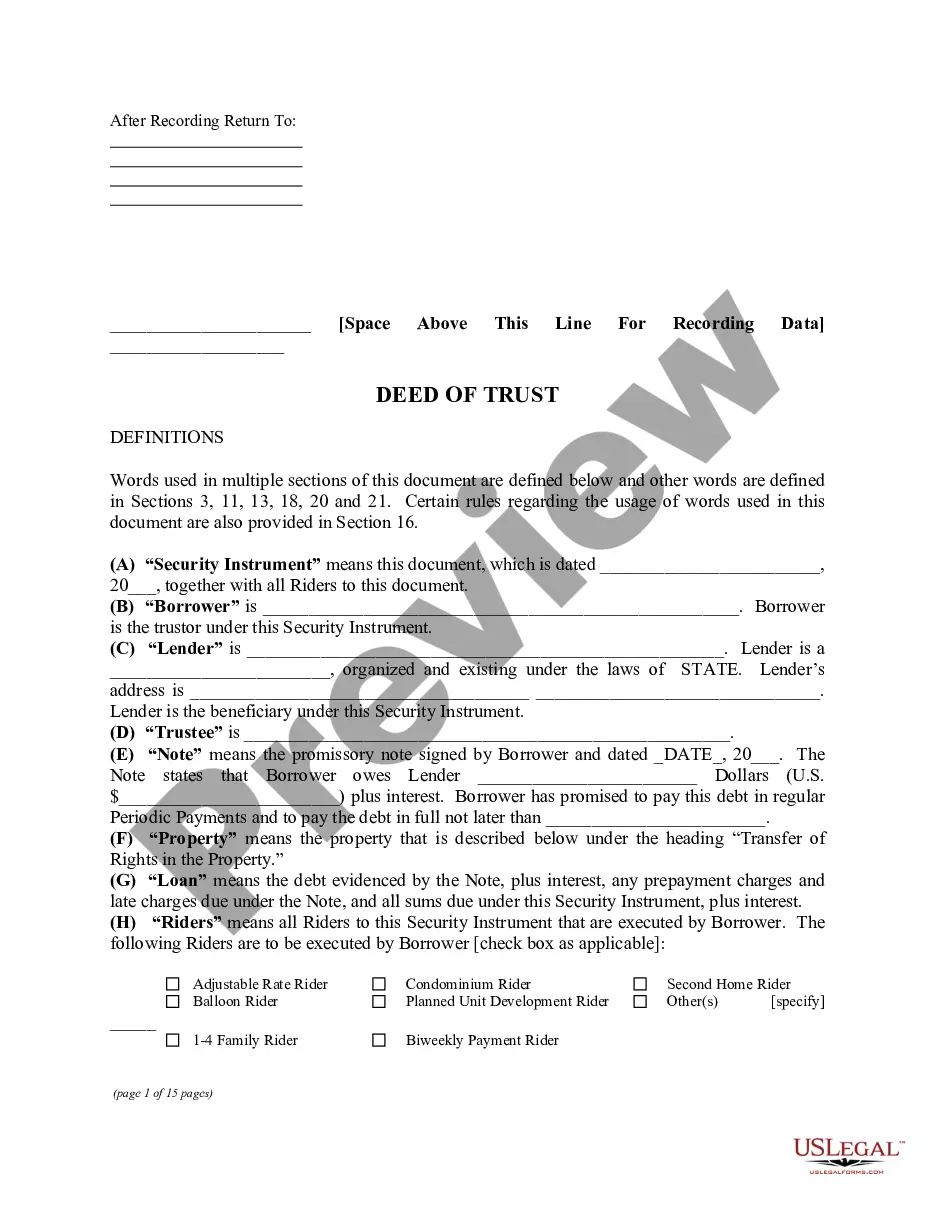
A trustee deed?sometimes called a deed of trust or a trust deed?is a legal document created when someone purchases real estate in a trust deed state, such as California (check your local laws to see what is required in your state). A trust deed is used in place of a mortgage.
You may designate as Trustee any person or a corporate trustee, such as First Nebraska Trust Company, in whom you have confidence that the role and duties of Trustee will be promptly and faithfully discharged in ance with the provisions you have set forth in the trust agreement.
You can't cancel a deed of trust without the consent of all parties named within the deed. The previous legal document is usually replaced with a new deed or lease contract and it can sometimes condition you to get additional supporting documents.
A deed of trust has a borrower, lender and a ?trustee.? The trustee is a neutral third party that holds the title to a property until the loan is completely paid off by the borrower. In most cases, the trustee is an escrow If you don't repay your loan, the escrow company's attorney must begin the foreclosure process.
Generally, the trustee must be an attorney, title insurance company, trust company, bank, savings and loan, credit union, or other company specifically authorized by law to serve as a trustee. Other states have no limitations.
Revoking the deed. If you later change your mind about who you want to inherit the property, you are not locked in. You have two options: (1) sign and record a revocation or (2) record another TOD deed, leaving the property to someone else. You cannot use your will to revoke or override a TOD deed.
Introduction to Trust Deeds Under the Act, a borrower conveys property to a trustee in trust for the benefit of the lender. A trust deed may secure for any kind of indebtedness where the owner of the property has a property right that can be conveyed.