This is a Complaint pleading for use in litigation of the title matter. Adapt this form to comply with your facts and circumstances, and with your specific state law. Not recommended for use by non-attorneys.
Nebraska Complaint For Declaratory Judgment, Temporary Restraining Order, Preliminary and Permanent Injunction From Enforcement Of County Hog farming Ordinances
Instant download
Description
Free preview





















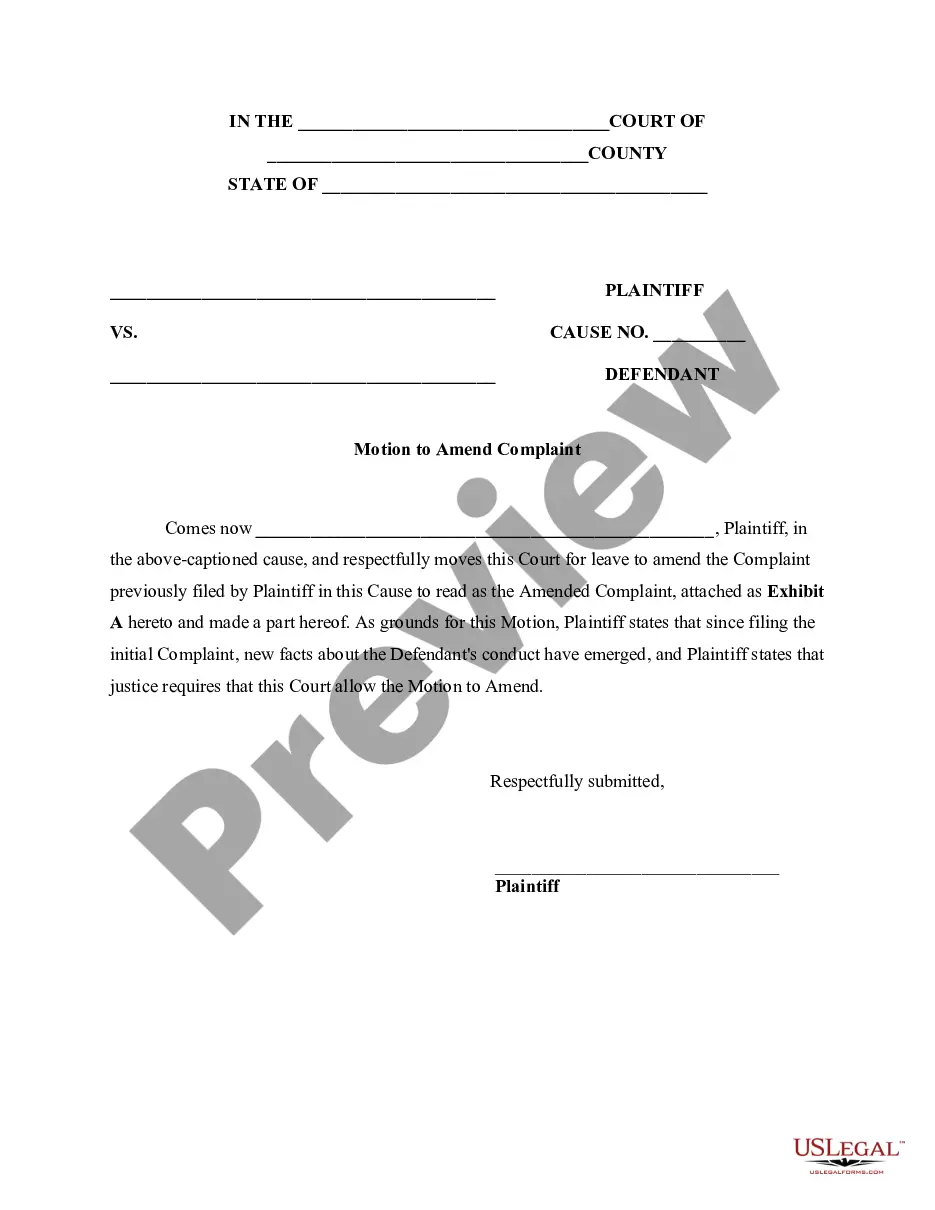

How to fill out Complaint For Declaratory Judgment, Temporary Restraining Order, Preliminary And Permanent Injunction From Enforcement Of County Hog Farming Ordinances?
If you require to complete, obtain, or print sanctioned document formats, utilize US Legal Forms, the largest collection of sanctioned templates, which can be discovered online.
Employ the site’s straightforward and user-friendly search to find the documents you need. A variety of templates for business and personal purposes are categorized by types and states, or keywords.
Utilize US Legal Forms to acquire the Nebraska Complaint For Declaratory Judgment, Temporary Restraining Order, Preliminary and Permanent Injunction From Enforcement Of County Hog farming Ordinances in just a few steps.
Step 5. Complete the transaction. You can use your credit card or PayPal account to finalize the payment.
Step 6. Select the format of the legal document and download it to your device. Step 7. Complete, modify, and print or sign the Nebraska Complaint For Declaratory Judgment, Temporary Restraining Order, Preliminary and Permanent Injunction From Enforcement Of County Hog farming Ordinances. Every legal document template you obtain is yours indefinitely. You have access to every form you saved in your account. Click the My documents section and select a form to print or download again. Compete and download, and print the Nebraska Complaint For Declaratory Judgment, Temporary Restraining Order, Preliminary and Permanent Injunction From Enforcement Of County Hog farming Ordinances with US Legal Forms. There are numerous professional and state-specific templates you may utilize for your business or personal needs.
- If you are already a US Legal Forms customer, Log In to your account and click the Download button to retrieve the Nebraska Complaint For Declaratory Judgment, Temporary Restraining Order, Preliminary and Permanent Injunction From Enforcement Of County Hog farming Ordinances.
- You can also access forms you previously saved from the My documents section of your account.
- If you are using US Legal Forms for the first time, follow the instructions provided below.
- Step 1. Ensure you have selected the form for the correct city/state.
- Step 2. Use the Preview option to review the form’s content. Don’t forget to read the description.
- Step 3. If you are dissatisfied with the template, use the Search area at the top of the screen to find alternative versions of the legal document template.
- Step 4. Once you have located the form you need, click the Get now button. Choose your preferred payment option and provide your details to register for an account.
Form popularity
FAQ
Yes, you can appeal a protection order in Nebraska, but the process involves specific legal steps and time limits. Generally, you must file your appeal within 30 days of the order being issued. If you find yourself in a situation concerning a Nebraska Complaint For Declaratory Judgment, Temporary Restraining Order, Preliminary and Permanent Injunction From Enforcement Of County Hog farming Ordinances, seeking guidance from experienced professionals can help you understand your options for appeal and ensure your rights are protected.
In Nebraska, a judgment typically lasts for five years from the date it is entered, although it can be renewed for additional periods. This means that the judgment can continue to affect your financial and legal standing if not addressed timely. If you're facing issues related to a Nebraska Complaint For Declaratory Judgment, Temporary Restraining Order, Preliminary and Permanent Injunction From Enforcement Of County Hog farming Ordinances, it is wise to consult with legal experts to navigate these time-sensitive matters effectively.
A default judgment in Nebraska occurs when a court rules in favor of one party because the other party did not respond or appear in court. This judgment holds the same weight as a verdict reached after a trial, and it typically grants the requesting party whatever relief they sought. For those dealing with a Nebraska Complaint For Declaratory Judgment, Temporary Restraining Order, Preliminary and Permanent Injunction From Enforcement Of County Hog farming Ordinances, understanding default judgments is critical to protect your interests.
Common reasons for default judgments include failure to respond to a lawsuit, missed deadlines, or lack of awareness about the legal proceedings. Sometimes, individuals may not receive proper notification about the case, leading to unintentional default. If you are involved in matters related to a Nebraska Complaint For Declaratory Judgment, Temporary Restraining Order, Preliminary and Permanent Injunction From Enforcement Of County Hog farming Ordinances, it is essential to stay informed and proactive.
A motion for default judgment is a formal request made to the court by a party when the other party has not responded to a lawsuit. This motion asks the court to grant a judgment based on the evidence presented, often leading to a ruling without a trial. In cases involving a Nebraska Complaint For Declaratory Judgment, Temporary Restraining Order, Preliminary and Permanent Injunction From Enforcement Of County Hog farming Ordinances, it is vital to respond promptly to avoid default judgments.
A default judgment can have significant negative consequences for the party that fails to respond to a lawsuit. Essentially, it means the court has ruled in favor of the other party without hearing your side of the case. This can lead to financial obligations or other penalties that might affect your rights. If you're facing a situation involving a Nebraska Complaint For Declaratory Judgment, Temporary Restraining Order, Preliminary and Permanent Injunction From Enforcement Of County Hog farming Ordinances, understanding the implications of a default judgment is crucial.
A motion for default judgment in Nebraska is a request made to the court when one party fails to respond to a complaint, such as a Nebraska Complaint For Declaratory Judgment, Temporary Restraining Order, Preliminary and Permanent Injunction From Enforcement Of County Hog Farming Ordinances. This motion allows the other party to seek a judgment in their favor without a trial. If you're facing such a situation, it’s crucial to understand the implications and to act promptly. Uslegalforms can assist you in preparing the necessary documentation to navigate this process effectively.
An injunction and a declaratory judgment serve different legal purposes, though they can be related. A Nebraska Complaint For Declaratory Judgment seeks a court's determination on the rights of the parties involved, while an injunction is a court order that directs a party to do or refrain from doing a specific action. In the context of Nebraska's hog farming ordinances, you may file a temporary restraining order to prevent enforcement while awaiting a declaratory judgment. Understanding these distinctions can help you effectively navigate legal challenges.