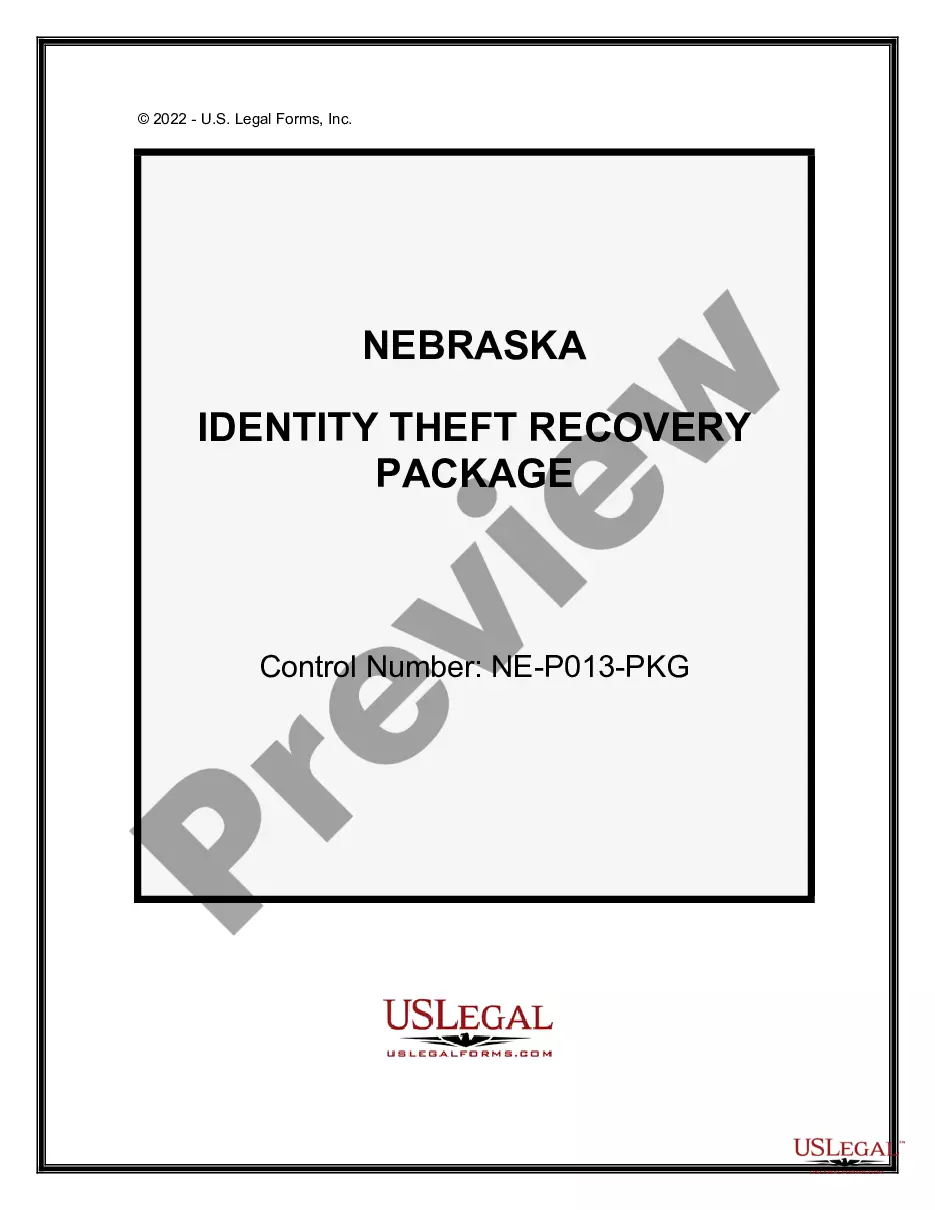
Nebraska Identity Theft Recovery Package
Understanding this form package
The Nebraska Identity Theft Recovery Package is a collection of essential legal forms designed for victims of identity theft. This package assists individuals in effectively managing fraud-related issues with creditors and government agencies when their personal identification has been compromised. Unlike generic recovery solutions, this specific package provides tailored forms that help clear your name, protect your credit, and safeguard your financial interests.
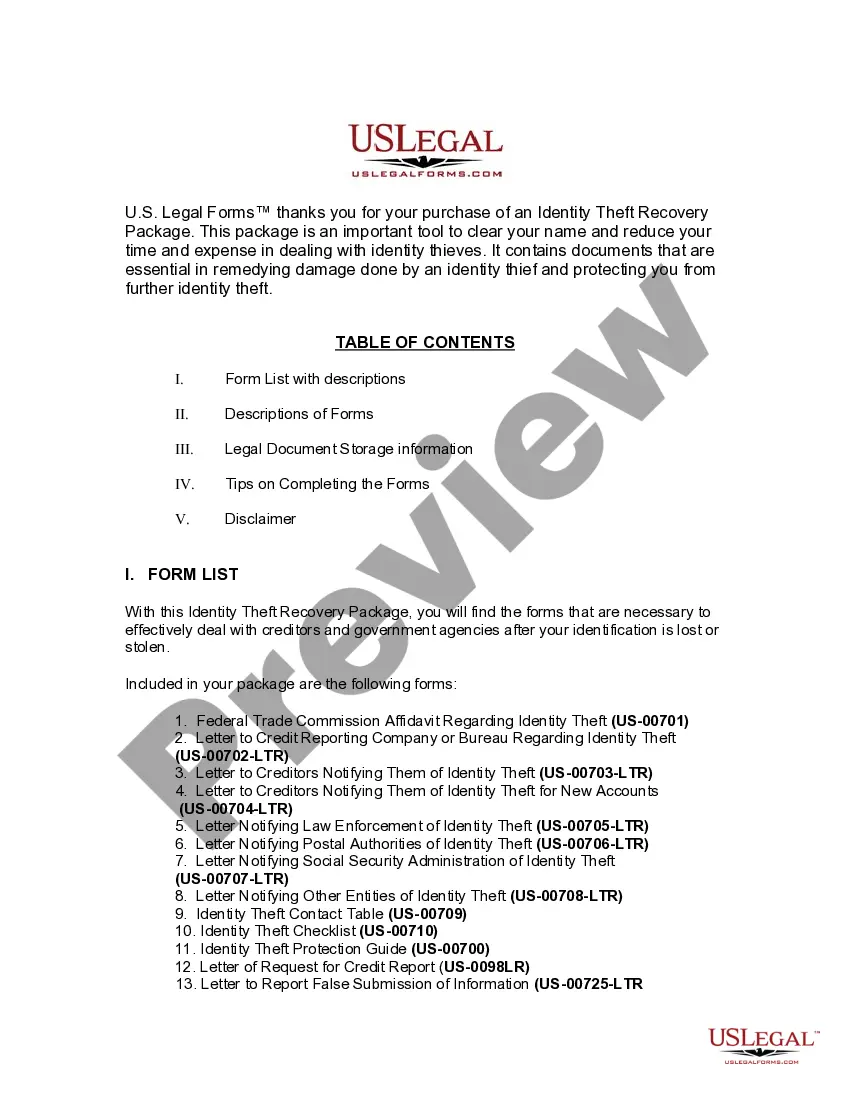
Forms included in this package
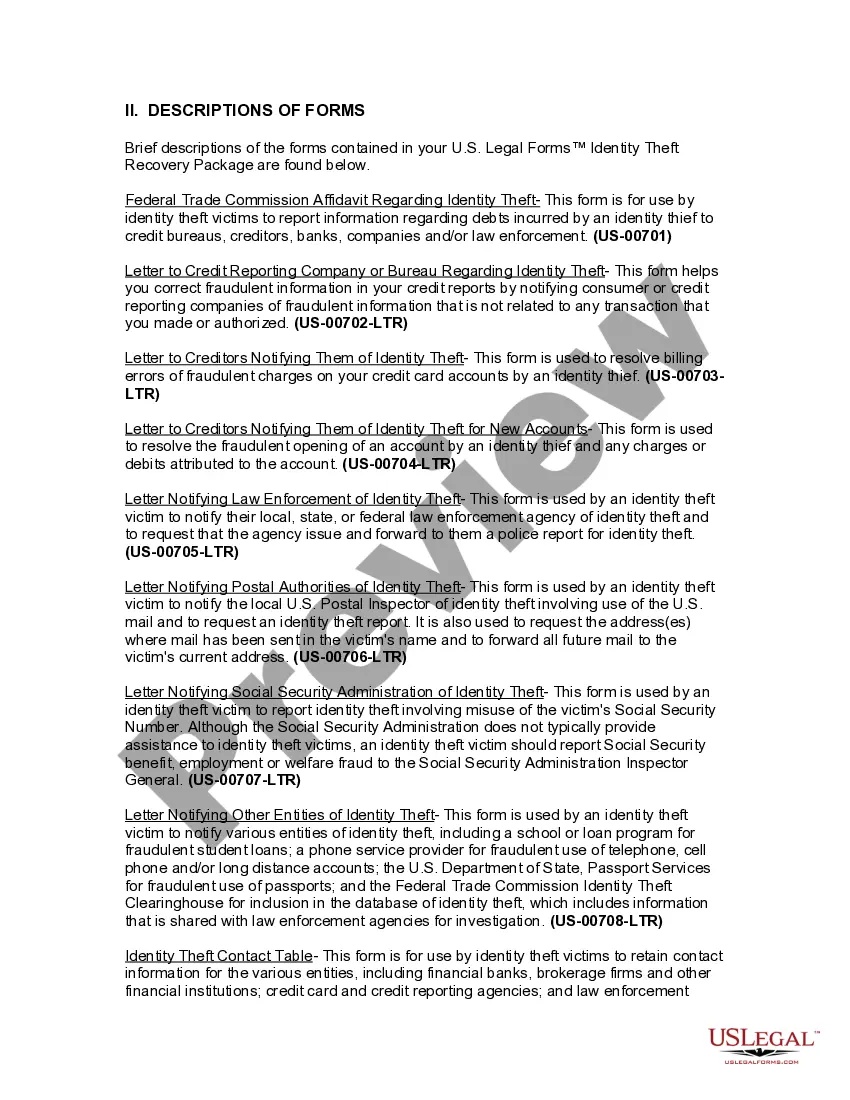
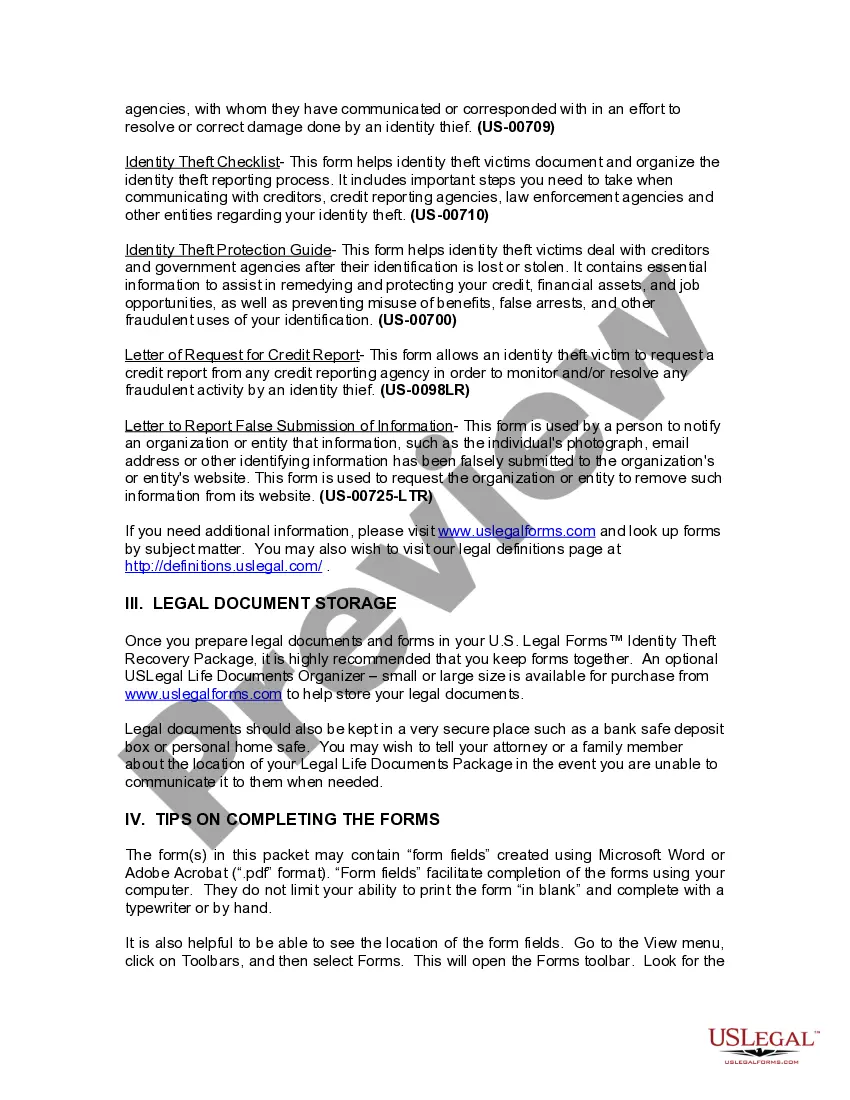
- Identity Theft Protection Guide
- Federal Trade Commission Affidavit regarding Identity Theft
- Letter to Credit Reporting Company or Bureau regarding Identity Theft
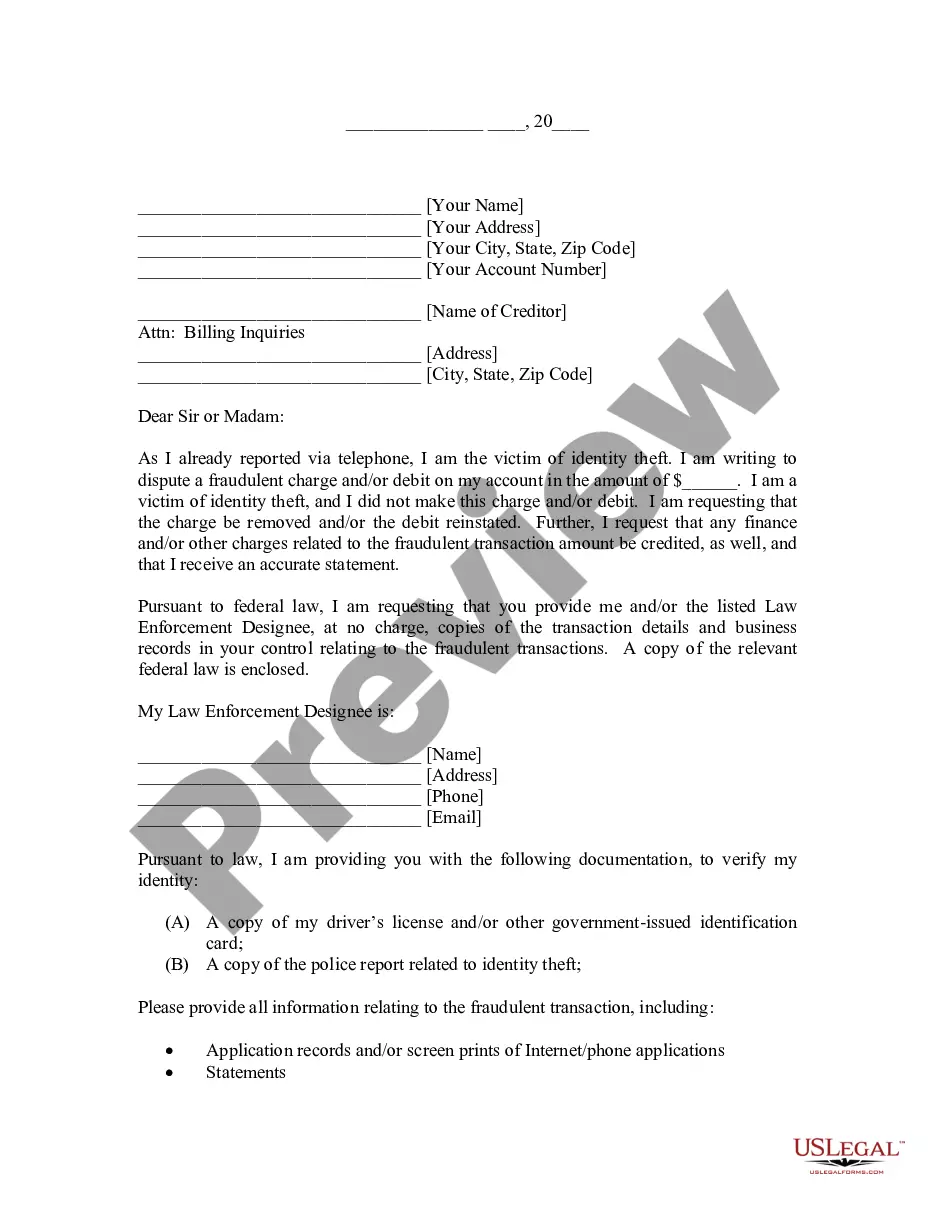
- Letter to Creditors notifying them of Identity Theft
- Letter to Creditors Notifying Them of Identity Theft for New Accounts
- Letter Notifying Law Enforcement of Identity Theft
- Letter Notifying Postal Authorities of Identity Theft
- Letter Notifying Social Security Administration of Identity Theft
- Letter to Other Entities Notifying Them of Identity Theft
- Identity Theft Contact Table
- Identity Theft Checklist
- Sample Letter to Report False Submission of Information
- Sample Letter for Request for Free Credit Report Allowed by Federal Law
Common use cases
This form package should be used in scenarios such as:
- You discover unauthorized charges on your credit card statements.
- Your personal information has been stolen, leading to fraudulent accounts being opened in your name.
- You need to notify law enforcement and other entities about identity theft incidents.
- You wish to prevent the misuse of your benefits or other governmental services that rely on your identity.
Who can use this document
- Individuals whose identification has been lost or stolen.
- Victims of identity theft who need to address fraudulent financial activity.
- Those looking to report identity theft to various authorities.
- Anyone seeking to reclaim their credit and protect their financial integrity.
Instructions for completing these forms
- Review the included forms to understand their purposes and requirements.
- Complete each form by entering the required information accurately.
- Sign where indicated to validate your claims and notices.
- Make copies of completed forms for your records before sending them out.
- Submit the forms to the appropriate parties, such as creditors and law enforcement agencies.
Notarization requirements for forms in this package
Most forms in this package do not require notarization. However, local laws or specific situations may demand it. Our online notarization service, powered by Notarize, lets you complete the process through a verified video call, available anytime.
Get your form ready online
Our built-in tools help you complete, sign, share, and store your documents in one place.
Make edits, fill in missing information, and update formatting in US Legal Forms—just like you would in MS Word.
Download a copy, print it, send it by email, or mail it via USPS—whatever works best for your next step.
Sign and collect signatures with our SignNow integration. Send to multiple recipients, set reminders, and more. Go Premium to unlock E-Sign.
If this form requires notarization, complete it online through a secure video call—no need to meet a notary in person or wait for an appointment.
We protect your documents and personal data by following strict security and privacy standards.

Make edits, fill in missing information, and update formatting in US Legal Forms—just like you would in MS Word.

Download a copy, print it, send it by email, or mail it via USPS—whatever works best for your next step.

Sign and collect signatures with our SignNow integration. Send to multiple recipients, set reminders, and more. Go Premium to unlock E-Sign.

If this form requires notarization, complete it online through a secure video call—no need to meet a notary in person or wait for an appointment.

We protect your documents and personal data by following strict security and privacy standards.
Common mistakes to avoid
- Failing to document communication with creditors or agencies regarding identity theft.
- Not keeping copies of completed forms and submitted documents.
- Submitting forms without all required signatures or information.
- Overlooking deadlines for reporting identity theft to certain institutions.
Why use this package online
- Convenient access to legally vetted forms anytime, anywhere.
- Edit and customize forms quickly to fit your specific situation.
- Cost-effective package that saves you up to 40% compared to purchasing forms separately.
- Internal guidance on filling out forms helps streamline the recovery process.
Looking for another form?





Form popularity
FAQ
A credit freeze (also known as a security freeze) restricts access to your credit reports, helping safeguard against fraudsters opening new accounts in your name, but a credit freeze may not stop misuse of your existing accounts or some other types of identity theft.
Contact the company or bank where the breach occurred. Closing down the affected account to avoid any more fraudulent activity should be the first thing you do. File a Complaint and Affidavit with the Federal Trade Commission. Review all your accounts and change your passwords.
Identity (ID) theft happens when someone steals your personal information to commit fraud. The identity thief may use your information to apply for credit, file taxes, or get medical services. These acts can damage your credit status, and cost you time and money to restore your good name.
File a claim with your identity theft insurance, if applicable. Notify companies of your stolen identity. File a report with the Federal Trade Commission. Contact your local police department. Place a fraud alert on your credit reports. Freeze your credit. Sign up for a credit monitoring service, if offered.
A conviction for an identity theft crime can result in time spent in jail or prison. In general, a conviction for a misdemeanor offense can lead to up to a year in jail, while felony sentences can result in several years or more in prison.
On average, it can take between 100 and 200 hours and six months to fix. But in some cases, it can take thousands of hours and years to resolve fully. Several key factors determine the length of the recovery process, but before we review those, let's look at the steps involved in resolving identity theft.
The effects of identity theft can last anywhere between a few days and several years, depending on the type of theft and how quickly you notice and address it. Identity thieves can gain access to your information in any number of ways.
About 15% of people have experienced identity fraud. Identity theft costs an average of $1,343 for victims who experienced a momentary loss. While some of these losses may be recuperated through financial institutions, some may remain out-of-pocket.
You have limited liability for fraudulent debts caused by identity theft. Under most state laws, you're not responsible for any debt incurred on fraudulent new accounts opened in your name without your permission. Under federal law, the amount you have to pay for unauthorized use of your credit card is limited to $50.