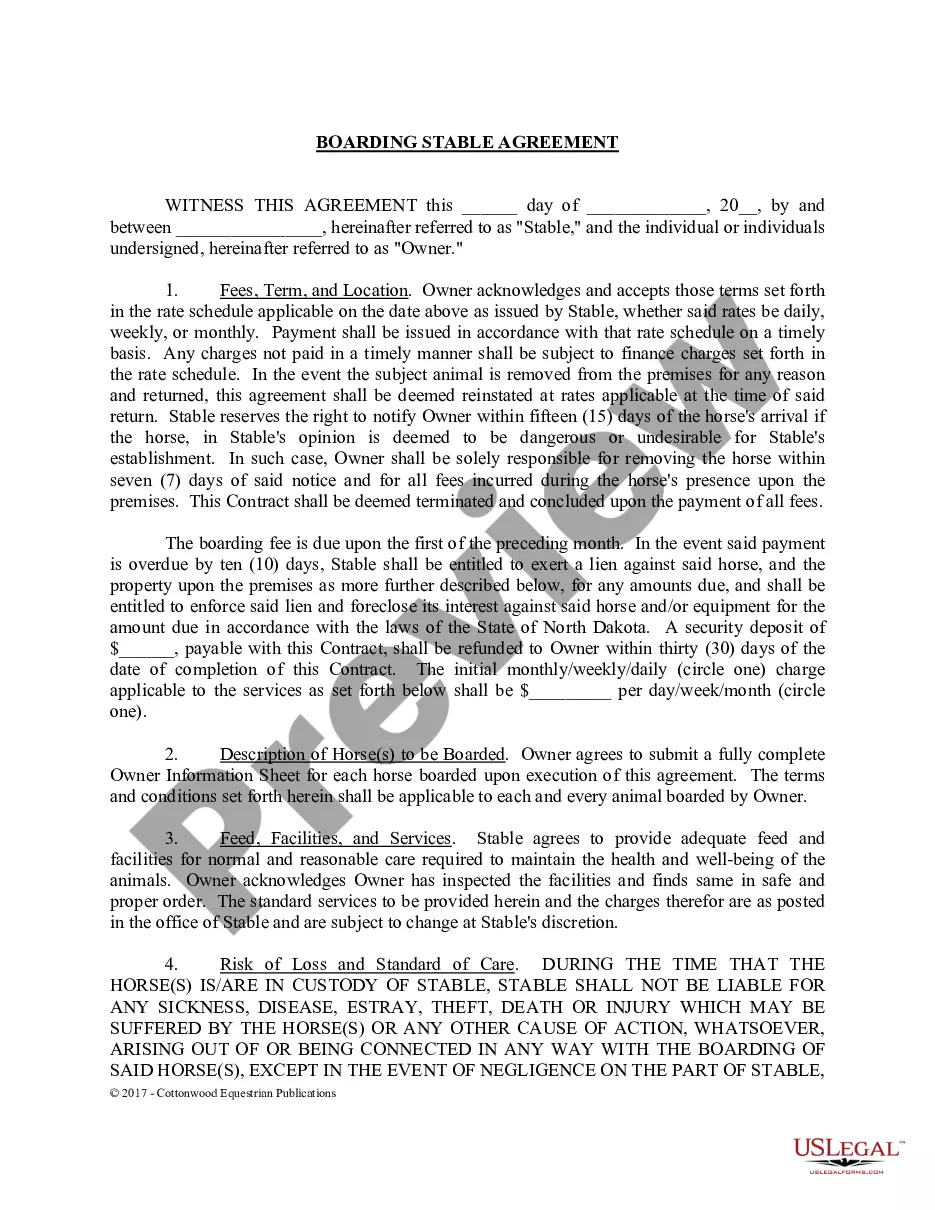
Nebraska Warranty Easement Deed in Perpetuity
About this form
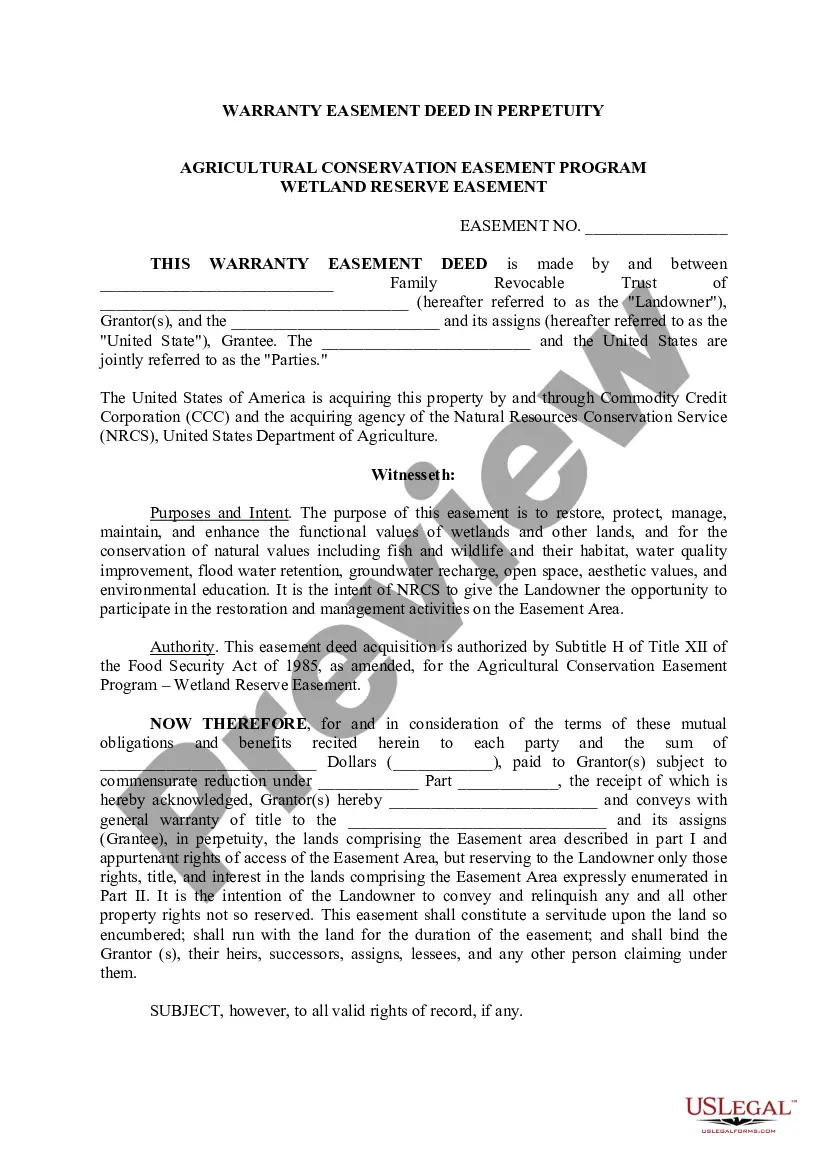
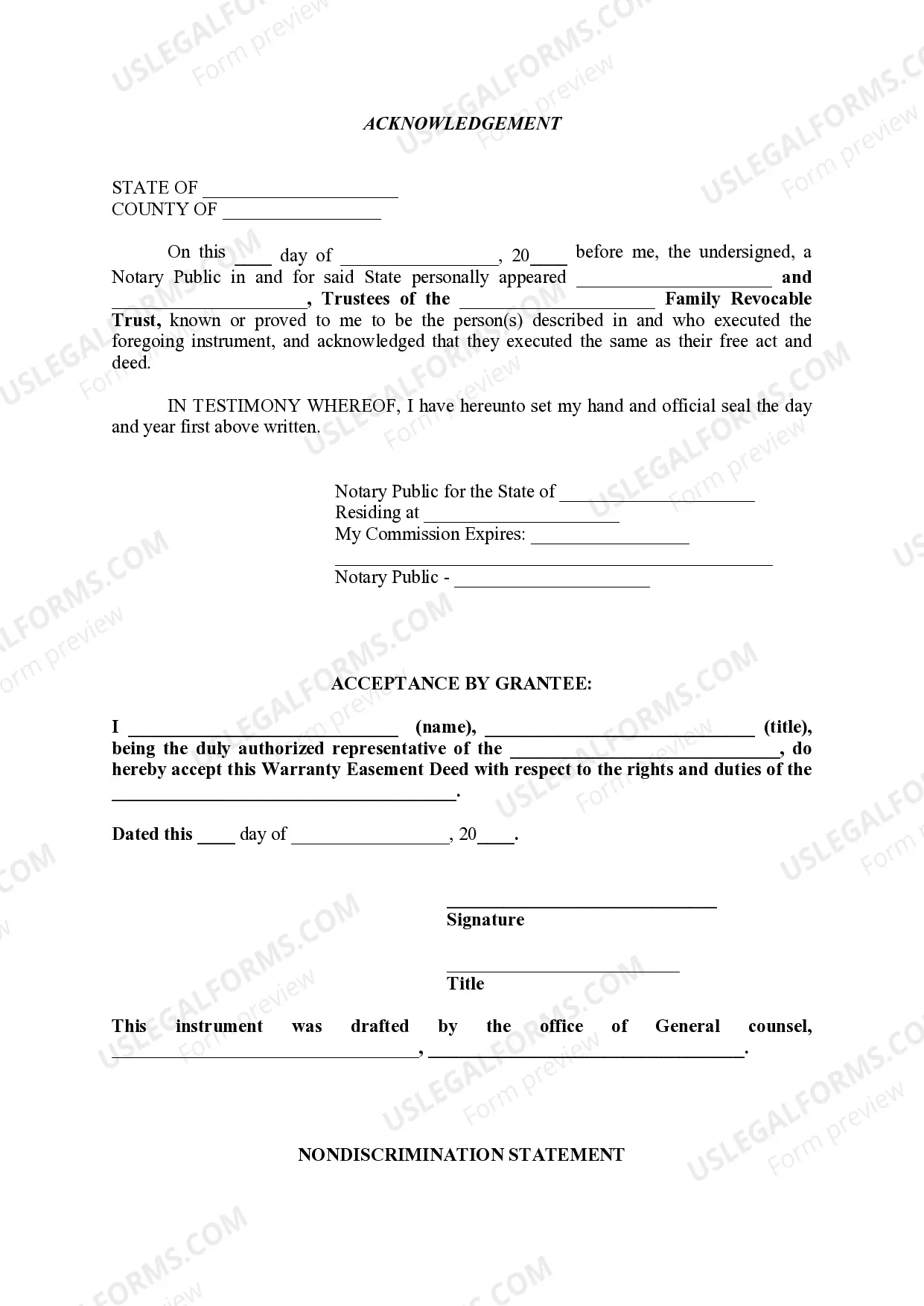
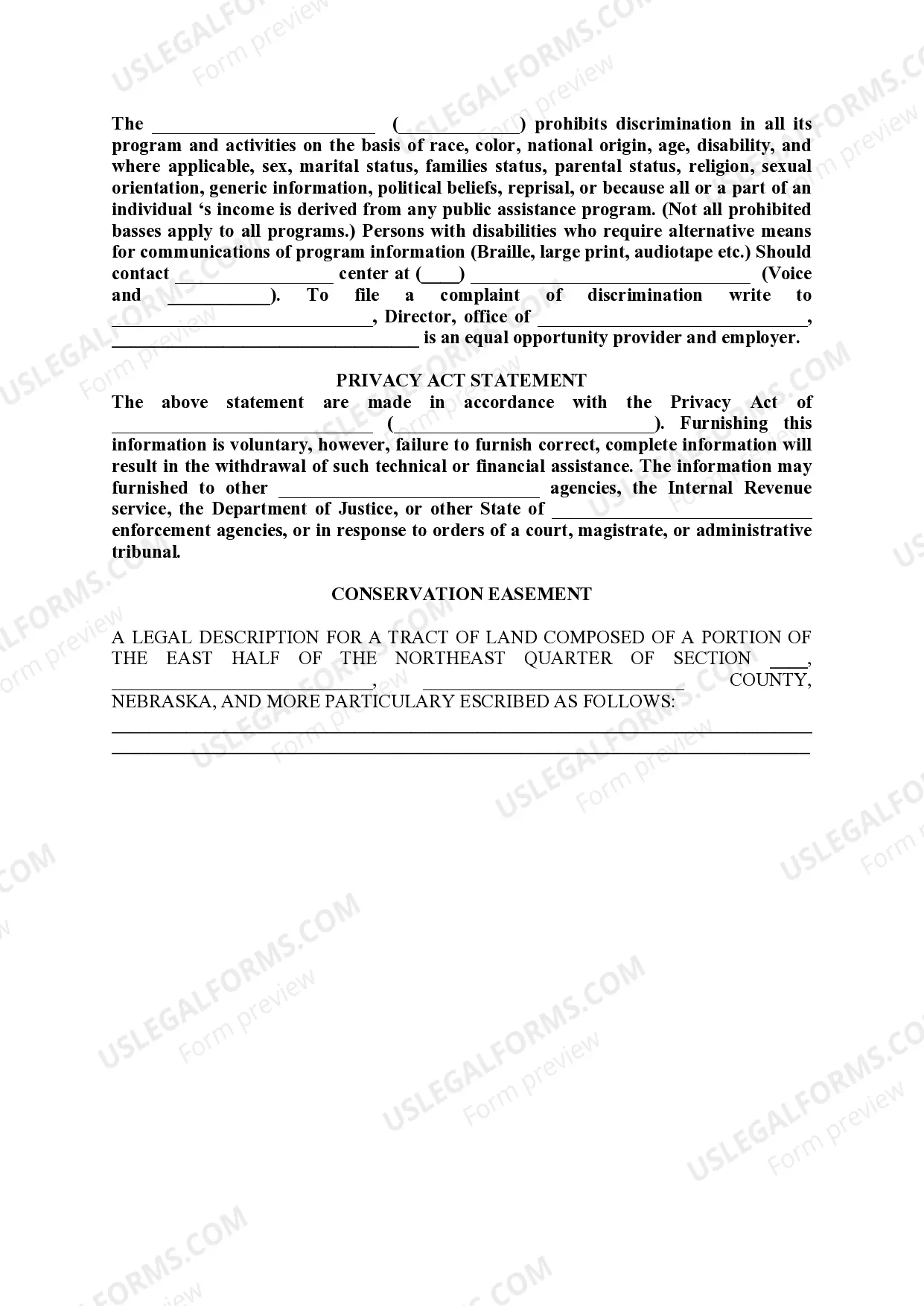
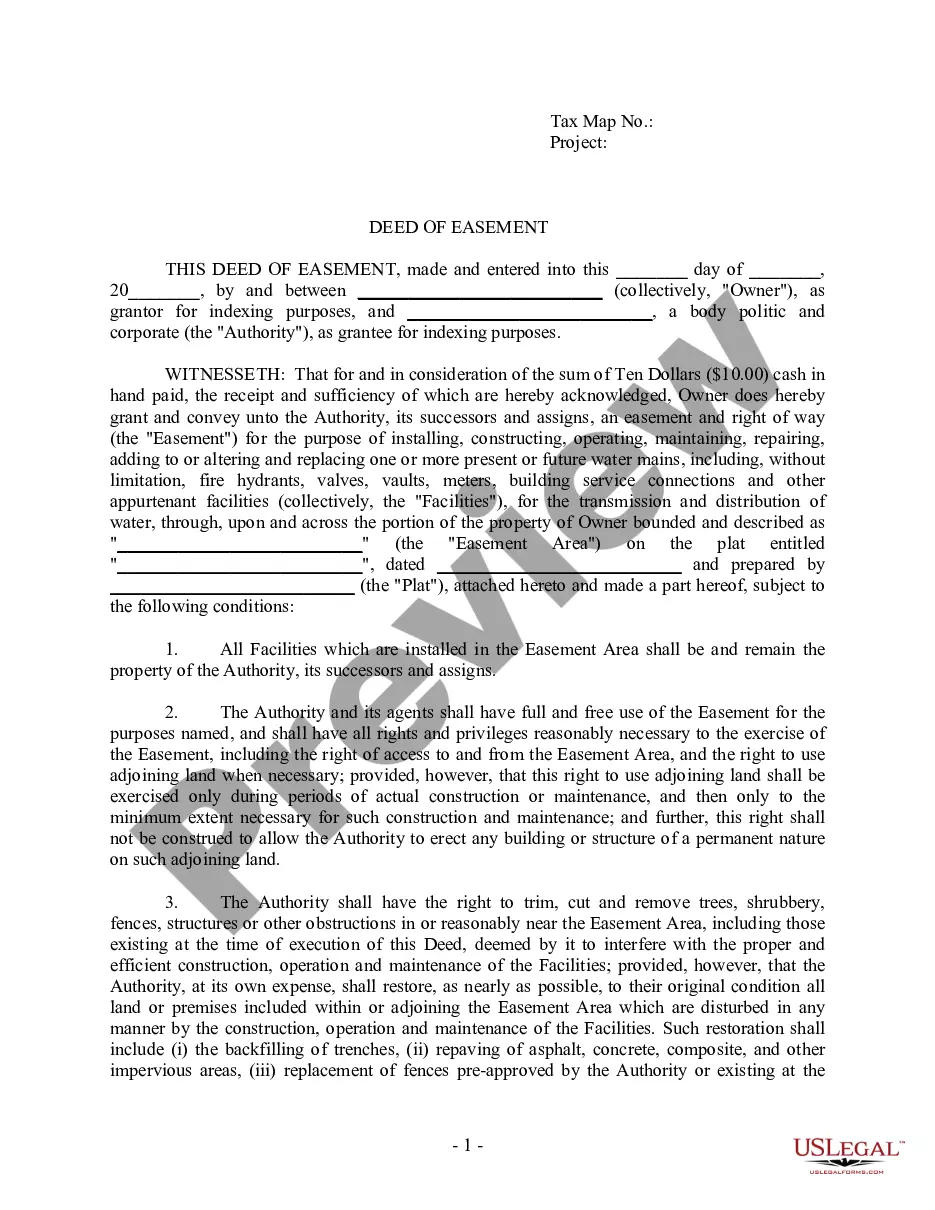
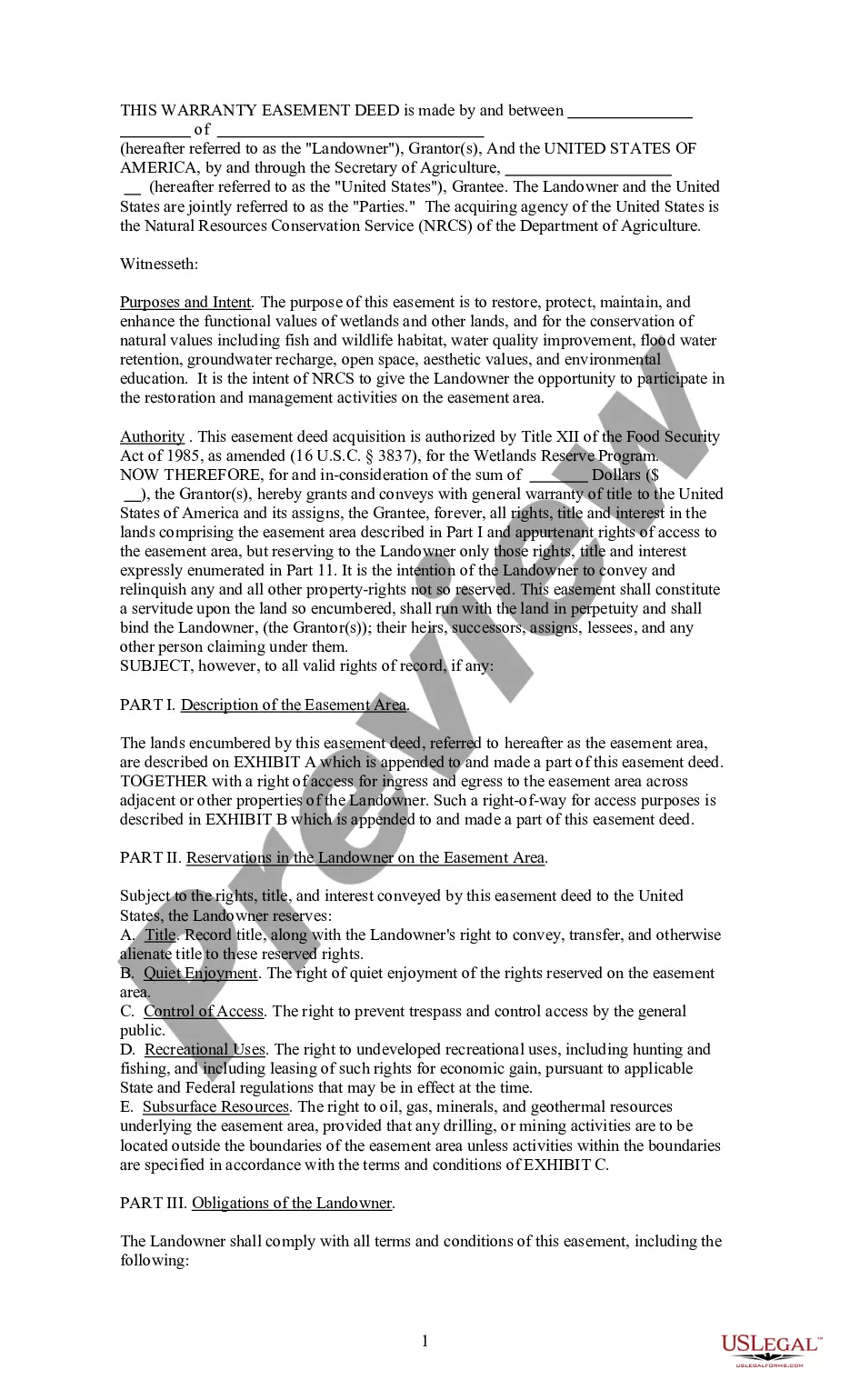
The Warranty Easement Deed in Perpetuity is a legal document that grants a conservation easement on property from a landowner to the United States government. This form is specifically designed for landowners participating in the Agricultural Conservation Easement Program, particularly for wetland reserves. Unlike traditional property deeds, this form emphasizes the land's conservation and management for environmental benefits, such as wildlife habitat protection and water quality improvement.
What’s included in this form
- Identification of the parties involved: the landowner (Grantor) and the United States (Grantee).
- Purpose and intent of the easement focused on restoring and protecting natural resources.
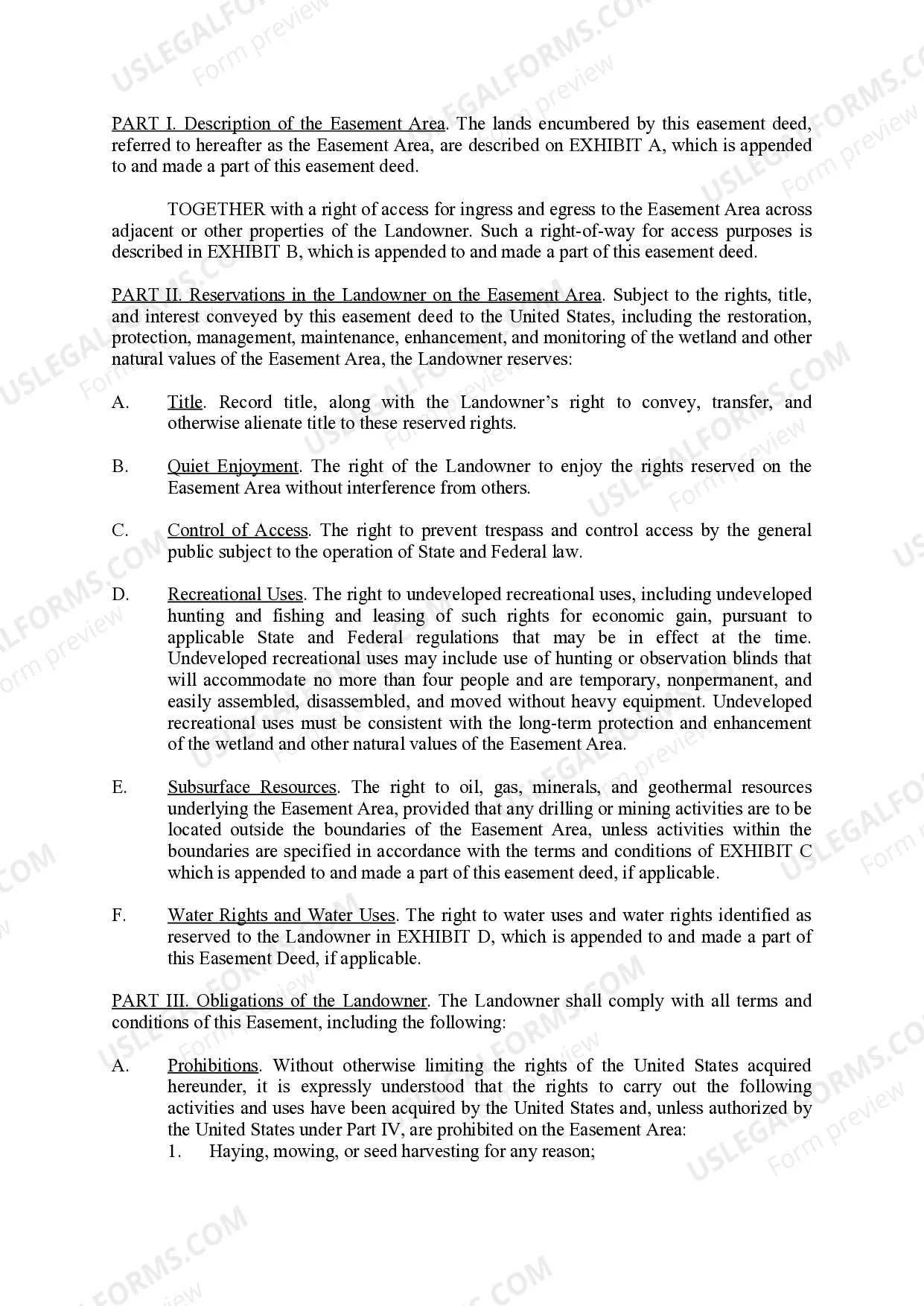
- Details of the Easement Area, including access rights and specific land use limitations.
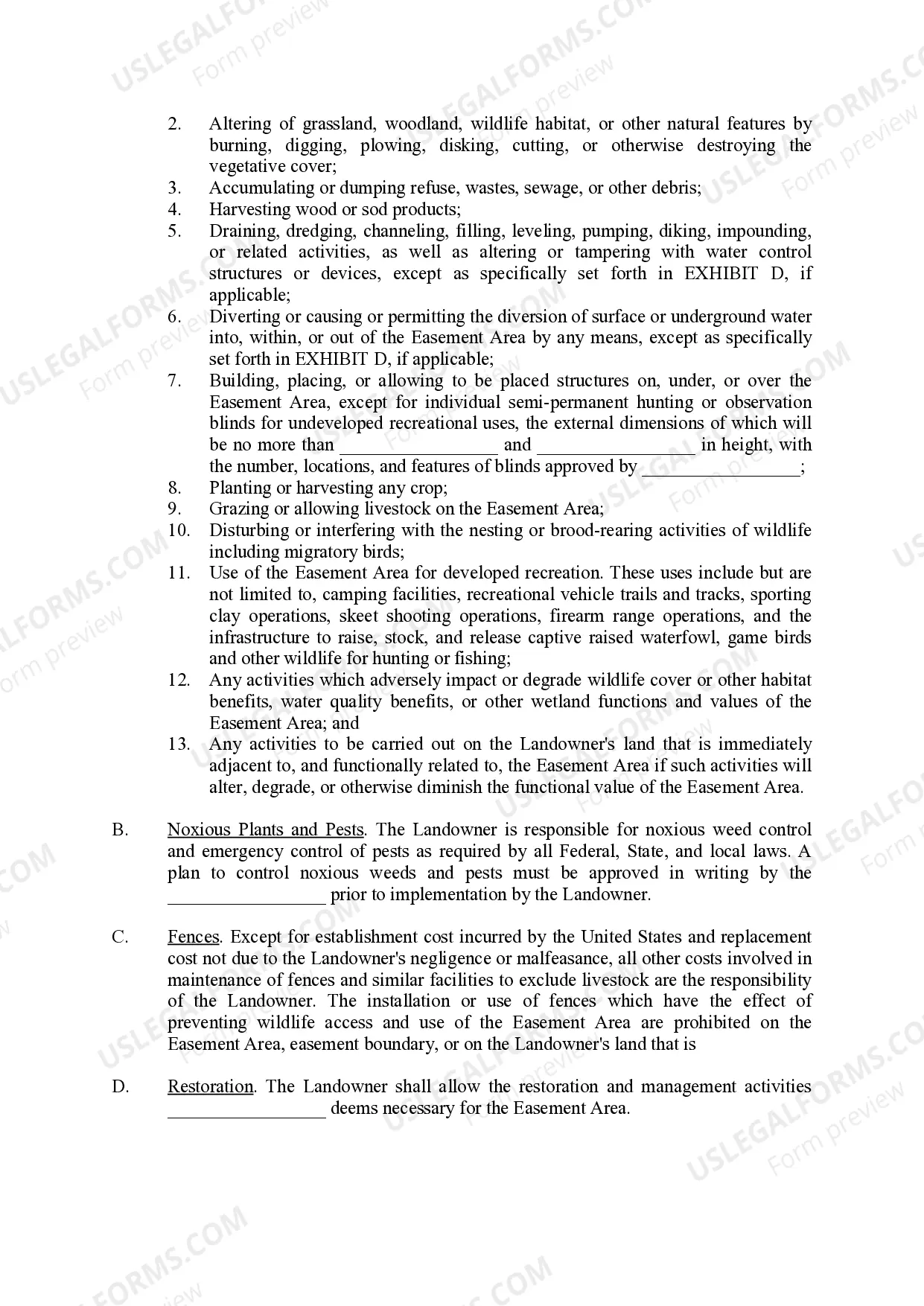
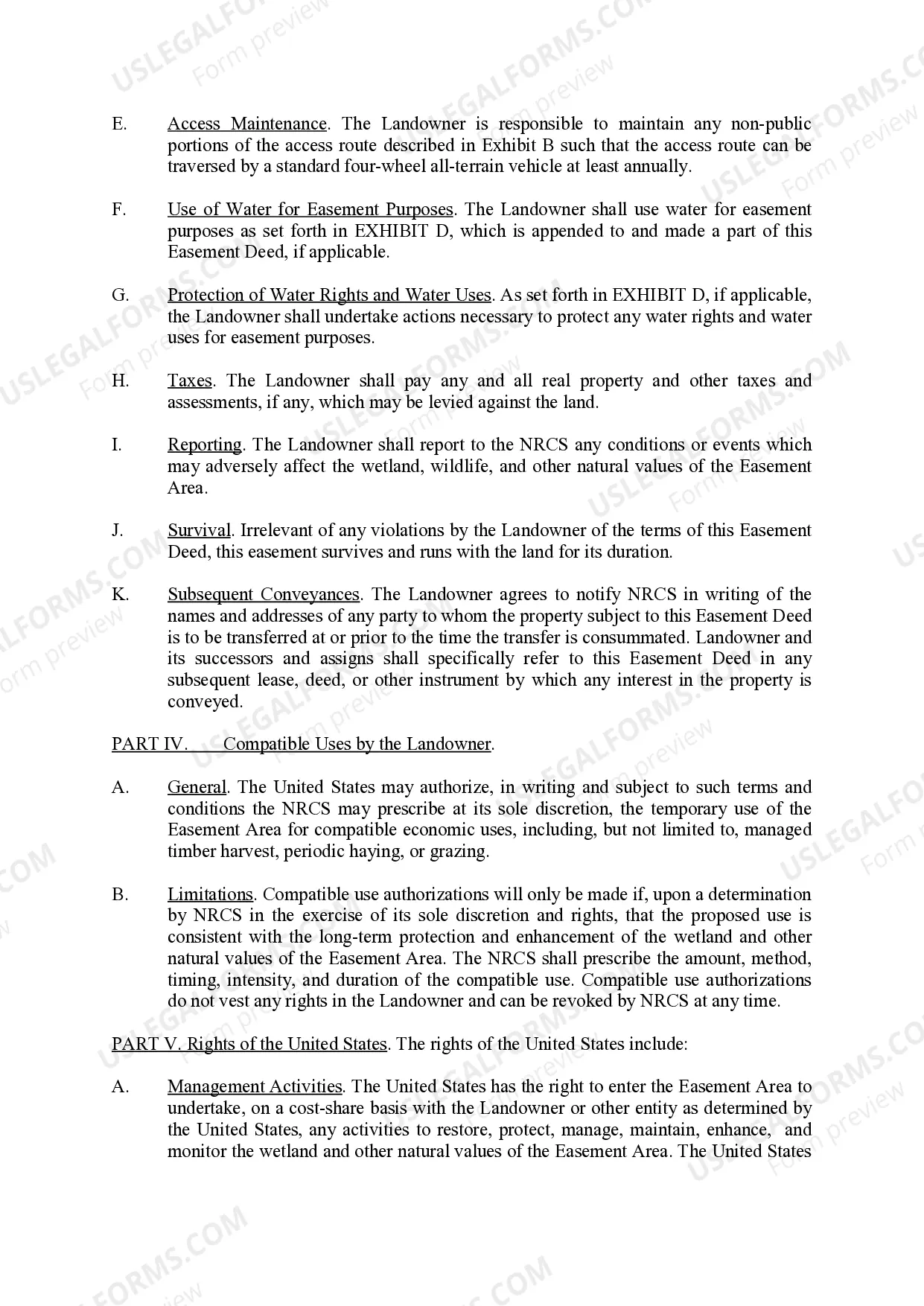
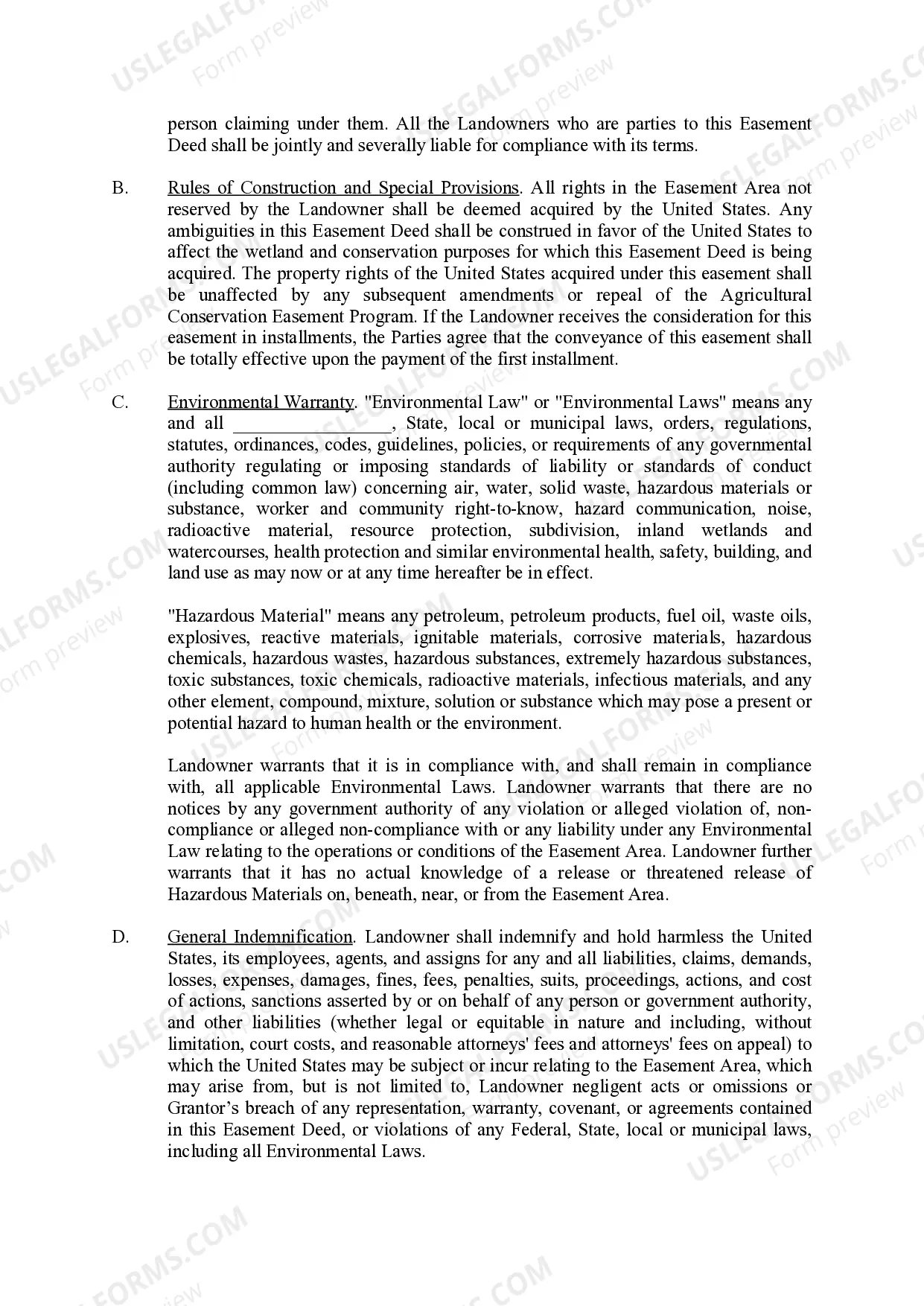
- Obligations of the landowner, including the prohibition of certain activities that might degrade the easement.
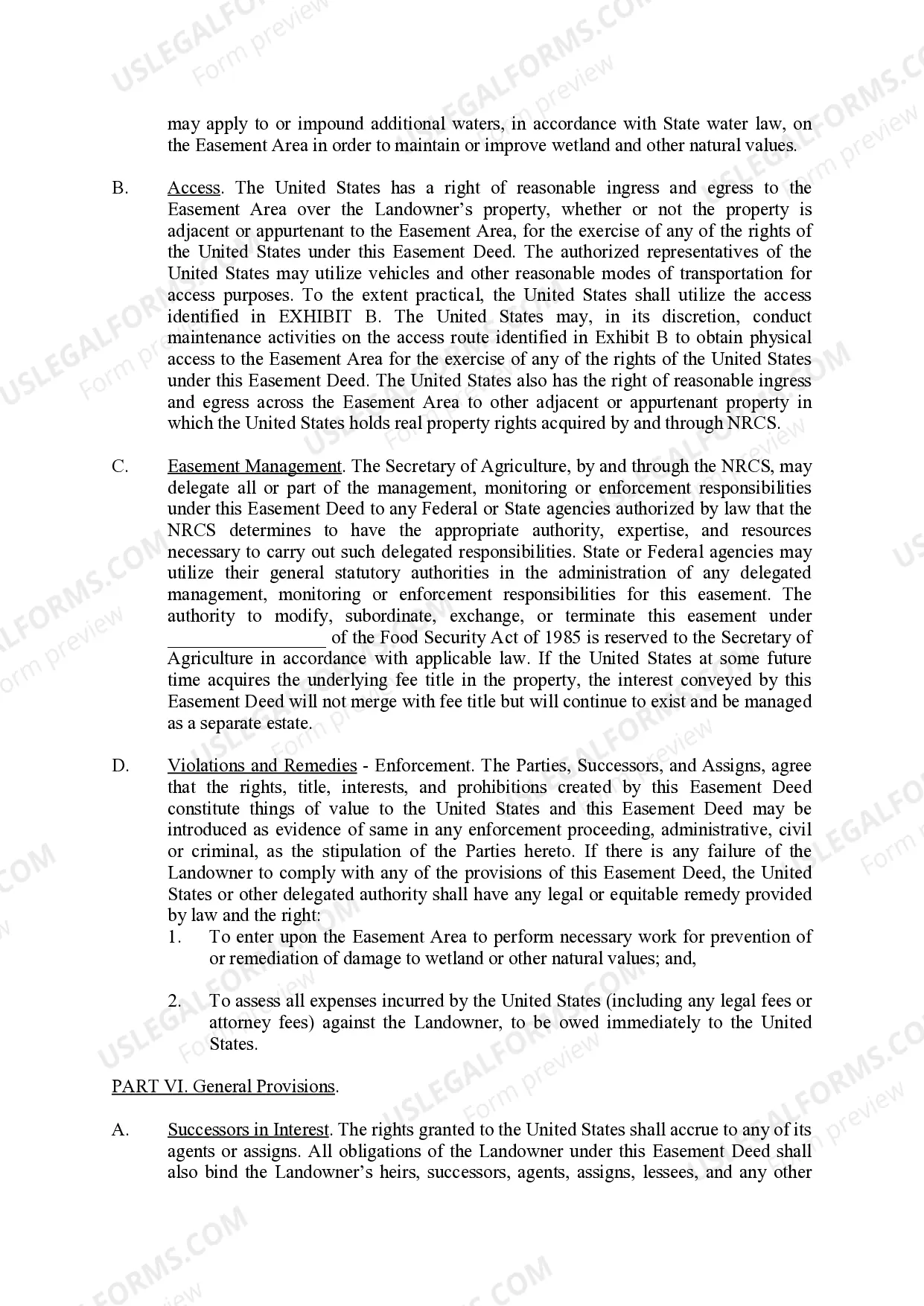
- Rights of the United States to access and manage the Easement Area for conservation purposes.
Common use cases
This form is used when a landowner wishes to grant a perpetual easement to the United States as part of conservation programs designed to protect wetlands and promote agricultural conservation. It is particularly relevant for landowners looking to secure funding or support for ecological restoration projects while ensuring the long-term preservation of their land's natural resources.
Who this form is for
- Landowners who are part of a family trust seeking to conserve agricultural land.
- Individuals or organizations that own property designated for wetland reservation.
- Farmers or landowners interested in participating in the Agricultural Conservation Easement Program.
- Trustees acting on behalf of family trusts involved in conservation efforts.
Completing this form step by step
- Identify and enter the names of the Grantor(s) and the Grantee.
- Specify the Easement Area description as described in the attached exhibit.
- Provide the consideration amount paid to the Grantor(s) for the easement.
- Detail the rights reserved by the Landowner in Part II of the form.
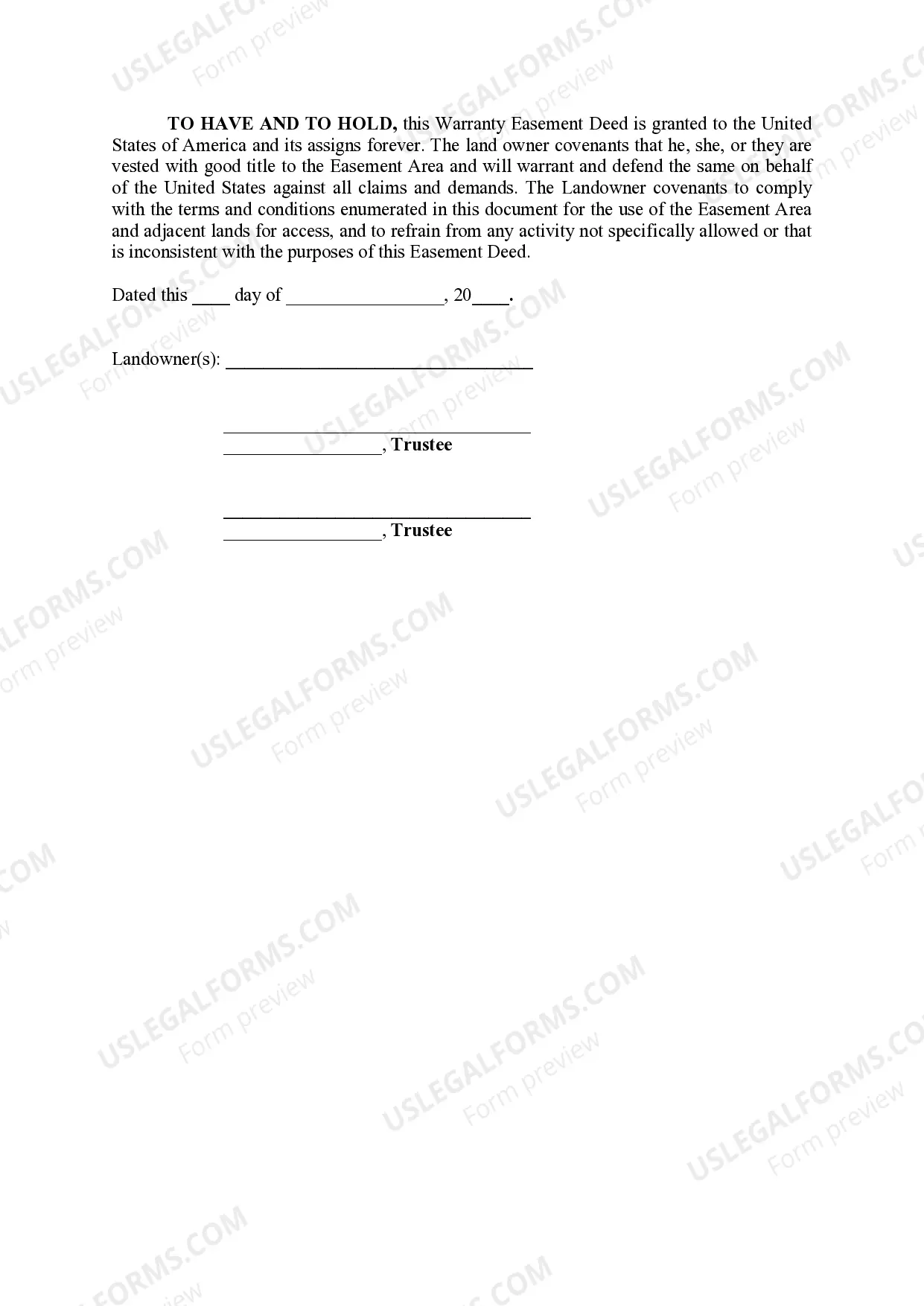
- Ensure the document is signed by all parties involved, including any necessary notarization.
Does this document require notarization?
Yes, this form must be notarized to be legally valid. US Legal Forms offers integrated online notarization services, allowing you to complete the notarization process securely via video call at any time without the need for in-person visits.
Get your form ready online
Our built-in tools help you complete, sign, share, and store your documents in one place.
Make edits, fill in missing information, and update formatting in US Legal Forms—just like you would in MS Word.
Download a copy, print it, send it by email, or mail it via USPS—whatever works best for your next step.
Sign and collect signatures with our SignNow integration. Send to multiple recipients, set reminders, and more. Go Premium to unlock E-Sign.
If this form requires notarization, complete it online through a secure video call—no need to meet a notary in person or wait for an appointment.
We protect your documents and personal data by following strict security and privacy standards.

Make edits, fill in missing information, and update formatting in US Legal Forms—just like you would in MS Word.

Download a copy, print it, send it by email, or mail it via USPS—whatever works best for your next step.

Sign and collect signatures with our SignNow integration. Send to multiple recipients, set reminders, and more. Go Premium to unlock E-Sign.

If this form requires notarization, complete it online through a secure video call—no need to meet a notary in person or wait for an appointment.

We protect your documents and personal data by following strict security and privacy standards.
Common mistakes
- Failing to accurately describe the Easement Area, leading to potential legal disputes.
- Not specifying the consideration amount, which can result in issues with enforceability.
- Overlooking the need for notarization or the signatures of all necessary parties.
- Neglecting to include all necessary exhibits related to rights and access.
Why complete this form online
- Easy access to downloadable templates tailored by licensed attorneys.
- Convenience of editing and customizing the document to fit specific needs.
- Reliable templates that meet legal requirements for conservation easements.
- Step-by-step guidance provided during the completion process.
Legal use & context
- The easement created by this deed is binding and runs with the land, meaning it applies to future owners of the property.
- Non-compliance with the easement terms can lead to legal enforcement by the United States.
- This form is part of federal efforts aimed at conserving agricultural land for environmental benefits.
Looking for another form?
Form popularity
FAQ
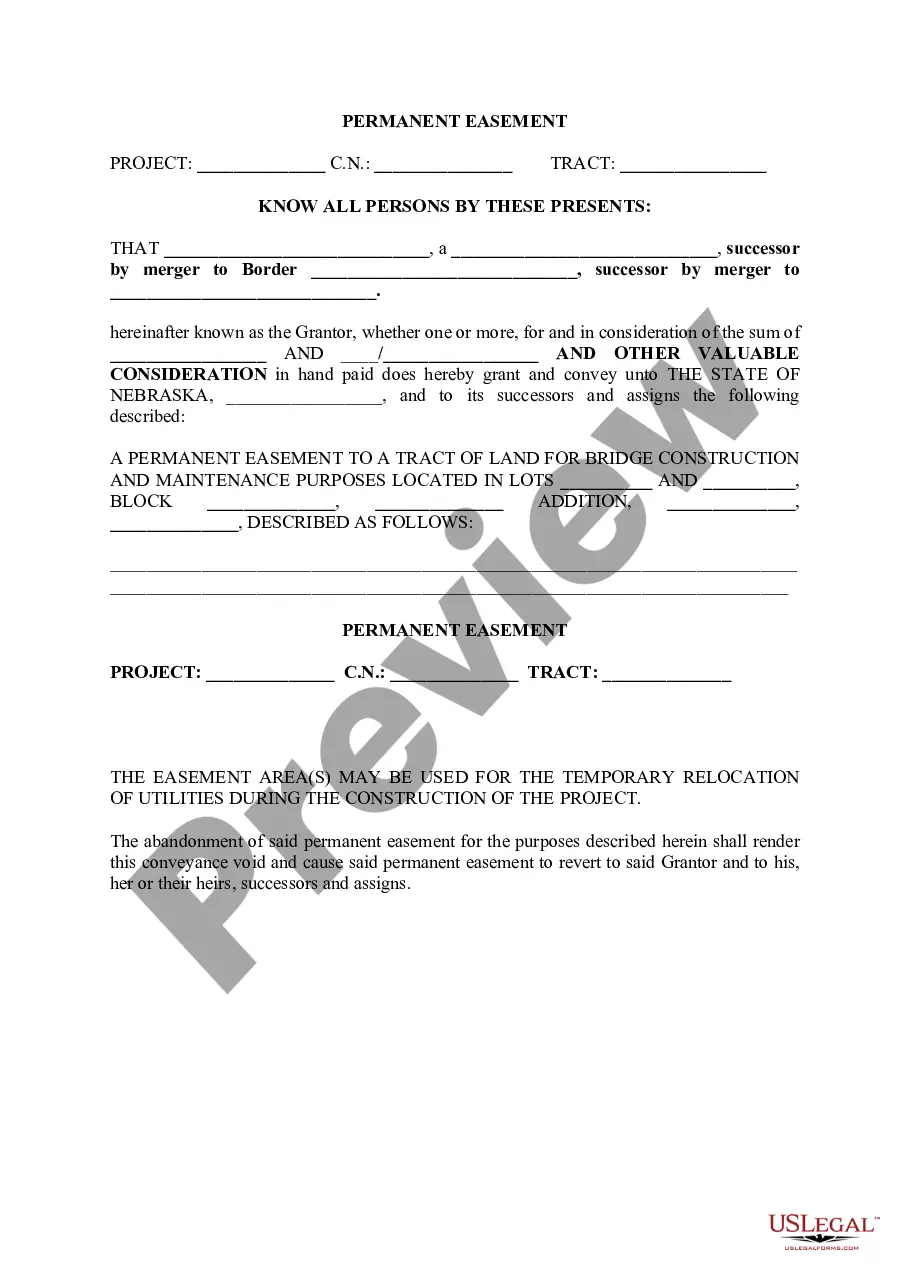
Courts generally assume easements are created to last forever unless otherwise indicated in the document creating the easement. Despite this, an individual granting an easement should avoid any potential problems by expressly providing that the easement is permanent.
Property law allows for an easement owner to transfer his easement to another person. And as with other property interests, in some ways an easement owner can divide his easement rights and transfer some of them to another person. Similarly, a servient owner can transfer the servient land to another person.
There are eight ways to terminate an easement: abandonment, merger, end of necessity, demolition, recording act, condemnation, adverse possession, and release.
A property easement is a legal situation in which the title to a specific piece land remains with the landowner, but another person or organization is given the right to use that land for a distinct purpose.
While an unrecorded easement may still be enforceable, the easement may be nullified by a "bona fide purchaser" of the property if the property is sold for value and the subsequent purchaser has no notice (constructive or otherwise) of the unrecorded easement.
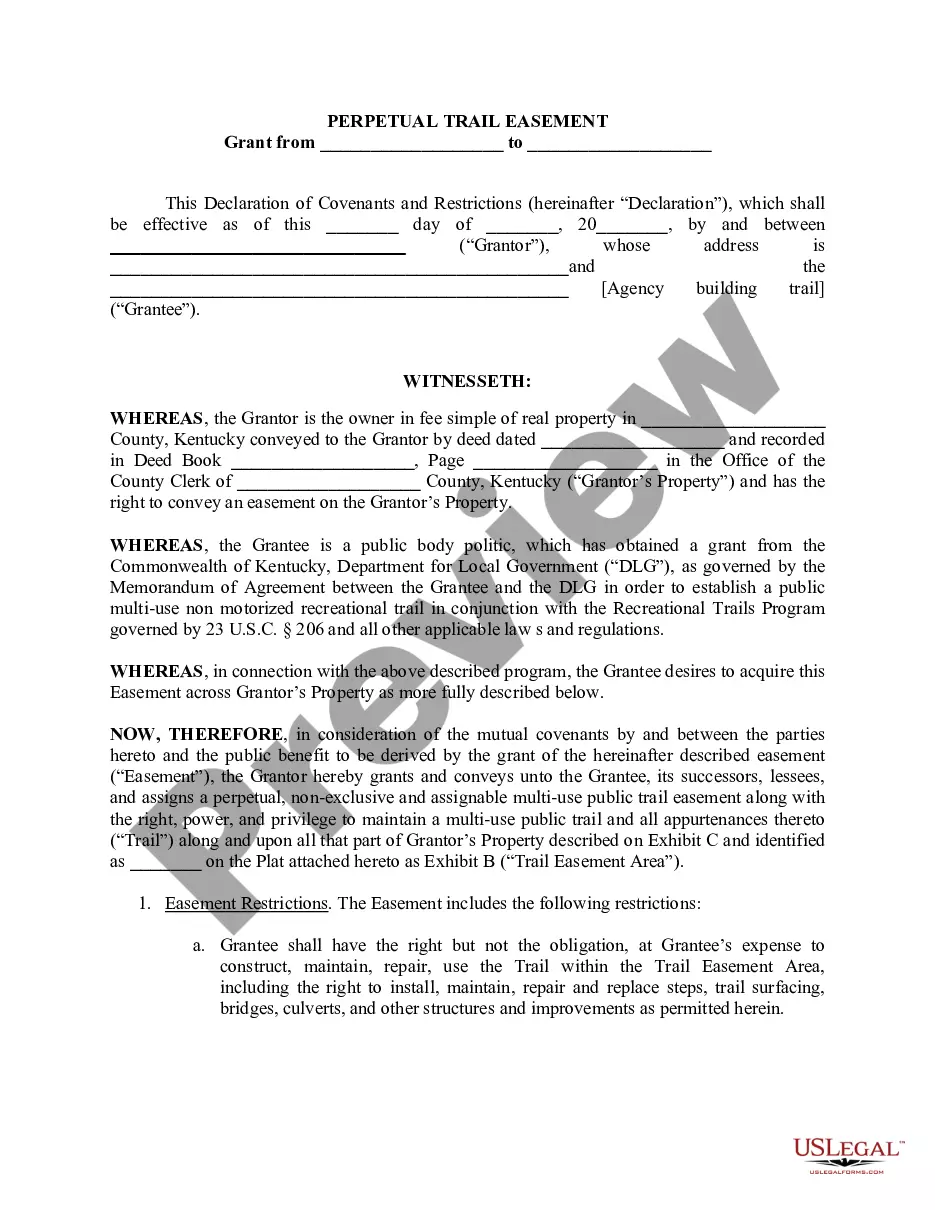
Perpetual easement is that type of easement which is to last without any limitation of time. It is a right which a person has on the property of another person which to an extent is permanent.
Generally, easements are created by express grant or reservation. Easements are perpetual unless they are expressly limited, or terminated by agreement, abandonment, implication (e.g. necessity ceases to exist), adverse possession, or another means of formal termination.
If the property is sold to a new owner, the easement is typically transferred with the property. The holder of the easement, however, has a personal right to the easement and is prohibited from transferring the easement to another person or company.