Nebraska Complex Will with Credit Shelter Marital Trust for Large Estates
What is this form?
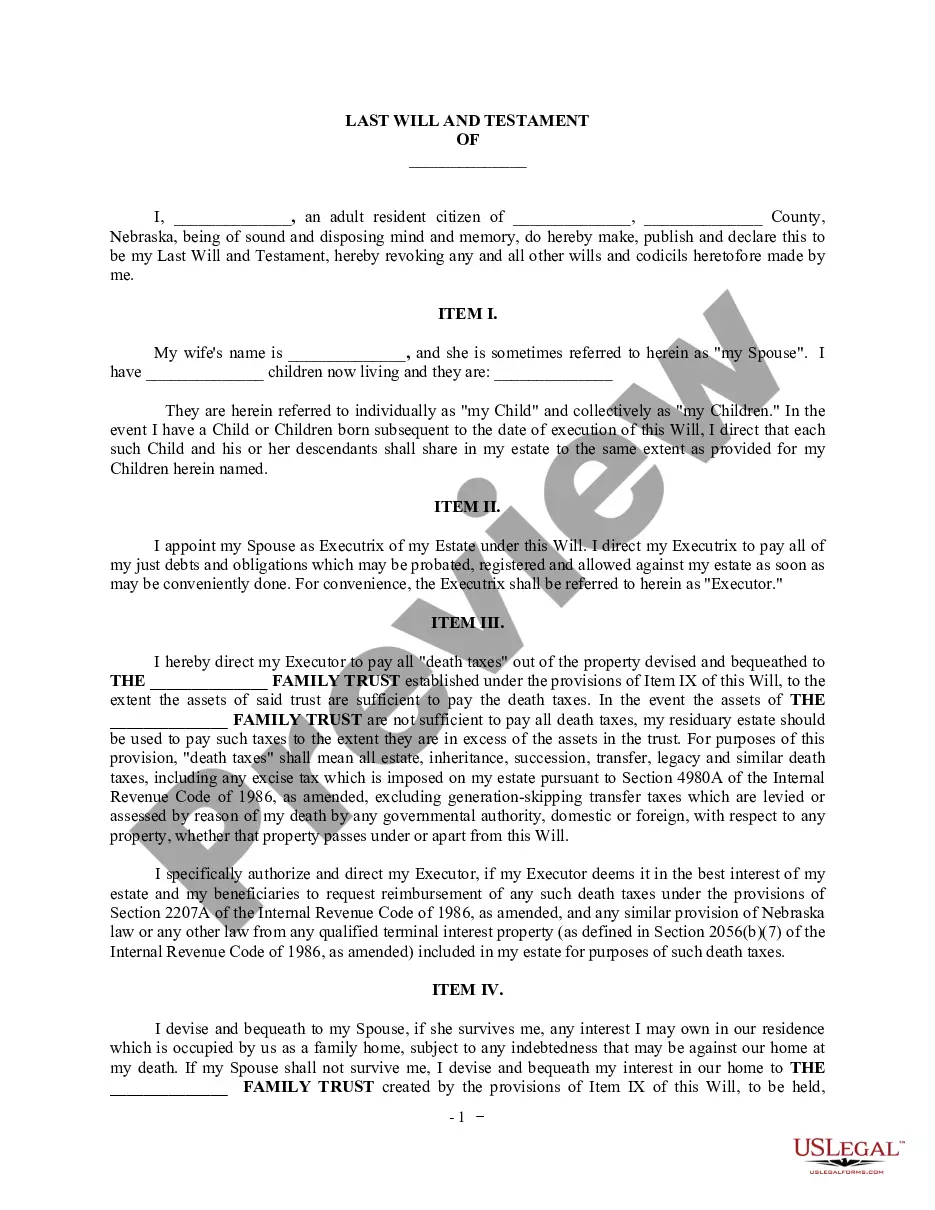
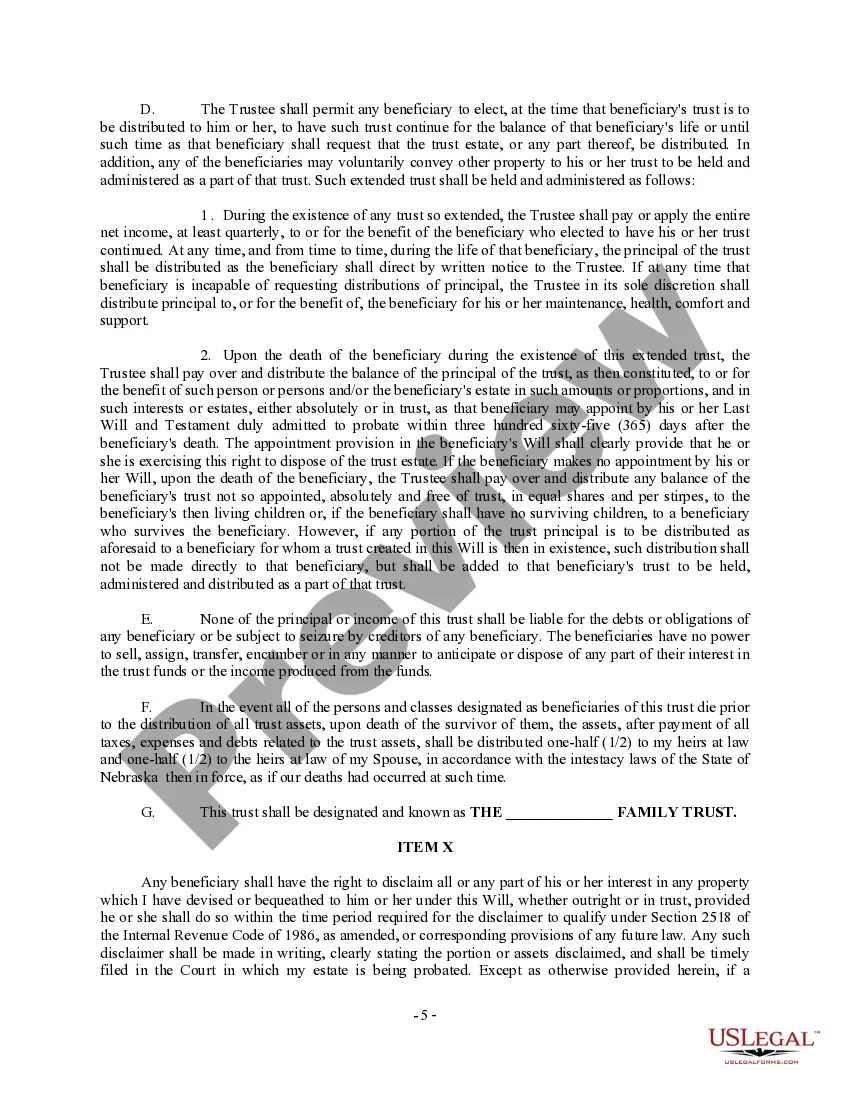
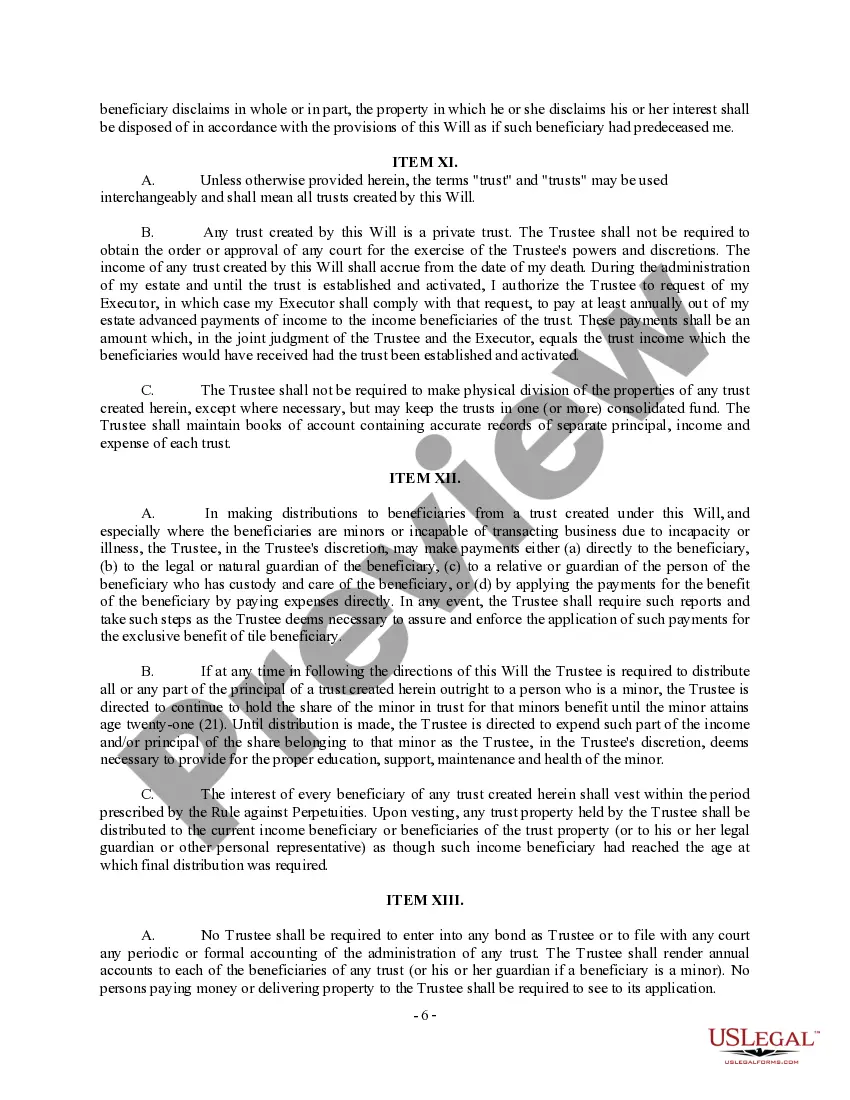
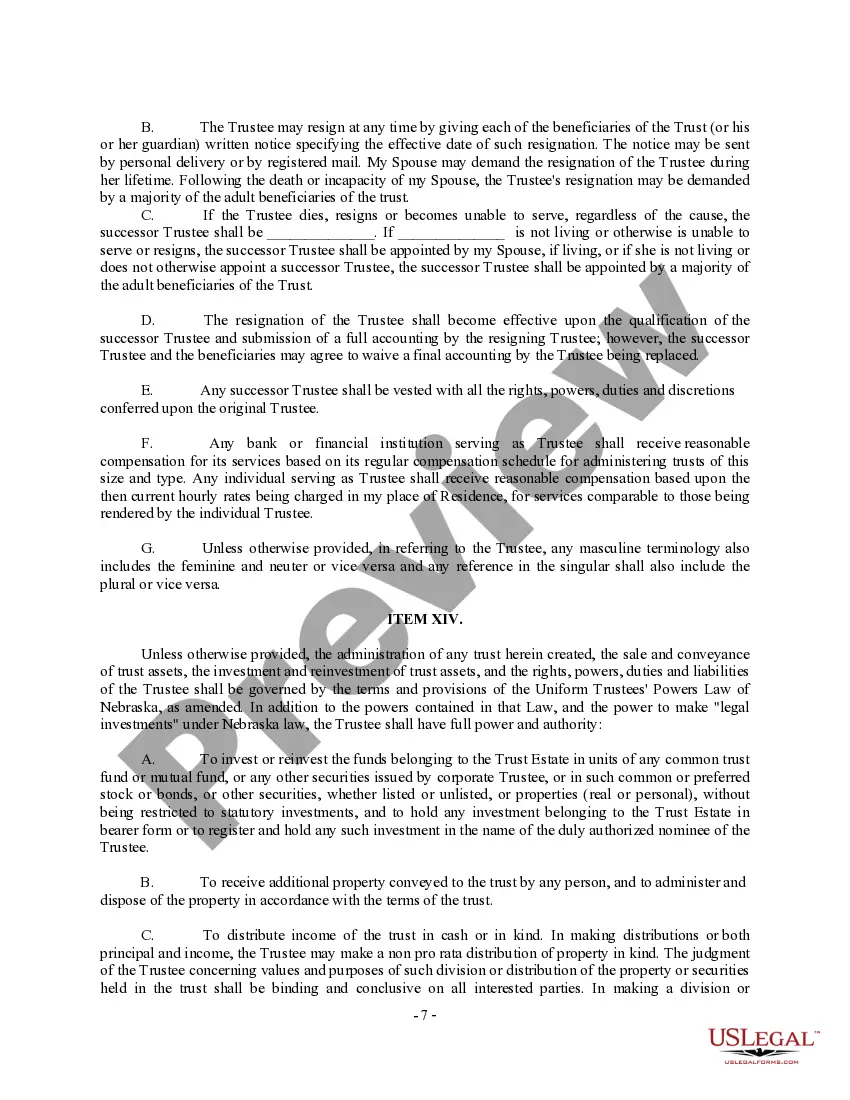
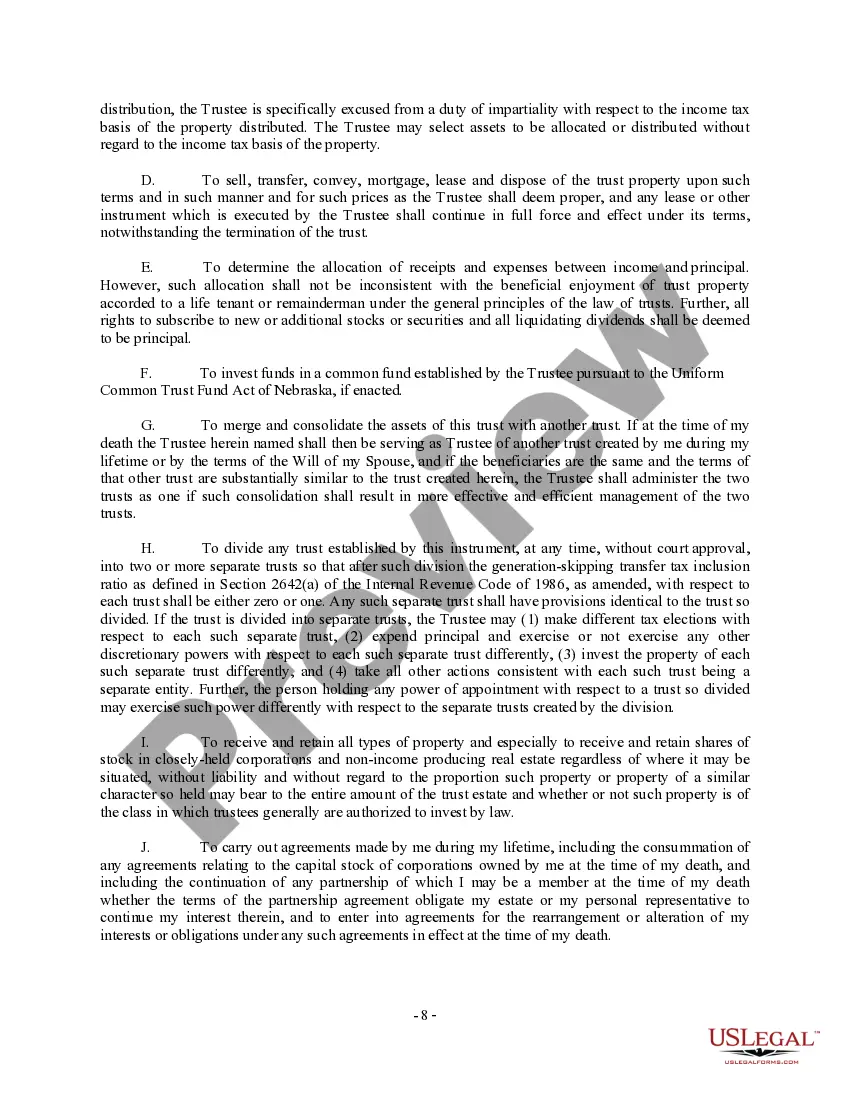
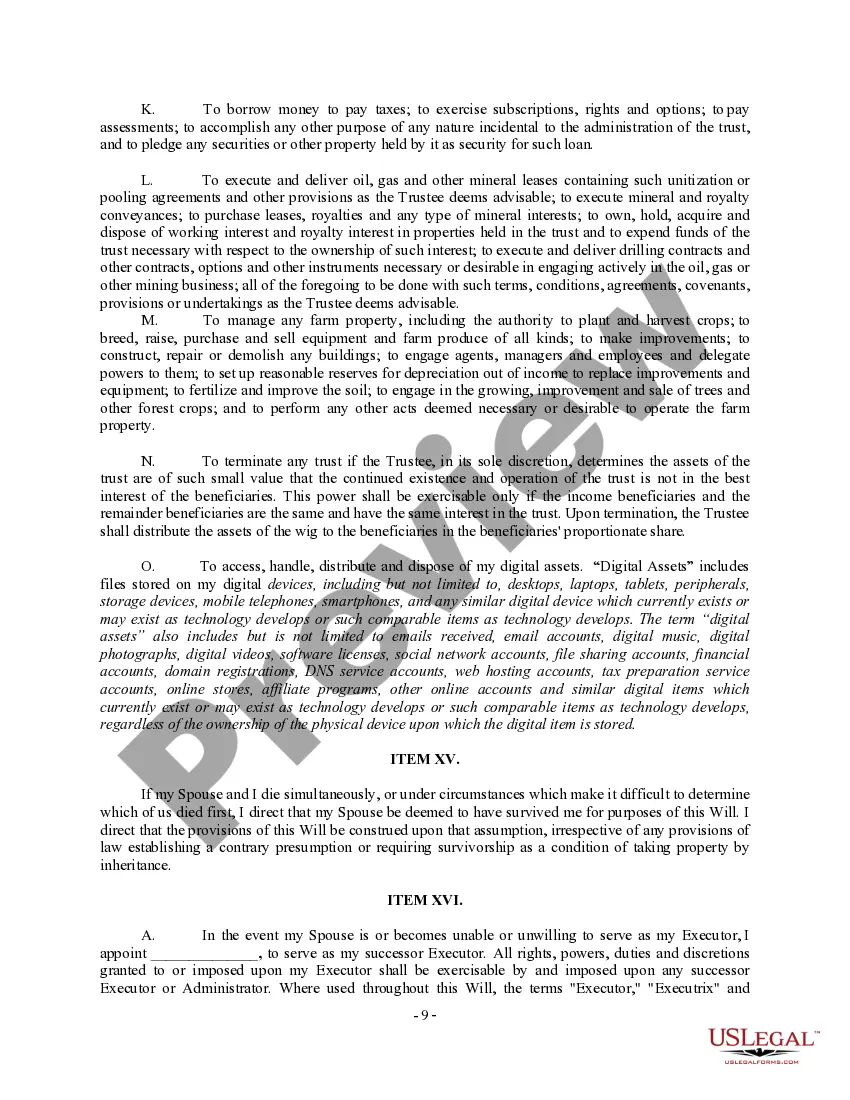
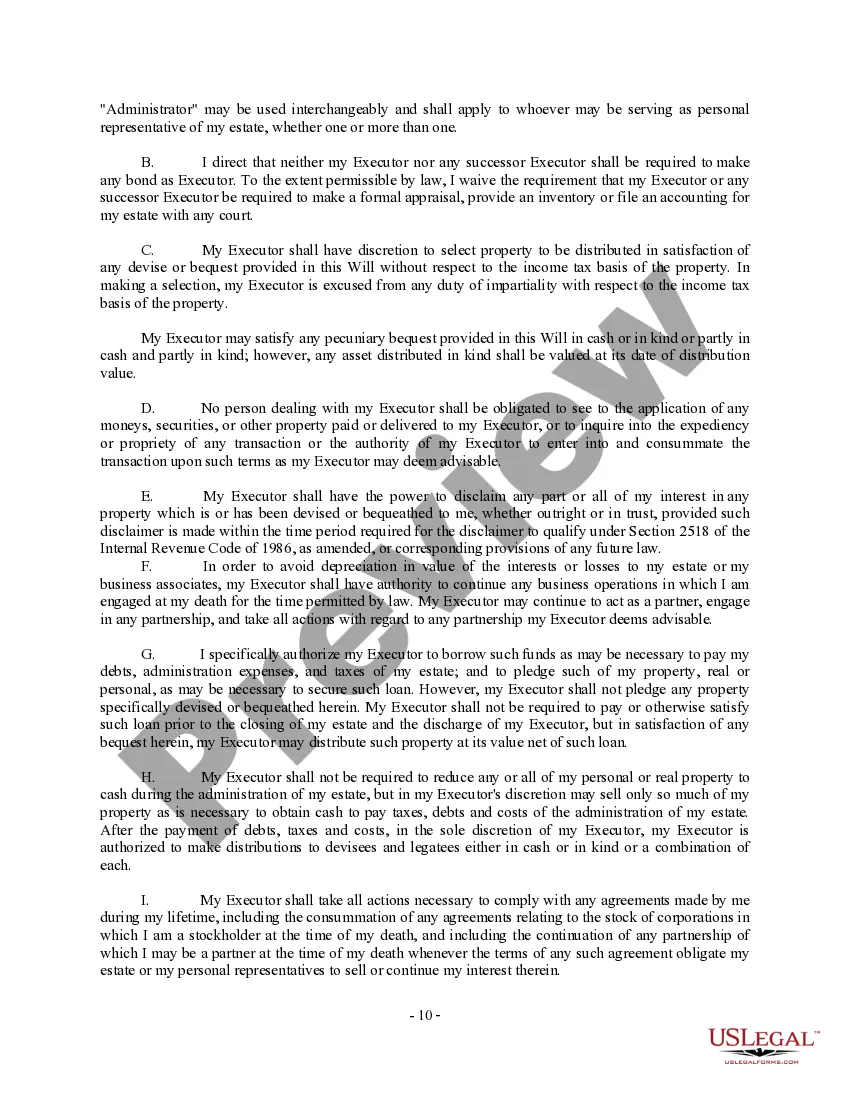
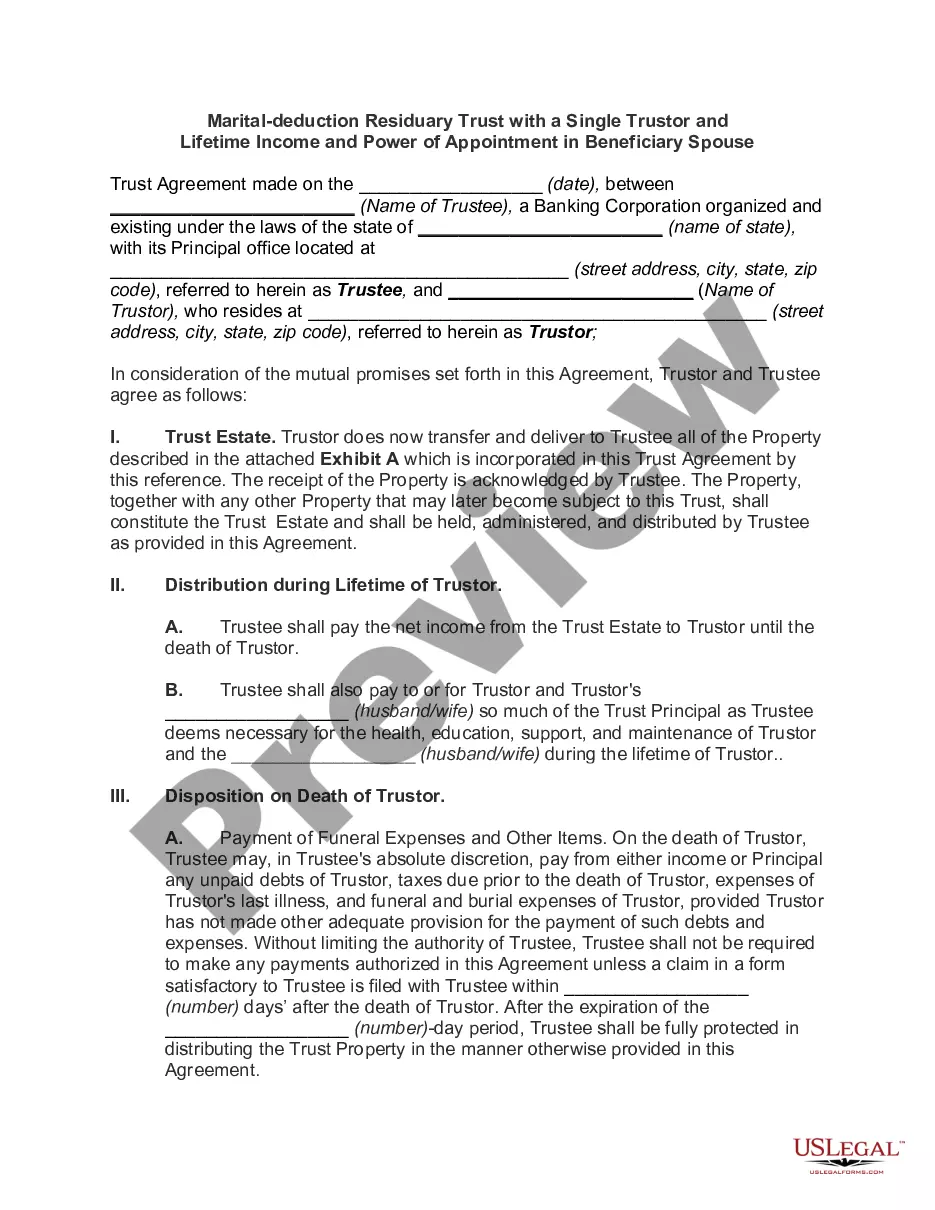
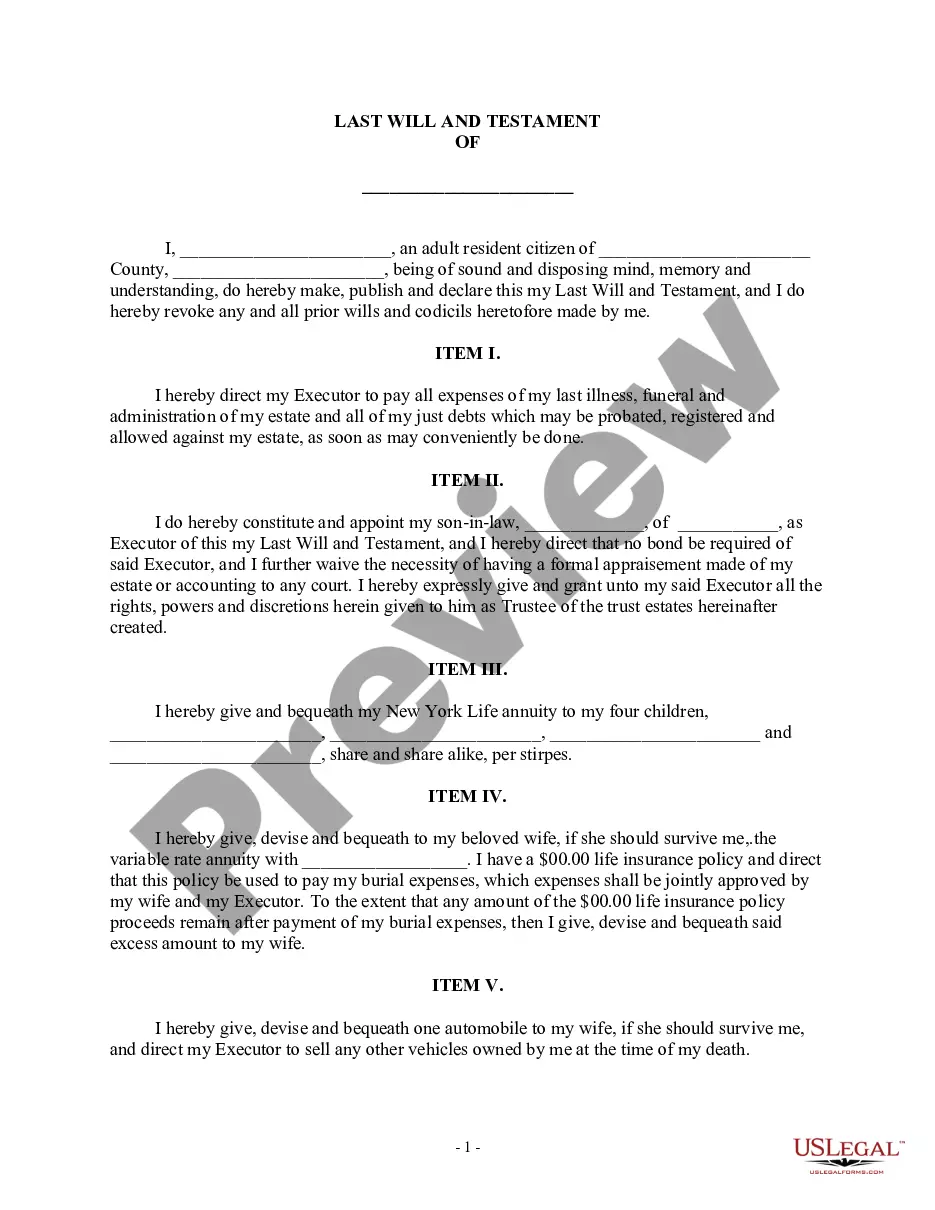
The Complex Will with Credit Shelter Marital Trust for Large Estates is a legal document designed for couples with significant assets. It allows for the maximum transfer of property tax-free after one spouse's death, by utilizing a trust to hold the exempt amount. Unlike simpler wills, this form specifically addresses estate planning for high-net-worth individuals, providing mechanisms to minimize estate taxes while ensuring benefits for the surviving spouse and children.
Main sections of this form
- Revocation of previous wills and codicils.
- Identification of spouse and children.
- Appointment of an executor for managing the estate.
- Details on tax obligation payments from the estate.
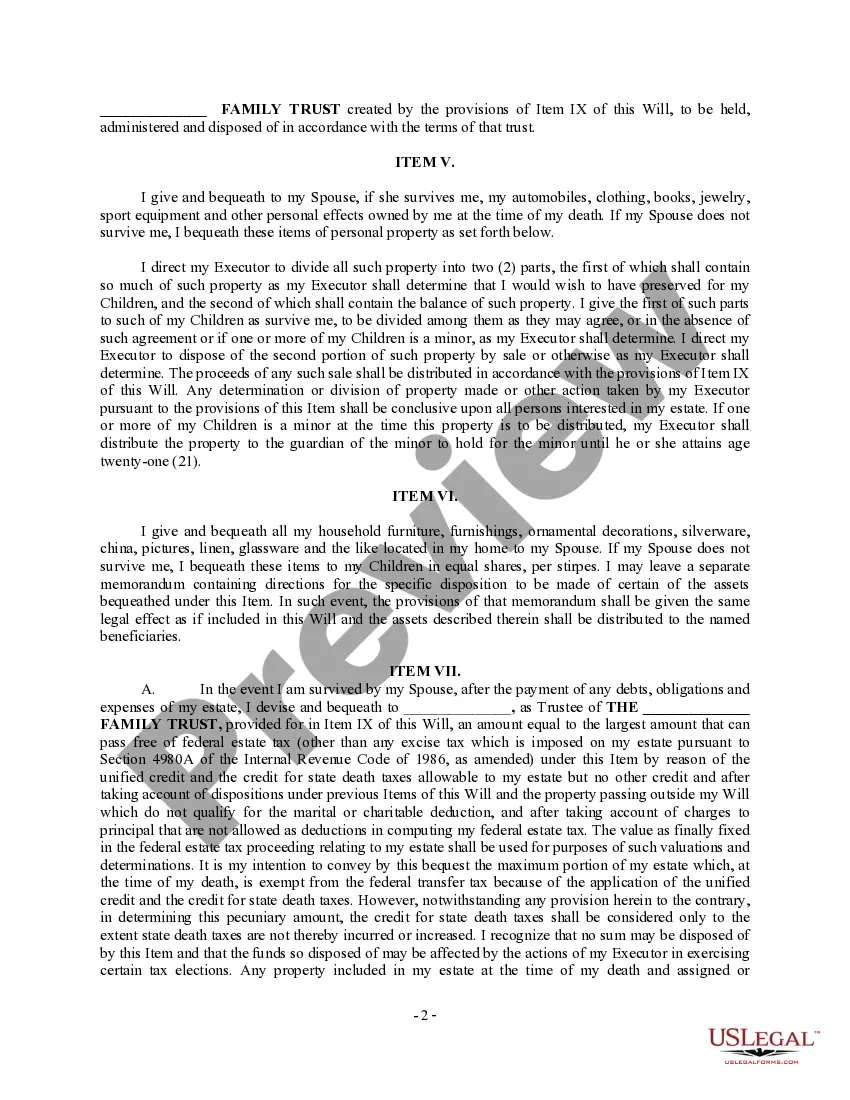
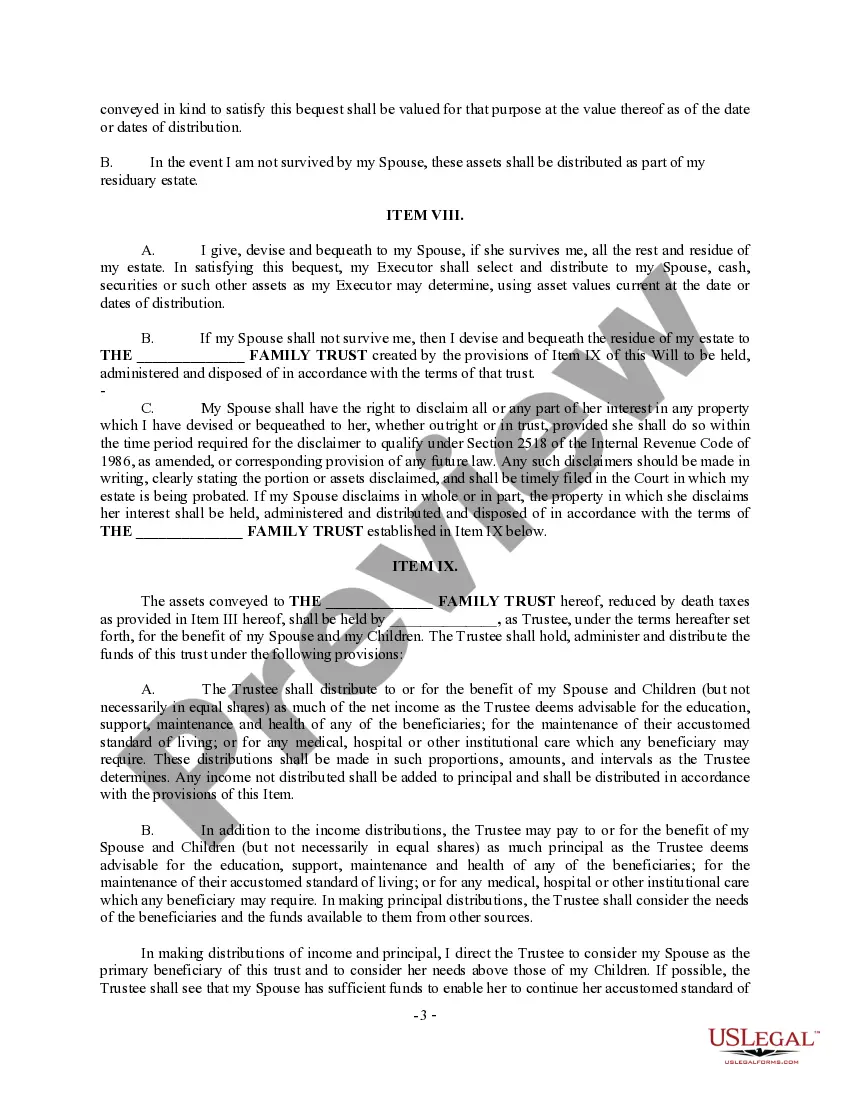
- Bequests to the spouse and children, including personal property and trust assets.
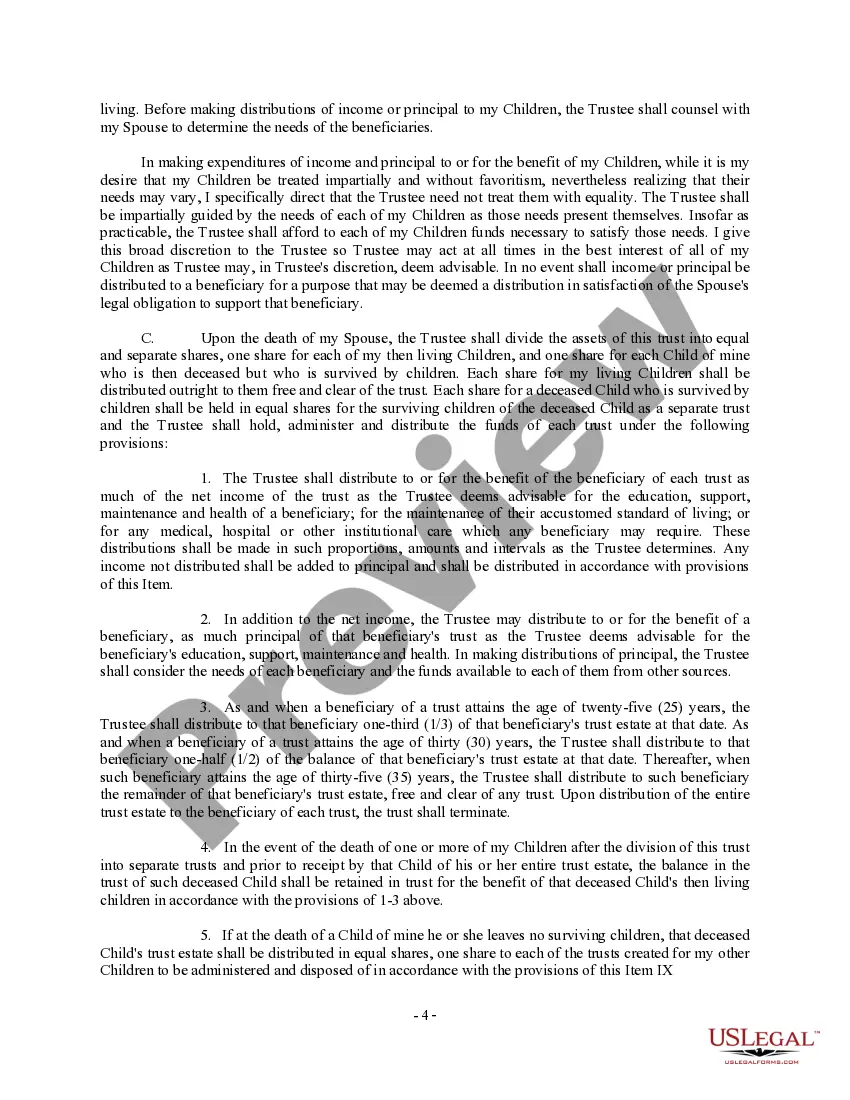
- Establishment of the family trust to manage and distribute assets after death.




When to use this form
This form is essential when a couple possesses substantial assets and wishes to ensure that their estate is handled in a tax-efficient manner. It is particularly useful if they want to provide financial security for the surviving spouse while also planning for the inheritance of their children. Scenarios may include second marriages, blended families, or any situation where estate tax concerns are prominent.
Who this form is for
- Couples with large estates who want to minimize estate taxes.
- Individuals planning for complex family situations, such as blended families.
- Those seeking to establish trusts to protect their heirs from estate taxes.
- People who want to ensure their spouse and children are financially secure after their death.
How to prepare this document
- Identify yourself as the testator, including your name and county of residency.
- Provide the names of your spouse and children to establish your family.
- Designate your spouse as the executor who will manage your estate after your death.
- Detail the distribution of your assets, including any real estate, vehicles, and personal belongings.
- Establish the terms of the family trust, including the trustee and how the assets will be managed and distributed.
- Sign the document in the presence of witnesses to ensure its validity.
Is notarization required?
This document requires notarization to meet legal standards. US Legal Forms provides secure online notarization powered by Notarize, allowing you to complete the process through a verified video call, available 24/7.
Get your form ready online
Our built-in tools help you complete, sign, share, and store your documents in one place.
Make edits, fill in missing information, and update formatting in US Legal Forms—just like you would in MS Word.
Download a copy, print it, send it by email, or mail it via USPS—whatever works best for your next step.
Sign and collect signatures with our SignNow integration. Send to multiple recipients, set reminders, and more. Go Premium to unlock E-Sign.
If this form requires notarization, complete it online through a secure video call—no need to meet a notary in person or wait for an appointment.
We protect your documents and personal data by following strict security and privacy standards.

Make edits, fill in missing information, and update formatting in US Legal Forms—just like you would in MS Word.

Download a copy, print it, send it by email, or mail it via USPS—whatever works best for your next step.

Sign and collect signatures with our SignNow integration. Send to multiple recipients, set reminders, and more. Go Premium to unlock E-Sign.

If this form requires notarization, complete it online through a secure video call—no need to meet a notary in person or wait for an appointment.

We protect your documents and personal data by following strict security and privacy standards.
Avoid these common issues
- Not updating the will after significant life events, such as births or deaths.
- Failing to properly identify all beneficiaries.
- Omitting to sign the document in the presence of required witnesses.
- Neglecting to clearly articulate the terms of the trust within the will.
- Assuming this will has no tax implications without consulting a tax advisor.
Why use this form online
- Convenience of completing the form at your pace, from anywhere.
- Editability allows for easy updates to reflect changes in your family situation.
- Access to legally vetted templates ensures compliance with state laws.
- Cost-effective compared to hiring a lawyer for drafting a complex will.
Legal use & context
- This will must comply with Nebraska state laws to be enforceable.
- It provides clarity on estate distribution and minimizes potential disputes among heirs.
- Non-compliance with required execution procedures may render the will invalid.
Quick recap
- The Complex Will with Credit Shelter Marital Trust is essential for high-net-worth couples.
- It optimizes estate tax benefits while ensuring family financial security.
- Completing this form requires careful consideration of family dynamics and asset distribution.
- Consult with legal and tax professionals to ensure regulatory compliance and effective strategies.
Looking for another form?
Form popularity
FAQ
A credit shelter trust (CST) is a trust created after the death of the first spouse in a married couple. Assets placed in the trust are generally held apart from the estate of the surviving spouse, so they may pass tax-free to the remaining beneficiaries at the death of the surviving spouse.
Upon the grantor's death, the assets in the trust are generally not considered part of his or her estate and are therefore not subject to estate taxes.
Generally, trusts are considered the separate property of the beneficiary spouse and the assets in a trust are not subject to equitable distribution unless they contain marital property.Any funds remaining in the trust or in a separate account will continue to be the separate property of the beneficiary spouse.
In the case of a marital trust, the IRS subjects the remaining trust assets to federal estate taxes when the surviving spouse passes. However, a couple can take advantage of the federal gift and estate tax exemption. This is the amount that you can pass on to heirs before you'd ever owe an actual estate tax.
Yes, the surviving spouse may serve as trustee of the credit shelter trust.All of the assets in the credit shelter trust, including any appreciation in value during the surviving spouse's lifetime, pass free of estate tax to the beneficiaries.
A marital trust starts as a revocable living trust. A surviving spouse can be its trustee.
The "A Trust" is also commonly referred to as the "Marital Trust," "QTIP Trust," or "Marital Deduction Trust." The "B Trust" is also commonly referred to as the "Bypass Trust," "Credit Shelter Trust," or "Family Trust."
First, in a standard credit shelter trust, there is no step-up in basis at the death of the surviving spouse.Second, the credit shelter trust is a separate taxpayer and requires its own tax return, Form 1041.
At the time of your death, the assets in your family trust are protected by the exemption, and the assets in your marital trust are protected by the marital deduction. No estate taxes are due.