Nebraska Interrogatories to Defendant for Motor Vehicle Accident
About this form
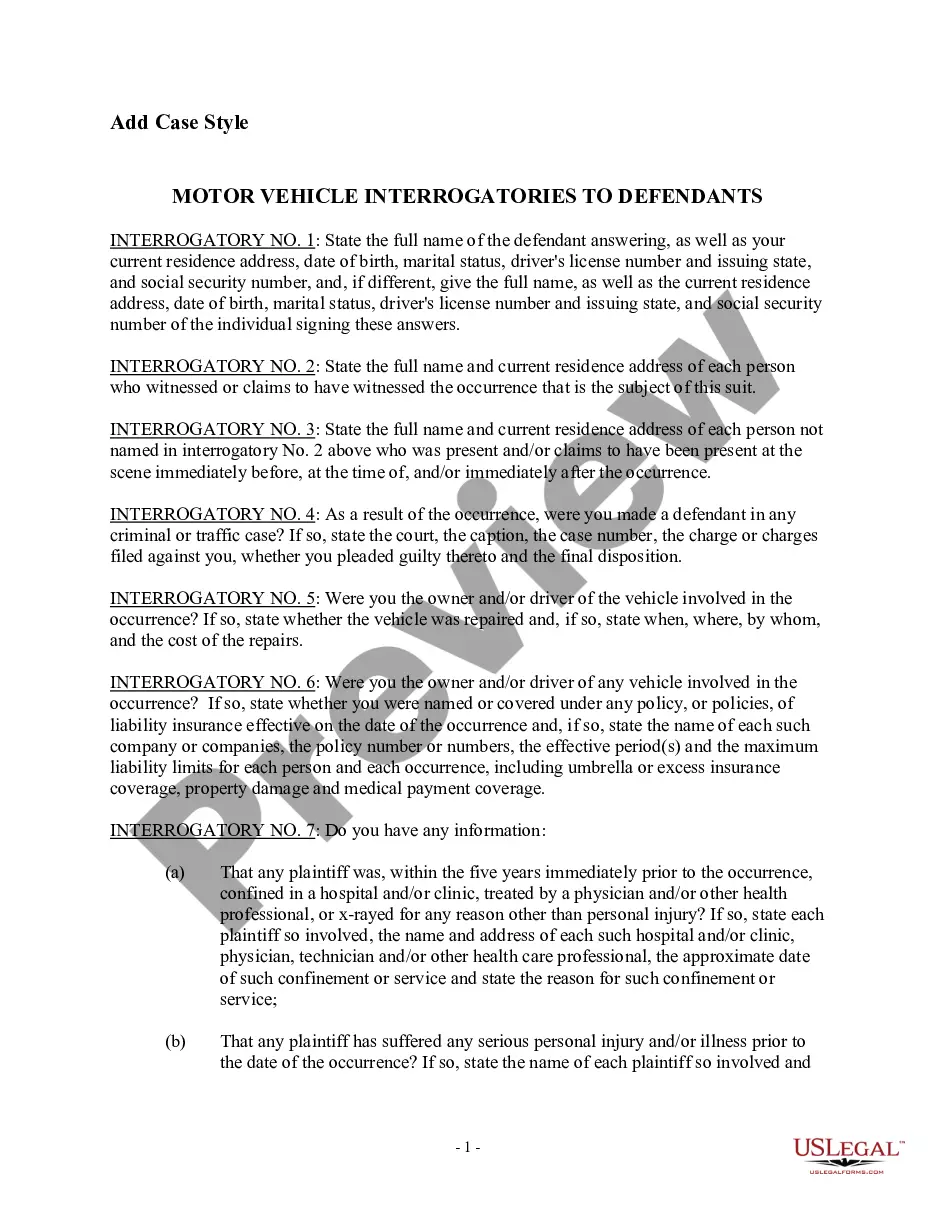
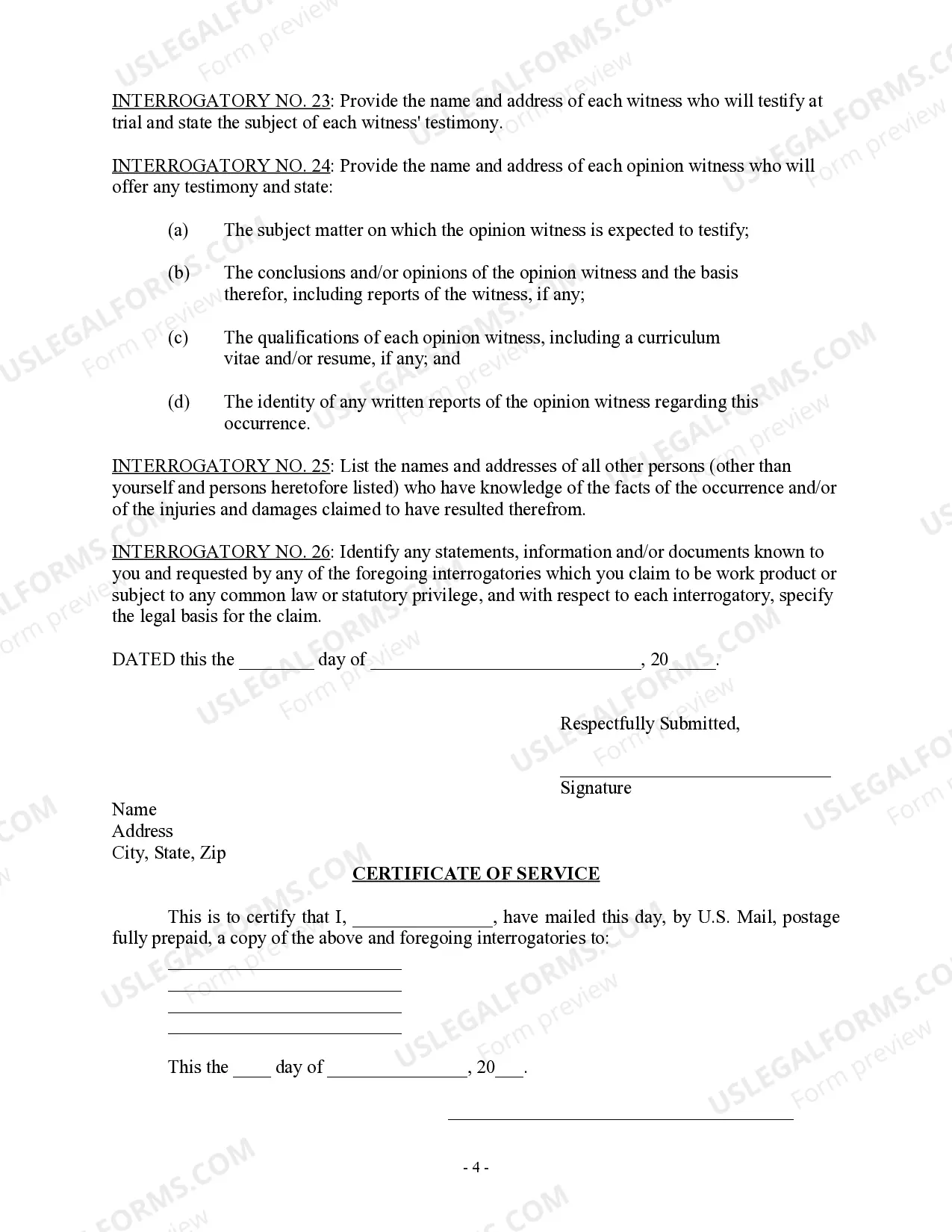
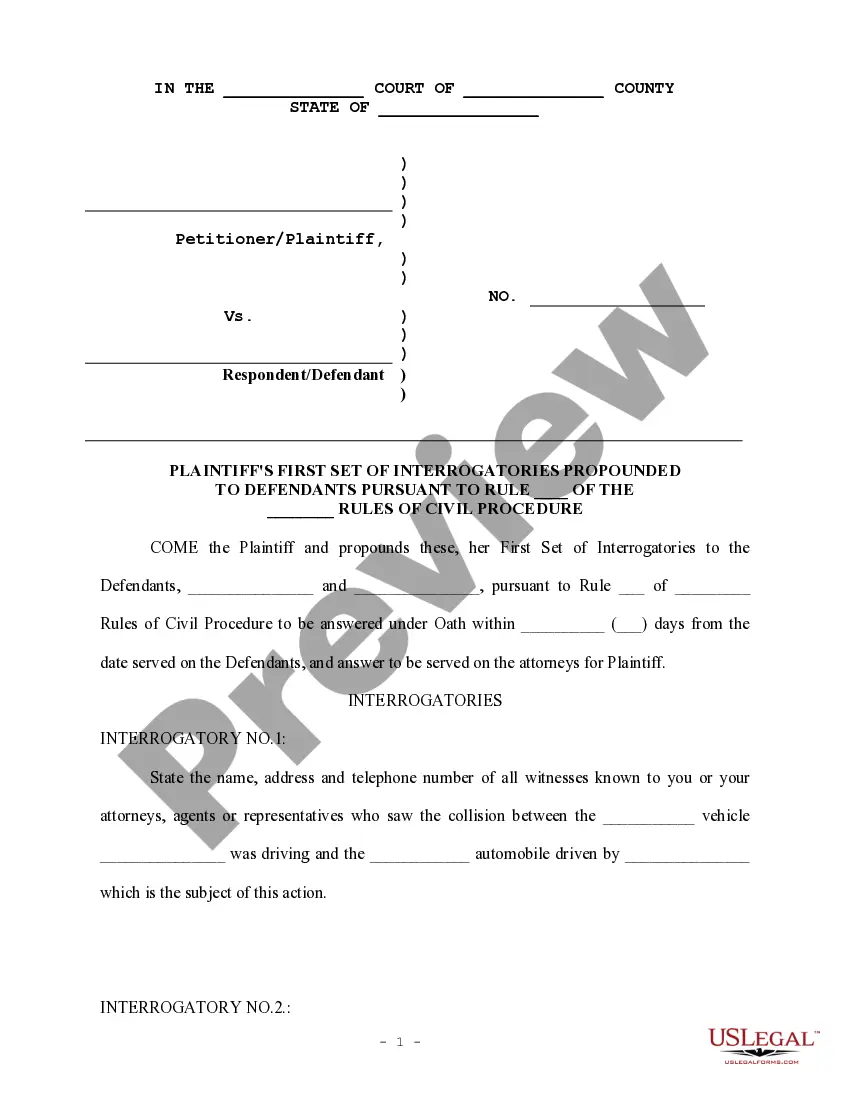
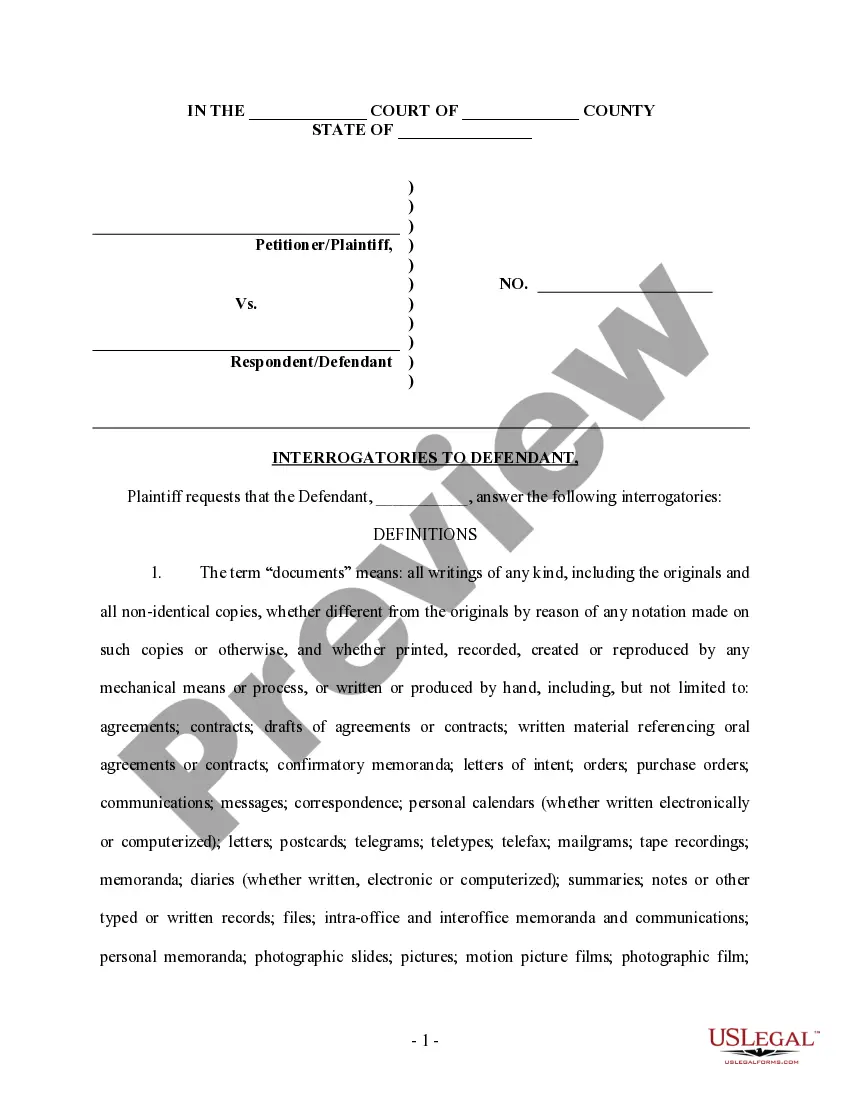
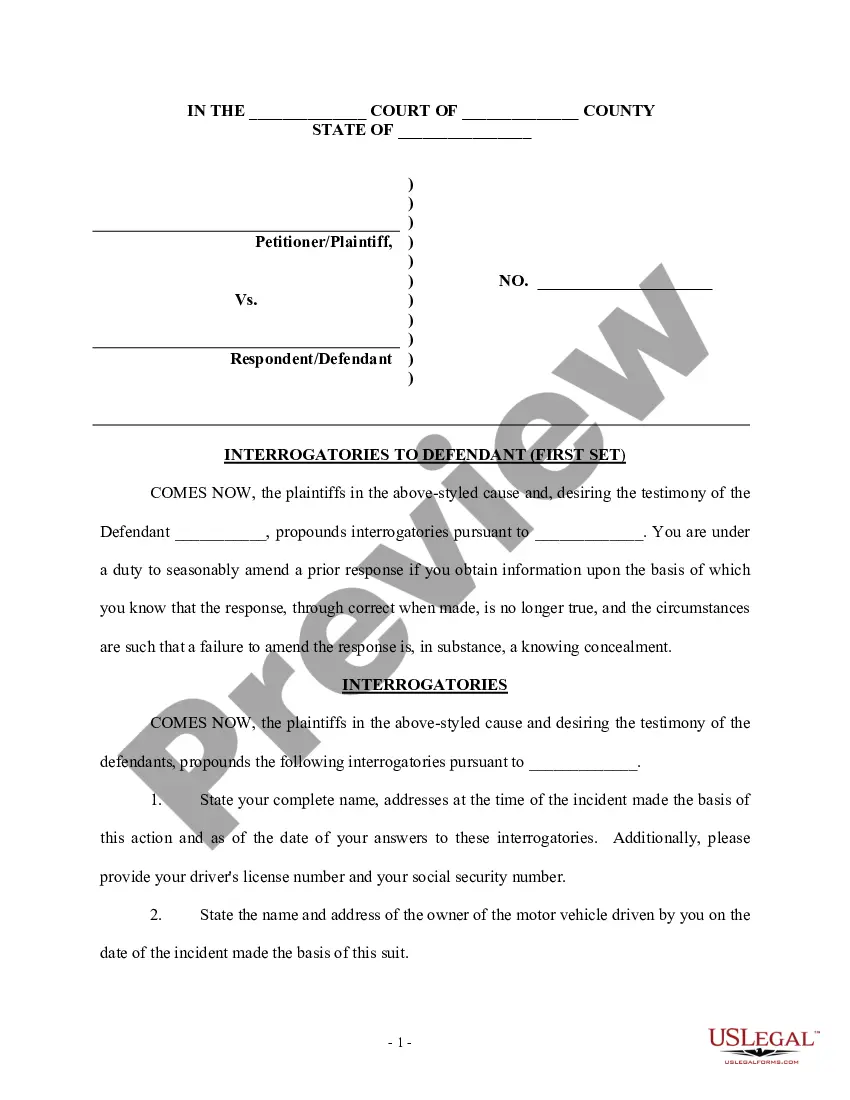
The Interrogatories to Defendant for Motor Vehicle Accident is a legal document consisting of a set of questions that the plaintiff sends to the defendant in a vehicle accident case. This form serves the purpose of obtaining detailed information from the defendant about the incident, their insurance details, and potential witnesses. By using this form, plaintiffs can gather essential facts that may help in their case preparation and strategy. Unlike other legal forms that may seek direct answers or requests for admission, these interrogatories aim for comprehensive responses relating to the incident.
Key parts of this document
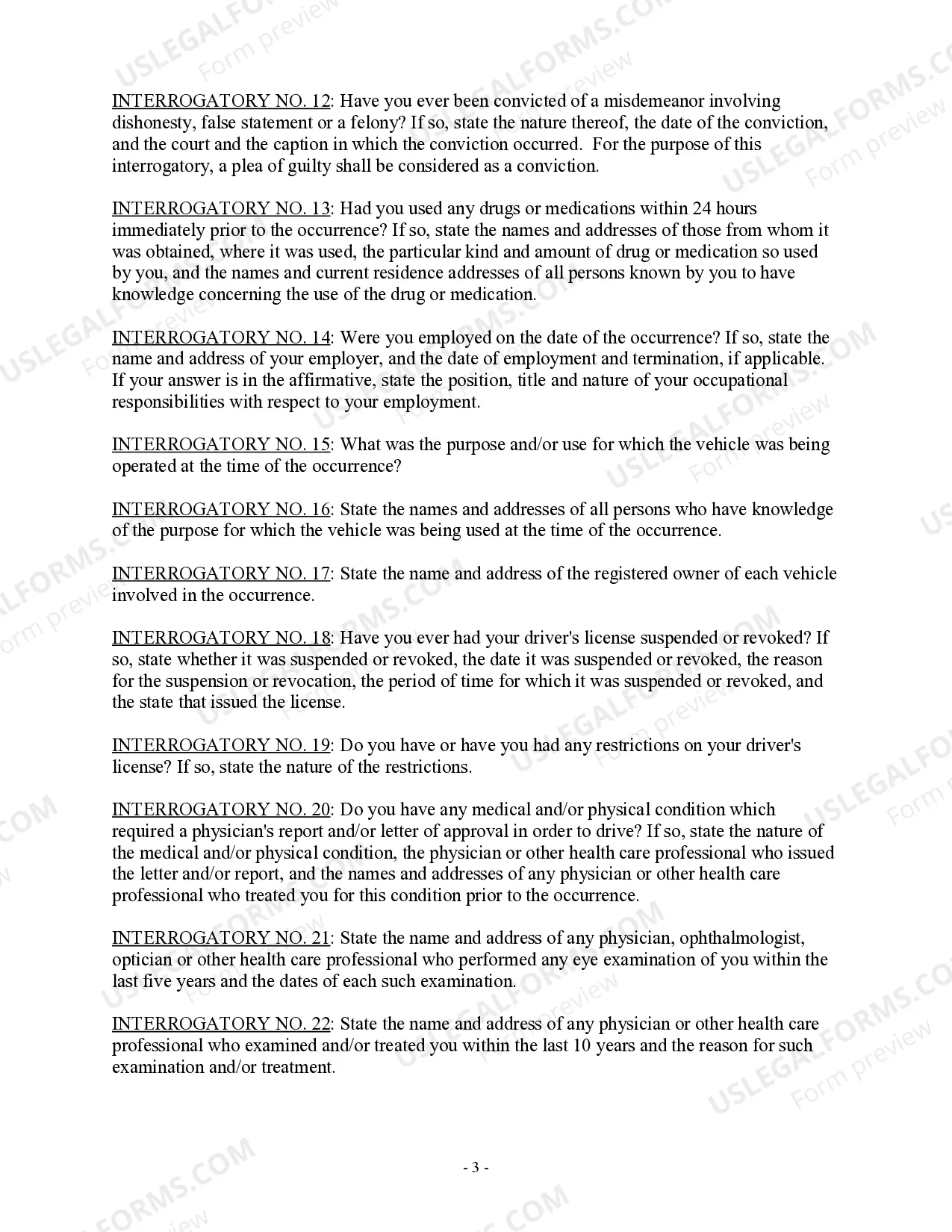
- Identification of the defendant's personal information, including name, address, and driver's license details.
- Information regarding witnesses present during the incident.
- Details on any insurance policies relevant to the accident.
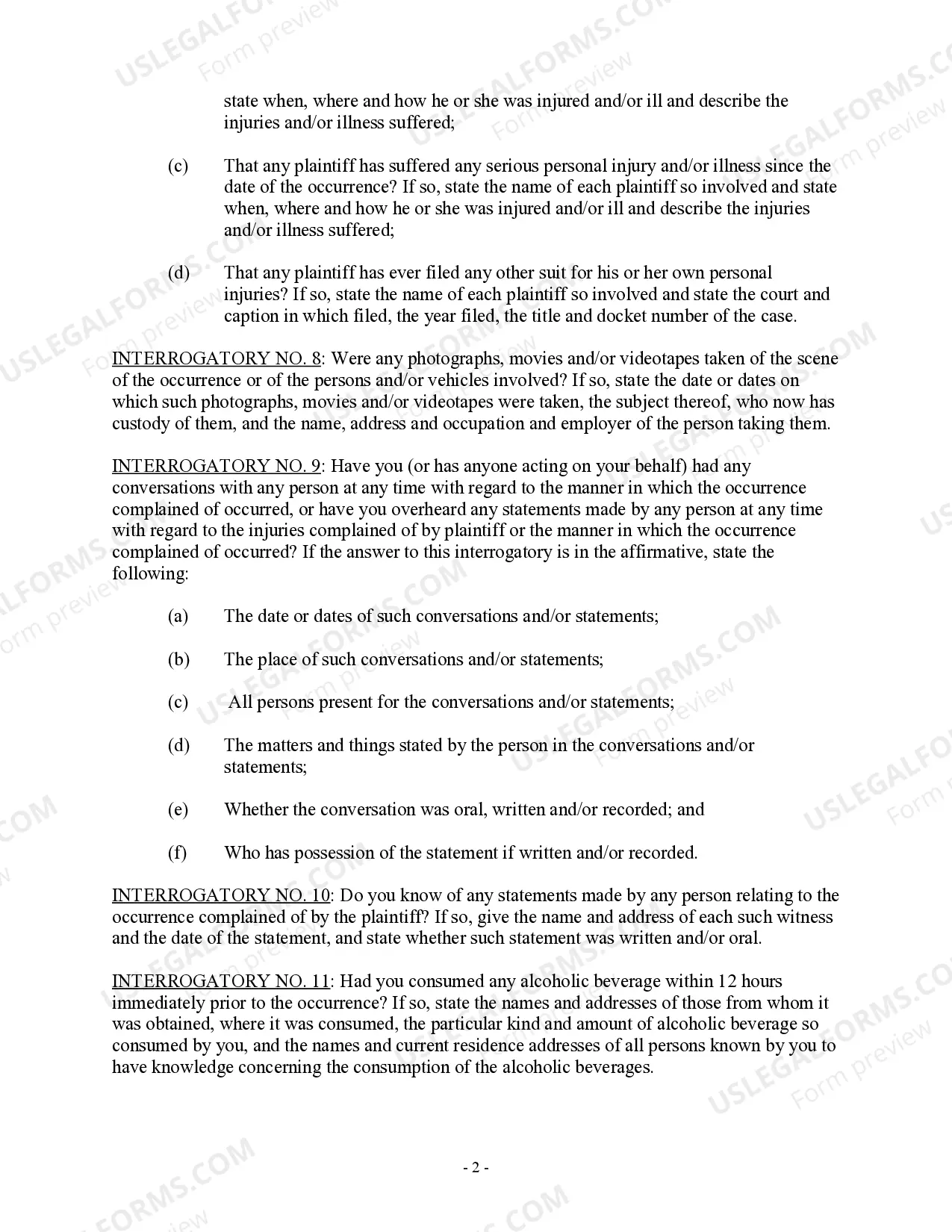
- Questions about prior injuries or claims made by the plaintiff.
- Inquiries into any evidence such as photographs or statements regarding the occurrence.
- Information about the defendant's alcohol or drug use before the incident.

When to use this document
You should use the Interrogatories to Defendant for Motor Vehicle Accident form when you are involved in a legal dispute following a vehicle accident. This form is particularly useful if you are a plaintiff seeking detailed information from the defendant to build your case. It can be used in situations where you need to clarify facts, gather evidence, or understand the defendantâs position regarding liability and damages claimed.
Intended users of this form
This form is intended for:
- Plaintiffs involved in a motor vehicle accident litigation.
- Attorneys representing plaintiffs in personal injury claims related to automobile accidents.
- Individuals seeking a better understanding of the legal process following a vehicle incident.
How to complete this form
To complete the Interrogatories to Defendant for Motor Vehicle Accident form, follow these steps:
- Enter the full name and current address of the defendant.
- Obtain and provide detailed witness information, including name and address.
- Gather relevant insurance policy details, including company names and coverage limits.
- Document any statements, photographs, or videos that pertain to the accident.
- Complete all questions regarding prior injuries, incidents, and drug or alcohol use.
Notarization guidance
This form does not typically require notarization unless specified by local law. It is advisable to check with a legal professional regarding any specific requirements that may apply in your jurisdiction.
Get your form ready online
Our built-in tools help you complete, sign, share, and store your documents in one place.
Make edits, fill in missing information, and update formatting in US Legal Forms—just like you would in MS Word.
Download a copy, print it, send it by email, or mail it via USPS—whatever works best for your next step.
Sign and collect signatures with our SignNow integration. Send to multiple recipients, set reminders, and more. Go Premium to unlock E-Sign.
If this form requires notarization, complete it online through a secure video call—no need to meet a notary in person or wait for an appointment.
We protect your documents and personal data by following strict security and privacy standards.

Make edits, fill in missing information, and update formatting in US Legal Forms—just like you would in MS Word.

Download a copy, print it, send it by email, or mail it via USPS—whatever works best for your next step.

Sign and collect signatures with our SignNow integration. Send to multiple recipients, set reminders, and more. Go Premium to unlock E-Sign.

If this form requires notarization, complete it online through a secure video call—no need to meet a notary in person or wait for an appointment.

We protect your documents and personal data by following strict security and privacy standards.
Typical mistakes to avoid
- Failing to provide complete personal information for the defendant.
- Not including all relevant witnesses to the accident.
- Omitting answers to questions about prior injuries or relevant medical treatment.
- Not verifying the insurance details or including all applicable policies.
- Neglecting to check for consistency in provided information across documents.
Why complete this form online
- Convenient online access allows users to download and fill out the form at their own pace.
- The ability to edit and customize responses according to specific case details.
- Reliability of legal forms drafted by licensed attorneys ensures completeness and accuracy.
- Time-saving by avoiding the need for in-person consultations for standard forms.
- This form is legally binding when completed and submitted as part of the pre-trial discovery process.
- Responses to the interrogatories can be used in court to establish facts related to the accident.
- It is important to answer all questions honestly to avoid penalties for perjury.
What to keep in mind
- The Interrogatories to Defendant for Motor Vehicle Accident form is crucial for plaintiffs in vehicle accident cases.
- This form helps gather detailed information relevant to the accident from the defendant.
- Ensure all provided information is comprehensive to avoid mistakes that could affect the case.
- Utilizing this document accurately can enhance your overall litigation strategy.
Looking for another form?



Form popularity
FAQ
So, can you refuse to answer interrogatories? The answer is, no, you may not. You must answer a Rule 33 interrogatory within 30 days of being served with it. That answer must either permit inspection of the requested information or object to the production of the information for a specific reason.
Your answers to the interrogatories should usually be short, clear, and direct and should answer only the question that is being asked. This is not the time to set out your entire case or defense to the other side. Take the time to make sure your answers are correct and truthful.
Motions to Compel If a party doesn't respond to interrogatories or requests for production, then the party seeking those answers must file a motion to compel with the court. If the court grants the motion to compel, then the party who objected or failed to answer must then do so.
You must answer each interrogatory separately and fully in writing under oath, unless you object to it. You must explain why you object. You must sign your answers and objections.
Interrogatory subparts are counted as one interrogatory if they are logically or factually subsumed within and necessarily related to the primary question. Safeco of America v. Rawstron, 181 F.R.D. 441, 445 (C.D. Cal.
In law, interrogatories (also known as requests for further information) are a formal set of written questions propounded by one litigant and required to be answered by an adversary in order to clarify matters of fact and help to determine in advance what facts will be presented at any trial in the case.
The plaintiff must respond by the deadline. There are different ways to make sure you get each kind of discovery if the plaintiff does not give it to you by the deadline. If the plaintiff does not respond to the court order, then you can file a Motion to Dismiss and you may win your case.
Responding to Form InterrogatoriesAnswer each question, being careful to answer each subpart, if one exists. Read the question carefully, and answer only what it asks. You may attach exhibits, if necessary. The response must be verified, meaning you must swear that the responses given are true.
You must answer each interrogatory separately and fully in writing under oath, unless you object to it. You must explain why you object. You must sign your answers and objections.