Nebraska Letter from Tenant to Landlord containing Notice that premises leaks during rain and demand for repair
Overview of this form
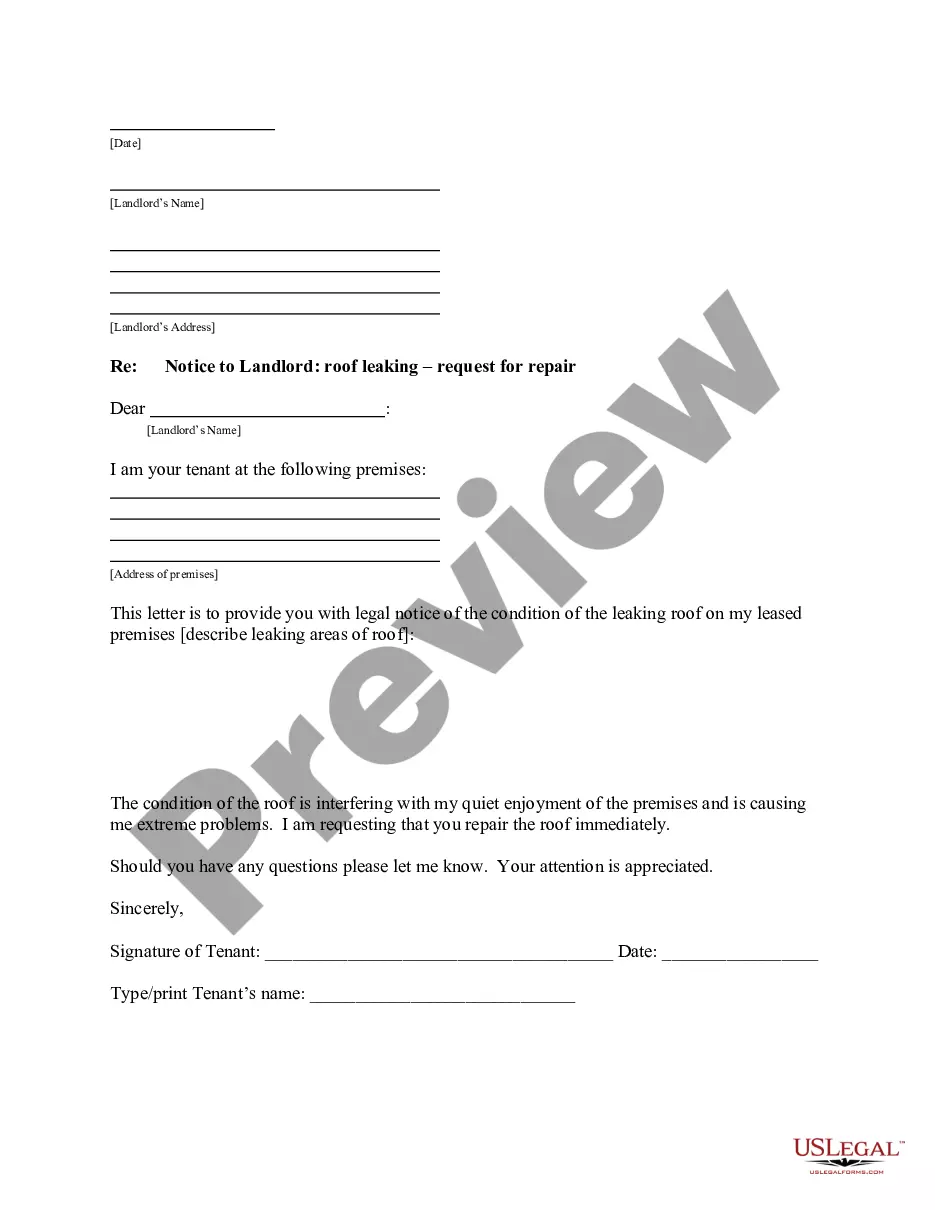
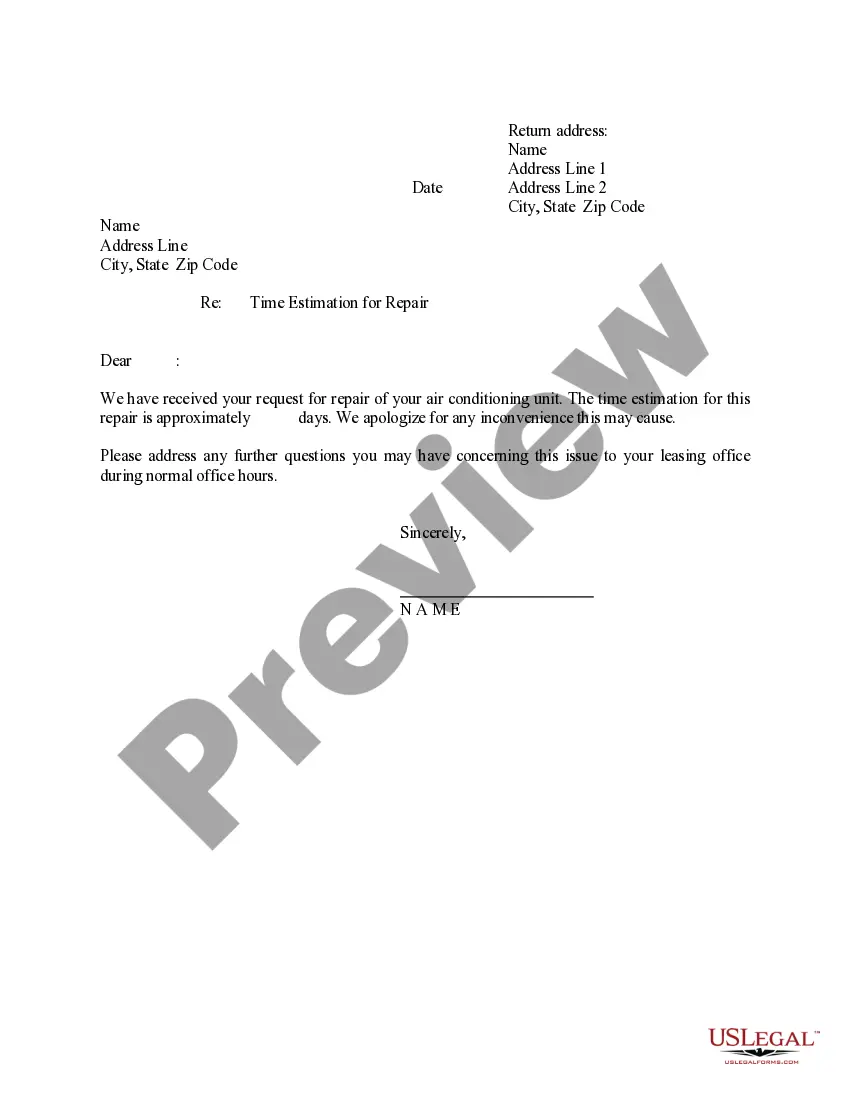
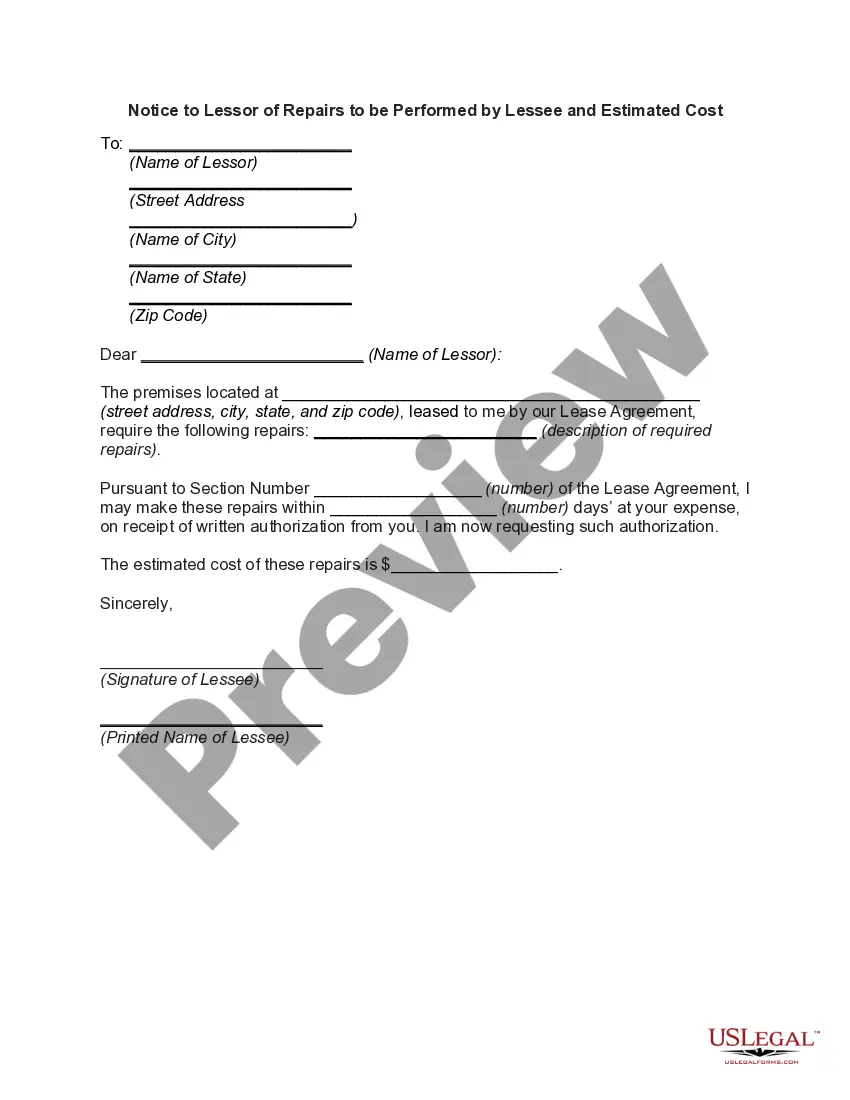
This form is a Letter from Tenant to Landlord containing Notice that premises leaks during rain and demand for repair. It serves the purpose of formally notifying the landlord about a leak and requesting necessary repairs as outlined in the lease agreement. This letter differs from other tenant-landlord communication forms by specifically addressing a maintenance issue that affects the habitability of the rental premises.
What’s included in this form
- Tenant's signature to validate the notice
- Tenant's printed name for identification
- Date field to indicate when the notice is delivered
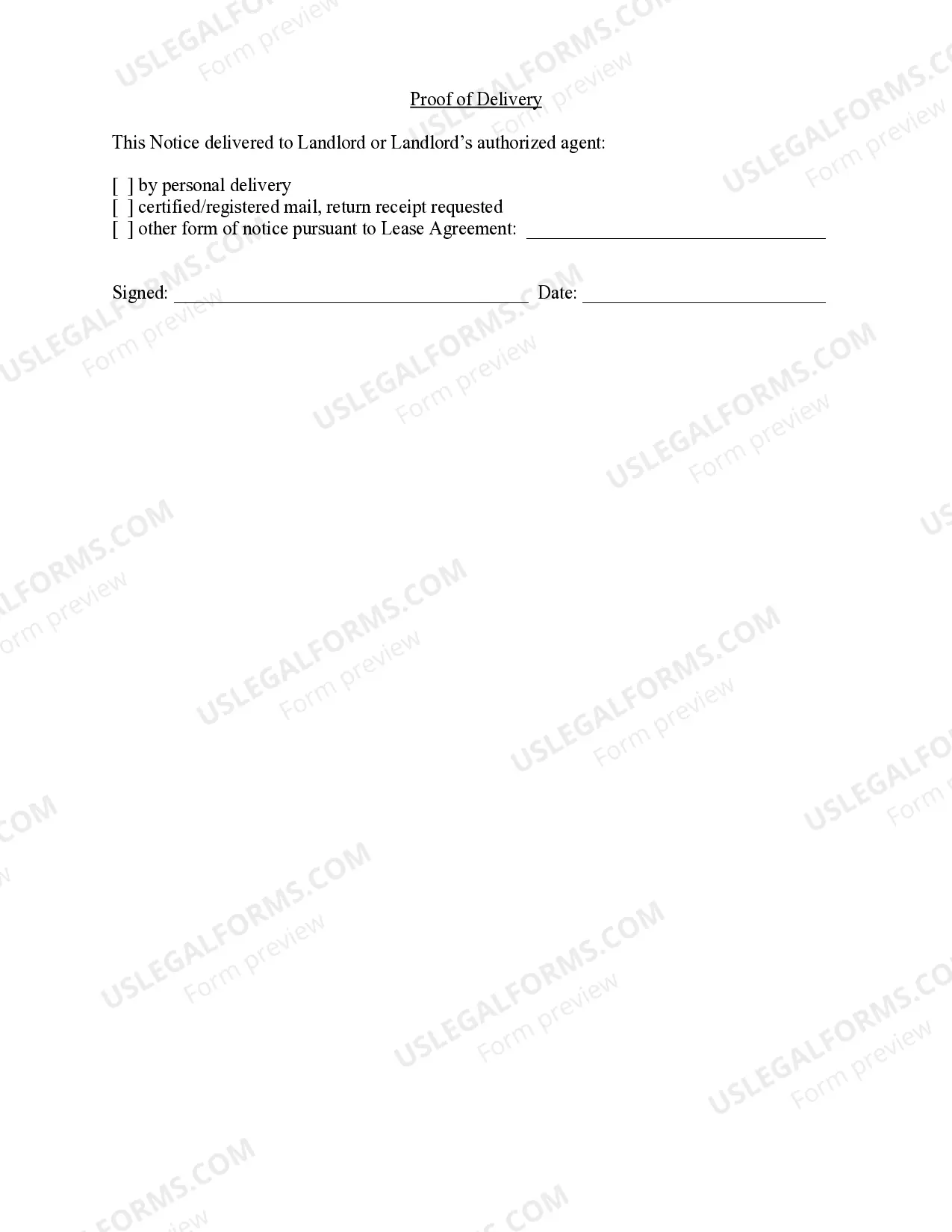
- Proof of delivery options to evidence that the landlord received the notice
- Space for landlord's authorized agent to acknowledge receipt

Common use cases
This form is used when a tenant experiences a leak in the roof or other areas during rain and needs to formally notify the landlord about the issue. It is essential to use this letter before the rental property becomes significantly damaged or uninhabitable, and it is required to provide the landlord with a reasonable timeframe to conduct repairs. Utilizing this form helps ensure that communication is clear and documented.
Who this form is for
- Tenants experiencing leaks in their rental property
- Individuals who hold a lease agreement with a landlord
- Renters seeking to document maintenance requests formally
Instructions for completing this form
- Enter the date of the disclosure at the top of the letter.
- Type or print the tenant's full name in the designated area.
- Clearly state the issue regarding the leak and request for repairs.
- Choose and indicate the method of delivery to the landlord, such as personal delivery.
- Sign and date the letter to affirm the request.
Notarization guidance
This form does not typically require notarization unless specified by local law. It is essential to follow any specific lease agreement requirements to ensure validity.
Get your form ready online
Our built-in tools help you complete, sign, share, and store your documents in one place.
Make edits, fill in missing information, and update formatting in US Legal Forms—just like you would in MS Word.
Download a copy, print it, send it by email, or mail it via USPS—whatever works best for your next step.
Sign and collect signatures with our SignNow integration. Send to multiple recipients, set reminders, and more. Go Premium to unlock E-Sign.
If this form requires notarization, complete it online through a secure video call—no need to meet a notary in person or wait for an appointment.
We protect your documents and personal data by following strict security and privacy standards.

Make edits, fill in missing information, and update formatting in US Legal Forms—just like you would in MS Word.

Download a copy, print it, send it by email, or mail it via USPS—whatever works best for your next step.

Sign and collect signatures with our SignNow integration. Send to multiple recipients, set reminders, and more. Go Premium to unlock E-Sign.

If this form requires notarization, complete it online through a secure video call—no need to meet a notary in person or wait for an appointment.

We protect your documents and personal data by following strict security and privacy standards.
Avoid these common issues
- Failing to provide specific details about the leak's location and severity.
- Not including the date of signature, making it harder to track the timeline.
- Choosing an improper method for delivering the notice, which may not be legally acceptable.
Why complete this form online
- Convenient access to a legally vetted template that ensures compliance.
- Editability allows for customization to fit individual situations.
- Immediate download for prompt communication with the landlord.
Summary of main points
- This form is crucial for formally notifying landlords about maintenance issues, such as leaks.
- Using this form ensures that your request is documented, which can be useful for further actions if repairs are not made.
- Always check state or local laws to ensure compliance with specific regulations regarding such notices.
Looking for another form?
Form popularity
FAQ
Dear (Name of landlord or property manager), My name is (Your name) and I have a keen interest in renting the apartment you have available at (Property name or address). I currently live at (Your current address) and have lived there for (XX) years.
Know your state's landlord/tenant laws. Read and respond to the court summons. Try to work out a settlement. Consider legal counsel. Show up for court. Look sharp and provide evidence.
Uninhabitable conditions can include dangerous ones, such as holes in the floor, unsafe or exposed wiring, or non-working air conditioning in dangerously hot summer months. Gross infestations of roaches, fleas or other pests are also uninhabitable conditions.
Your name and address. Your Landlord's name and address. The date your notice period ends. A forwarding address. A request for tenancy documentation such as the tenancy agreement or deposit details. A reason for a request to terminate the tenancy early (if applicable)
The landlord had a duty to reasonably maintain the property; The landlord knew or should have known of the dangerous condition; The landlord breached their duty by failing to repair/fix the dangerous condition;
When a tenant damages property eviction is a legal recourse. You'll want to make sure you follow the proper eviction steps which include serving a proper eviction notice. If a tenant is severely damaging a rental property they are violating the lease and may be evicted for this infraction.
Dear (Name of landlord or manager), I am writing to request repairs to the (appliance, heating/air conditioning, plumbing issue be specific!) due to (reason for repair; this could include things such as broken handle, leaky sink hose, even normal wear-and-tear that would necessitate replacement).
I am giving 1 month's notice to end my tenancy, as required by law. I will be leaving the property on (date xxxxx). I would like you to be at the property on the day I move out to check the premises and for me to return the keys. I also need you to return my tenancy deposit of (state amount).
Today's Date. Landlord's Name. Property Address and Unit Number. State Your Desire to Move Out of the Apartment. Include Desired Move-Out Date. That You Expect the Return of Your Security Deposit Under State Law. A Forwarding Address Where Your Security Deposit Can Be Sent.