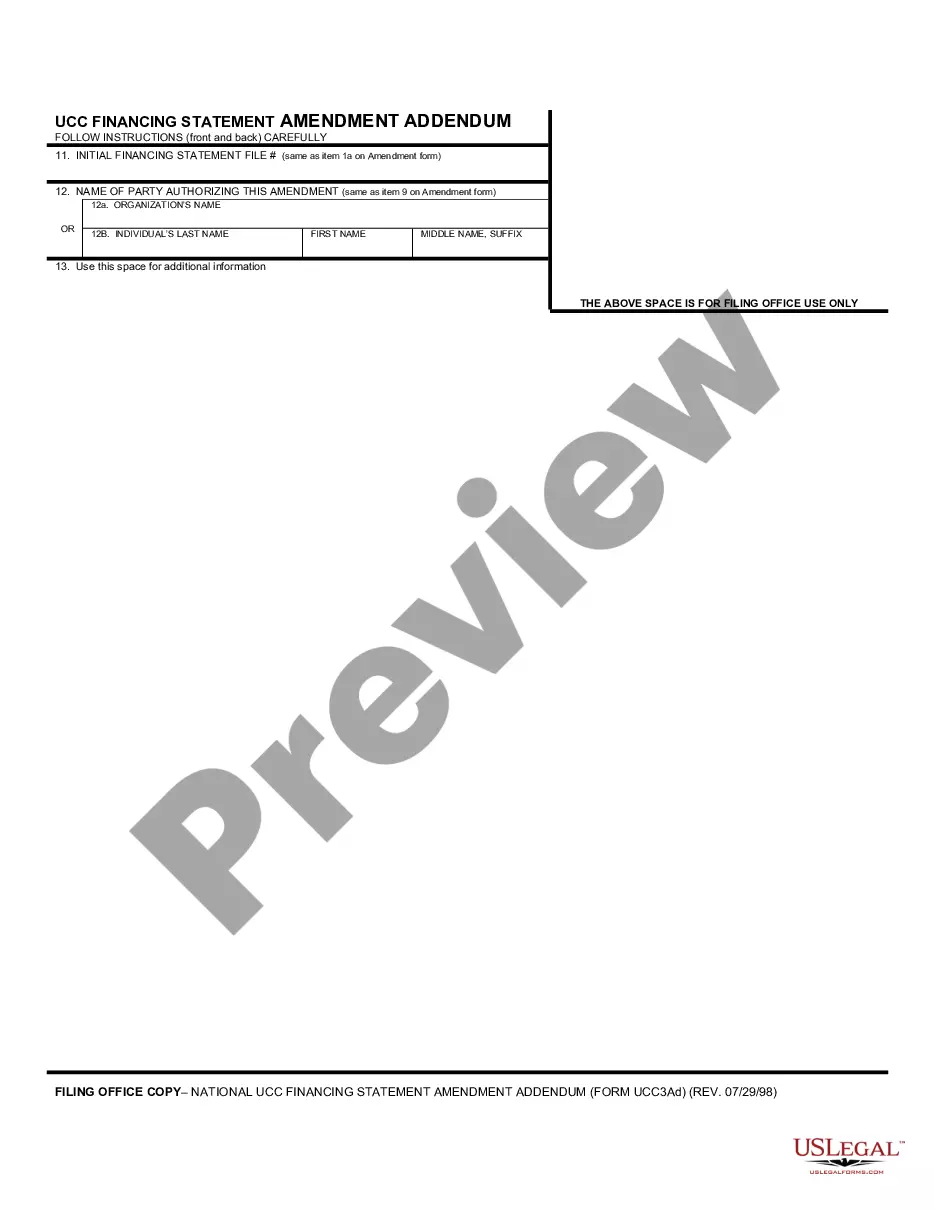
North Dakota UCC3 Financing Statement Amendment Addendum
Understanding this form
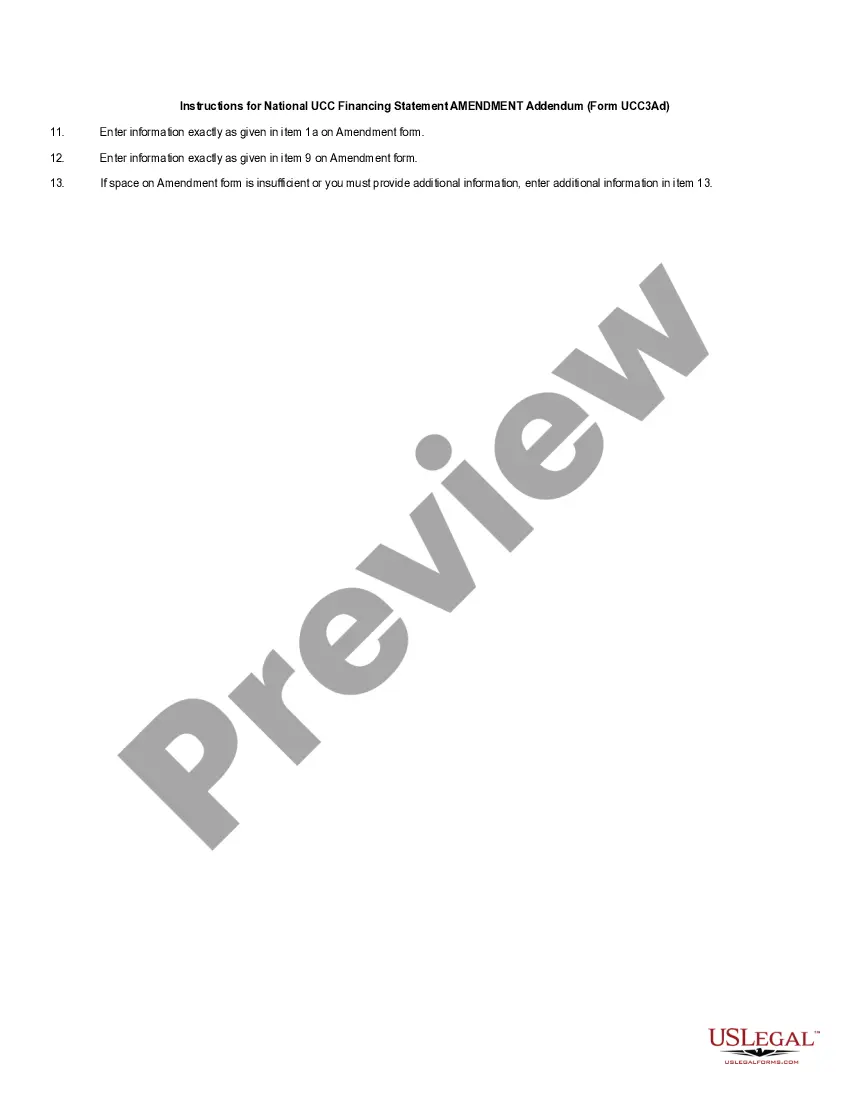
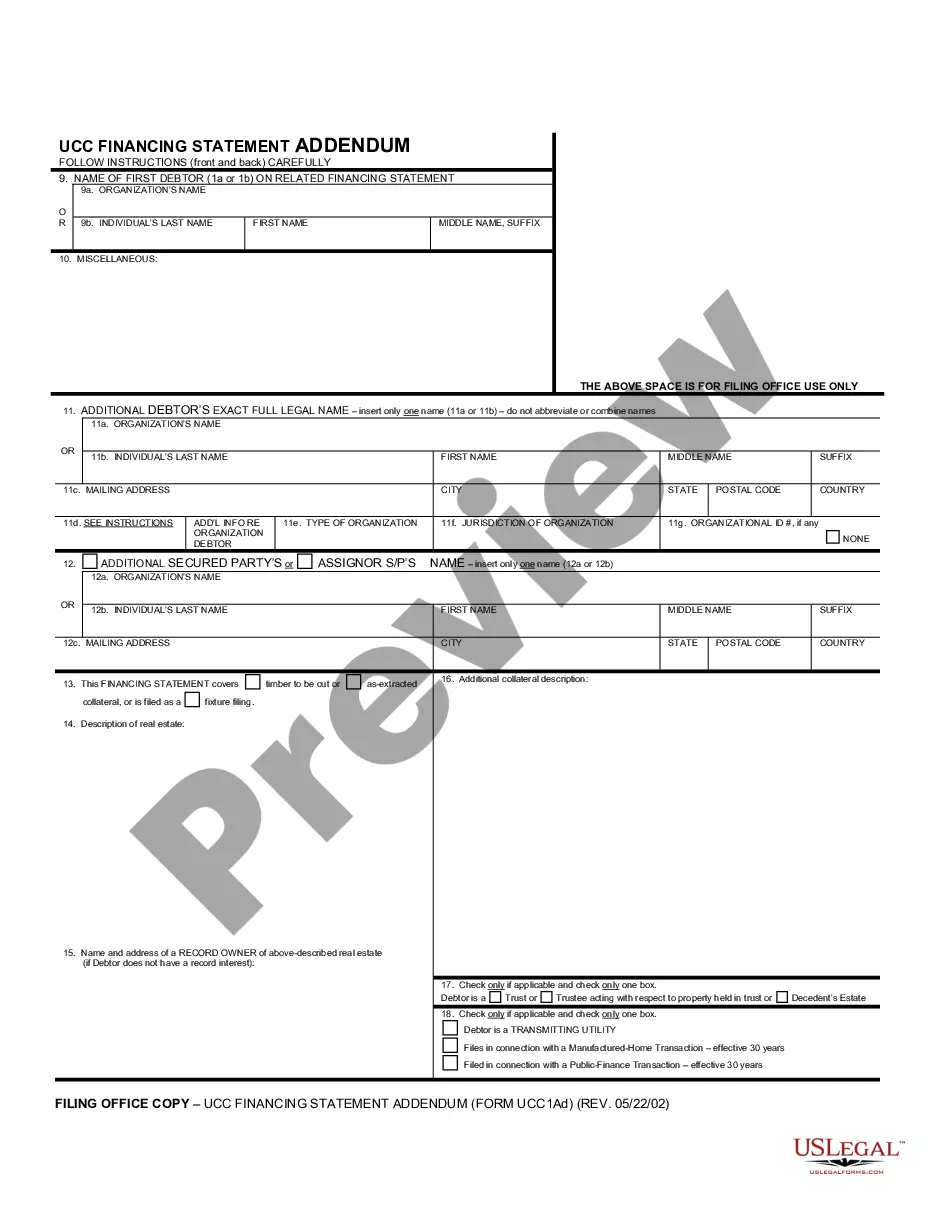
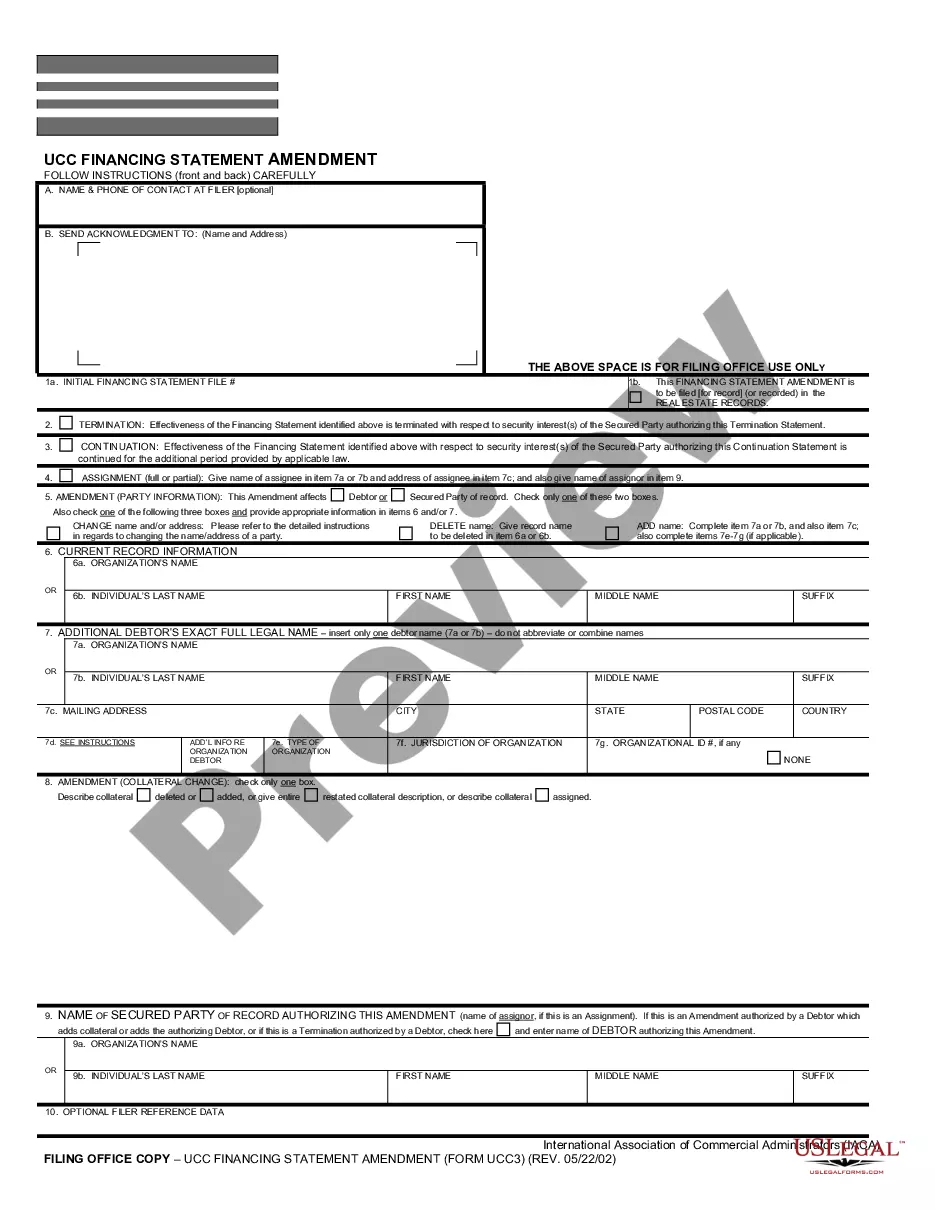
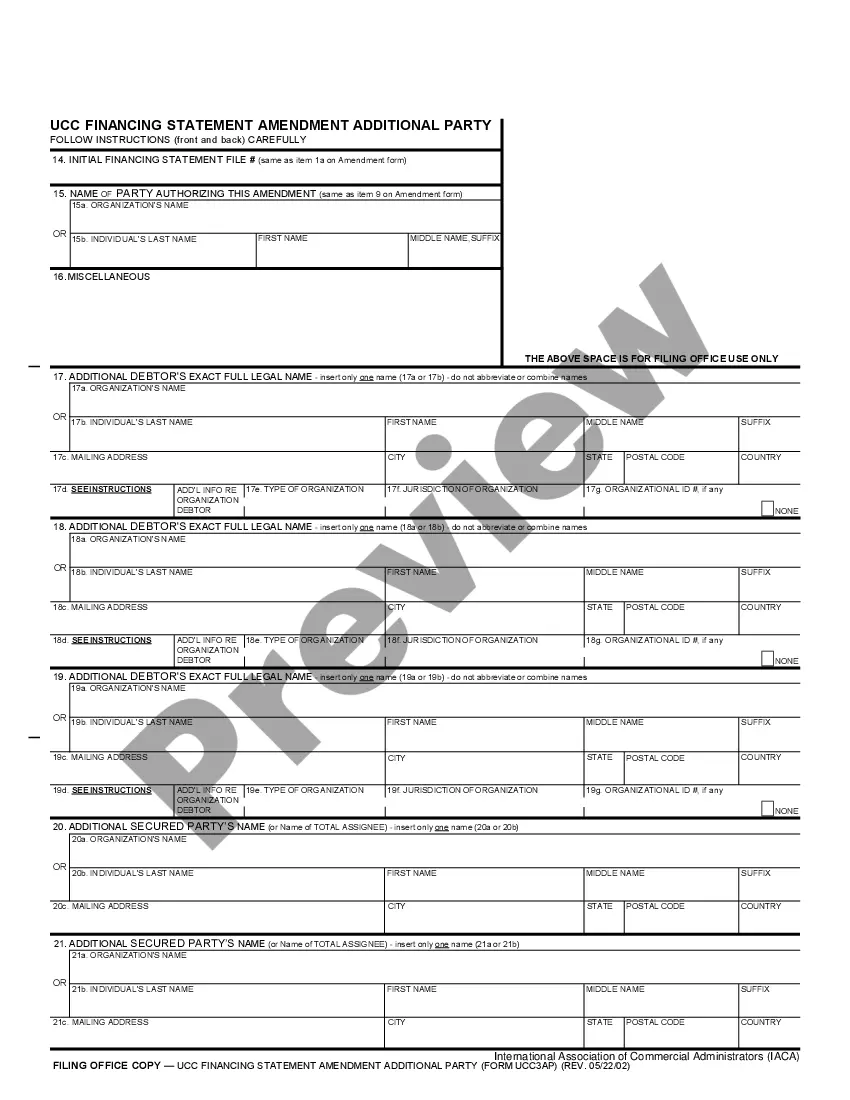
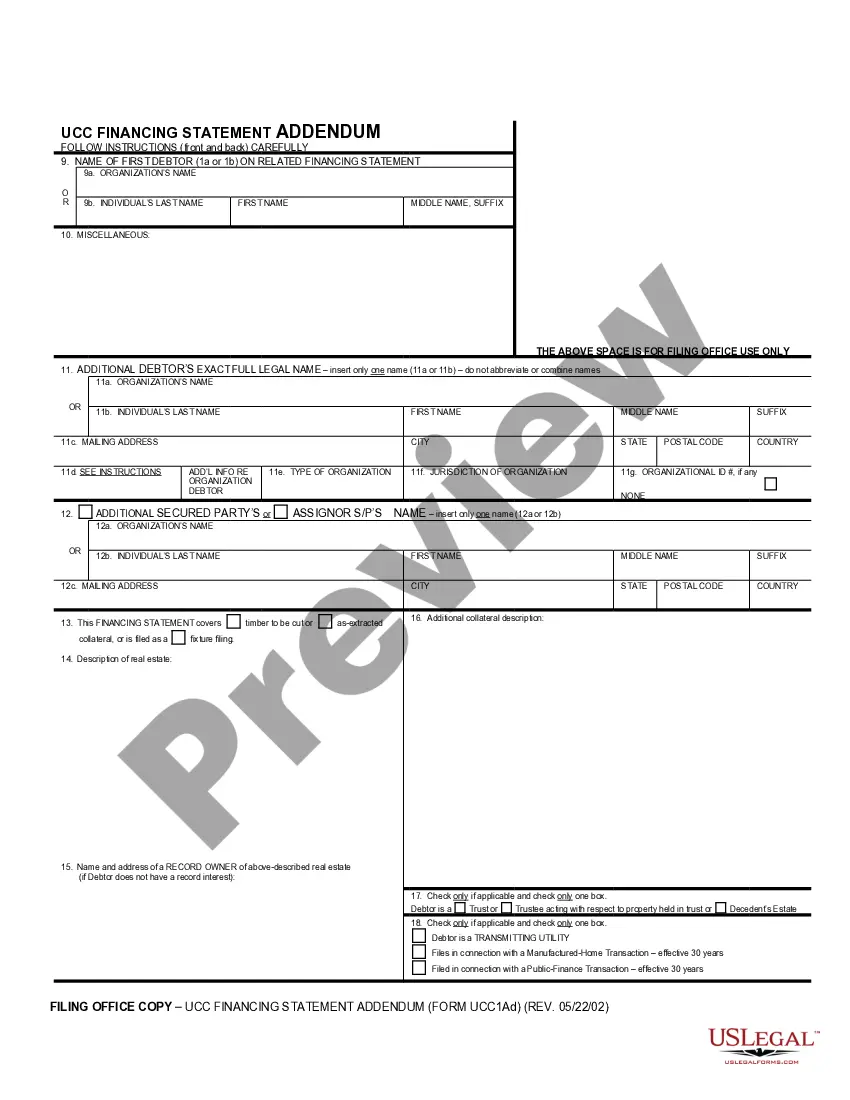
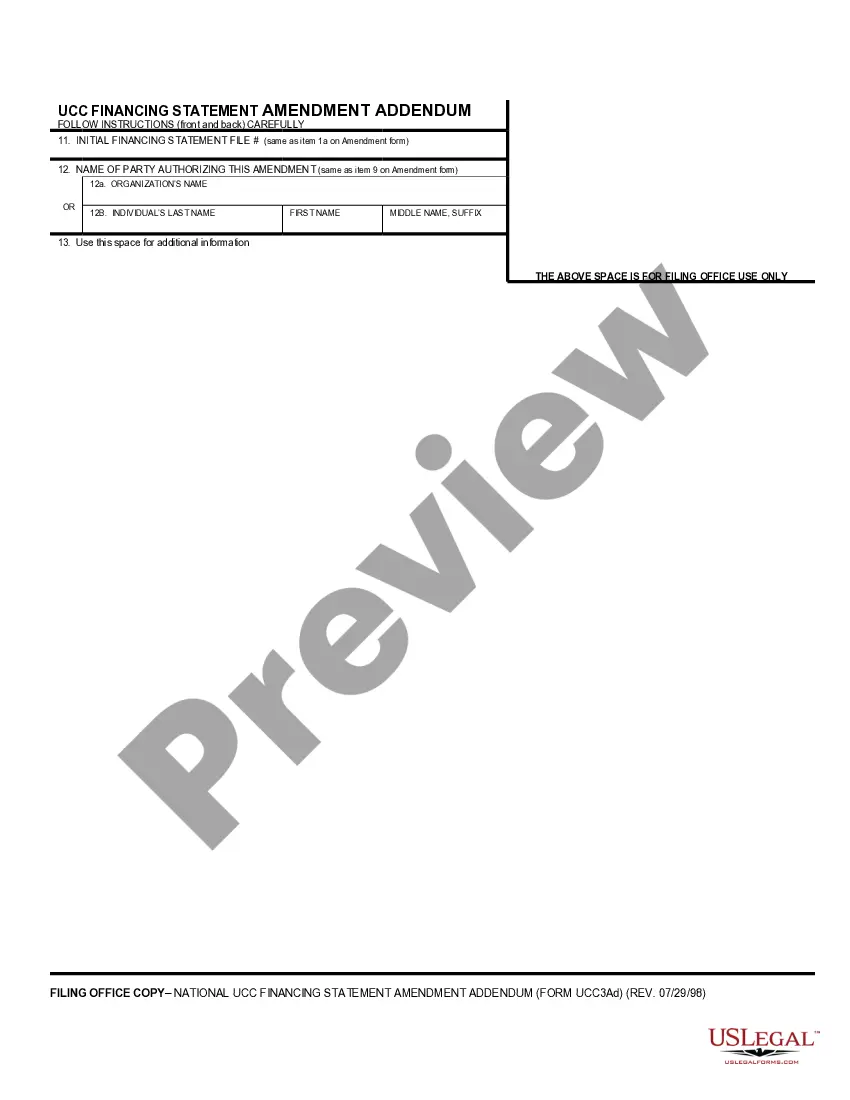
The North Dakota UCC3 Financing Statement Amendment Addendum is a legal document used to amend an existing financing statement under the Uniform Commercial Code. Unlike other forms, this addendum specifically facilitates changes to a previously filed financing statement, ensuring that the amendments are properly recorded in real estate records. It is essential for those who need to update details related to secured transactions, such as changes in debtor information or the collateral securing the debt.
Main sections of this form
- Identification of the original financing statement to be amended.
- Details regarding the debtor's name and address that may have changed.
- Changes or additions to the collateral description.
- Declaration of the file date and other relevant filing information.
When this form is needed
This form should be used when there is a need to amend an existing financing statement in North Dakota. Common scenarios include updating the name or address of the debtor, adjusting collateral descriptions, or correcting information that was previously filed. This ensures that all parties involved have access to the correct and current information regarding secured transactions.
Who should use this form
- Lenders or creditors who hold a security interest in a debtor's property.
- Debtors looking to update or amend their secured transaction details.
- Attorneys handling real estate or commercial transactions requiring amendments to previously filed statements.
- Businesses needing to maintain accurate records of their secured interests.
How to prepare this document
- Review the existing financing statement to identify necessary amendments.
- Fill in the original financing statement's information, including file number and debtor details.
- Specify the changes or additions to the collateral description.
- Provide updated contact information for the debtor, if applicable.
- Sign and date the addendum, ensuring all required signatures are present.
- File the completed form with the appropriate county clerk or recording office.
Notarization guidance
Notarization is generally not required for this form. However, certain states or situations might demand it. You can complete notarization online through US Legal Forms, powered by Notarize, using a verified video call available anytime.
Get your form ready online
Our built-in tools help you complete, sign, share, and store your documents in one place.
Make edits, fill in missing information, and update formatting in US Legal Forms—just like you would in MS Word.
Download a copy, print it, send it by email, or mail it via USPS—whatever works best for your next step.
Sign and collect signatures with our SignNow integration. Send to multiple recipients, set reminders, and more. Go Premium to unlock E-Sign.
If this form requires notarization, complete it online through a secure video call—no need to meet a notary in person or wait for an appointment.
We protect your documents and personal data by following strict security and privacy standards.

Make edits, fill in missing information, and update formatting in US Legal Forms—just like you would in MS Word.

Download a copy, print it, send it by email, or mail it via USPS—whatever works best for your next step.

Sign and collect signatures with our SignNow integration. Send to multiple recipients, set reminders, and more. Go Premium to unlock E-Sign.

If this form requires notarization, complete it online through a secure video call—no need to meet a notary in person or wait for an appointment.

We protect your documents and personal data by following strict security and privacy standards.
Common mistakes to avoid
- Failing to include the original financing statement file number.
- Not updating the debtor's information correctly.
- Leaving out required signatures or dates on the addendum.
- Filing the amendment in the wrong county or jurisdiction.
Benefits of using this form online
- Convenience of downloading and filling out the form at your own pace.
- Access to reliable, attorney-drafted templates to ensure compliance with legal requirements.
- Editability allows for easy corrections and updates before filing.
- Immediate availability, reducing the time needed for traditional in-office visits.
What to keep in mind
- The North Dakota UCC3 Financing Statement Amendment Addendum is essential for updating financing statements.
- Ensure all information is accurate to maintain public record integrity.
- Utilize this form to avoid legal complications arising from outdated records.
Looking for another form?

Form popularity
FAQ
The secured party has 20 days to either terminate the filing or send a termination statement to the debtor that the debtor can then file. If this does not happen within the 20-day time frame, the debtor may file a UCC-3 termination statement.
Rules vary by State around releasing a UCC lien after a borrower satisfied the debt. Primarily there are two main ways to remove them. One way is by having the lender file a UCC-3 Financing Statement Amendment. Another way to remove a UCC filing is by swearing an oath of full payment at the secretary of state office.
After receiving your request, the lender has 20 days to terminate the UCC filing.
When the debtor has satisfied all amounts owed to the lender, a UCC-3 termination statement (now called a UCC termination statement) is routinely filed to terminate the security interest perfected by the UCC-1 financing statement.
A UCC-3 termination statement (a Termination) is a required filing that terminates a security interest that has been perfected by a UCC-1 filing. 1. A Termination for personal property is accomplished by completing and filing form UCC-3 with the Secretary of State's office in the appropriate state.
Also known as a UCC-3, and, depending on the context, a UCC-3 financing statement amendment, a UCC-3 termination statement, and a UCC-3 continuation statement. Under the Uniform Commercial Code, a UCC-3 is used to continue, assign, terminate, or amend an existing UCC-1 financing statement (UCC-1).
When the debtor has satisfied all amounts owed to the lender, a UCC-3 termination statement (now called a UCC termination statement) is routinely filed to terminate the security interest perfected by the UCC-1 financing statement.