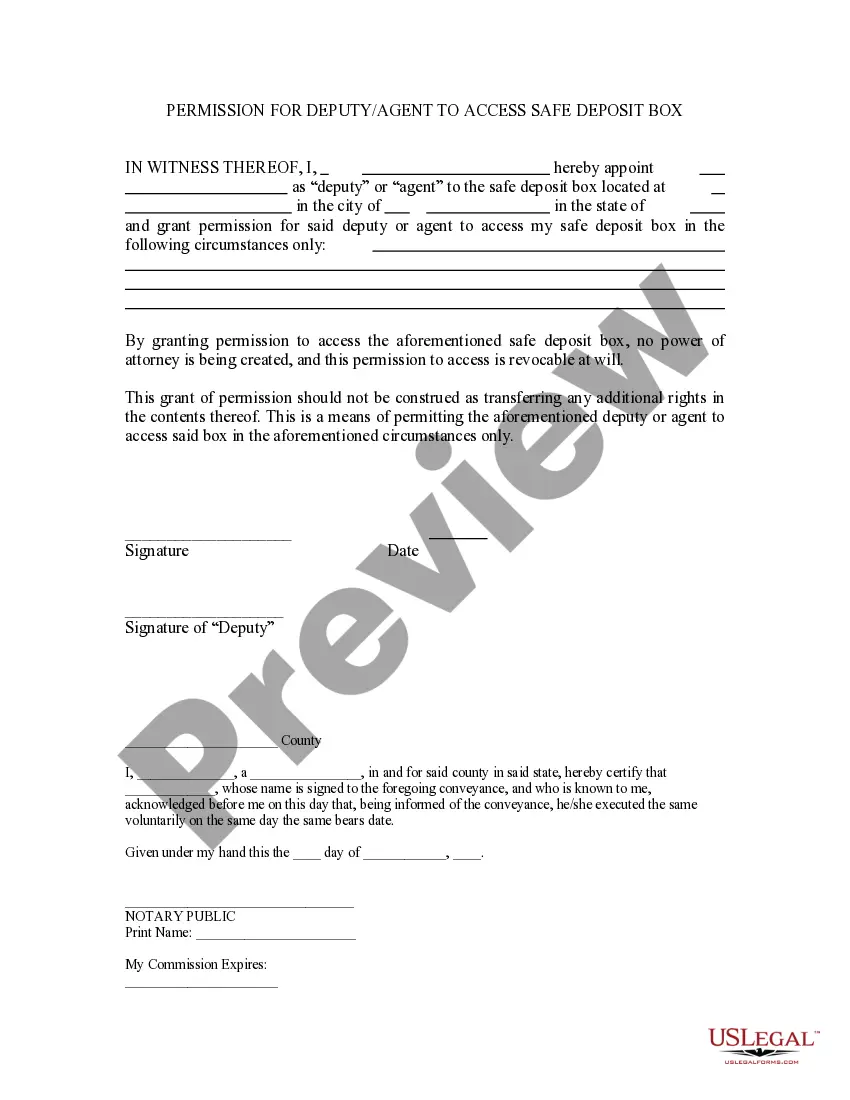
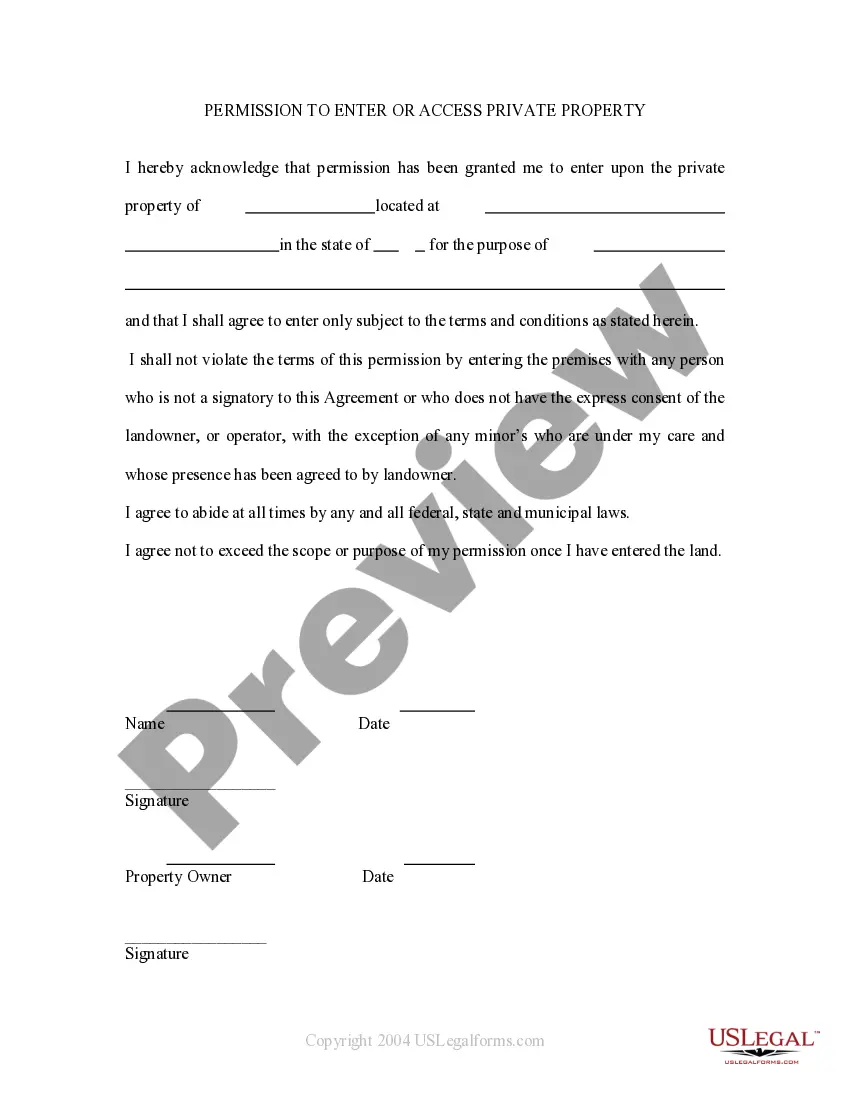
This is a form signed by an individual who rents a safe deposit box granting permission for a another individual to have access to the same safe deposit box under certain circumstances.
North Dakota Permission For Deputy or Agent To Access Safe Deposit Box
State:
Multi-State
Control #:
US-PRM-32
Format:
Word;
Rich Text
Instant download
Description
How to fill out Permission For Deputy Or Agent To Access Safe Deposit Box?
You can dedicate hours online looking for the legal document template that meets the state and federal standards you need. US Legal Forms provides a vast array of legal forms that are reviewed by experts.
You can download or print the North Dakota Permission For Deputy or Agent To Access Safe Deposit Box from my service. If you already possess a US Legal Forms account, you can Log In and click the Acquire button. Following that, you can fill out, modify, print, or sign the North Dakota Permission For Deputy or Agent To Access Safe Deposit Box. Every legal document template you purchase is yours permanently.
To obtain another copy of any purchased form, visit the My documents tab and click the appropriate button. If you are accessing the US Legal Forms website for the first time, follow the simple instructions below: First, ensure that you have chosen the correct document template for the region/city you select. Review the form description to confirm you have selected the right one. If available, utilize the Preview button to browse through the document template as well.
Utilize professional and state-specific templates to address your business or personal needs.
- To obtain another version of the form, use the Search field to find the template that suits you and your requirements.
- Once you have located the template you need, click on Buy now to proceed.
- Select the pricing plan you desire, enter your credentials, and register for an account on US Legal Forms.
- Complete the transaction. You can use your credit card or PayPal account to pay for the legal form.
- Choose the format of the document and download it to your device.
- Make edits to your document if possible. You can fill out, modify, and sign and print the North Dakota Permission For Deputy or Agent To Access Safe Deposit Box.
- Obtain and print numerous document templates using the US Legal Forms site, which offers the largest selection of legal forms.
Form popularity
FAQ
Yes, having power of attorney typically grants someone the authority to access your safe deposit box. However, it is important to ensure that the power of attorney includes North Dakota Permission For Deputy or Agent To Access Safe Deposit Box. This legal document allows your agent to manage your affairs, including accessing your safe deposit box. Always consult with legal experts to confirm that your documents are in order.
Yes, your husband can access your safety deposit box if he is listed as an authorized user. You will need to provide North Dakota Permission For Deputy or Agent To Access Safe Deposit Box to the bank for him to gain access. This may involve a visit to the bank where both of you can complete the necessary paperwork. Ensuring he is authorized can simplify access when needed.
To give someone access to your safe deposit box, you should first check with your bank about their specific requirements. Generally, you will need to complete a form and provide North Dakota Permission For Deputy or Agent To Access Safe Deposit Box. It is also advisable to have the person present when finalizing the process at the bank. This approach helps avoid any potential complications later.
To add someone to your safety deposit box, you typically need to visit your bank together. Bring identification and any required documentation, such as North Dakota Permission For Deputy or Agent To Access Safe Deposit Box. Once there, a bank representative will guide you through the process to officially list your chosen person as an authorized user. This ensures they can access the box without any issues.
Yes, you can give someone access to your safety deposit box. In North Dakota, you may need to provide North Dakota Permission For Deputy or Agent To Access Safe Deposit Box to the bank. This usually involves filling out specific forms and possibly having the person accompany you to the bank. Making arrangements in advance can ensure your chosen representative can access your box when needed.
Discharge of locker contents If the locker was opened jointly by two holders and in the case of the demise of either holder with another individual as nominee, the bank will provide locker access to the survivor and the nominee.
A dual key system protects safe deposit boxes. The bank provides you with two keys of your own, and the bank has a 'guard' key. Without the combination of one of your keys and the bank's guard key, the box cannot be opened.
(iv) Where there are joint locker-hirers having a contract of hire with survivorship clause such as 'either or survivor', 'anyone or survivor' etc., but the locker is not to be operated jointly, access to the locker may be given only to the survivor in case of death of one of the hirers.
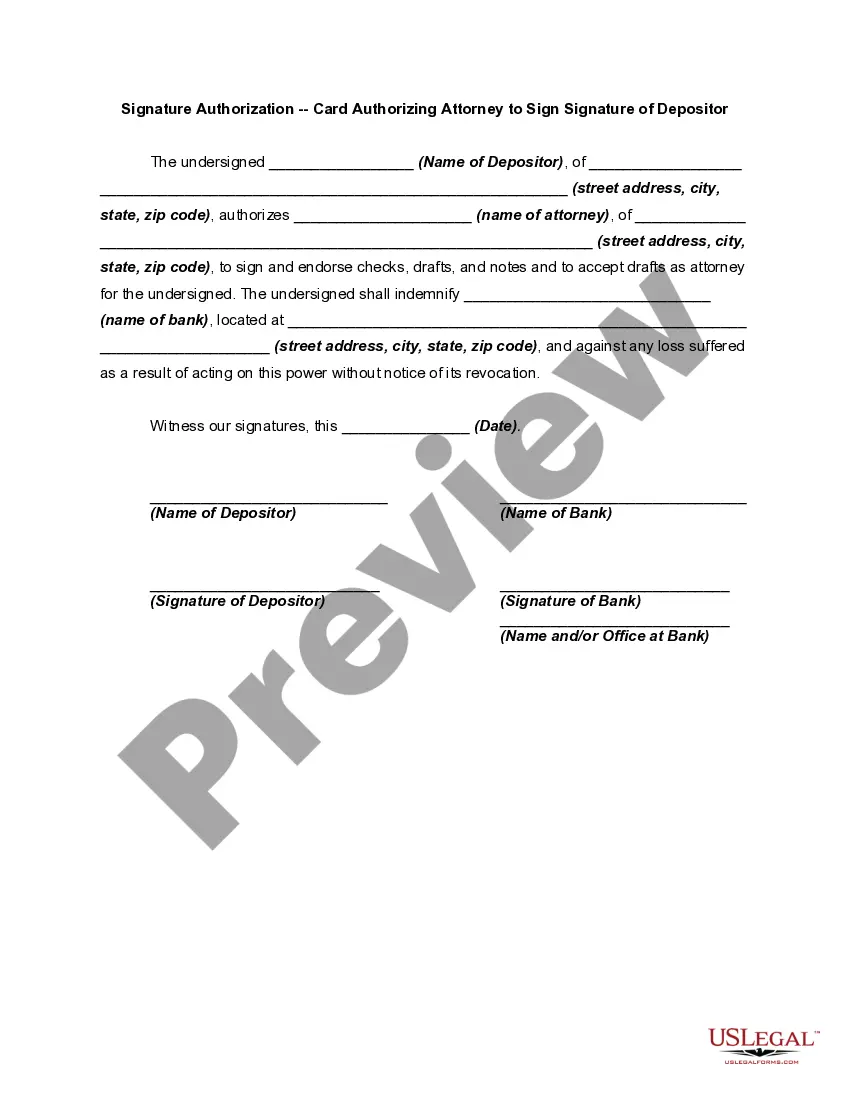
Authorized signature: When the safe deposit account is opened, all persons authorized to access the box sign a signature card. The bank allows only those individuals to open the box. From then on, the bank records the signature of any individual allowed to open the box.
For example, if an individual brings in 50 prepaid debit cards and wishes to store them in a safety deposit box, the bank will typically require to know the amount stored on the prepaid debit cards, and may deny the application for the safety deposit box based on the liability if the amount is significant.