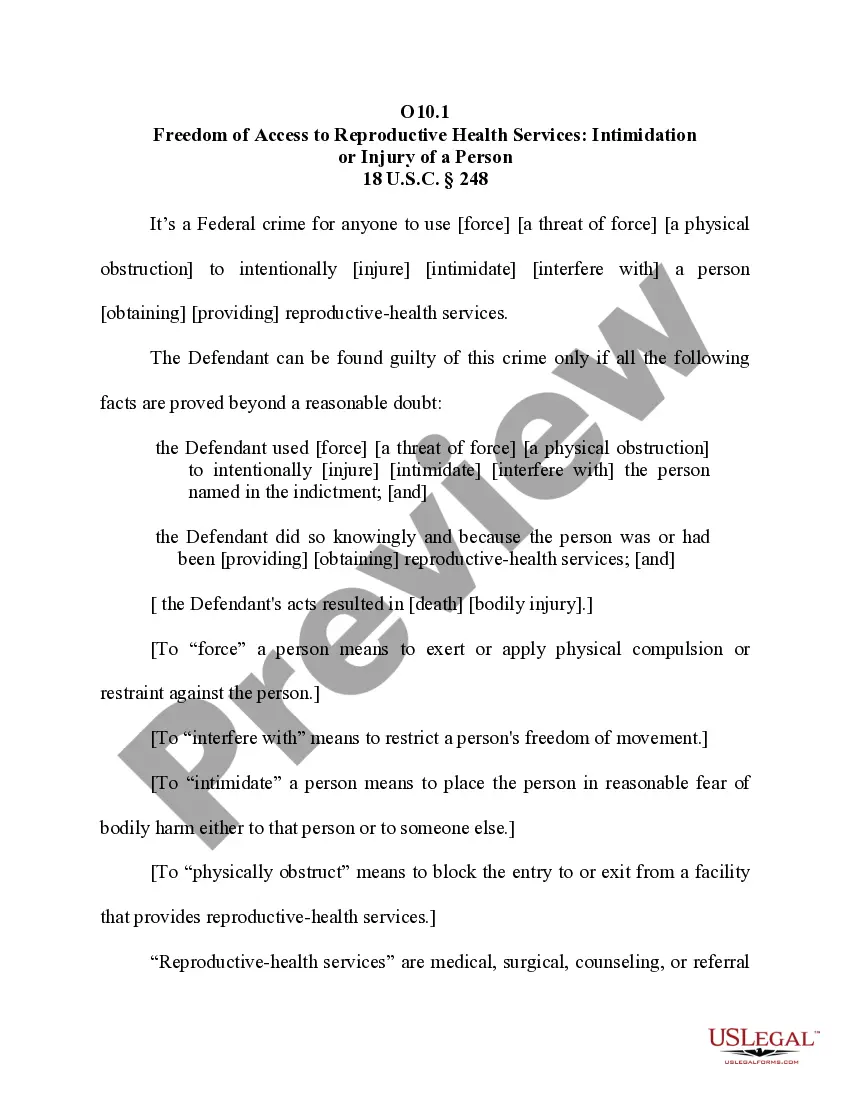
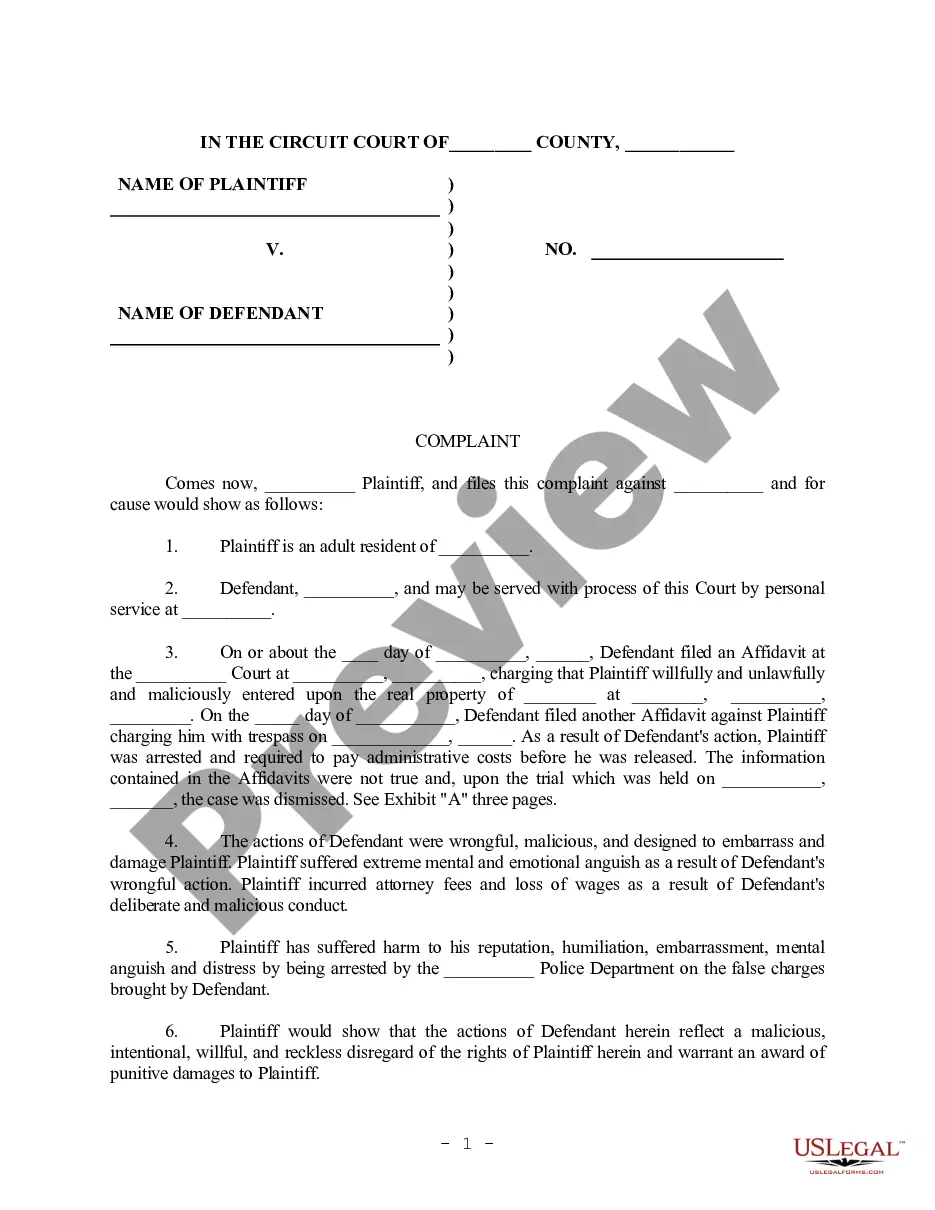
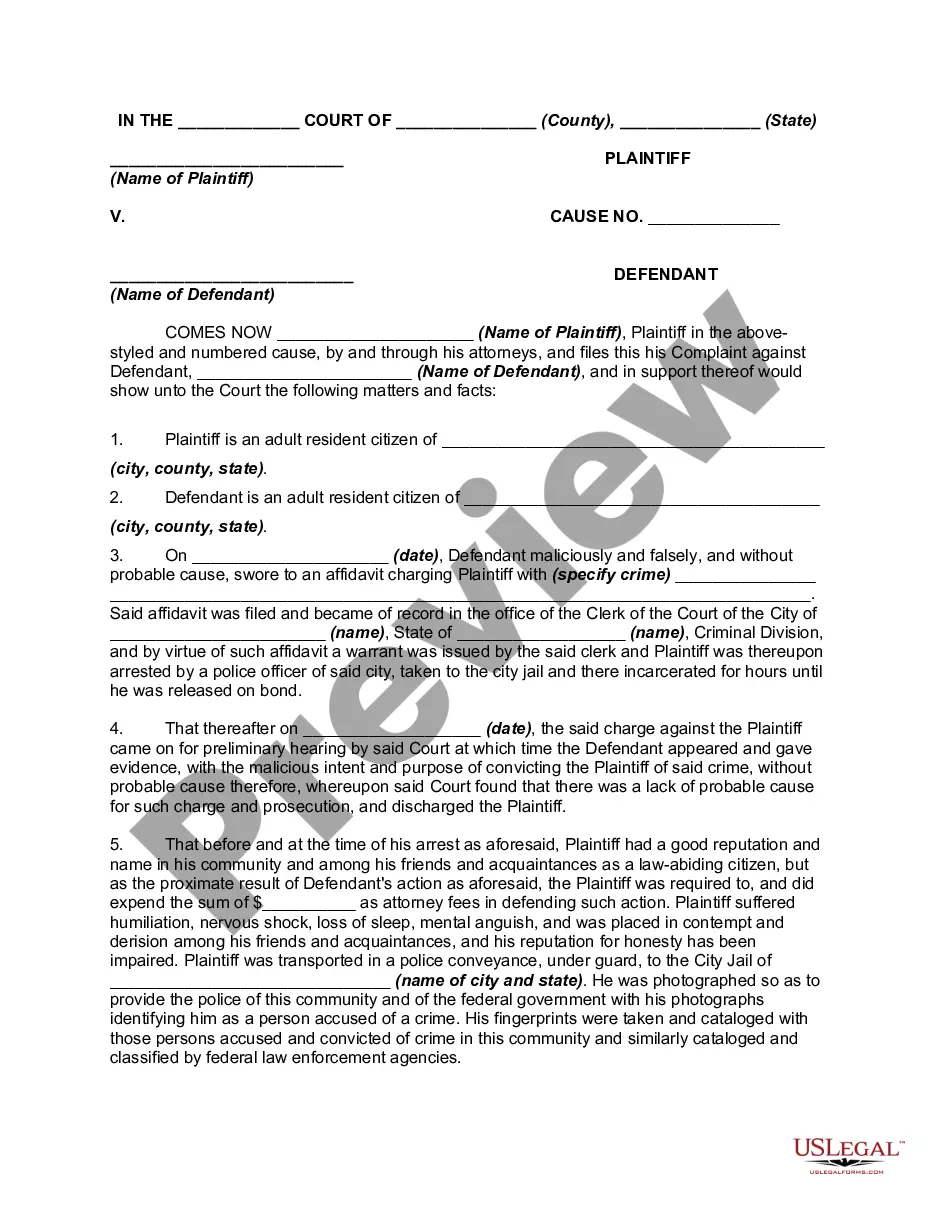
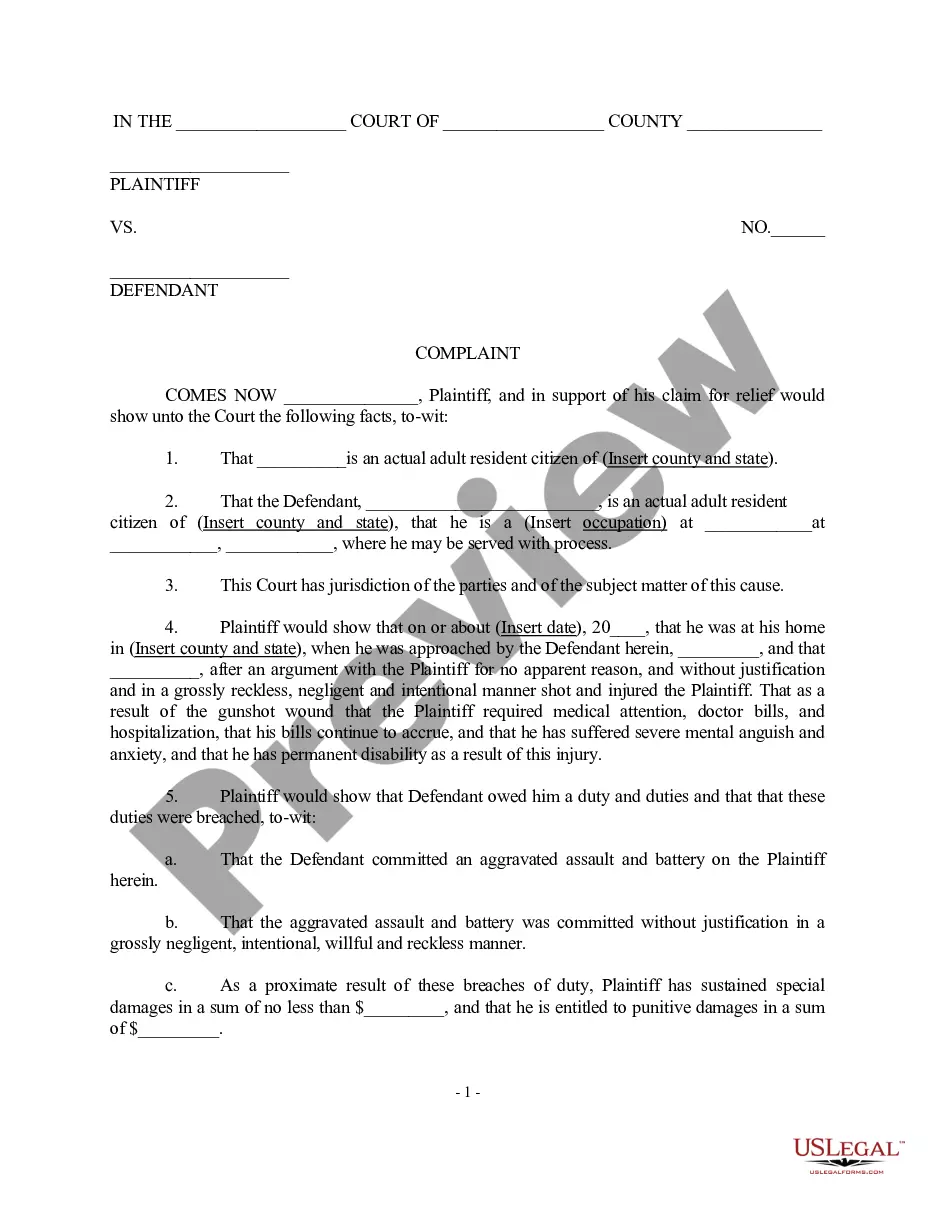
North Dakota Complaint for Malicious Prosecution, False Imprisonment, Abuse of Process
Description



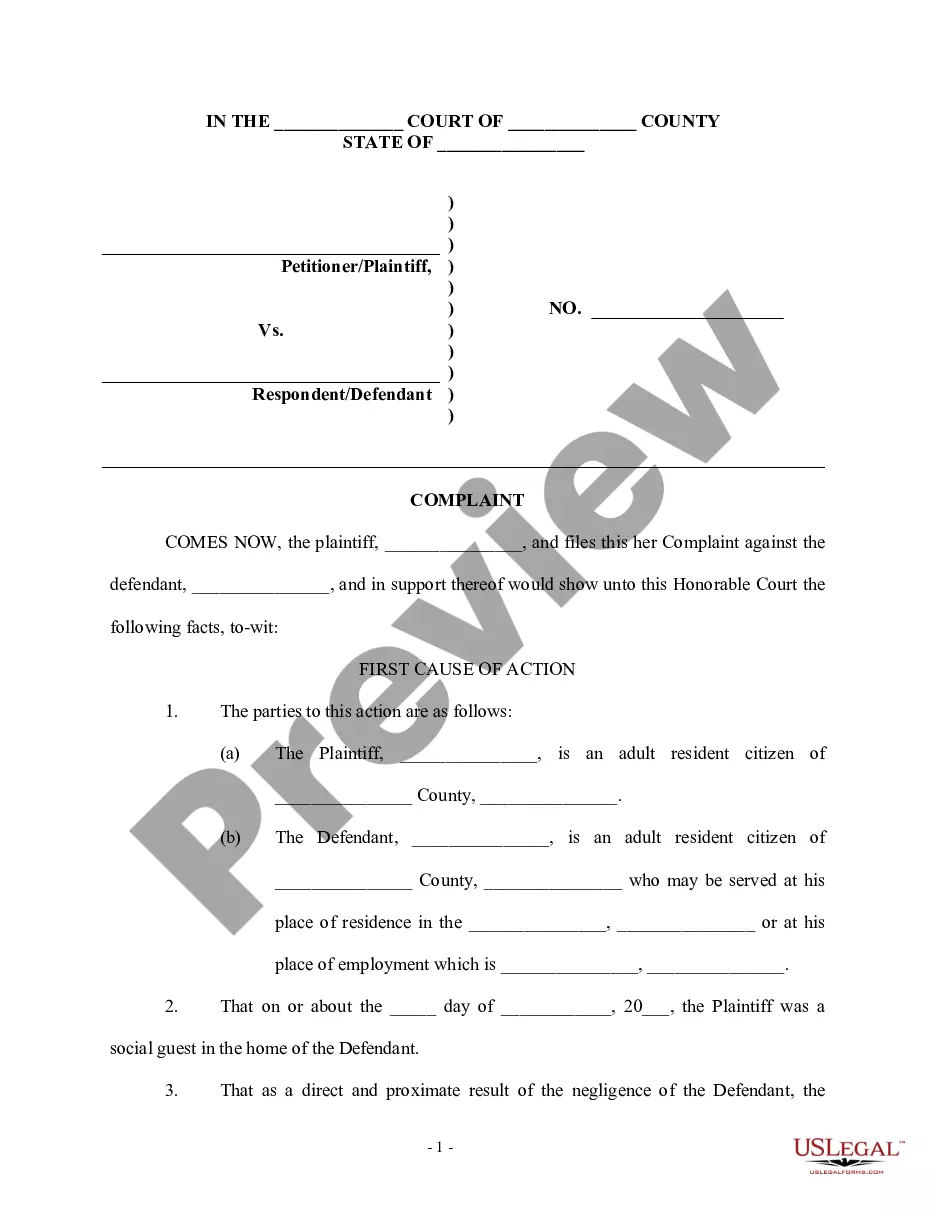
Get your form ready online
Our built-in tools help you complete, sign, share, and store your documents in one place.
Make edits, fill in missing information, and update formatting in US Legal Forms—just like you would in MS Word.
Download a copy, print it, send it by email, or mail it via USPS—whatever works best for your next step.
Sign and collect signatures with our SignNow integration. Send to multiple recipients, set reminders, and more. Go Premium to unlock E-Sign.
If this form requires notarization, complete it online through a secure video call—no need to meet a notary in person or wait for an appointment.
We protect your documents and personal data by following strict security and privacy standards.

Make edits, fill in missing information, and update formatting in US Legal Forms—just like you would in MS Word.

Download a copy, print it, send it by email, or mail it via USPS—whatever works best for your next step.

Sign and collect signatures with our SignNow integration. Send to multiple recipients, set reminders, and more. Go Premium to unlock E-Sign.

If this form requires notarization, complete it online through a secure video call—no need to meet a notary in person or wait for an appointment.

We protect your documents and personal data by following strict security and privacy standards.
Looking for another form?


How to fill out Complaint For Malicious Prosecution, False Imprisonment, Abuse Of Process?
US Legal Forms - one of the largest repositories of legal documents in the United States - offers a vast array of legal template forms that you can download or print. Through the website, you can access thousands of forms for business and personal use, organized by categories, states, or keywords. You can find the latest versions of documents such as the North Dakota Complaint for Malicious Prosecution, False Imprisonment, and Abuse of Process in just minutes.
If you already hold a membership, Log In to obtain the North Dakota Complaint for Malicious Prosecution, False Imprisonment, and Abuse of Process from your US Legal Forms collection. The Download button will appear on every form you view. You can access all previously saved forms from the My documents section of your account.
If you are using US Legal Forms for the first time, here are simple steps to get you started: Ensure you have selected the correct form for your region/state. Click the Preview button to review the form's content. Check the form details to confirm you have selected the appropriate one. If the form does not meet your requirements, utilize the Search field at the top of the screen to find one that does. If you are satisfied with the form, confirm your choice by clicking the Buy now button. Then, select the pricing plan you prefer and provide your credentials to create an account. Process the transaction. Use a credit card or PayPal account to complete the transaction. Choose the format and download the form to your device. Make modifications. Fill in, edit, print, and sign the saved North Dakota Complaint for Malicious Prosecution, False Imprisonment, and Abuse of Process. Each template you add to your account does not expire and is yours indefinitely. Therefore, to download or print another copy, simply navigate to the My documents section and click on the form you need.
- Access the North Dakota Complaint for Malicious Prosecution, False Imprisonment, and Abuse of Process with US Legal Forms, the most extensive collection of legal document templates.
- Utilize a multitude of professional and state-specific templates that cater to your business or personal requirements.
Form popularity
FAQ
Malicious prosecution is the filing of a lawsuit for an improper purpose, and without grounds or probable cause. The improper lawsuit may either be civil or criminal in nature. To remedy an act of malicious prosecution, an alleged victim files a malicious prosecution action.
Most recently, the Supreme Court determined that malicious prosecution finds its constitutional home in the Fourth Amendment, so § 1983 claims require a showing of both a Fourth Amendment violation and the common law elements of a malicious prosecution claim.
Malicious prosecution is the filing of a lawsuit for an improper purpose, and without grounds or probable cause. The improper lawsuit may either be civil or criminal in nature. To remedy an act of malicious prosecution, an alleged victim files a malicious prosecution action.
Rejecting the rule that applied across most of the country, the Supreme Court made clear that the victim of false charges ?need only show that his prosecution ended without a conviction? in order to sue.
The Elements of a Malicious Prosecution Claim A legal action commenced or prosecuted without probable cause. ... The legal action was brought or initiated with malice or malicious intent. Final, favorable termination or resolution of the action (or relevant claims) in the defendant's favor. ... Legally recognizable damages.
A malicious prosecution case can be difficult to prove, but with a few key elements it can be won in court. First, it must be clear that the defendant did not have probable cause to bring the action.
Speak With an Attorney About Malicious Prosecution Claims They may file private civil actions containing false accusations. Defending against bogus civil claims or criminal charges can be a traumatic experience for anyone. This is particularly true if those claims or charges were filed with malice.
Malicious prosecution This is a violation of a person's civil rights to liberty and due process under the Fourteenth Amendment. Essentially, malicious prosecution is a baseless accusation brought against someone in order to harass or intimidate them ? an arrest without probable cause.