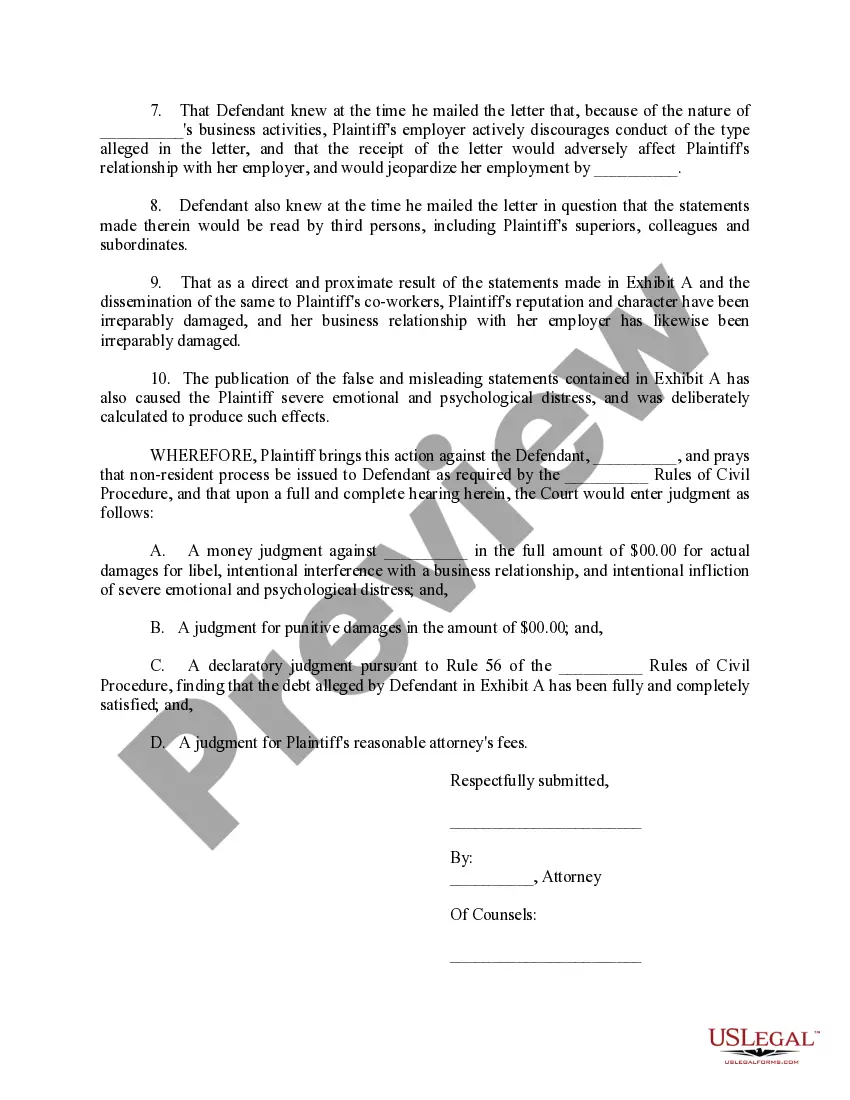
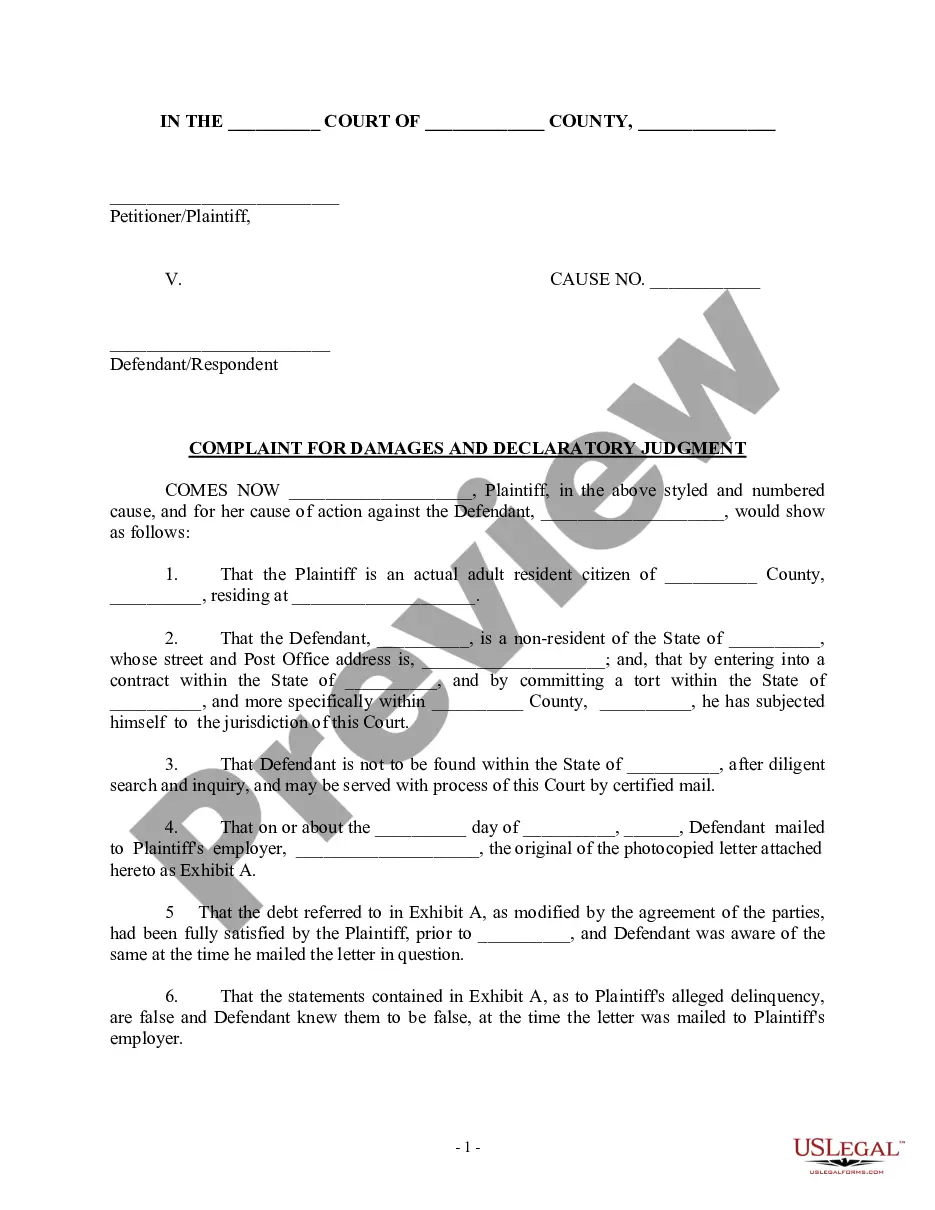
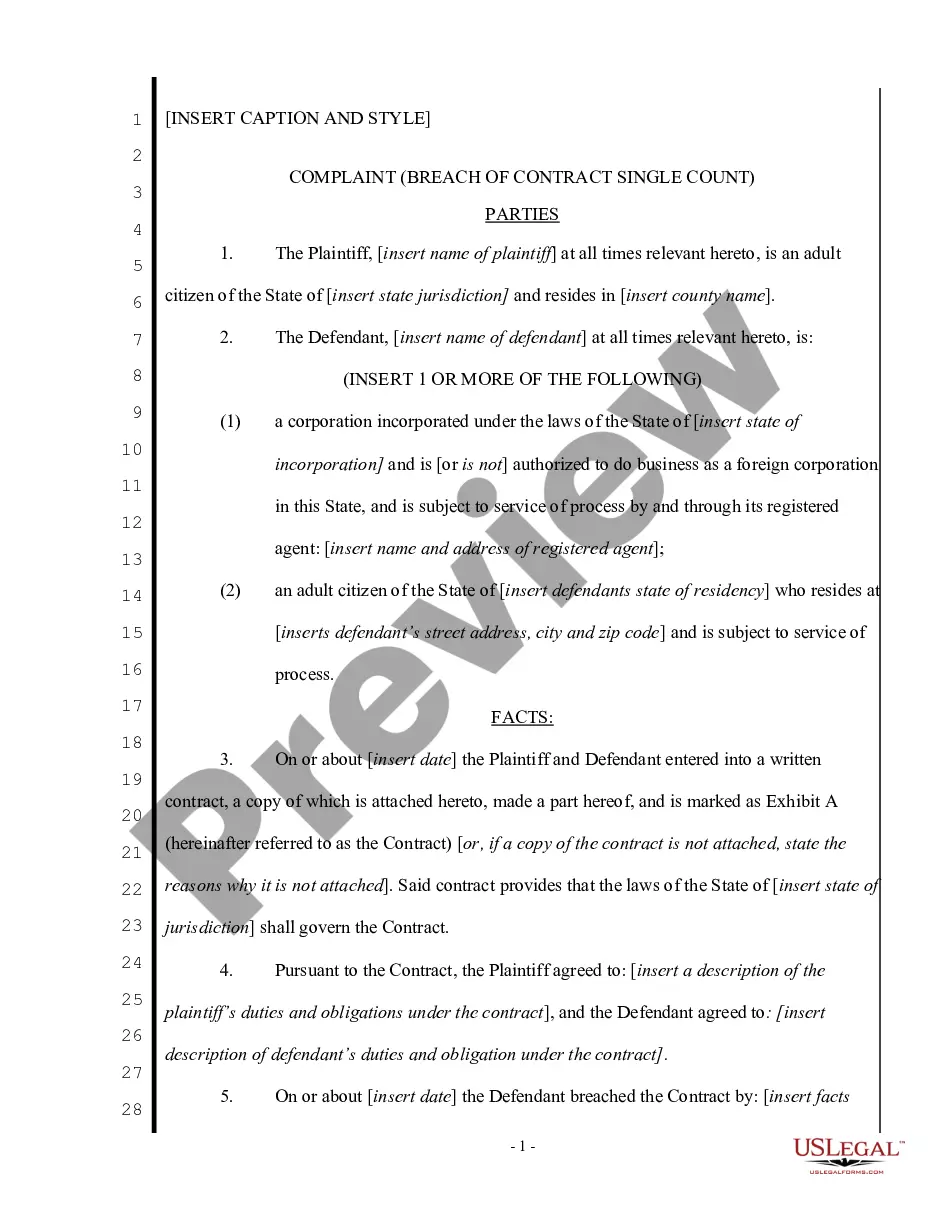
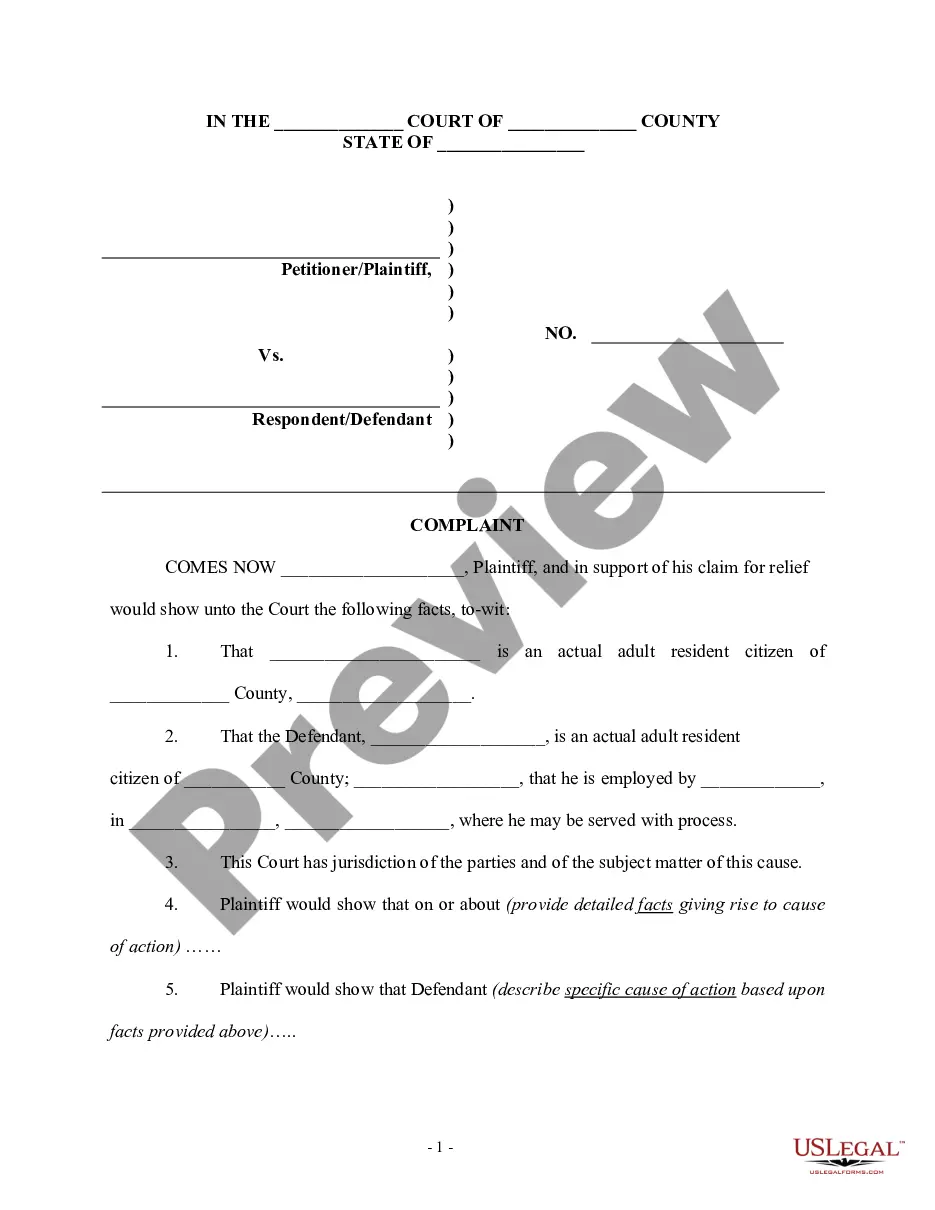
North Dakota Complaint for Damages and Declaratory Judgment
Description


Get your form ready online
Our built-in tools help you complete, sign, share, and store your documents in one place.
Make edits, fill in missing information, and update formatting in US Legal Forms—just like you would in MS Word.
Download a copy, print it, send it by email, or mail it via USPS—whatever works best for your next step.
Sign and collect signatures with our SignNow integration. Send to multiple recipients, set reminders, and more. Go Premium to unlock E-Sign.
If this form requires notarization, complete it online through a secure video call—no need to meet a notary in person or wait for an appointment.
We protect your documents and personal data by following strict security and privacy standards.

Make edits, fill in missing information, and update formatting in US Legal Forms—just like you would in MS Word.

Download a copy, print it, send it by email, or mail it via USPS—whatever works best for your next step.

Sign and collect signatures with our SignNow integration. Send to multiple recipients, set reminders, and more. Go Premium to unlock E-Sign.

If this form requires notarization, complete it online through a secure video call—no need to meet a notary in person or wait for an appointment.

We protect your documents and personal data by following strict security and privacy standards.
Looking for another form?



How to fill out Complaint For Damages And Declaratory Judgment?
If you want to total, obtain, or print legal document templates, utilize US Legal Forms, the largest selection of legal forms available online.
Make use of the site’s straightforward and user-friendly search to find the documents you need.
Numerous templates for business and personal purposes are organized by categories and states, or keywords.
Step 4. Once you have found the form you want, click the Get now button. Choose the pricing plan you prefer and enter your details to register for an account.
Step 5. Process the payment. You can use your credit card or PayPal account to complete the transaction.
- Use US Legal Forms to obtain the North Dakota Complaint for Damages and Declaratory Judgment within a few clicks.
- If you are already a US Legal Forms member, Log In to your account and click the Download button to retrieve the North Dakota Complaint for Damages and Declaratory Judgment.
- You can also access forms you previously saved in the My documents section of your account.
- If you are using US Legal Forms for the first time, follow the instructions below.
- Step 1. Ensure you have selected the form for the correct city/state.
- Step 2. Utilize the Review option to examine the form’s content. Don’t forget to read the details.
- Step 3. If you are dissatisfied with the form, use the Lookup field at the top of the screen to find other versions of the legal form template.
Form popularity
FAQ
For example, a policyholder believes that their denied claim is unjust. As a result, they inform the insurer that they are considering a lawsuit to recover losses. The insurer seeks a declaratory judgment to clarify its rights and obligations with hopes of preventing the lawsuit.
A counterclaim of infringement is a compulsory counterclaim to a claim for declaratory judgment of non-infringement. If a patent owner fails to assert an infringement counterclaim in a declaratory-judgment non-infringement suit, the patent infringement claim will be deemed waived.
To establish federal jurisdiction in a declaratory judgment action, two conditions must be satisfied. First, is the constitutional inquiry - the case must be a 'case or controversy' pursuant to Article III of the US Constitution. Second is the prudential inquiry ? declaratory relief must be appropriate.
If summary judgment is not rendered on the whole action, the court shall, to the extent practicable, determine what material facts are not genuinely at issue. The court shall so determine by examining the pleadings and evidence before it and by interrogating the attorneys.
To begin with, a ?declaratory judgment action is the preferred manner of deciding a dispute between an insured and insurer over the construction and effect of the terms of the insurance contract.? Franklin v. Professional Risk Managment Services, Inc., 987 F. Supp.
So what is a "declaratory judgment" lawsuit? This answer is this: It's a lawsuit that a plaintiff files in which the plaintiff asks the court to "declare" through issuance of a "declaratory judgment" what the respective rights of the parties are.
Declaratory relief refers to a court's declaratory judgment stating the rights of parties without ordering any specific action or listing awards for damages.
For example, a declaratory judgment action could be brought to determine party rights and obligations under a contract or to establish the validity of a patent. Under Article III of the U.S. Constitution, a federal court may only issue a declaratory judgment when there is an actual controversy.