North Dakota Requests for Admissions
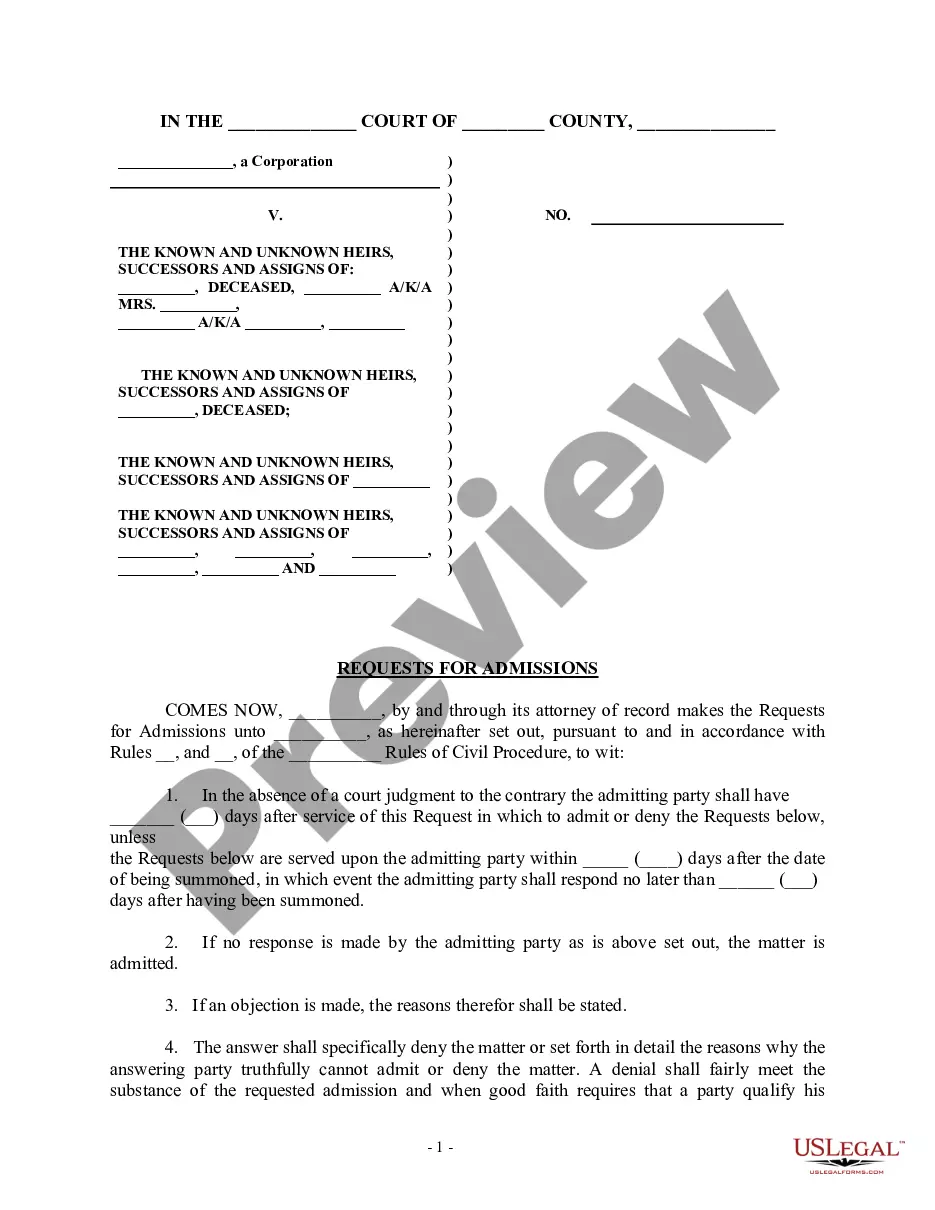
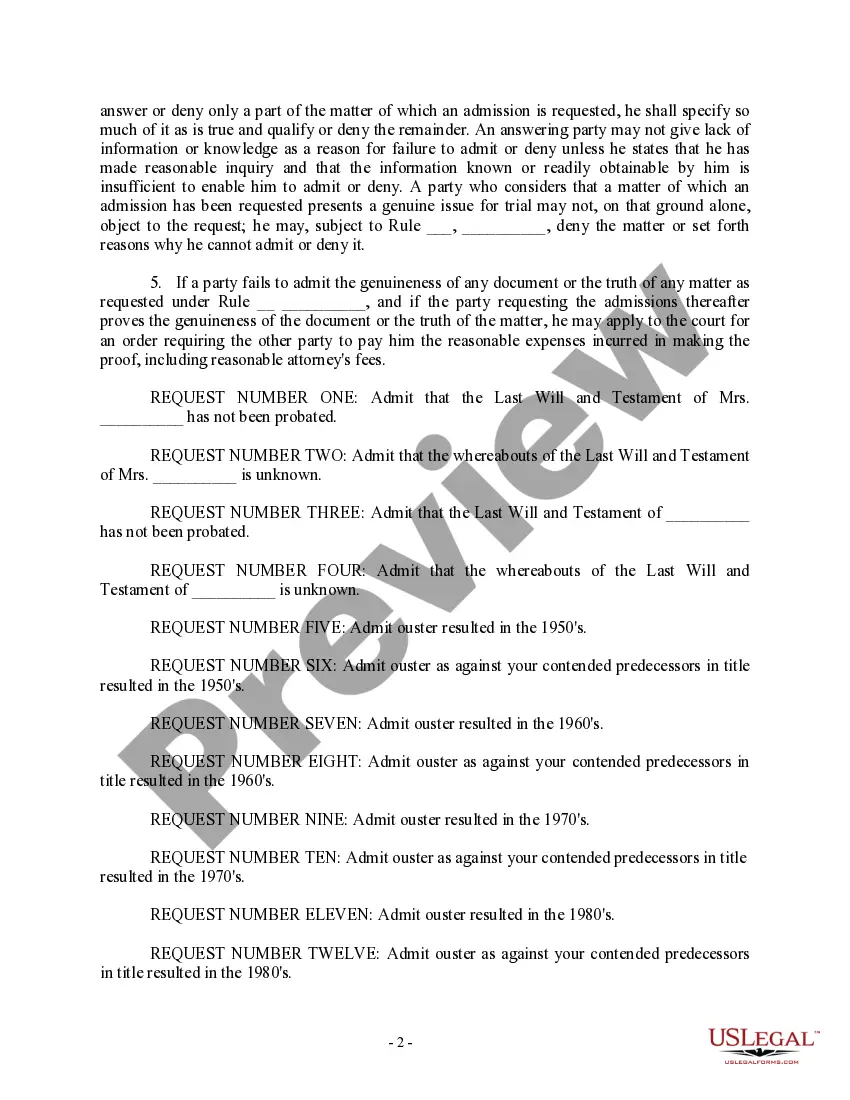
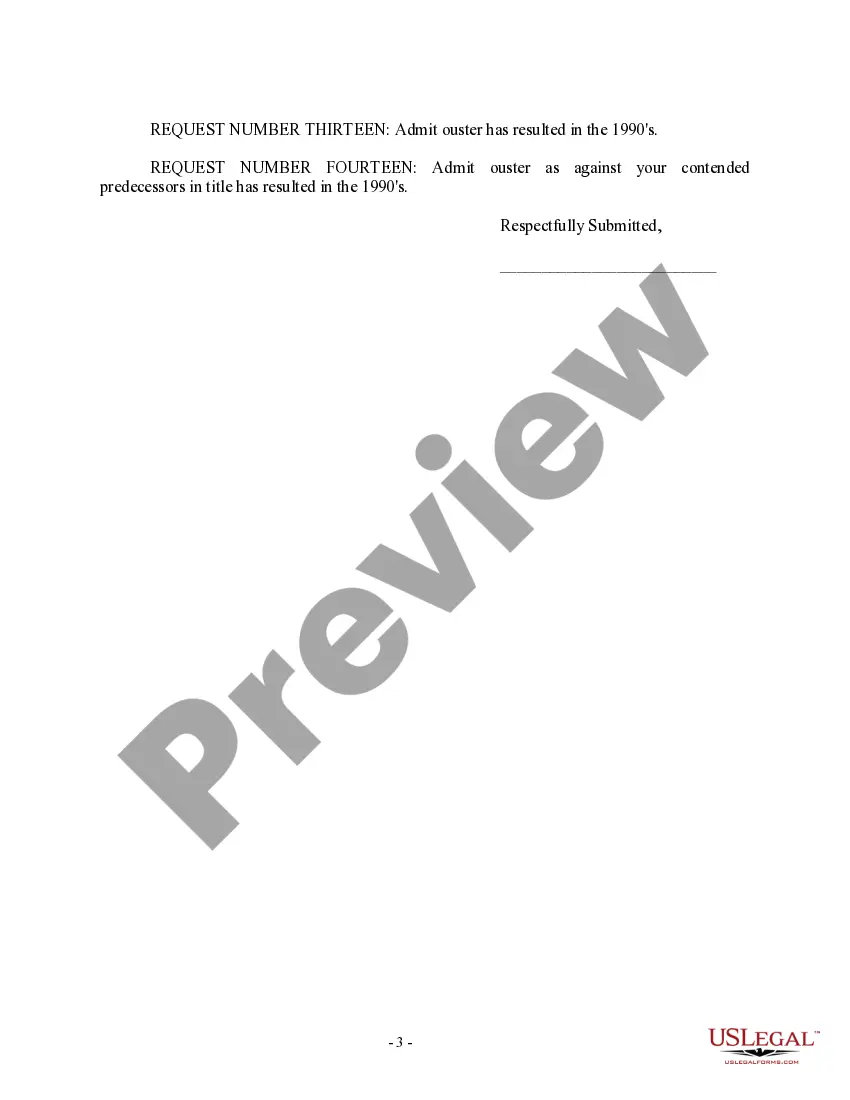
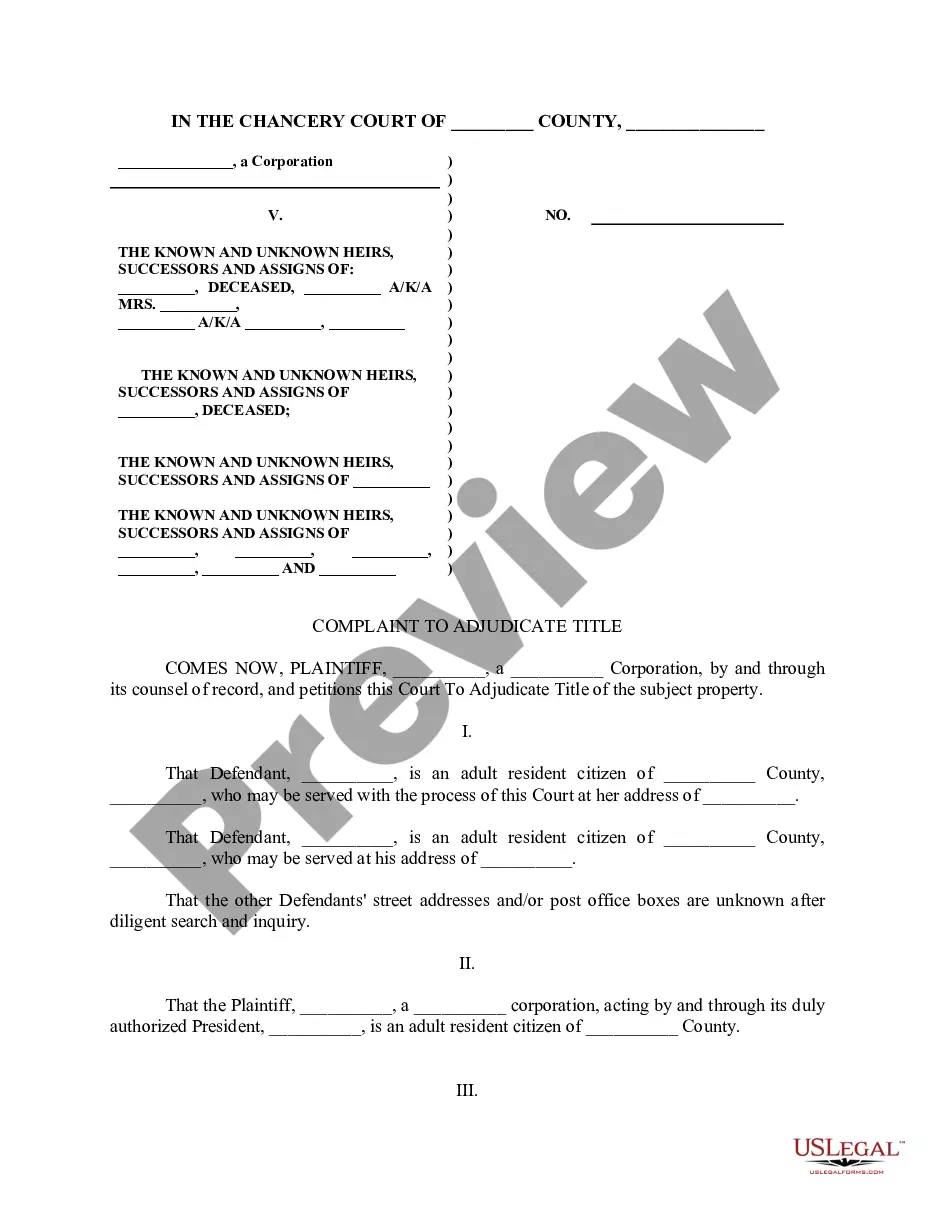
Description
Get your form ready online
Our built-in tools help you complete, sign, share, and store your documents in one place.
Make edits, fill in missing information, and update formatting in US Legal Forms—just like you would in MS Word.
Download a copy, print it, send it by email, or mail it via USPS—whatever works best for your next step.
Sign and collect signatures with our SignNow integration. Send to multiple recipients, set reminders, and more. Go Premium to unlock E-Sign.
If this form requires notarization, complete it online through a secure video call—no need to meet a notary in person or wait for an appointment.
We protect your documents and personal data by following strict security and privacy standards.

Make edits, fill in missing information, and update formatting in US Legal Forms—just like you would in MS Word.

Download a copy, print it, send it by email, or mail it via USPS—whatever works best for your next step.

Sign and collect signatures with our SignNow integration. Send to multiple recipients, set reminders, and more. Go Premium to unlock E-Sign.

If this form requires notarization, complete it online through a secure video call—no need to meet a notary in person or wait for an appointment.

We protect your documents and personal data by following strict security and privacy standards.
Looking for another form?
How to fill out Requests For Admissions?
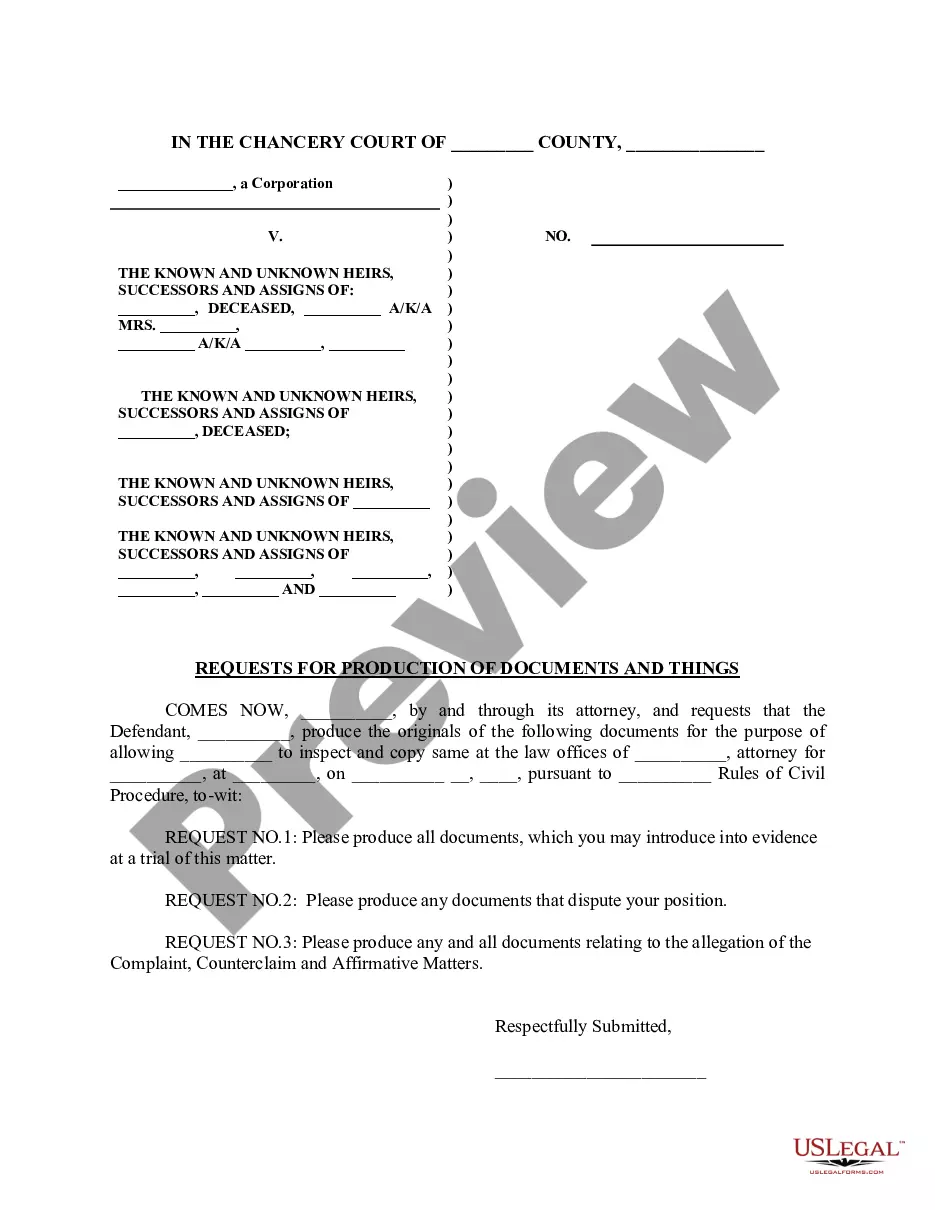
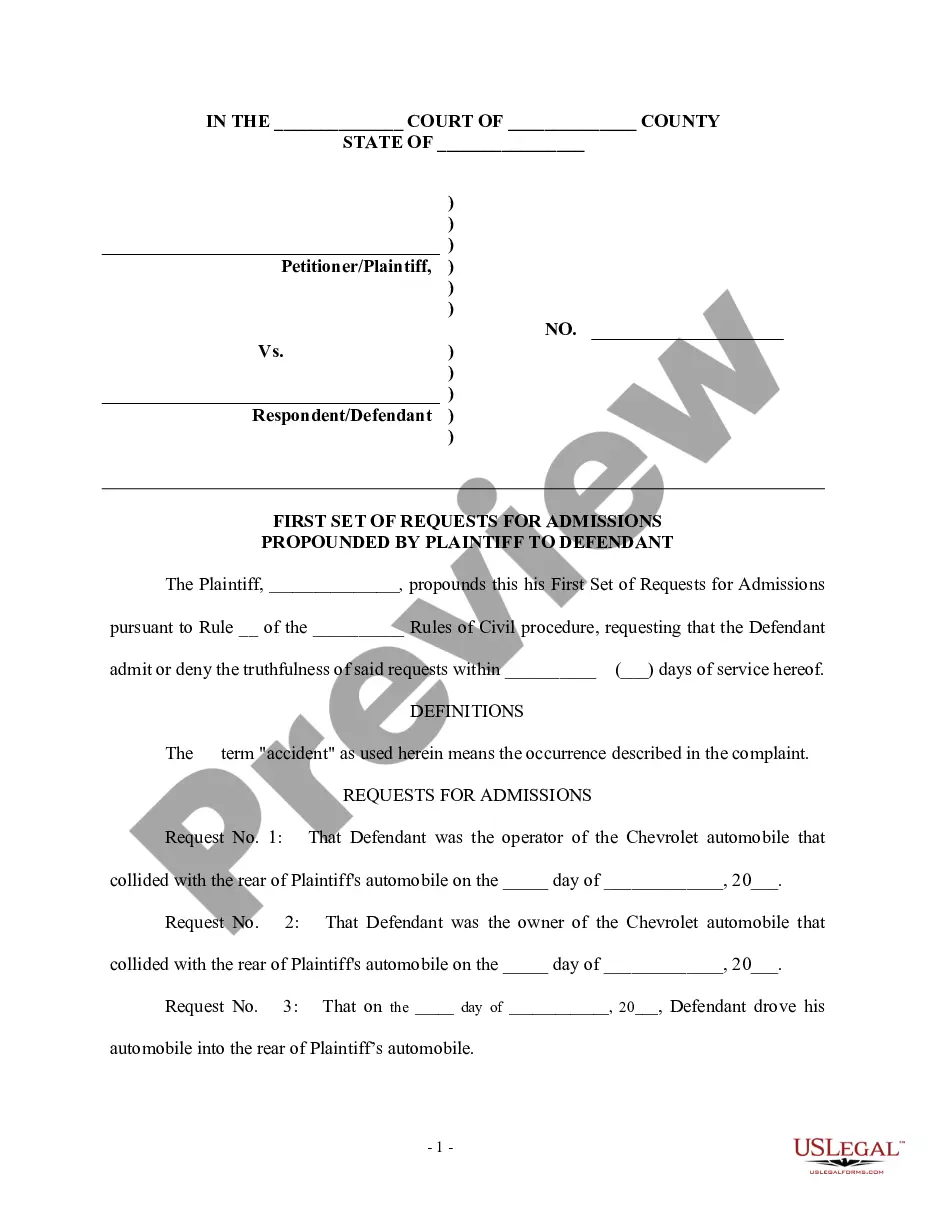
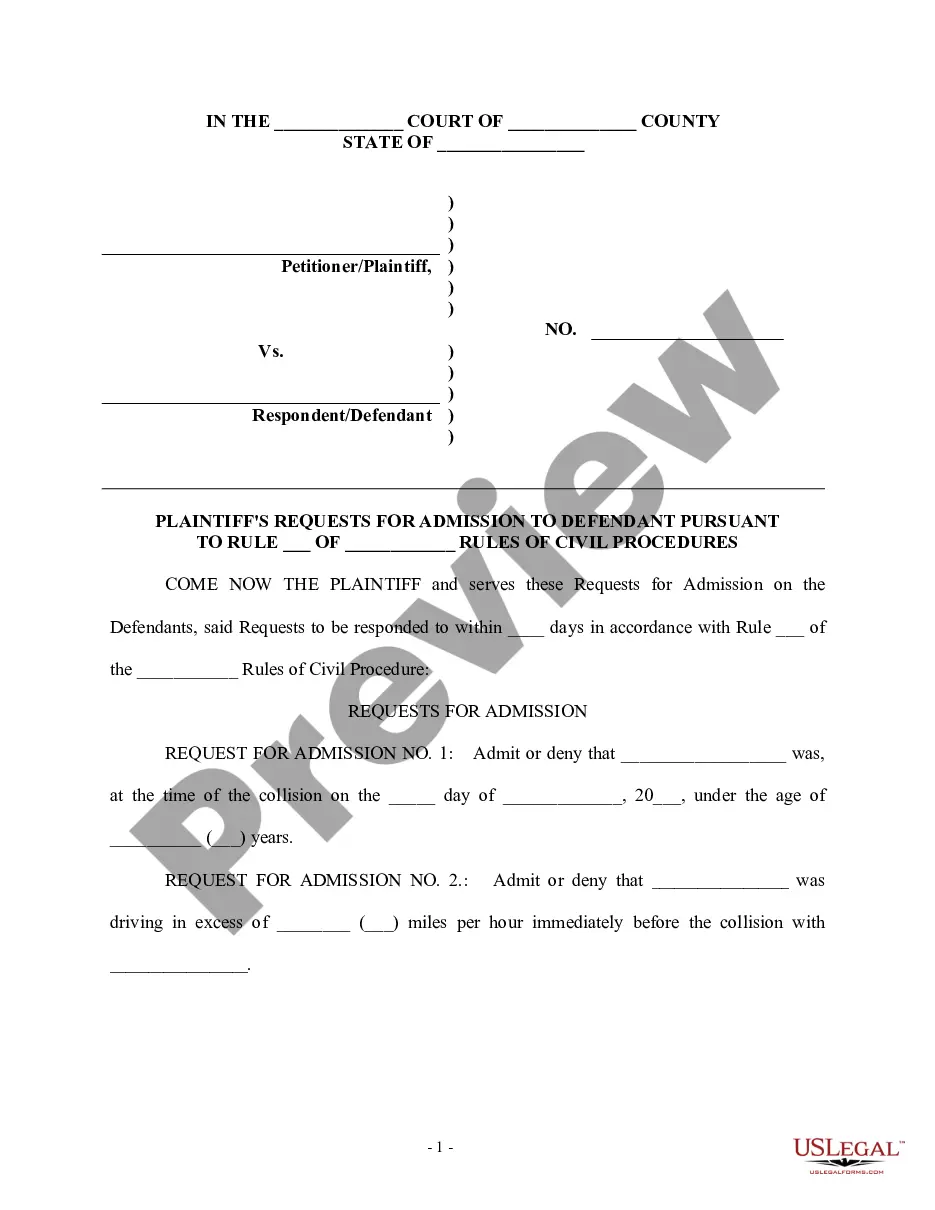
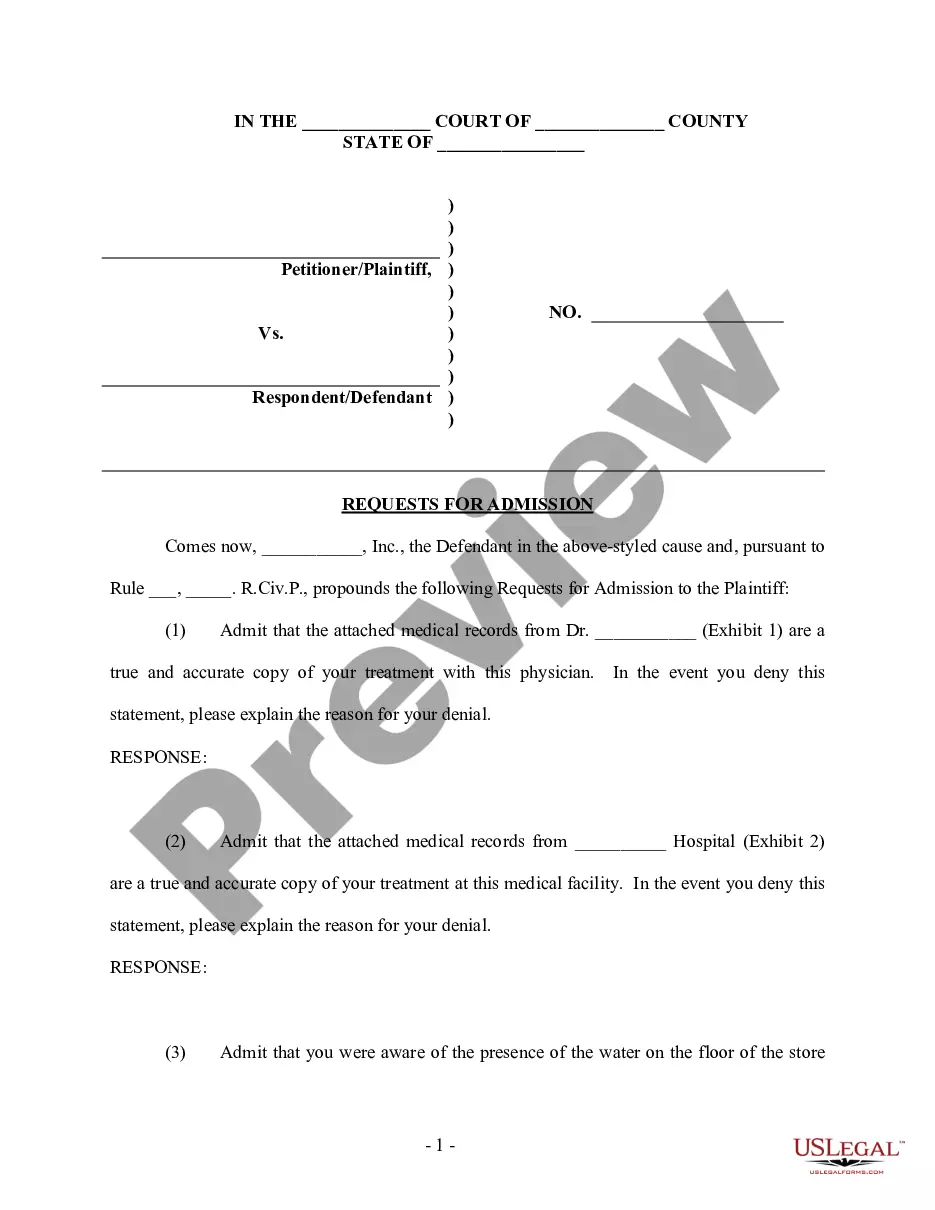
Are you currently in a situation where you need documents for either business or personal purposes almost every day? There are numerous legal document templates available online, but locating ones you can trust is challenging. US Legal Forms provides thousands of template forms, including the North Dakota Requests for Admissions, designed to meet state and federal requirements.
If you are already acquainted with the US Legal Forms website and have an account, simply Log In. After that, you can download the North Dakota Requests for Admissions template.
If you do not have an account and wish to start using US Legal Forms, follow these steps: Discover the form you need and ensure it is for the correct city/county. Utilize the Review button to examine the form. Read the description to confirm that you have selected the right form. If the form is not what you are looking for, use the Search field to find the form that meets your needs and requirements. If you find the correct form, click on Buy now. Select the pricing plan you prefer, fill in the required information to create your account, and complete the order using your PayPal or credit card. Choose a suitable document format and download your copy.
- Locate all the document templates you have purchased in the My documents menu.
- You can retrieve another copy of North Dakota Requests for Admissions at any time, if necessary.
- Just click the desired form to download or print the document template.
- Utilize US Legal Forms, one of the most extensive collections of legal forms, to save time and avoid errors.
- The service offers properly crafted legal document templates that you can use for a variety of purposes.
- Create your account on US Legal Forms and start making your life a bit easier.
Form popularity
FAQ
WHAT IS A MOTION TO DEEM FACTS ADMITTED? A motion to deem facts admitted is a request made by a party to the court to treat certain facts as admitted because the other party failed to respond to a request for admission within the time allowed by the rules of civil procedure.
If a party fails to timely serve a response to a request for admissions, the requests are. deemed admitted without a court order.
If the Board determines that the applicant's legal experience does not demonstrate sufficient competency in the practice of law, it shall require the applicant to take an lawyer's examination. The Board shall set the date, time, place and content of each examination.
Use Requests for Admission. A Request for Admission asks the other side in your case to admit that a fact is true or that a document is authentic. If the other side admits that something is true or authentic, you will not need to prove that at trial. This can make your trial faster and less expensive.
California law places strict limits on the number of discovery requests a party can make. In a limited civil case (cases less than $25,000) you may ask each party only 35 questions total, whether they are form interrogatories, special interrogatories, requests for admission, or requests for production of documents.
During discovery, each party may serve one or more sets of Requests for Admissions, asking the opposing side to admit that. that one or more facts are true or. one or more documents are genuine.
The court shall make the requested order for deemed admissions, unless it finds that before the hearing on the motion the party to whom the requests for admission have been directed has served a proposed response to the requests for admission that is in substantial compliance with CCP §§ 2033.210-2033.230. (Code Civ.
4) Although there are no limits on how many requests you can include in an RFA they must pertain to the claims or defenses in your lawsuit. Consider limiting the content of your RFAs to: ? Whether a fact is true or false.