North Dakota Agreed Order Authorizing Release and Payment of Funds Held in the Court Registry
Description
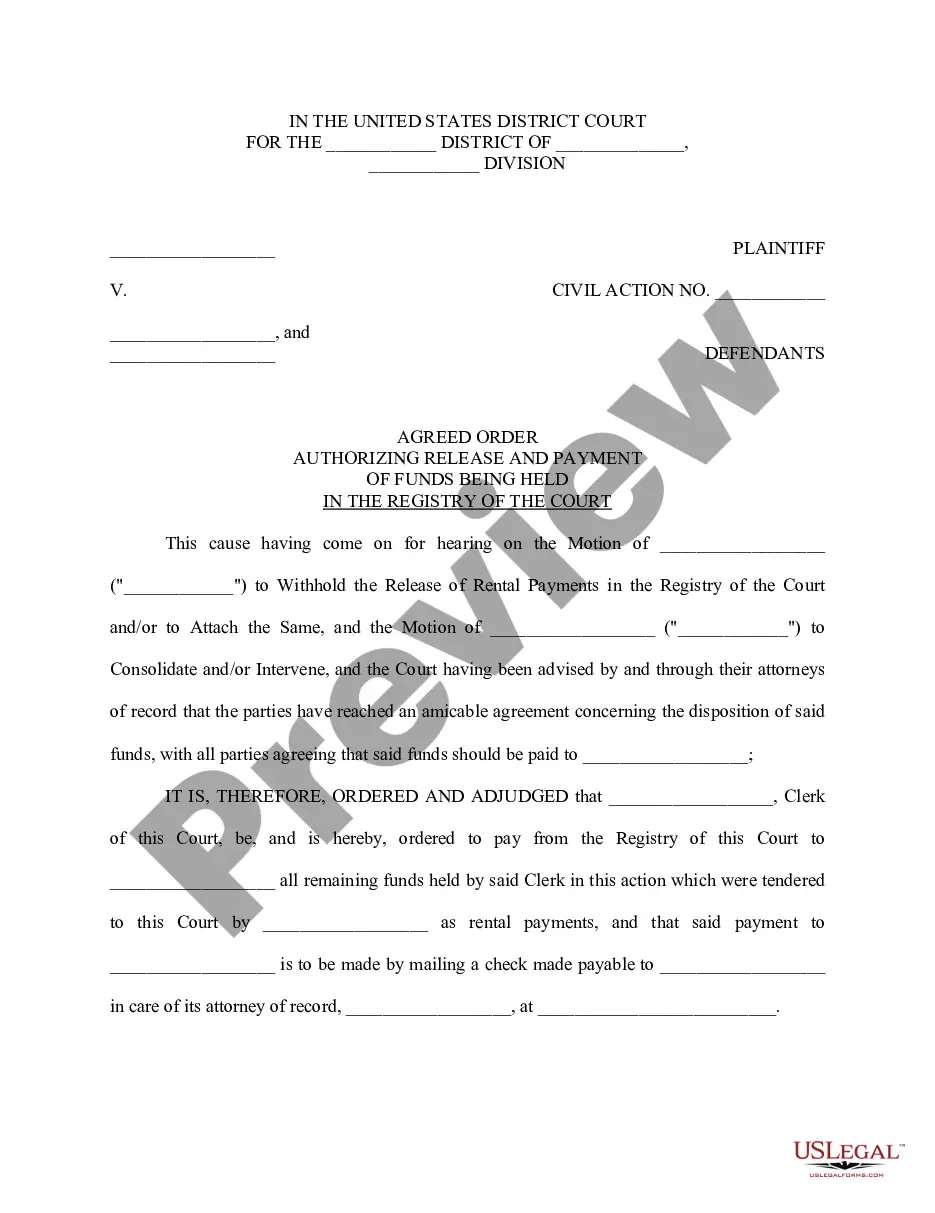
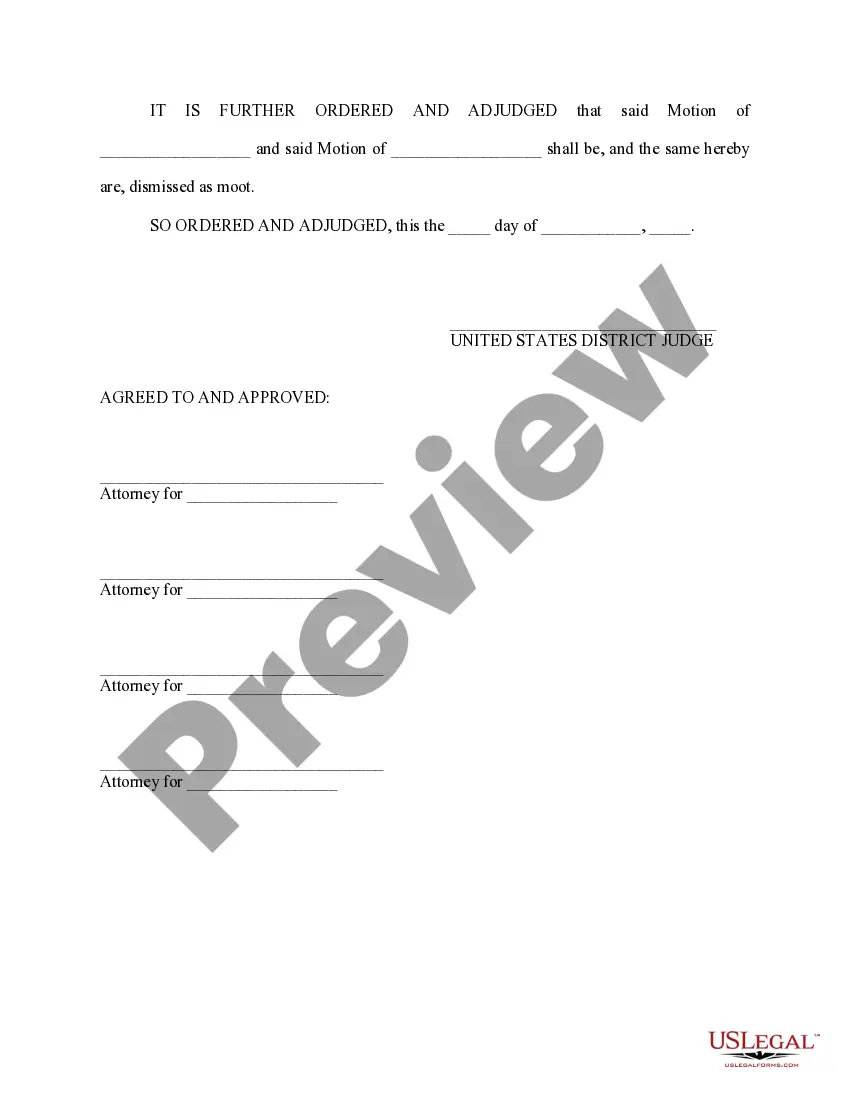
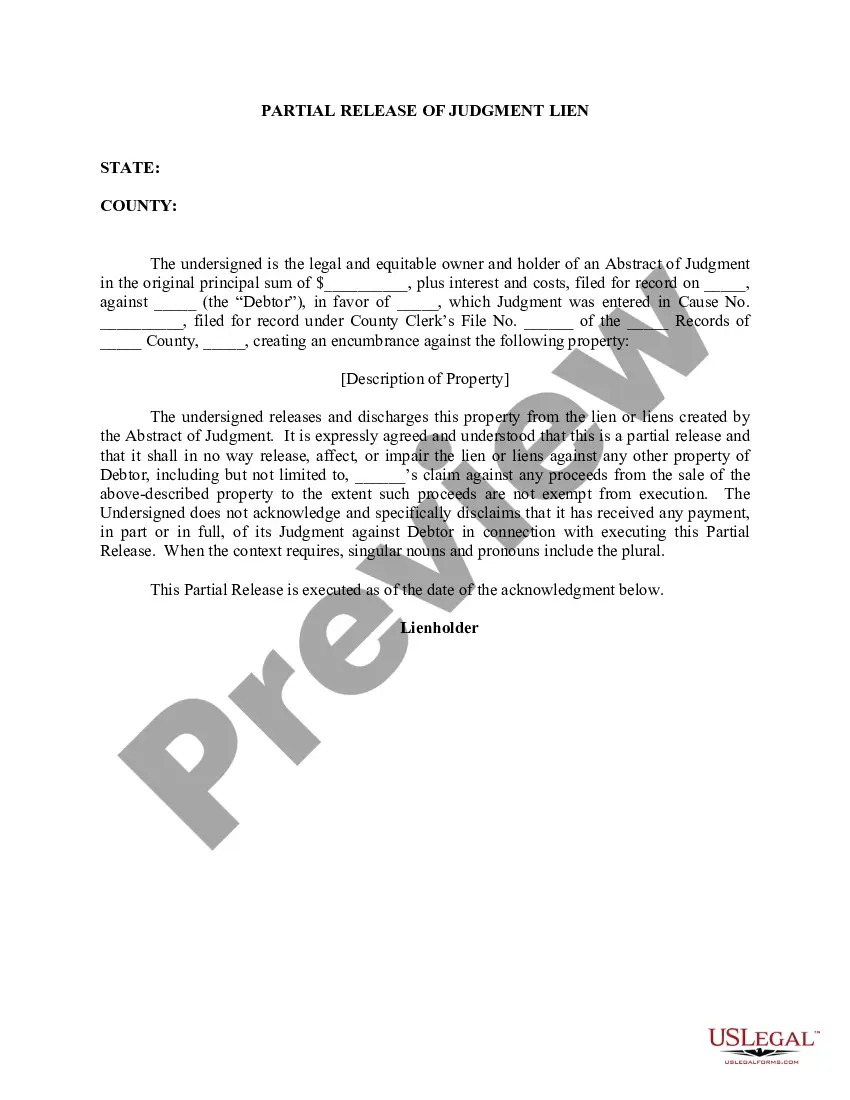
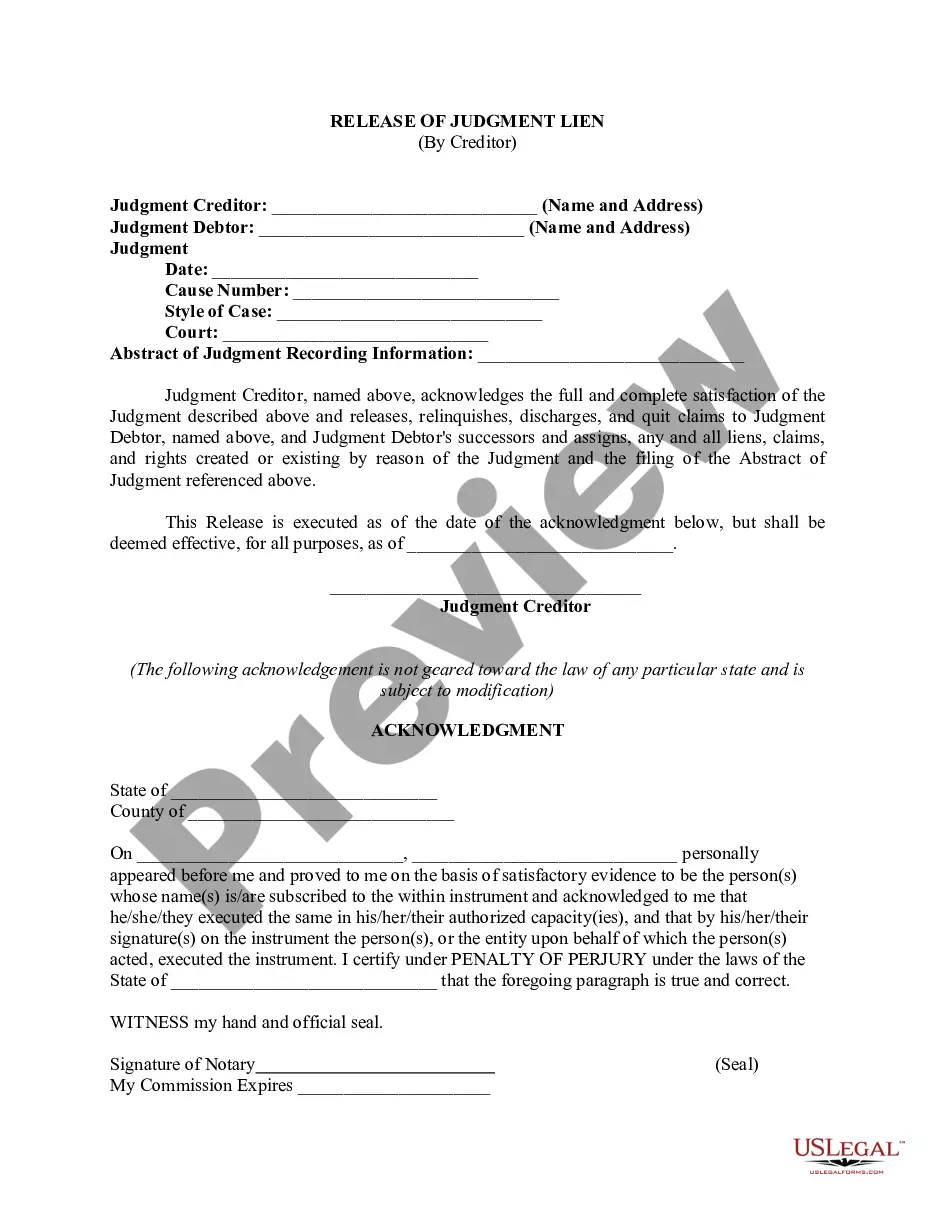
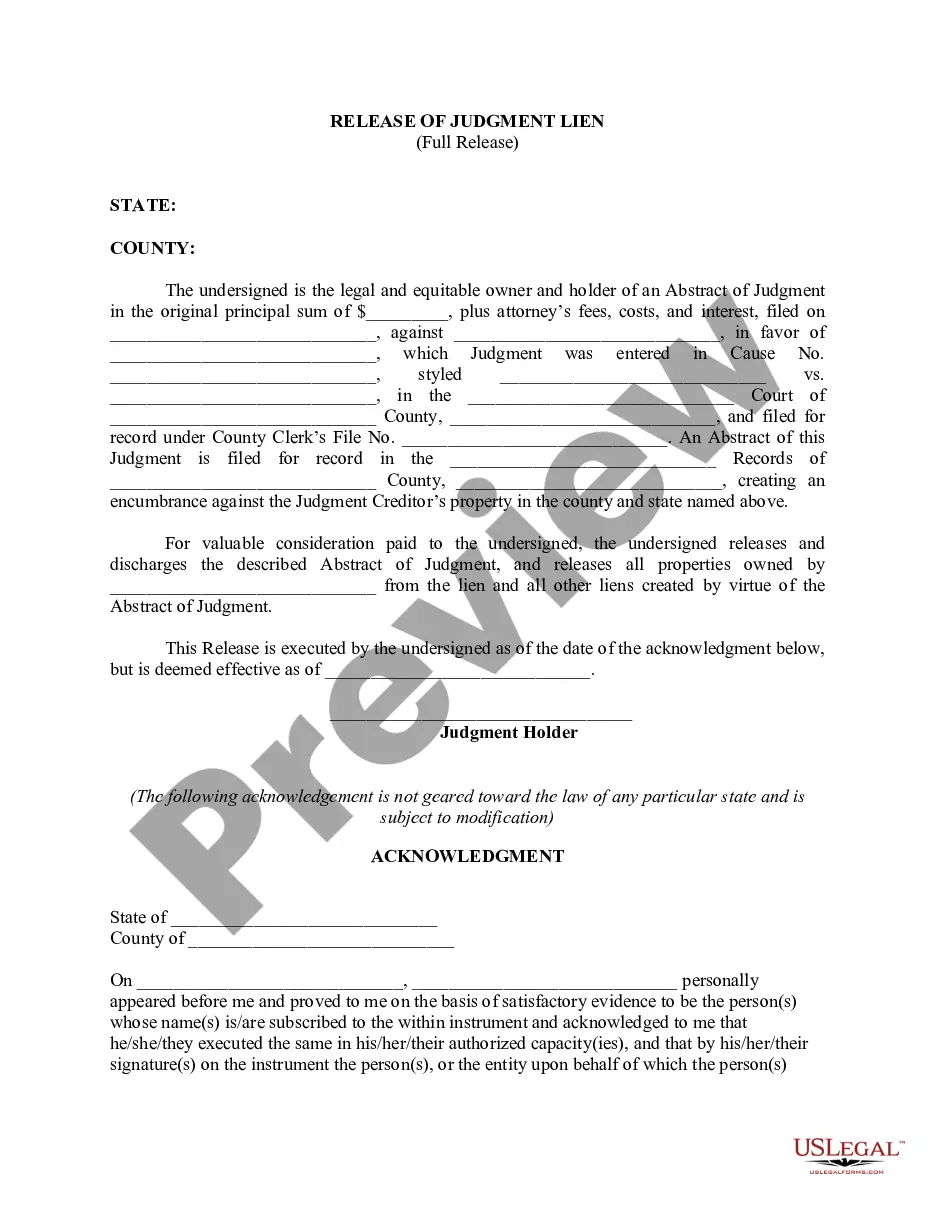
How to fill out Agreed Order Authorizing Release And Payment Of Funds Held In The Court Registry?
US Legal Forms - one of the biggest collections of authentic templates in the States - offers a variety of legitimate document formats that you can download or print. By using the website, you can obtain thousands of forms for business and personal purposes, organized by categories, states, or keywords.
You can find the latest versions of documents like the North Dakota Agreed Order Authorizing Release and Payment of Funds Held in the Court Registry in just minutes. If you already have a monthly subscription, Log In and download the North Dakota Agreed Order Authorizing Release and Payment of Funds Held in the Court Registry from the US Legal Forms library. The Download option will appear on each form you view. You can access all previously saved forms in the My documents tab of your account.
If you are using US Legal Forms for the first time, here are simple steps to get started: Ensure you have selected the correct form for your city/region. Click the Preview button to check the document’s content. Read the form description to ensure you have selected the appropriate document. If the form doesn’t meet your requirements, use the Search field at the top of the screen to find one that does. Once you are satisfied with the form, confirm your selection by clicking the Buy now button. Then, choose the pricing plan you prefer and provide your information to create an account. Process the transaction. Use your Visa or Mastercard or PayPal account to complete the transaction. Select the format and download the form to your device. Make edits. Fill out, modify, print, and sign the saved North Dakota Agreed Order Authorizing Release and Payment of Funds Held in the Court Registry.
- Every template you add to your account has no expiration date and is yours forever.
- So, if you wish to download or print another copy, simply go to the My documents section and click on the form you want.
- Access the North Dakota Agreed Order Authorizing Release and Payment of Funds Held in the Court Registry with US Legal Forms, the most extensive library of legitimate document formats.
- Utilize thousands of professional and state-specific templates that meet your business or personal needs and requirements.
Form popularity
FAQ
?Bail? is money or property that a defendant puts up as a promise to return for future court dates. When setting the amount of bail, the judge takes into account the seriousness of the crime, whether the defendant is a risk to the community, and whether he or she is a ?flight risk? and likely to run away.
It is not supposed to be used as punishment. The purpose of bail is simply to ensure that defendants will appear for trial and all pretrial hearings for which they must be present. Bail is returned to defendants when their trial is over, in some states minus a processing fee.
Bail refers to money that you or someone else deposits as an assurance that you will show up for all future court appearances. By depositing bail, you can get out of jail while you await your court appearances. You can make bail in cash, or through a bond from a bail bondsman.
Unless otherwise limited by court order, the scope of discovery is as follows: Parties may obtain discovery regarding any nonprivileged matter that is relevant to any party's claim or defense, including the existence, description, nature, custody, condition, and location of any documents, electronically stored ...
In a non-felony case, if the defendant pleads guilty without appearing in court, a written form must be used advising the defendant of his or her constitutional rights and creating a record showing that the plea was made voluntarily, knowingly, and understandingly.
Bail: A security deposit (usually money) given to release a defendant or witness from custody and to make sure that they go to court when they're supposed to.
Upon written request of a defendant the prosecuting attorney shall permit the defendant to inspect and copy or photograph any results or reports of physical or mental examinations, and of scientific tests or experiments, or copies thereof, within the possession, custody, or control of the prosecution, the existence of ...
Bail: A security deposit (usually money) given to release a defendant or witness from custody and to make sure that they go to court when they're supposed to.