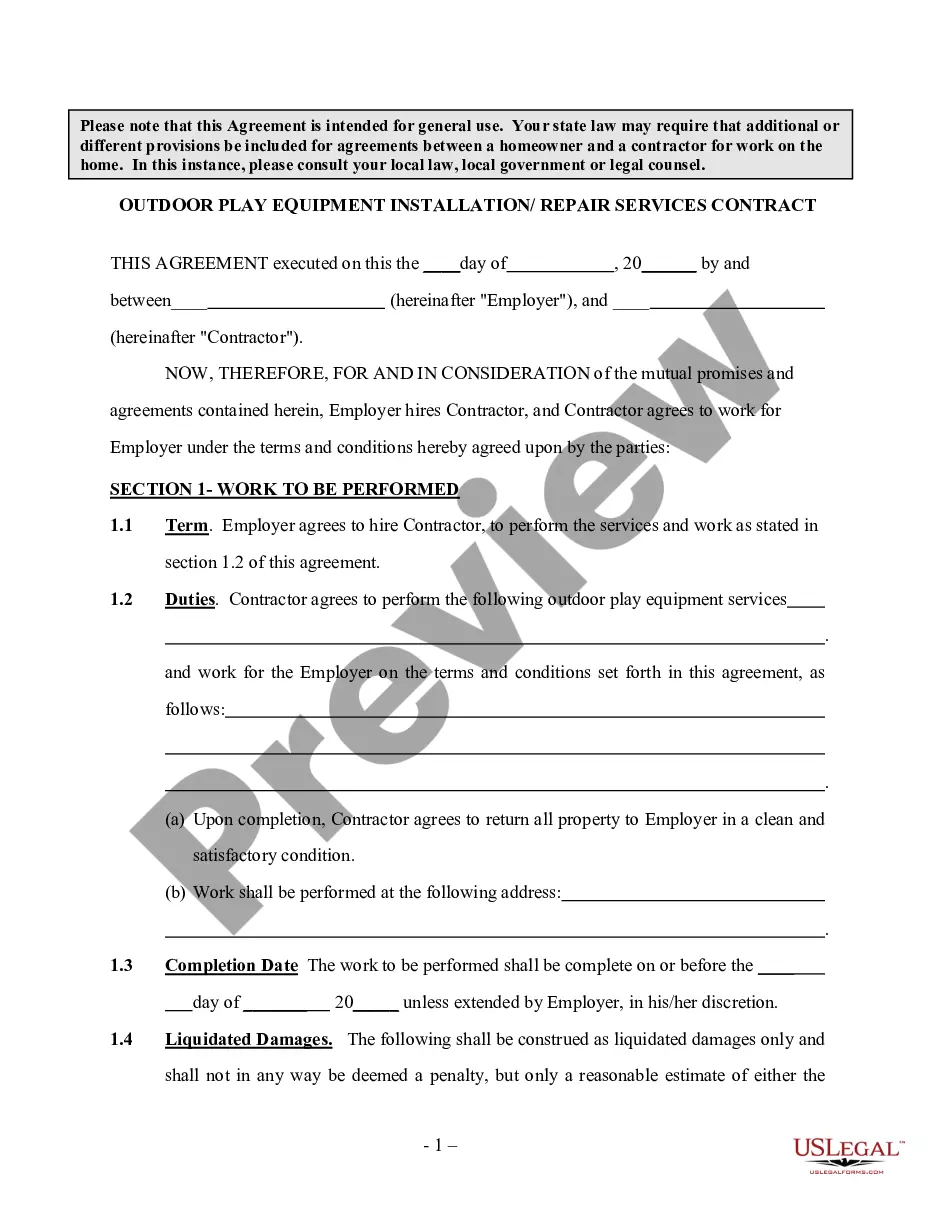
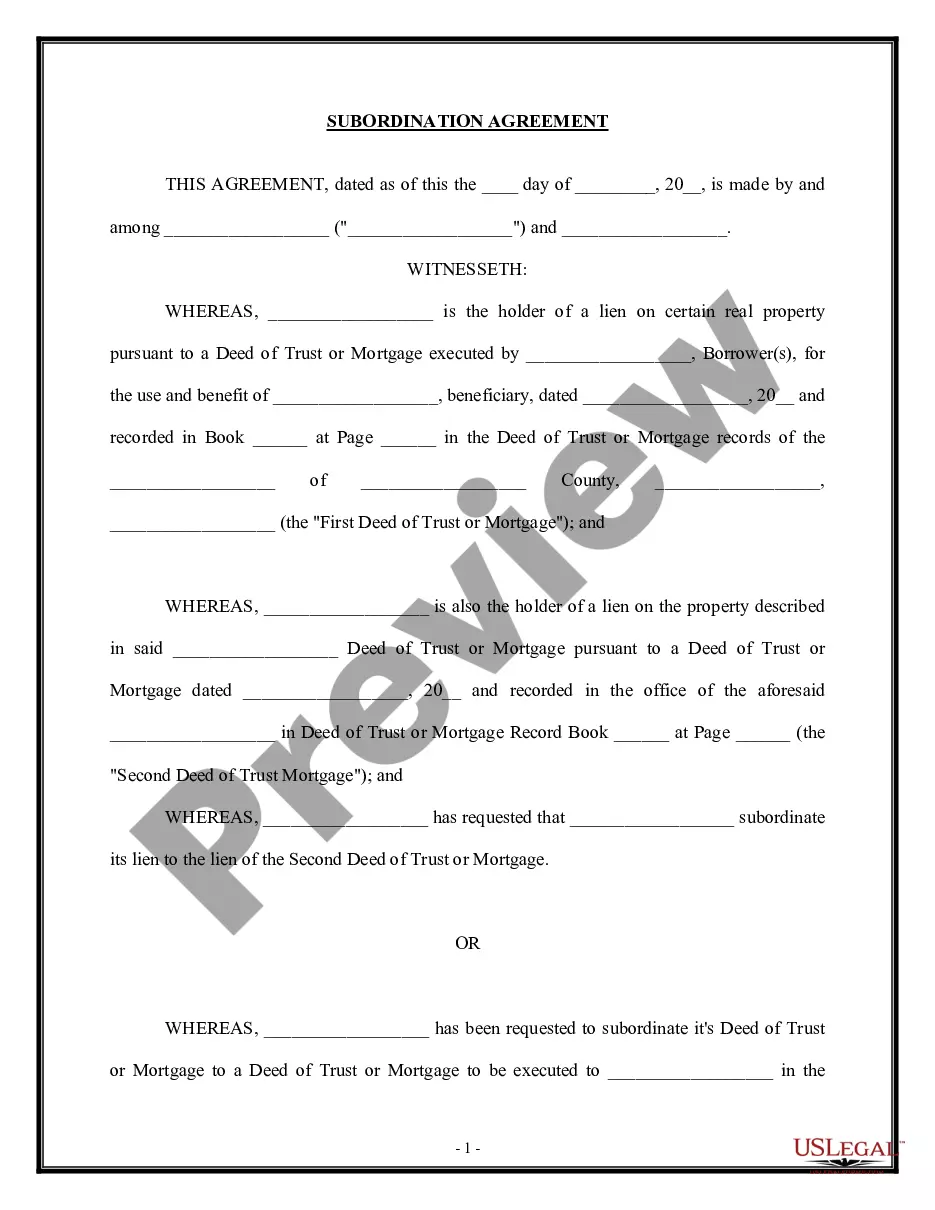
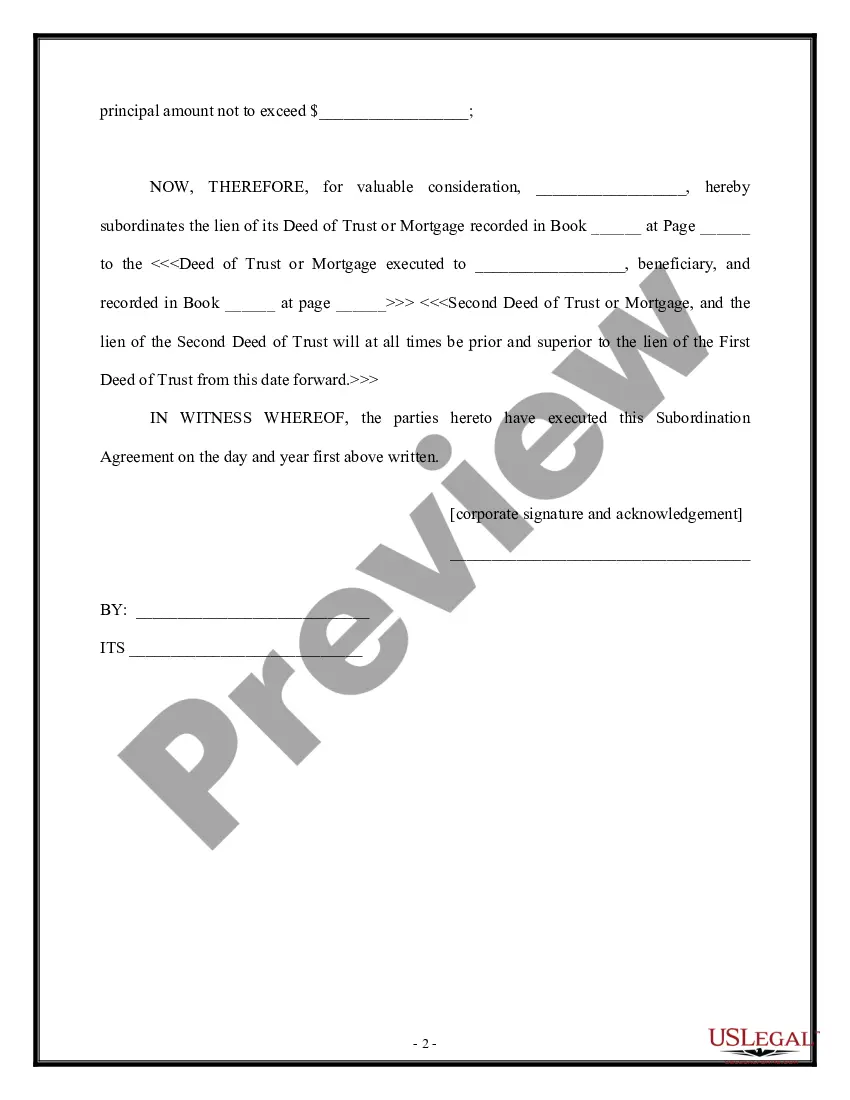
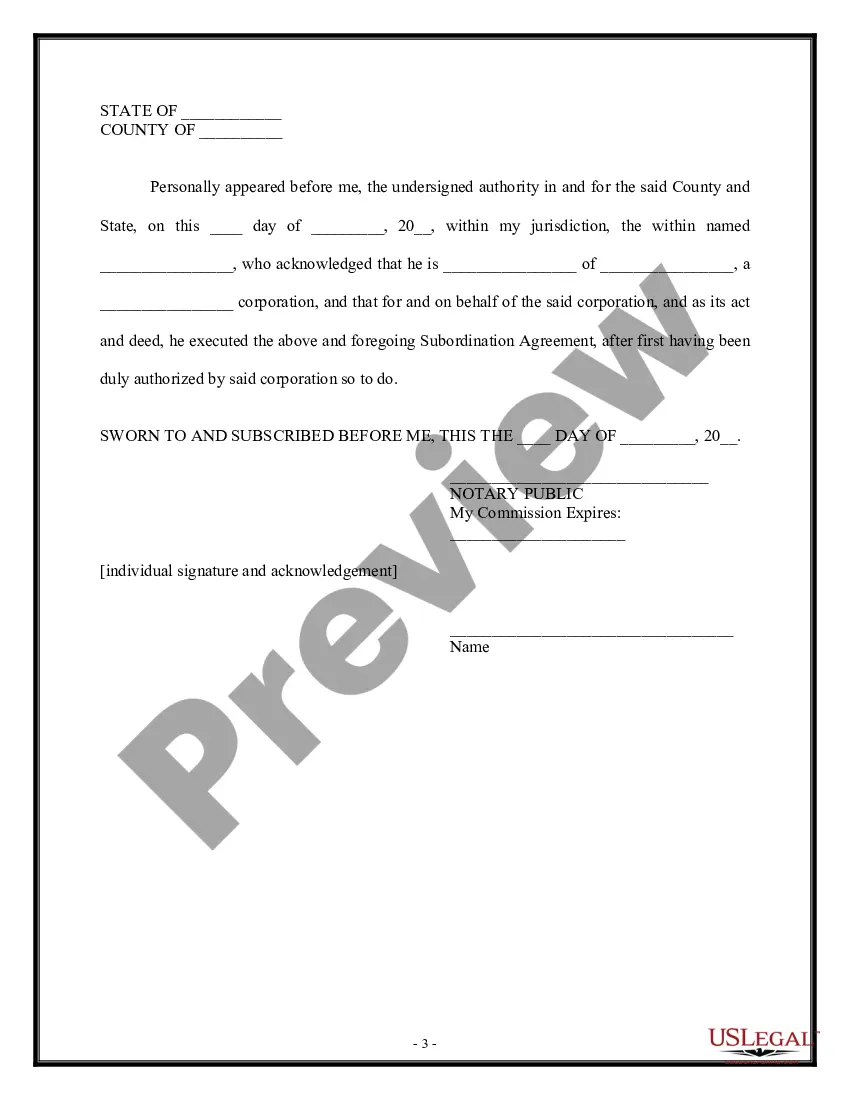
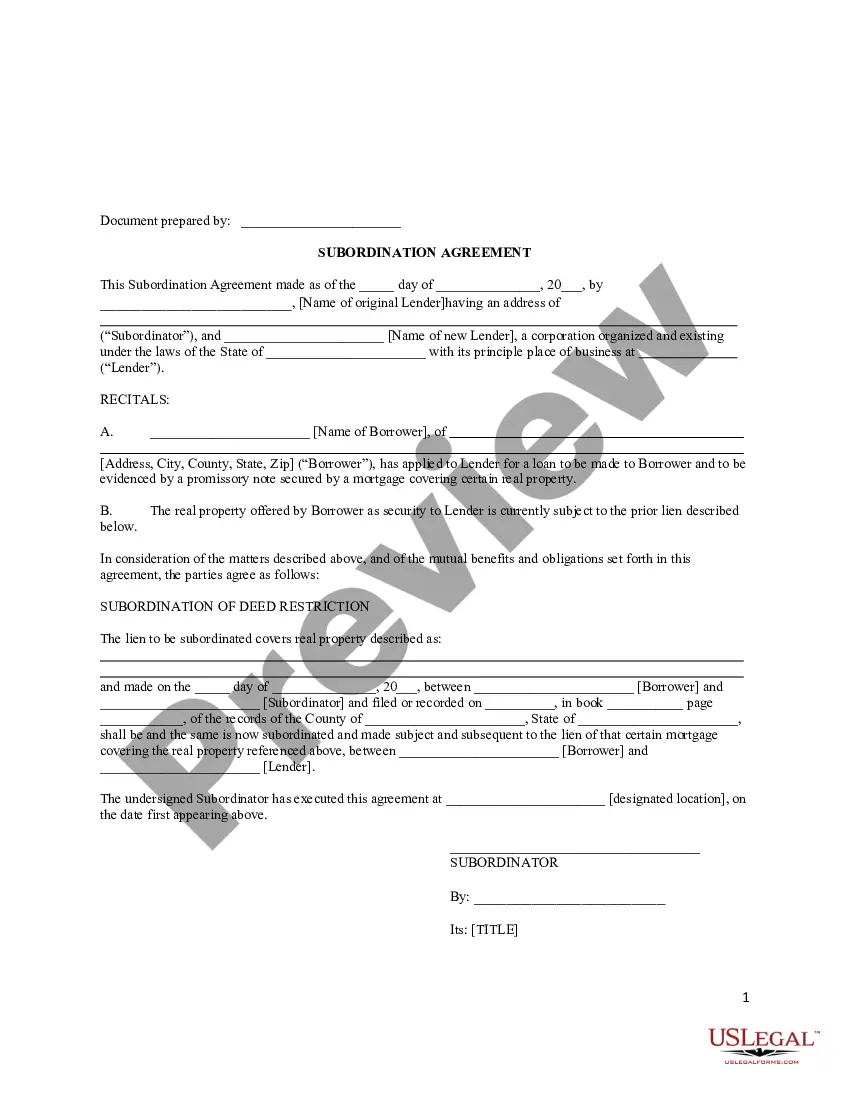
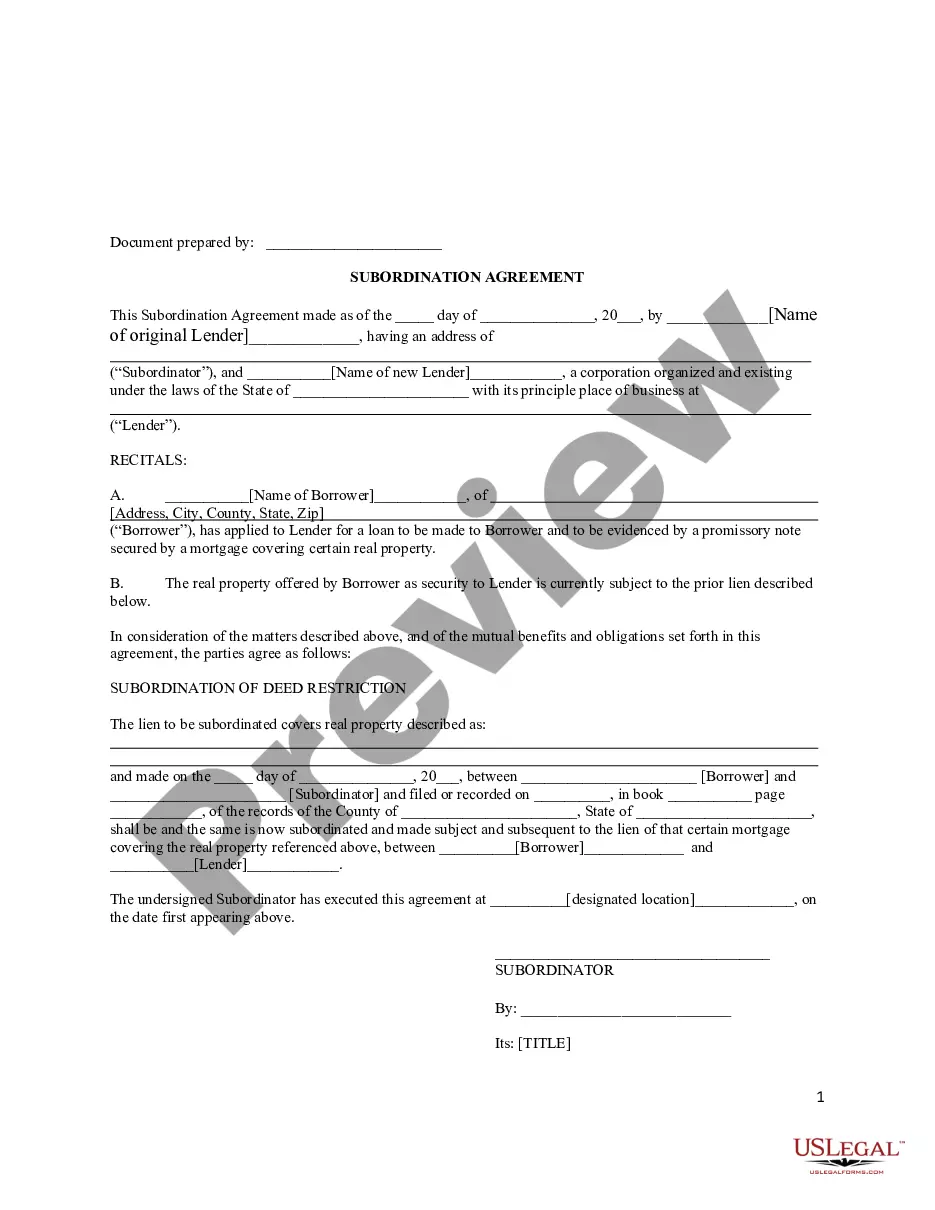
North Dakota Subordination Agreement - Lien
Description
Get your form ready online
Our built-in tools help you complete, sign, share, and store your documents in one place.
Make edits, fill in missing information, and update formatting in US Legal Forms—just like you would in MS Word.
Download a copy, print it, send it by email, or mail it via USPS—whatever works best for your next step.
Sign and collect signatures with our SignNow integration. Send to multiple recipients, set reminders, and more. Go Premium to unlock E-Sign.
If this form requires notarization, complete it online through a secure video call—no need to meet a notary in person or wait for an appointment.
We protect your documents and personal data by following strict security and privacy standards.

Make edits, fill in missing information, and update formatting in US Legal Forms—just like you would in MS Word.

Download a copy, print it, send it by email, or mail it via USPS—whatever works best for your next step.

Sign and collect signatures with our SignNow integration. Send to multiple recipients, set reminders, and more. Go Premium to unlock E-Sign.

If this form requires notarization, complete it online through a secure video call—no need to meet a notary in person or wait for an appointment.

We protect your documents and personal data by following strict security and privacy standards.
Looking for another form?



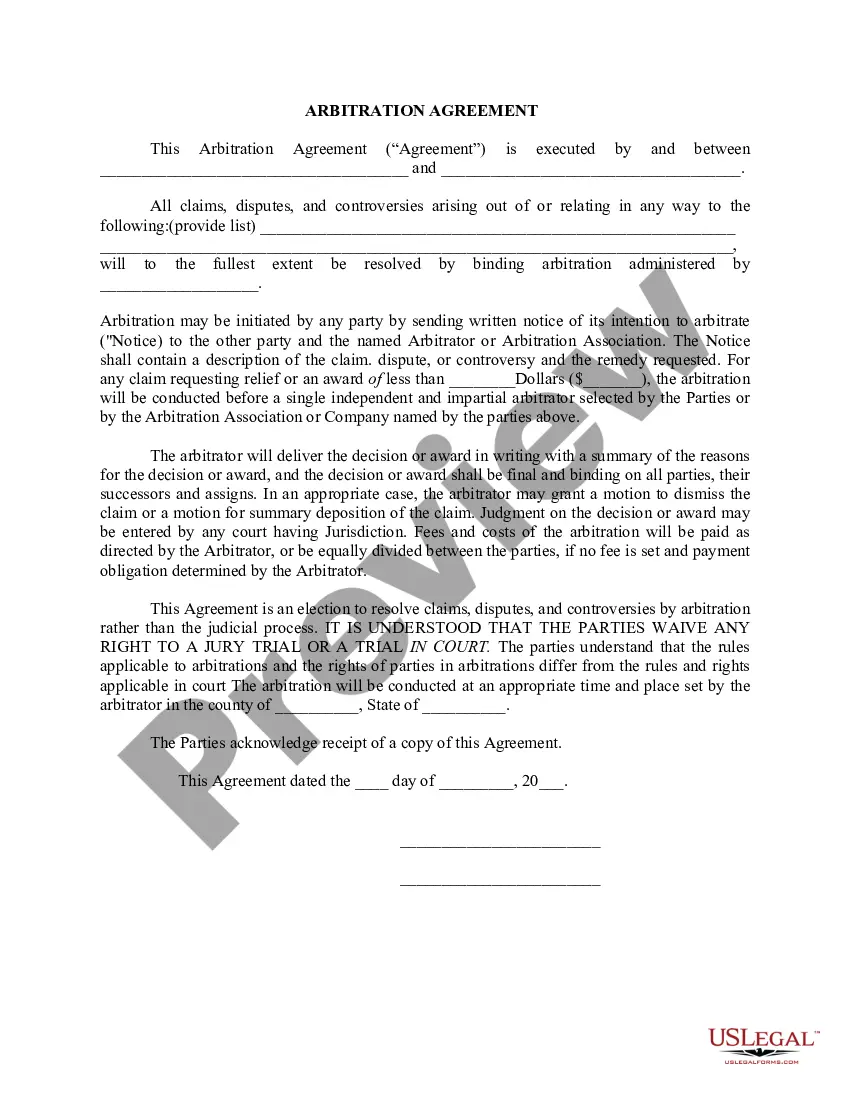
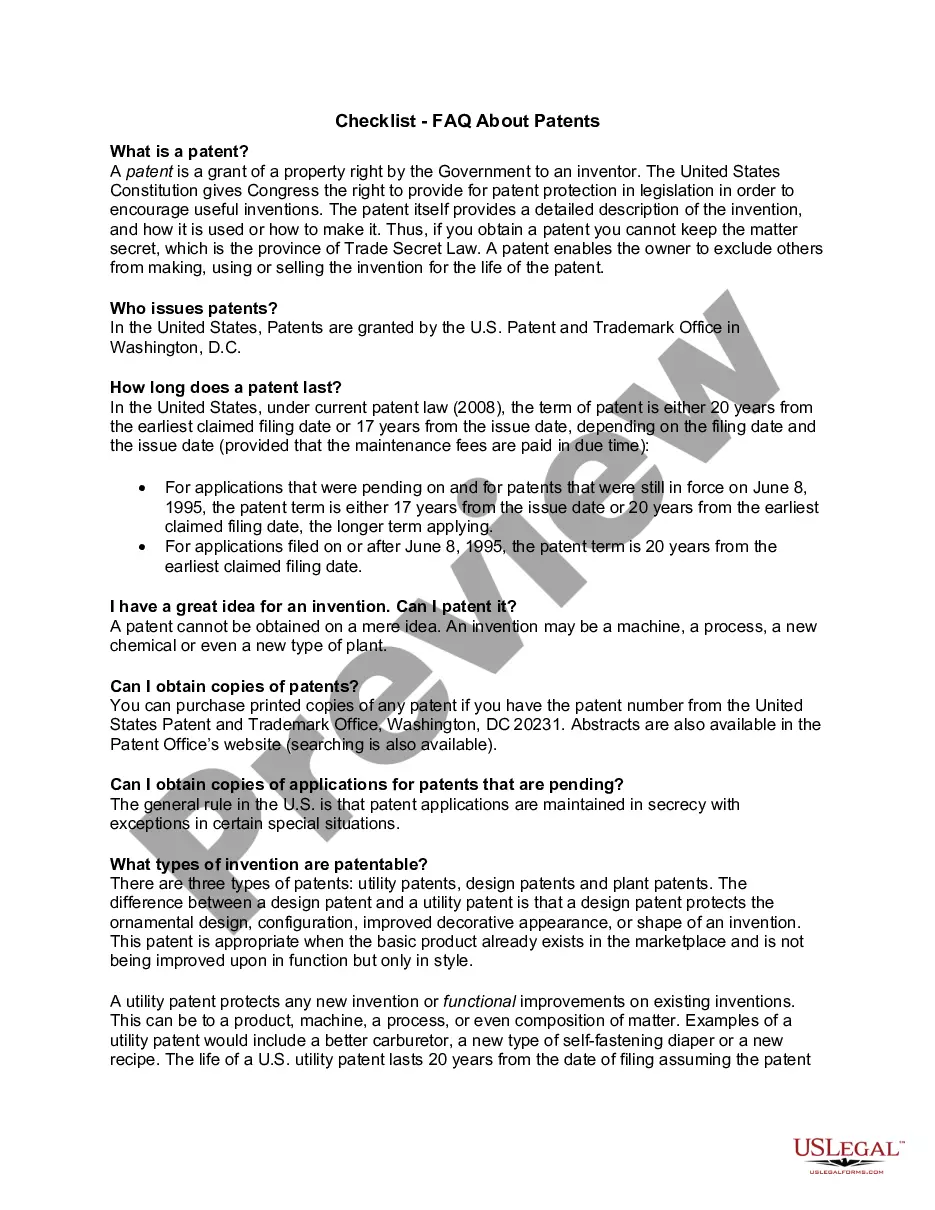

How to fill out Subordination Agreement - Lien?
Finding the appropriate legal document template can be challenging. Certainly, there are numerous templates accessible online, but how do you find the legal form you require? Utilize the US Legal Forms website. The platform offers a vast array of templates, including the North Dakota Subordination Agreement - Lien, suitable for both business and personal needs. All documents are vetted by professionals and meet federal and state regulations.
If you are already registered, Log In to your account and click the Download button to receive the North Dakota Subordination Agreement - Lien. Use your account to search through the legal documents you have previously ordered. Navigate to the My documents section of your account to obtain another copy of the document you require.
If you are a new user of US Legal Forms, here are straightforward instructions to follow: First, ensure you have chosen the correct form for your location. You can preview the document using the Preview button and review the form description to confirm it is the right one for you. If the form does not meet your requirements, utilize the Search field to find the appropriate document. Once you are certain that the form is suitable, click the Get now button to acquire the form. Select the pricing plan you prefer and enter the necessary information. Create your account and complete the transaction using your PayPal account or credit card. Choose the document format and download the legal document template to your device. Finally, complete, modify, print, and sign the received North Dakota Subordination Agreement - Lien.
In summary, US Legal Forms is a comprehensive resource for locating the necessary legal templates tailored to your needs.
- US Legal Forms is the largest repository of legal documents where you can locate a variety of document templates.
- Utilize the service to download professionally crafted documents that adhere to state requirements.
- Ensure that the selected template fits your specific needs.
- All forms are reviewed by experts to guarantee compliance with legal standards.
- The website provides an efficient way to manage and access your legal templates.
- Follow the easy steps to make your document acquisition process smooth.
Form popularity
FAQ
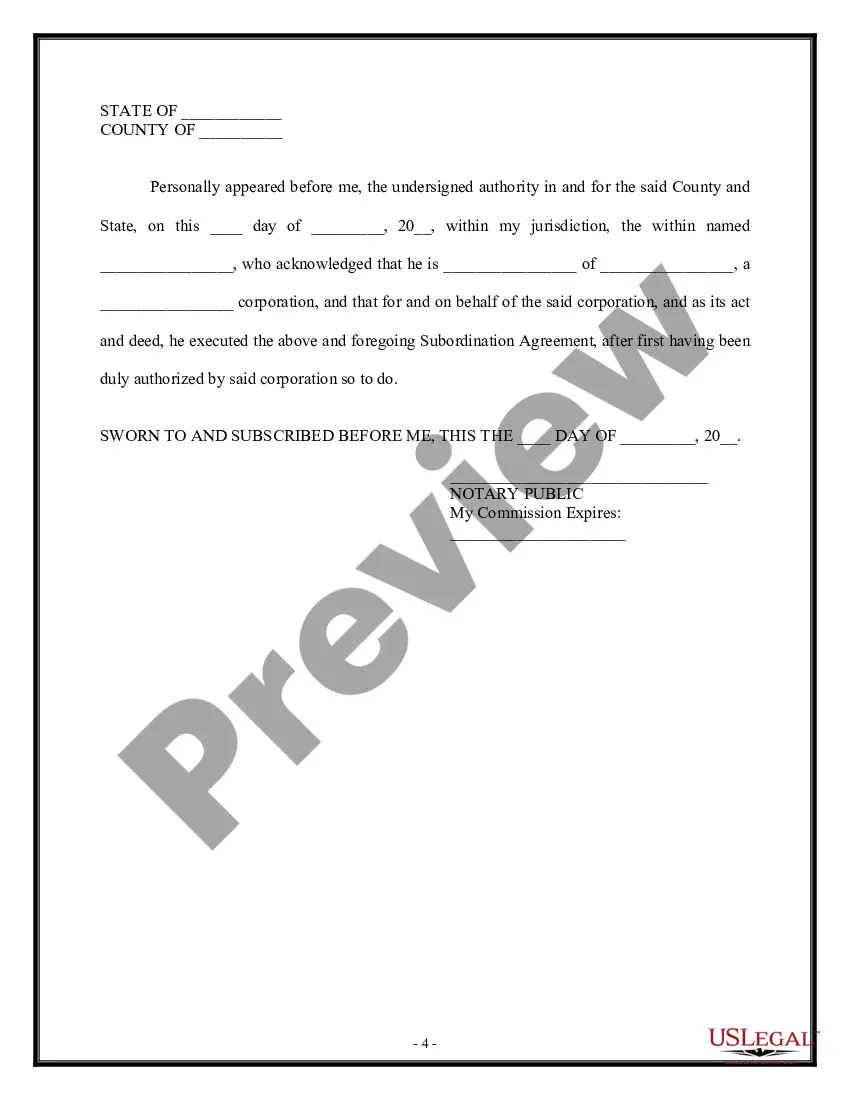
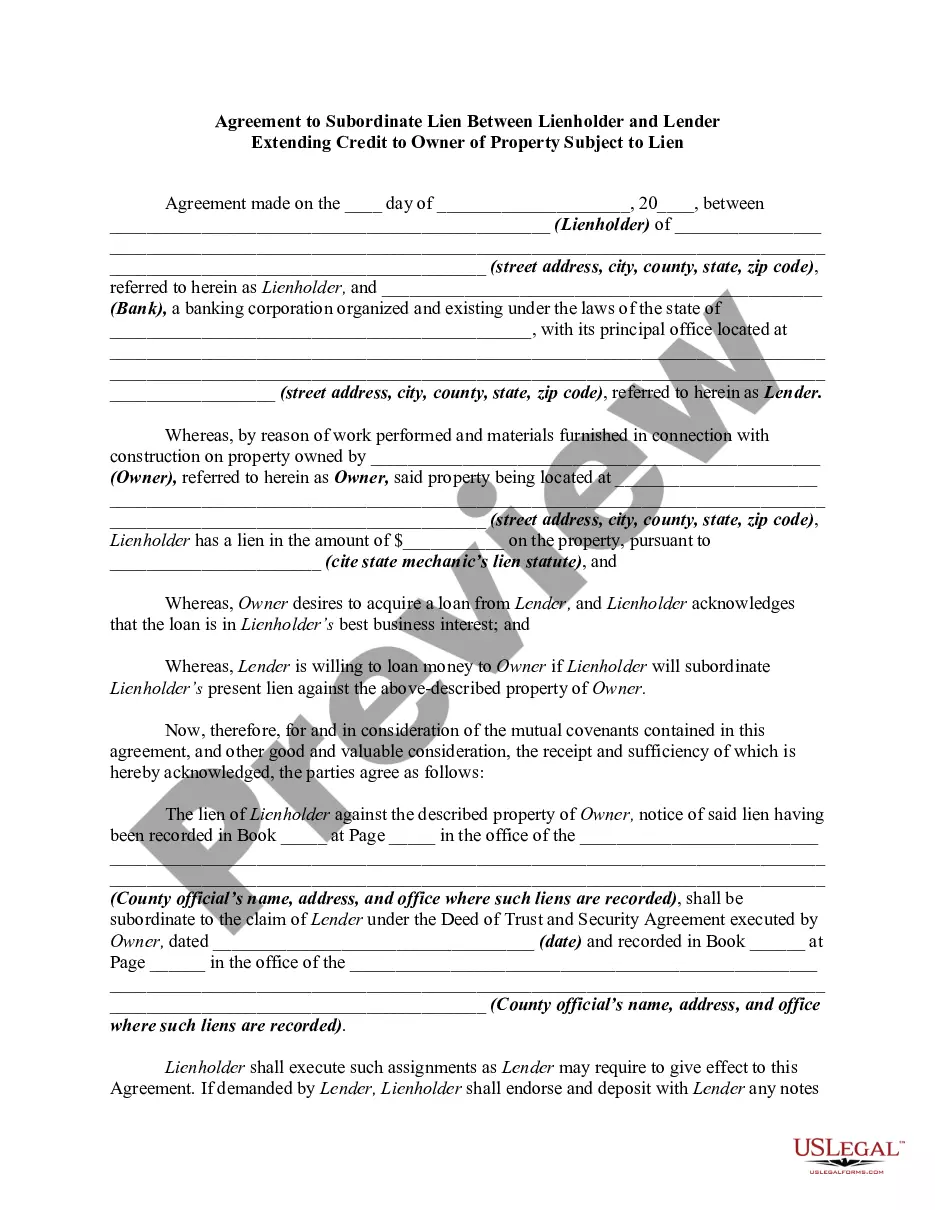
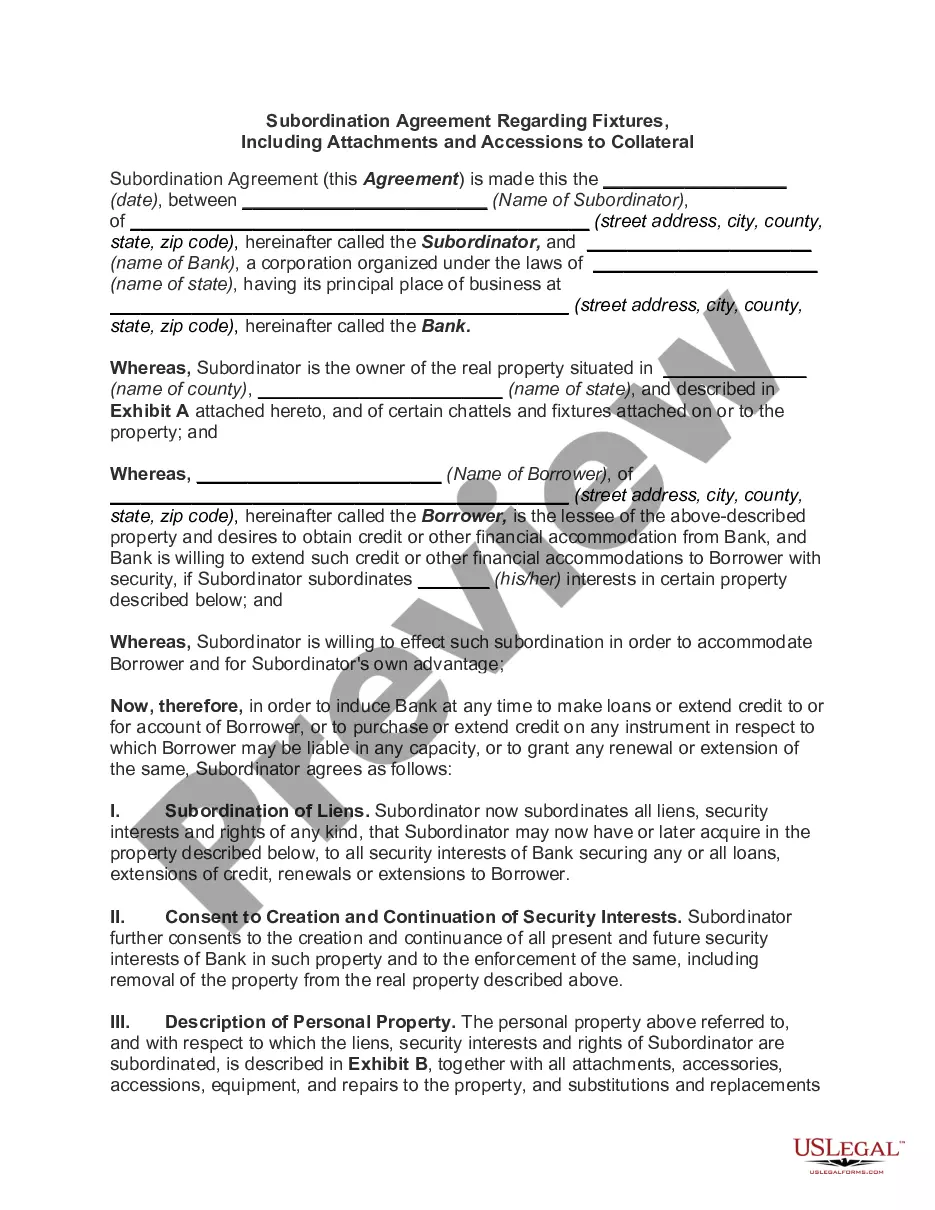
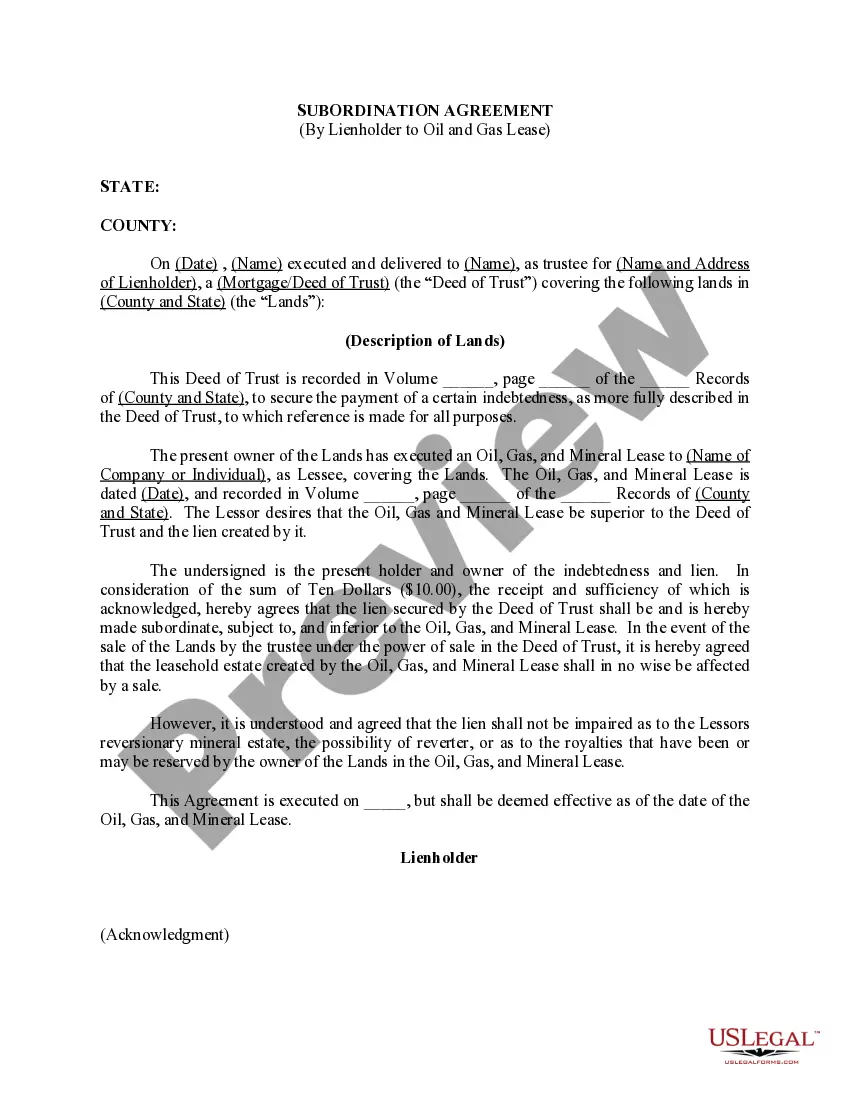
A mortgage subordination refers to the order the outstanding liens on your property get repaid if you stop making your mortgage payments. For example, your first home loan (primary mortgage) is repaid first, with any remaining funds paying off additional liens, including second mortgages, HELOCs and home equity loans.
Lenders can execute what are referred to as executory subordination agreements. Executory subordination agreements are essentially a promise to enter into a subordination agreement in the future if another loan enters the picture, like a construction loan.
A subordination clause is a clause in an agreement that states that the current claim on any debts will take priority over any other claims formed in other agreements made in the future. Subordination is the act of yielding priority.
A subordination clause serves to protect the lender if a homeowner defaults. If this happens, the lender then has the legal standing to repossess the home and cover their loan's outstanding balance first. If other subordinate mortgages are involved, the secondary liens will take a backseat in this process.
A Subordination Agreement focuses on creditor priorities and security claims, providing legal certainty to creditors when assessing repayment risk. If a credit event (or default) occurs, a subordination agreement provides a senior lender superior repayment rights than the subordinated lender.
Subordination is the act or process by which one person or creditor's rights or claims are ranked below those of others, dealing with the distribution priority of debts between creditors.
The Subordinated Lender hereby agrees that all Subordinated Obligations (as defined below) and all of his right, title and interest in and to the Subordinated Obligations shall be subordinate and junior in right of payment to the Senior Lender Loan and all rights of Senior Lender in respect of the Senior Lender Loan, ...
A subordination agreement prioritizes debts, ranking one behind another for purposes of collecting repayment from a debtor in the event of foreclosure or bankruptcy. A second-in-line creditor collects only when and if the priority creditor has been fully paid.