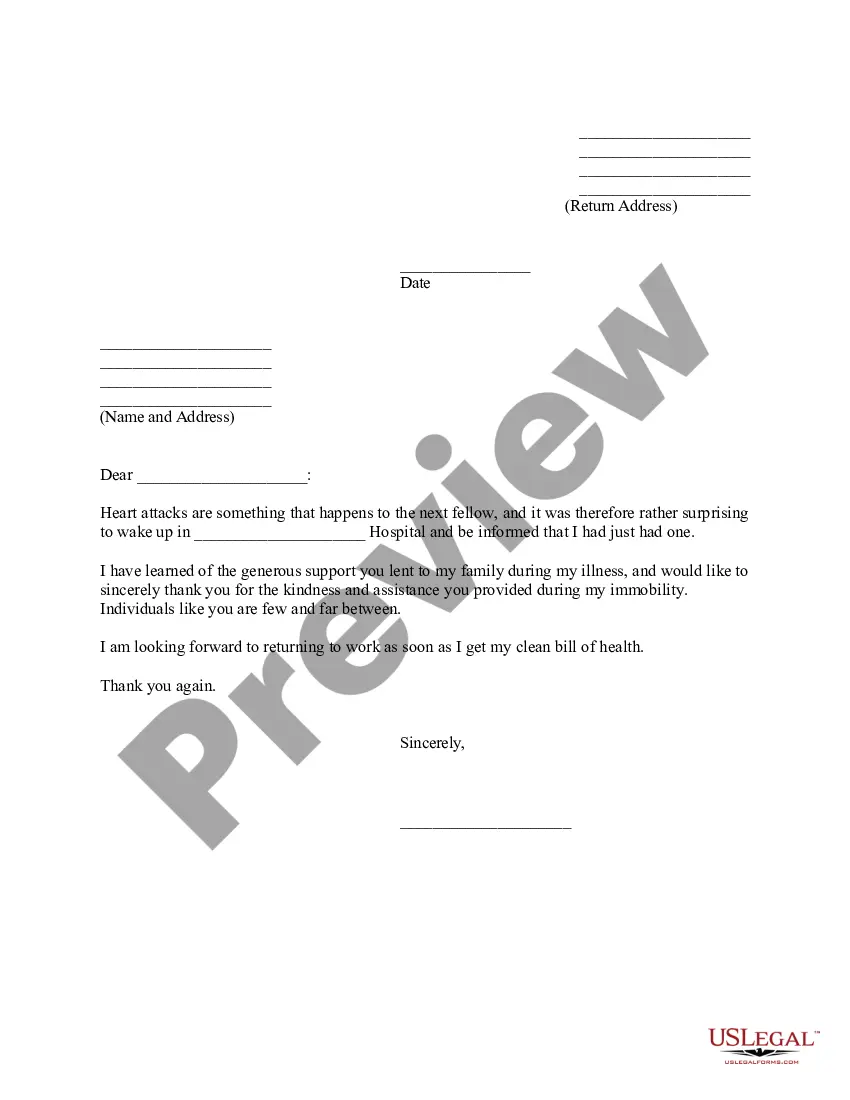
This form is a Complaint. This action was filed by the plaintiff due to a strip search which was conducted upon his/her person after an arrest. The plaintiff requests that he/she be awarded compensatory damages and punitive damages for the alleged violation of his/her constitutional rights.
North Dakota Complaint For Strip Search - 4th and 14th Amendment, US Constitution - Jury Trial Demand
Category:
State:
Multi-State
Control #:
US-000282
Format:
Word;
Rich Text
Instant download
This website is not affiliated with any governmental entity
Public form
Description



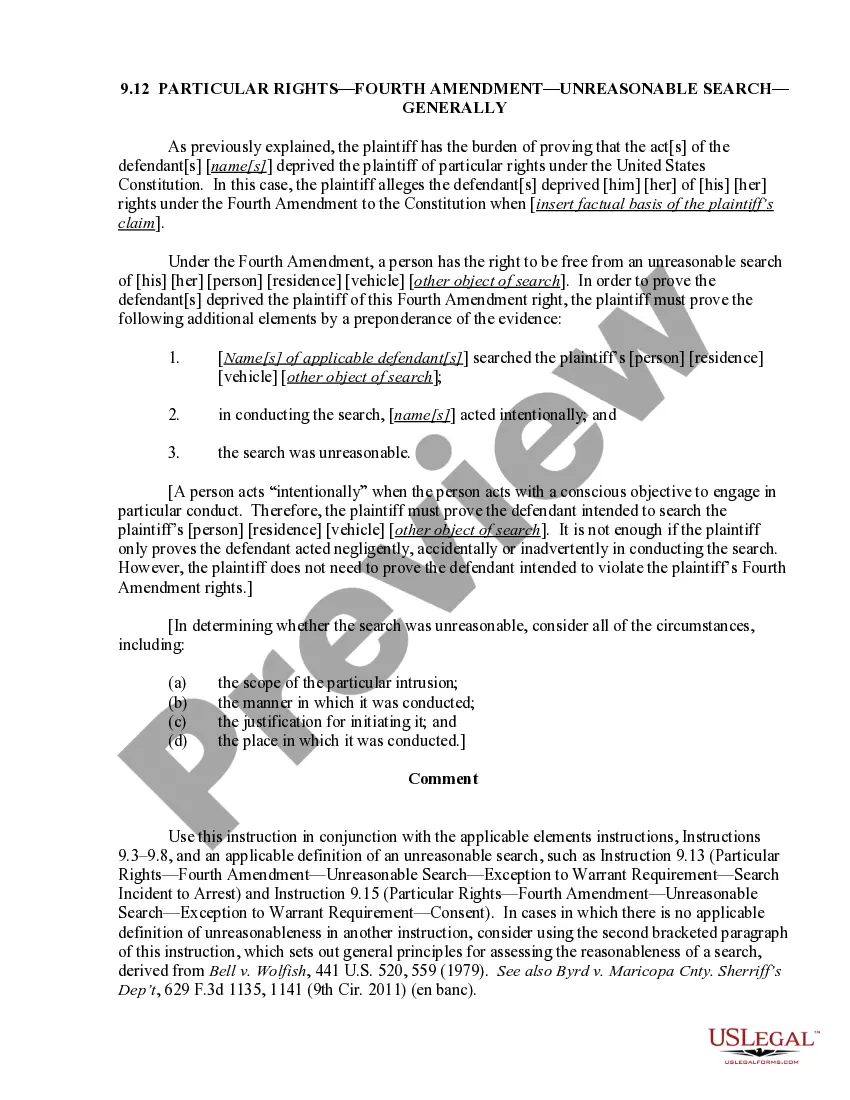
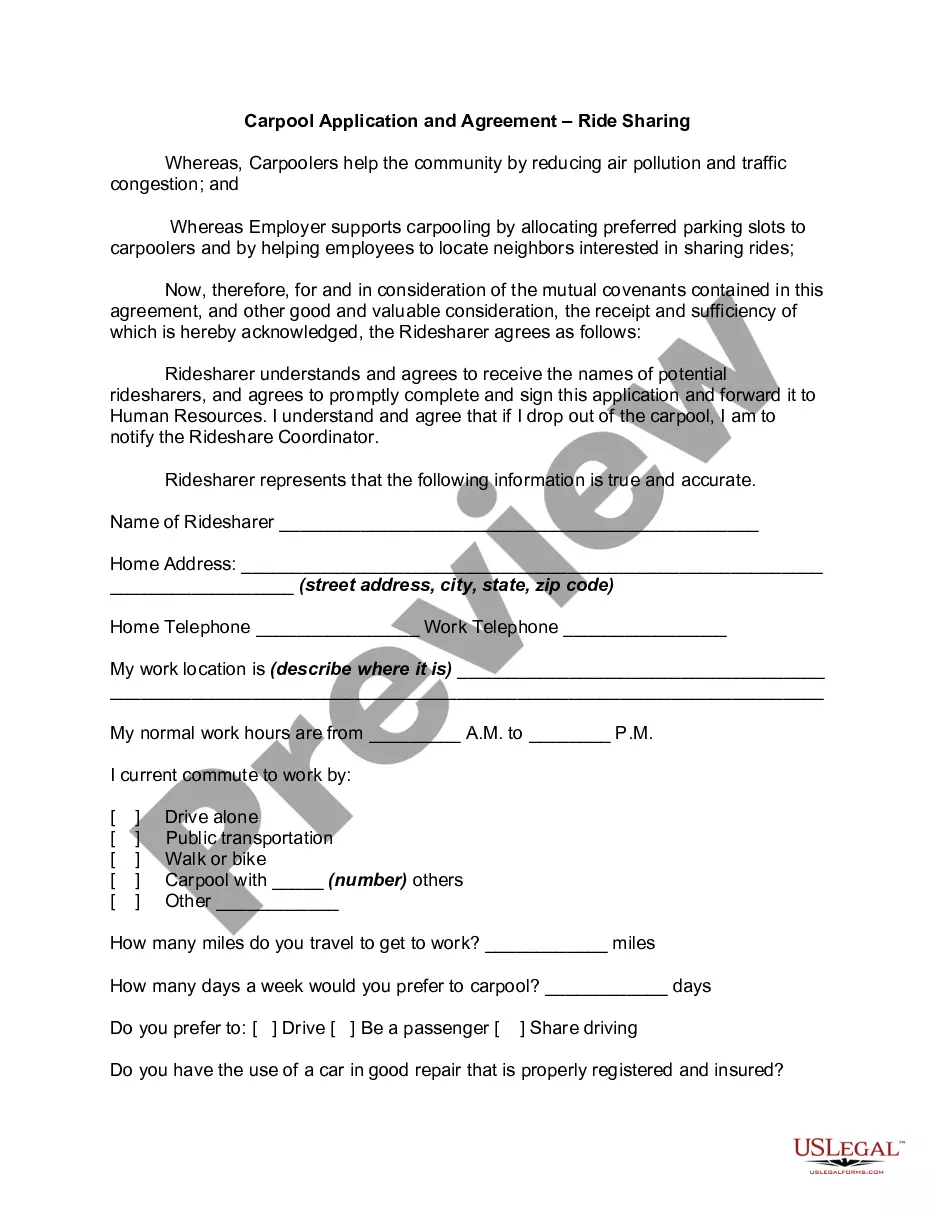
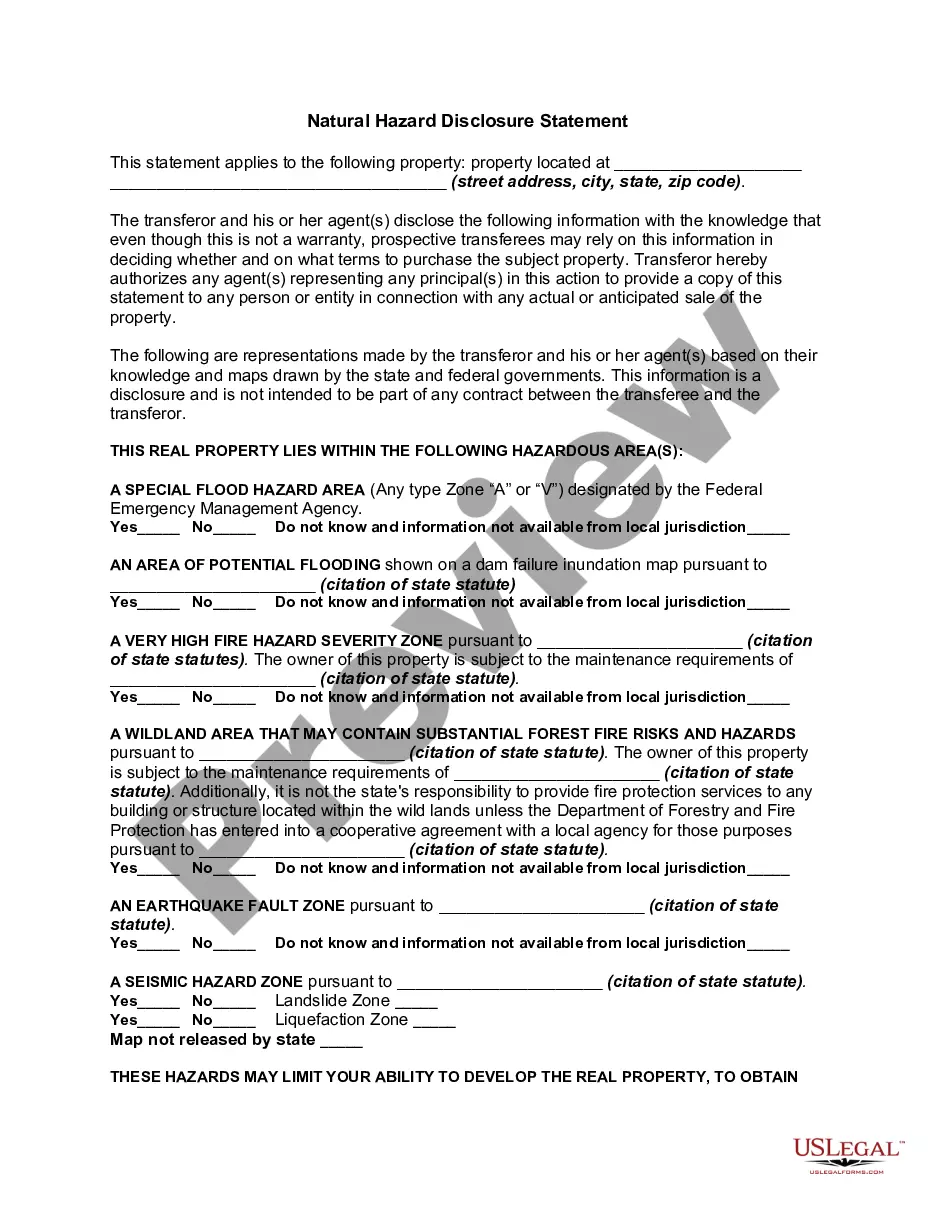

How to fill out Complaint For Strip Search - 4th And 14th Amendment, US Constitution - Jury Trial Demand?
If you wish to complete, acquire, or print authentic document templates, utilize US Legal Forms, the largest collection of genuine forms available online.
Employ the website's straightforward and user-friendly search feature to locate the documents you require.
Different templates for business and personal purposes are organized by categories and states, or keywords.
Step 4. Once you have located the form you need, click the Acquire now button. Select the pricing plan you prefer and enter your details to create an account.
Step 5. Process the transaction. You can use your credit card or PayPal account to complete the purchase. Step 6. Choose the format of the legal form and download it to your device. Step 7. Complete, edit, and print or sign the North Dakota Complaint For Strip Search - 4th and 14th Amendment, US Constitution - Jury Trial Demand.
- Use US Legal Forms to find the North Dakota Complaint For Strip Search - 4th and 14th Amendment, US Constitution - Jury Trial Demand with just a few clicks.
- If you are already a US Legal Forms member, sign in to your account and click on the Download button to get the North Dakota Complaint For Strip Search - 4th and 14th Amendment, US Constitution - Jury Trial Demand.
- You can also access forms you previously saved in the My documents section of your account.
- If you are utilizing US Legal Forms for the first time, follow the instructions below.
- Step 1. Ensure you have selected the form for the correct jurisdiction.
- Step 2. Use the Review option to examine the form's content. Don’t forget to read the details.
- Step 3. If you are not satisfied with the form, use the Search box at the top of the screen to find alternative versions of the legal form template.
Form popularity
FAQ
Rule 16 of the North Dakota Rules of Civil Procedure pertains to the scheduling and management of discovery in legal cases. This rule allows parties to discuss and agree on the timeline for gathering evidence, which can significantly impact your case. When preparing your North Dakota Complaint For Strip Search - 4th and 14th Amendment, US Constitution - Jury Trial Demand, understanding Rule 16 is vital, as it ensures a fair process for both sides in gathering necessary information.
Rule 4 of the North Dakota Rules of Civil Procedure addresses the process of serving legal documents. It outlines how a complaint or summons should be delivered to ensure proper notification of the parties involved. This rule is crucial when preparing your North Dakota Complaint For Strip Search - 4th and 14th Amendment, US Constitution - Jury Trial Demand, as it ensures that all parties receive the necessary information to respond in a timely manner.
The 6th and 7th Amendments of the US Constitution guarantee the right to a trial by jury. Specifically, the 6th Amendment protects this right in criminal cases, while the 7th Amendment ensures it in civil cases. Understanding these amendments is essential when filing a North Dakota Complaint For Strip Search - 4th and 14th Amendment, US Constitution - Jury Trial Demand. This knowledge empowers you to assert your rights effectively.
The Fourth Amendment does not protect someone who is under suspicion of a Federal felony. Also, the Amendment would not protect someone who voluntarily agrees to a search without a warrant.
(the Fourth Amendment provides that no warrants shall issue, but upon probable cause, supported by oath or affirmation, and particularly describing the place to be searched, and the persons or things to be seized; a search that is conducted pursuant to a warrant is presumptively reasonable whereas warrantless searches ...
All searches and seizures under the Fourth Amendment must be reasonable and no excessive force shall be used. Reasonableness is the ultimate measure of the constitutionality of a search or seizure. Searches and seizures with the warrant must also satisfy the reasonableness requirement.
Police officers search a suspect's home without obtaining a search warrant. No special circumstances allowed the police to search the house without a warrant. The police seize illegal drugs and weapons during the search. The search violates the suspect's constitutional rights.
The right of the people to be secure in their persons, houses, papers, and effects, against unreasonable searches and seizures, shall not be violated, and no Warrants shall issue, but upon probable cause, supported by Oath or affirmation, and particularly describing the place to be searched, and the persons or things ...
The Constitution, through the Fourth Amendment, protects people from unreasonable searches and seizures by the government. The Fourth Amendment, however, is not a guarantee against all searches and seizures, but only those that are deemed unreasonable under the law.