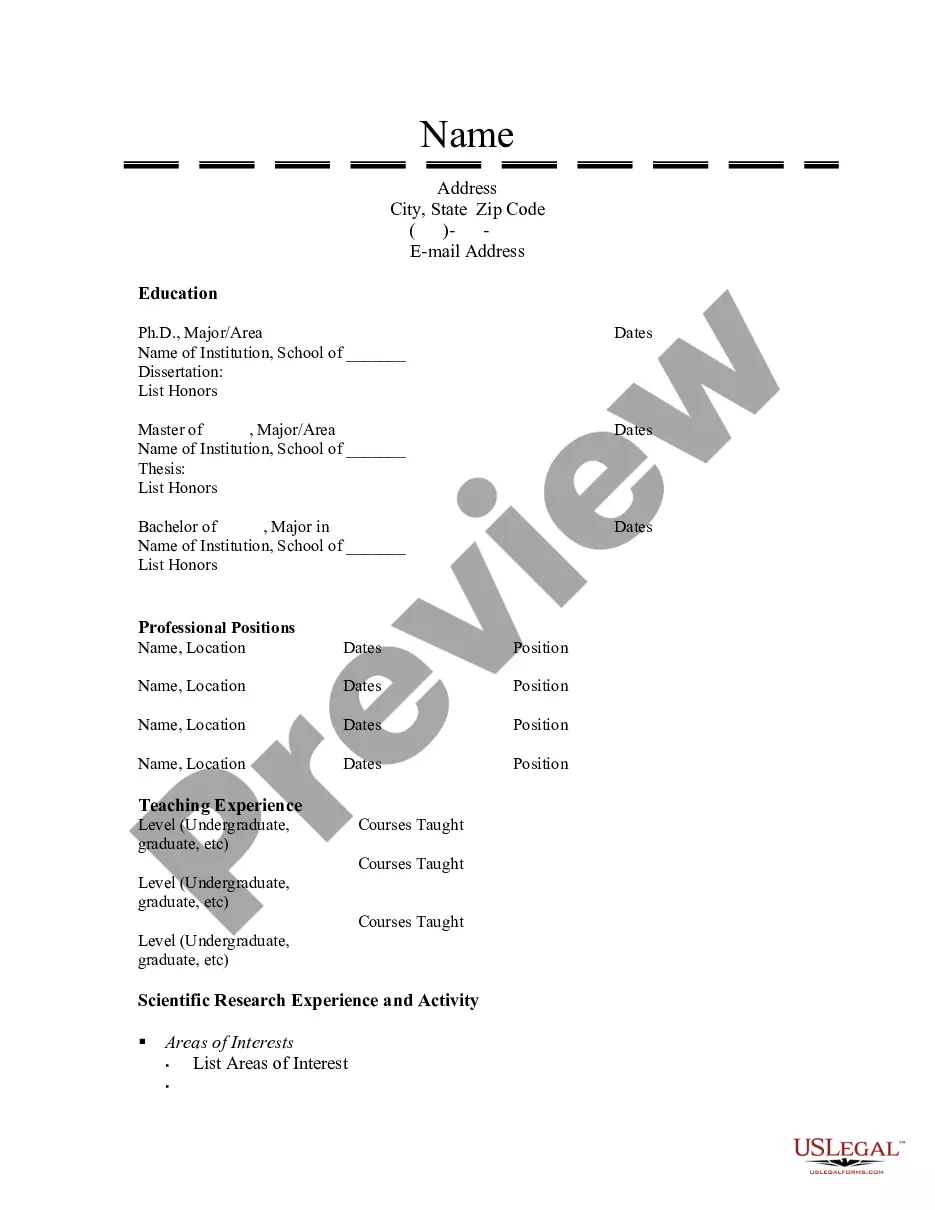
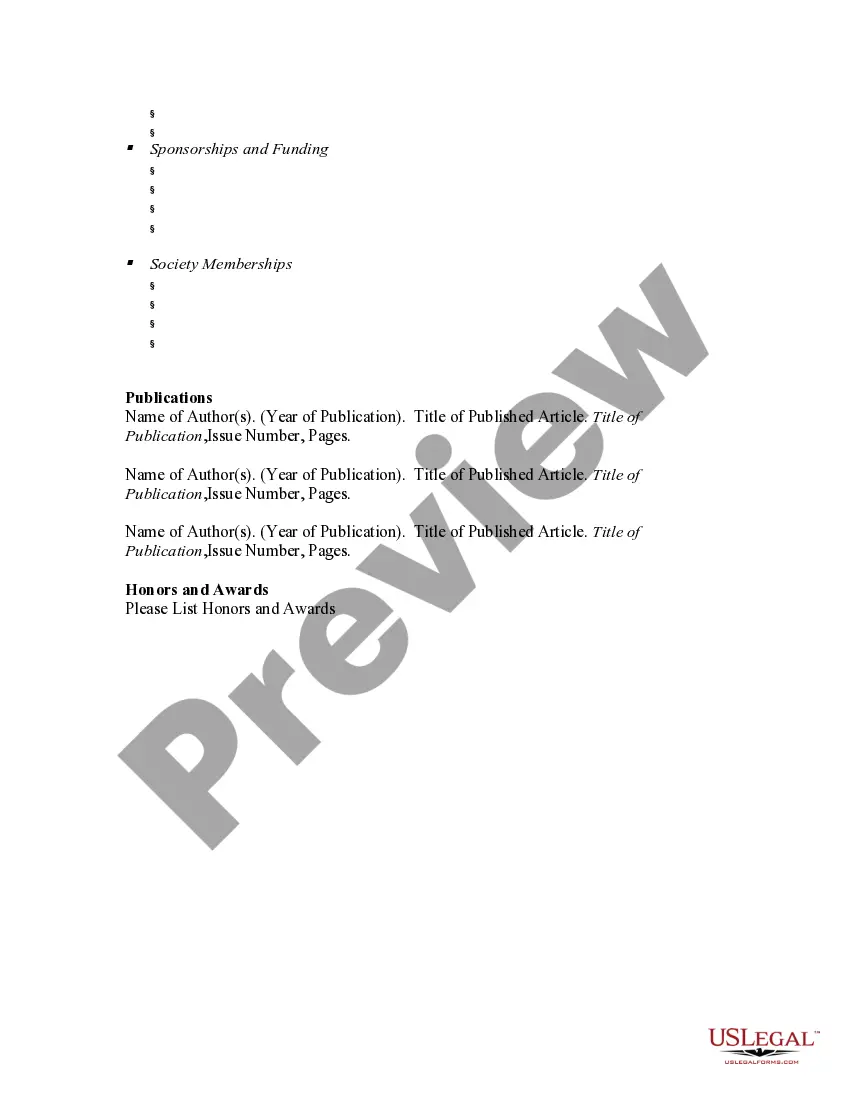
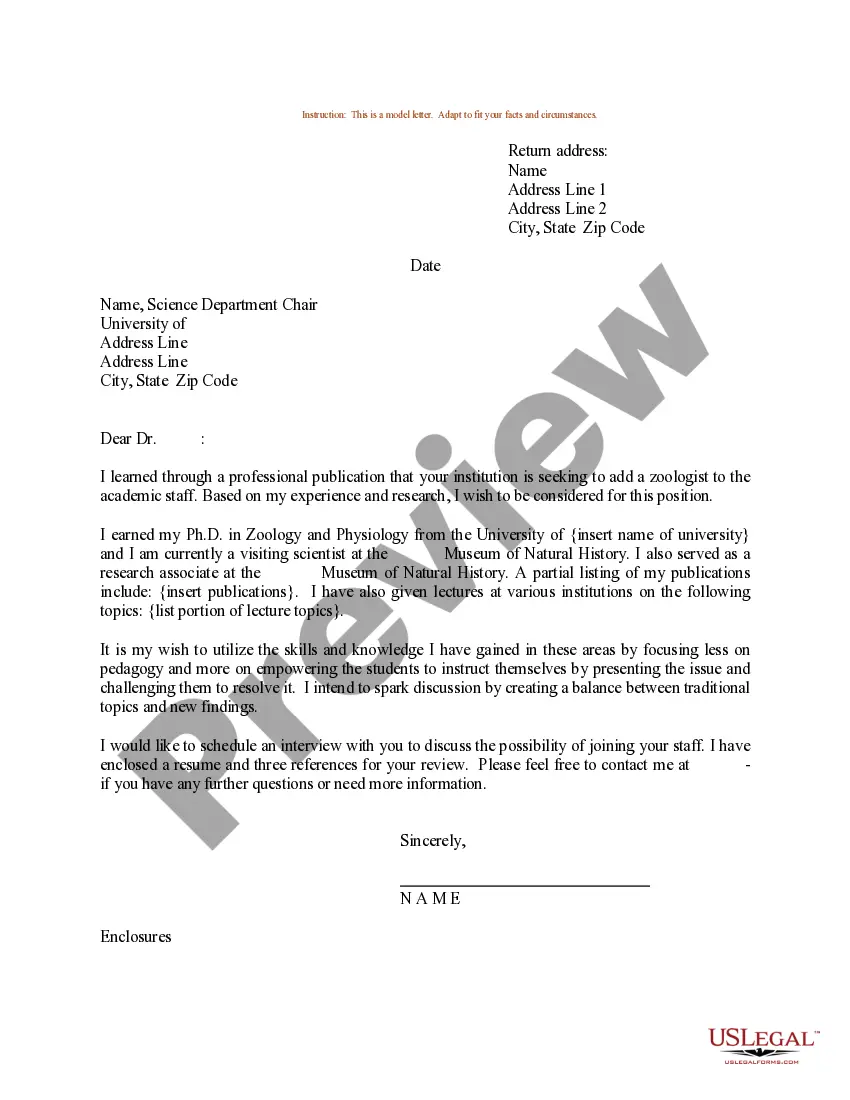
North Carolina Resume for Zoologist
Description
Get your form ready online
Our built-in tools help you complete, sign, share, and store your documents in one place.
Make edits, fill in missing information, and update formatting in US Legal Forms—just like you would in MS Word.
Download a copy, print it, send it by email, or mail it via USPS—whatever works best for your next step.
Sign and collect signatures with our SignNow integration. Send to multiple recipients, set reminders, and more. Go Premium to unlock E-Sign.
If this form requires notarization, complete it online through a secure video call—no need to meet a notary in person or wait for an appointment.
We protect your documents and personal data by following strict security and privacy standards.

Make edits, fill in missing information, and update formatting in US Legal Forms—just like you would in MS Word.

Download a copy, print it, send it by email, or mail it via USPS—whatever works best for your next step.

Sign and collect signatures with our SignNow integration. Send to multiple recipients, set reminders, and more. Go Premium to unlock E-Sign.

If this form requires notarization, complete it online through a secure video call—no need to meet a notary in person or wait for an appointment.

We protect your documents and personal data by following strict security and privacy standards.
Looking for another form?




How to fill out Resume For Zoologist?
Selecting the appropriate legal document format can be challenging.
Clearly, there are numerous templates accessible online, but how can you find the legal form you require.
Utilize the US Legal Forms website. This service offers thousands of templates, including the North Carolina Resume for Zoologist, suitable for both professional and personal needs. All documents are verified by experts and comply with state and federal regulations.
If the form does not meet your needs, use the Search field to find the correct form. Once you are confident that the form is appropriate, click the Purchase now button to acquire the form. Choose the payment plan you prefer and provide the required information. Create your account and pay for your order using your PayPal account or credit card. Select the file format and download the legal document to your device. Complete, edit, print, and sign the acquired North Carolina Resume for Zoologist. US Legal Forms is the largest repository of legal forms where you can find various document templates. Use the service to obtain professionally crafted paperwork that complies with state regulations.
- If you are already registered, sign in to your account and click the Download button to obtain the North Carolina Resume for Zoologist.
- Use your account to review the legal forms you have previously ordered.
- Navigate to the My documents section of your account and retrieve another copy of the document you require.
- If you are a new user of US Legal Forms, here are simple instructions for you to follow.
- First, make sure you have selected the correct form for your region/area.
- You can view the form using the Preview button and read the form description to ensure it is suitable for you.
Form popularity
FAQ
An animal care resume summary provides a brief overview of your qualifications and experience in animal care. It typically includes your skills in handling animals, knowledge of animal behavior, and any relevant certifications. Using a North Carolina resume for zoologists, you can create a compelling summary that showcases your passion for animal welfare and your commitment to conservation.
To become a Zoologist, you typically need a bachelor's degree in zoology, biology, or a related field. Many positions also require hands-on experience with animals, which can be gained through internships, volunteering, or lab work. Creating a North Carolina resume for zoologists that emphasizes your relevant experience will help you stand out to employers seeking knowledgeable candidates.
A Zoologist studies animals and their behavior, physiology, and habitats. They conduct research to understand animal species and contribute to conservation efforts. In North Carolina, a well-crafted resume for zoologists can highlight your skills in research, data analysis, and animal care, making you a strong candidate for job opportunities in wildlife research and education.
For most zoologist jobs, you need at least a bachelor's degree in a relevant scientific subject such as zoology, biology, environmental biology, animal behaviour or something similar. You can obtain a relevant degree from most universities, and entry requirements tend to be similar.
Wildlife biologists and zoologists require a bachelor's degree as a minimum. The majority of schools offer programs in wildlife biology, zoology or ecology. Good preparation for this career would entail having an undergraduate degree in biology with courses in wildlife biology or zoology.
Best Countries to Study Zoology AbroadAustralia. Reason: rich biodiversity, access to technology, and opportunity to learn alongside experts.Germany. Reason: free tuition and practical learning.Taiwan.Japan.China.South Africa.Malaysia.16-Nov-2021
Despite the name, a degree in zoology will do more than just qualify you to work in a zoo. The science, research, data, analysis, and behavioural skills you'll learn can make you attractive to a wide variety of organisations including charities, government agencies, universities, and research centres.
There are numerous career opportunities for candidates completing their BSc, MSc, and Ph. D. in Zoology in the public and private sectors. Candidates find jobs as Animal Behaviourist, Conservationist, Wildlife Biologist, Zoo Curator, Wildlife Educator, Zoology faculty, Forensic experts, lab technicians, Veterinarians.
The bachelor's program at NC State was ranked #16 on College Factual's Best Schools for zoology list. It is also ranked #1 in North Carolina.
Job OutlookEmployment of zoologists and wildlife biologists is projected to grow 5 percent from 2020 to 2030, slower than the average for all occupations. Despite limited employment growth, about 1,700 openings for zoologists and wildlife biologists are projected each year, on average, over the decade.