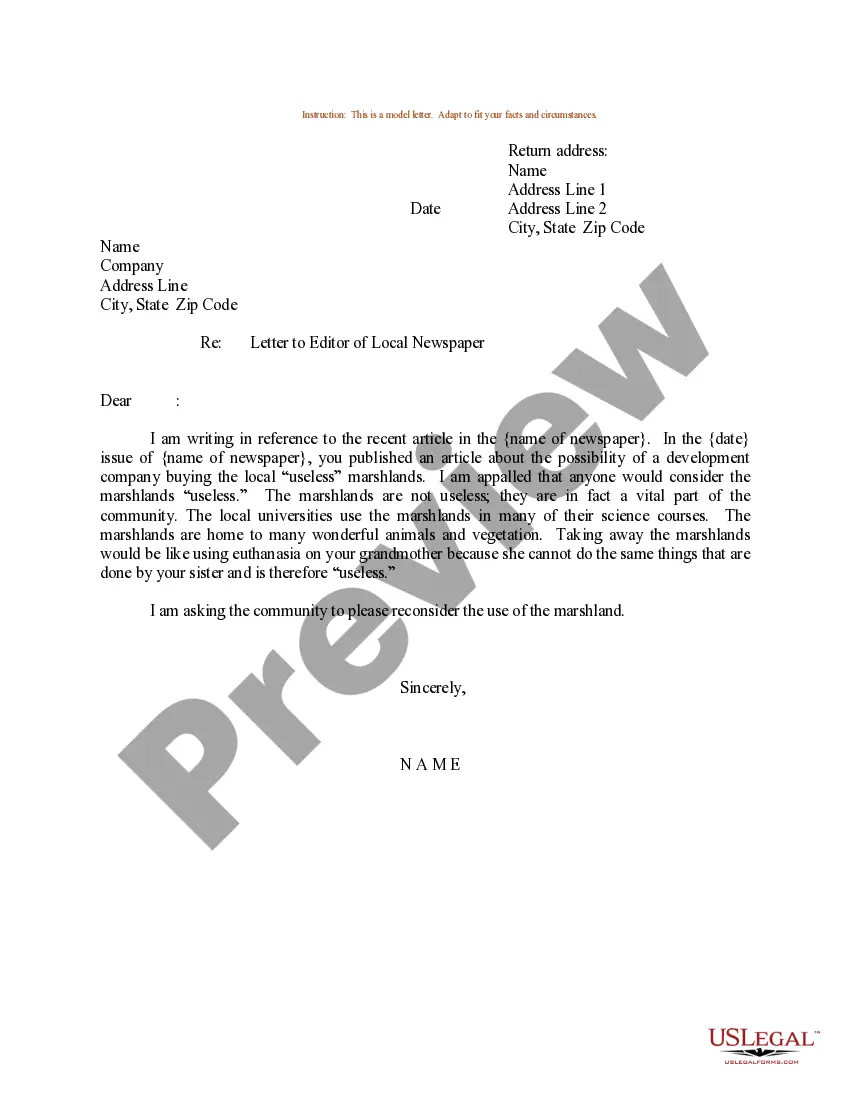
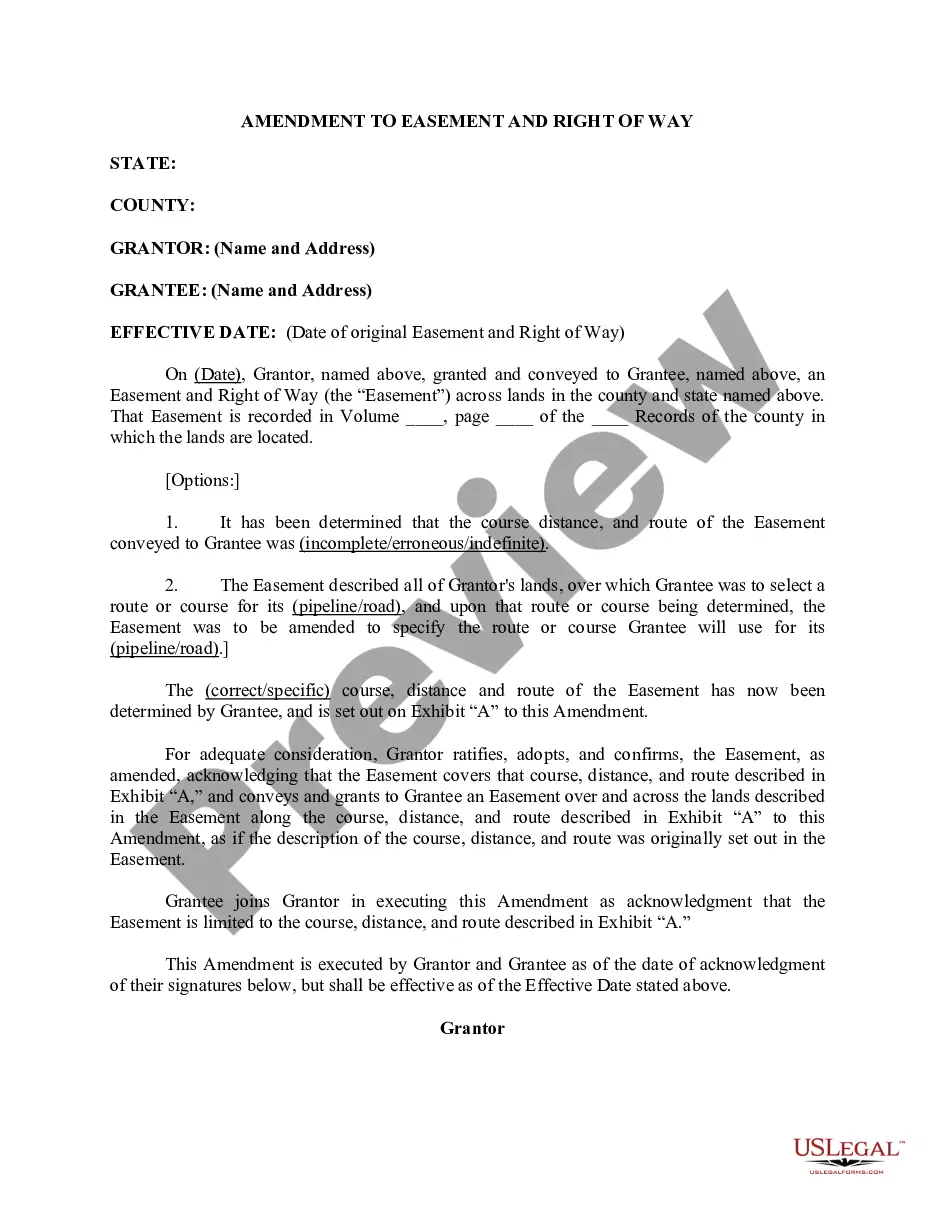
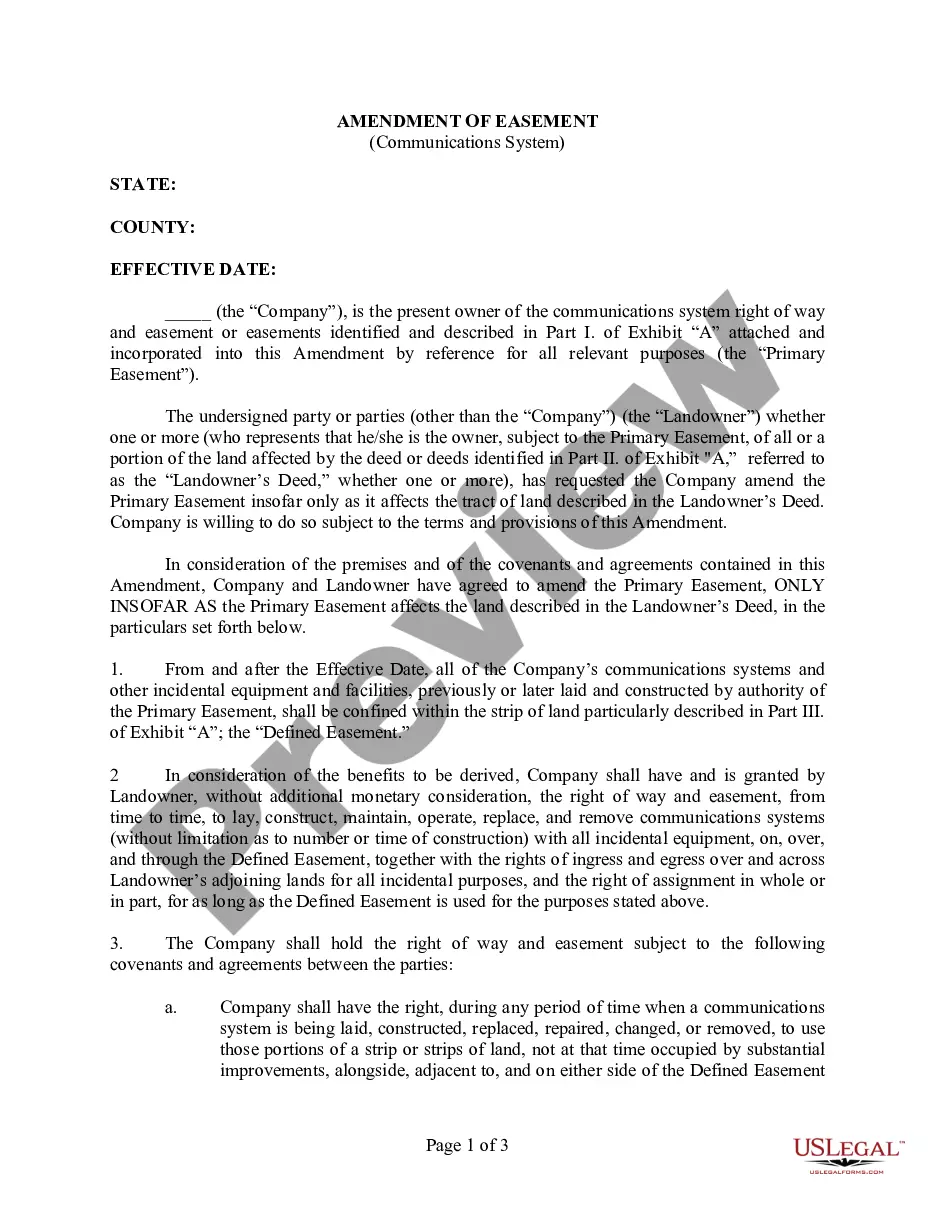
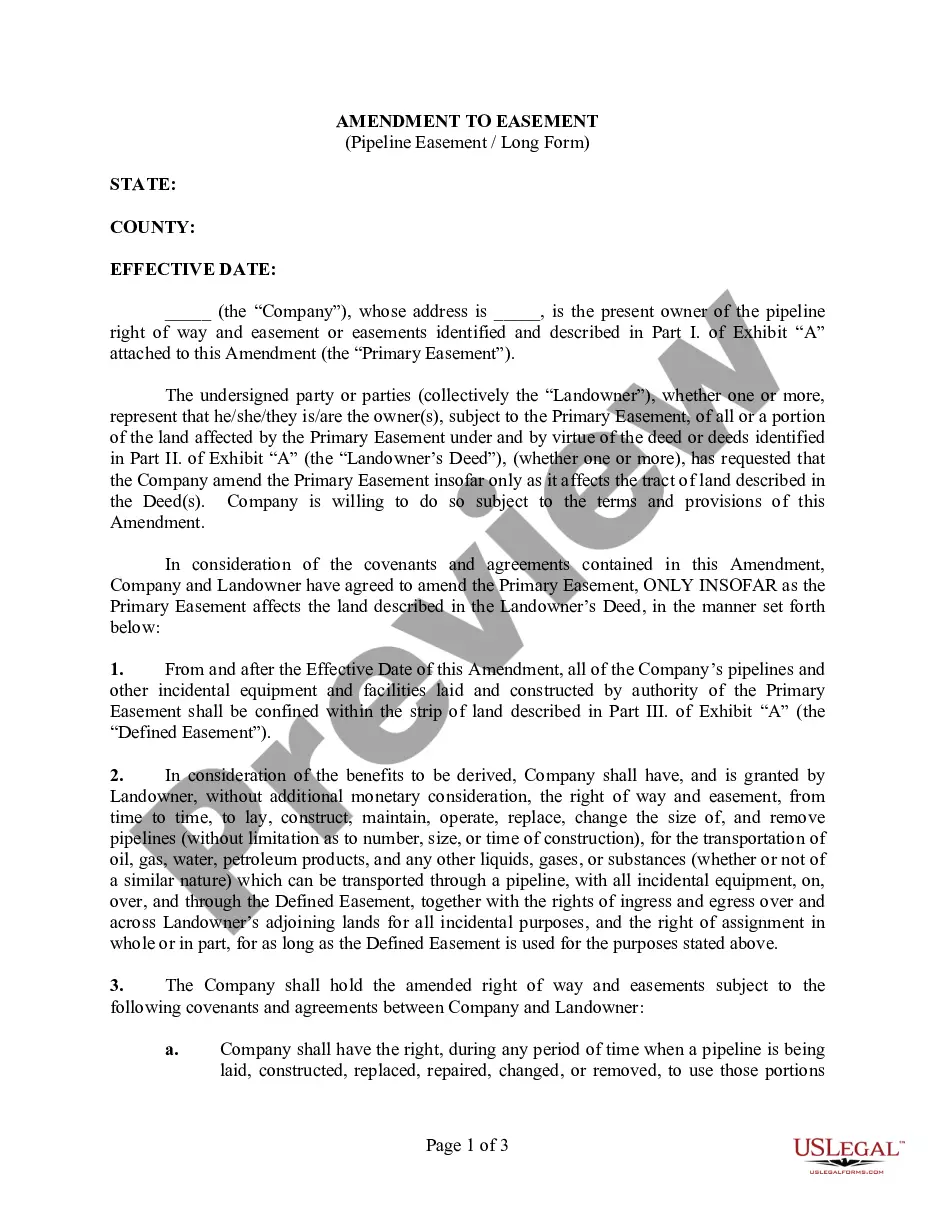
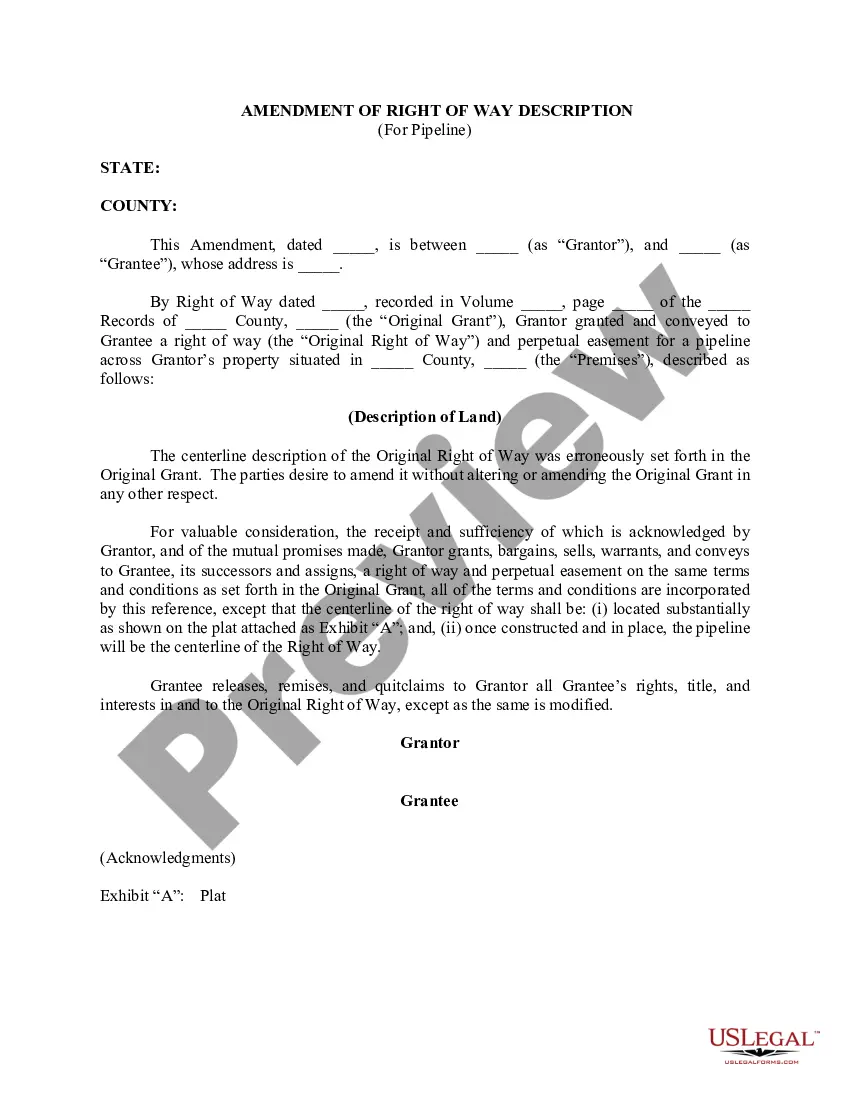
North Carolina Amendment to Easement (Powerline Easement)
Description
Get your form ready online
Our built-in tools help you complete, sign, share, and store your documents in one place.
Make edits, fill in missing information, and update formatting in US Legal Forms—just like you would in MS Word.
Download a copy, print it, send it by email, or mail it via USPS—whatever works best for your next step.
Sign and collect signatures with our SignNow integration. Send to multiple recipients, set reminders, and more. Go Premium to unlock E-Sign.
If this form requires notarization, complete it online through a secure video call—no need to meet a notary in person or wait for an appointment.
We protect your documents and personal data by following strict security and privacy standards.

Make edits, fill in missing information, and update formatting in US Legal Forms—just like you would in MS Word.

Download a copy, print it, send it by email, or mail it via USPS—whatever works best for your next step.

Sign and collect signatures with our SignNow integration. Send to multiple recipients, set reminders, and more. Go Premium to unlock E-Sign.

If this form requires notarization, complete it online through a secure video call—no need to meet a notary in person or wait for an appointment.

We protect your documents and personal data by following strict security and privacy standards.
Looking for another form?




How to fill out Amendment To Easement (Powerline Easement)?
Choosing the best legitimate record web template might be a struggle. Of course, there are tons of web templates accessible on the Internet, but how can you get the legitimate kind you need? Make use of the US Legal Forms site. The support gives a large number of web templates, including the North Carolina Amendment to Easement (Powerline Easement), that you can use for company and private demands. All of the forms are inspected by professionals and meet state and federal specifications.
When you are presently listed, log in to your profile and click on the Down load key to have the North Carolina Amendment to Easement (Powerline Easement). Use your profile to look throughout the legitimate forms you may have ordered earlier. Proceed to the My Forms tab of the profile and have one more copy of your record you need.
When you are a whole new customer of US Legal Forms, allow me to share simple directions that you can stick to:
- Initially, be sure you have chosen the proper kind for the town/region. It is possible to examine the shape utilizing the Preview key and browse the shape outline to guarantee this is basically the right one for you.
- In the event the kind will not meet your requirements, utilize the Seach industry to find the correct kind.
- Once you are certain that the shape is suitable, click on the Acquire now key to have the kind.
- Pick the pricing program you desire and enter in the necessary information. Create your profile and pay for your order making use of your PayPal profile or bank card.
- Choose the submit formatting and acquire the legitimate record web template to your gadget.
- Full, edit and print out and sign the received North Carolina Amendment to Easement (Powerline Easement).
US Legal Forms may be the largest catalogue of legitimate forms that you will find various record web templates. Make use of the company to acquire expertly-manufactured files that stick to condition specifications.
Form popularity
FAQ
Property owners may not interfere with the purpose of an easement. For example, if a beneficiary electric company has wires strung across your yard, you can not take them down or block the workers' path. Violators may be held liable for damages to the easement holder.
Permanent Utility Easements (PUEs); Machiavelli's taking The Department of Transportation (DOT) often condemns land along its highway projects for utility providers to place the equipment needed to operate their utilities and serve their customers. The DOT does so by taking what are called permanent utility easements.
The short answer is ? the owner of the easement is responsible for maintaining the easement.
What is the State's minimum right-of-way width? The NCDOT requires 45 feet for local subdivision roads. Collector roads require 50 feet; five lane highways require 80 feet and cul-de-sacs must have a 50 foot right of way radius.
The North Carolina courts have defined an easement as ?a non-possessory right to make limited use of land owned by another without taking a part thereof.?
Right-of-way is a specific form of easement. An easement is usually given across land for a singular purpose such as for a utility line. An easement for ingress and egress (the right to travel) may be permanent but is often temporary such as in a construction access easement.
Generally, it is the duty of the dominant estate to maintain and repair the easement. Likewise, the dominant estate must make the necessary repairs to prevent the dominant estate from created an annoyance or nuisance to the servient estate.
In North Carolina, there is a presumption that the use of a road is permissive. Therefore, a landlocked owner must prove permission to use the road was neither given nor sought.