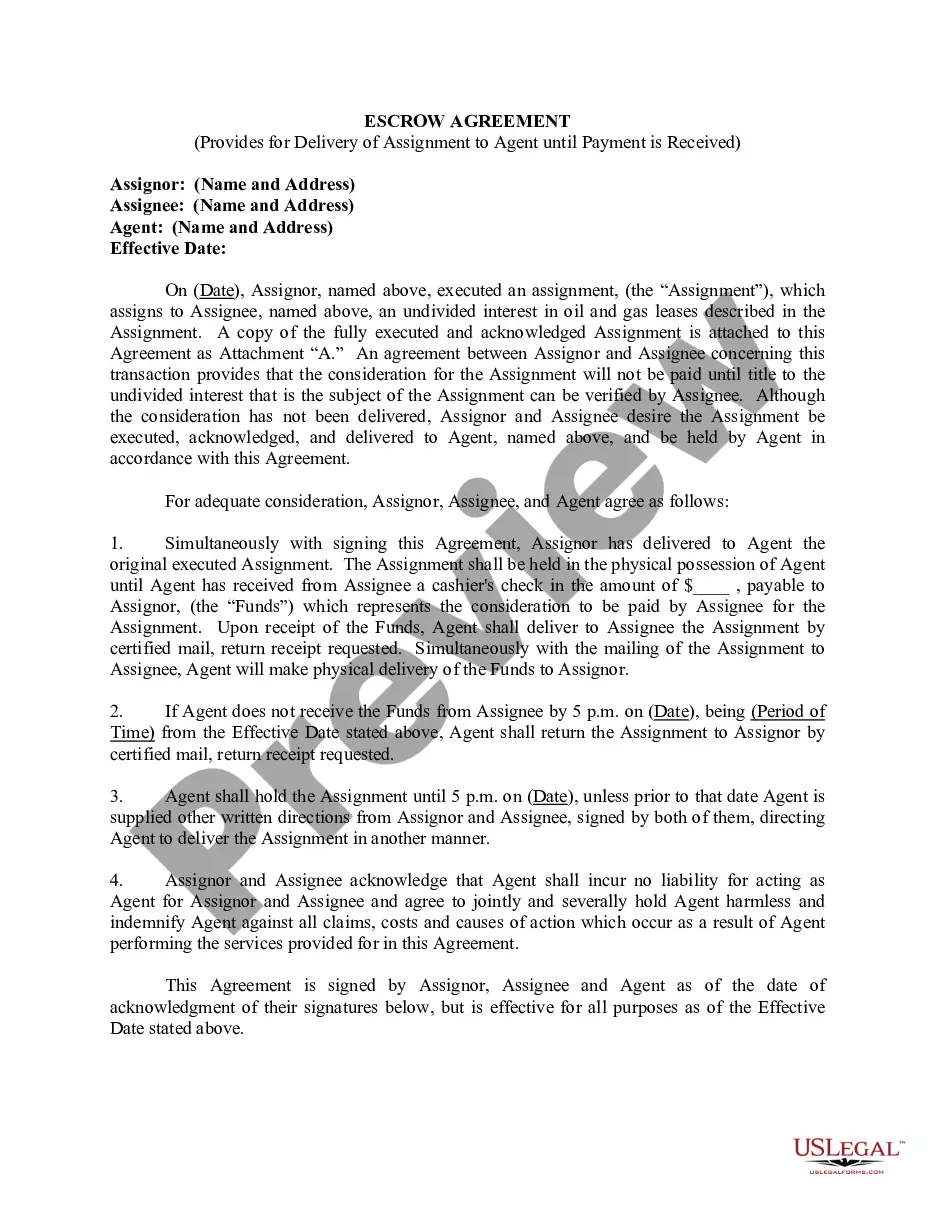
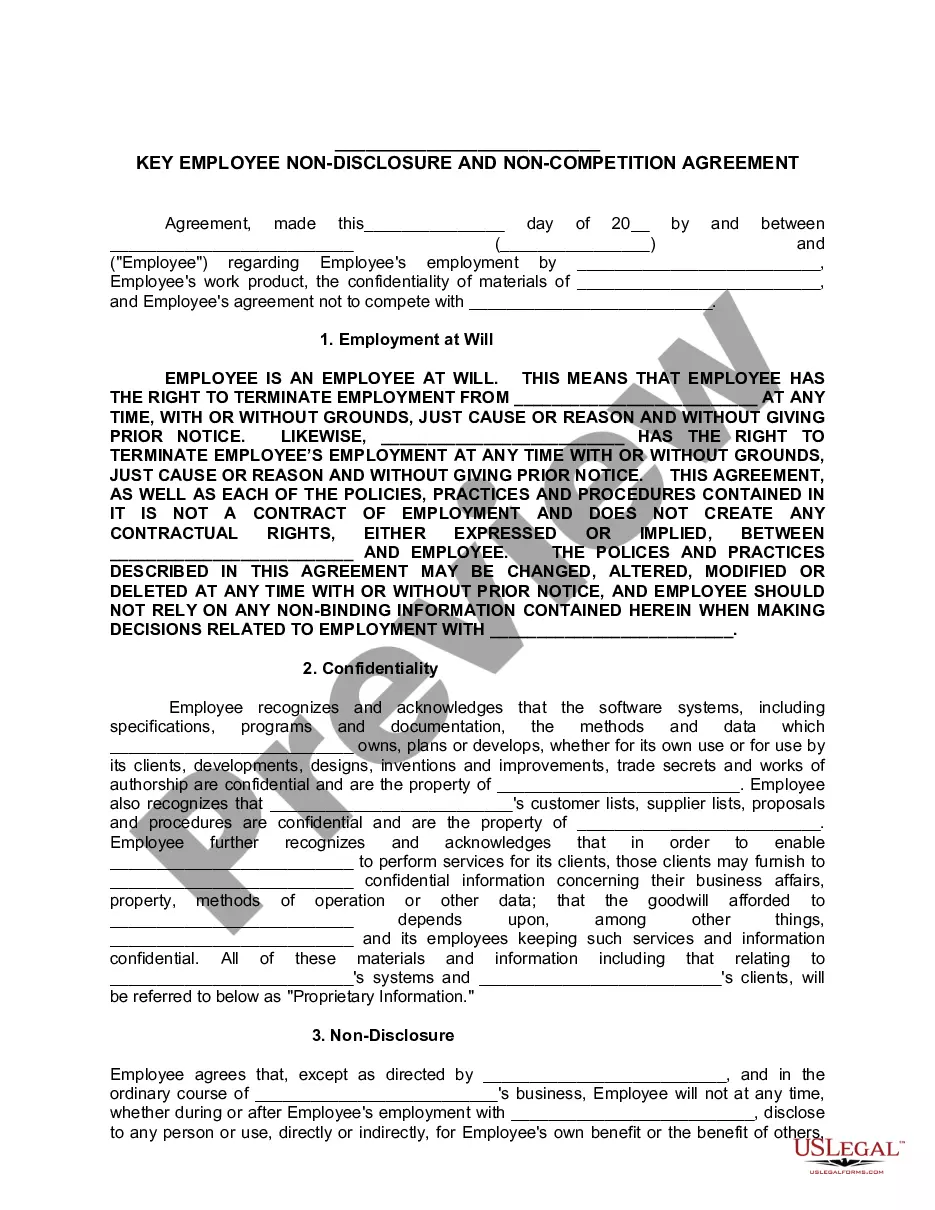
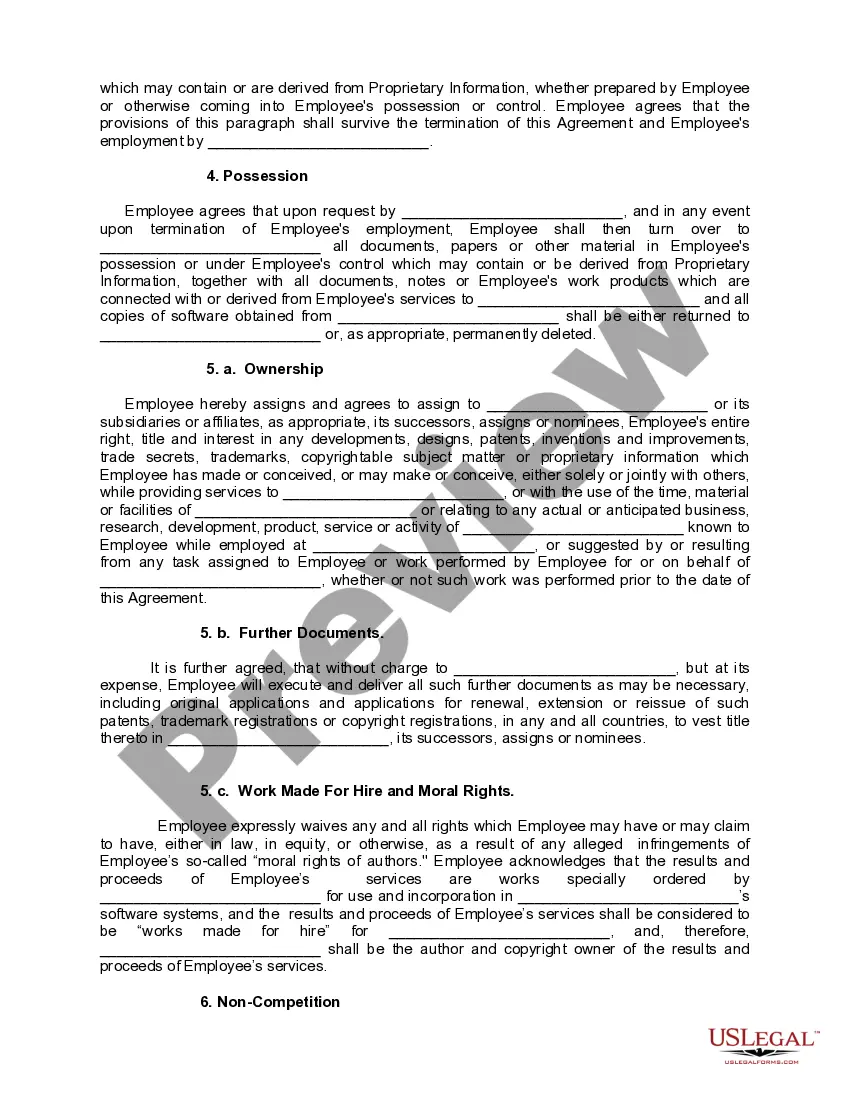
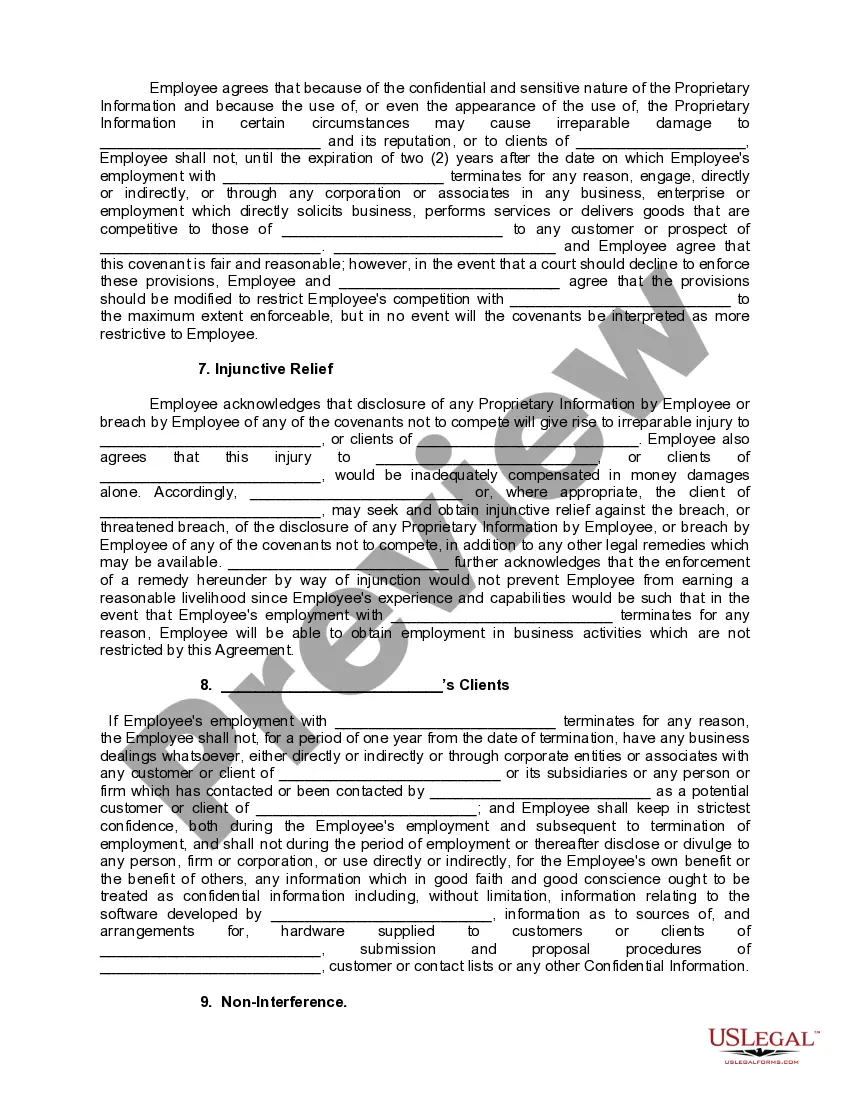
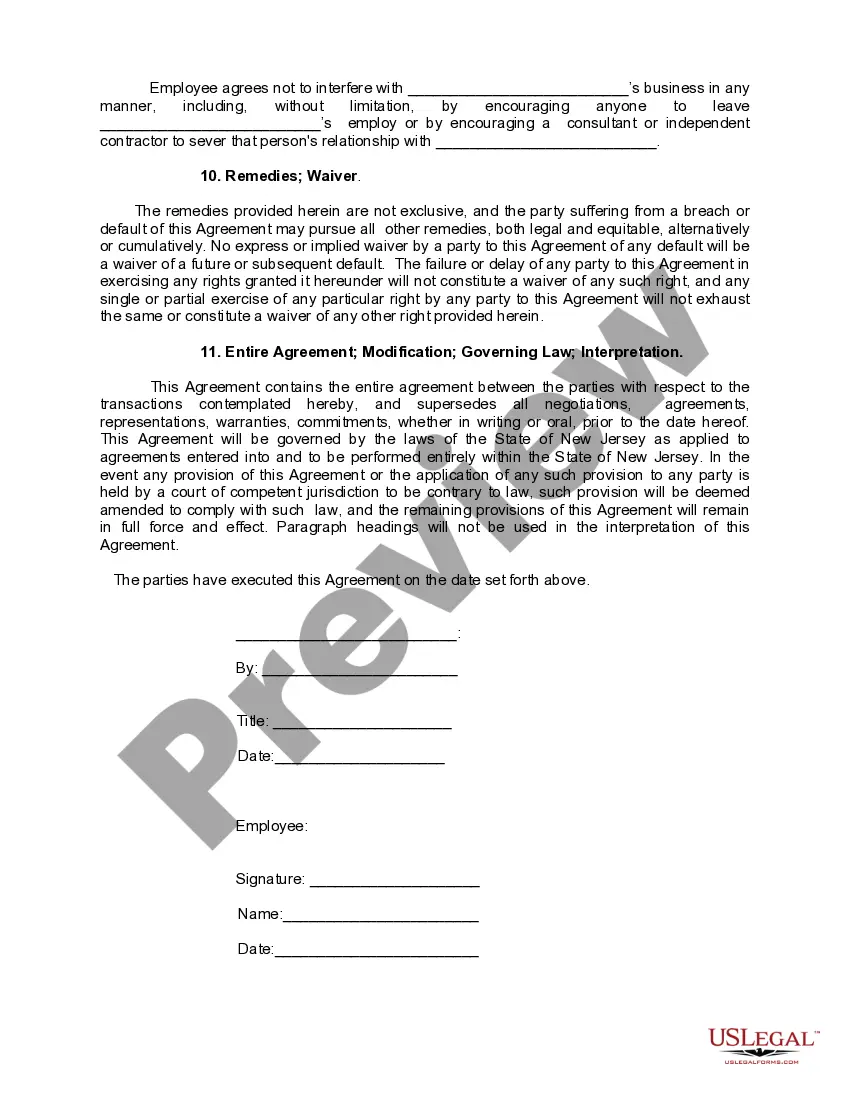
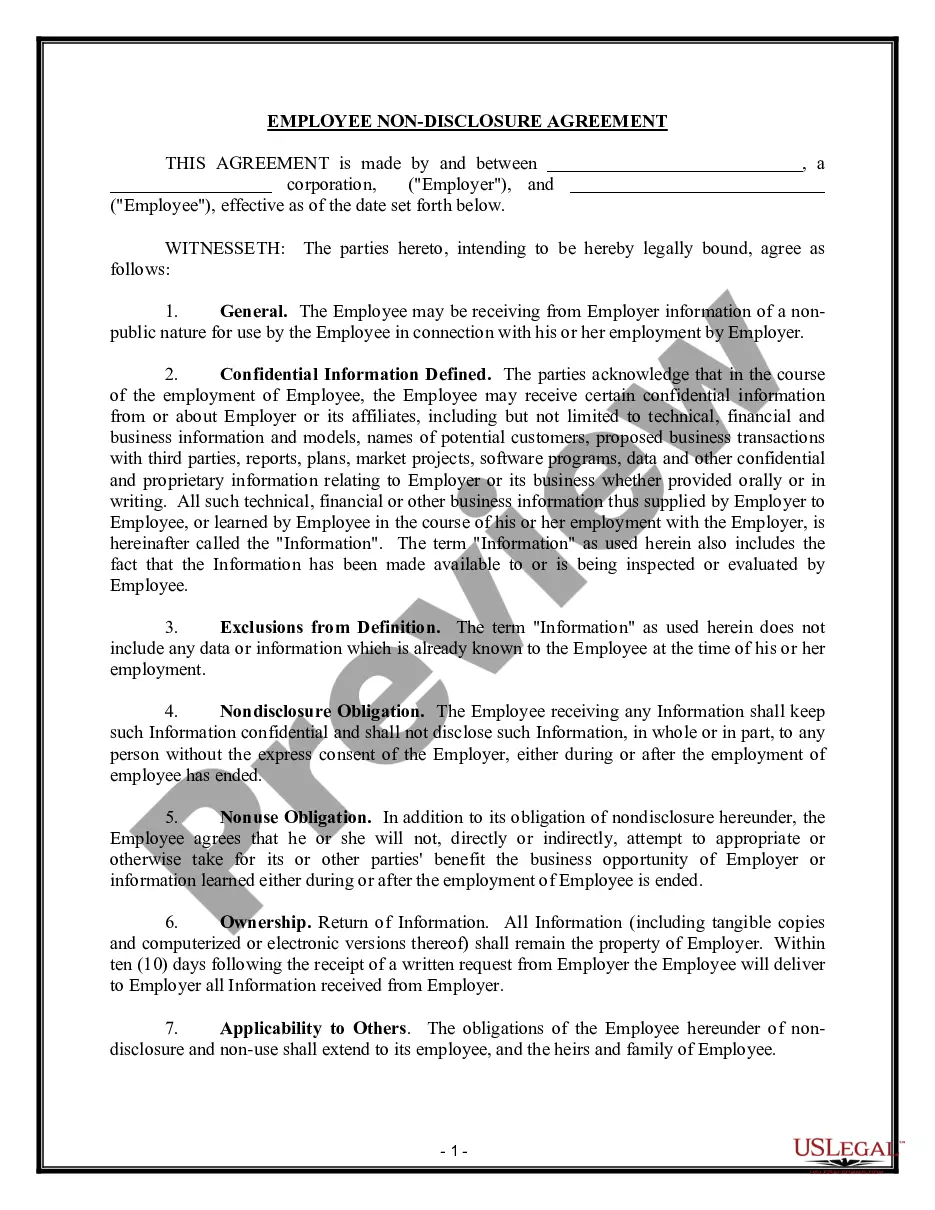
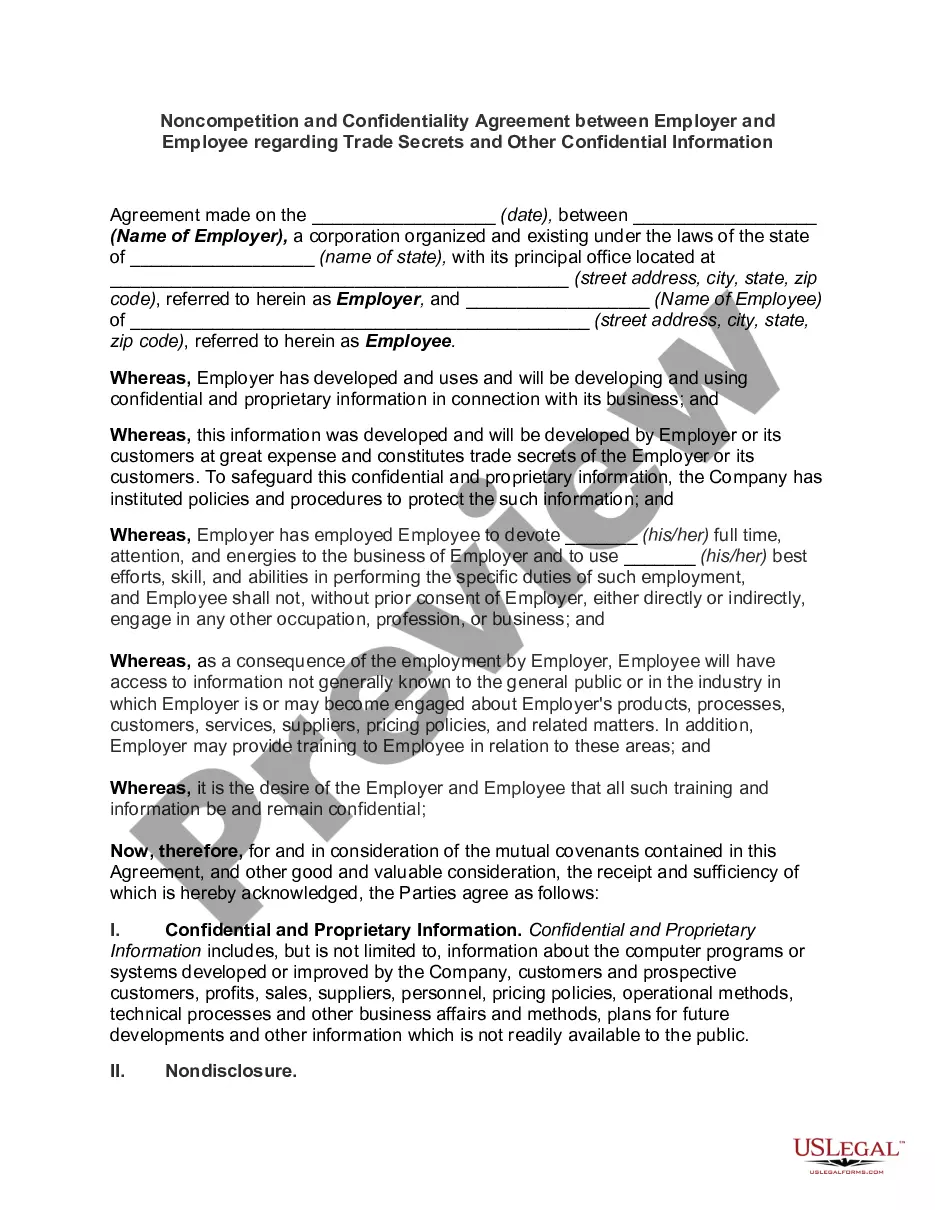
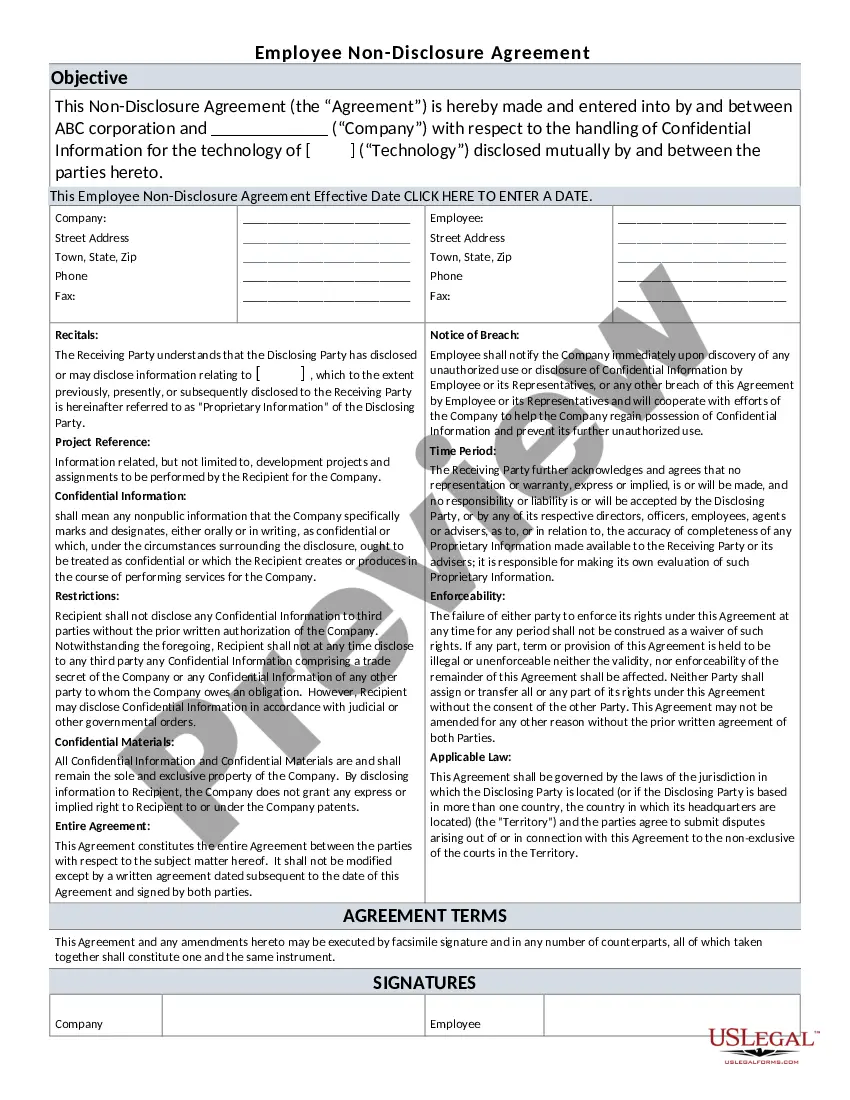
This form is a Key Employee Non-Disclosure and Non-Competition Agreement. The form provides that this is an employment at will and the employee has the right to terminate his/her employment at any time. The employee also agrees to keep all information obtained as a result of his/her employment confidential. The employee will not interfere with the employer's business in any manner, including, encouraging anyone to leave the employer's company or by encouraging a consultant to sever the relationship with the employer.
North Carolina Key Employee Nondisclosure and Noncompetition Agreement
Category:
State:
Multi-State
Control #:
US-KWP-0038
Format:
Word;
Rich Text
Instant download
Description
Free preview
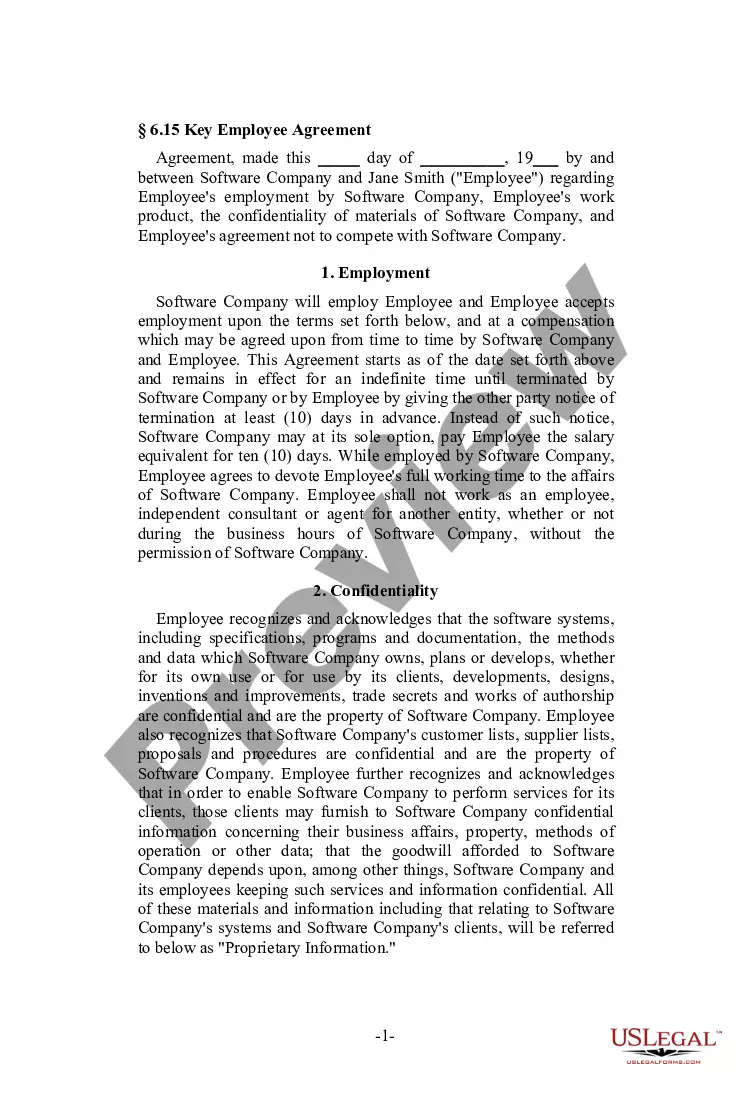
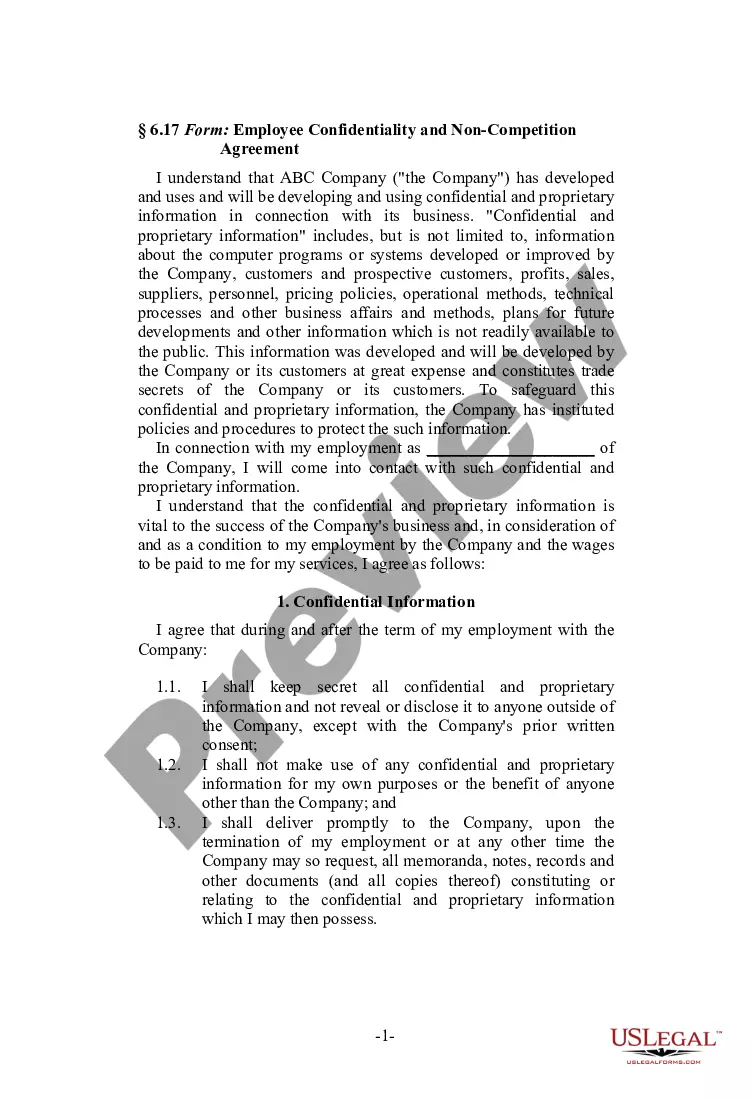

How to fill out Key Employee Nondisclosure And Noncompetition Agreement?
Are you currently in a location that requires documentation for either business or personal activities almost every day? There are numerous legitimate document templates available online, but finding reliable ones is not easy. US Legal Forms offers a vast array of form templates, including the North Carolina Key Employee Nondisclosure and Noncompetition Agreement, which can be tailored to meet state and federal requirements.
If you are already familiar with the US Legal Forms website and have an account, simply Log In. After that, you can download the North Carolina Key Employee Nondisclosure and Noncompetition Agreement template.
If you do not have an account and wish to start using US Legal Forms, follow these instructions: Get the form you need and ensure it is for the correct city/state. Use the Review button to inspect the form. Read the description to ensure you have selected the right form. If the form is not what you are looking for, use the Search field to find the form that fits your needs and requirements. Once you find the correct form, click on Get now. Choose the pricing plan you want, fill in the required information to create your account, and pay for the order using your PayPal or credit card. Select a convenient file format and download your copy.
- Find all of the document templates you have purchased in the My documents section. You can obtain an additional copy of the North Carolina Key Employee Nondisclosure and Noncompetition Agreement at any time, if needed. Just click on the desired form to download or print the document template.
- Utilize US Legal Forms, one of the most comprehensive collections of legal forms, to save time and prevent mistakes. The service offers professionally crafted legal document templates that can be used for a variety of purposes.
- Create an account on US Legal Forms and start making your life a little easier.
Form popularity
FAQ
Yes, North Carolina allows non-compete agreements, but there are specific guidelines to follow. These agreements must be reasonable in terms of duration, geographic area, and scope of activity. It’s important to ensure that a North Carolina Key Employee Nondisclosure and Noncompetition Agreement complies with these guidelines to be enforceable. Consulting with a legal expert can provide clarity on your specific situation.
Filling out a non-disclosure agreement for employees requires careful attention to detail. Begin by listing the employee's name and the date of signing. Clearly state the confidential information being protected and the obligations of both parties. If you are utilizing a North Carolina Key Employee Nondisclosure and Noncompetition Agreement, ensure you incorporate any necessary clauses specific to North Carolina law.
To write a non-disclosure agreement for an employee, start by including the employee's name and position. Then, describe the types of confidential information the employee may access. Include terms that outline the duration of the agreement and the consequences of breach. For a North Carolina Key Employee Nondisclosure and Noncompetition Agreement, tailor the language to align with North Carolina regulations.
Writing a simple NDA involves a few key steps. Begin with the title, stating it is a Non-Disclosure Agreement. Next, define the parties, outline what information is confidential, and set the duration of confidentiality. If you’re creating a North Carolina Key Employee Nondisclosure and Noncompetition Agreement, you should also include relevant state-specific provisions to ensure legal compliance.
To fill out a non-disclosure agreement, start by identifying the parties involved. Clearly outline the confidential information that needs protection. Specify the duration of the agreement and any exceptions that apply. For a North Carolina Key Employee Nondisclosure and Noncompetition Agreement, it's essential to ensure that the terms comply with North Carolina laws.
Yes, North Carolina does allow non-compete agreements, but they must meet certain criteria to be enforceable. The North Carolina Key Employee Nondisclosure and Noncompetition Agreement must be reasonable in terms of time, geographic area, and the scope of activity. To ensure compliance with state laws, consider using a template from US Legal Forms, which can guide you in creating a valid agreement that protects your business interests.
To obtain a non-disclosure agreement, you can start by visiting a reliable legal forms provider like US Legal Forms. They offer templates specifically tailored for a North Carolina Key Employee Nondisclosure and Noncompetition Agreement. Simply choose the appropriate template, customize it to fit your needs, and ensure it complies with North Carolina law. This process allows you to effectively protect your confidential information.