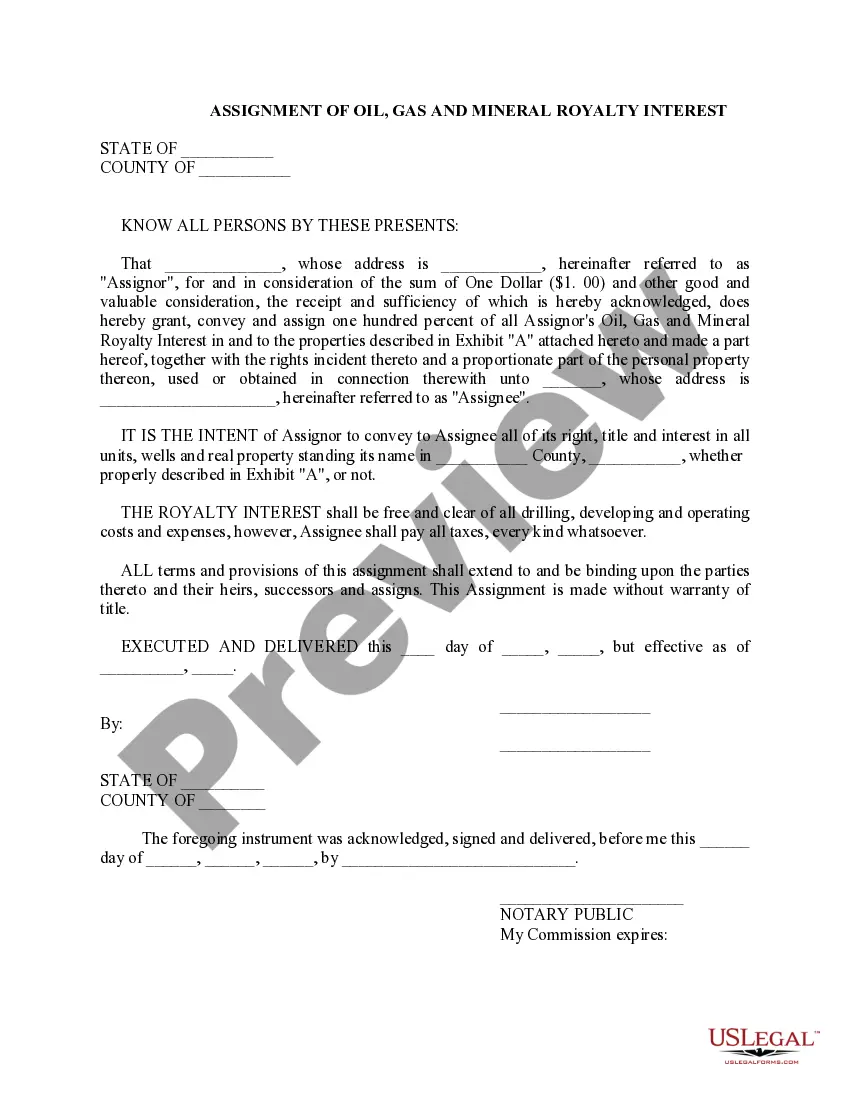
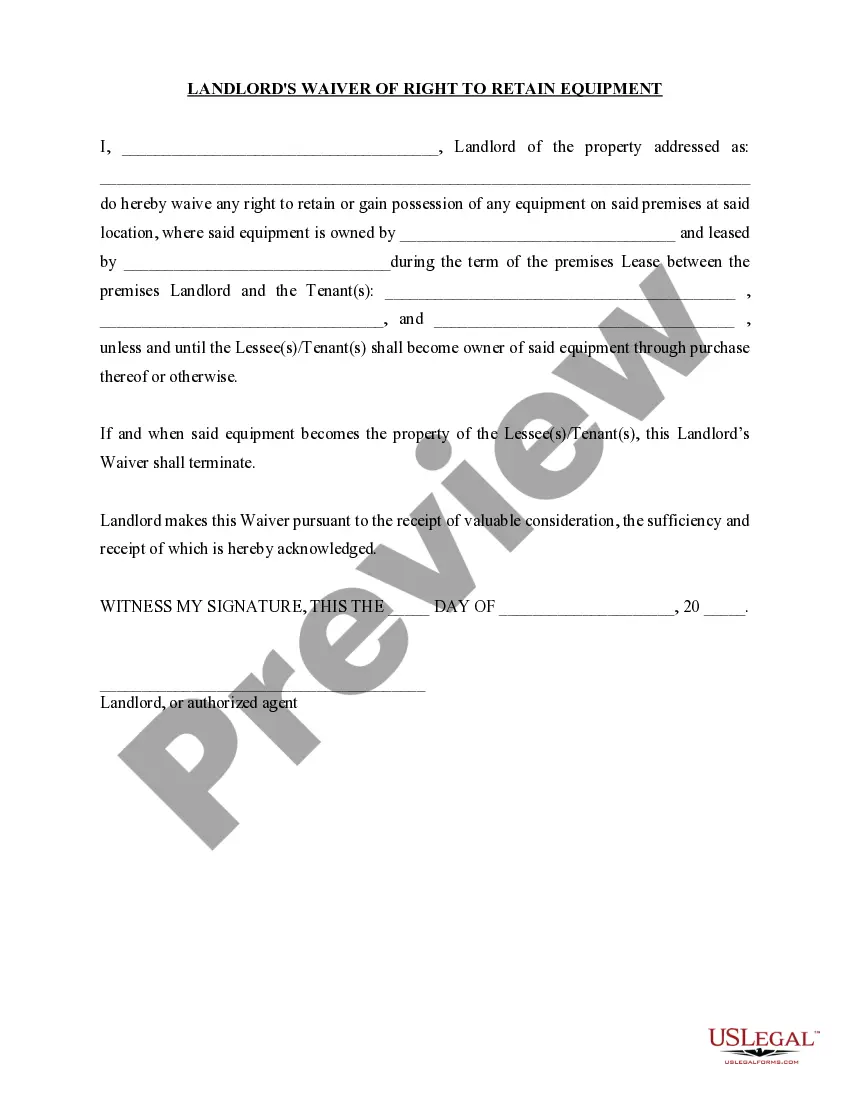
Landlord waives all rights to any equipment leased from a third party by Tenant, until equipment becomes Tenant's property.
North Carolina Landlord's Waiver of right to retain Property
Instant download
Description
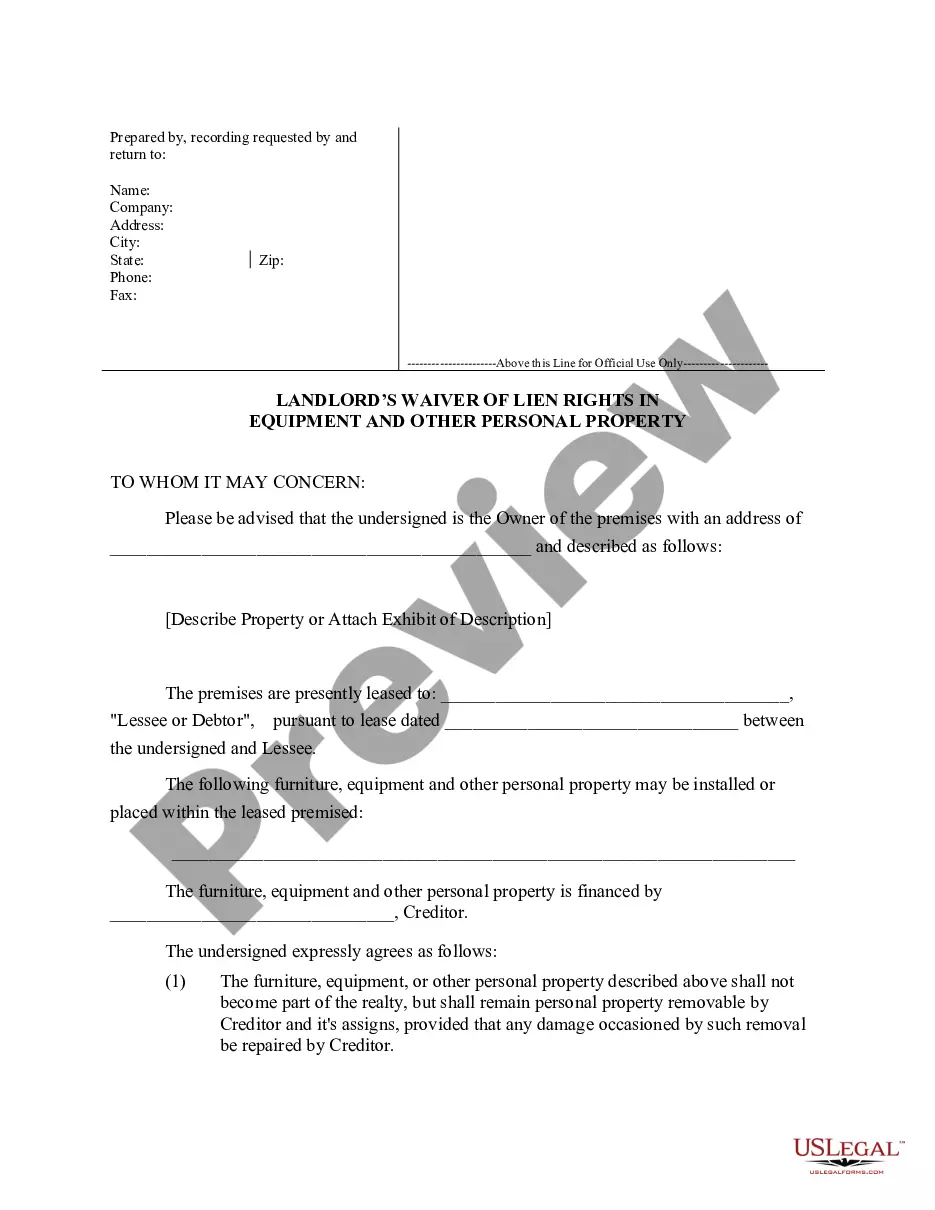
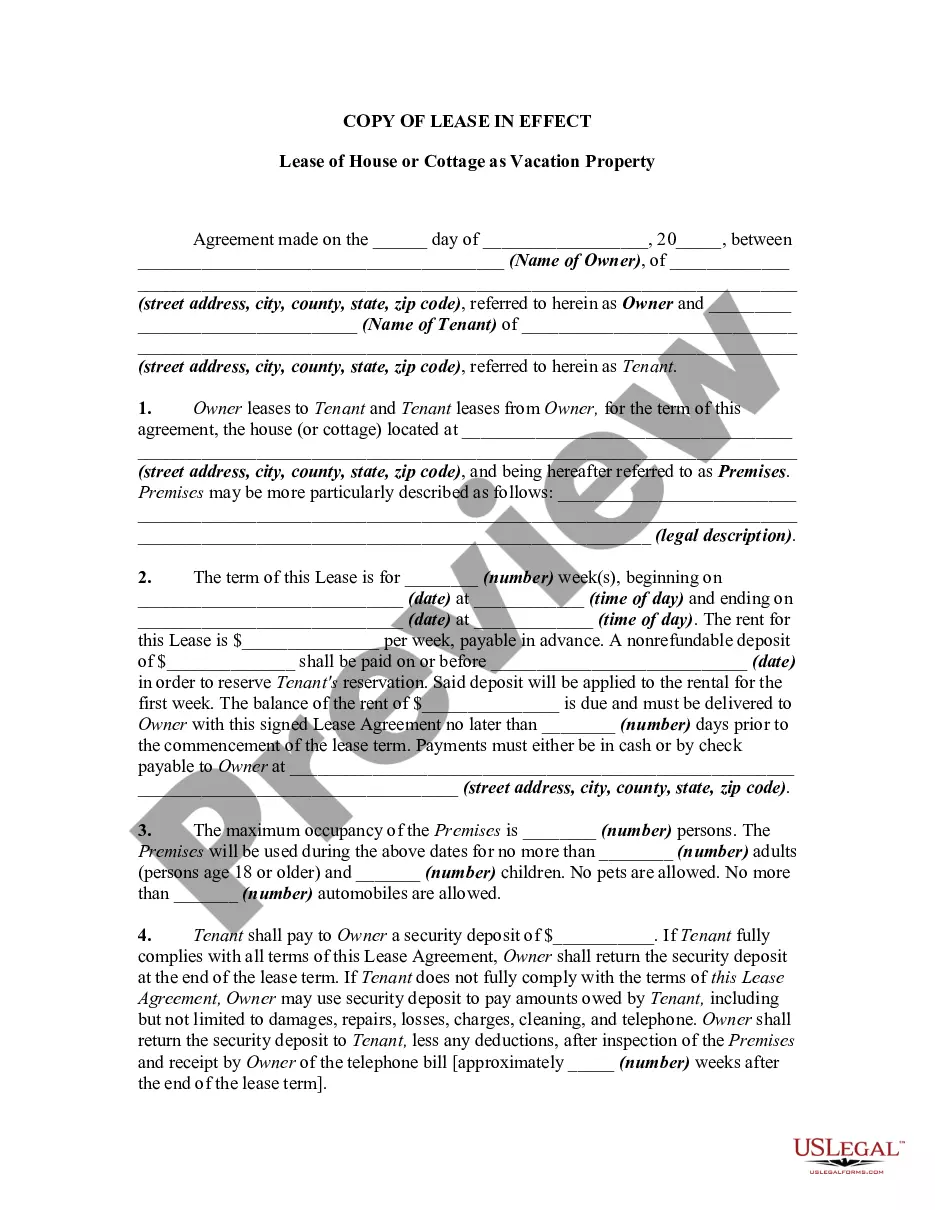
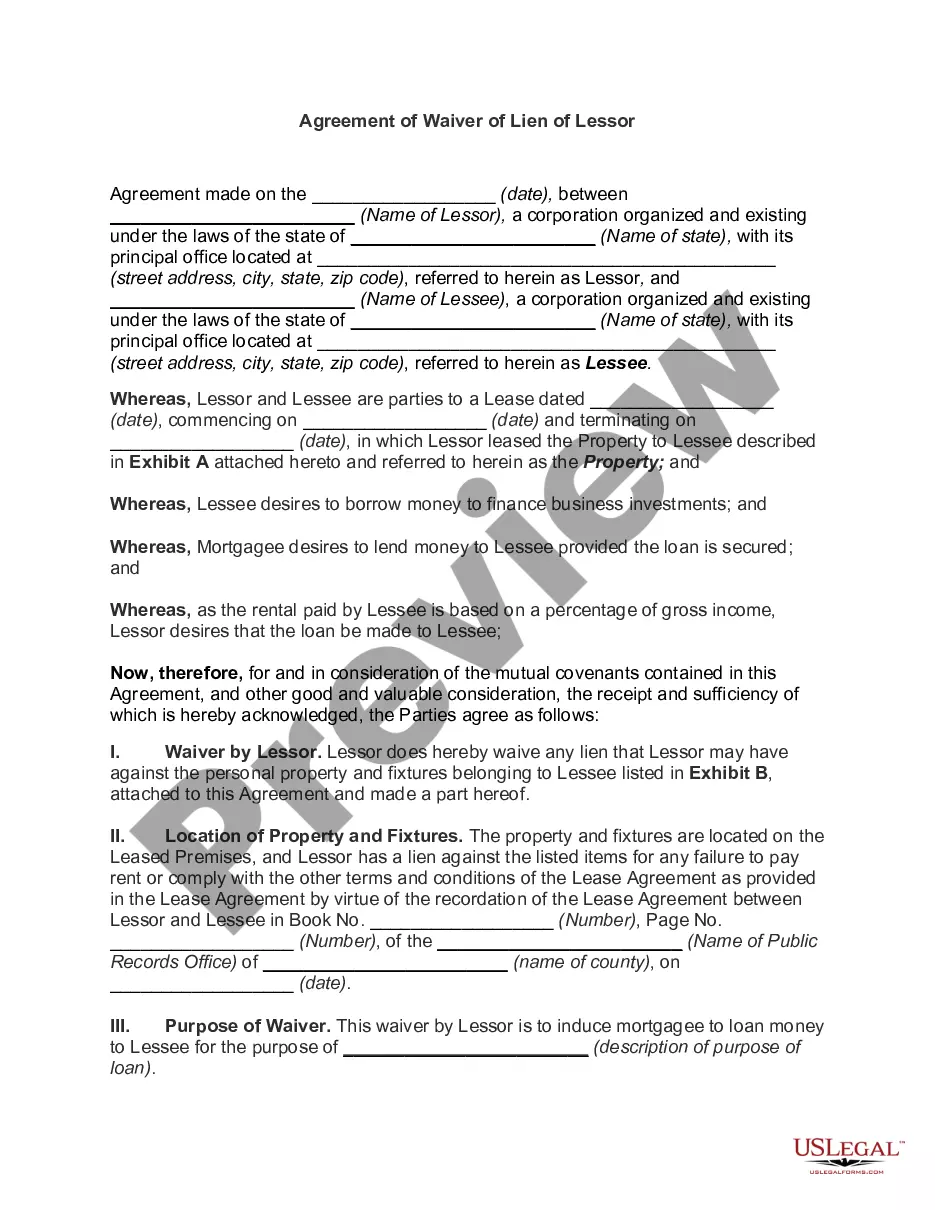
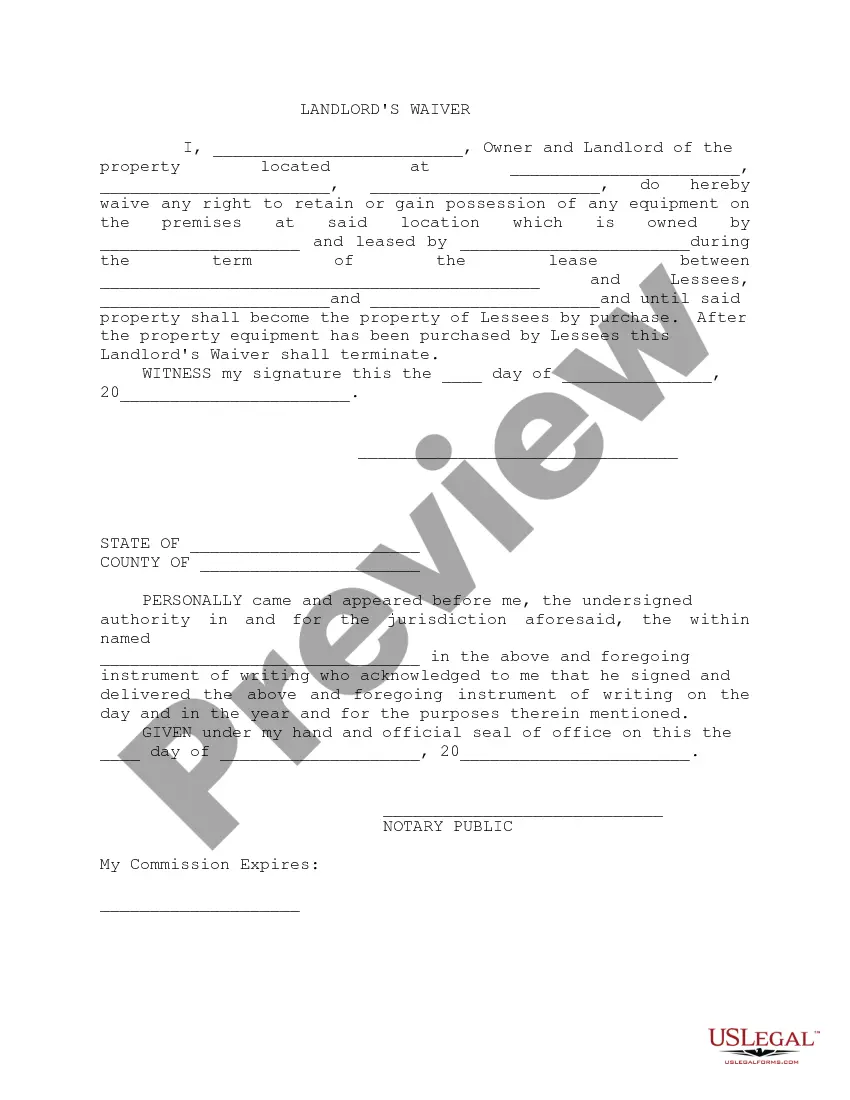
How to fill out Landlord's Waiver Of Right To Retain Property?
Are you presently in the situation where you require documentation for both organizational or personal reasons almost all the time.
There are numerous legal document templates accessible online, but finding ones you can trust is not easy.
US Legal Forms offers a vast collection of template forms, such as the North Carolina Landlord's Waiver of right to retain Property, that are designed to comply with state and federal regulations.
Once you find the correct form, simply click Purchase now.
Select the payment plan you prefer, fill in the necessary information to create your account, and complete the payment using your PayPal or credit card.
- If you are already familiar with the US Legal Forms website and have an account, simply Log In.
- Then, you can download the North Carolina Landlord's Waiver of right to retain Property template.
- If you do not have an account and wish to start using US Legal Forms, follow these steps.
- Find the form you need and ensure it is for the correct city/region.
- Use the Preview button to review the form.
- Read the description to confirm you have selected the right form.
- If the form is not what you are looking for, use the Search field to locate a form that suits your requirements.
Form popularity
FAQ
Landlords cannot enter tenanted properties without giving proper notice. Landlords cannot arbitrarily end someone's tenancy before the lease expires. Arbitrary, mid-lease rent increases are not permitted unless specified in certain circumstances in the lease or by the municipality.
North Carolina law says that your landlord must keep your housing fit and safe. It also says that you, the tenant, must pay your rent, keep your home clean, and not damage your home. To make the law work, both the tenant and the landlord must do their part.
The eviction process in North Carolina is called a Summary Ejectment. The Summary Ejectment eviction process in North Carolina applies if you have no lease with your tenant. When we use the term eviction, what we are referring to is the summary ejectment process.
What is a Motion to Stay the Writ of Possession? Simply put, the Motion to Stay the Writ of Possession is a document filed with the court asking the judge to stay or stop the sheriff from executing the Writ of Possession and removing the resident.
Can a tenant refuse entry to a landlord or letting agent? Yes, they can. In 99% of cases a tenant refusing entry to a landlord will usually boil down to convenience, or lack thereof. Simply adjusting the time and date will be enough to gain access to the property.
Withholding rent payments North Carolina law does not allow tenants to withhold rent payments except under two circumstances: when the landlord consents to it in writing or when a judge or civil magistrate allows you to withhold rent pursuant to a court order.
The North Carolina Consumers Council explains that under state law, you can withhold rent under two circumstances only: if your landlord consents to such action in writing or if a judge or magistrate gives you a court order letting you do so.
The first step you want to take to evict someone with no lease in NC is to provide the tenant with notice. The amount of notice required will depend on the terms of your prior lease. Unlike the 10 day notice for eviction for non-payment, you will have a different notice requirement for this type of ejectment.
A Writ of Possession in North Carolina gives the county sheriff the authority to remove the tenant out of your rental property. After the Writ of Possession is issued by the court, the sheriff would be required to carry out the eviction seven days after it's issued.
States set specific rules and procedures for ending a tenancy when a tenant has not paid the rent. North Carolina landlords must give tenants at least ten days in which to pay the rent or move. If the tenant does neither, the landlord can file for eviction.