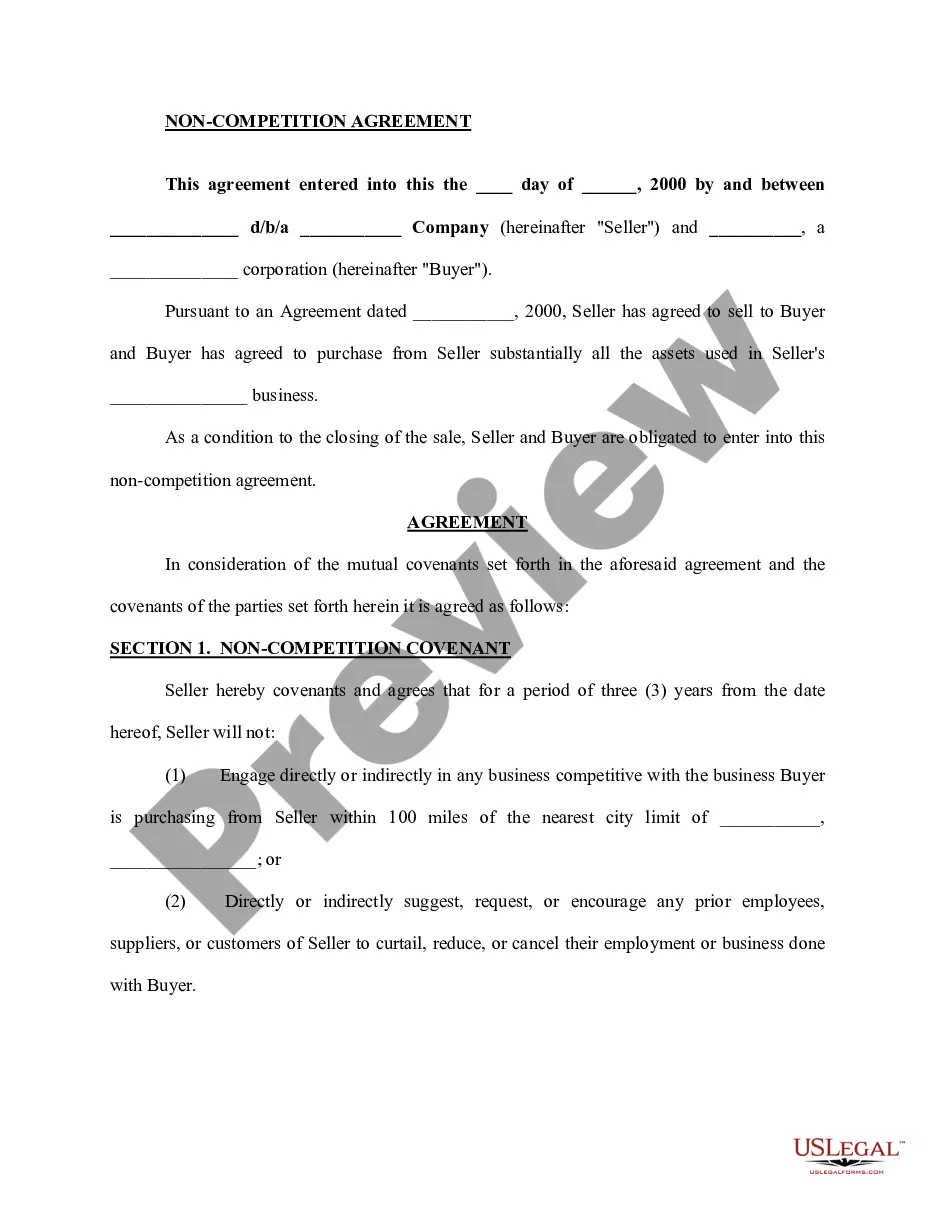
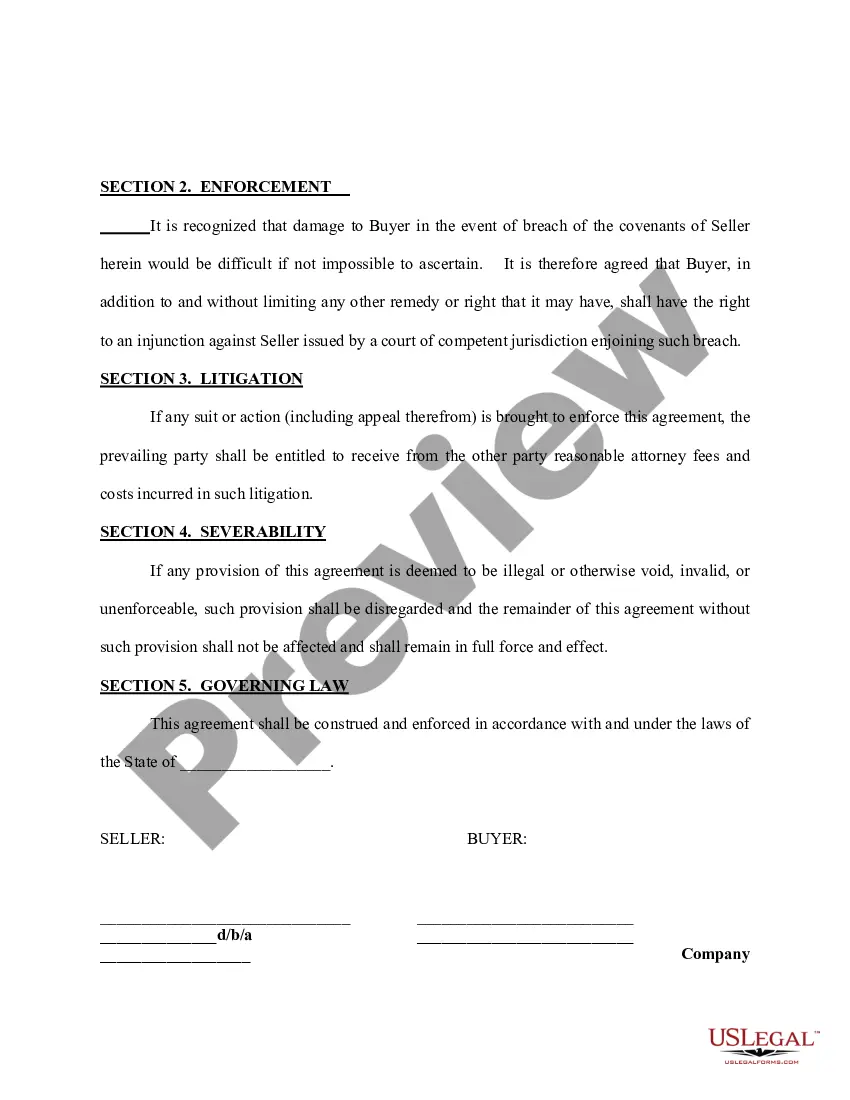
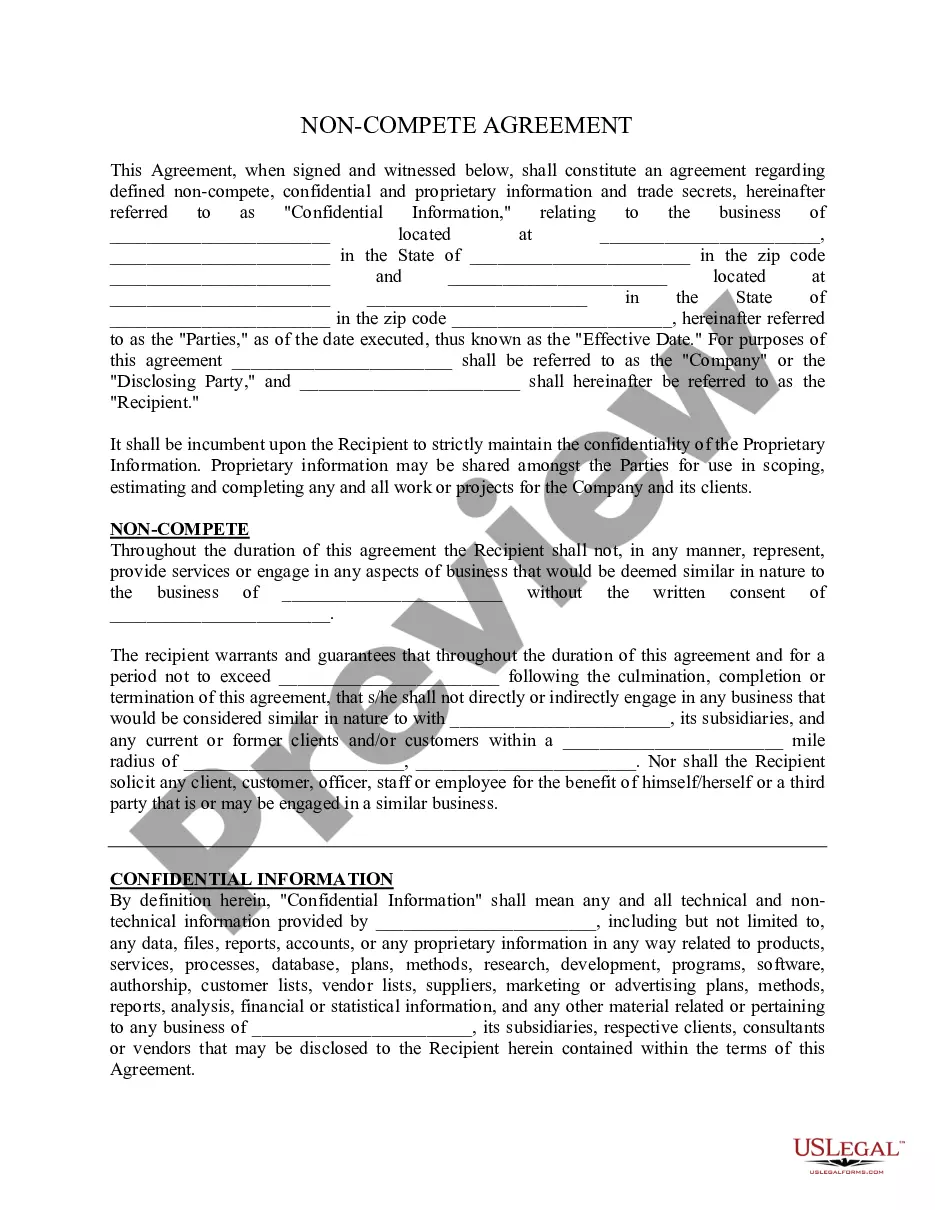
North Carolina Noncompetition Agreement - Small Business
Description

Get your form ready online
Our built-in tools help you complete, sign, share, and store your documents in one place.
Make edits, fill in missing information, and update formatting in US Legal Forms—just like you would in MS Word.
Download a copy, print it, send it by email, or mail it via USPS—whatever works best for your next step.
Sign and collect signatures with our SignNow integration. Send to multiple recipients, set reminders, and more. Go Premium to unlock E-Sign.
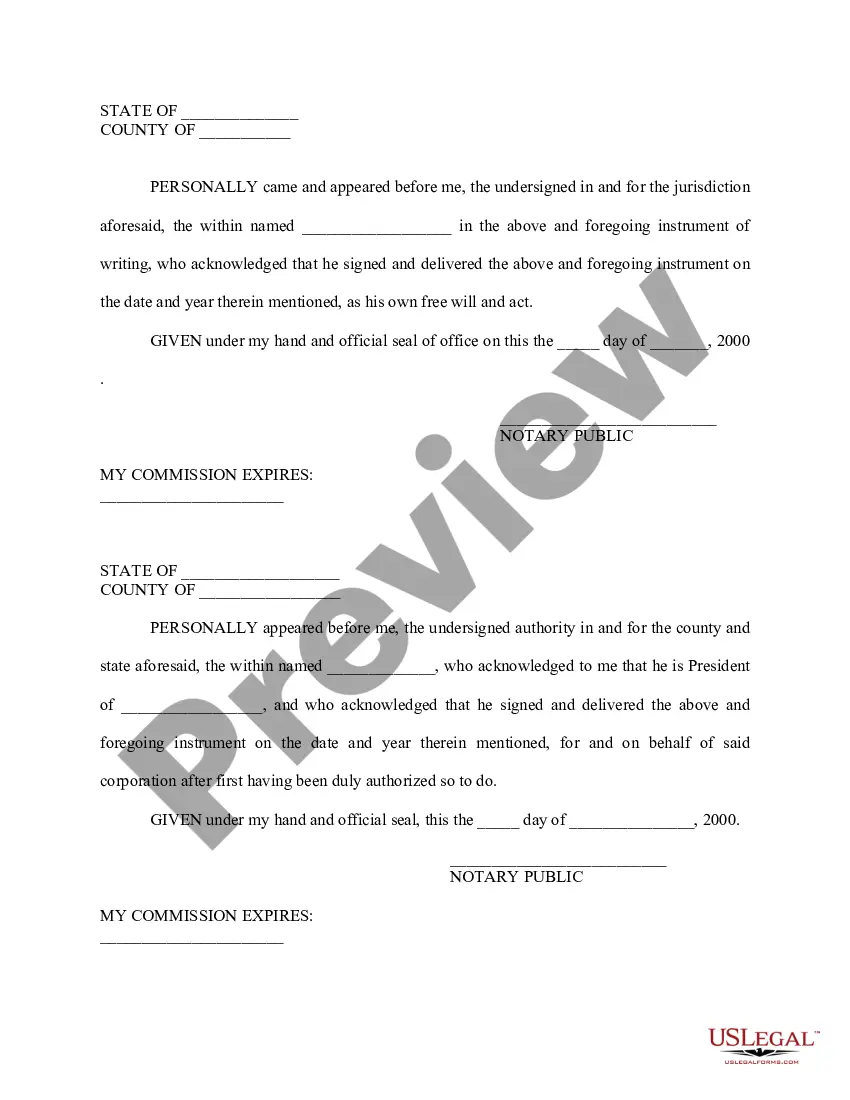
If this form requires notarization, complete it online through a secure video call—no need to meet a notary in person or wait for an appointment.
We protect your documents and personal data by following strict security and privacy standards.

Make edits, fill in missing information, and update formatting in US Legal Forms—just like you would in MS Word.

Download a copy, print it, send it by email, or mail it via USPS—whatever works best for your next step.

Sign and collect signatures with our SignNow integration. Send to multiple recipients, set reminders, and more. Go Premium to unlock E-Sign.

If this form requires notarization, complete it online through a secure video call—no need to meet a notary in person or wait for an appointment.

We protect your documents and personal data by following strict security and privacy standards.
Looking for another form?





How to fill out Noncompetition Agreement - Small Business?
Selecting the optimal legal document format can be quite challenging.
Clearly, there is an assortment of templates accessible online, but how do you identify the legal document you need.
Utilize the US Legal Forms website. The service offers thousands of templates, including the North Carolina Noncompetition Agreement - Small Business, that can be employed for business and personal purposes.
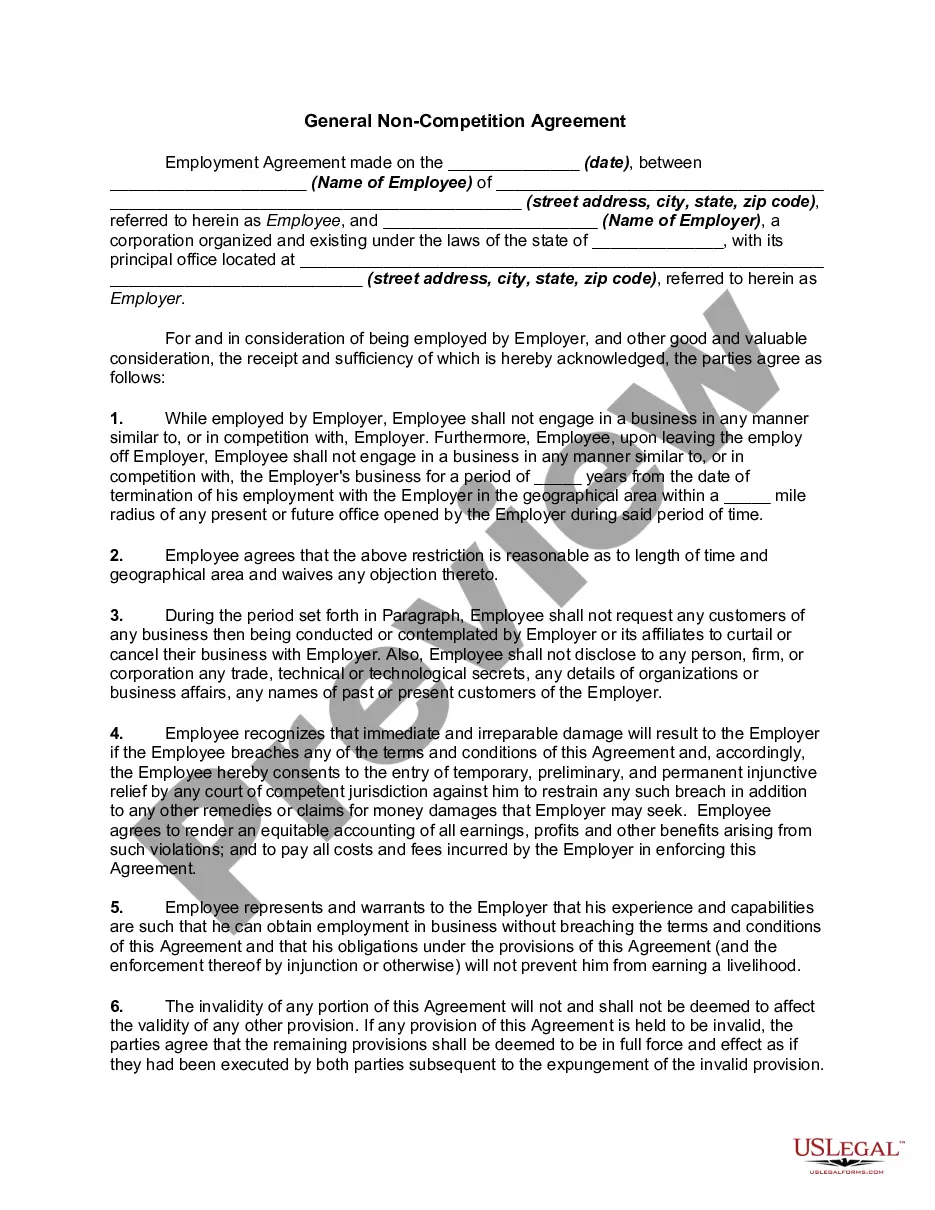
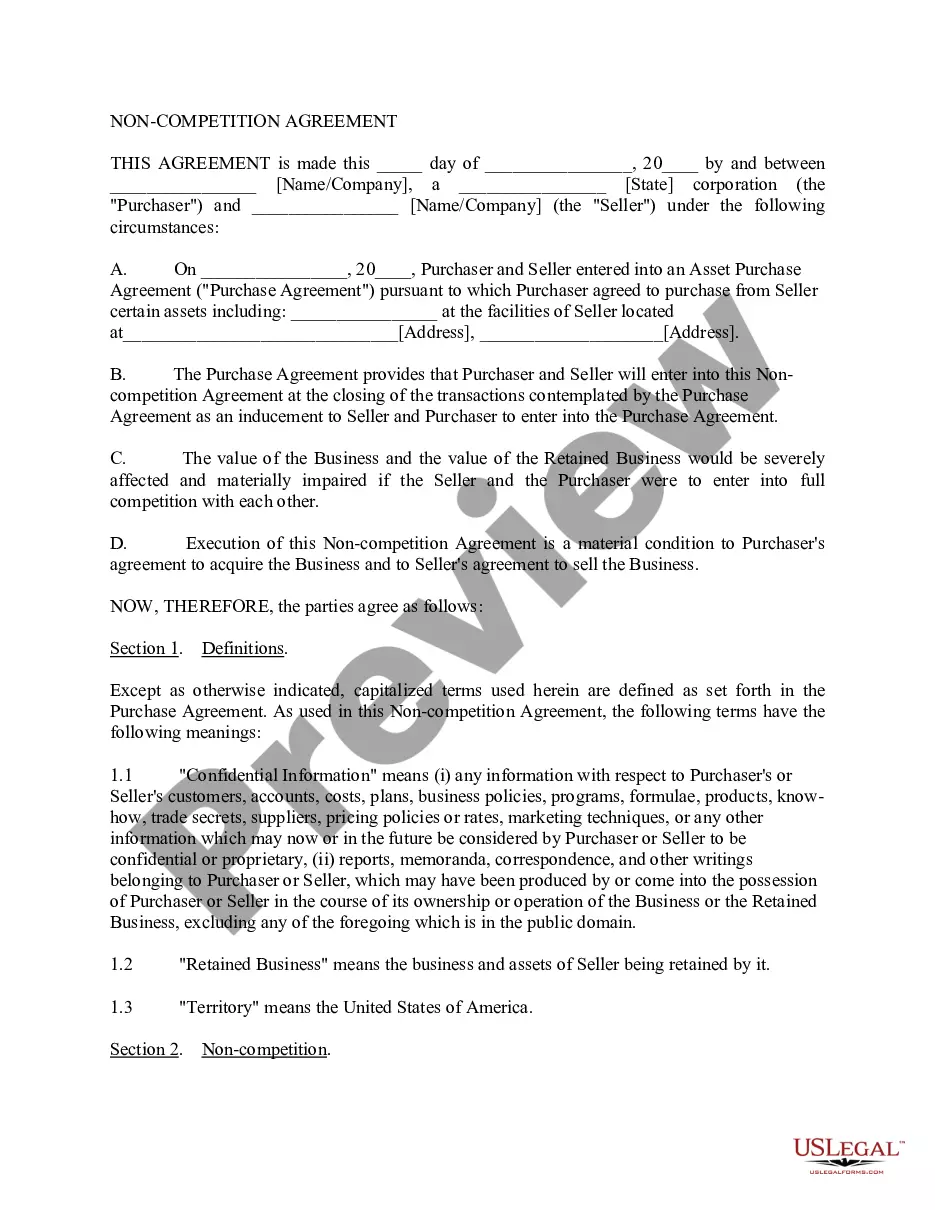
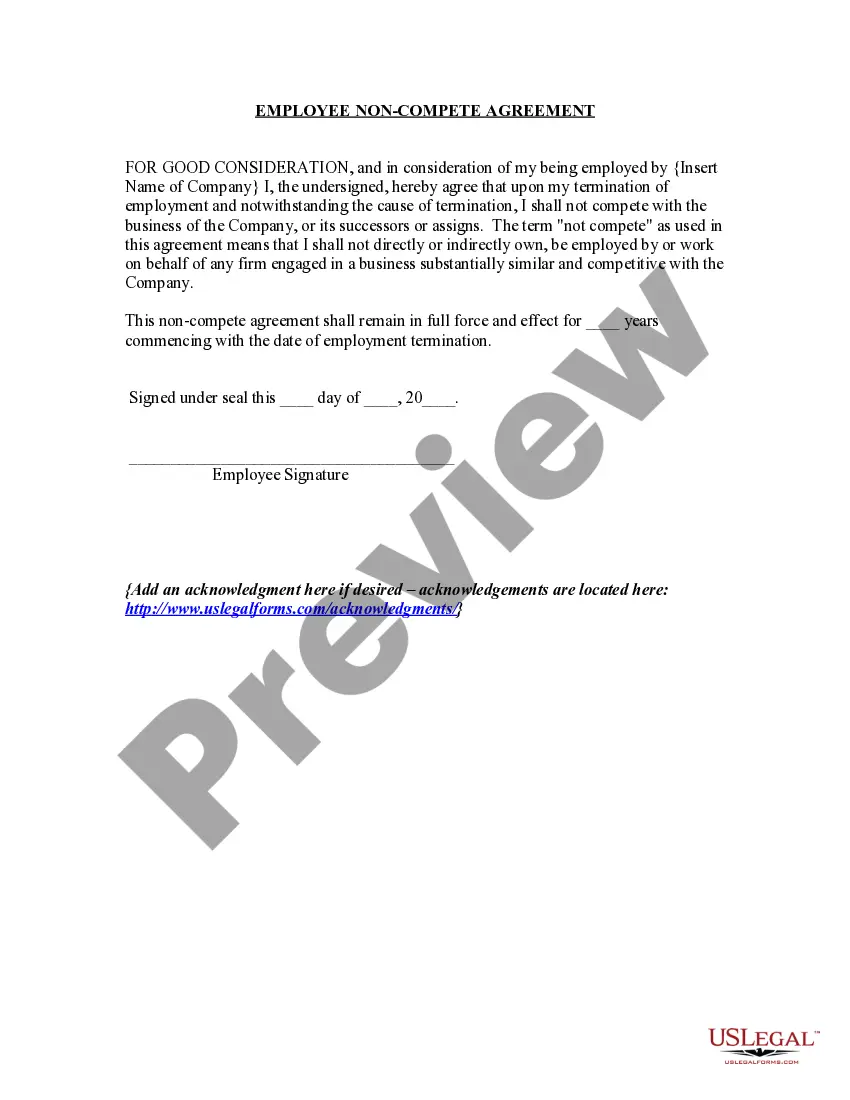
Ensure you have selected the correct form for your location/county. You can preview the document using the Review button and read the form description to verify that it is suitable for you.
- All of the documents are reviewed by experts and comply with federal and state regulations.
- If you are already logged in, sign in to your account and click the Download button to access the North Carolina Noncompetition Agreement - Small Business.
- Use your account to search for the legal documents you have acquired previously.
- Navigate to the My documents section of your account to obtain an additional copy of the document you need.
- If you are a first-time user of US Legal Forms, here are straightforward steps to follow.
Form popularity
FAQ
In North Carolina, a non-solicitation clause prevents a former employee from soliciting clients or employees after leaving a company. This clause is often included in a North Carolina Noncompetition Agreement - Small Business to maintain business relationships and safeguard client lists. A properly crafted non-solicitation clause can provide a small business with a competitive edge in a challenging market. Always consider legal guidance to tailor the clause to your specific needs.
In North Carolina, the non-solicit law protects businesses by preventing former employees from soliciting clients or employees for a certain period. Under a North Carolina Noncompetition Agreement - Small Business, these clauses are enforceable as long as they are reasonable in time and scope. This law allows small business owners to maintain client relationships and workforce stability. If you need assistance with drafting or understanding these agreements, uslegalforms can provide valuable resources.
You Can Void a Non-Compete by Proving Its Terms Go Too Far or Last Too Long. Whether a non-compete is unenforceable because it covers too large of a geographical area or it lasts too long can depend on many factors. Enforceability can depend on your industry, skills, location, etc.
North Carolina courts do not enforce non-solicitation agreements that prohibit former employees from soliciting customers with whom former employees had no personal contact or interaction (Clinical Staffing, Inc. v.
Escaping Nonsolicitation AgreementsDon't sign.Build your book independently.Carve out pre-existing relationships.Require for cause termination as the trigger.Provide for a payoff.Turn clients into friends.Don't treat clients as trade secrets.Invest in your own business.
Non-compete agreements are not viewed favorably under North Carolina law. To be valid, they must be designed to protect a legitimate business interest of the employer. If it is too broad to be considered a reasonable protection of the employer's business, it will not be enforced.
In North Carolina, courts are permitted to blue pencil restrictive covenants. This means that a court may decide not to enforce a part of the covenant that is distinctly separable in order to make the provision reasonable. However, a court is not able to re-draft an overly broad provision completely or from scratch.
Thus, North Carolina case law strongly implies that almost any non-compete agreement with a time limitation of two years or less that covers non-medical business practices will be enforced as long as the territorial restriction is not overly broad.
Non-compete agreements are not viewed favorably under North Carolina law. To be valid, they must be designed to protect a legitimate business interest of the employer. If it is too broad to be considered a reasonable protection of the employer's business, it will not be enforced.
In North Carolina, non-compete agreements in the employment context are generally disfavored. However, they are valid within reasonable limits and if consideration was given for the promise not to compete.