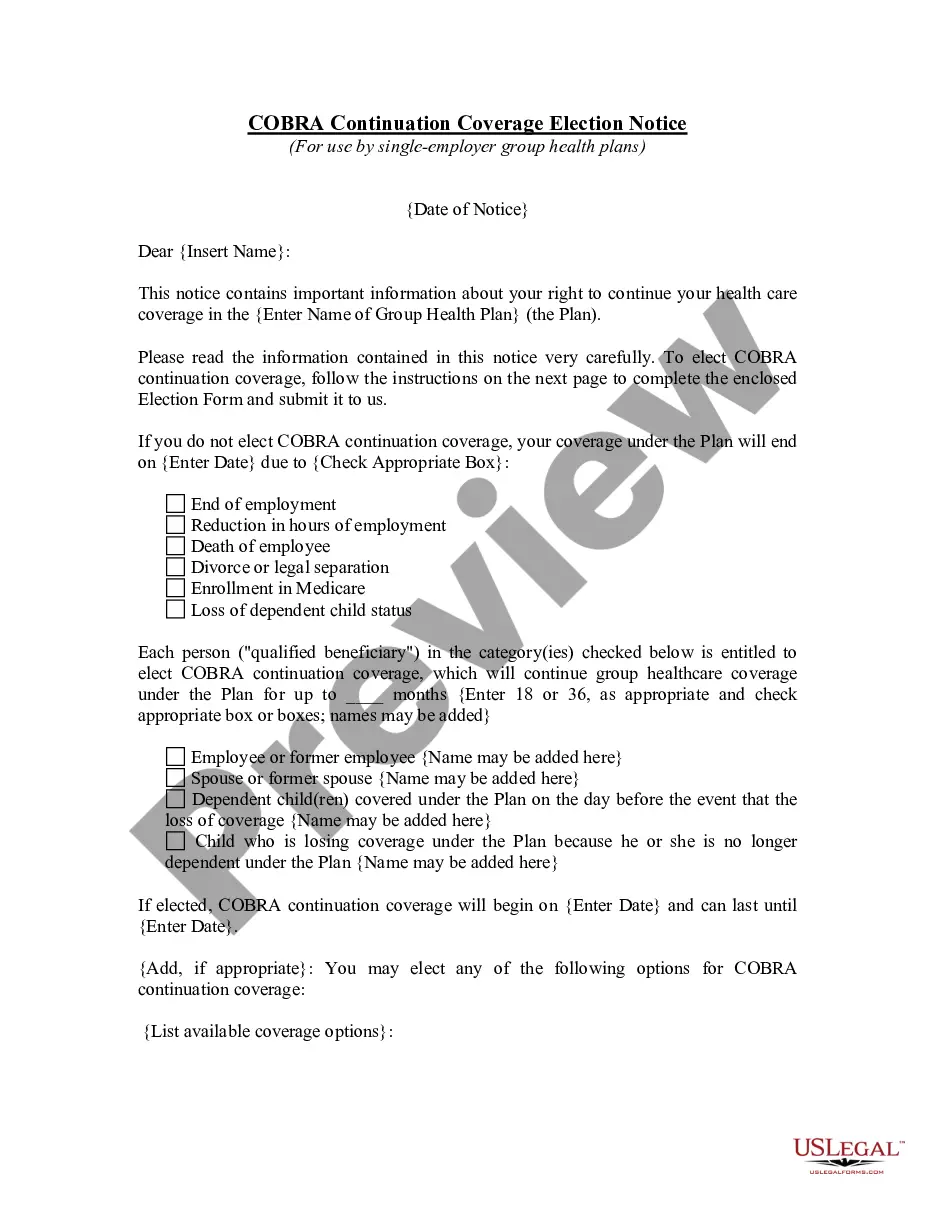
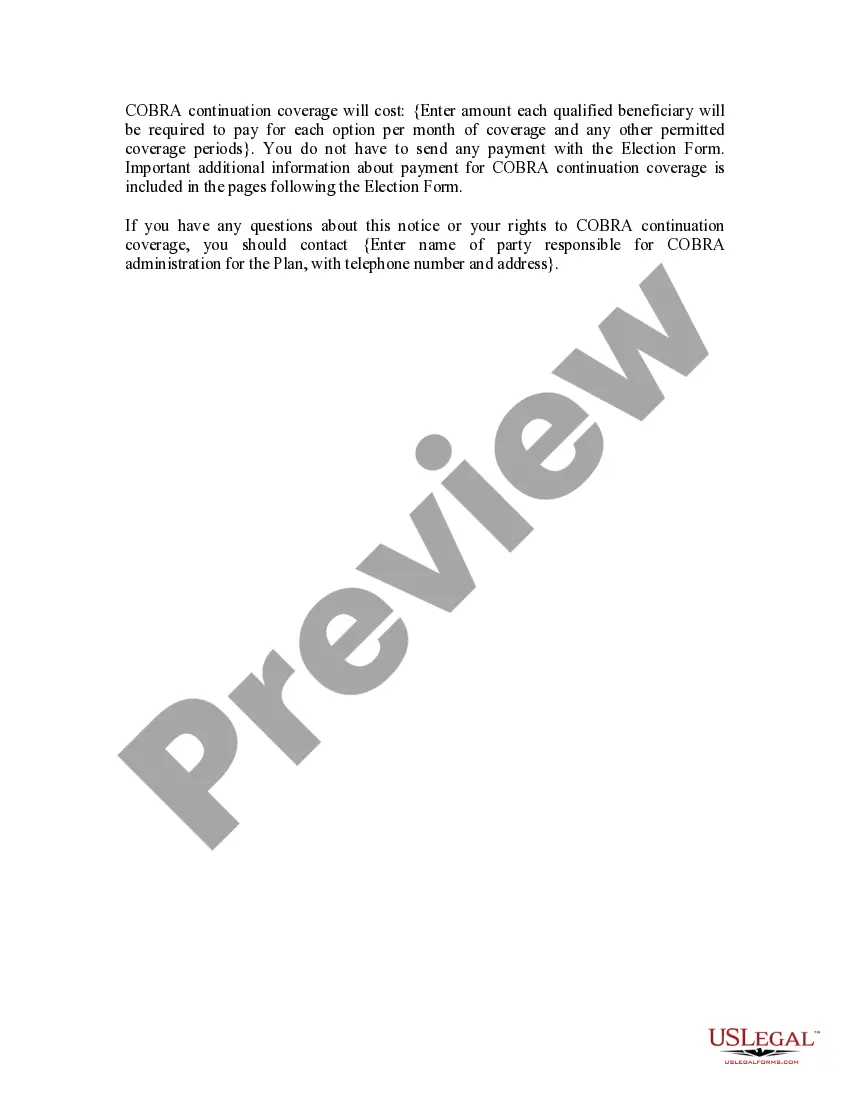
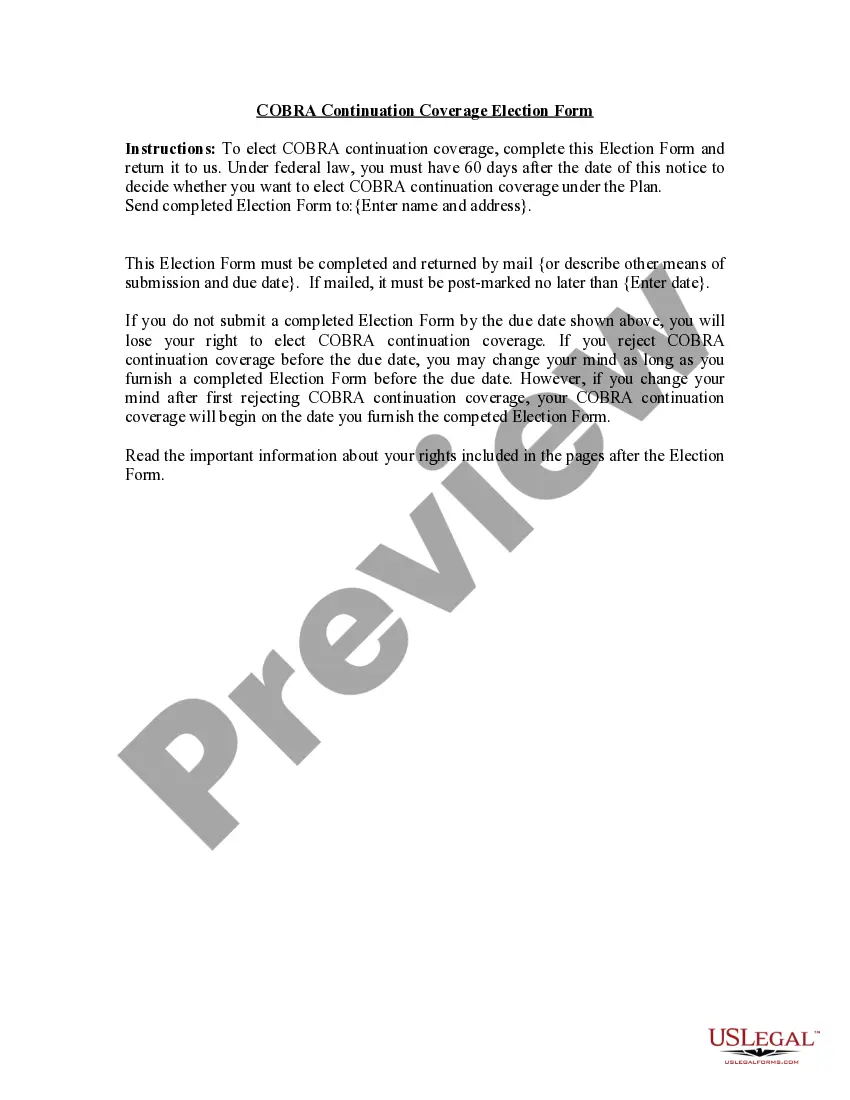
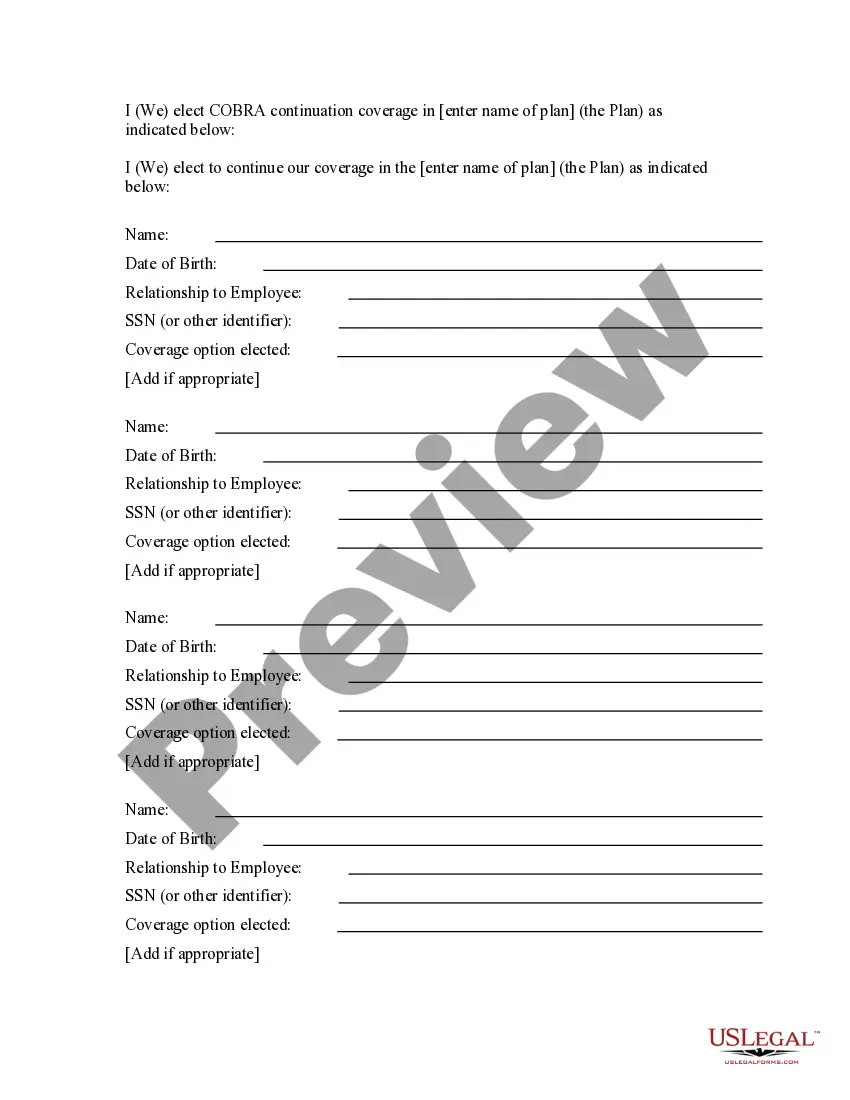
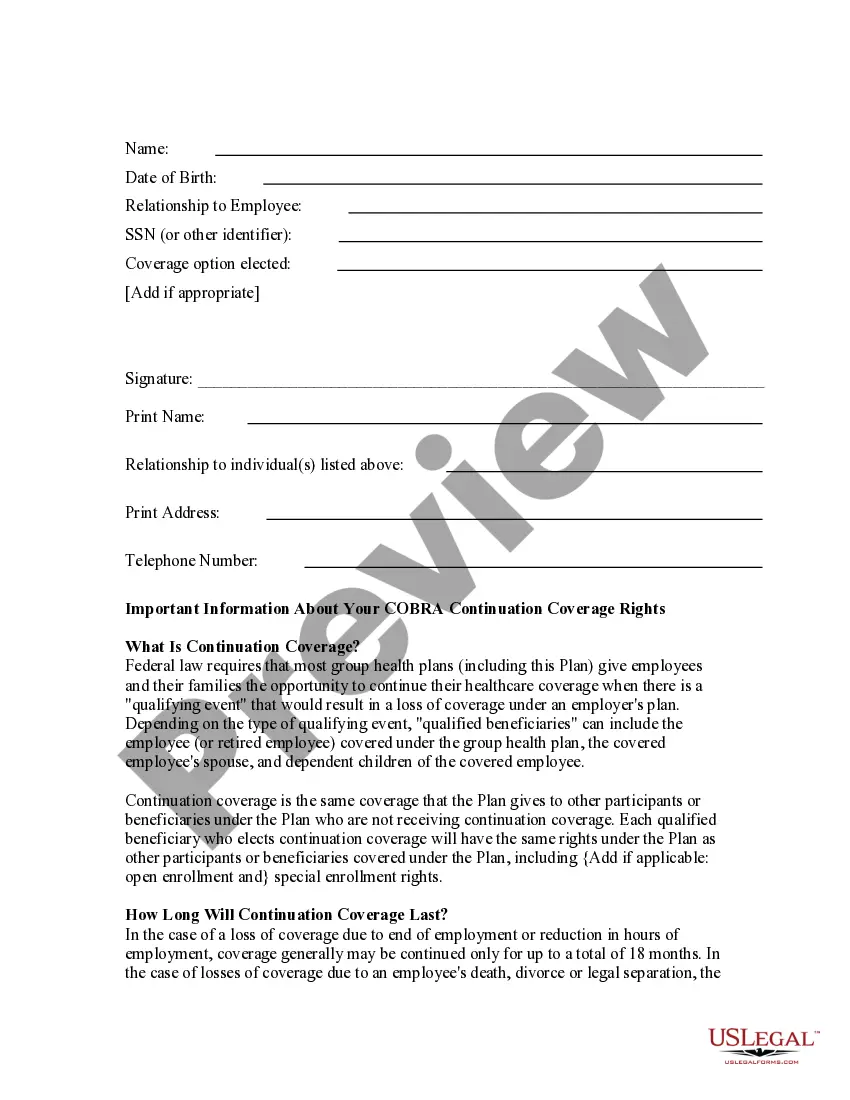
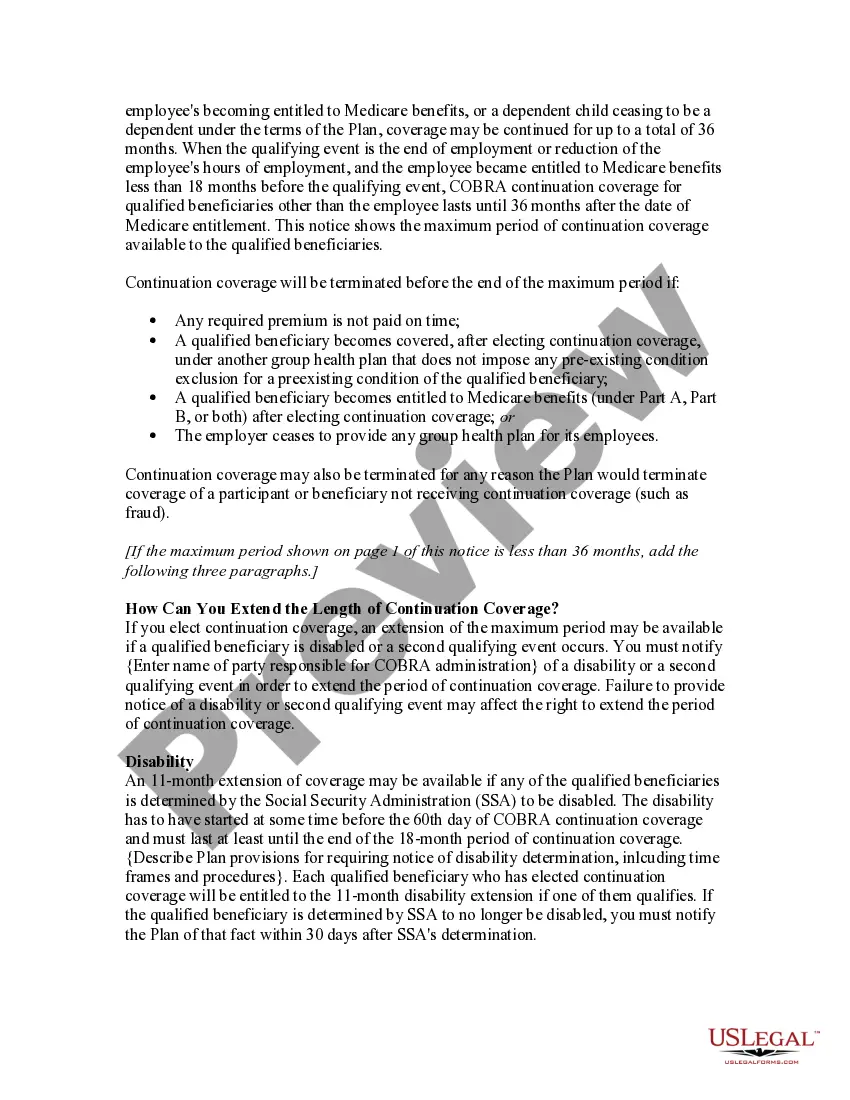
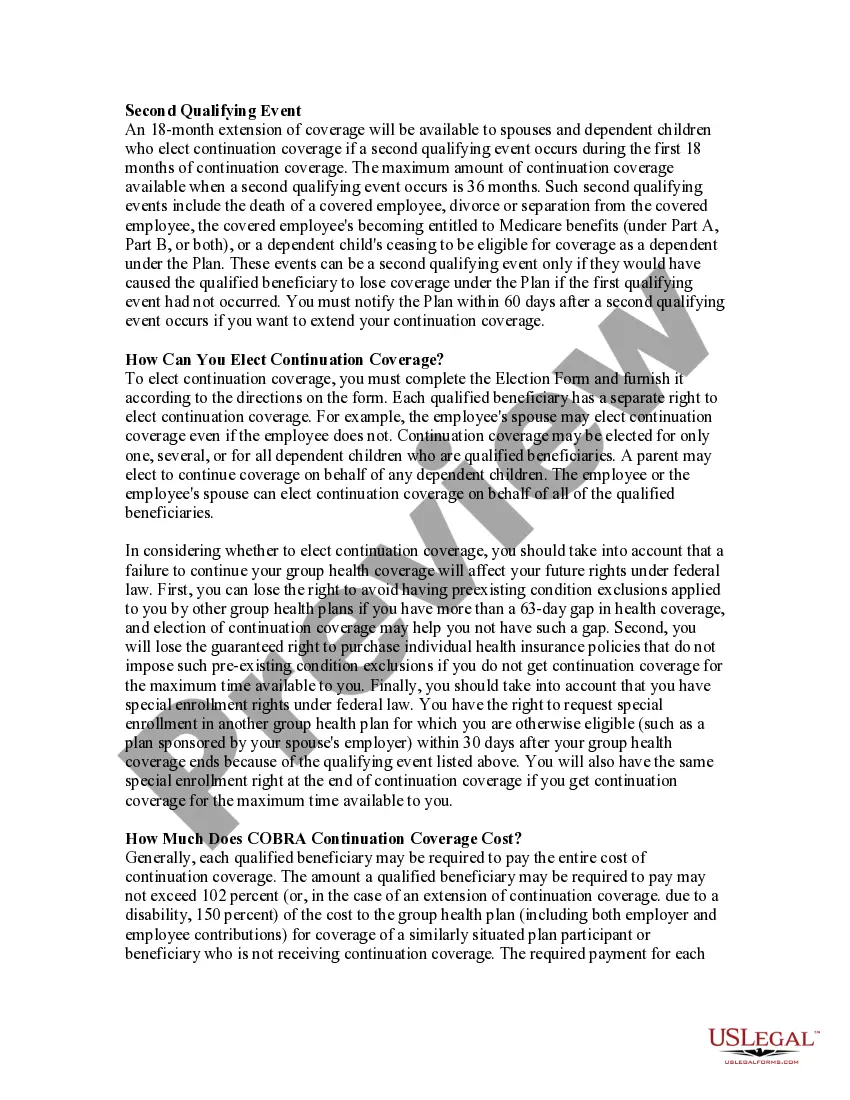
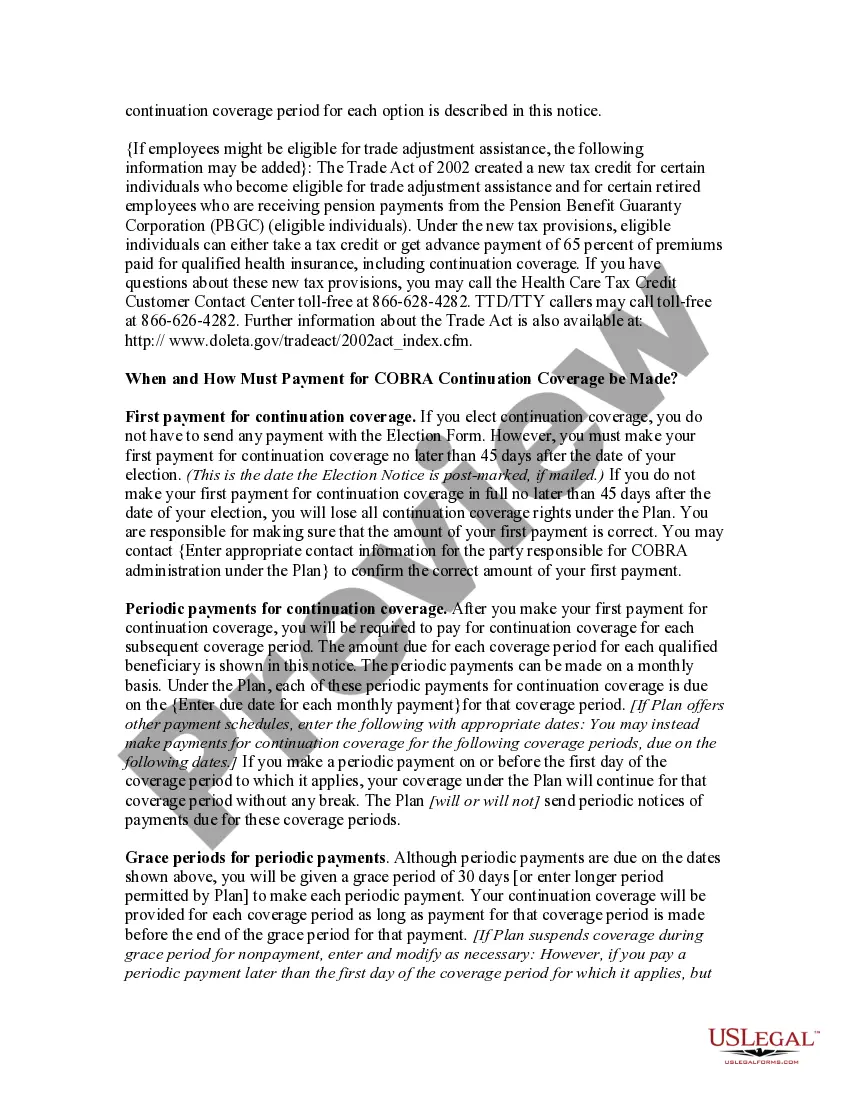
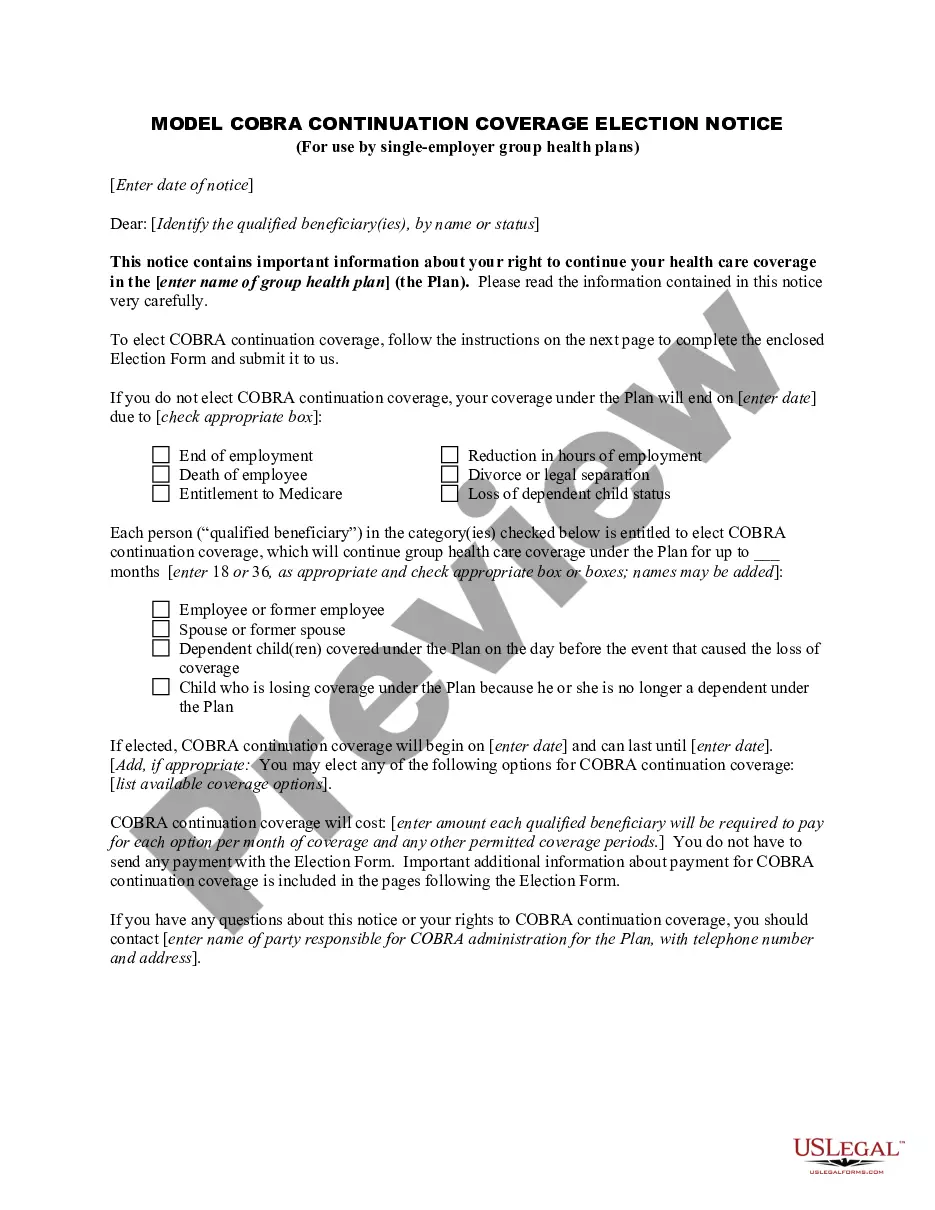
North Carolina COBRA Continuation Coverage Election Notice
Description
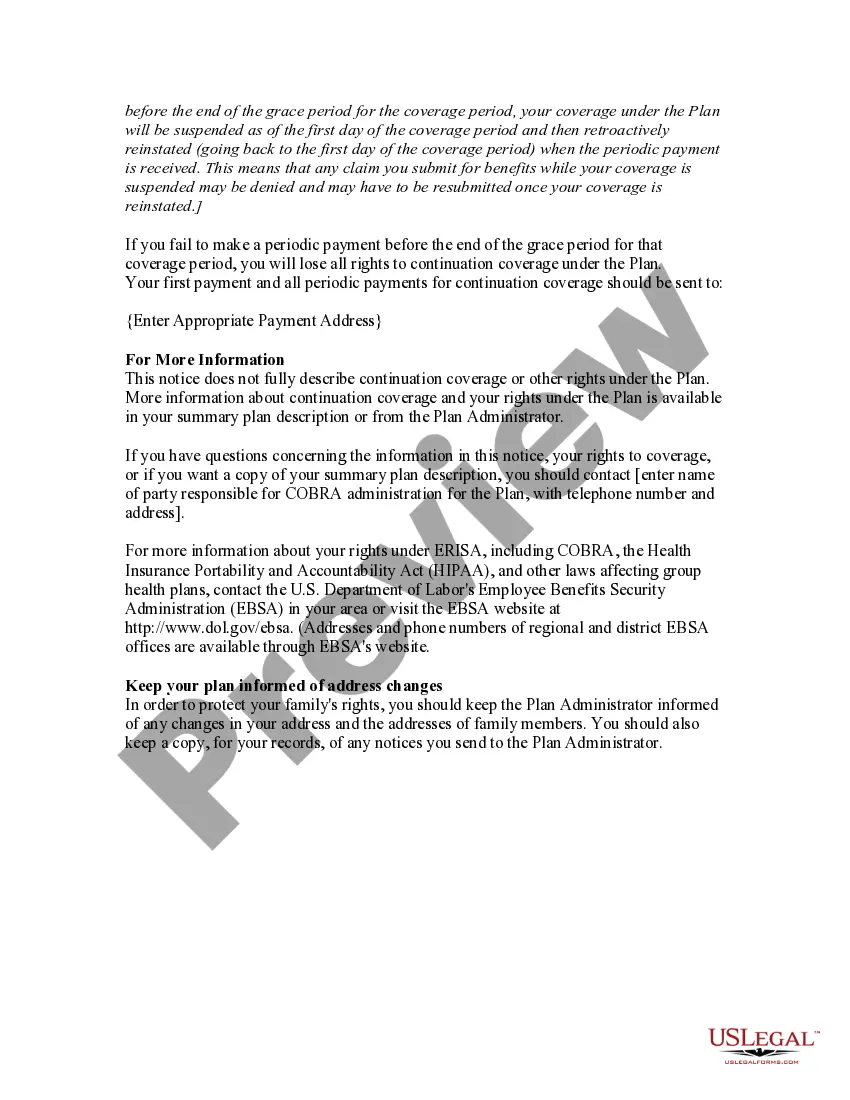
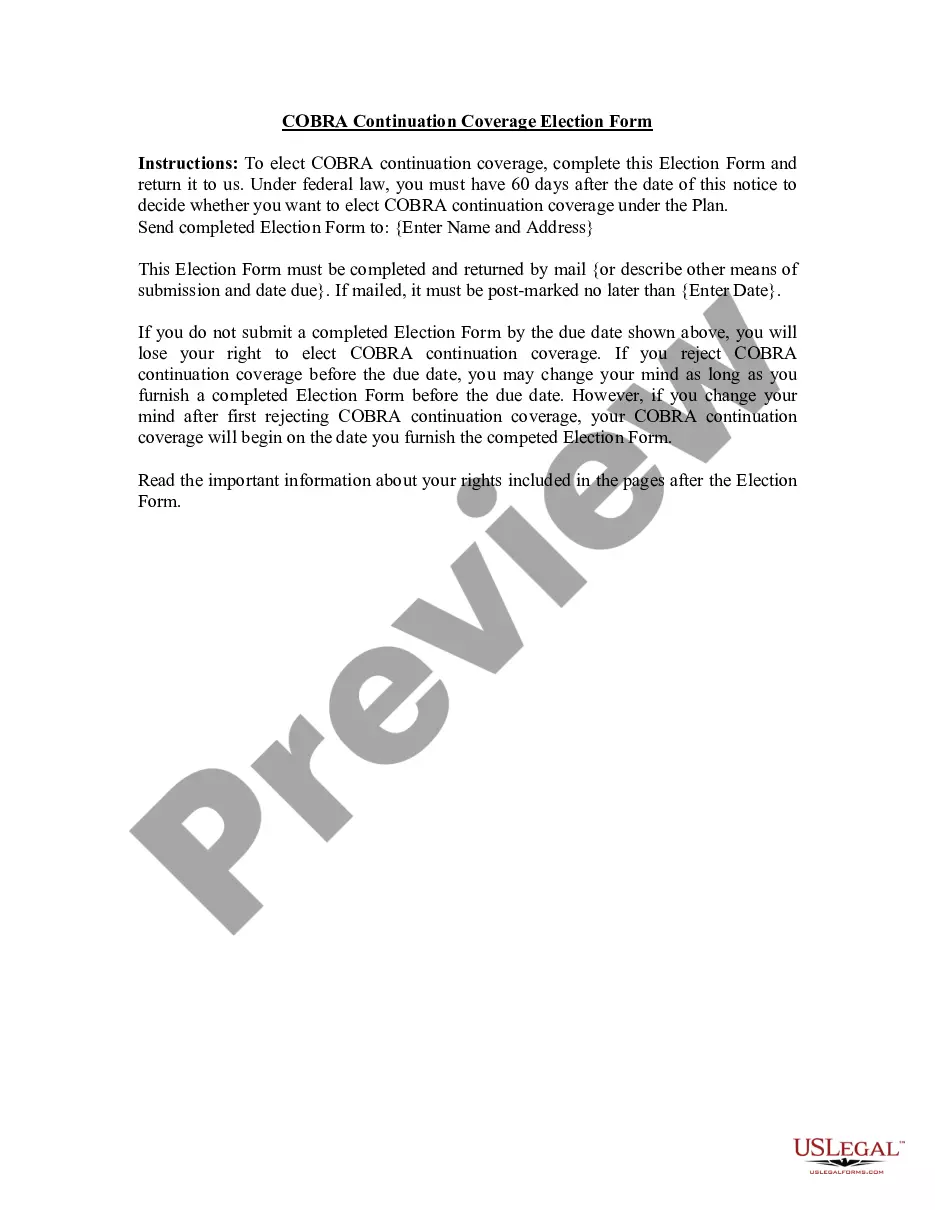
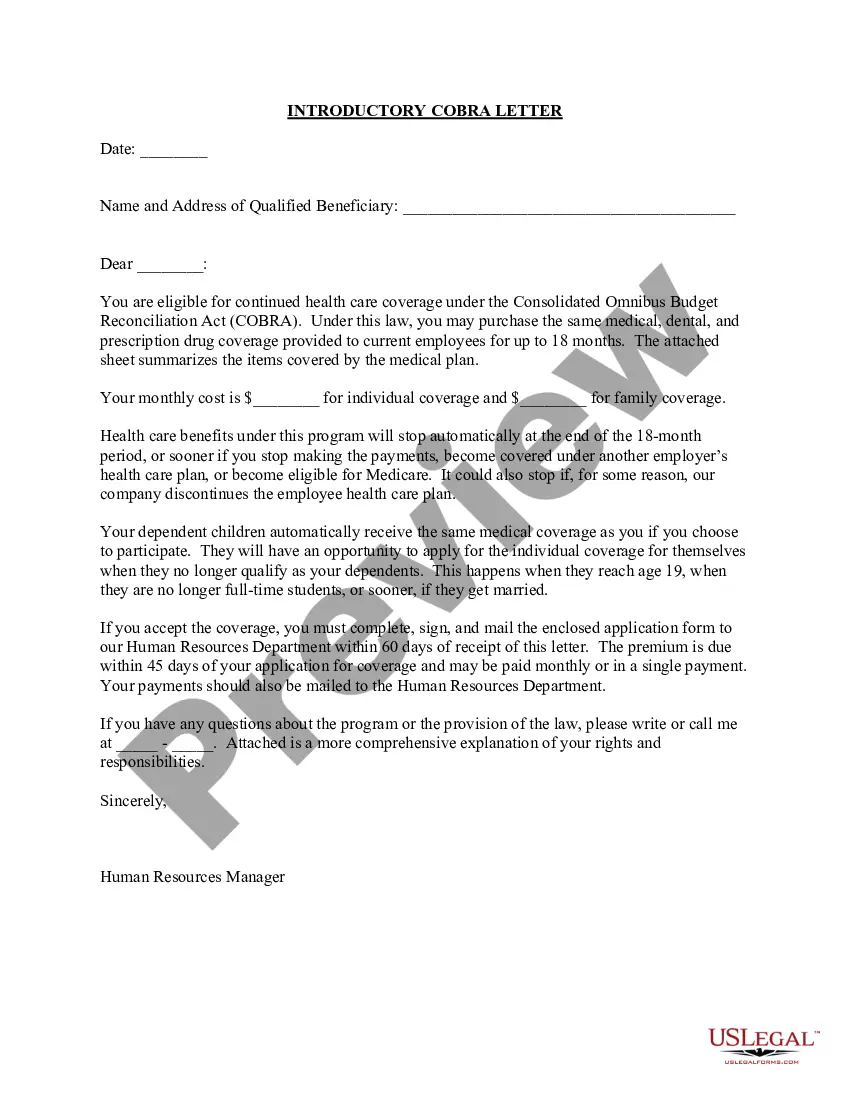
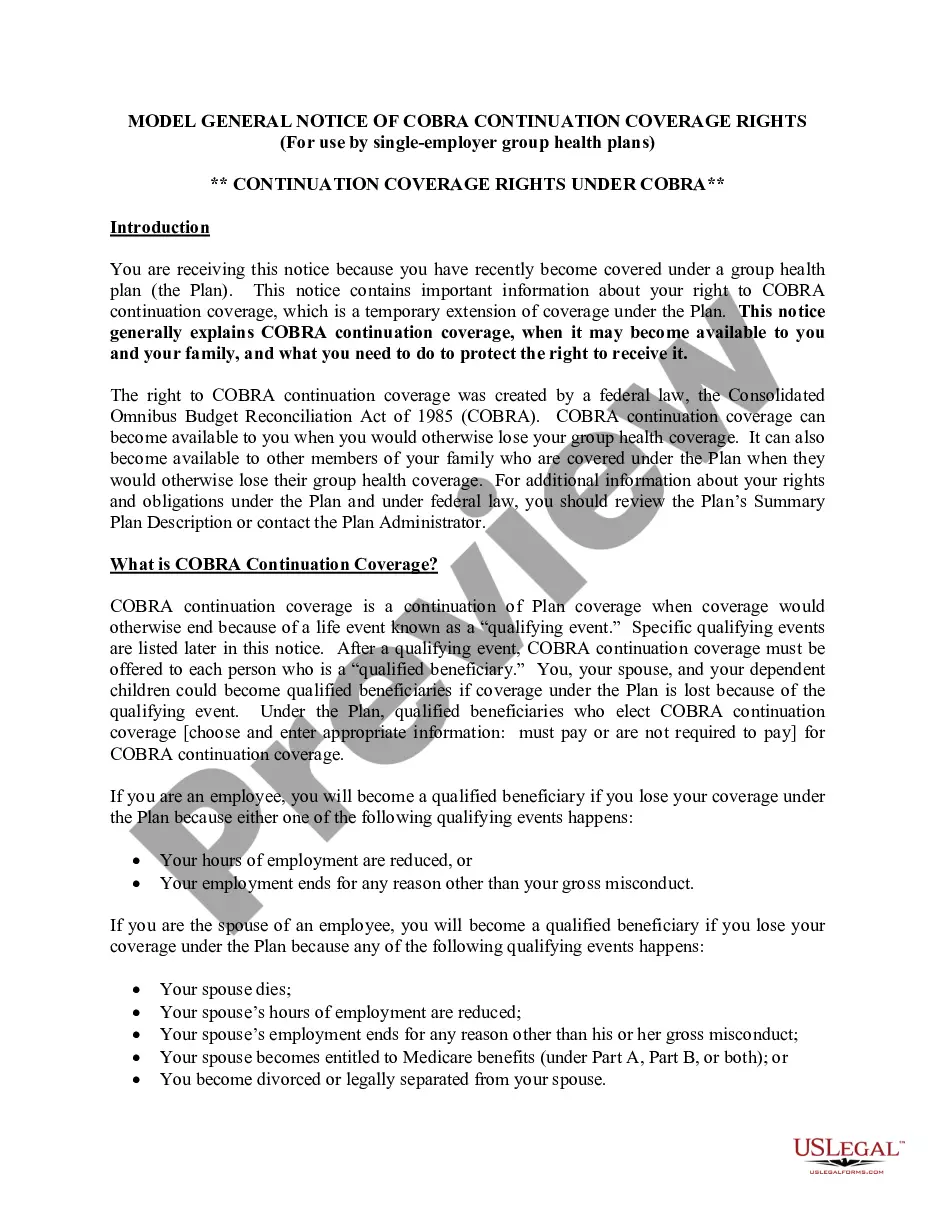

Get your form ready online
Our built-in tools help you complete, sign, share, and store your documents in one place.
Make edits, fill in missing information, and update formatting in US Legal Forms—just like you would in MS Word.
Download a copy, print it, send it by email, or mail it via USPS—whatever works best for your next step.
Sign and collect signatures with our SignNow integration. Send to multiple recipients, set reminders, and more. Go Premium to unlock E-Sign.
If this form requires notarization, complete it online through a secure video call—no need to meet a notary in person or wait for an appointment.
We protect your documents and personal data by following strict security and privacy standards.

Make edits, fill in missing information, and update formatting in US Legal Forms—just like you would in MS Word.

Download a copy, print it, send it by email, or mail it via USPS—whatever works best for your next step.

Sign and collect signatures with our SignNow integration. Send to multiple recipients, set reminders, and more. Go Premium to unlock E-Sign.

If this form requires notarization, complete it online through a secure video call—no need to meet a notary in person or wait for an appointment.

We protect your documents and personal data by following strict security and privacy standards.
Looking for another form?
How to fill out COBRA Continuation Coverage Election Notice?
Have you found yourself in a circumstance where you require documents for either professional or particular purposes nearly every workday.
There are numerous legal template documents accessible online, but locating ones that you can rely on isn't easy.
US Legal Forms offers a multitude of template documents, such as the North Carolina COBRA Continuation Coverage Election Notice, designed to satisfy both state and federal regulations.
Choose a convenient file format and download your copy.
Access all the document templates you have purchased in the My documents section. You can obtain another copy of the North Carolina COBRA Continuation Coverage Election Notice at any time, if necessary. Just click the required form to download or print the document template.
- If you are currently familiar with the US Legal Forms website and have an account, simply Log In.
- Then, you can download the North Carolina COBRA Continuation Coverage Election Notice template.
- If you do not have an account and wish to start using US Legal Forms, follow these steps.
- Obtain the form you need and ensure it is for your correct city/county.
- Utilize the Review option to inspect the form.
- Check the description to confirm that you have selected the appropriate form.
- If the form isn't what you are looking for, use the Search area to find the form that meets your needs and requirements.
- Once you locate the correct form, click Get now.
- Select the pricing plan you desire, fill in the necessary information to create your account, and complete your order using PayPal or Visa or Mastercard.
Form popularity
FAQ
The general notice describes general COBRA rights and employee obligations. This notice must be provided to each covered employee and each covered spouse of an employee who becomes covered under the plan. The notice must be provided within the first 90 days of coverage under the group health plan.
There are several other scenarios that may explain why you received a COBRA continuation notice even if you've been in your current position for a long time: You may be enrolled in a new plan annually and, therefore, receive a notice each year. Your employer may have just begun offering a health insurance plan.
The Consolidated Omnibus Budget Reconciliation Act (COBRA) gives workers and their families who lose their health benefits the right to choose to continue group health benefits provided by their group health plan for limited periods of time under certain circumstances such as voluntary or involuntary job loss,
COBRA continuation coverage lets you stay on your employer's group health insurance plan after leaving your job. COBRA stands for the Consolidated Omnibus Budget Reconciliation Act. It's shorthand for the law change that required employers to extend temporary group health insurance to departing employees.
Federal COBRA Continuation law applies to employer groups covering 20 and more employees. This law generally allows eligible enrollees the right to continue under the employer group health plan for up to 18 months. The continuation period can be extended beyond the 18-month period in some situations.
COBRA the Consolidated Omnibus Budget Reconciliation Act -- requires group health plans to offer continuation coverage to covered employees, former employees, spouses, former spouses, and dependent children when group health coverage would otherwise be lost due to certain events.
Federal law requires that most group health plans (including this Plan) give employees and their families the opportunity to continue their health care coverage through COBRA continuation coverage when there's a qualifying event that would result in a loss of coverage under an employer's plan.