North Carolina Agreement for Accord and Satisfaction - Disputed Claim for Personal Injuries or Property Damage
Description
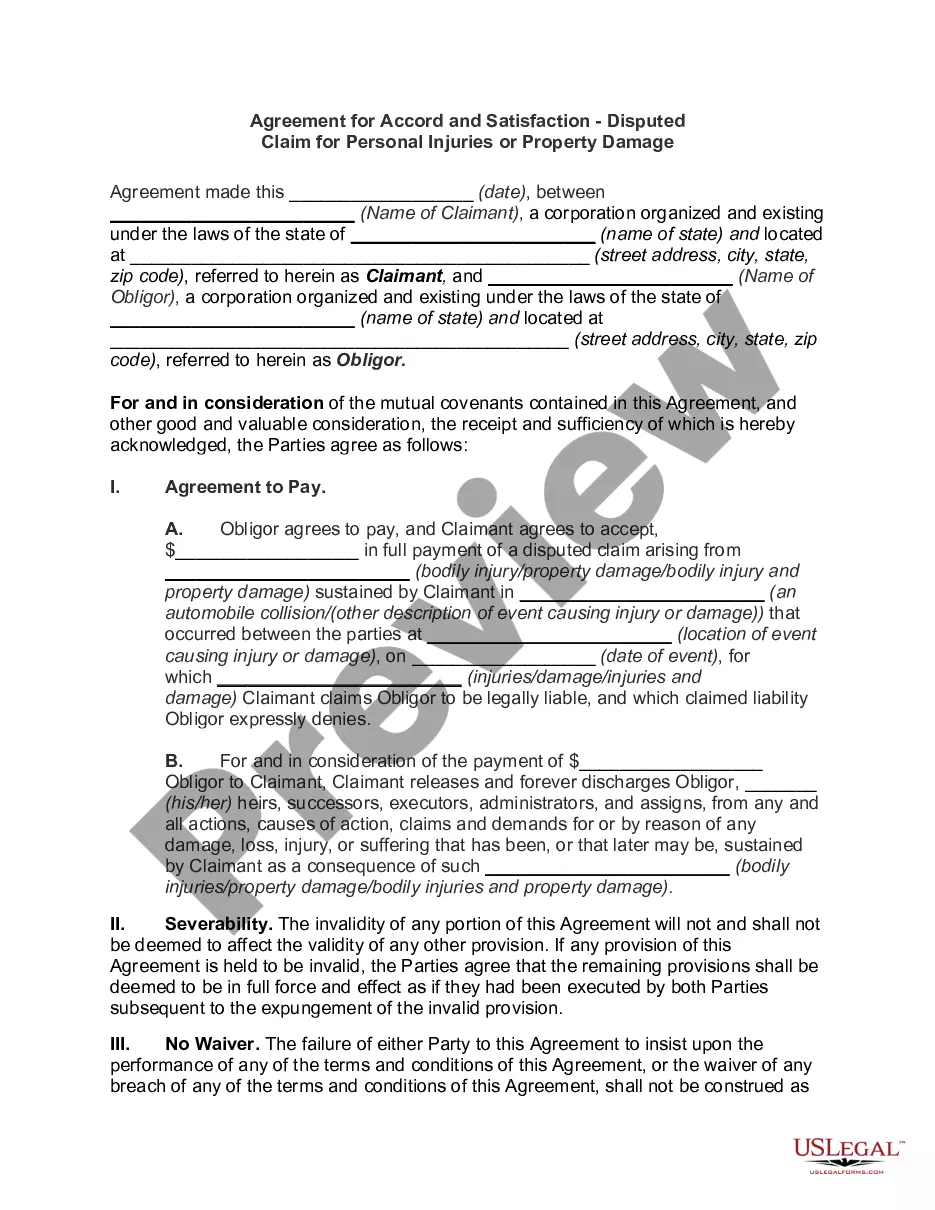
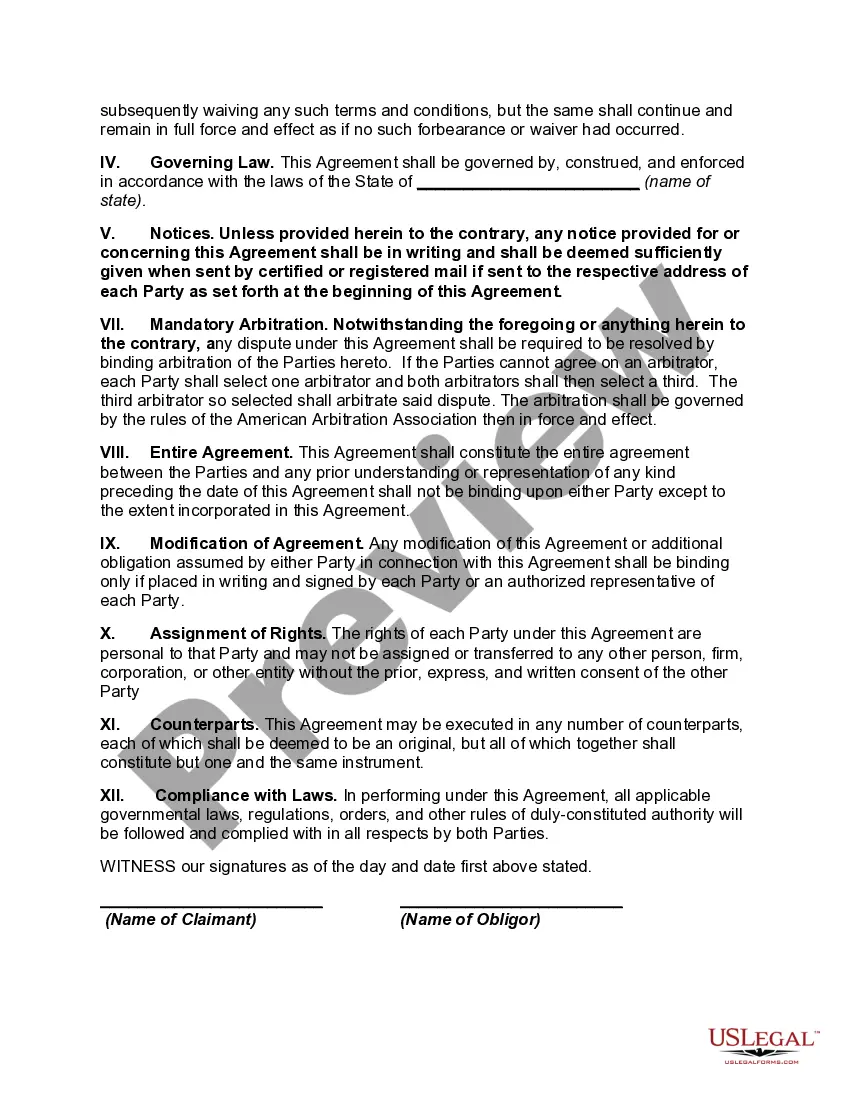

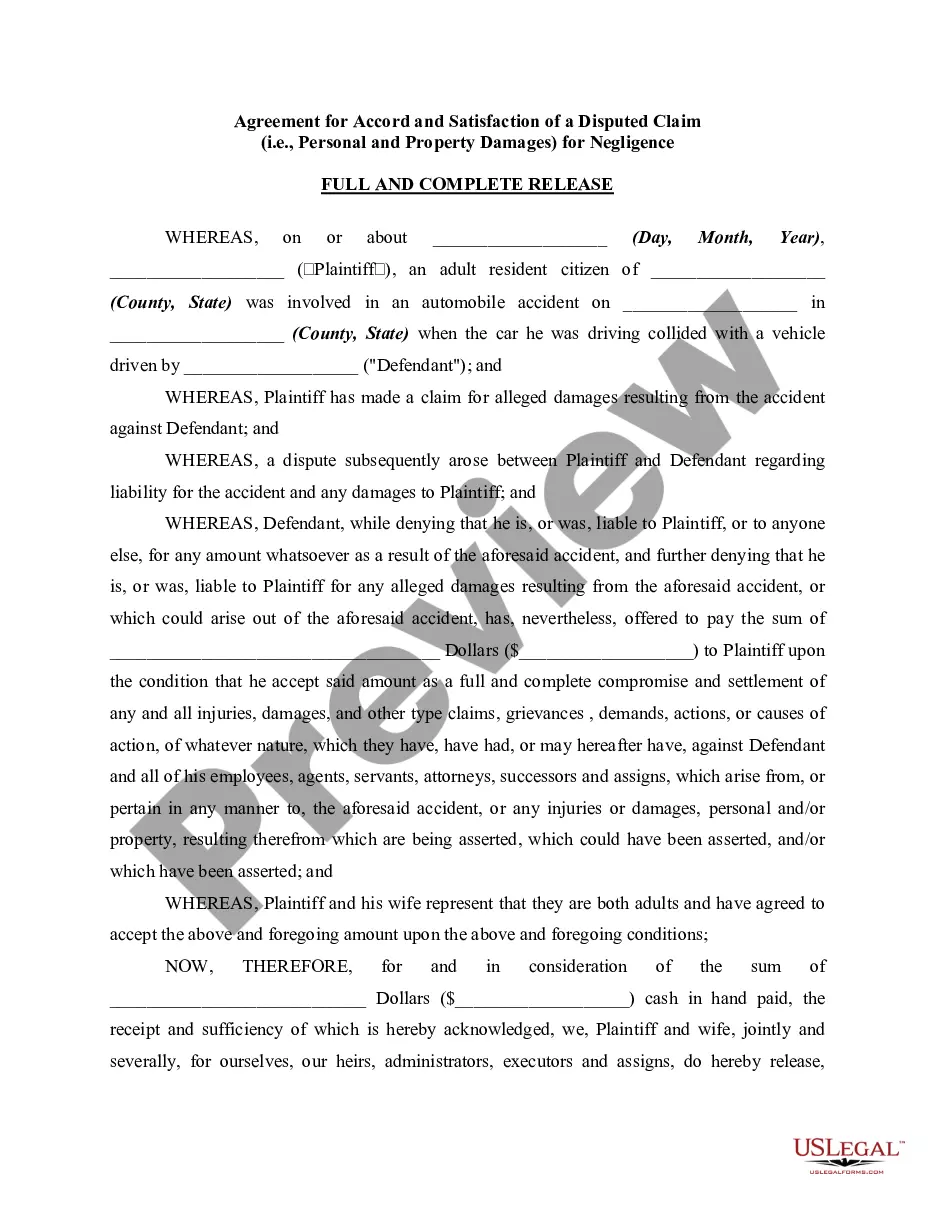
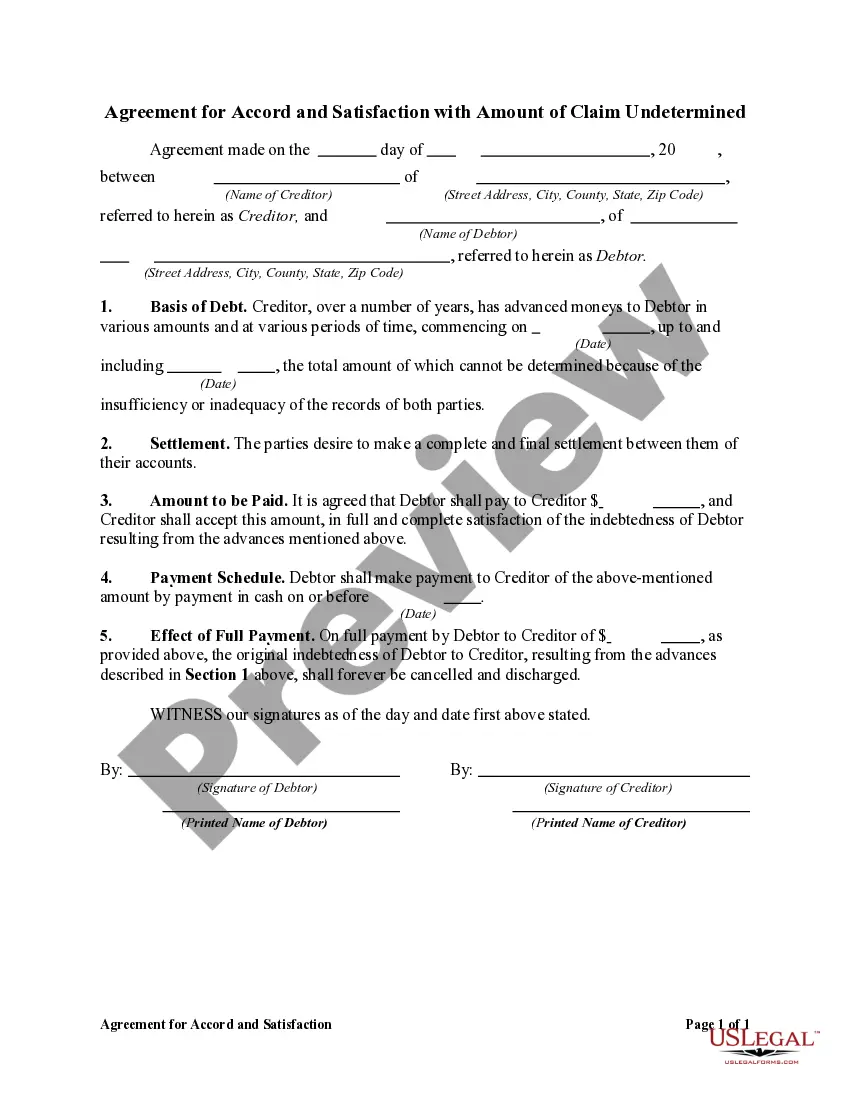
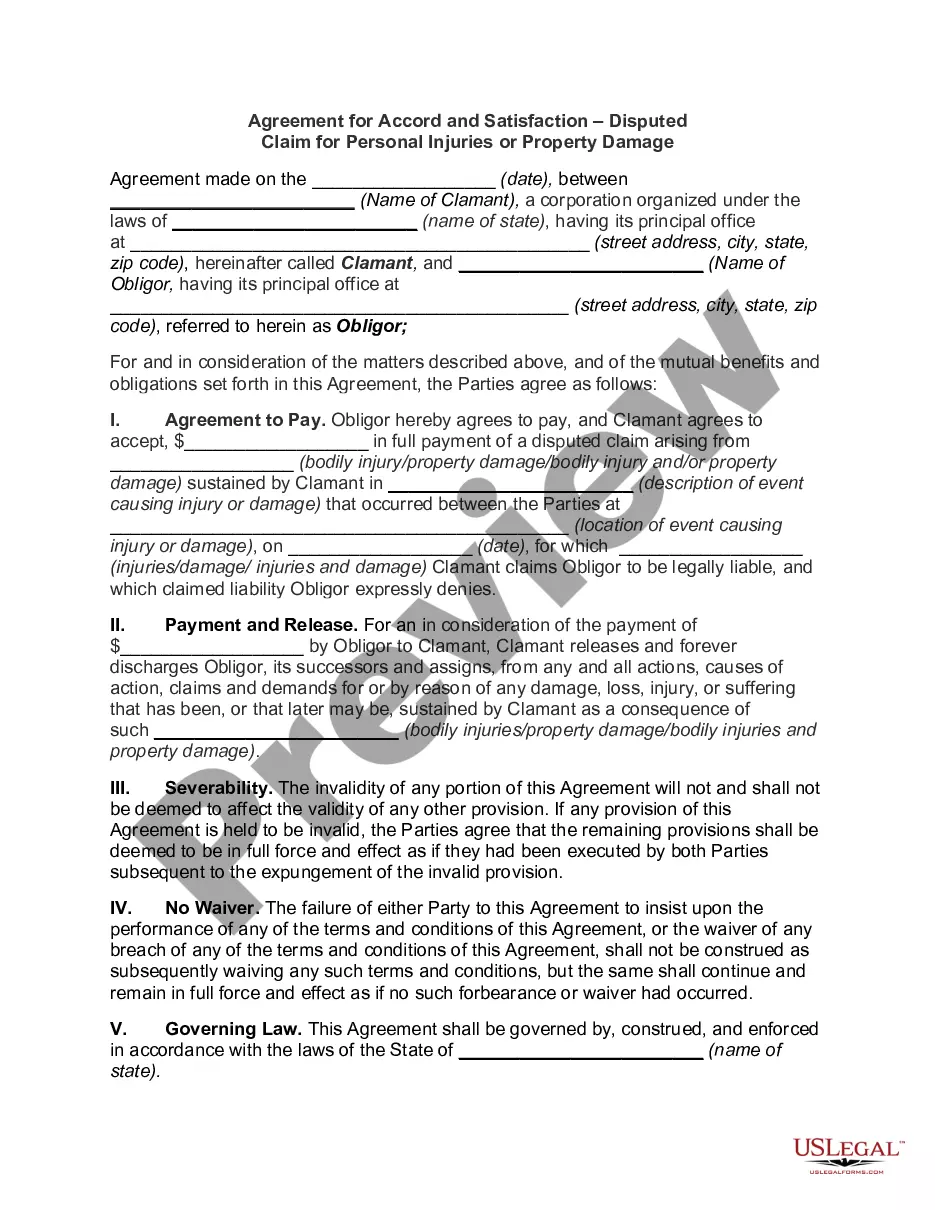
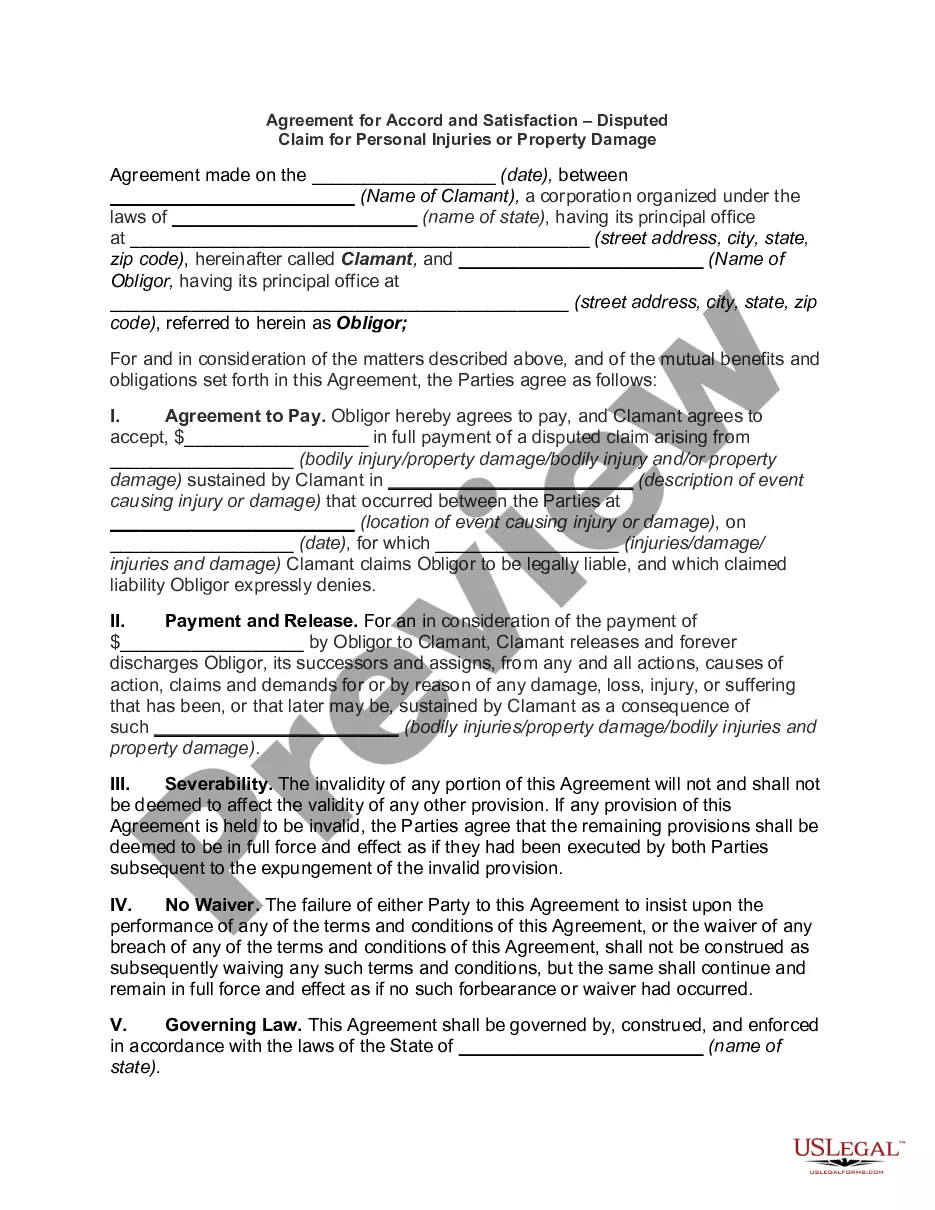
How to fill out Agreement For Accord And Satisfaction - Disputed Claim For Personal Injuries Or Property Damage?
If you wish to access, download, or create lawful document templates, utilize US Legal Forms, the largest selection of legal documents, which can be accessed online.
Employ the site’s straightforward and user-friendly search to find the documents you require.
A range of templates for corporate and personal purposes are categorized by types and states, or keywords.
Step 4. Once you have located the form you need, click the Acquire now button. Choose the pricing plan you prefer and enter your details to sign up for an account.
Step 5. Complete the transaction. You can use your credit card or PayPal account to finalize the purchase.
- Take advantage of US Legal Forms to locate the North Carolina Agreement for Accord and Satisfaction - Disputed Claim for Personal Injuries or Property in just a few clicks.
- If you are already a US Legal Forms user, Log In to your account and then click the Acquire button to obtain the North Carolina Agreement for Accord and Satisfaction - Disputed Claim for Personal Injuries or Property.
- You can also retrieve forms you have previously saved from the My documents tab of your account.
- If you are using US Legal Forms for the first time, follow the steps outlined below.
- Step 1. Ensure you have selected the form for the correct region/state.
- Step 2. Use the Review feature to examine the form’s content. Remember to read the details.
- Step 3. If you are not satisfied with the form, utilize the Search bar at the top of the screen to find alternative versions of the legal document template.
Form popularity
FAQ
The three requirements of an effective acceptance under the North Carolina Agreement for Accord and Satisfaction - Disputed Claim for Personal Injuries or Property Damage include clear communication of acceptance, compliance with the agreed terms, and mutual consent. First, acceptance must be clearly communicated to the other party to avoid confusion. Next, both parties must comply with the agreed terms to finalize the settlement. Finally, both sides must demonstrate mutual consent to ensure that the agreement is legally enforceable.
When writing a check for accord and satisfaction, it’s important to clearly state that the payment is intended to settle a disputed claim. You can include a note in the memo section, indicating that this payment fulfills the North Carolina Agreement for Accord and Satisfaction - Disputed Claim for Personal Injuries or Property Damage. This clarity helps prevent misunderstandings and ensures that both parties recognize the payment as a final settlement. Always keep a copy for your records.
The principle of accord and satisfaction refers to an agreement where one party agrees to accept something different than originally owed to resolve a dispute. In the context of the North Carolina Agreement for Accord and Satisfaction - Disputed Claim for Personal Injuries or Property Damage, it serves to legally conclude disputes without further litigation. This principle helps both parties move forward by establishing a clear resolution that satisfies their needs. Understanding this principle is vital for effective conflict resolution.
The three requirements of accord and satisfaction in the context of the North Carolina Agreement for Accord and Satisfaction - Disputed Claim for Personal Injuries or Property Damage include a genuine dispute, a clear agreement on the terms of resolution, and performance by the parties involved. First, a legitimate disagreement must exist that both parties acknowledge. Second, they must mutually agree on the terms that resolve the dispute, followed by fulfilling those terms to complete the agreement.
To settle a dispute using accord and satisfaction, both parties must agree to a new arrangement that resolves the original claim. This often means one party provides a specific offer, which the other party accepts as complete settlement of the claim. By documenting this agreement properly, you can avoid future disputes and ensure that both sides are satisfied with the outcome. Utilizing resources like uslegalforms can streamline this process.
The North Carolina Agreement for Accord and Satisfaction - Disputed Claim for Personal Injuries or Property Damage involves several key components. Primarily, it includes an agreement between parties to resolve a claim without further litigation. Additionally, there must be a clear understanding of the dispute and what constitutes satisfactory resolution for both parties. Understanding these components helps you navigate the settlement process effectively.
You might say, 'The parties reached an Accord and Satisfaction to resolve their differences without going to court.' This legal principle plays a significant role in the North Carolina Agreement for Accord and Satisfaction - Disputed Claim for Personal Injuries or Property Damage, allowing individuals to settle their claims amicably. Utilizing this phrase correctly can help clarify the intent behind resolving legal disputes in everyday conversation, particularly when discussing settlement options.
An example of Accord and Satisfaction involves a situation where two parties agree to settle a dispute over a personal injury or property damage claim. For instance, if a homeowner and a contractor disagree on the quality of work done, they may agree that the contractor will perform additional repairs in exchange for the homeowner waiving further claims. This principle is vital in the North Carolina Agreement for Accord and Satisfaction - Disputed Claim for Personal Injuries or Property Damage, as it provides a structured way for parties to reach an agreement and move forward.
The rule of Accord and Satisfaction states that once an agreement has been reached to fulfill a previous obligation, the new agreement must be honored to extinguish the original obligation. This process provides a legal framework for resolving disputes without litigation. In the context of the North Carolina Agreement for Accord and Satisfaction - Disputed Claim for Personal Injuries or Property Damage, it is vital to follow this rule to ensure that all parties adhere to the agreed-upon terms.
An Accord and Satisfaction agreement serves as a settlement tool to resolve disputes outside of court. By creating a new obligation that both parties agree upon, this agreement negates the original claim. Utilizing the North Carolina Agreement for Accord and Satisfaction - Disputed Claim for Personal Injuries or Property Damage can provide a straightforward path to resolution, allowing both parties to move forward.