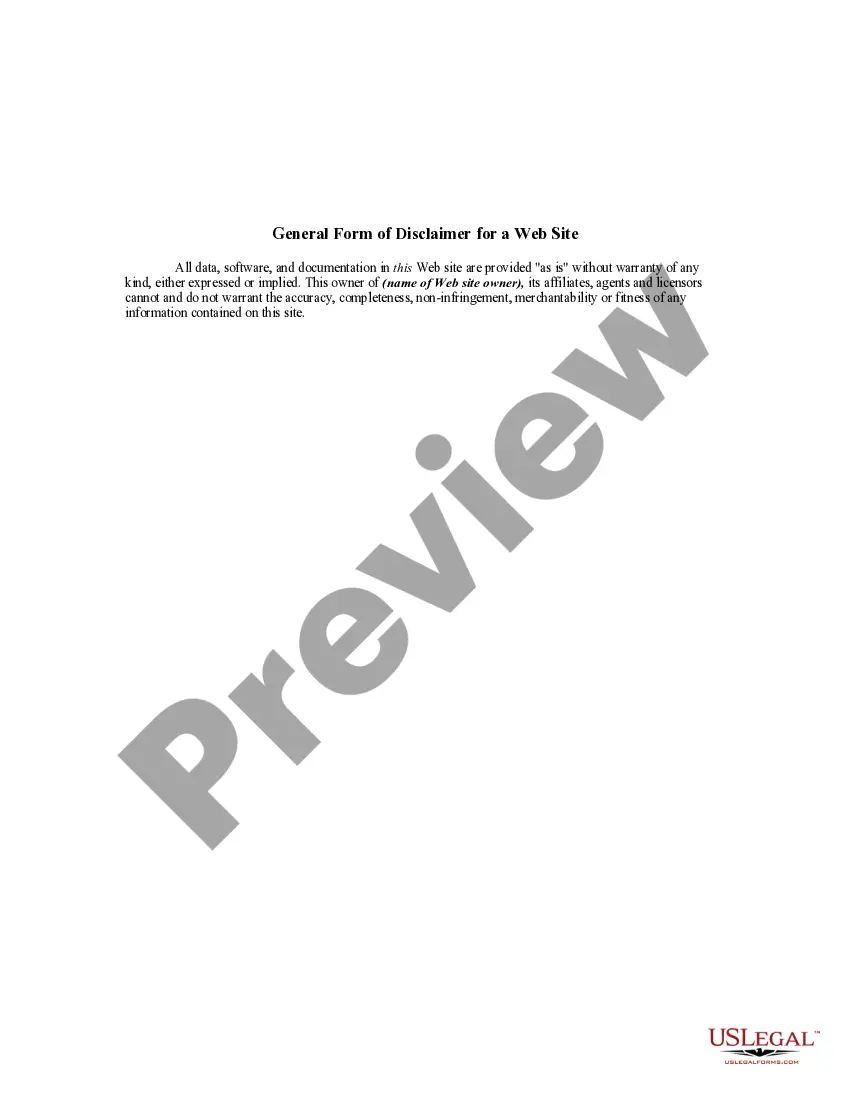
North Carolina Exclusive Distributorship Agreement
Description
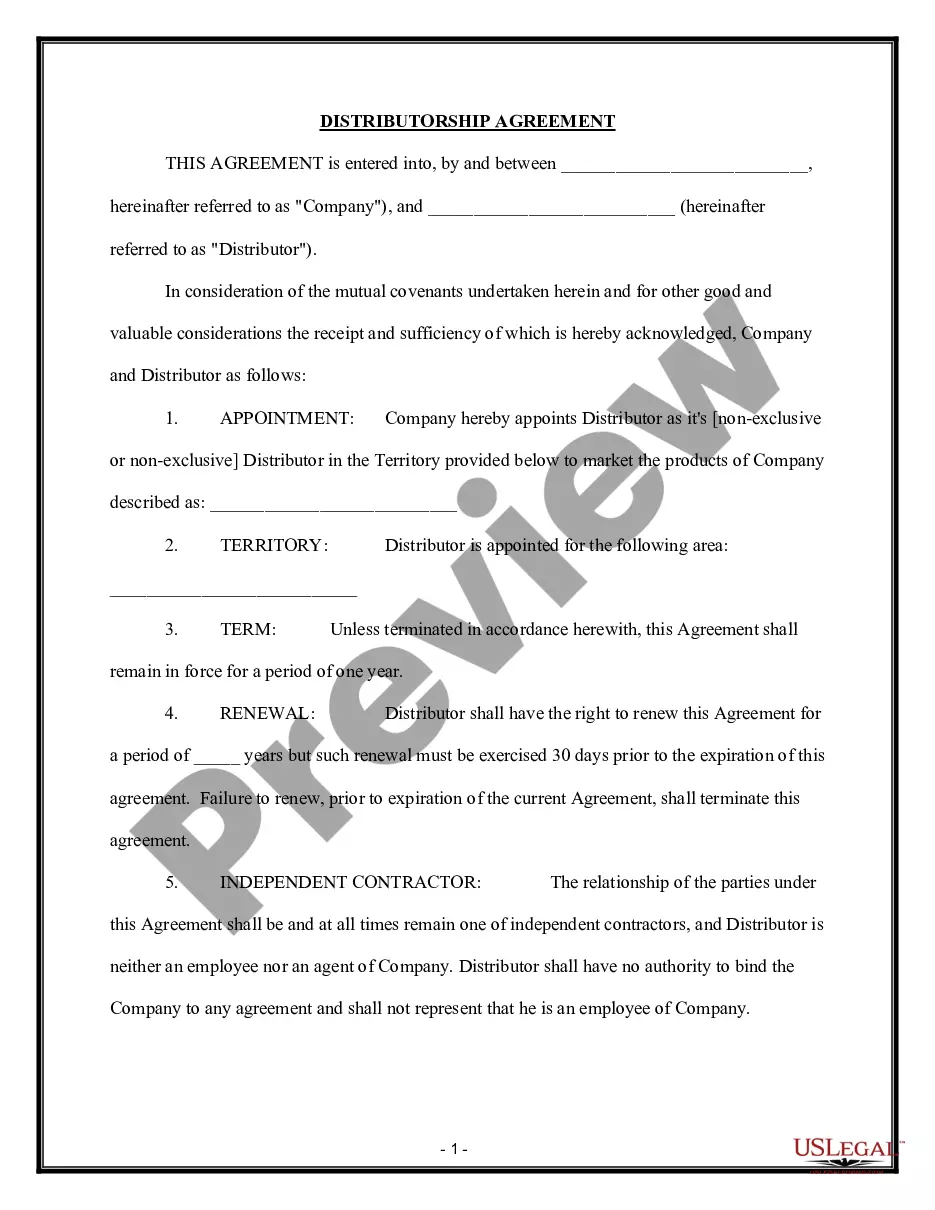
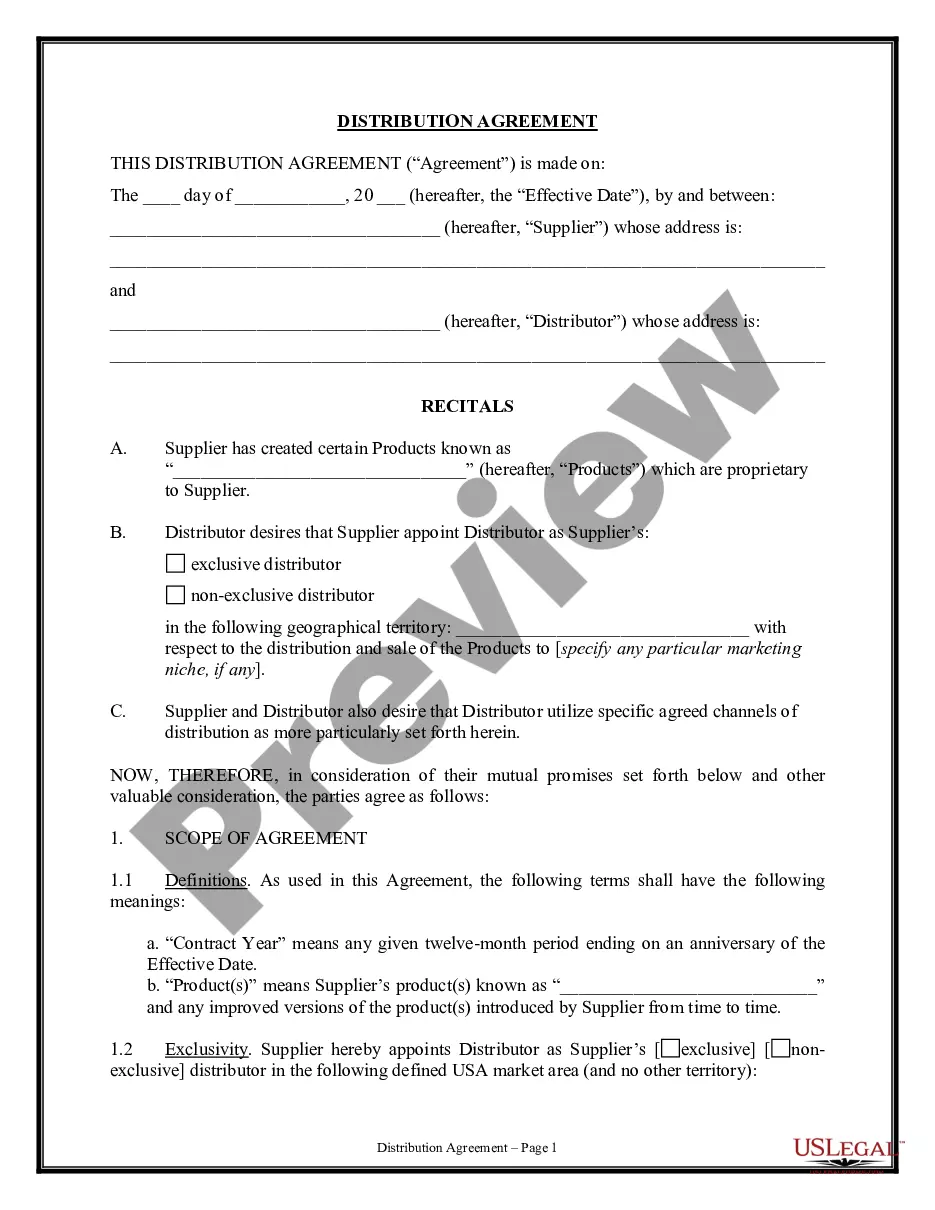
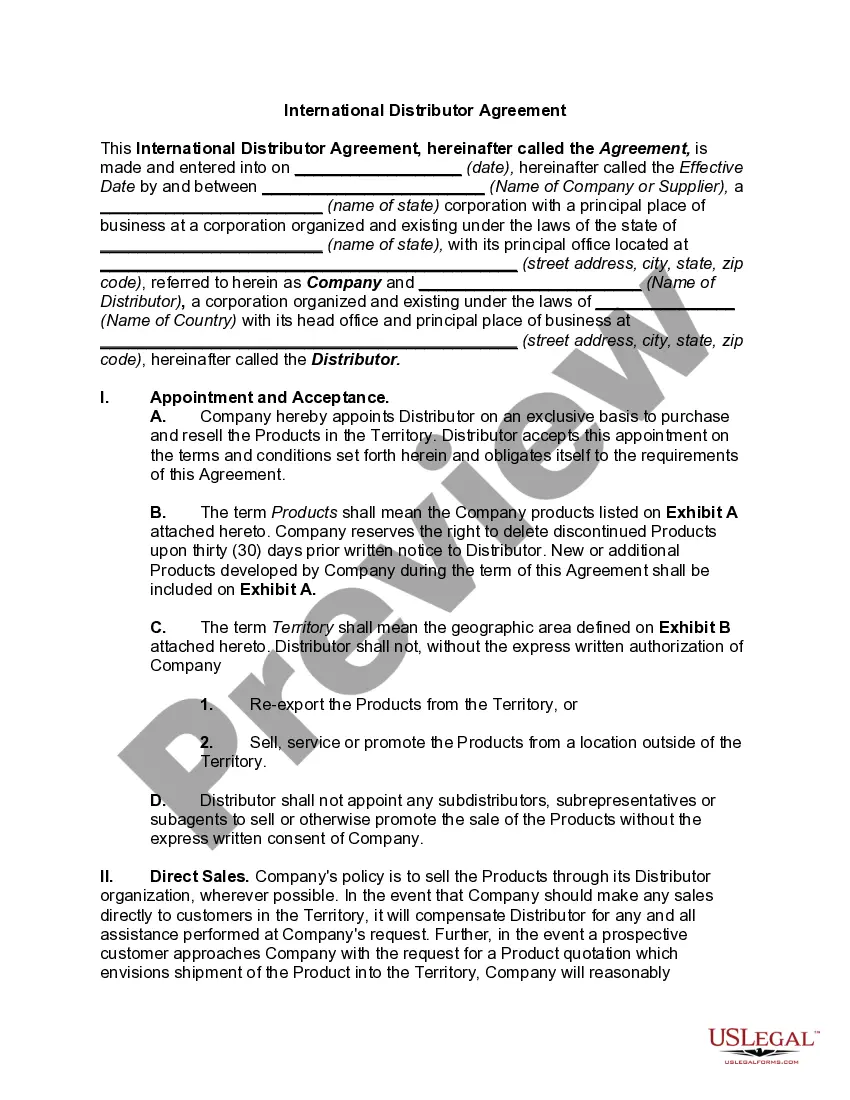
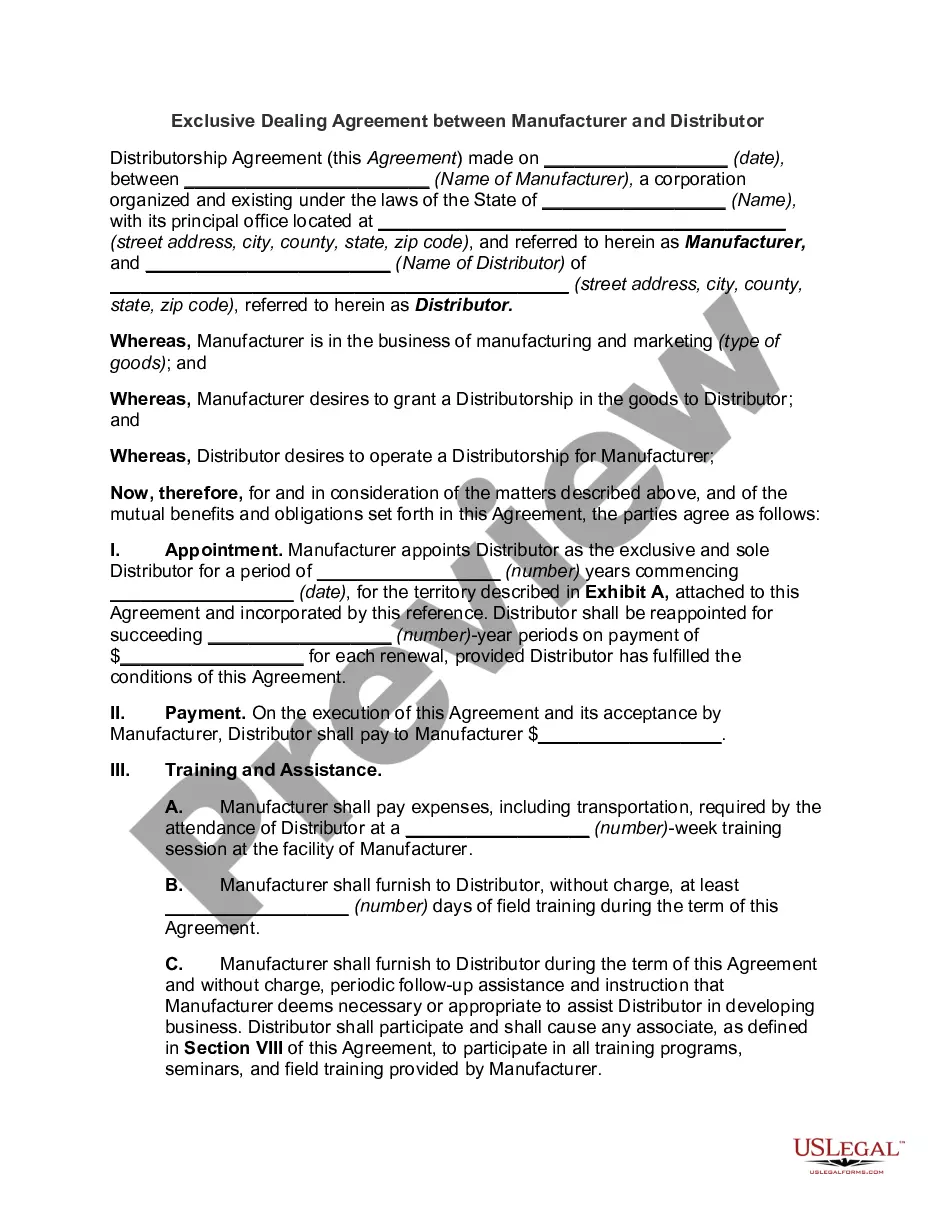
Get your form ready online
Our built-in tools help you complete, sign, share, and store your documents in one place.
Make edits, fill in missing information, and update formatting in US Legal Forms—just like you would in MS Word.
Download a copy, print it, send it by email, or mail it via USPS—whatever works best for your next step.
Sign and collect signatures with our SignNow integration. Send to multiple recipients, set reminders, and more. Go Premium to unlock E-Sign.
If this form requires notarization, complete it online through a secure video call—no need to meet a notary in person or wait for an appointment.
We protect your documents and personal data by following strict security and privacy standards.

Make edits, fill in missing information, and update formatting in US Legal Forms—just like you would in MS Word.

Download a copy, print it, send it by email, or mail it via USPS—whatever works best for your next step.

Sign and collect signatures with our SignNow integration. Send to multiple recipients, set reminders, and more. Go Premium to unlock E-Sign.

If this form requires notarization, complete it online through a secure video call—no need to meet a notary in person or wait for an appointment.

We protect your documents and personal data by following strict security and privacy standards.
Looking for another form?



How to fill out Exclusive Distributorship Agreement?
It is feasible to spend hours online trying to discover the valid file template that fulfills the federal and state criteria you need.
US Legal Forms provides thousands of authentic forms that are evaluated by professionals.
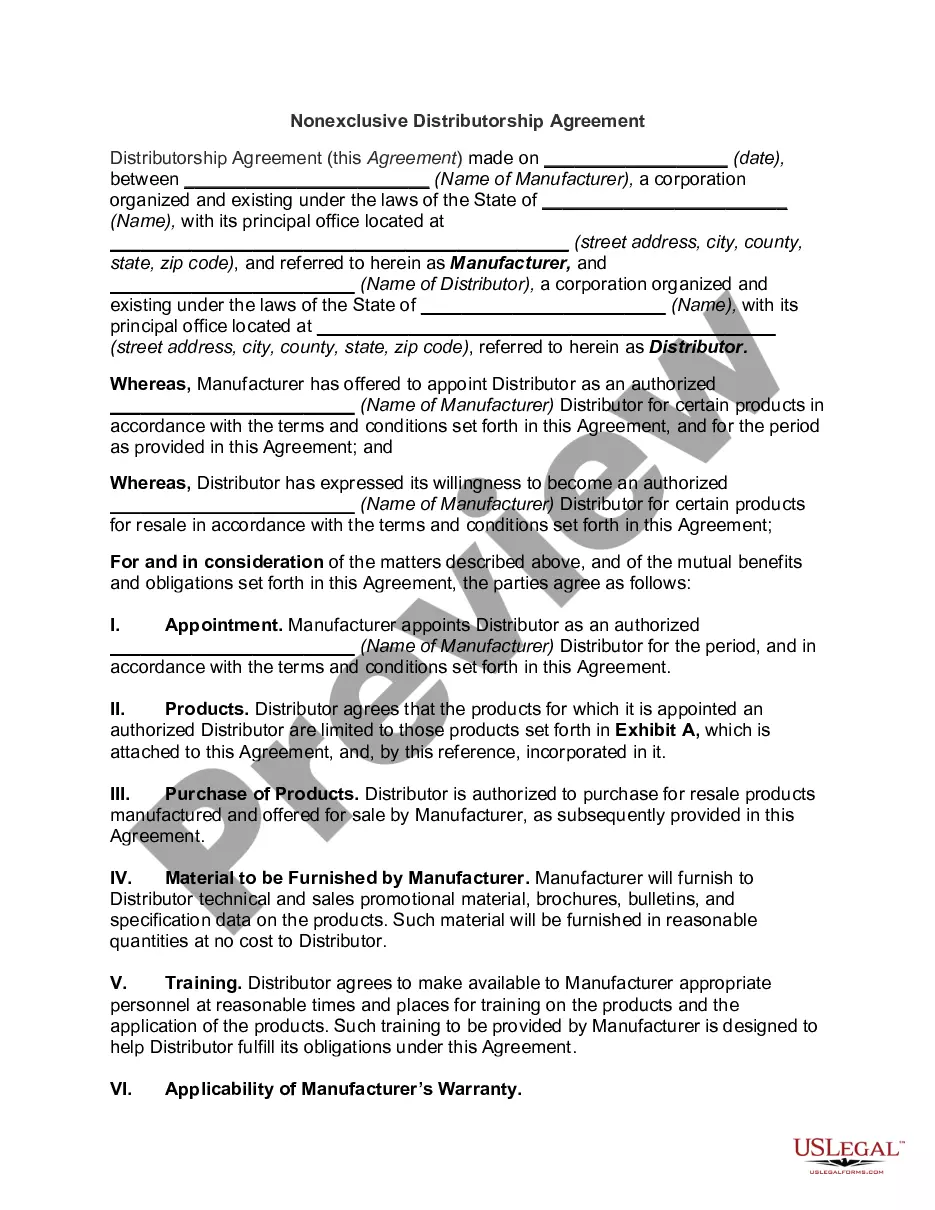
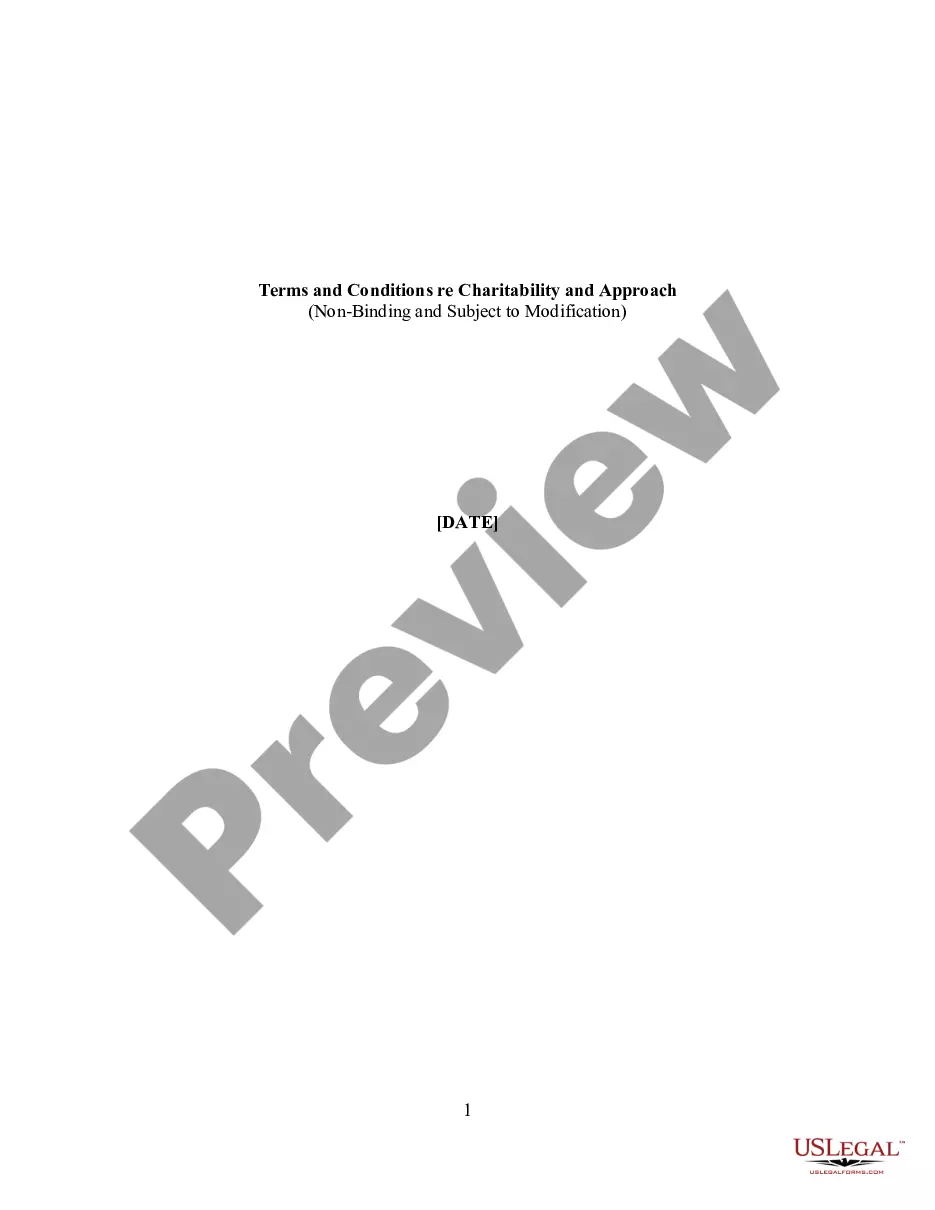
You can easily obtain or print the North Carolina Exclusive Distributorship Agreement from this service.
If available, use the Preview button to look through the document template as well. If you wish to get another version of your document, utilize the Search field to find the template that suits your needs and specifications.
- If you already possess a US Legal Forms account, you can Log In and click the Download button.
- After that, you can complete, modify, print, or sign the North Carolina Exclusive Distributorship Agreement.
- Every legal document template you obtain is yours permanently.
- To acquire another copy of any purchased form, visit the My documents tab and click the appropriate button.
- If you are using the US Legal Forms website for the first time, follow the simple instructions below.
- First, ensure that you have selected the correct document template for your region/city of choice.
- Review the form description to confirm you have chosen the right document.
Form popularity
FAQ
The main difference between exclusive and non-exclusive distribution lies in the rights assigned to distributors. In an exclusive distribution agreement, like a North Carolina Exclusive Distributorship Agreement, one distributor is authorized to sell within a territory, whereas non-exclusive agreements allow multiple distributors to sell the same product in the same territory. This distinction can significantly impact sales strategy, market reach, and the overall relationship between manufacturers and distributors.
Examples of companies which use exclusive distribution Samsung, Apple, Gucci, Lamborghini, Mercedes, BMW etc.
Territory: The agreement should specifically define the area in which the distributor is permitted to sell and promote the products. b. Products: The agreement should specify what products, product lines, or brands are included under the agreement.
In simple terms, an exclusive dealing contract prevents a distributor from selling the products of a different manufacturer, and a requirements contract prevents a manufacturer from buying inputs from a different supplier.
Exclusive distribution definition is a kind of distribution a manufacturer or supplier authorizes only one distributor to carry out within a definite region. Such a distributor becomes the sole authorized seller of the manufacturer's specific products.
An exclusive distribution agreement is an agreement between a distributor company and a supplier company that grants the distributor exclusive rights to sell the suppliers goods. This means that the supplier agrees to now allow another distributor to sell its goods for the duration of the agreement.
An example of exclusive distribution is Apple solely authorizing AT&T to be the distributor of the iPhone to end users.
How to become a distributorIdentify your industry. The first step to becoming a distributor is identifying the industry you'd like to serve.Register your business legally.Seek suppliers and manufacturers.Plan your logistics.Apply as a distributor.Build relationships.
A distribution agreement, also known as a distributor agreement, is a contract between a supplying company with products to sell and another company that markets and sells the products. The distributor agrees to buy products from the supplier company and sell them to clients within certain geographical areas.
Exclusive dealing or requirements contracts between manufacturers and retailers are common and are generally lawful.