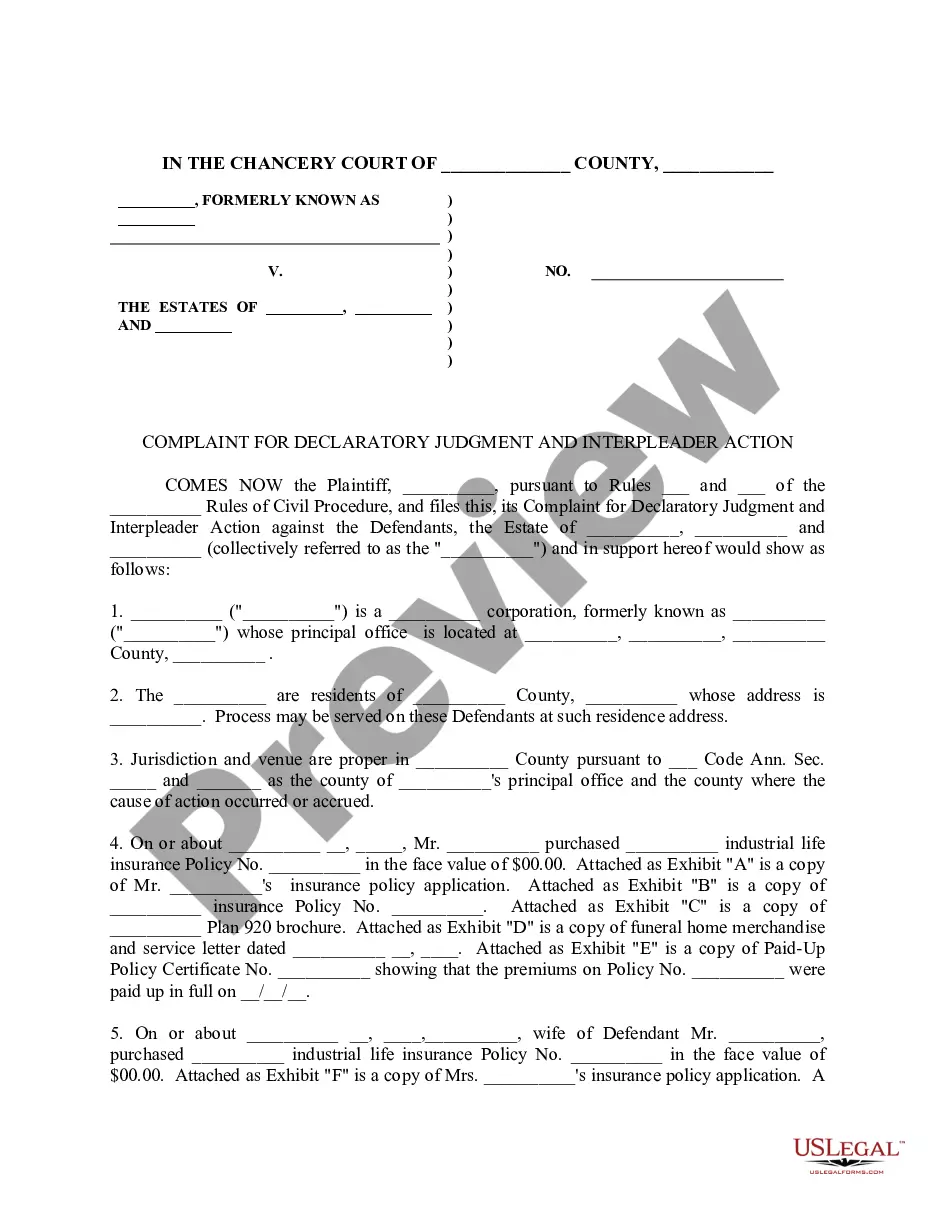
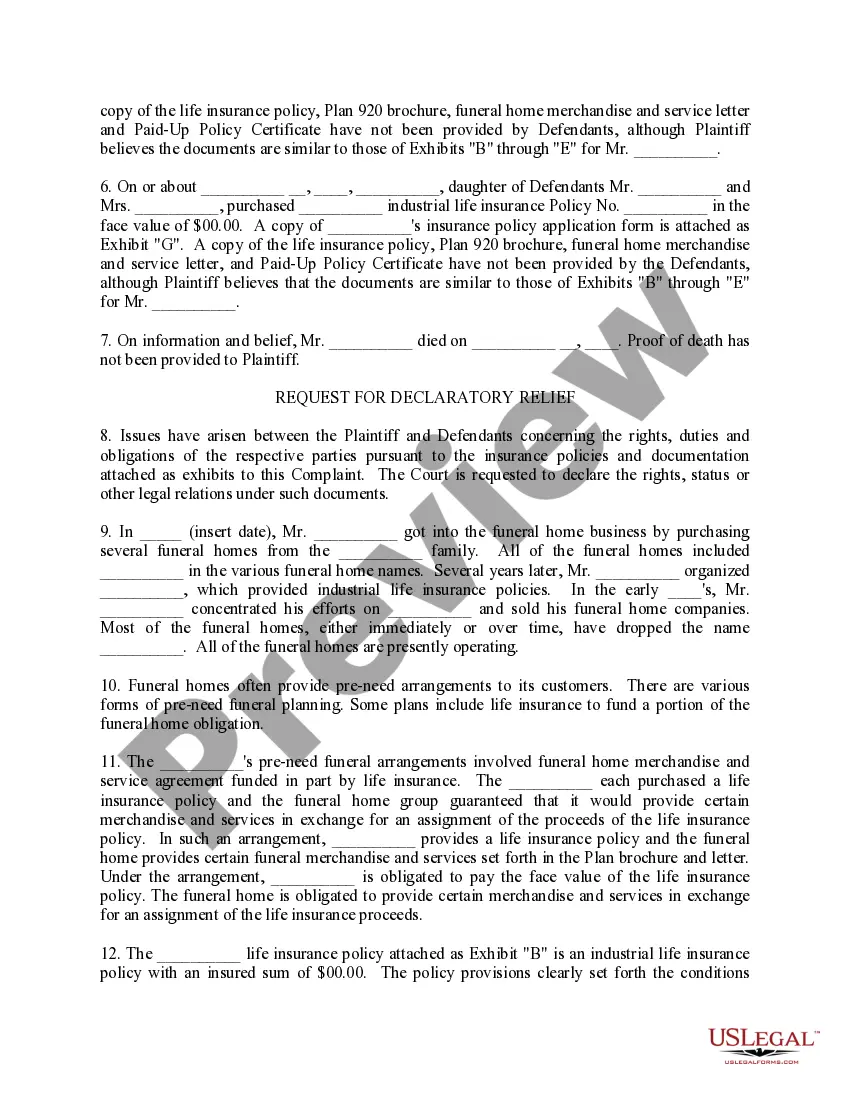
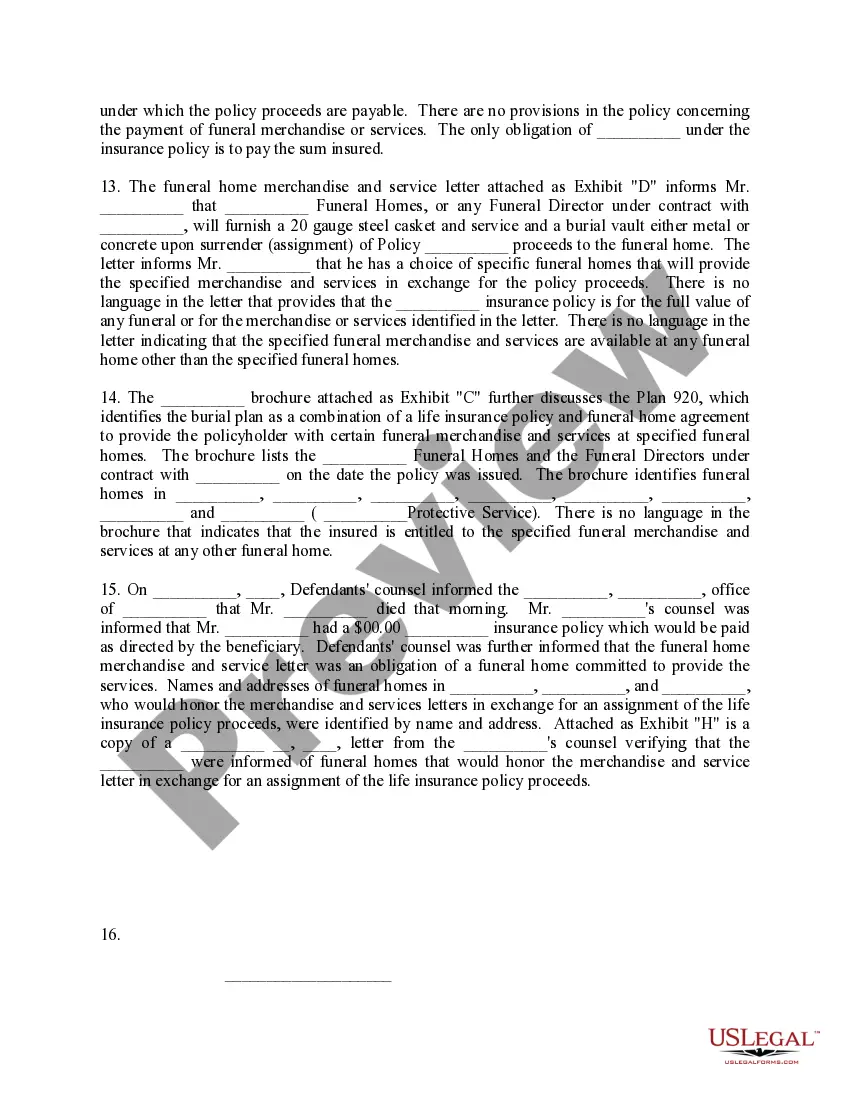
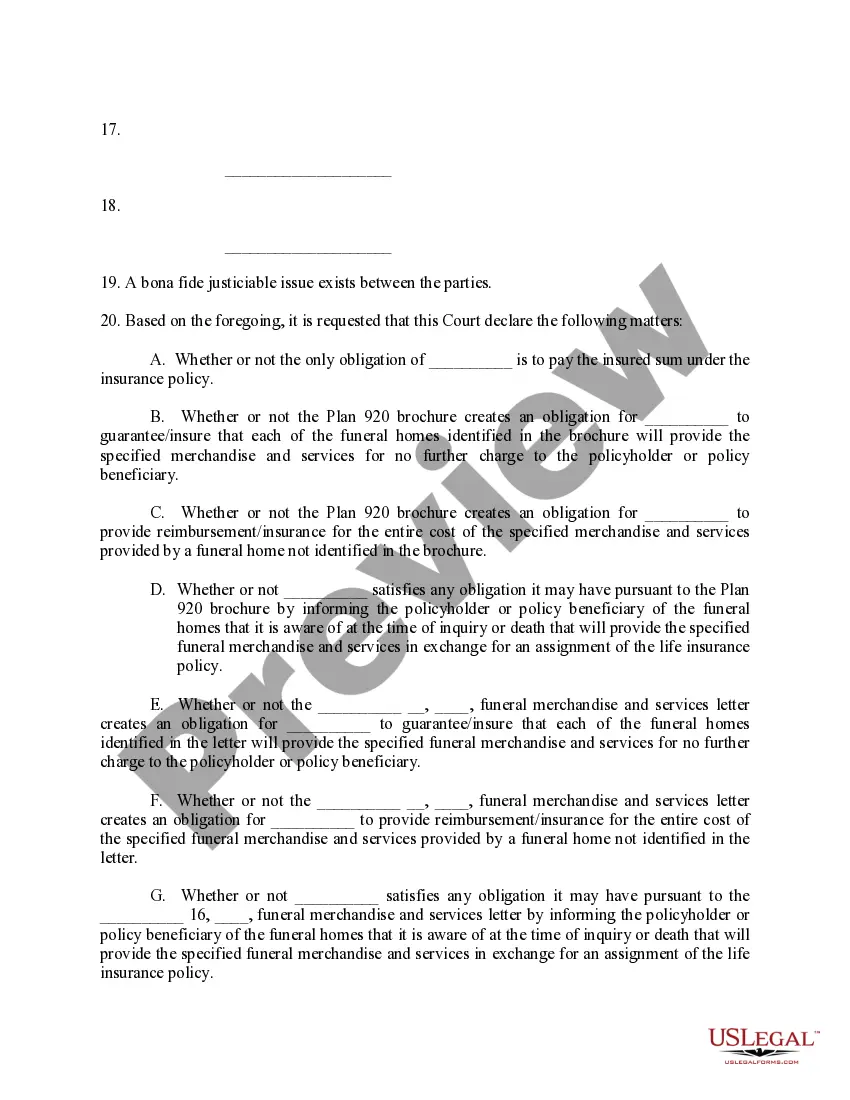
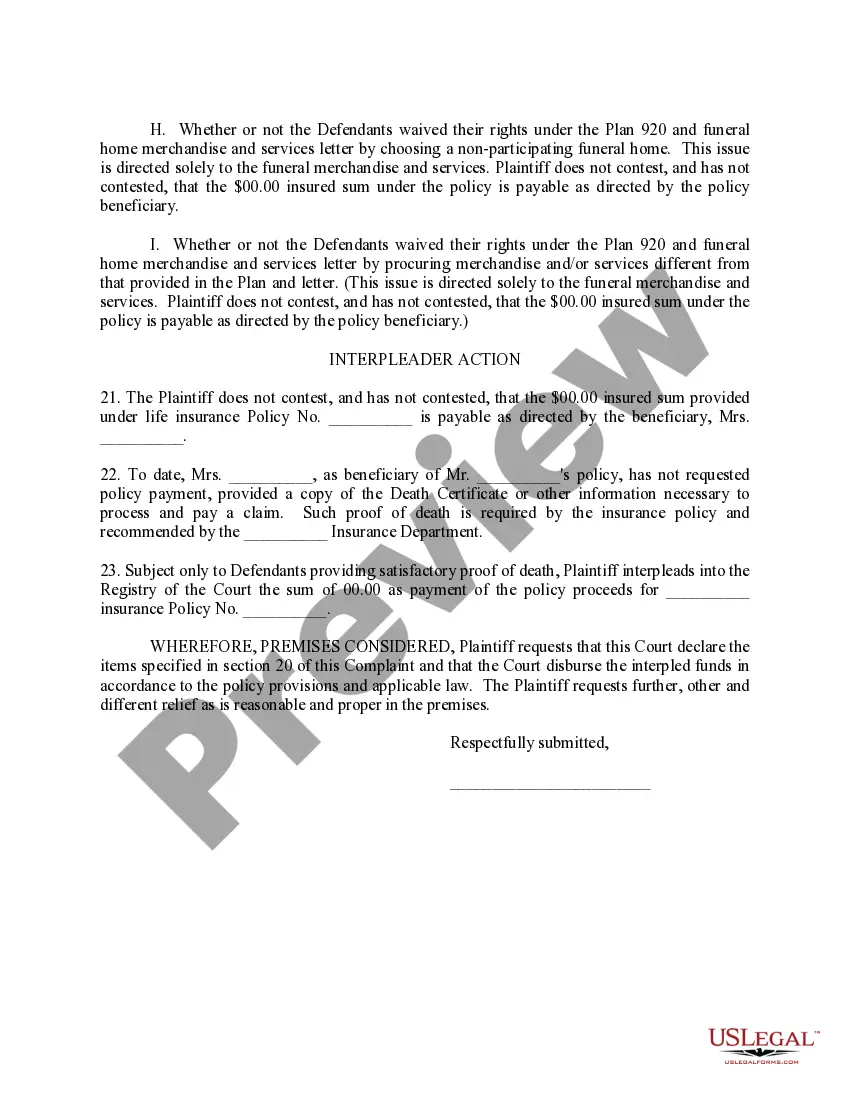
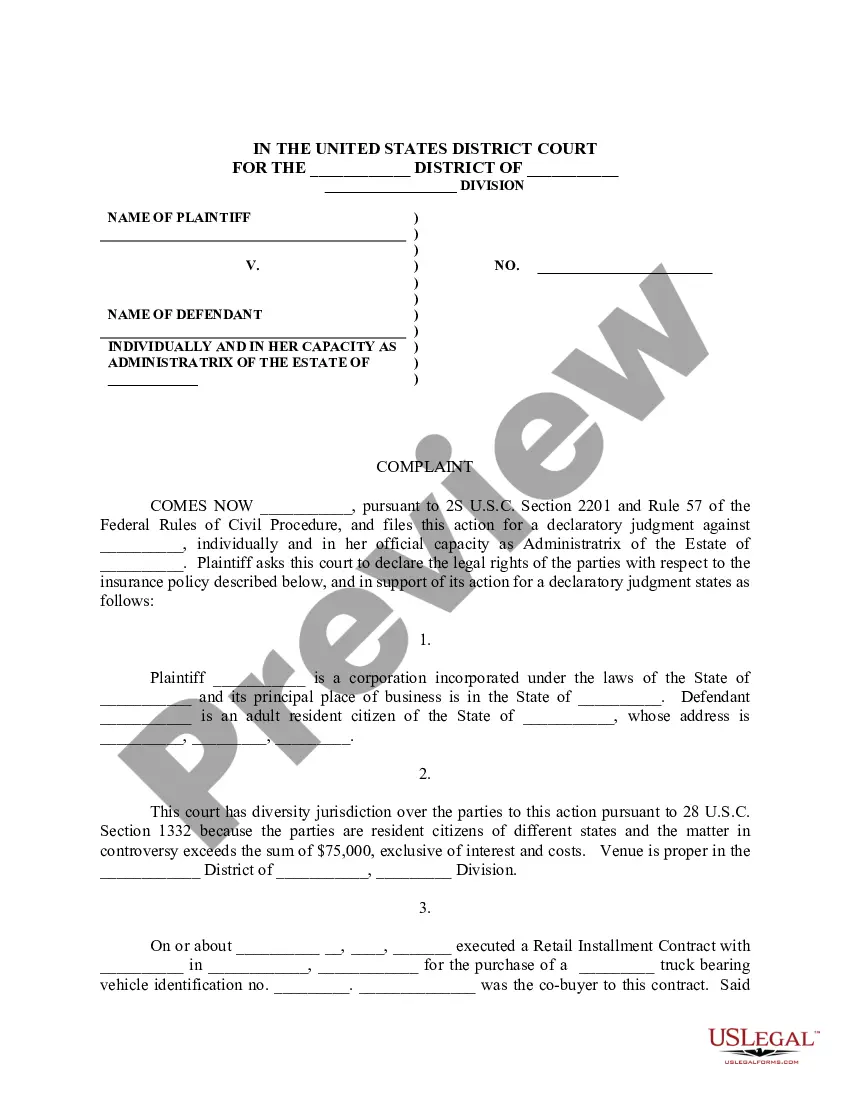
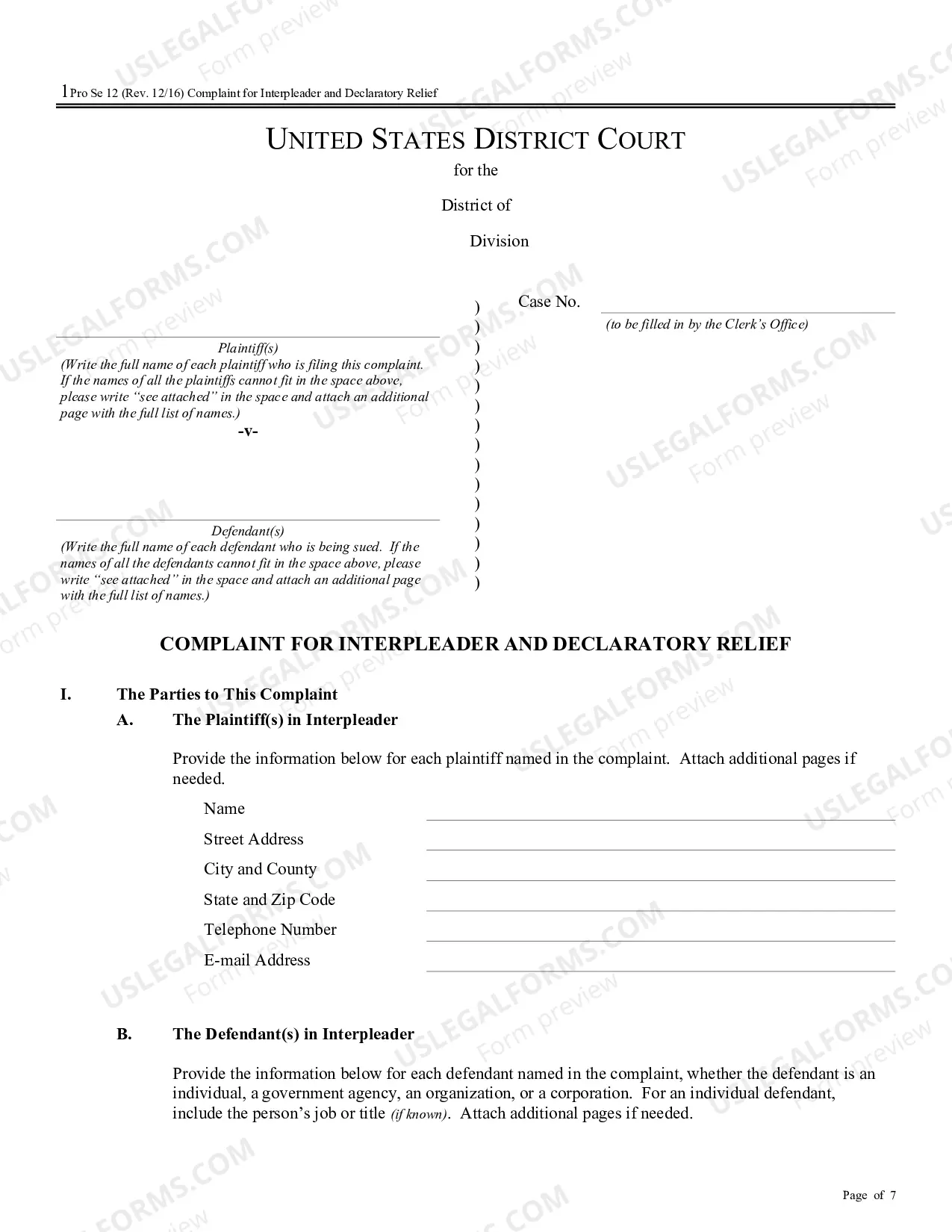
North Carolina Complaint for Declaratory Judgment and Interpleader Action or Burial Policy
Description


Get your form ready online
Our built-in tools help you complete, sign, share, and store your documents in one place.
Make edits, fill in missing information, and update formatting in US Legal Forms—just like you would in MS Word.
Download a copy, print it, send it by email, or mail it via USPS—whatever works best for your next step.
Sign and collect signatures with our SignNow integration. Send to multiple recipients, set reminders, and more. Go Premium to unlock E-Sign.
If this form requires notarization, complete it online through a secure video call—no need to meet a notary in person or wait for an appointment.
We protect your documents and personal data by following strict security and privacy standards.

Make edits, fill in missing information, and update formatting in US Legal Forms—just like you would in MS Word.

Download a copy, print it, send it by email, or mail it via USPS—whatever works best for your next step.

Sign and collect signatures with our SignNow integration. Send to multiple recipients, set reminders, and more. Go Premium to unlock E-Sign.

If this form requires notarization, complete it online through a secure video call—no need to meet a notary in person or wait for an appointment.

We protect your documents and personal data by following strict security and privacy standards.
Looking for another form?
How to fill out Complaint For Declaratory Judgment And Interpleader Action Or Burial Policy?
US Legal Forms - one of the largest collections of legal documents in the United States - offers a broad selection of legal document templates that you can download or print. By utilizing the website, you can access thousands of forms for business and personal purposes, organized by categories, states, or keywords.
You can find the latest versions of forms such as the North Carolina Complaint for Declaratory Judgment and Interpleader Action or Burial Policy in just a few minutes. If you already have a subscription, Log In and download the North Carolina Complaint for Declaratory Judgment and Interpleader Action or Burial Policy from the US Legal Forms library. The Download button will appear on every form you view. You have access to all previously saved forms from the My documents section of your account.
If you are looking to use US Legal Forms for the first time, here are simple instructions to help you get started: Make sure you have selected the correct form for your state/region. Click the Preview button to review the form's content. Check the form description to ensure you have chosen the right document. If the form does not meet your needs, utilize the Search area at the top of the screen to find one that does. If you are satisfied with the form, confirm your choice by clicking the Buy now button. Next, choose the pricing plan you prefer and provide your details to register for an account. Process the purchase. Use your credit card or PayPal account to complete the transaction. Choose the format and download the form to your device. Make modifications. Fill out, edit, print, and sign the saved North Carolina Complaint for Declaratory Judgment and Interpleader Action or Burial Policy. Every template you add to your account does not have an expiration date and is yours indefinitely. Therefore, if you wish to download or print another copy, simply navigate to the My documents section and click on the form you need.
- Access the North Carolina Complaint for Declaratory Judgment and Interpleader Action or Burial Policy with US Legal Forms, one of the most extensive collections of legal document templates.
- Utilize thousands of professional and state-specific templates that meet your business or personal needs and requirements.
Form popularity
FAQ
A declaratory judgment is a binding judgment from a court defining the legal relationship between parties and their rights in a matter before the court.
On a separate page or pages, write a short and plain statement of the answer to the allegations in the complaint. Number the paragraphs. The answer should correspond to each paragraph in the complaint, with paragraph 1 of the answer corresponding to paragraph 1 of the complaint, etc.
? A defendant shall serve his answer within 30 days after service of the summons and complaint upon him. A party served with a pleading stating a crossclaim against him shall serve an answer thereto within 30 days after service upon him.
An answer is a response to a complaint that has been filed against you. These forms allow you to file a document telling the Judge which parts of the Plaintiff's complaint that you agree and disagree with. YOU MUST FILE THESE DOCUMENTS WITHIN 30 DAYS OF BEING SERVED WITH THE PLAINTIFF'S COMPLAINT.
Rule 4. The complaint and summons shall be delivered to some proper person for service. In this State, such proper person shall be the sheriff of the county where service is to be made or some other person duly authorized by law to serve summons.
The action of interpleader, under section 120, is a remedy whereby a person who has personal property in his possession, or an obligation to render wholly or partially, without claiming any right in both, comes to court and asks that the persons who claim the said personal property or who consider themselves entitled ...
Under Rule 12(f), however, motions to strike are limited to addressing ?an insufficient defense or any redundant, immaterial, impertinent, or scandalous matter.? Because ?the Court must view the pleadings in a light most favorable to the pleading party,? a 12(f) motion to strike will rarely be granted.