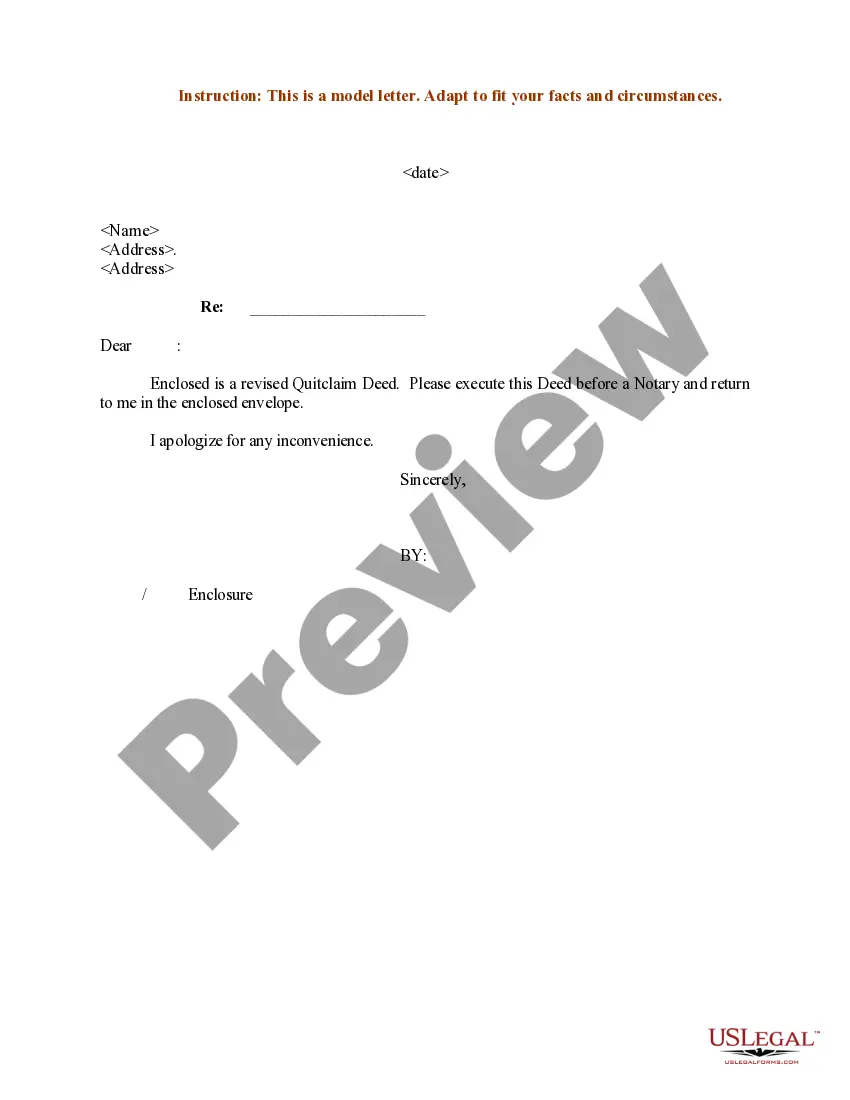
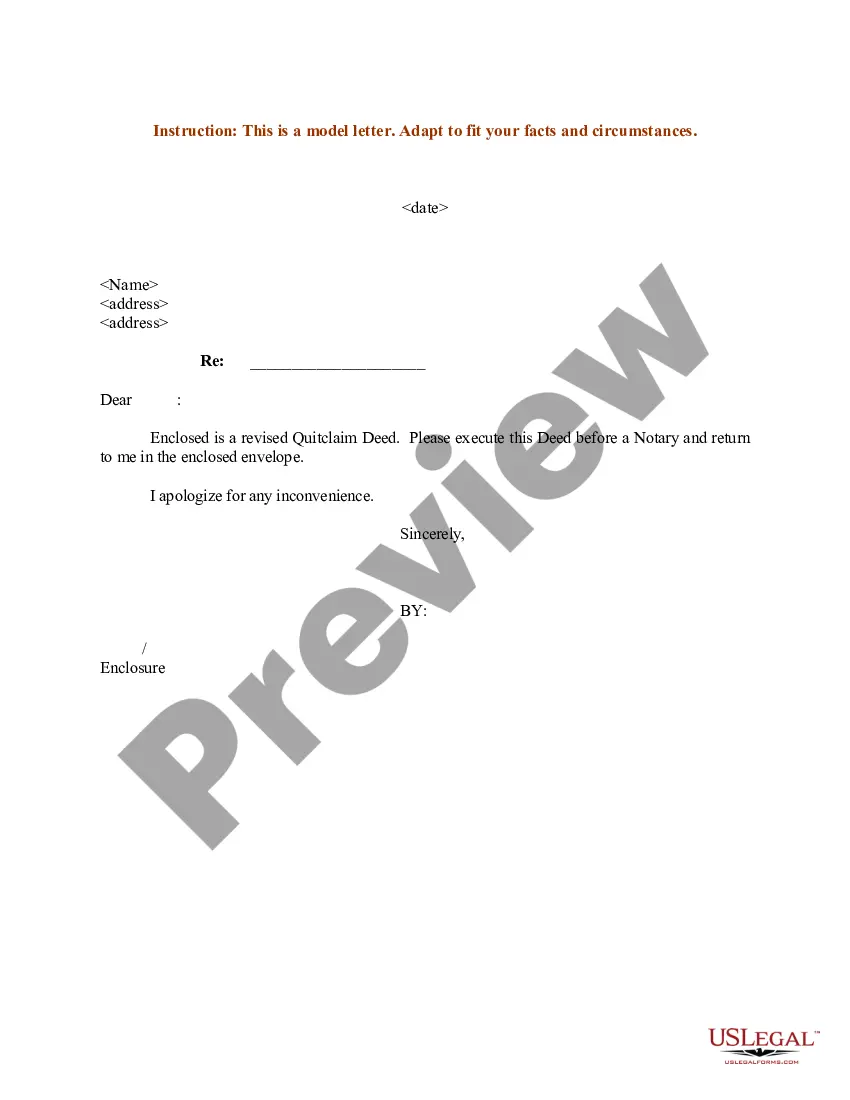
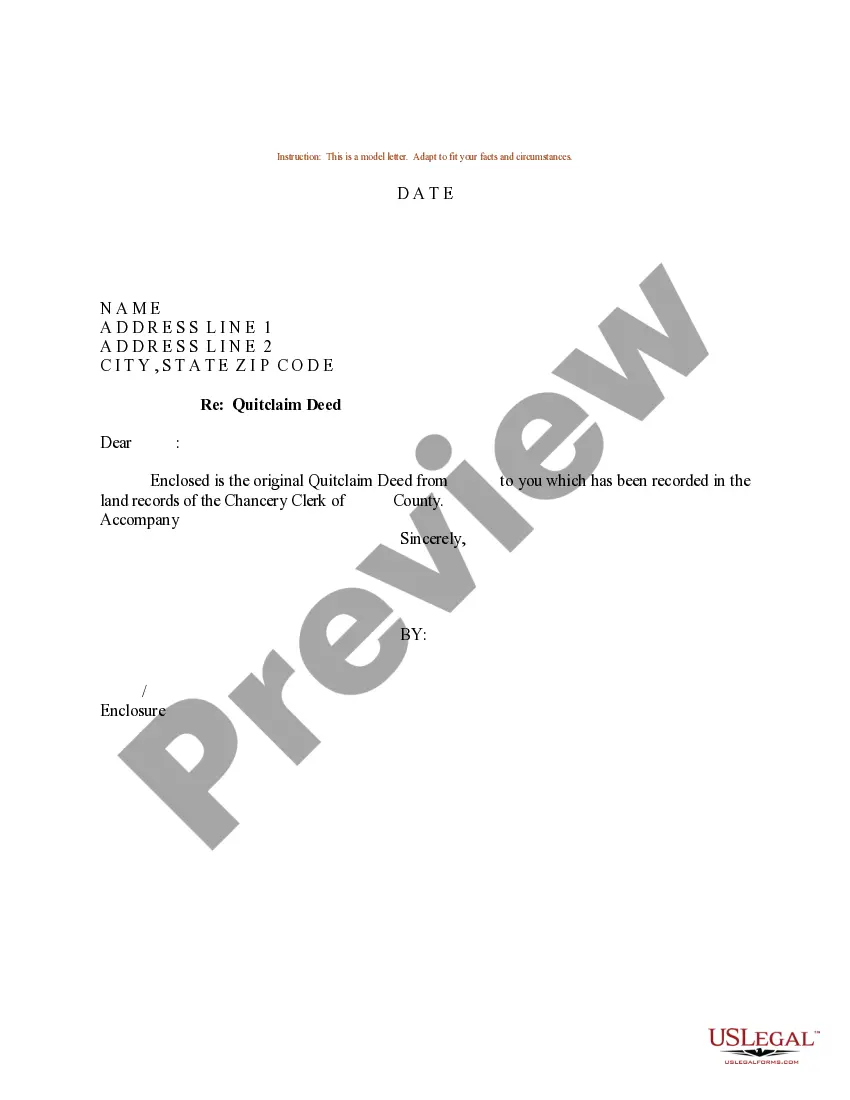
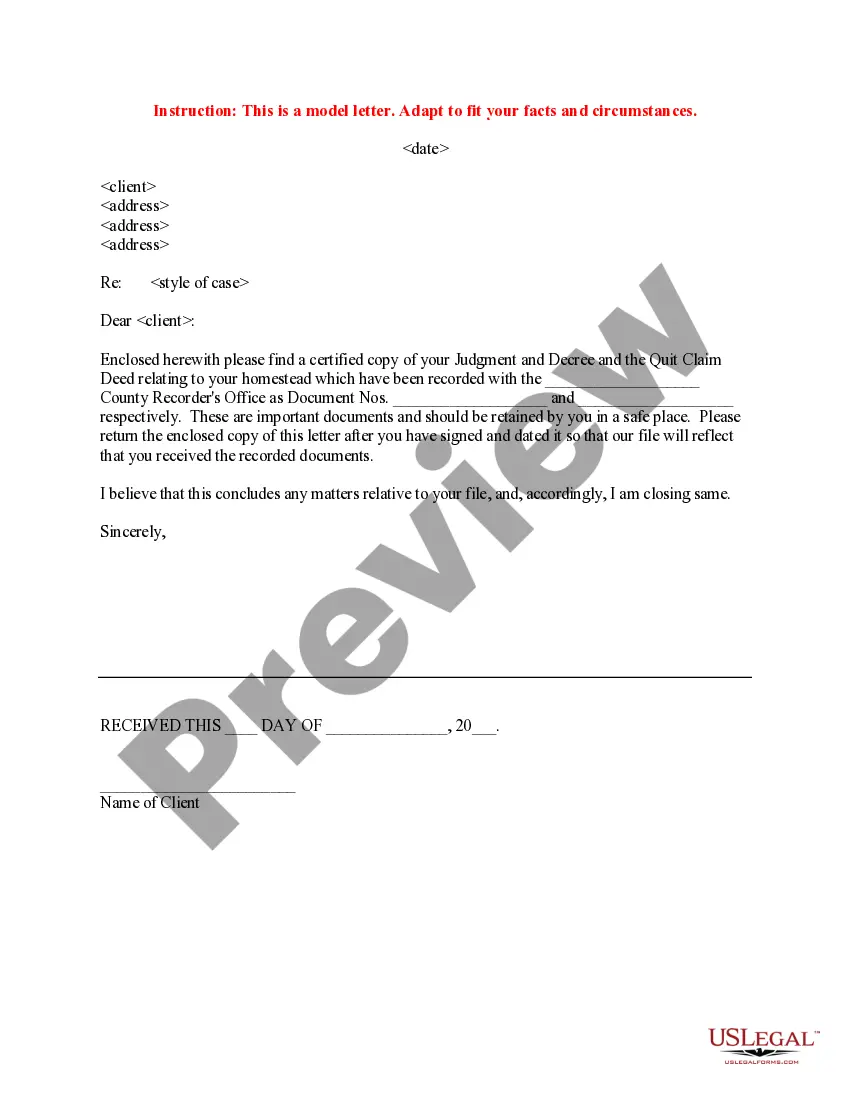
North Carolina Sample Letter for Revised Quitclaim Deed
Description
Get your form ready online
Our built-in tools help you complete, sign, share, and store your documents in one place.
Make edits, fill in missing information, and update formatting in US Legal Forms—just like you would in MS Word.
Download a copy, print it, send it by email, or mail it via USPS—whatever works best for your next step.
Sign and collect signatures with our SignNow integration. Send to multiple recipients, set reminders, and more. Go Premium to unlock E-Sign.
If this form requires notarization, complete it online through a secure video call—no need to meet a notary in person or wait for an appointment.
We protect your documents and personal data by following strict security and privacy standards.

Make edits, fill in missing information, and update formatting in US Legal Forms—just like you would in MS Word.

Download a copy, print it, send it by email, or mail it via USPS—whatever works best for your next step.

Sign and collect signatures with our SignNow integration. Send to multiple recipients, set reminders, and more. Go Premium to unlock E-Sign.

If this form requires notarization, complete it online through a secure video call—no need to meet a notary in person or wait for an appointment.

We protect your documents and personal data by following strict security and privacy standards.
Looking for another form?

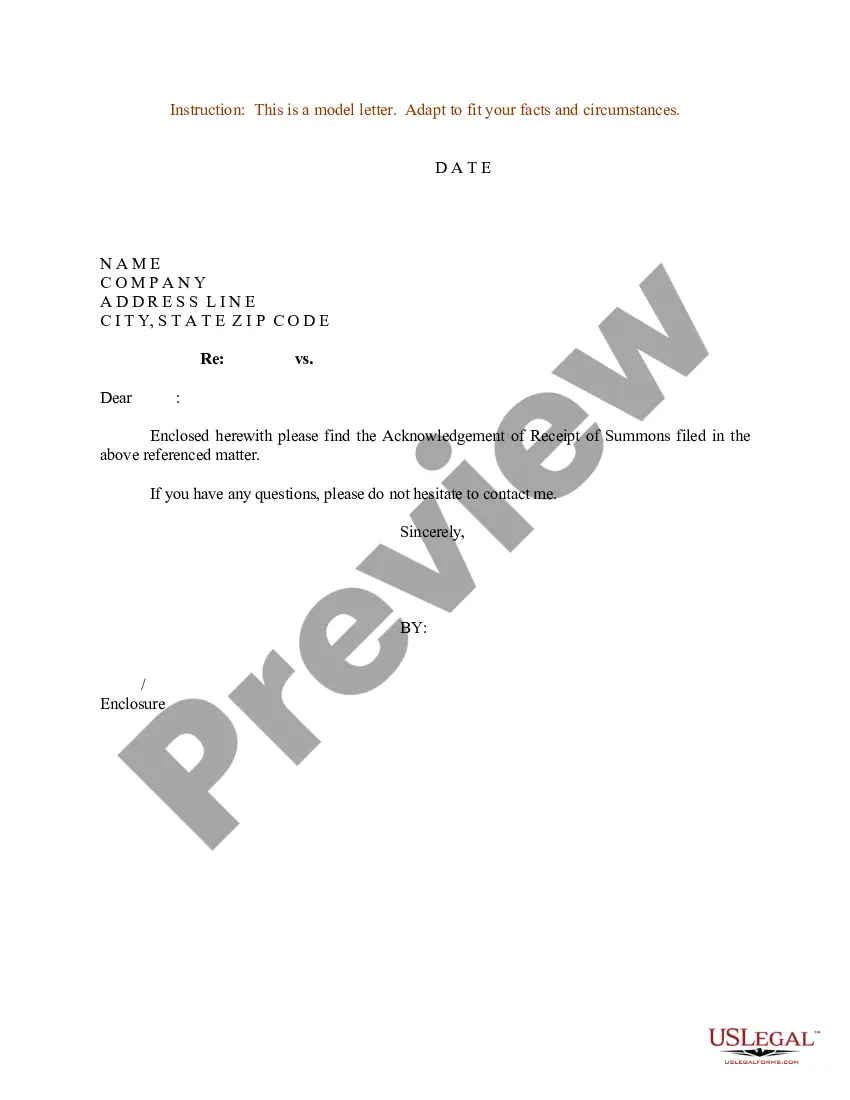
How to fill out Sample Letter For Revised Quitclaim Deed?
Are you currently in the location where you require documents for both business or personal reasons almost all the time.
There are numerous legal document templates accessible online, but locating ones you can trust is not easy.
US Legal Forms offers thousands of form templates, including the North Carolina Sample Letter for Revised Quitclaim Deed, which are designed to meet state and federal requirements.
Utilize US Legal Forms, the most extensive collection of legal forms, to save time and prevent mistakes.
The service provides professionally created legal document templates that can be used for various purposes. Create an account on US Legal Forms and start making your life easier.
- If you are already familiar with the US Legal Forms website and have an account, simply Log In.
- Then, you can download the North Carolina Sample Letter for Revised Quitclaim Deed template.
- If you do not have an account and wish to start using US Legal Forms, follow these steps.
- Find the form you need and ensure it is for the correct city/region.
- Utilize the Review button to evaluate the document.
- Check the outline to confirm you have selected the correct form.
- If the form is not what you are looking for, use the Search field to find the form that meets your needs and requirements.
- Once you have the right form, click Get now.
- Select the pricing plan you prefer, fill in the necessary information to create your account, and pay for the order using your PayPal or credit card.
- Choose a convenient document format and download your copy.
- Access all the document templates you have purchased in the My documents section. You can obtain another copy of the North Carolina Sample Letter for Revised Quitclaim Deed at any time. Click on the desired form to download or print the document template.
Form popularity
FAQ
Deed name changes require the submittal of a new deed to the Register of Deeds office. We suggest that you consult an attorney unless you are familiar with creating legal documents. Click to look up recording fees. You may also have to pay excise tax at the rate of $2 per thousand dollars of the purchase price.
The grantor completes the quit claim deed form, including their name, the grantee's name, and a legal description of the property. The grantor signs the deed in front of a notary public. The grantee records the deed with the appropriate county office, usually the county recorder or register of deeds.
Among other things, a quitclaim deed or non-warranty deed must include the following items: Names and addresses of the current owner and new owner; A legal description of the property; The name of the person who prepared the deed;23 and. A statement that the property is or is not the transferor's primary residence.
Almost all instruments presented for recordation first must be acknowledged (notarized) before the Register of Deeds can record the instrument. Notary Publics are authorized by North Carolina law to perform this duty.
Signing Requirements § 47-38: All North Carolina quitclaim deeds need the grantor's signature to be acknowledged by a notary public. Recording Requirements § 47H-2: Quitclaim deeds must be recorded with the Register of Deeds in the county where the property is located.
Navigating the quitclaim deed process is an extremely arduous task to tackle on your own. You need a knowledgeable real estate attorney who can help you successfully transfer ownership for the most stress-free experience possible.
To properly convey land in North Carolina, the owner must execute and file a new deed with the register of deeds for the county in which the property is located. The most common types of deeds are the General Warranty Deed, the Special Warranty Deed, and the Non-Warranty Deed (also known as the Quit Claim Deed).