See Preview
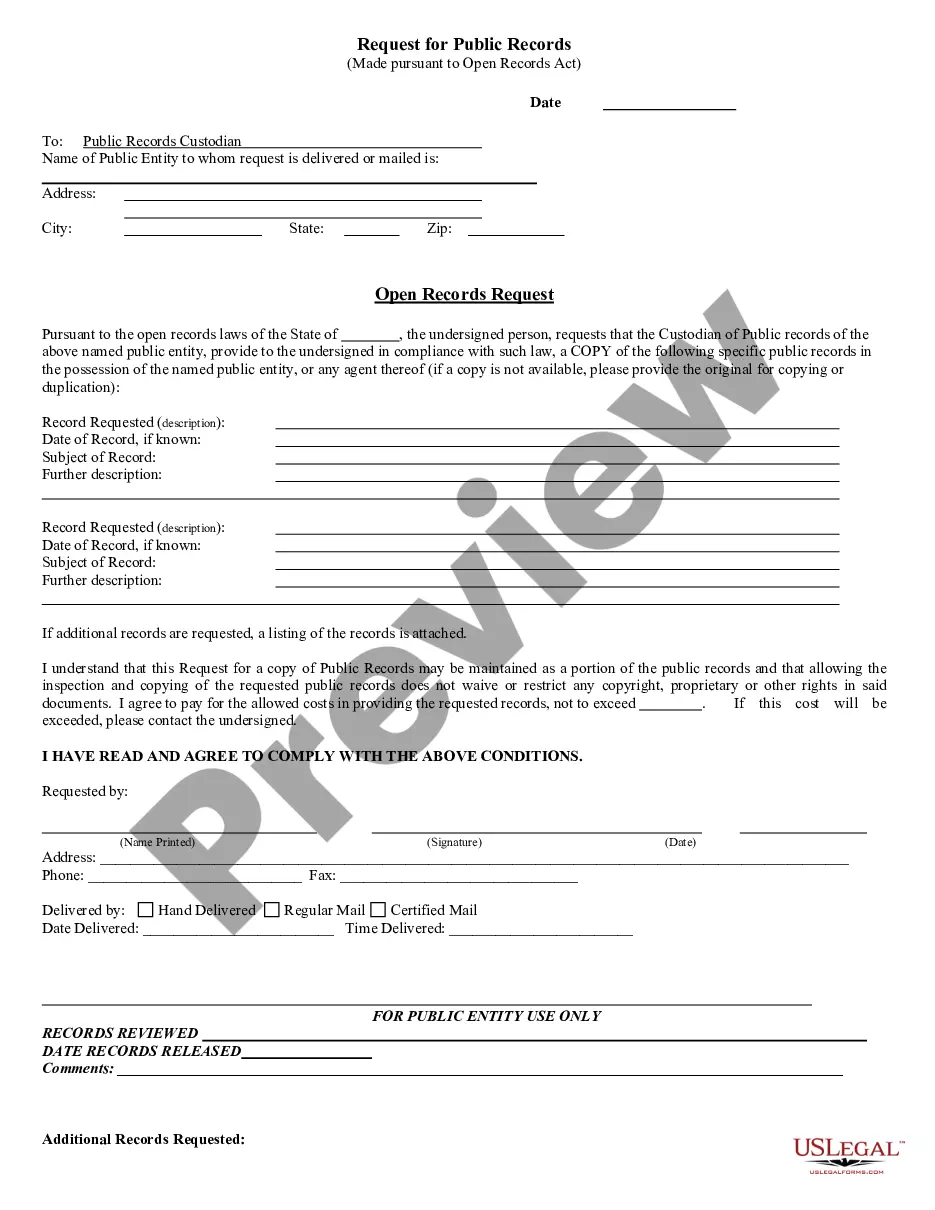
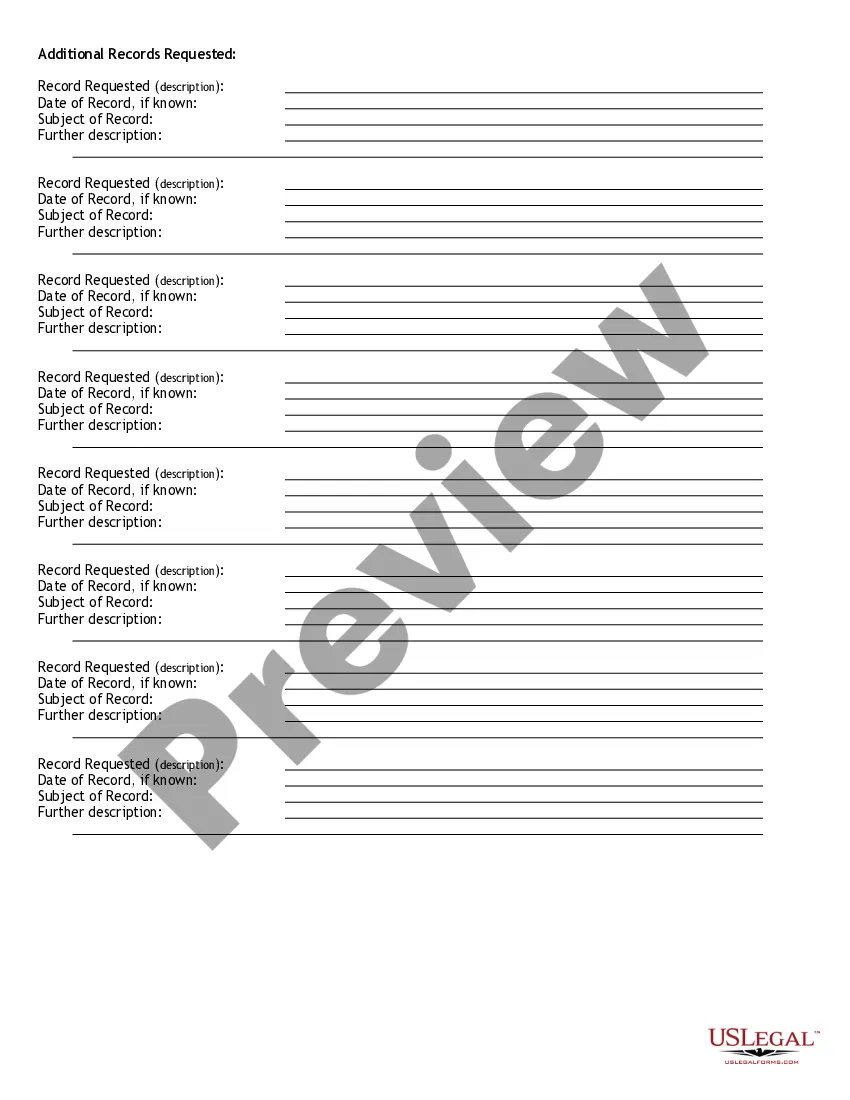
North Carolina Public Records Request - Open Public Records Act
State:
Multi-State
Category:
Control #:
US-004-PR
Format:
Word;
Rich Text
124 downloads
Description
Free preview
Get your form ready online
Our built-in tools help you complete, sign, share, and store your documents in one place.
Built-in online Word editor
Make edits, fill in missing information, and update formatting in US Legal Forms—just like you would in MS Word.
Export easily
Download a copy, print it, send it by email, or mail it via USPS—whatever works best for your next step.
E-sign your document
Sign and collect signatures with our SignNow integration. Send to multiple recipients, set reminders, and more. Go Premium to unlock E-Sign.
Notarize online 24/7
If this form requires notarization, complete it online through a secure video call—no need to meet a notary in person or wait for an appointment.
Store your document securely
We protect your documents and personal data by following strict security and privacy standards.

Make edits, fill in missing information, and update formatting in US Legal Forms—just like you would in MS Word.

Download a copy, print it, send it by email, or mail it via USPS—whatever works best for your next step.

Sign and collect signatures with our SignNow integration. Send to multiple recipients, set reminders, and more. Go Premium to unlock E-Sign.

If this form requires notarization, complete it online through a secure video call—no need to meet a notary in person or wait for an appointment.

We protect your documents and personal data by following strict security and privacy standards.
Looking for another form?

How to fill out Public Records Request - Open Public Records Act?
You might spend hours online searching for the legal document template that complies with the federal and state requirements you need.
US Legal Forms offers thousands of legal forms that have been reviewed by experts.
It is easy to obtain or print the North Carolina Public Records Request - Open Public Records Act from our service.
If available, utilize the Preview option to view the document template as well. To find another version of the form, use the Lookup section to locate the template that suits your needs and requirements. Once you have found the template you need, click Buy now to continue. Select the pricing plan you desire, enter your credentials, and create an account on US Legal Forms. Complete the transaction. You can use your credit card or PayPal account to pay for the legal form. Choose the format of the document and download it to your device. Make changes to your document if necessary. You can complete, modify, sign, and print the North Carolina Public Records Request - Open Public Records Act. Download and print thousands of document templates using the US Legal Forms website, which offers the largest selection of legal forms. Utilize professional and state-specific templates to meet your business or personal needs.
- If you already have a US Legal Forms account, you can Log In and click the Acquire button.
- After that, you can complete, modify, print, or sign the North Carolina Public Records Request - Open Public Records Act.
- Every legal document template you purchase is yours forever.
- To obtain another copy of the purchased form, visit the My documents tab and click the corresponding option.
- If you are using the US Legal Forms website for the first time, follow the simple instructions below.
- First, ensure that you have selected the correct document template for the area/town of your preference.
- Review the form outline to ensure you have chosen the right form.
Form popularity
FAQ
Certain types of information are exempt from public disclosure under North Carolina law. This includes sensitive details such as personal data, law enforcement records under investigation, and specific legal documents. Understanding these exemptions is essential when making a North Carolina Public Records Request - Open Public Records Act. For assistance in identifying what records you can access, consider utilizing the tools offered by US Legal Forms.
Yes, North Carolina is an open record state, meaning that most government records are accessible to the public. The North Carolina Public Records Request - Open Public Records Act supports transparency by allowing citizens to request these records. However, there are exceptions, so being informed about what is available is important. US Legal Forms provides valuable resources to help you understand the scope of public records in NC.
In North Carolina, it is generally illegal to record a conversation without the consent of at least one party involved. This means you should obtain permission before recording anyone, to respect their privacy rights. Understanding these laws is crucial, especially when handling information related to the North Carolina Public Records Request - Open Public Records Act. For detailed legal guidance, US Legal Forms offers resources to help you navigate these regulations.
To request open records in North Carolina, you must submit a formal request to the appropriate government agency. You can do this in writing, by email, or sometimes through an online portal. Be specific about the records you want, citing the North Carolina Public Records Request - Open Public Records Act, to ensure clarity. For a streamlined process, consider using the services of US Legal Forms, which can guide you through the necessary steps.
Section § 132-6 of the North Carolina Public Records Law states that a custodian of public records shall make them available ?at reasonable times and under reasonable supervision by any person, and shall, as promptly as possible, furnish copies thereof upon payment of any fees as may be prescribed by law.?
To submit a request, use the online public records request form.
Public Integrity North Carolina's Public Records and Open Meetings laws ensure that the public can know what government officials and entities do. North Carolinians are entitled to see any public record. Public bodies must conduct business in public.
North Carolina's public records law provides a broad right of access to records of public agencies. The main statutes that define the scope of the law are contained in Chapter 132 of the North Carolina General Statutes (hereinafter G.S.).
Public records, as defined in G.S. 132 1, shall not include written communications (and copies thereof) to any public board, council, commission or other governmental body of the State or of any county, municipality or other political subdivision or unit of government, made within the scope of the attorney client ...
The policy of the state of North Carolina is to allow public access to the activities of government, including public documents, for residents, members of the media and other organizations.