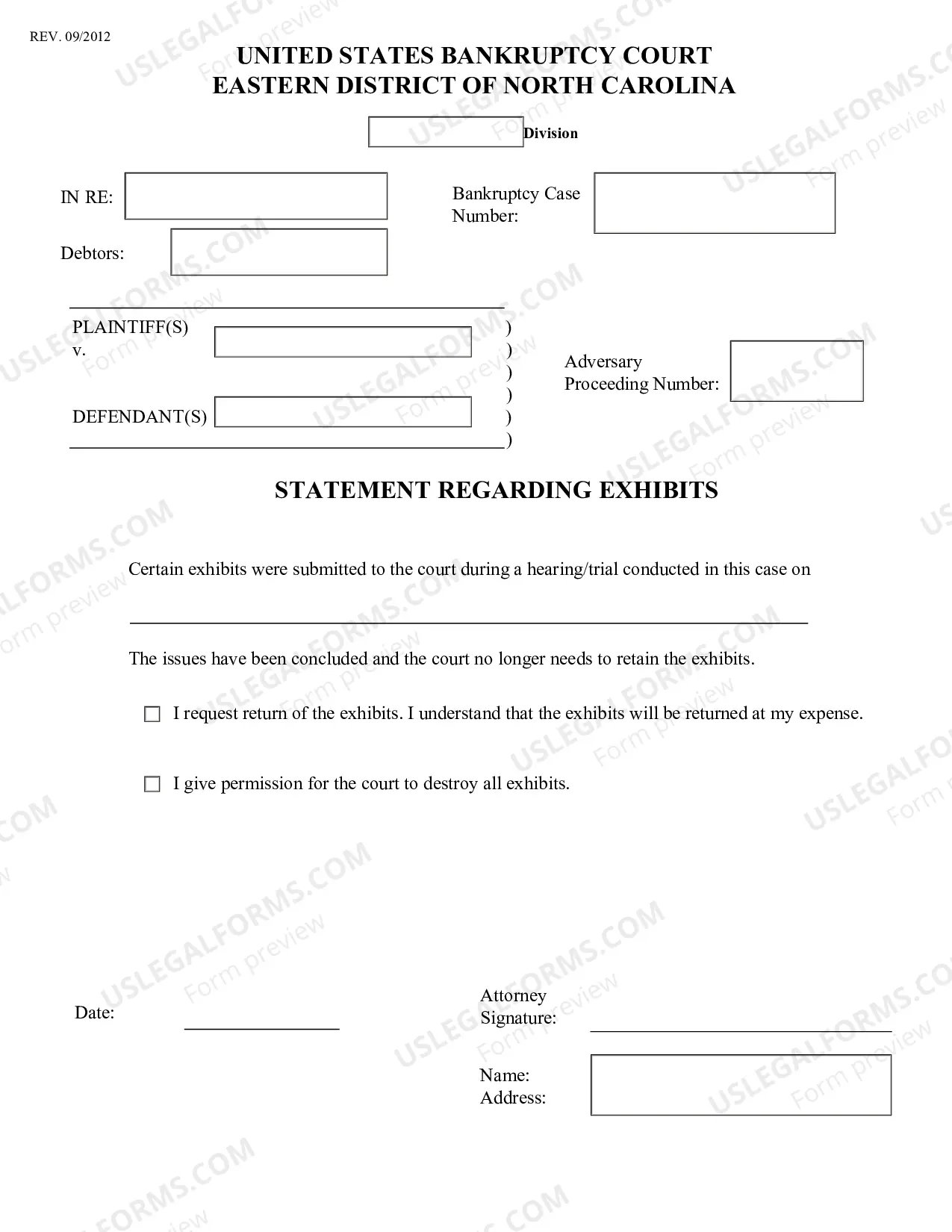
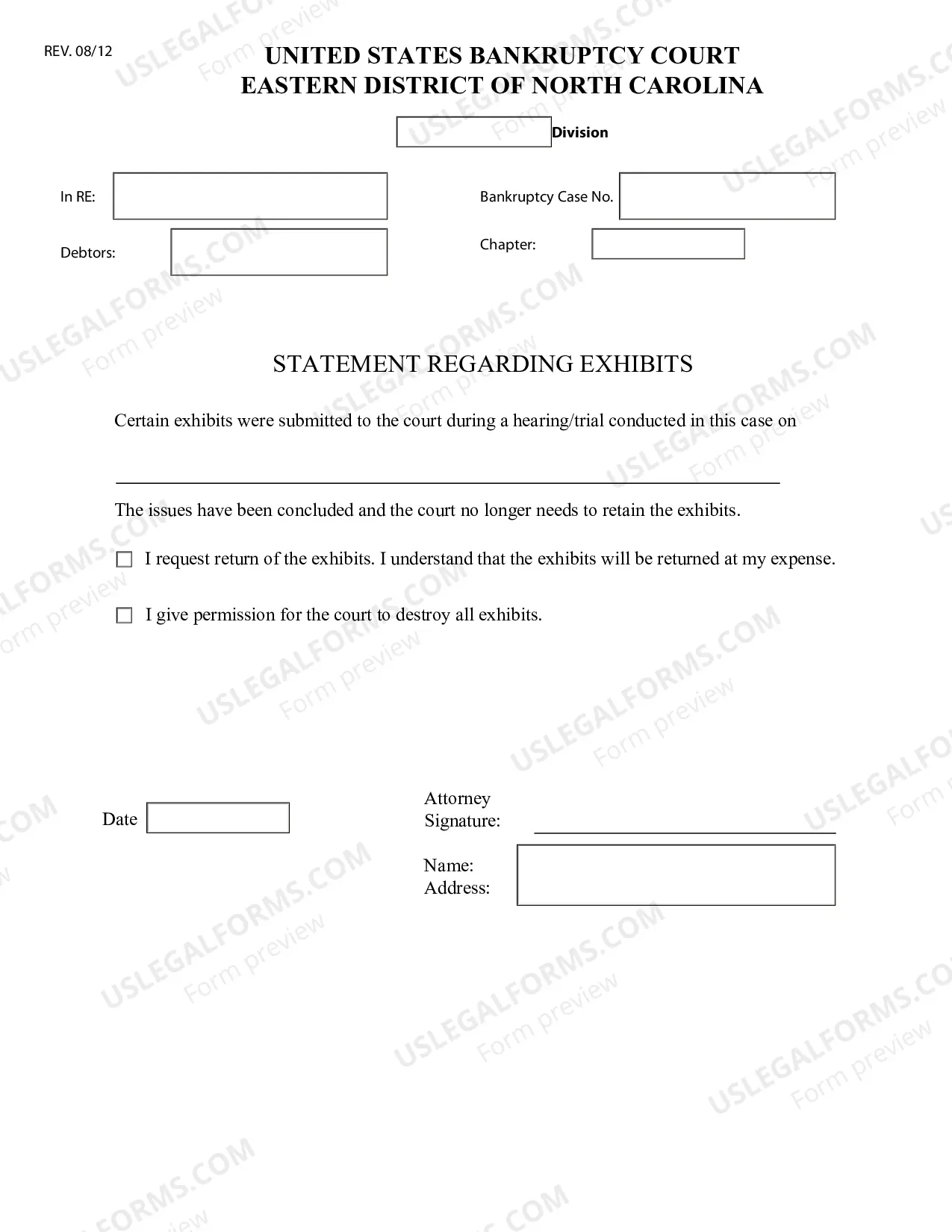
North Carolina Statement Regarding Exhibits is a document used in North Carolina civil court cases to certify that the documents being submitted as evidence are true copies of the originals. This document must be signed by the party submitting the exhibit and notarized. There are three types of North Carolina Statement Regarding Exhibits: 1. Original Document Statement — where the party submitting the exhibit certifies that the document is a true and accurate copy of the original. 2. Transcribed or Copied Document Statement — where the party submitting the exhibit certifies that the document is a true and accurate transcription or copy of the original. 3. Certified Document Statement — where the party submitting the exhibit certifies that the document has been certified by the custodian of the original document.
North Carolina Statement Regarding Exhibits
Description
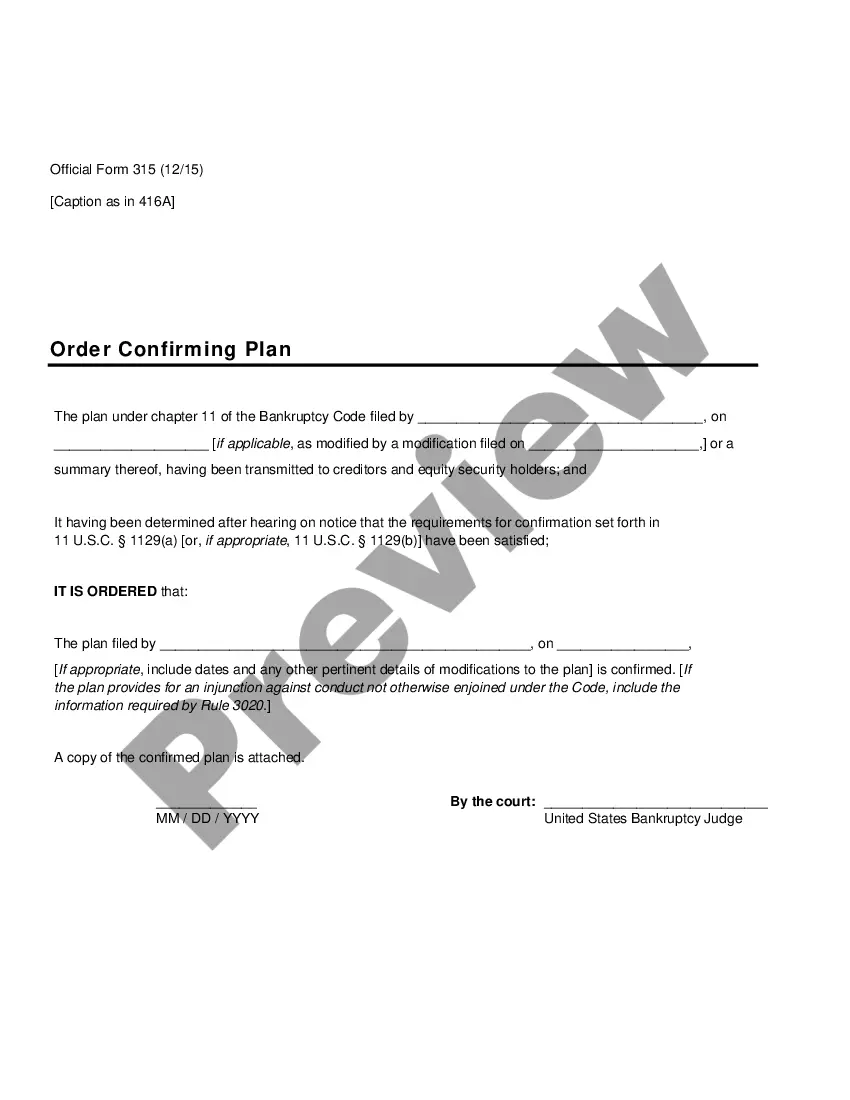
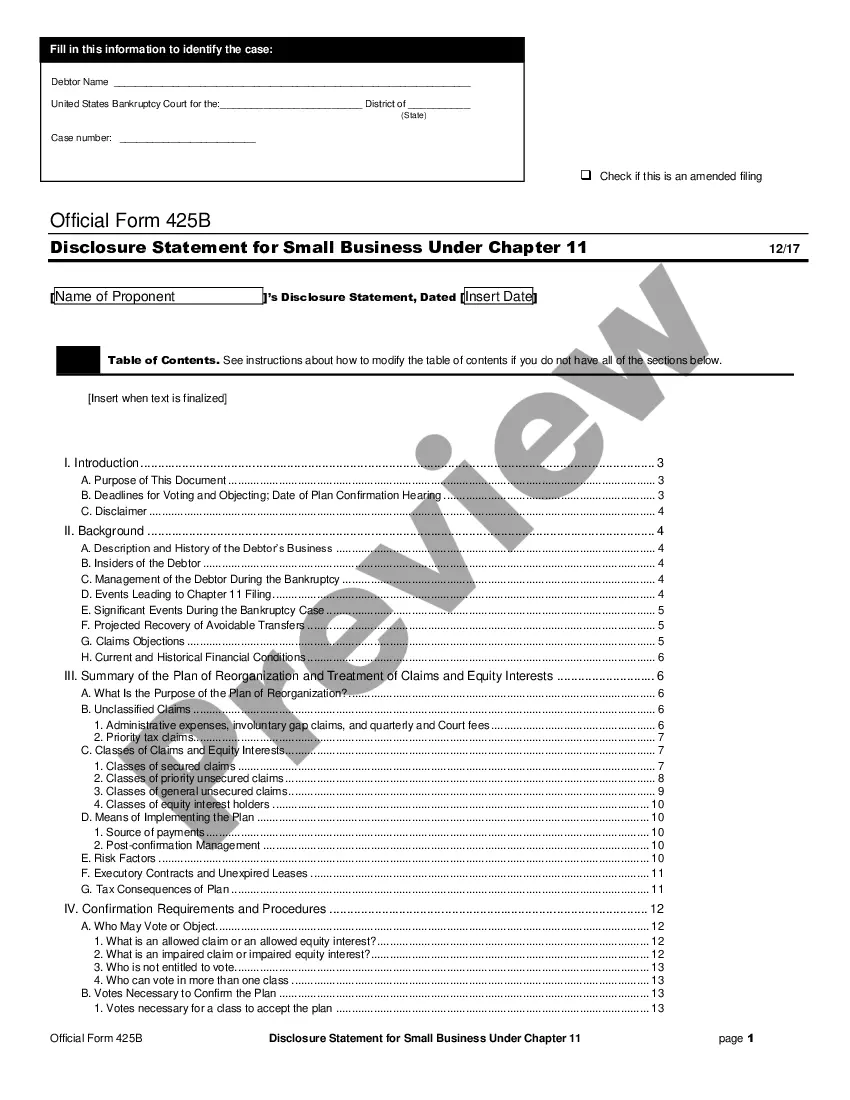
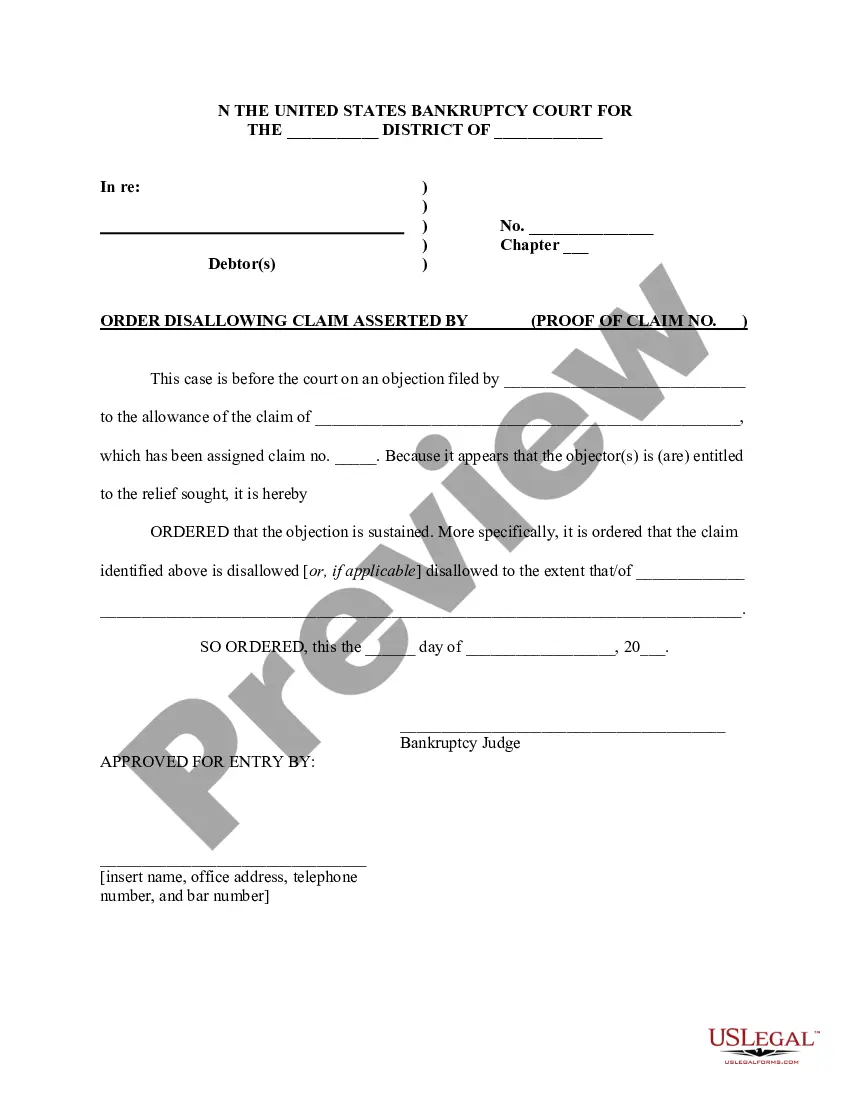
Get your form ready online
Our built-in tools help you complete, sign, share, and store your documents in one place.
Make edits, fill in missing information, and update formatting in US Legal Forms—just like you would in MS Word.
Download a copy, print it, send it by email, or mail it via USPS—whatever works best for your next step.
Sign and collect signatures with our SignNow integration. Send to multiple recipients, set reminders, and more. Go Premium to unlock E-Sign.
If this form requires notarization, complete it online through a secure video call—no need to meet a notary in person or wait for an appointment.
We protect your documents and personal data by following strict security and privacy standards.

Make edits, fill in missing information, and update formatting in US Legal Forms—just like you would in MS Word.

Download a copy, print it, send it by email, or mail it via USPS—whatever works best for your next step.

Sign and collect signatures with our SignNow integration. Send to multiple recipients, set reminders, and more. Go Premium to unlock E-Sign.

If this form requires notarization, complete it online through a secure video call—no need to meet a notary in person or wait for an appointment.

We protect your documents and personal data by following strict security and privacy standards.
Looking for another form?
How to fill out North Carolina Statement Regarding Exhibits?
Managing official documents necessitates focus, precision, and utilizing well-prepared templates. US Legal Forms has been assisting individuals nationwide for 25 years, ensuring that when you select your North Carolina Statement Regarding Exhibits template from our platform, it complies with federal and state regulations.
Interacting with our service is straightforward and efficient. To obtain the necessary documents, all you need is an account with an active subscription. Here’s a brief guide to help you locate your North Carolina Statement Regarding Exhibits in just a few minutes.
All documents are designed for multiple uses, similar to the North Carolina Statement Regarding Exhibits displayed on this page. If you require them in the future, you can complete them without additional payment - simply access the My documents tab in your account and fill out your document whenever necessary. Experience US Legal Forms and achieve your business and personal paperwork swiftly and in full legal compliance!
- Ensure to thoroughly review the form content and its alignment with general and legal standards by previewing it or reading its description.
- Look for an alternative formal template if the one you have does not fit your circumstances or state requirements (the option for that is located in the upper corner of the page).
- Log in to your account and obtain the North Carolina Statement Regarding Exhibits in your desired format. If it's your first time using our website, click Buy now to continue.
- Create an account, select your subscription option, and pay using your credit card or PayPal account.
- Choose the format in which you want to save your document and click Download. Print the blank copy or upload it to a professional PDF editor for electronic submission.
Form popularity
FAQ
Presenting an exhibit in court involves a few key steps: introducing the exhibit, establishing its relevance, and providing context for the judge or jury. You should clearly label each exhibit and ensure you have copies for all parties involved. The North Carolina Statement Regarding Exhibits can serve as a helpful resource to guide you through this process.
While exhibits are a type of evidence, they are not synonymous with all evidence. Exhibits are tangible items or documents presented to support arguments in court, while evidence encompasses all materials used to establish facts. To navigate this distinction effectively, consult the North Carolina Statement Regarding Exhibits for clarity.
To move exhibits into evidence, you must formally request the court to admit them during a hearing. This typically involves providing a foundation for the exhibit's relevance and authenticity. The North Carolina Statement Regarding Exhibits offers specific protocols to follow, ensuring that your exhibits are properly considered.
Evidence refers to any material that helps to prove or disprove a fact in a legal case. An exhibit, however, is a specific piece of evidence presented in court, often organized for clarity. Understanding this distinction is vital, especially when working with the North Carolina Statement Regarding Exhibits, which outlines how to present each effectively.
Filing a motion in North Carolina court involves preparing the motion document and submitting it to the appropriate court. You must include all necessary exhibits and a clear explanation of your request. For detailed guidance, refer to the North Carolina Statement Regarding Exhibits to ensure you meet all filing requirements.
An exhibit is a document or physical item presented as evidence in a legal setting. Common types include contracts, photographs, or charts that support a case. When preparing your case, it's crucial to understand how the North Carolina Statement Regarding Exhibits defines and categorizes these materials.
To include exhibits in a paper, you need to reference them clearly within the text. Use a specific format that identifies the exhibit, such as 'See Exhibit A.' Additionally, ensure that each exhibit is labeled and attached at the end of the document. The North Carolina Statement Regarding Exhibits can guide you on proper formatting and organization.
To mark an exhibit in a deposition, present the exhibit to the witness and clearly state the exhibit number or letter. Record this in the deposition transcript as per the North Carolina Statement Regarding Exhibits. It's important to ensure that all parties are aware of the exhibit being referenced, maintaining transparency throughout the process. Using a resource like USLegalForms can help streamline the preparation of deposition exhibits.
Numbering exhibits typically involves a systematic approach, often starting with 'Exhibit 1,' 'Exhibit 2,' and so forth. Make sure to follow the North Carolina Statement Regarding Exhibits for any specific numbering conventions required. Additionally, it's helpful to maintain a master list that tracks each exhibit's number and description, ensuring easy reference during your case.
Another word for exhibit in a document is 'attachment.' Both terms refer to supplementary materials included to support the main content. When drafting legal documents, it's essential to remain consistent with terminology, especially when adhering to the North Carolina Statement Regarding Exhibits. Using the correct term ensures clarity for all parties involved.