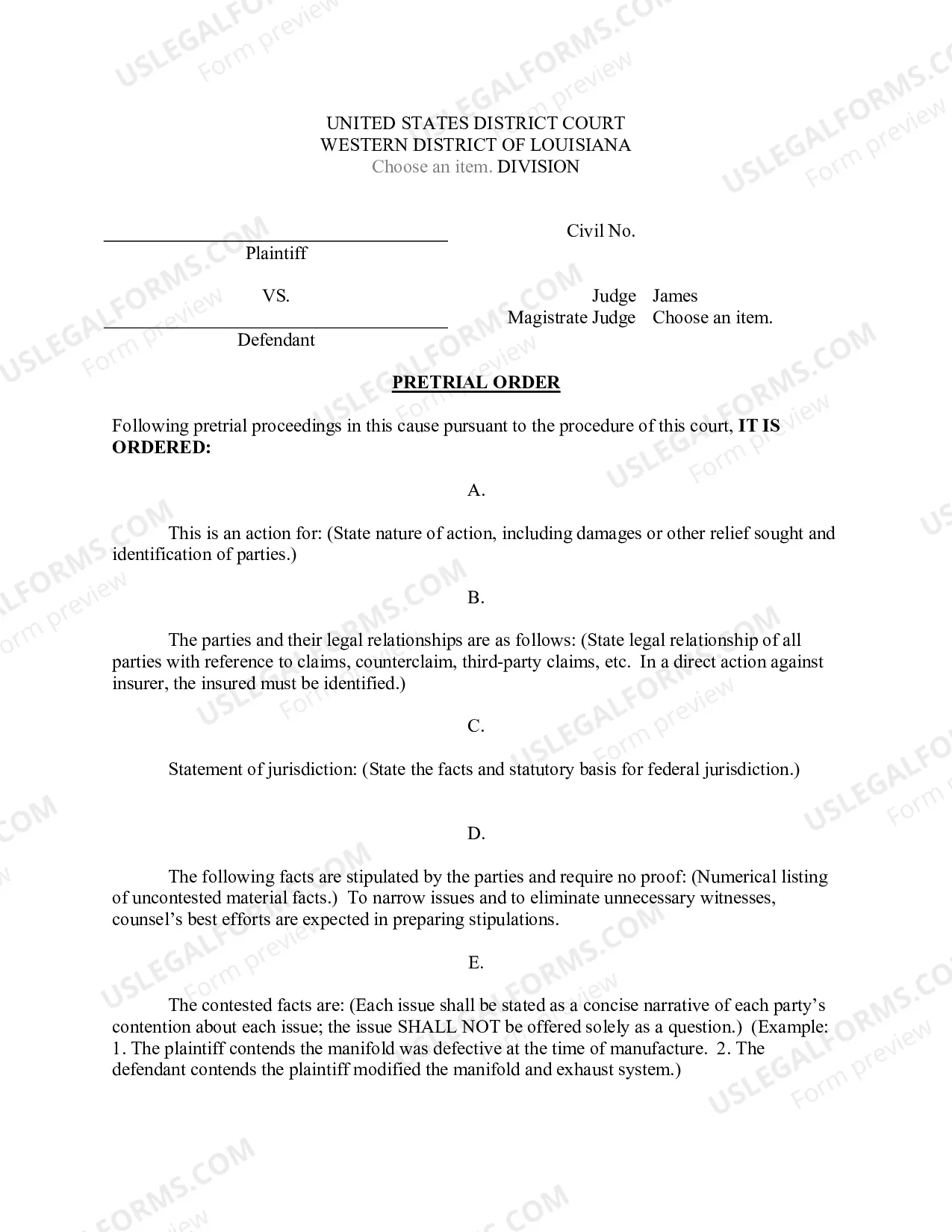
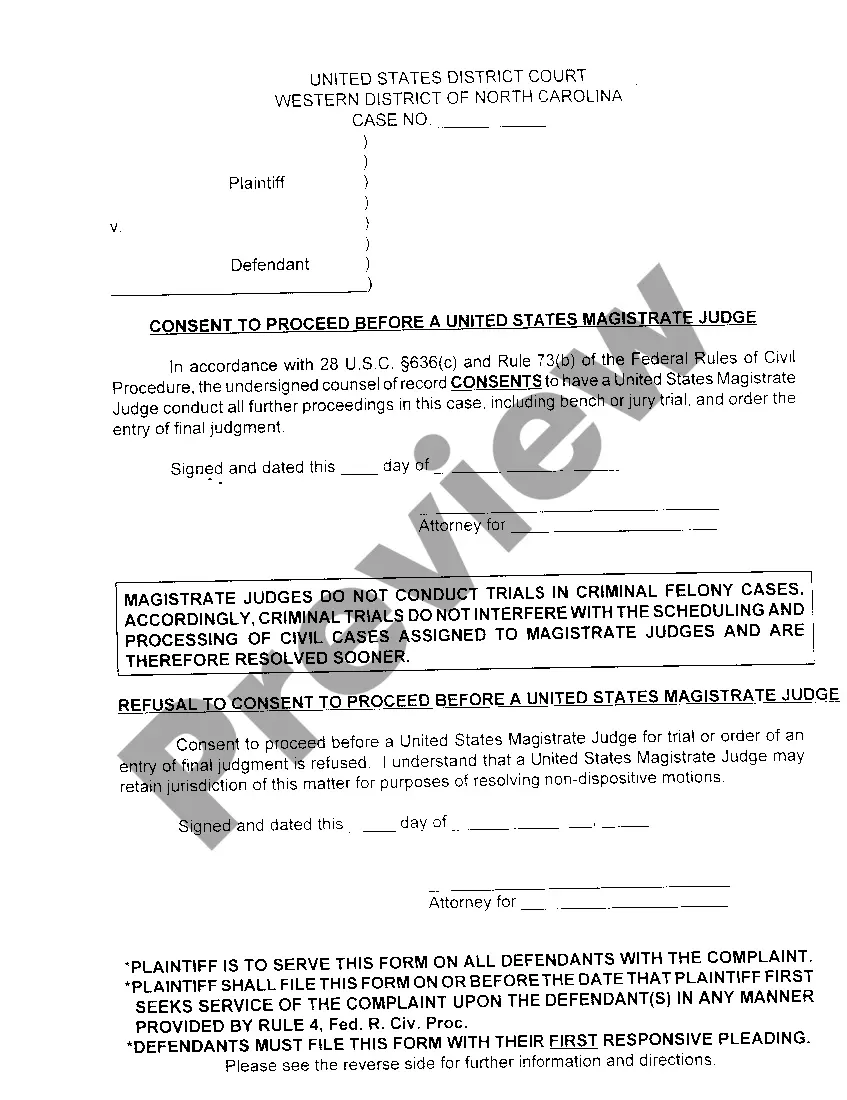
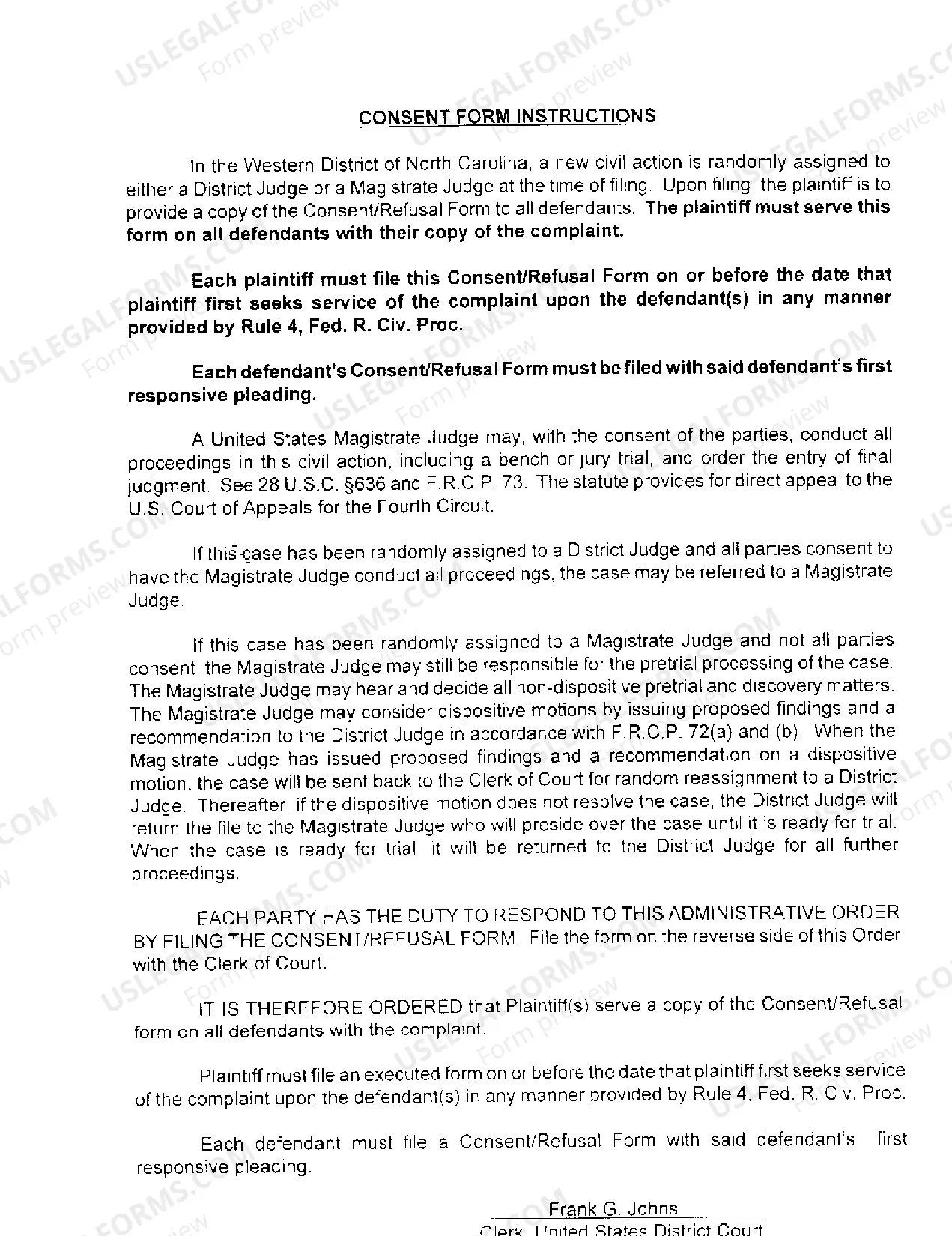
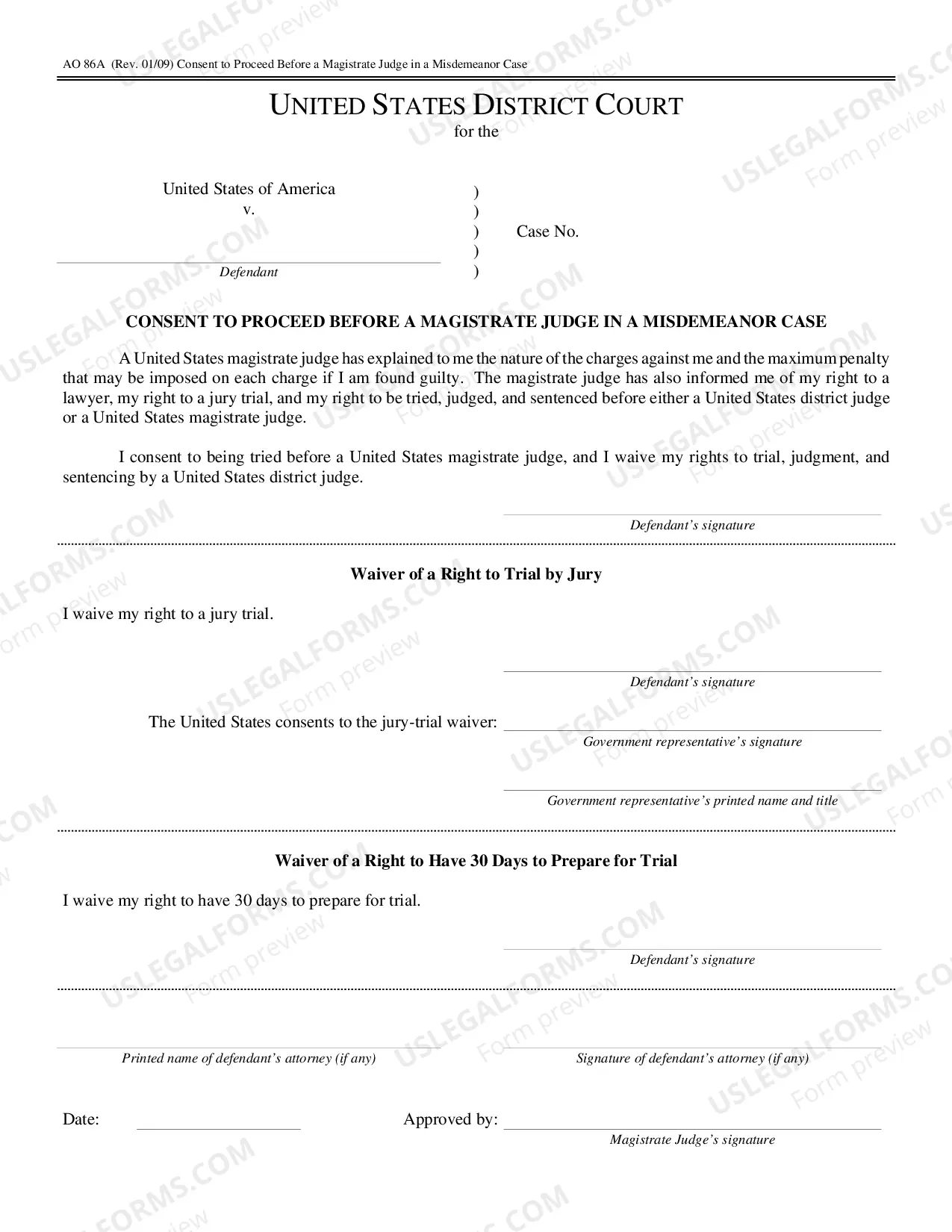
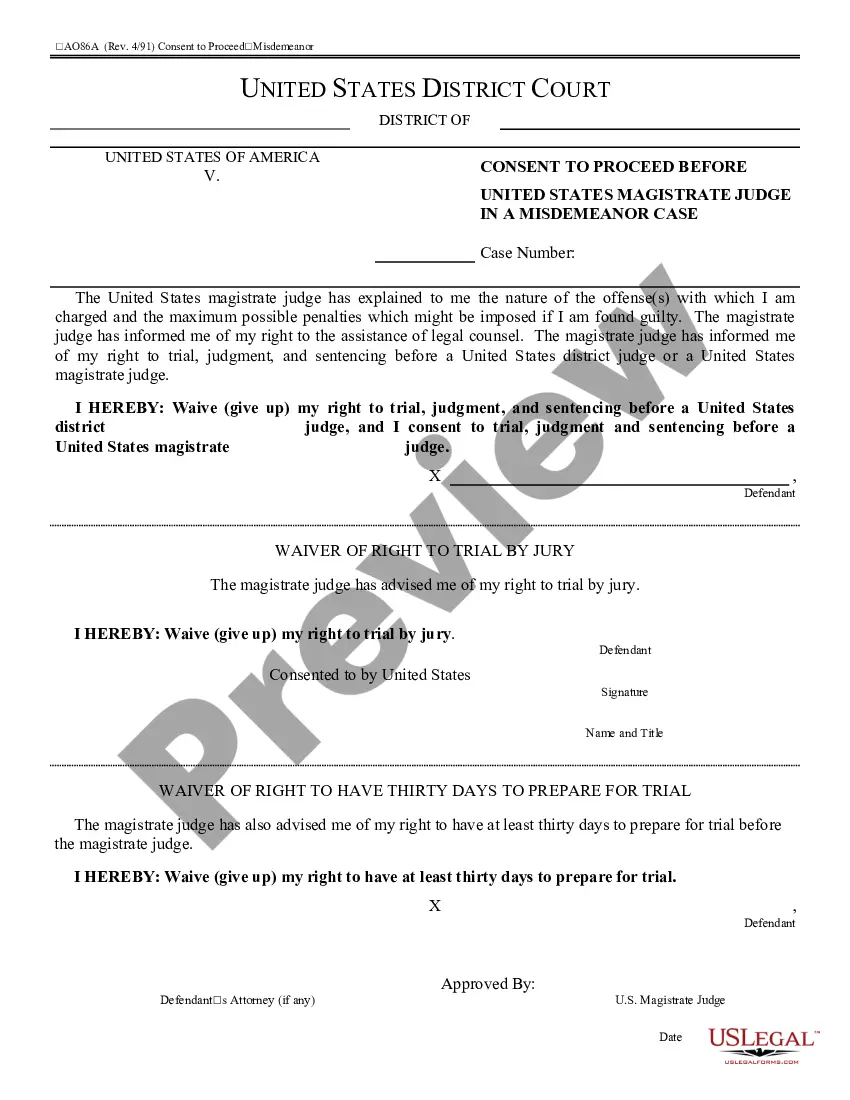
North Carolina Consent to Proceed before a U.S. Magistrate Judge
Description
Get your form ready online
Our built-in tools help you complete, sign, share, and store your documents in one place.
Make edits, fill in missing information, and update formatting in US Legal Forms—just like you would in MS Word.
Download a copy, print it, send it by email, or mail it via USPS—whatever works best for your next step.
Sign and collect signatures with our SignNow integration. Send to multiple recipients, set reminders, and more. Go Premium to unlock E-Sign.
If this form requires notarization, complete it online through a secure video call—no need to meet a notary in person or wait for an appointment.
We protect your documents and personal data by following strict security and privacy standards.

Make edits, fill in missing information, and update formatting in US Legal Forms—just like you would in MS Word.

Download a copy, print it, send it by email, or mail it via USPS—whatever works best for your next step.

Sign and collect signatures with our SignNow integration. Send to multiple recipients, set reminders, and more. Go Premium to unlock E-Sign.

If this form requires notarization, complete it online through a secure video call—no need to meet a notary in person or wait for an appointment.

We protect your documents and personal data by following strict security and privacy standards.
Looking for another form?
How to fill out North Carolina Consent To Proceed Before A U.S. Magistrate Judge?
Steer clear of expensive attorneys and locate the North Carolina Consent to Proceed before a U.S. Magistrate Judge you require at a reasonable cost on the US Legal Forms site.
Utilize our straightforward groups feature to search for and download legal and tax documents. Review their descriptions and preview them prior to downloading.
Select to receive the form in PDF or DOCX format. Click Download and locate your template in the My documents section. You are welcome to save the template to your device or print it out. After downloading, you can complete the North Carolina Consent to Proceed before a U.S. Magistrate Judge by hand or using editing software. Print it and reuse the template multiple times. Do more for less with US Legal Forms!
- Moreover, US Legal Forms offers clients detailed instructions on how to acquire and fill out each template.
- US Legal Forms users primarily need to Log In and access the specific form they require from their My documents section.
- Those who haven't subscribed yet should follow the guidelines outlined below.
- Verify that the North Carolina Consent to Proceed before a U.S. Magistrate Judge is valid for use in your state.
- If possible, review the description and utilize the Preview feature prior to downloading the document.
- If you’re certain the template suits your requirements, click on Buy Now.
- If the form is incorrect, use the search tool to find the correct one.
- Subsequently, set up your account and choose a subscription plan.
- Make payment via credit card or PayPal.
Form popularity
FAQ
While district judges are nominated by the President and confirmed by the United States Senate for lifetime tenure, magistrate judges are appointed by a majority vote of the federal district judges of a particular district and serve terms of eight years if full-time, or four years if part-time, and may be reappointed.
Magistrate Judges should have this title after their name (The Honorable First M. Last, Magistrate Judge). It will still be Dear Judge Last after that.
If the magistrates agree to this, the case will be dismissed. This is uncommon, but possible usually only when there are clear inconsistencies in the prosecution evidence.
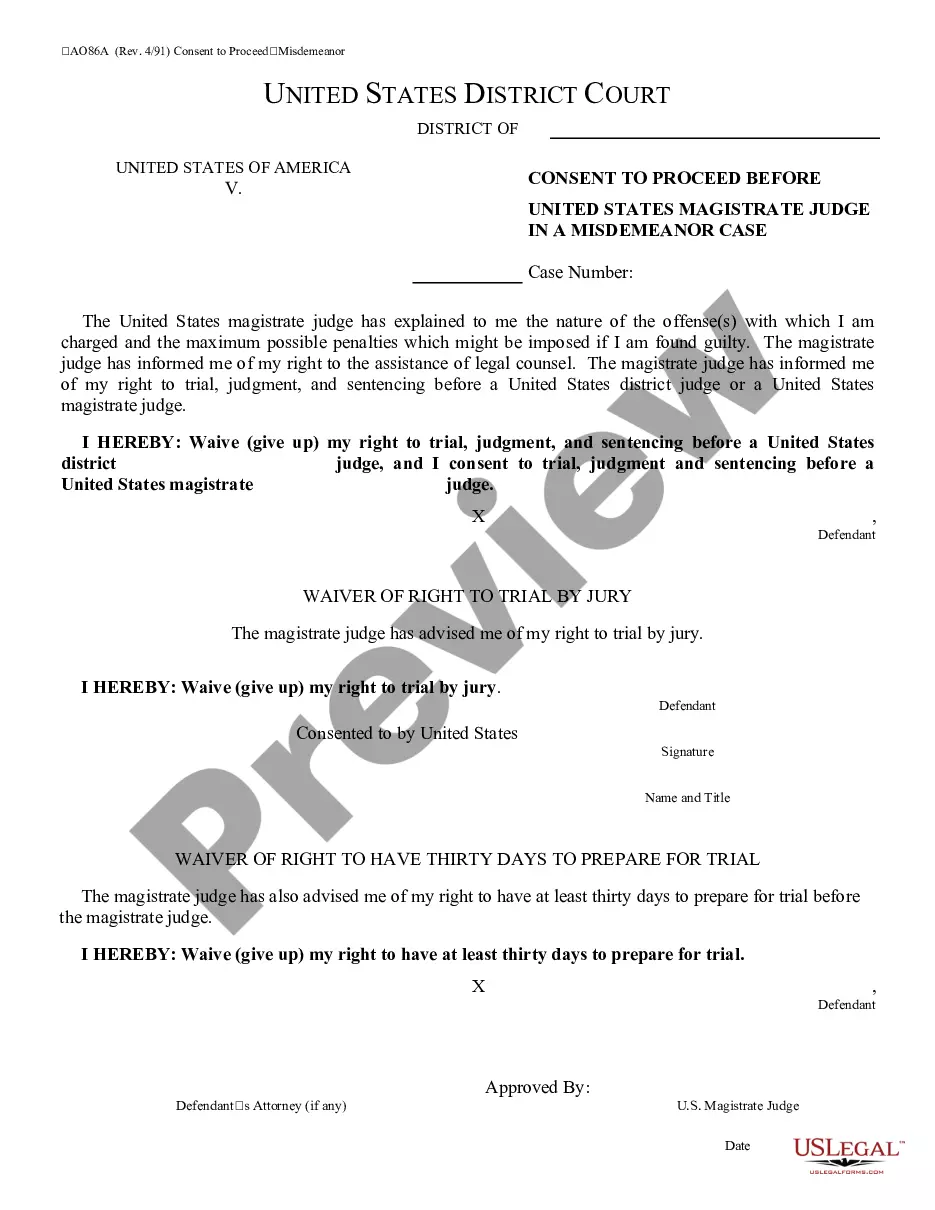
In criminal proceedings, magistrate judges preside over misdemeanor and petty offense cases, and as to all criminal cases (felony and misdemeanor) may issue search warrants, arrest warrants, and summonses, accept criminal complaints, conduct initial appearance proceedings and detention hearings, set bail or other
A judge may designate a magistrate judge to hear and determine any pretrial matter pending before the court, except a motion for injunctive relief, for judgment on the pleadings, for summary judgment, to dismiss or quash an indictment or information made by the defendant, to suppress evidence in a criminal case, to
Magistrates have fewer and more limited powers than judges. They can hear different types of cases. Judges generally hear larger, more complex cases while magistrates hear smaller matters such as petty crime and traffic offenses.There is a difference between the power given to a judge over a magistrate.
The official title of these judges is United States Magistrate Judge. To be consistent with the position's judicial role and official title as prescribed by law, a United States Magistrate Judge should be addressed, orally and in writing, as Judge.
A district judge who is thinking of referring a dispositive motion should instead encourage full or limited consent by the parties for the magistrate judge to decide the motion. Many district courts no longer refer dis- positive motions to magistrate judges as a means of making better use of their magistrate judges.