North Carolina Renunciation and Disclaimer of Property - Individual Retirement Account, Annuity, or Bond
What this document covers
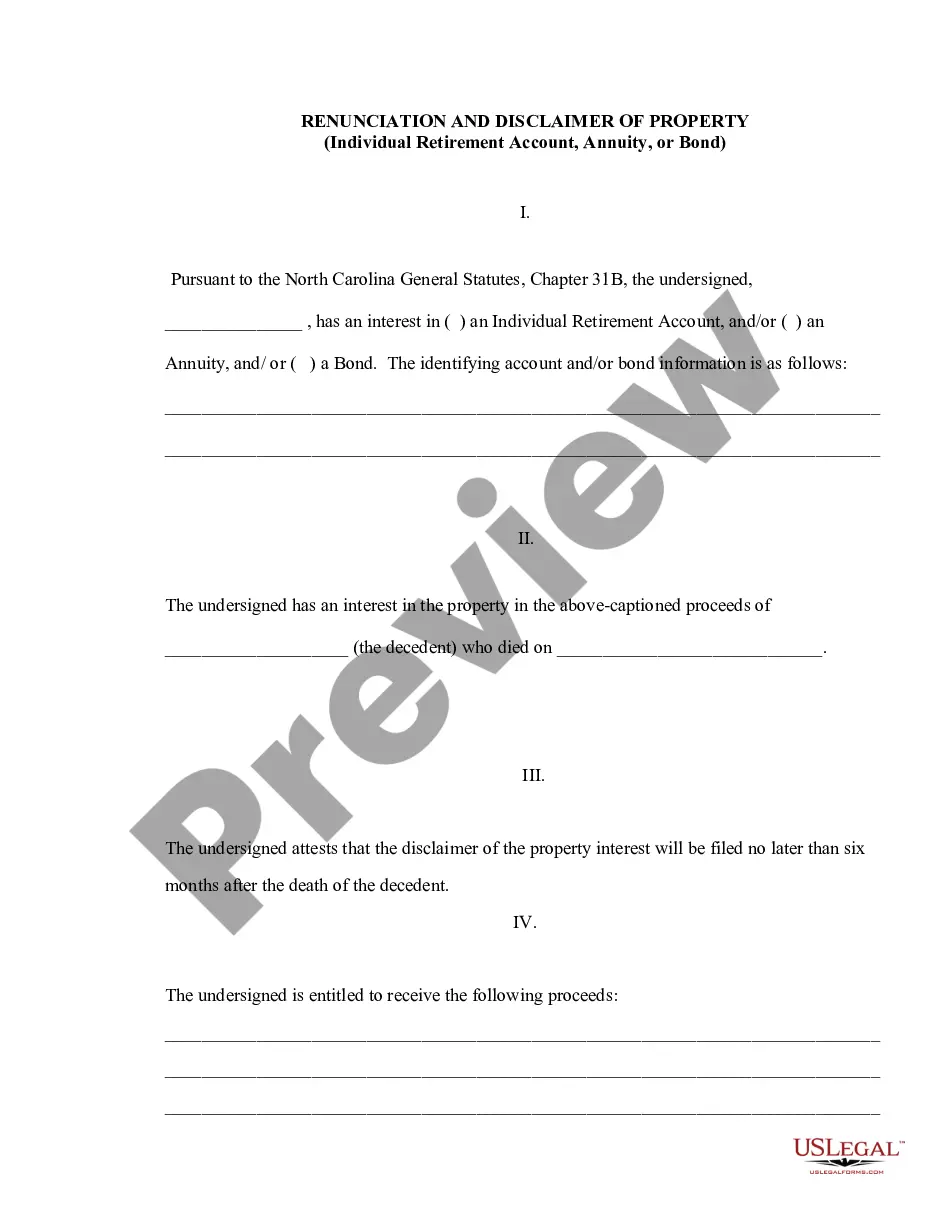
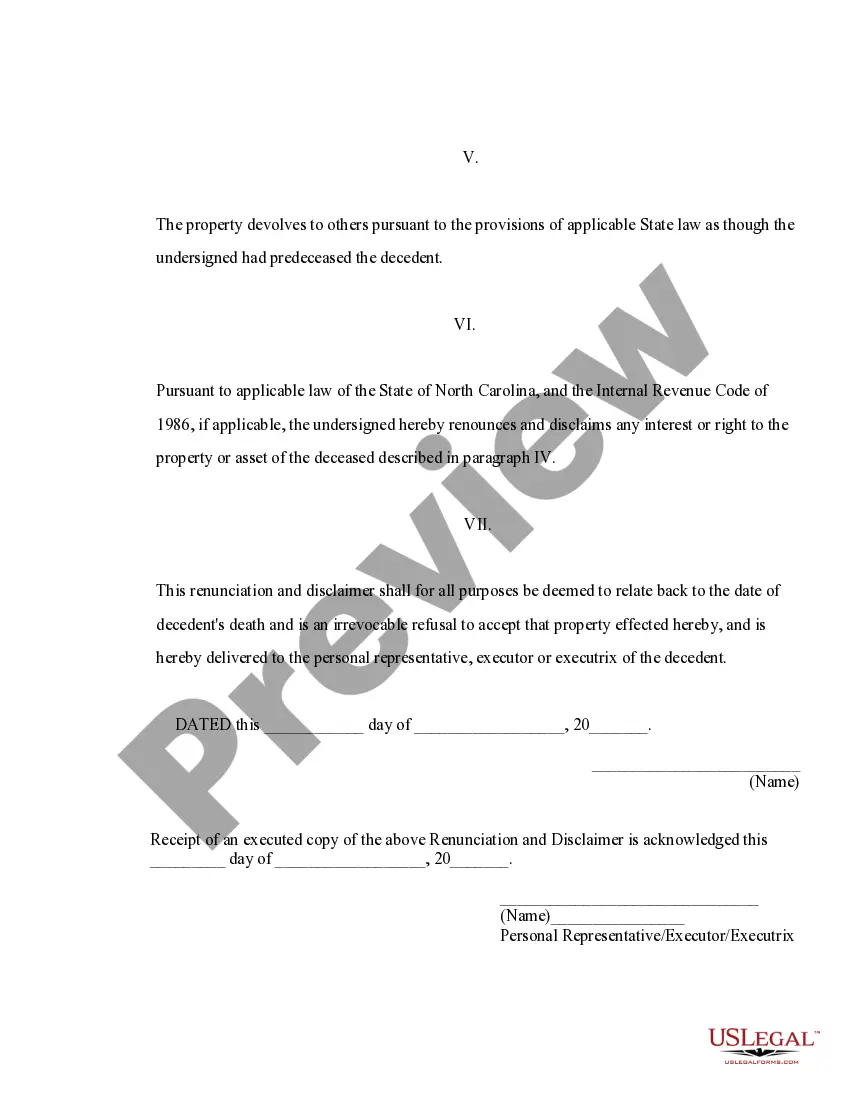
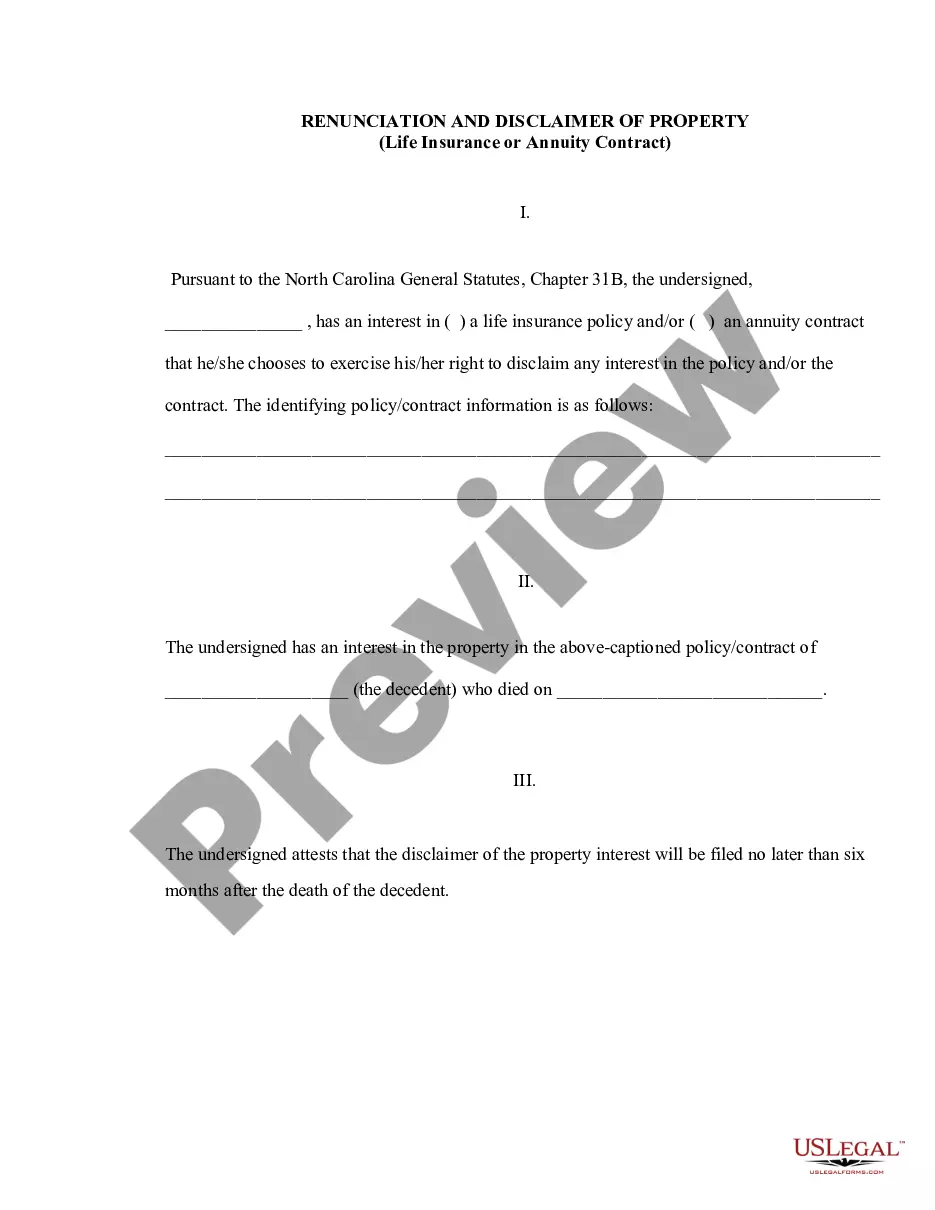
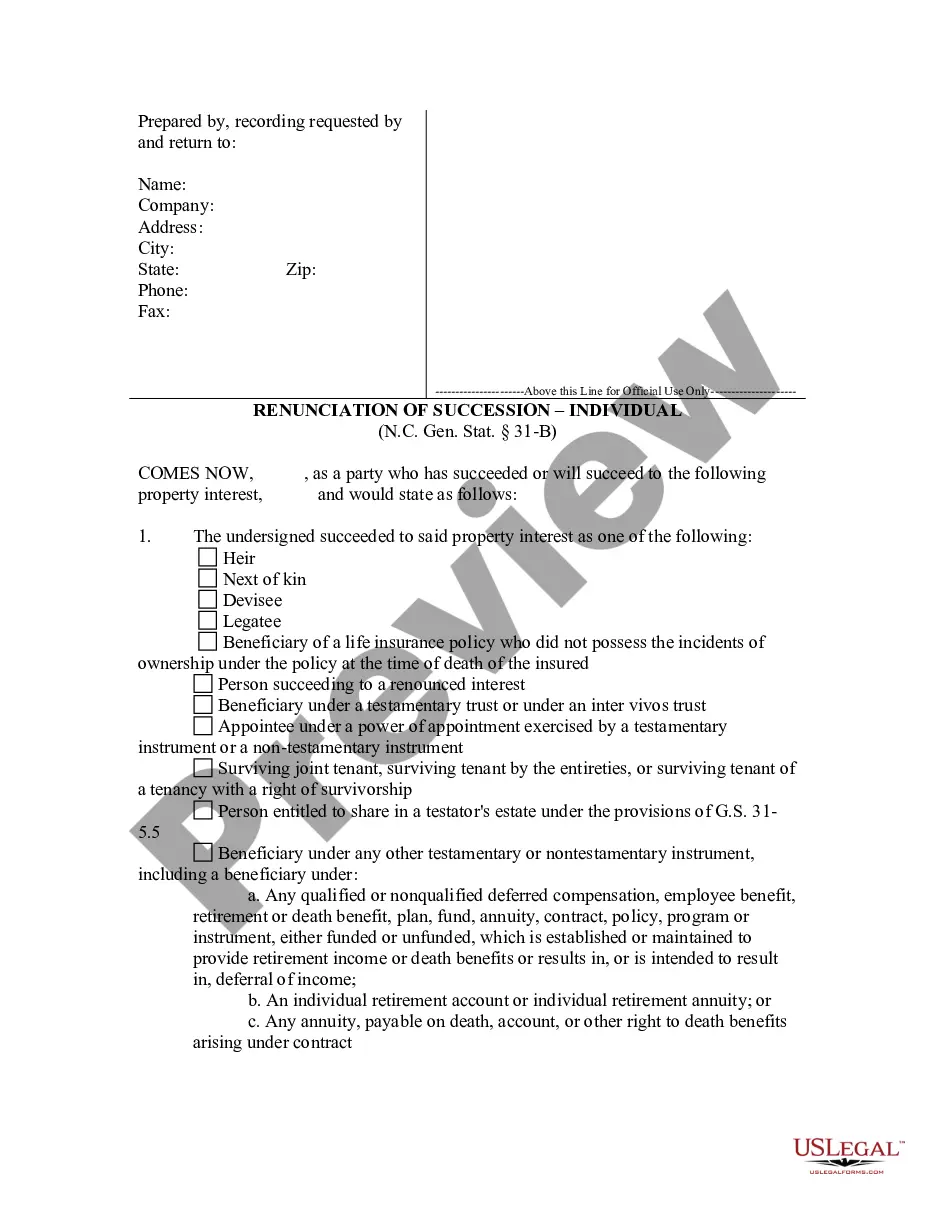
The North Carolina Renunciation and Disclaimer of Property form is a legal document used by a beneficiary to formally reject their interest in proceeds from an Individual Retirement Account (IRA), Annuity, or Bond after the death of the account owner. This renunciation means that the proceeds will be distributed to other beneficiaries as if the rejecting beneficiary had predeceased the deceased. This form ensures that the disclaimer is recognized under North Carolina law, specifically as outlined in the North Carolina General Statutes, Chapter 31B.
Key components of this form
- Identification of the beneficiary and the type of account or property being disclaimed.
- Details of the decedent, including their name and date of death.
- A statement confirming the timely filing of the disclaimer within six months of the decedent's death.
- A declaration of the specific proceeds the beneficiary is entitled to receive.
- An acknowledgment that the property will be treated as if the beneficiary predeceased the decedent.
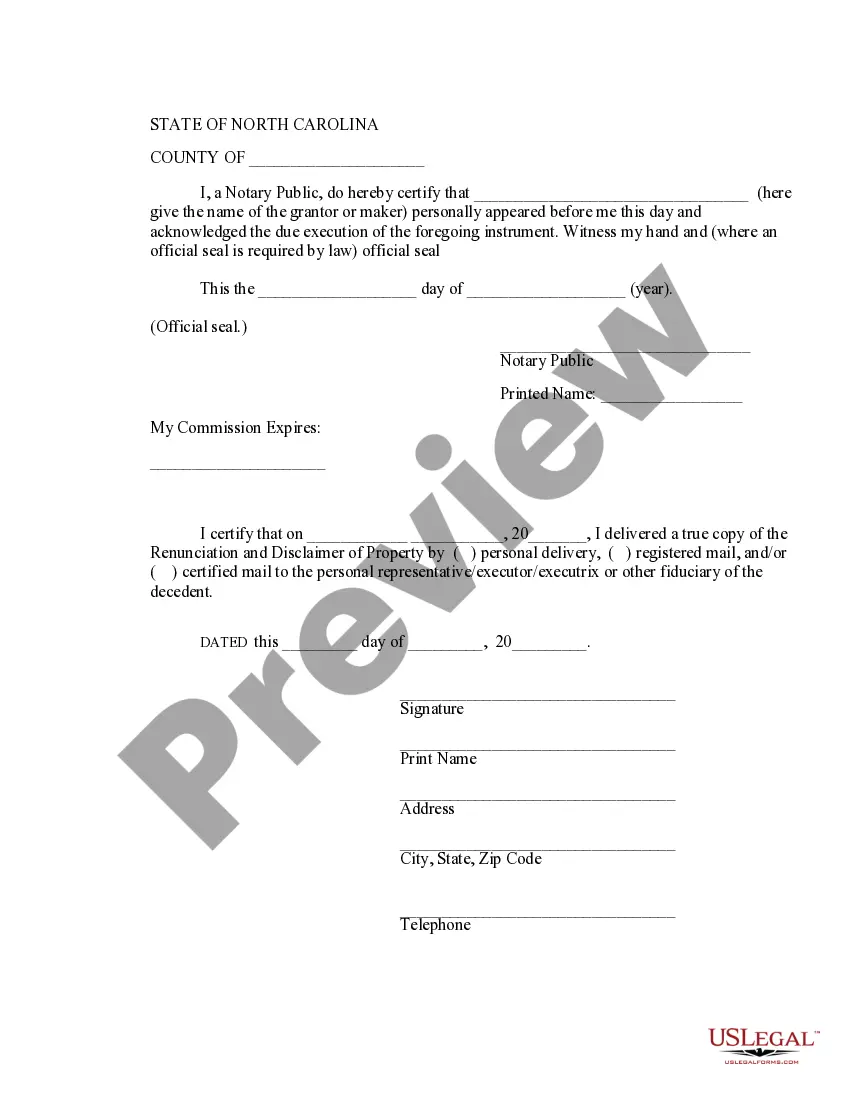
- A certification section for notarization and delivery confirmation to the personal representative or executor.
Common use cases
This form is needed when a beneficiary of an IRA, Annuity, or Bond wishes to formally disclaim their right to the proceeds following the death of the account owner. Common situations for using this form include circumstances where the beneficiary does not want to accept the inheritance for personal financial reasons, tax implications, or to allow the proceeds to pass directly to other beneficiaries or heirs as per the deceased's wishes.
Who can use this document
This form is intended for:
- Beneficiaries of Individual Retirement Accounts, Annuities, or Bonds in North Carolina.
- Individuals wishing to renounce their interest in an inherited financial asset.
- Those who are aware of their rights and the implications of disclaiming the property according to North Carolina law.
How to complete this form
- Complete the identifying details of the beneficiary and the type of account (IRA, Annuity, or Bond).
- Provide the name and date of death of the decedent.
- Sign the document, ensuring the disclaimer will be filed within six months post-death.
- Identify the proceeds that are being disclaimed under the document.
- Have the form notarized as required, providing the notary with the necessary documentation for verification.
Notarization guidance
To make this form legally binding, it must be notarized. Our online notarization service, powered by Notarize, lets you verify and sign documents remotely through an encrypted video session.
Get your form ready online
Our built-in tools help you complete, sign, share, and store your documents in one place.
Make edits, fill in missing information, and update formatting in US Legal Forms—just like you would in MS Word.
Download a copy, print it, send it by email, or mail it via USPS—whatever works best for your next step.
Sign and collect signatures with our SignNow integration. Send to multiple recipients, set reminders, and more. Go Premium to unlock E-Sign.
If this form requires notarization, complete it online through a secure video call—no need to meet a notary in person or wait for an appointment.
We protect your documents and personal data by following strict security and privacy standards.

Make edits, fill in missing information, and update formatting in US Legal Forms—just like you would in MS Word.

Download a copy, print it, send it by email, or mail it via USPS—whatever works best for your next step.

Sign and collect signatures with our SignNow integration. Send to multiple recipients, set reminders, and more. Go Premium to unlock E-Sign.

If this form requires notarization, complete it online through a secure video call—no need to meet a notary in person or wait for an appointment.

We protect your documents and personal data by following strict security and privacy standards.
Avoid these common issues
- Failing to file the disclaimer within the six-month period after the decedent's death.
- Not providing complete identifying information about the decedent and the account.
- Neglecting to have the document notarized when required.
- Incorrectly assuming that not all beneficiaries need to sign the form.
Benefits of using this form online
- Convenient access to a legally compliant document tailored for North Carolina.
- Editability to customize the form to your specific situation.
- Reduced risk of errors with professionally drafted language by licensed attorneys.
Looking for another form?
Form popularity
FAQ
The answer is yes. The technical term is "disclaiming" it. If you are considering disclaiming an inheritance, you need to understand the effect of your refusalknown as the "disclaimer"and the procedure you must follow to ensure that it is considered qualified under federal and state law.
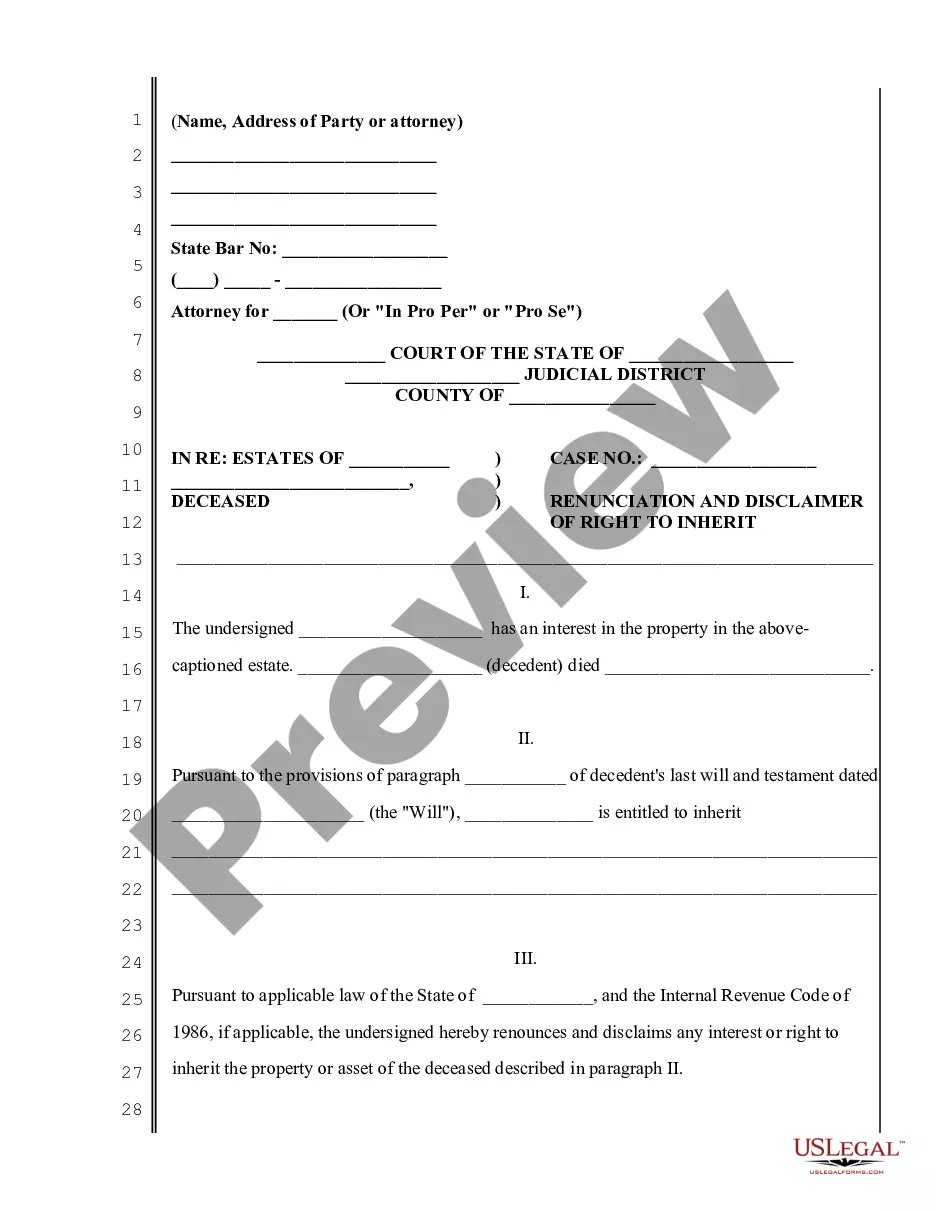
Disclaim, in a legal sense, refers to the renunciation of an interest in, or an acceptance of, inherited assets, such as property, by way of a legal instrument.
A disclaimer trust is a clause typically included in a person's will that establishes a trust upon their death, subject to certain specifications. This allows certain assets to be moved into the trust by the surviving spouse without being subject to taxation.
A qualified disclaimer is a part of the U.S. tax code that allows estate assets to pass to a beneficiary without being subject to income tax. Legally, the disclaimer portrays the transfer of assets as if the intended beneficiary never actually received them.
It must be in writing. It must be made within 9 months of the date of death of the decedent. The disclaimant cannot receive any benefits from the assets.
Any disclaimer of an interest in a trust by a trust beneficiary must be made to the trustee of that trust. For a disclaimer to be valid, it must be supported by some evidence that the beneficiary is disclaiming their interest. Silence or otherwise passive behaviour will not suffice.
A disclaimer is essentially a refusal of a gift or bequest.Disclaimers typically arise in the context of postmortem estate planning where a beneficiary may desire to make a qualified disclaimer under Sec. 2518 to achieve certain tax results such as qualifying for a marital deduction.
Put the disclaimer in writing. Deliver the disclaimer to the person in control of the estate usually the executor or trustee. Complete the disclaimer within nine months of the death of the person leaving the property. Do not accept any benefit from the property you're disclaiming.
Disclaim Inheritance, DefinitionDisclaiming means that you give up your rights to receive the inheritance. If you choose to do so, whatever assets you were meant to receive would be passed along to the next beneficiary in line.