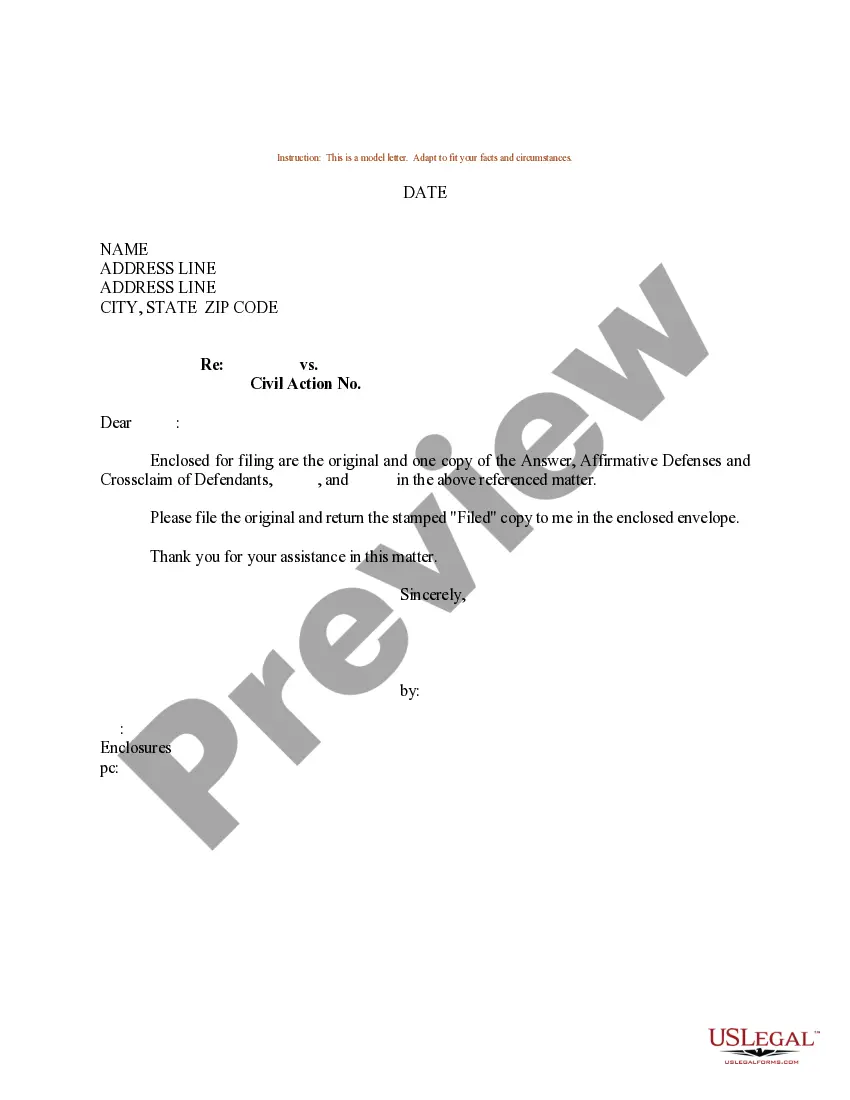
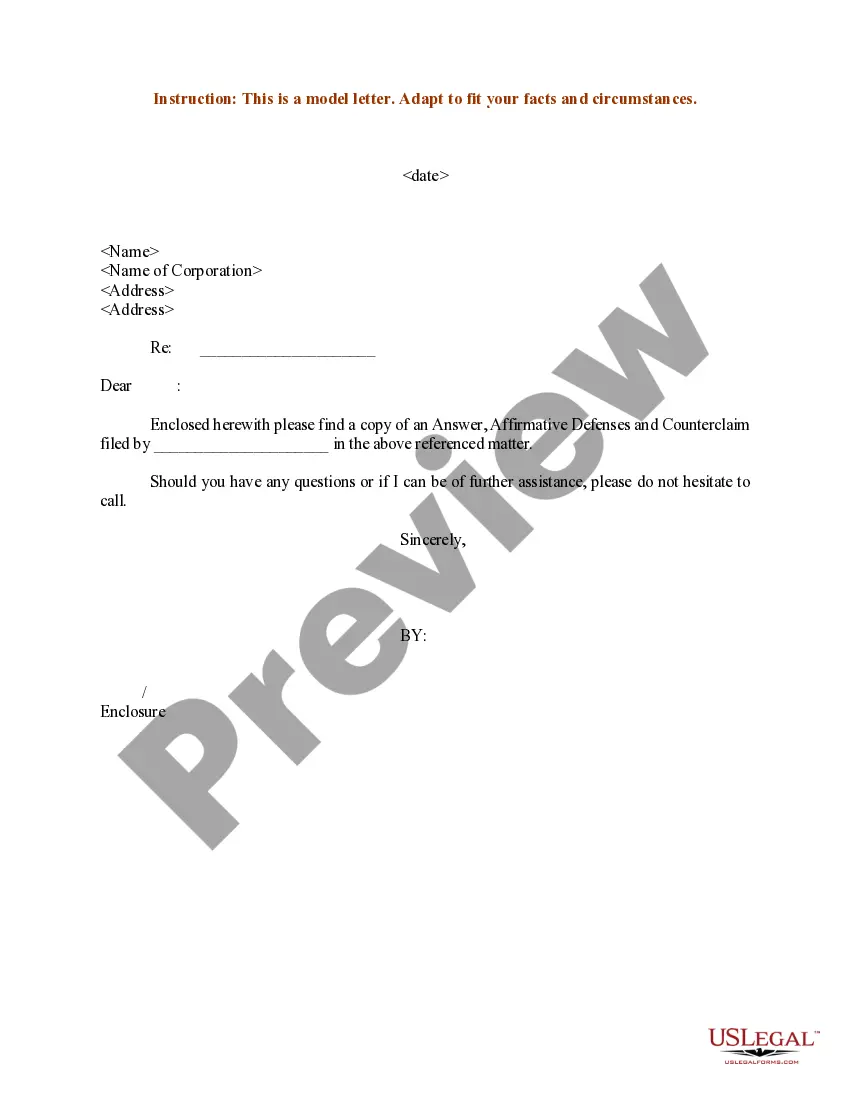
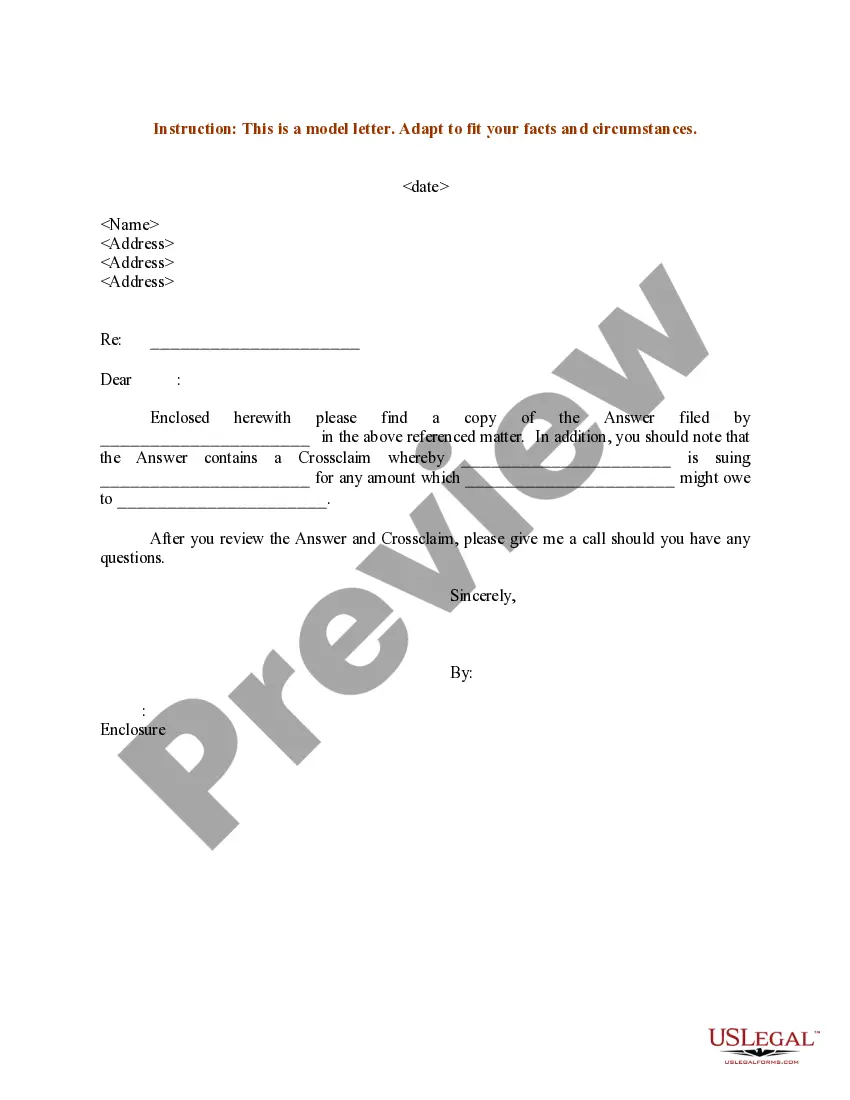
Montana Sample Letter for Copy of Answer, Affirmative Defenses, and Crossclaim
Description
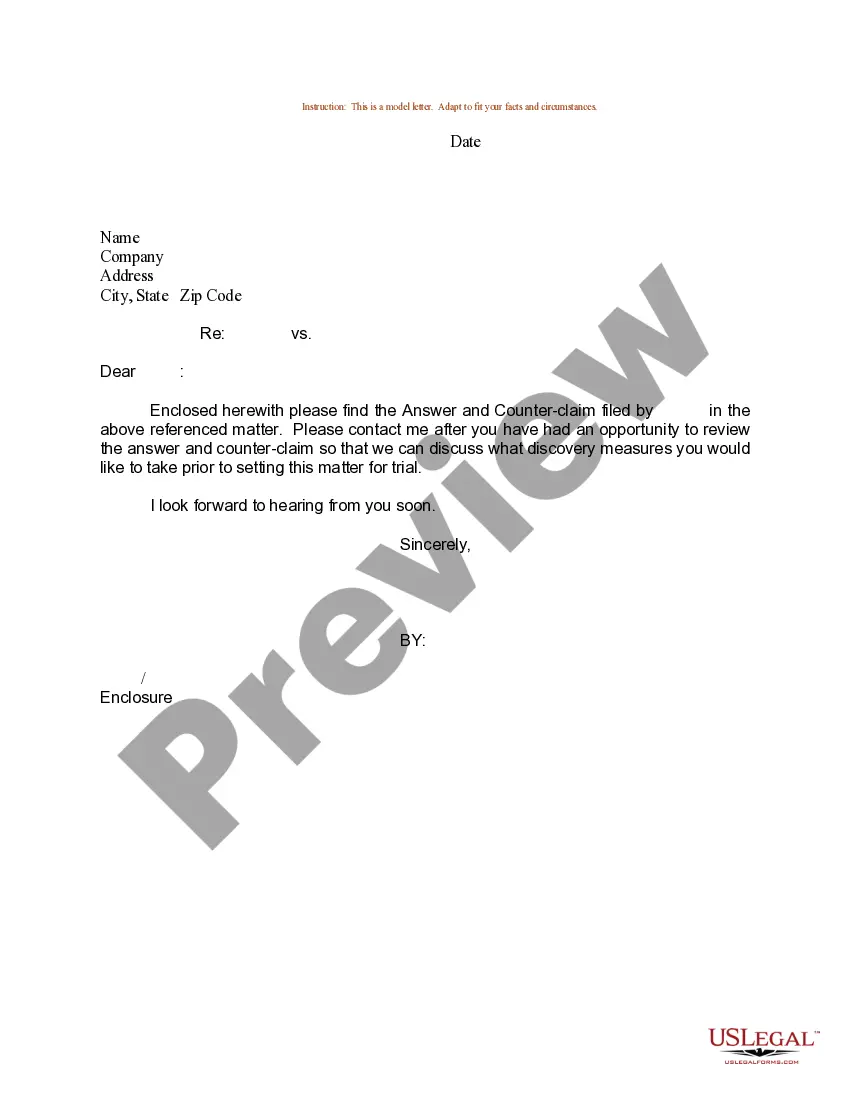
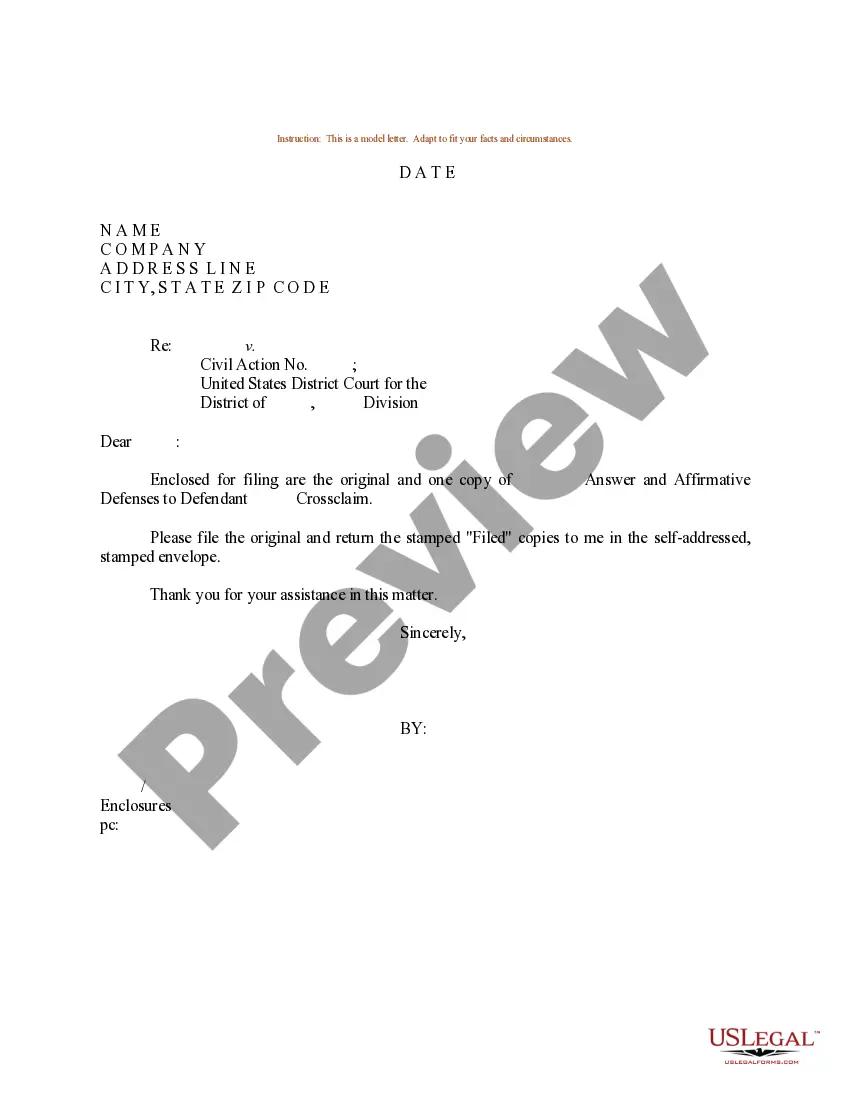
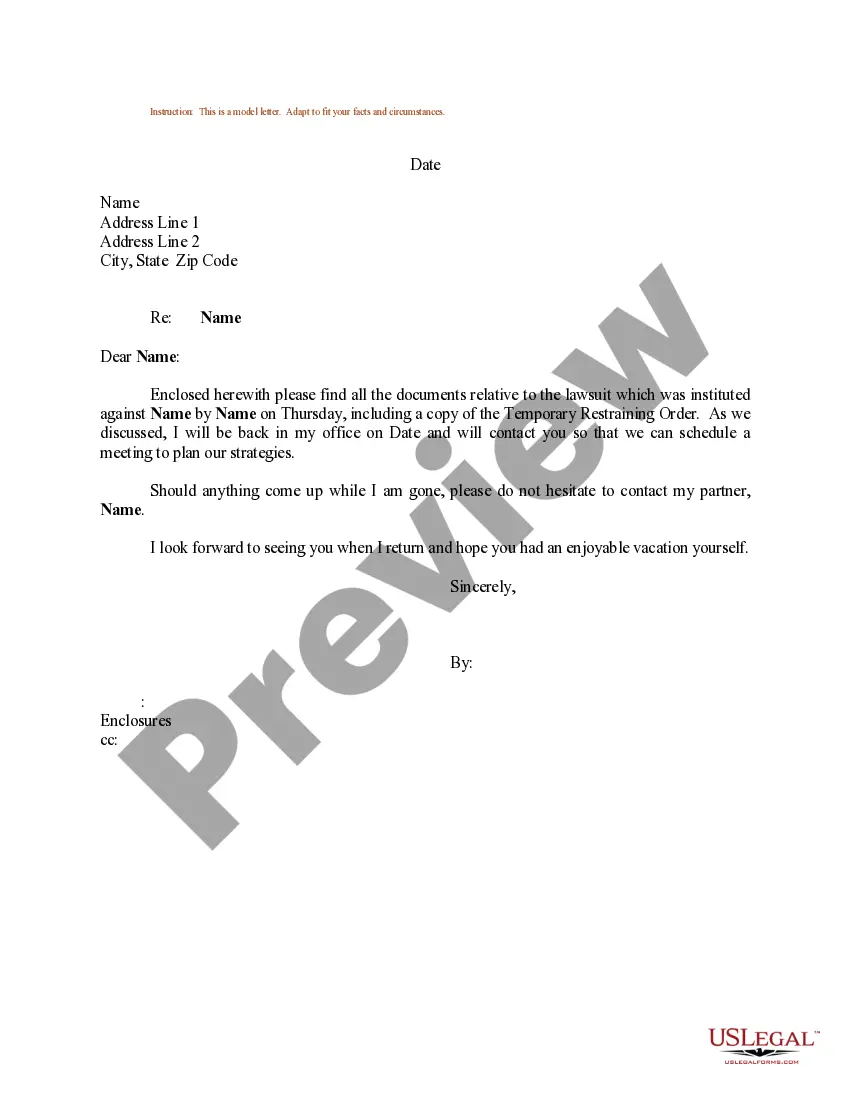

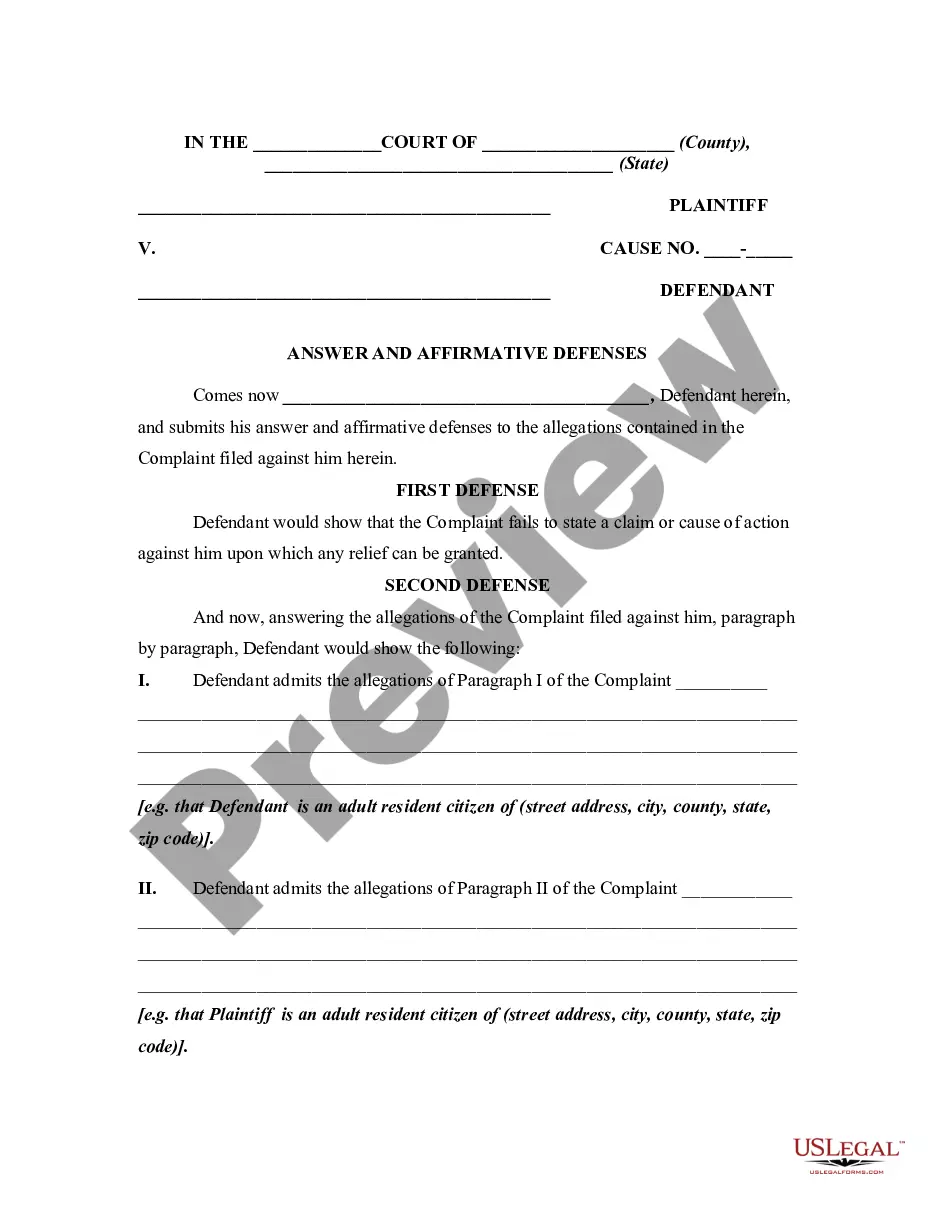

How to fill out Sample Letter For Copy Of Answer, Affirmative Defenses, And Crossclaim?
US Legal Forms - one of the largest collections of legal documents in the United States - provides a selection of legal document templates that you can download or print. By using the website, you can access thousands of forms for business and personal uses, organized by categories, states, or keywords.
You can obtain the latest versions of documents such as the Montana Sample Letter for Copy of Answer, Affirmative Defenses, and Crossclaim in moments. If you have an account, Log In and download the Montana Sample Letter for Copy of Answer, Affirmative Defenses, and Crossclaim from the US Legal Forms library. The Download button will appear on each form you view. You have access to all previously downloaded documents in the My documents section of your account.
If you want to use US Legal Forms for the first time, here are some simple tips to help you get started: Ensure you have chosen the correct form for your city/state. Click on the Preview button to examine the content of the form. Review the form description to confirm that you have selected the correct form. If the form does not meet your requirements, use the Search feature at the top of the screen to find the one that does. Once you are satisfied with the form, confirm your choice by clicking on the Get now button. Then, select the payment plan you desire and provide your details to create an account. Process the transaction. Use your Visa or Mastercard or PayPal account to complete the transaction. Choose the format and download the form to your device. Edit. Fill out, modify, print, and sign the downloaded Montana Sample Letter for Copy of Answer, Affirmative Defenses, and Crossclaim. Every template you add to your account has no expiration date and belongs to you indefinitely. Therefore, if you wish to download or print another copy, simply go to the My documents section and click on the form you need.
- Access the Montana Sample Letter for Copy of Answer, Affirmative Defenses, and Crossclaim with US Legal Forms, the most extensive collection of legal document templates.
- Utilize thousands of professional and state-specific templates that meet your business or personal needs and requirements.
Form popularity
FAQ
Self-defense, entrapment, insanity, necessity, and respondeat superior are some examples of affirmative defenses. Under the Federal Rules of Civil Procedure Rule 56, any party may make a motion for summary judgment on an affirmative defense.
In the vast majority of cases, the defendant/respondent bears the burden of proof regarding the claimed affirmative defense.
In a criminal case, the prosecution has the burden of proof as to each element of the crime charged, and the criminal defendant has the burden of proof on any affirmative defenses (e.g., insanity, necessity, or self-defense).
Affirmative defense?Examples On [Date], after making the contract and the alleged breach, and before this action was commenced, defendant paid to the plaintiff the sum of [specify amount], which was accepted by the plaintiff in full satisfaction and discharge of the damages claimed in the petition.
When arguing an affirmative defense, a defendant must meet the ?preponderance of the evidence? burden of proof ? a much lower standard. Subsequently, the burden of proof shifts back to the prosecution who must disprove the affirmative defense raised beyond a reasonable doubt.
29 In other words, a defendant has the burden of proving an affirmative defense, just as a plaintiff has the burden of proving a cause of action.
The criminal burden of proof for the prosecution is beyond a reasonable doubt. The criminal burden of proof for the defense is generally preponderance of evidence. States vary on whether they require the criminal defendant to meet both the burden of production and persuasion or just the burden of production.
An affirmative defense is a defense which will counteract one element of a criminal or civil charge, but not the charge itself, while the standard defense or a negating defense will deign the evidence in support of the charge.