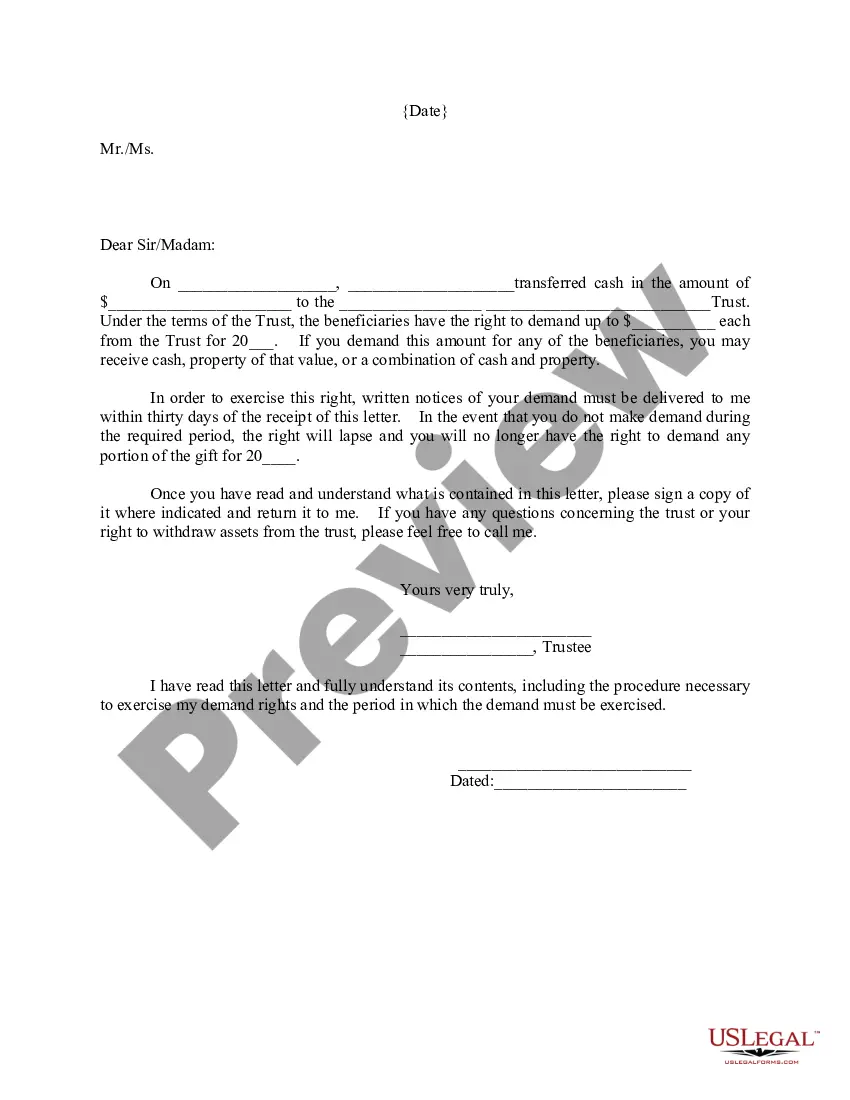
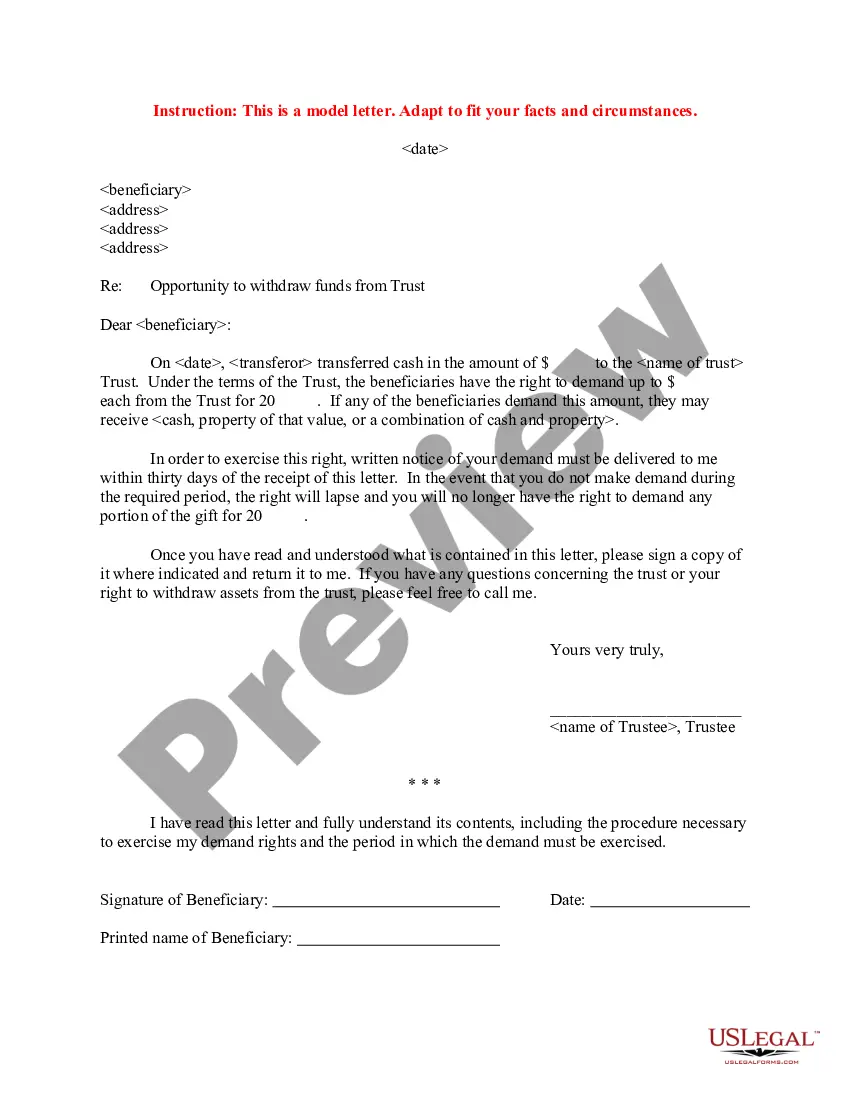
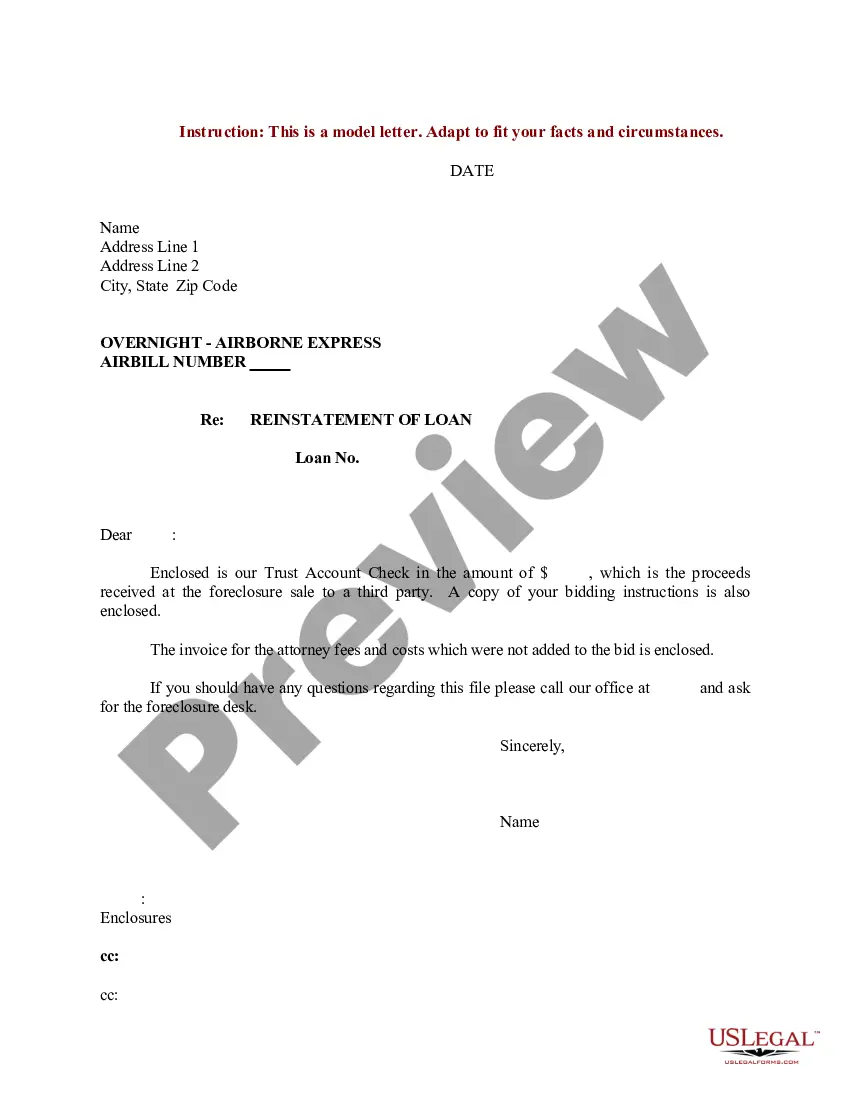
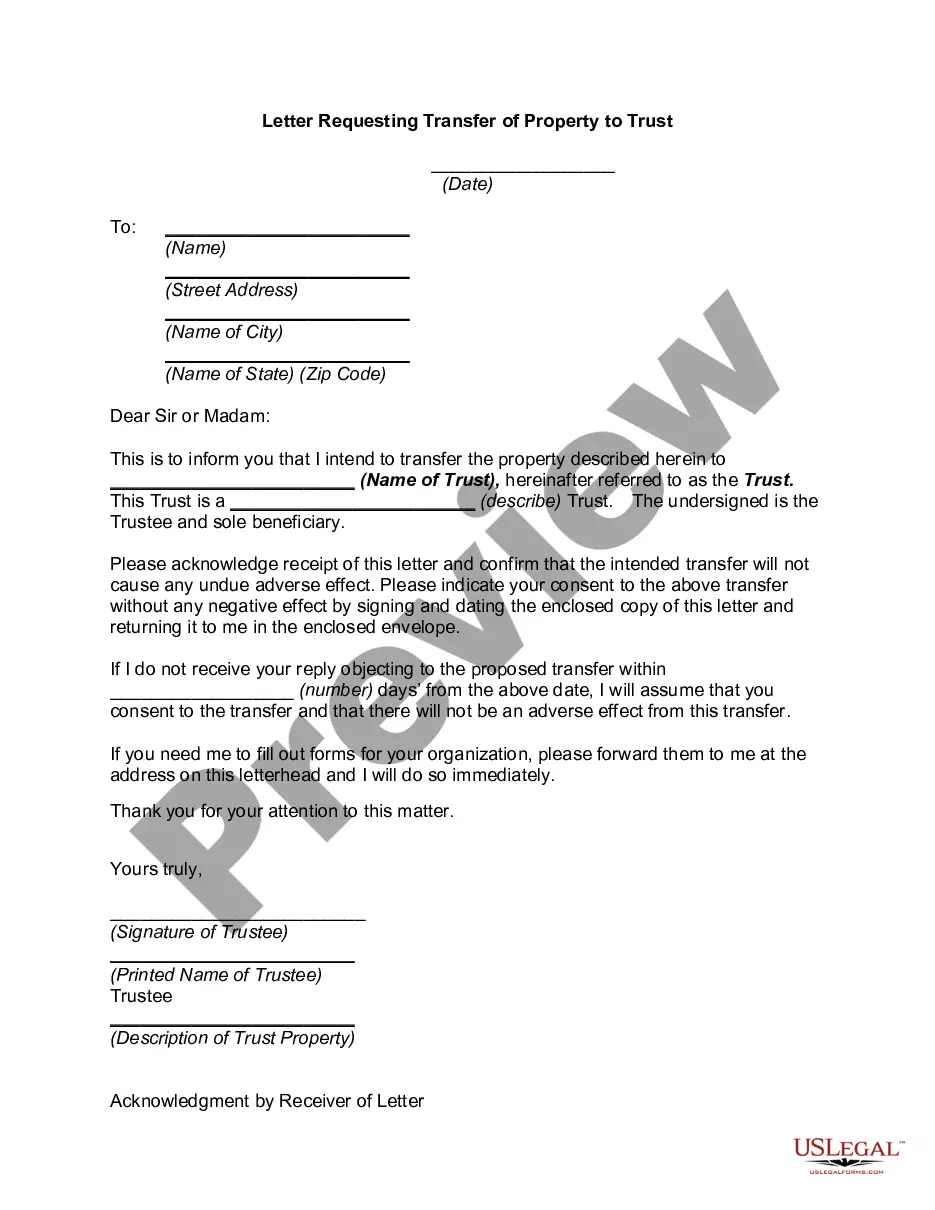
Trustee informs the trustor that he/she has the right to demand a certain amount of funds from the trust during the year. If the trustor demands a withdrawal for any of the beneficiaries, he/she may receive cash, property of that value, or a combination of cash and property.
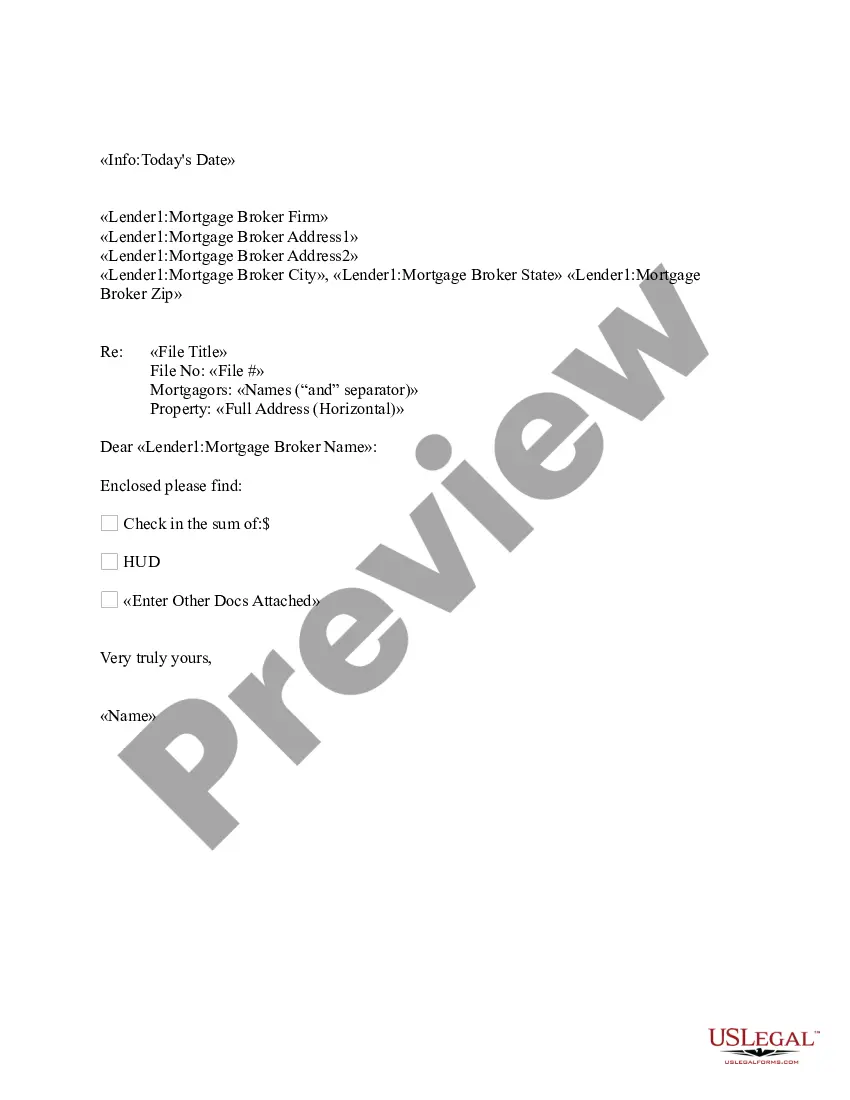
Montana Letter regarding trust money
Instant download
Description
Get your form ready online
Our built-in tools help you complete, sign, share, and store your documents in one place.
Built-in online Word editor
Make edits, fill in missing information, and update formatting in US Legal Forms—just like you would in MS Word.
Export easily
Download a copy, print it, send it by email, or mail it via USPS—whatever works best for your next step.
E-sign your document
Sign and collect signatures with our SignNow integration. Send to multiple recipients, set reminders, and more. Go Premium to unlock E-Sign.
Notarize online 24/7
If this form requires notarization, complete it online through a secure video call—no need to meet a notary in person or wait for an appointment.
Store your document securely
We protect your documents and personal data by following strict security and privacy standards.

Make edits, fill in missing information, and update formatting in US Legal Forms—just like you would in MS Word.

Download a copy, print it, send it by email, or mail it via USPS—whatever works best for your next step.

Sign and collect signatures with our SignNow integration. Send to multiple recipients, set reminders, and more. Go Premium to unlock E-Sign.

If this form requires notarization, complete it online through a secure video call—no need to meet a notary in person or wait for an appointment.

We protect your documents and personal data by following strict security and privacy standards.
Looking for another form?





How to fill out Letter Regarding Trust Money?
It is feasible to spend hours online looking for the valid document template that satisfies the state and federal requirements you require.
US Legal Forms offers numerous valid forms that have been reviewed by specialists.
You can easily acquire or create the Montana Letter regarding trust funds from your support.
First, ensure that you have selected the correct document template for your county/city of choice. Review the form details to make sure you have chosen the right one. If available, use the Review button to look through the document template as well. If you want to find another version of the form, use the Search section to locate the template that meets your needs and preferences. Once you have found the template you want, click Acquire now to proceed. Select the pricing plan you want, enter your information, and register for an account on US Legal Forms. Complete the purchase. You can use your credit card or PayPal account to pay for the valid form. Choose the format of the document and download it to your device. Make adjustments to the document if necessary. You can fill out, modify, and sign and print the Montana Letter regarding trust funds. Download and print thousands of document templates using the US Legal Forms website, which offers the largest collection of valid forms. Utilize professional and state-specific templates to address your business or personal needs.
- If you have a US Legal Forms account, you can Log In and click on the Obtain button.
- Then, you can fill out, modify, create, or sign the Montana Letter regarding trust funds.
- Every valid document template you obtain is yours forever.
- To get an additional copy of the purchased form, visit the My documents tab and click on the corresponding button.
- If you are using the US Legal Forms website for the first time, follow the simple instructions below.
Form popularity
FAQ
Most expenses that a fiduciary incurs in the administration of the estate or trust are properly payable from the decedent's assets. These include funeral expenses, appraisal fees, attorney's and accountant's fees, and insurance premiums.
Trust Funds can guarantee that your assets are properly taken care of until your beneficiaries come of age, while also allowing them to avoid probate. In some cases, Trust Funds can even be used to designate funds for certain purposes, such as healthcare or educational costs.
Also, your assets in a revocable trust are considered personal assets for estate tax purposes and creditors. This means that if you owe money when you pass away, creditors have access to your assets to pay off those debts.
They can withdraw money to maintain trust property, like paying property taxes or homeowners insurance or for general upkeep of a house owned by the trust. The trustee can use trust funds to pay filing fees, registration fees, title fees as necessary when transferring assets into the trust's name.
There are three parties who take part in a trust fund: the grantor, the trustee and the beneficiary. The grantor is the person who establishes the trust fund and places his or her assets into the fund. The trustee is the person or institution who holds and manages the assets.
Probate timelines vary in Montana, depending on the size of the estate and if there are any disputes or other delays. In a small estate with no complications, it can be completed in as little as six months. Other probate cases will take up to a year.
Because trust funds deposited into the trust account belong to, and are owed to the client (a non-owner) until earned, the client's trust funds are recorded as a liability on the balance sheet.
Putting money in a trust lets you pass property to someone in a structured way, where you can impose rules. For example, you might say that your beneficiary can't use these funds to pay off debt. Or, you might impose rules on how old the beneficiary needs to be before she gains control over the money.
The difference between a Trust and a Trust Fund is small but important when it comes to understanding Estate Planning. A Trust is an agreement used to specify how certain assets will be managed and distributed. A Trust Fund is the legal entity those assets are placed into when the Trust is created.