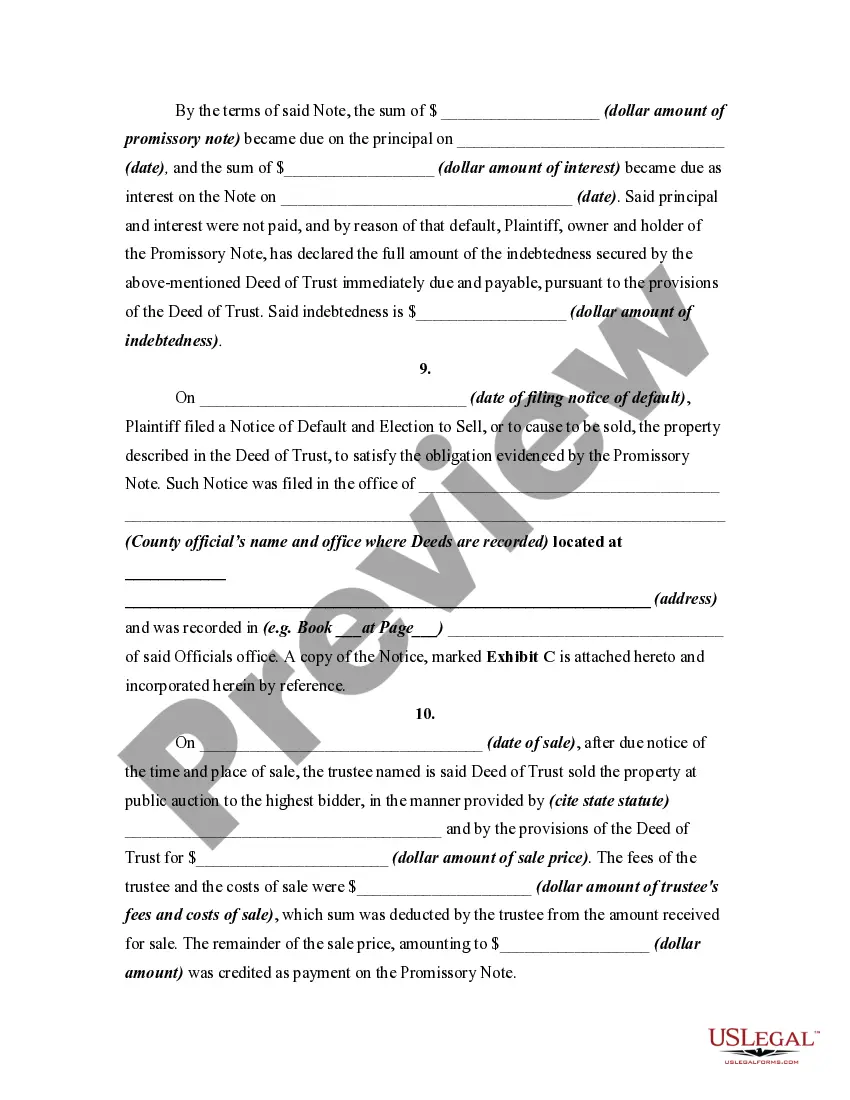
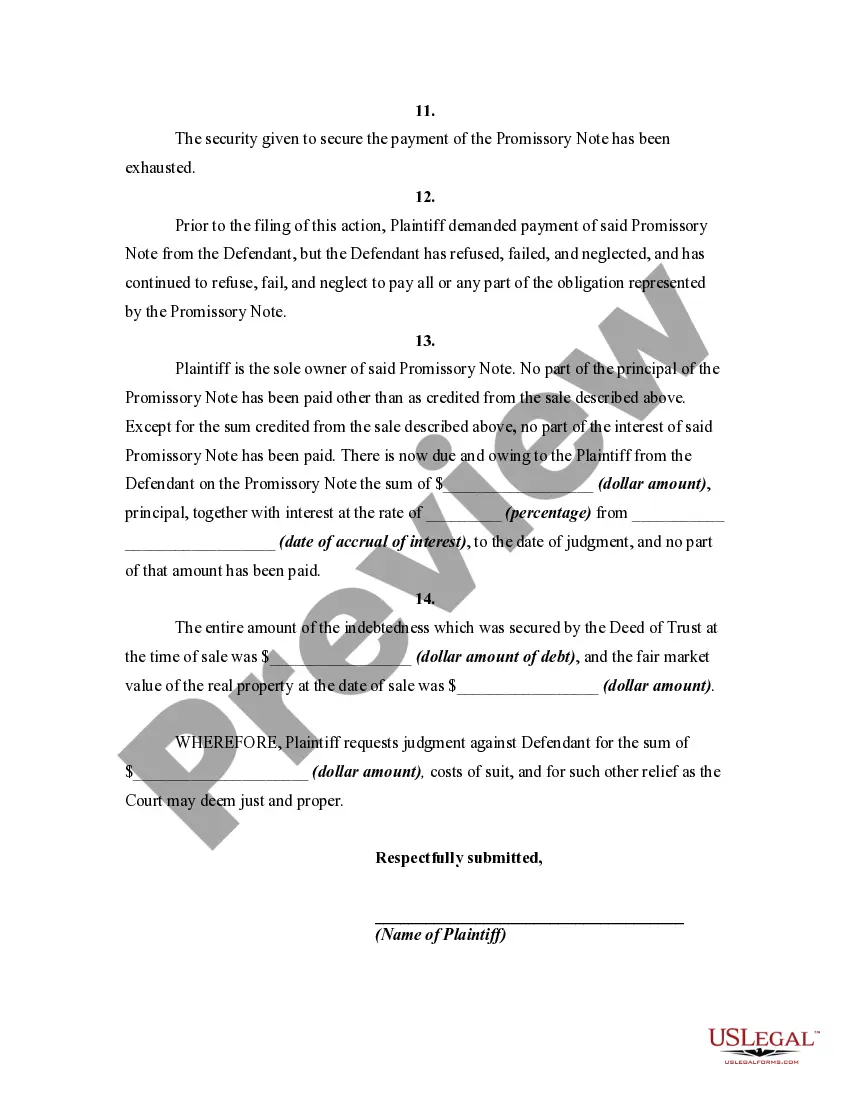
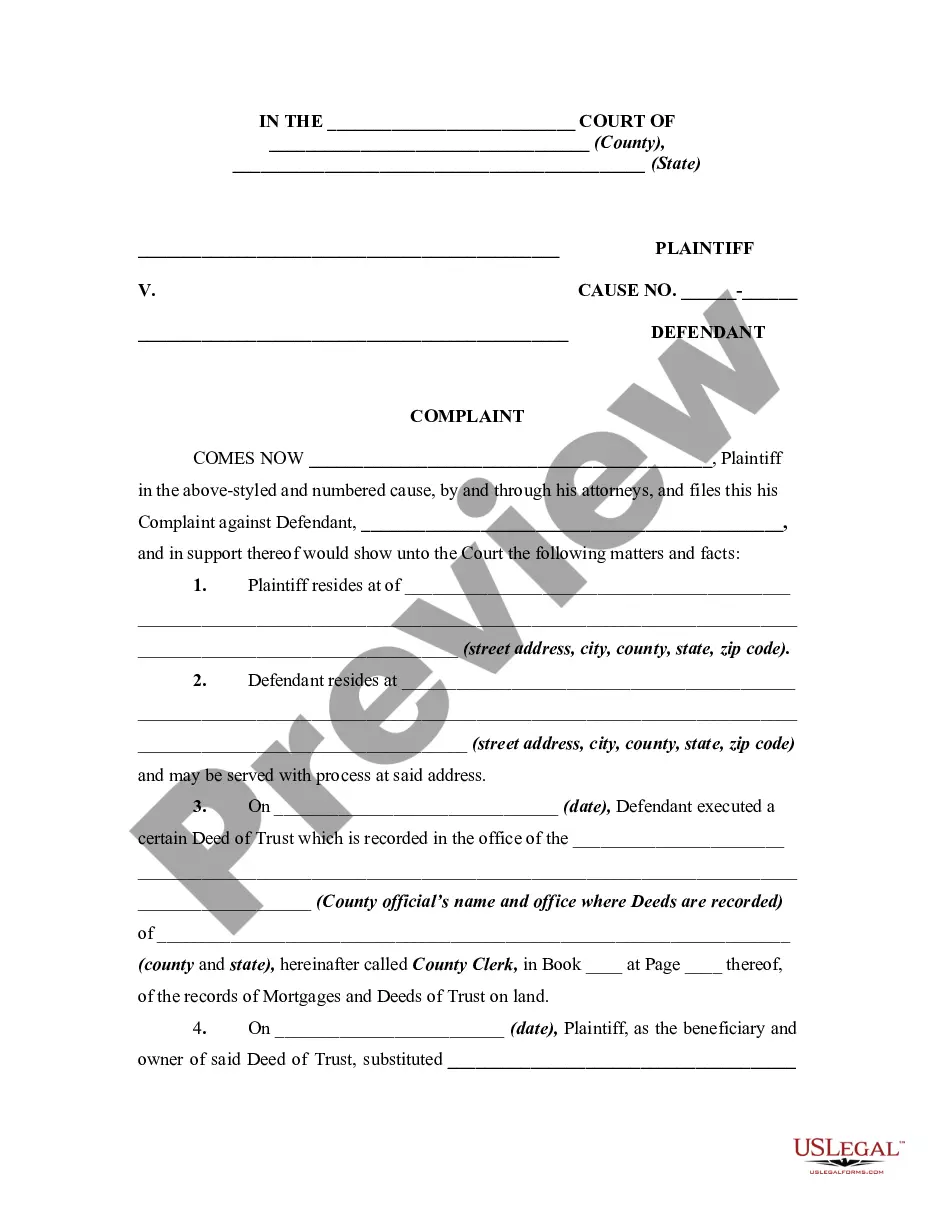
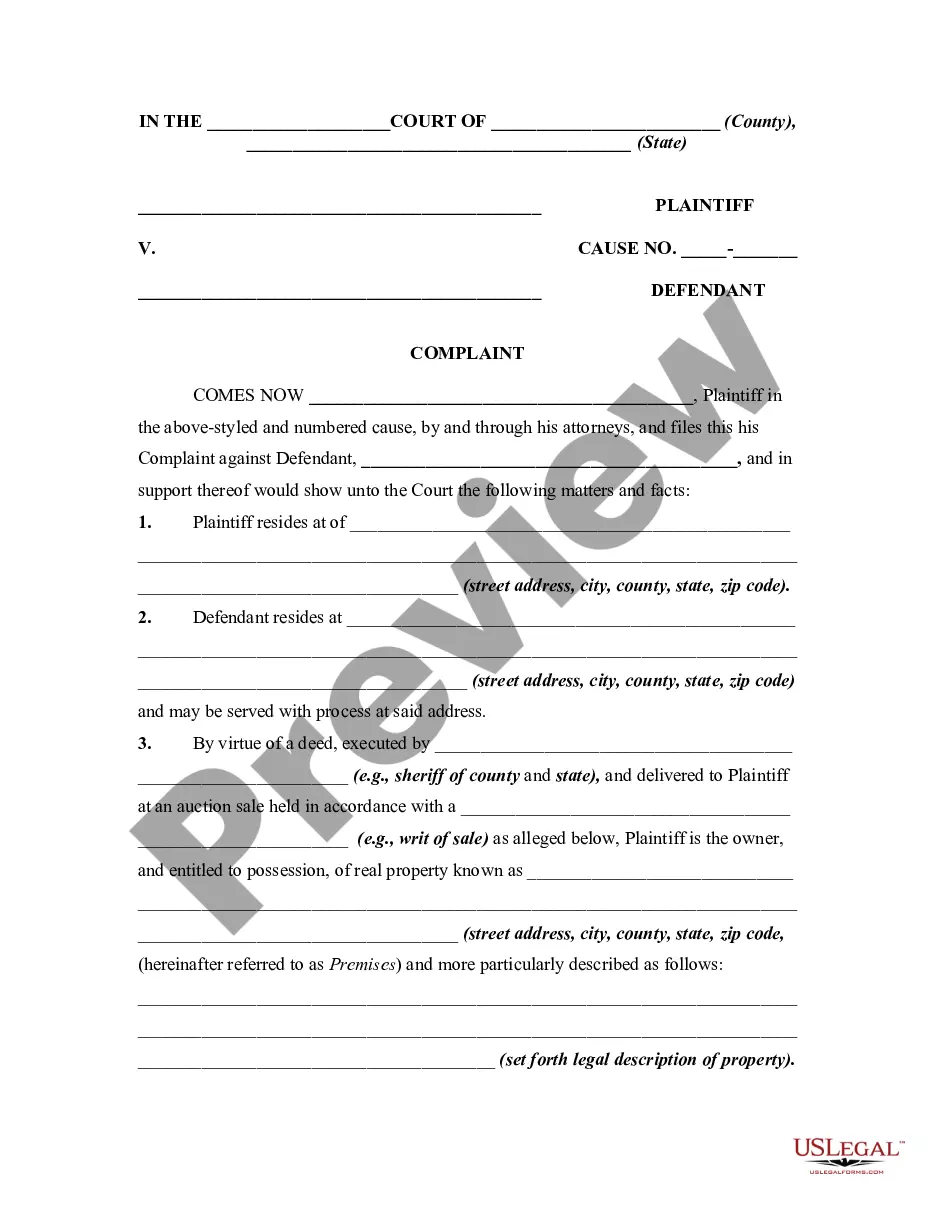
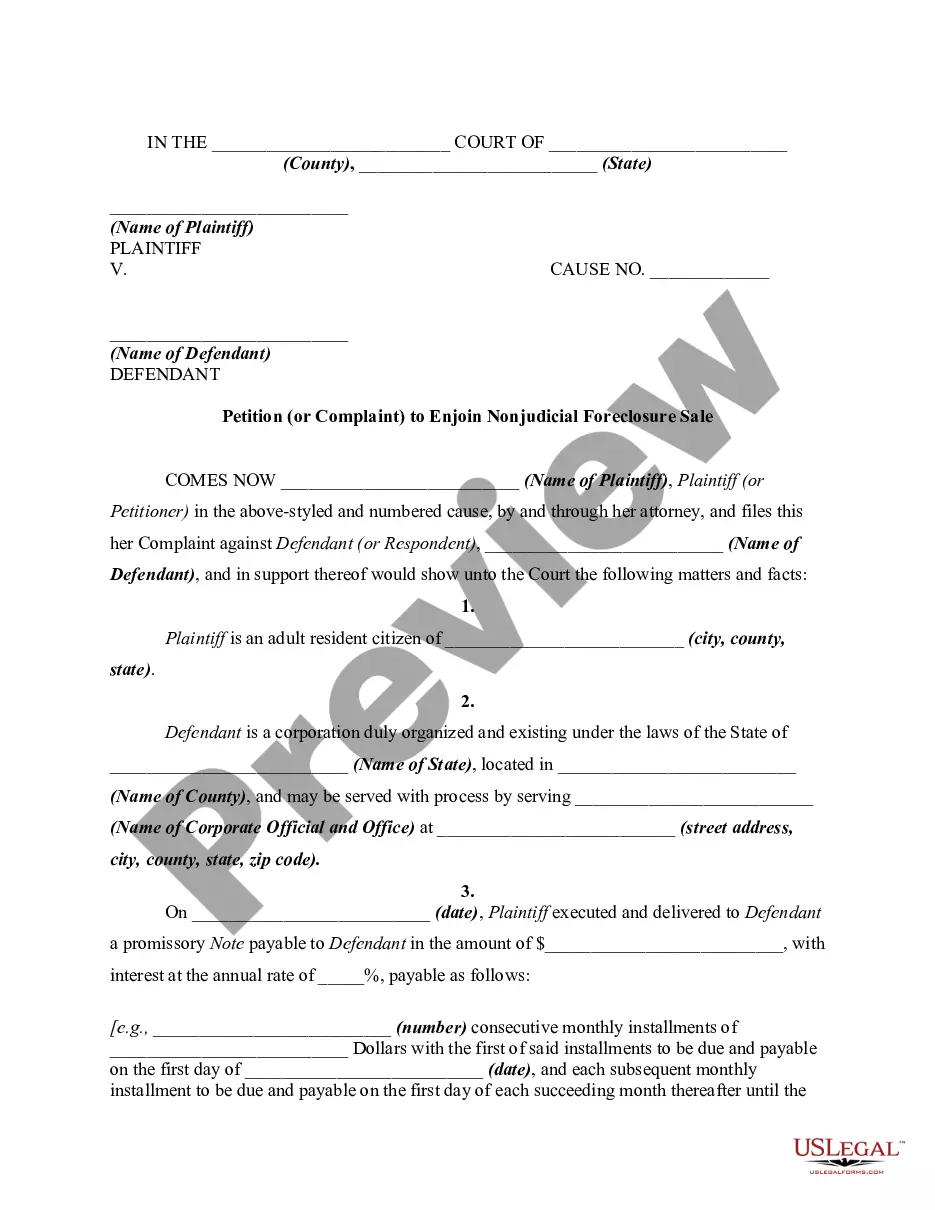
Montana Complaint or Petition to Recover Deficiency after Sale under Trust Deed or Deed of Trust

State:
Multi-State
Control #:
US-01525BG
Format:
Word; 
Rich Text
Instant download

Description

A deficiency judgment is typically in an amount equal to the difference between the funds received from a court sale of property and the balance remaining on a debt. Deficiency judgments are commonly issued when a property owner fails to pay amounts owed on a mortgage and the property securing the mortgage is sold to satisfy the debt, but the proceeds from the sale are less than the amount owed.


Deficiency judgments are not allowed in all states. In order to get a deficiency judgment in most states, the party owed money must file a suit for judicial foreclosure instead of just foreclosing on real property. However, some states allow a lawsuit for a deficiency after foreclosure on the mortgage or deed of trust. Local laws should be consulted for specific requirements in your area.
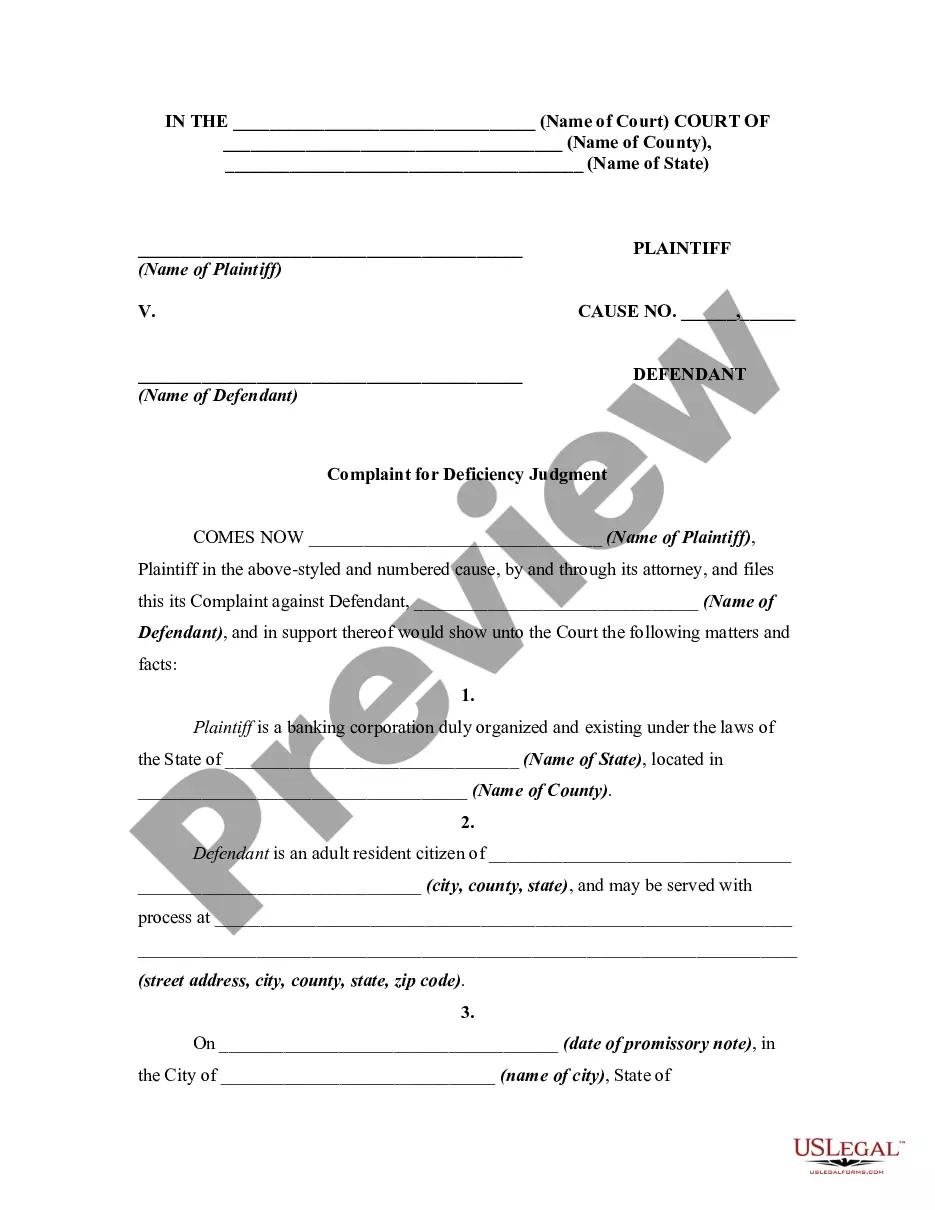
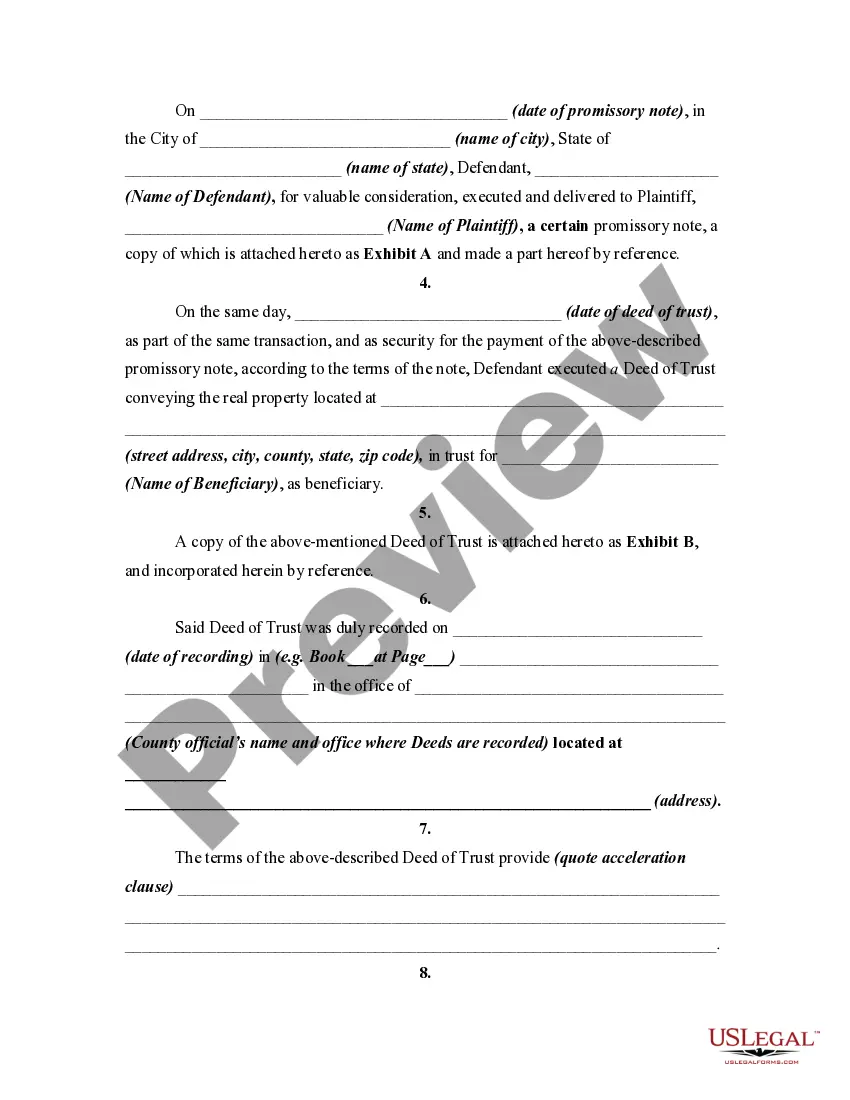
Free preview
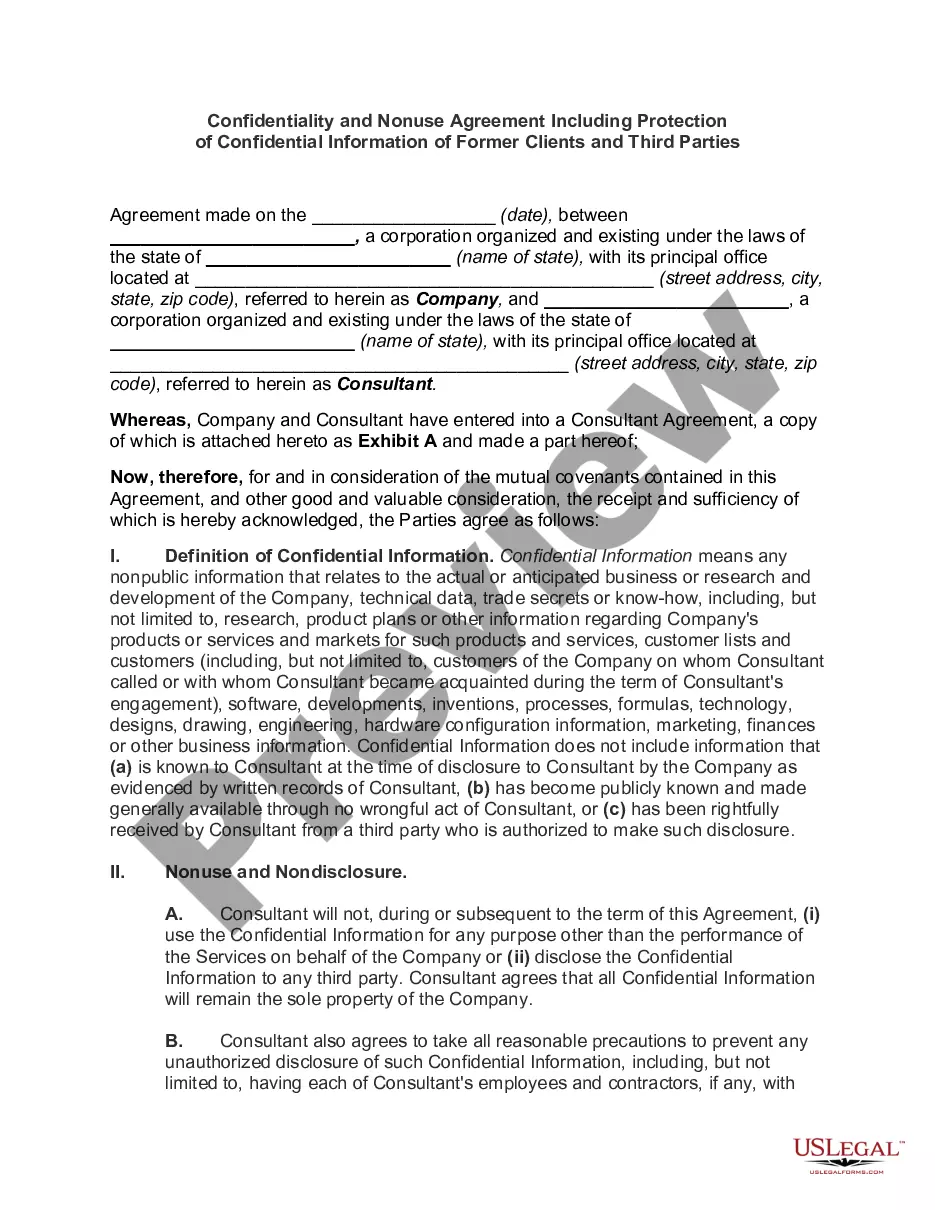
  • Preview Complaint or Petition to Recover Deficiency after Sale under Trust Deed or Deed of Trust
  • Preview Complaint or Petition to Recover Deficiency after Sale under Trust Deed or Deed of Trust
  • Preview Complaint or Petition to Recover Deficiency after Sale under Trust Deed or Deed of Trust
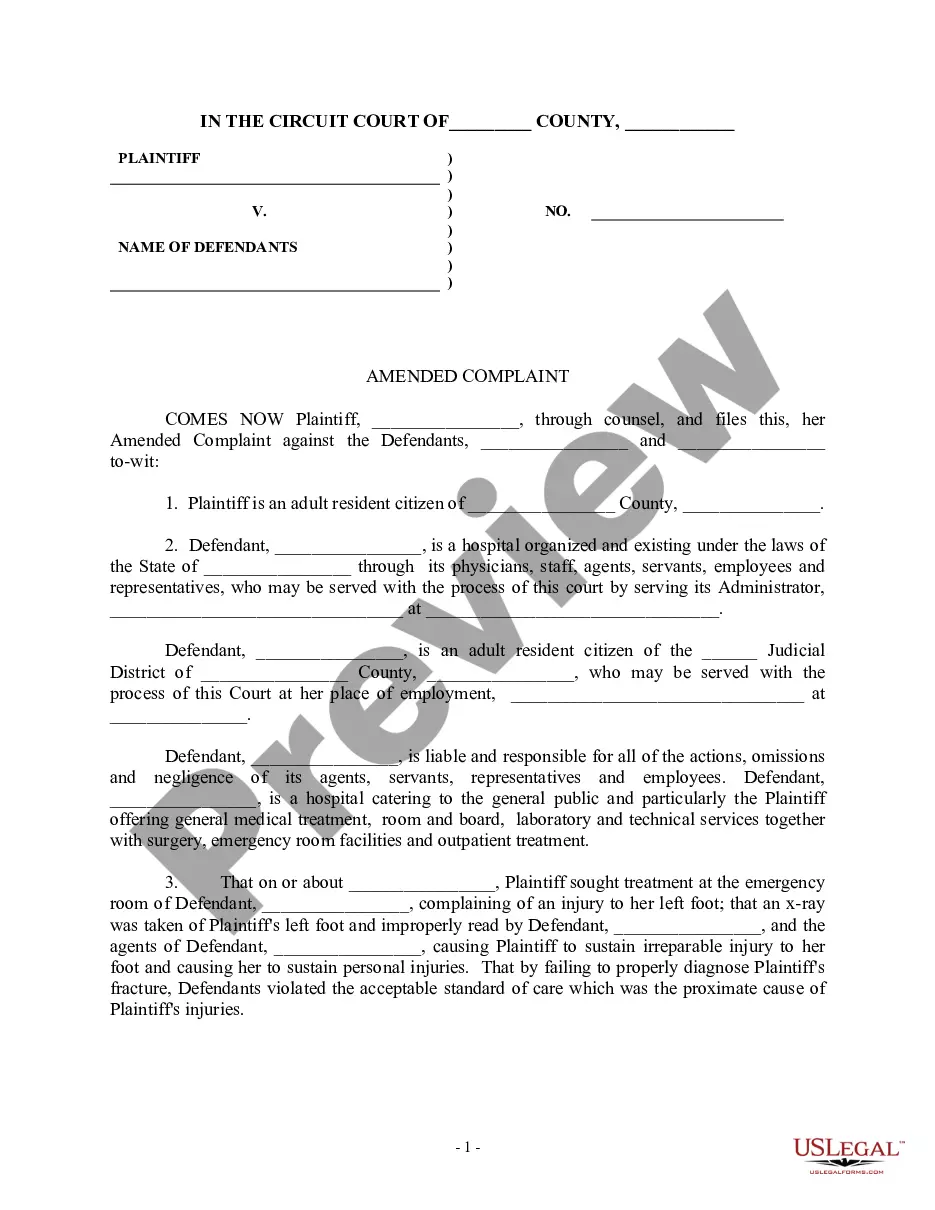
  • Preview Complaint or Petition to Recover Deficiency after Sale under Trust Deed or Deed of Trust
  • Preview Complaint or Petition to Recover Deficiency after Sale under Trust Deed or Deed of Trust

How to fill out Complaint Or Petition To Recover Deficiency After Sale Under Trust Deed Or Deed Of Trust?

It is possible to devote hrs on the Internet looking for the legitimate document format that fits the federal and state specifications you will need. US Legal Forms supplies 1000s of legitimate types that are analyzed by professionals. You can actually obtain or print out the Montana Complaint or Petition to Recover Deficiency after Sale under Trust Deed or Deed of Trust from my support.

If you already have a US Legal Forms account, you can log in and then click the Obtain button. After that, you can comprehensive, modify, print out, or signal the Montana Complaint or Petition to Recover Deficiency after Sale under Trust Deed or Deed of Trust. Every legitimate document format you get is your own property permanently. To obtain yet another copy associated with a acquired type, visit the My Forms tab and then click the corresponding button.

If you use the US Legal Forms internet site initially, follow the easy recommendations below:

  • Initially, make certain you have selected the correct document format for the region/area that you pick. Look at the type description to make sure you have picked the appropriate type. If offered, make use of the Review button to look from the document format also.
  • If you would like discover yet another variation in the type, make use of the Research field to discover the format that meets your needs and specifications.
  • Once you have discovered the format you would like, simply click Purchase now to carry on.
  • Pick the rates plan you would like, type your accreditations, and register for your account on US Legal Forms.
  • Complete the deal. You may use your bank card or PayPal account to purchase the legitimate type.
  • Pick the formatting in the document and obtain it in your system.
  • Make changes in your document if needed. It is possible to comprehensive, modify and signal and print out Montana Complaint or Petition to Recover Deficiency after Sale under Trust Deed or Deed of Trust.

Obtain and print out 1000s of document templates making use of the US Legal Forms website, which offers the largest collection of legitimate types. Use skilled and state-specific templates to handle your business or individual requirements.

Form popularity

FAQ

The jurisdiction clause is an important element of any trust deed, as it establishes which country's courts have jurisdiction over the administration of the trust or any potential disputes between the trustee and beneficiaries.

Beneficiary. The beneficiary, more commonly known as the lender, is the person or company that lends the borrower money, and who will be entitled to be repaid from the proceeds of a foreclosure.

The three parties involved in a deed of trust are: The borrower is the trustor. The third party who holds the title is the trustee. The lender is the beneficiary.

Mortgage States and Deed of Trust States StateMortgage StateDeed of Trust StateMontanaYYNebraskaYNevadaYNew HampshireY47 more rows

A trust indenture is held by a company who owns many small parcels of land and, in the interest of allowing banks to foreclose, the trust indenture is a promissory note and is a legal document that cannot be held by the company itself, but by an individual person or couple.

Trustor: This is the borrower. Trustee: This is the third party who will hold the legal title to the real property. Beneficiary: This is the lender.

Under a deed of trust, the lender has the remedy of nonjudicial foreclosure. Non-Judicial Foreclosure. A deed of trust may be foreclosed judicially (i.e. through the courts) or non-judicially (i.e. outside of the courts).

The borrower under a deed of trust is known as. The answer is the trustor. A borrower gives a deed of trust to a trustee and a note to the lender, thus becoming a trustor on the deed of trust and a maker?or obligor?on the note. The deed is held by the trustee, and the lender is the beneficiary of the trust.

Trusted and secure by over 3 million people of the world’s leading companies

Montana Complaint or Petition to Recover Deficiency after Sale under Trust Deed or Deed of Trust