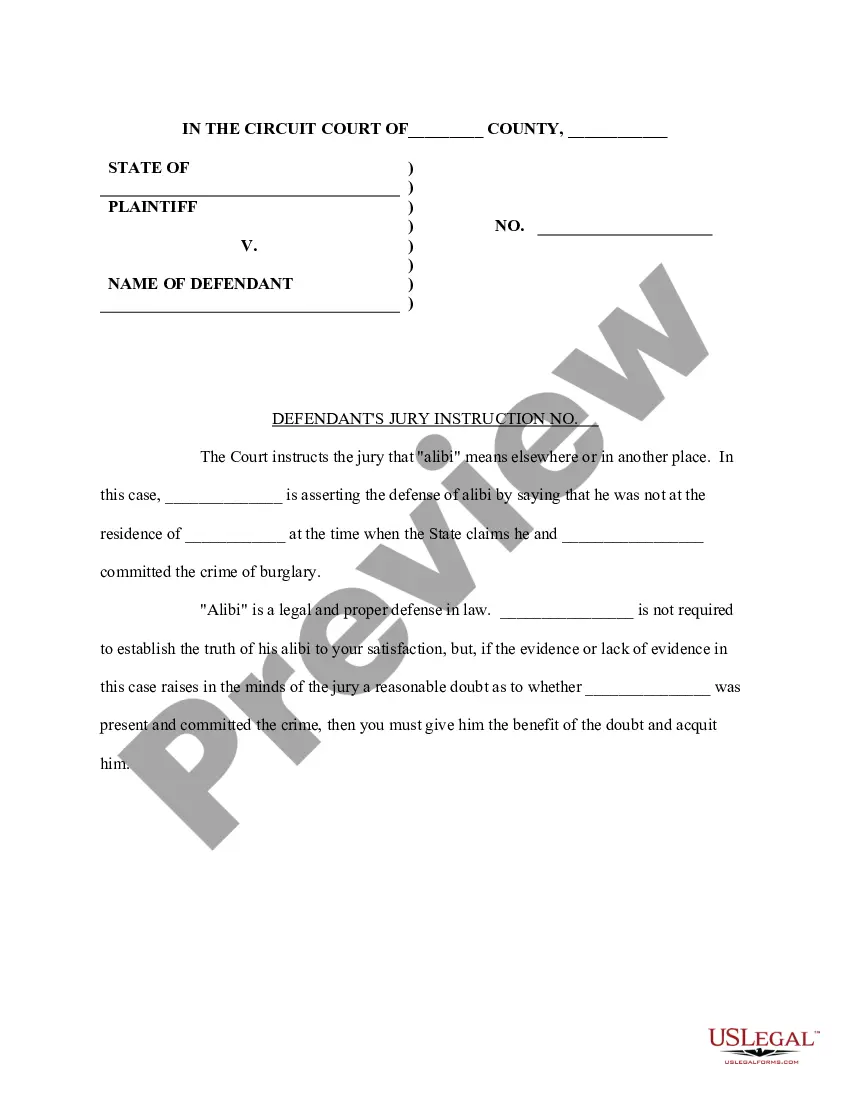
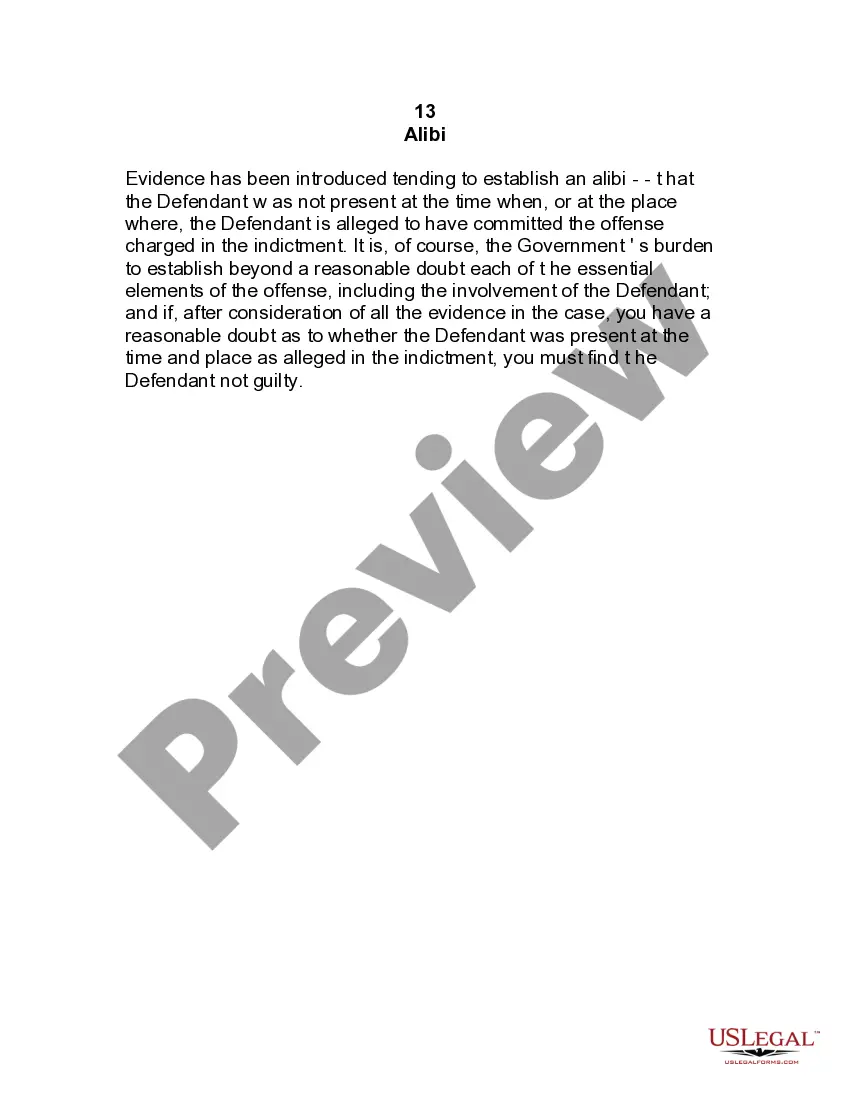
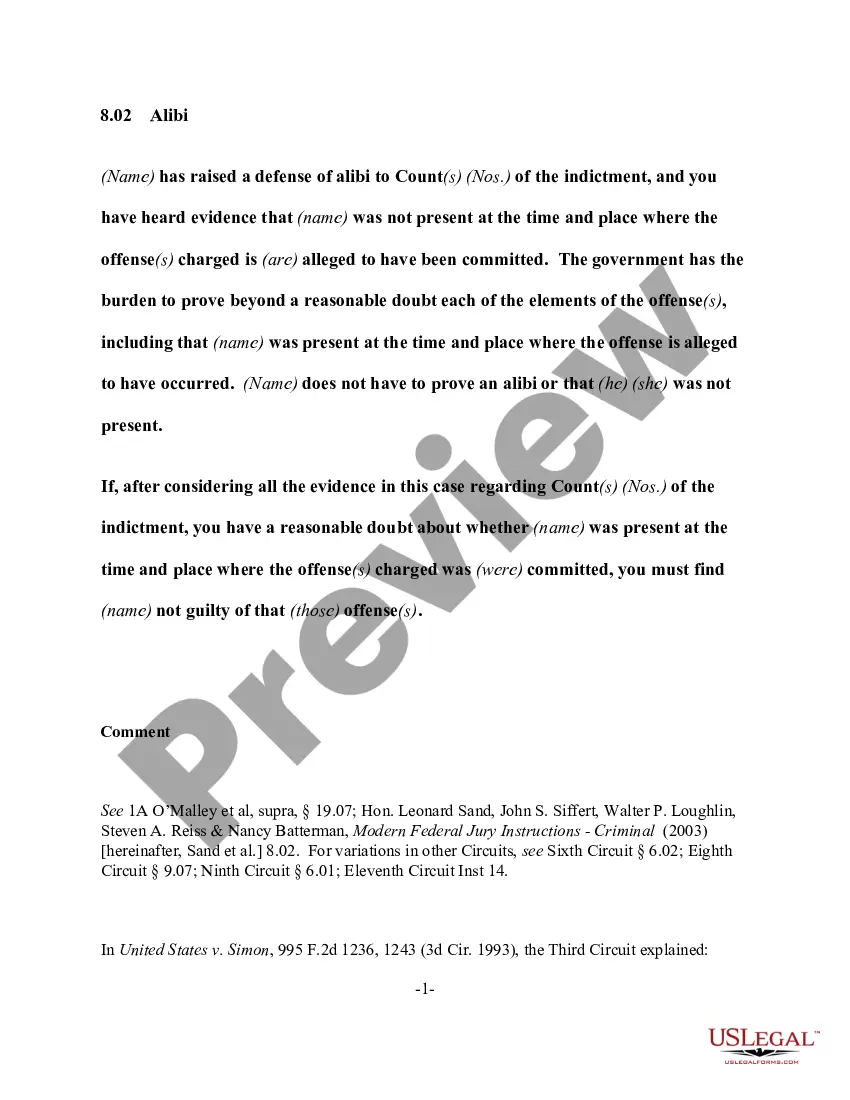
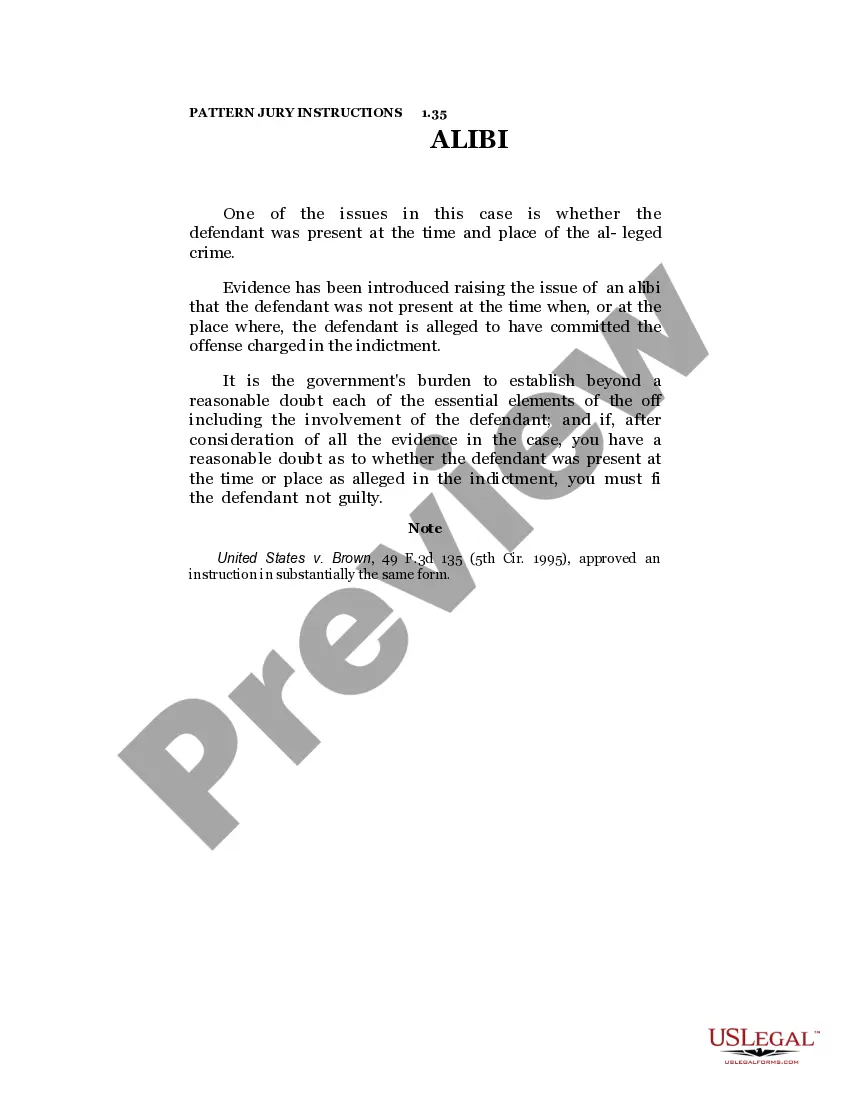
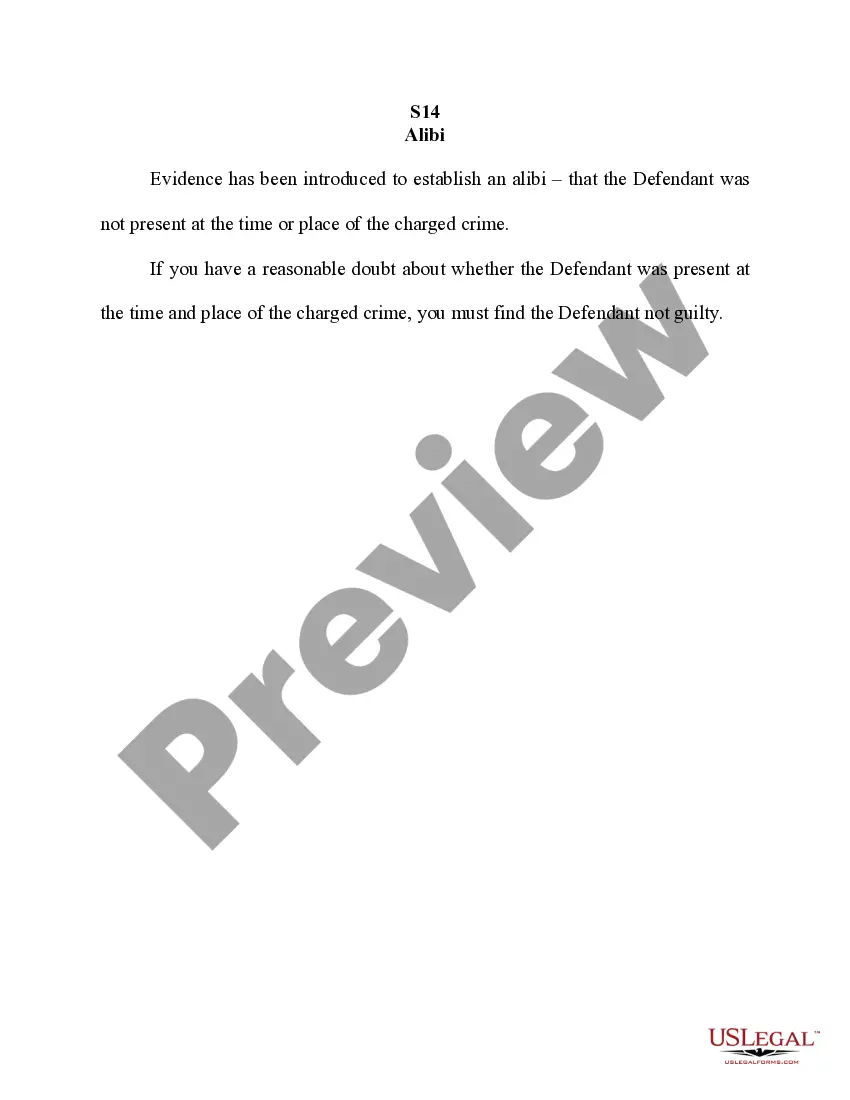
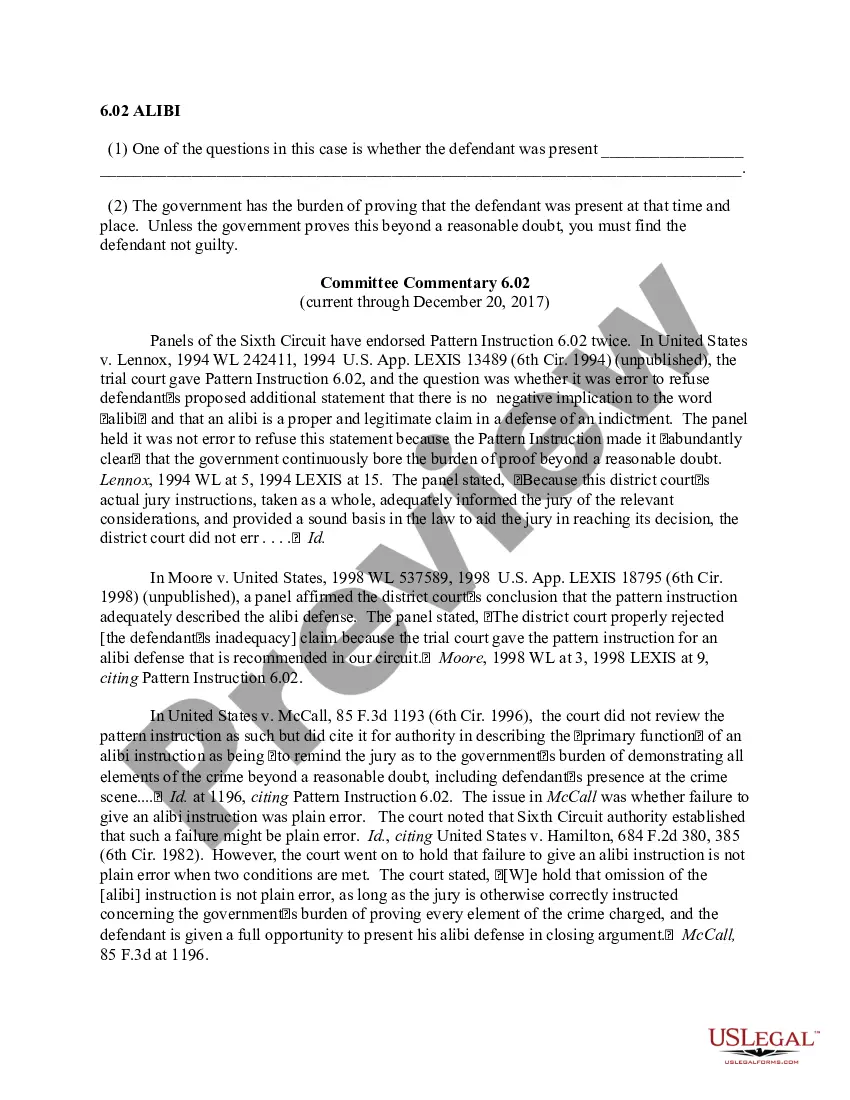
Montana Alibi Instruction
Description
Get your form ready online
Our built-in tools help you complete, sign, share, and store your documents in one place.
Make edits, fill in missing information, and update formatting in US Legal Forms—just like you would in MS Word.
Download a copy, print it, send it by email, or mail it via USPS—whatever works best for your next step.
Sign and collect signatures with our SignNow integration. Send to multiple recipients, set reminders, and more. Go Premium to unlock E-Sign.
If this form requires notarization, complete it online through a secure video call—no need to meet a notary in person or wait for an appointment.
We protect your documents and personal data by following strict security and privacy standards.

Make edits, fill in missing information, and update formatting in US Legal Forms—just like you would in MS Word.

Download a copy, print it, send it by email, or mail it via USPS—whatever works best for your next step.

Sign and collect signatures with our SignNow integration. Send to multiple recipients, set reminders, and more. Go Premium to unlock E-Sign.

If this form requires notarization, complete it online through a secure video call—no need to meet a notary in person or wait for an appointment.

We protect your documents and personal data by following strict security and privacy standards.
Looking for another form?


How to fill out Alibi Instruction?
US Legal Forms - one of the largest collections of legal documents in the United States - offers a variety of legal document templates that you can download or print.
By using the site, you can find thousands of forms for business and personal use, organized by category, state, or keywords. You can discover the latest versions of forms like the Montana Alibi Instruction in seconds.
If you already have a membership, Log In and download the Montana Alibi Instruction from your US Legal Forms library. The Download button will appear on every form you view. You have access to all previously downloaded forms within the My documents tab of your account.
Make edits. Fill out, modify, print, and sign the downloaded Montana Alibi Instruction.
Every document you add to your account does not have an expiration date and belongs to you permanently. So, if you want to download or print another copy, just visit the My documents section and click on the form you need. Access the Montana Alibi Instruction with US Legal Forms, the most comprehensive library of legal document templates. Utilize a vast array of professional and state-specific templates that meet your business or personal needs and requirements.
- If you want to use US Legal Forms for the first time, here are simple instructions to get you started.
- Ensure you have selected the correct form for your city/county. Click the Review button to examine the form's details. Read the form description to make sure you have chosen the right form.
- If the form does not meet your needs, use the Search field at the top of the screen to find one that does.
- When you are satisfied with the form, confirm your choice by clicking the Buy now button. Then, select the pricing plan you want and provide your details to register for an account.
- Process the payment. Use a credit card or PayPal account to complete the transaction.
- Select the format and download the form to your device.
Form popularity
FAQ
The next step in establishing a solid alibi is to identify all possible evidence that can prove you were somewhere other than the scene of the crime at the time it occurred. This might include phone records, video footage from surveillance cameras, eyewitness accounts and more.
Alibi witnesses that are close family members or friends of the defendant are generally considered weak alibis for the most part. Stronger alibis exist in such things as video evidence, photographs, and unbiased witnesses.
An alibi is not an affirmative defense. The defendant is not admitting to anything and does not have the burden of proving their alibi. When a defendant raises an alibi, the burden of proof remains with the prosecution to prove the charge or charges against a defendant beyond a reasonable doubt.
The defense of alibi is a defense asserted by a defendant that effectively says ?I would not have committed the crime for which I am charged because I was somewhere else at the time in question.? Generally, when a defendant asserts a defense of alibi, the defendant has at least one (and preferably several) witnesses ...
An alibi witness is a recognized defense in all jurisdictions in the United States, and if admitted at trial, could result in proving the innocence of a defendant and lead to their acquittal.
The next step in establishing a solid alibi is to identify all possible evidence that can prove you were somewhere other than the scene of the crime at the time it occurred. This might include phone records, video footage from surveillance cameras, eyewitness accounts and more.