Montana Waste Disposal Agreement for Municipality
Description
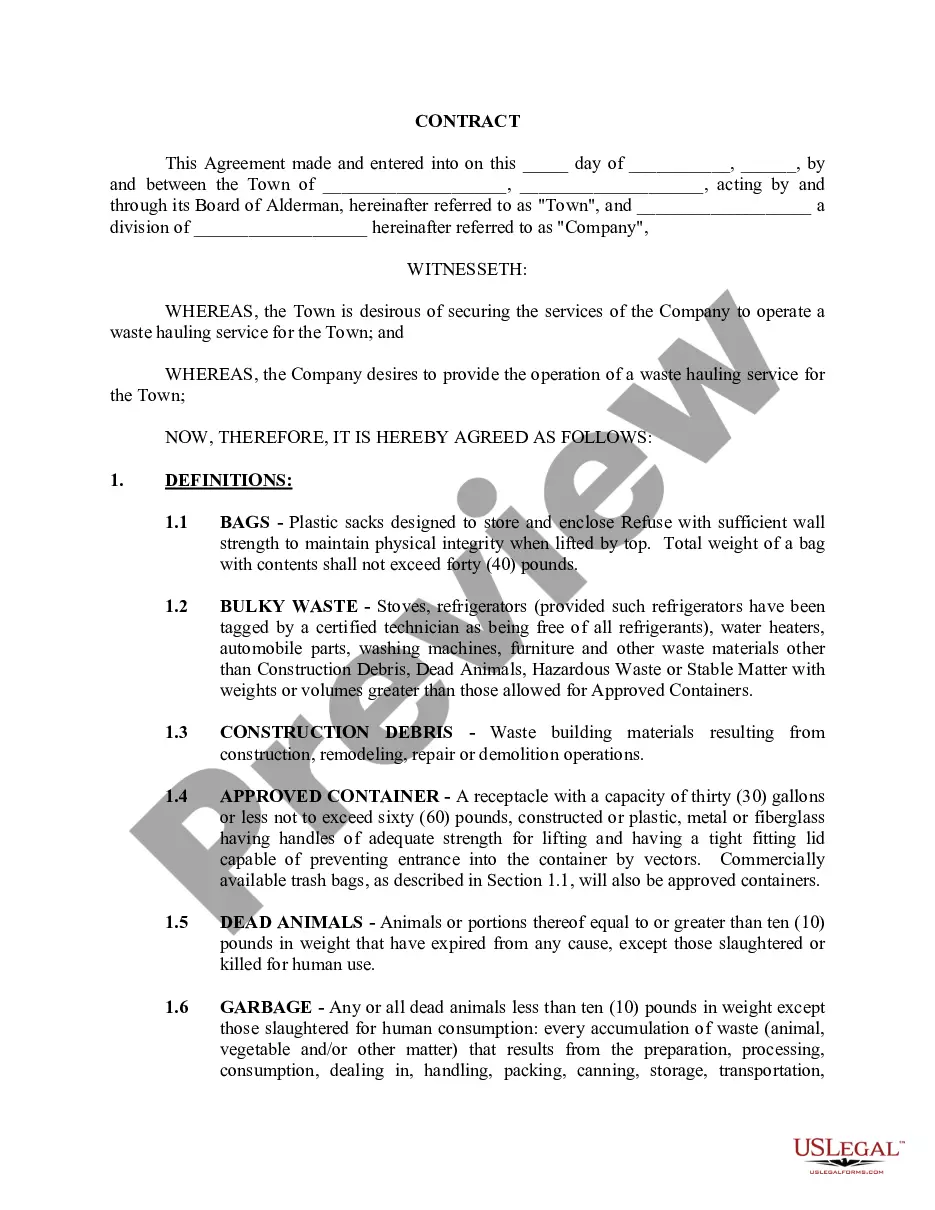
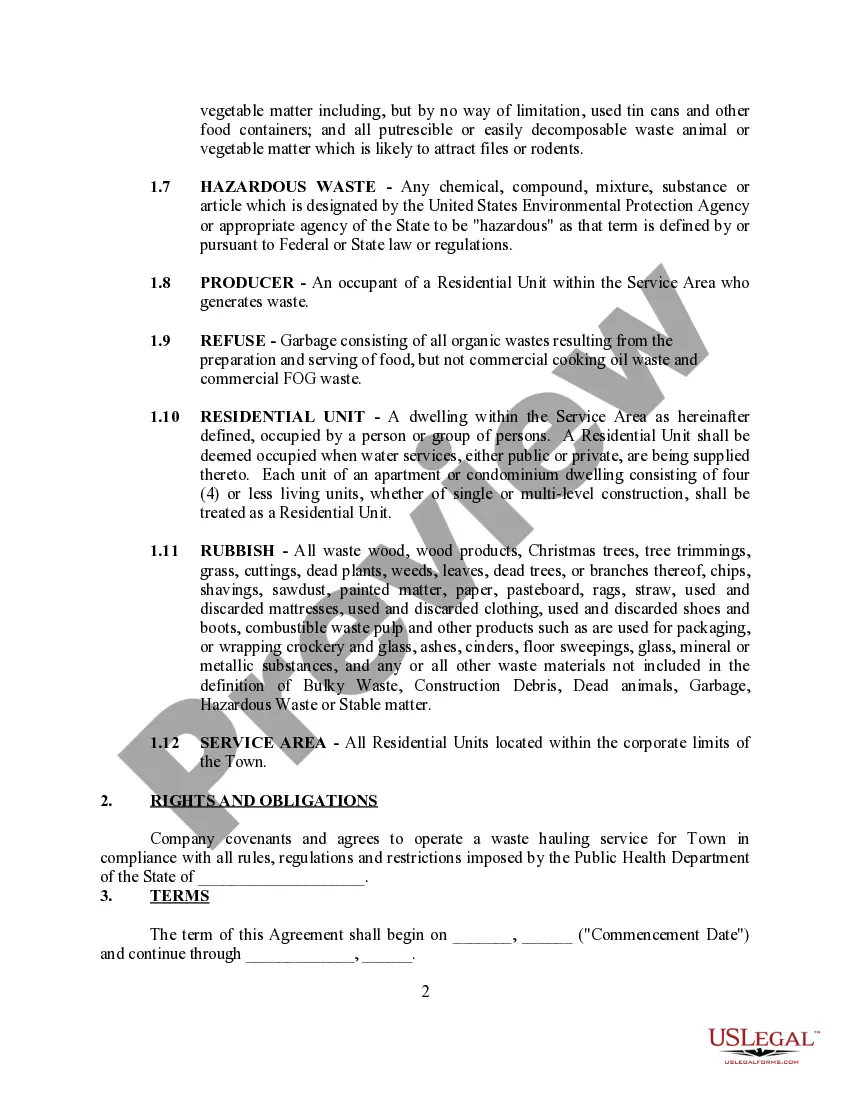
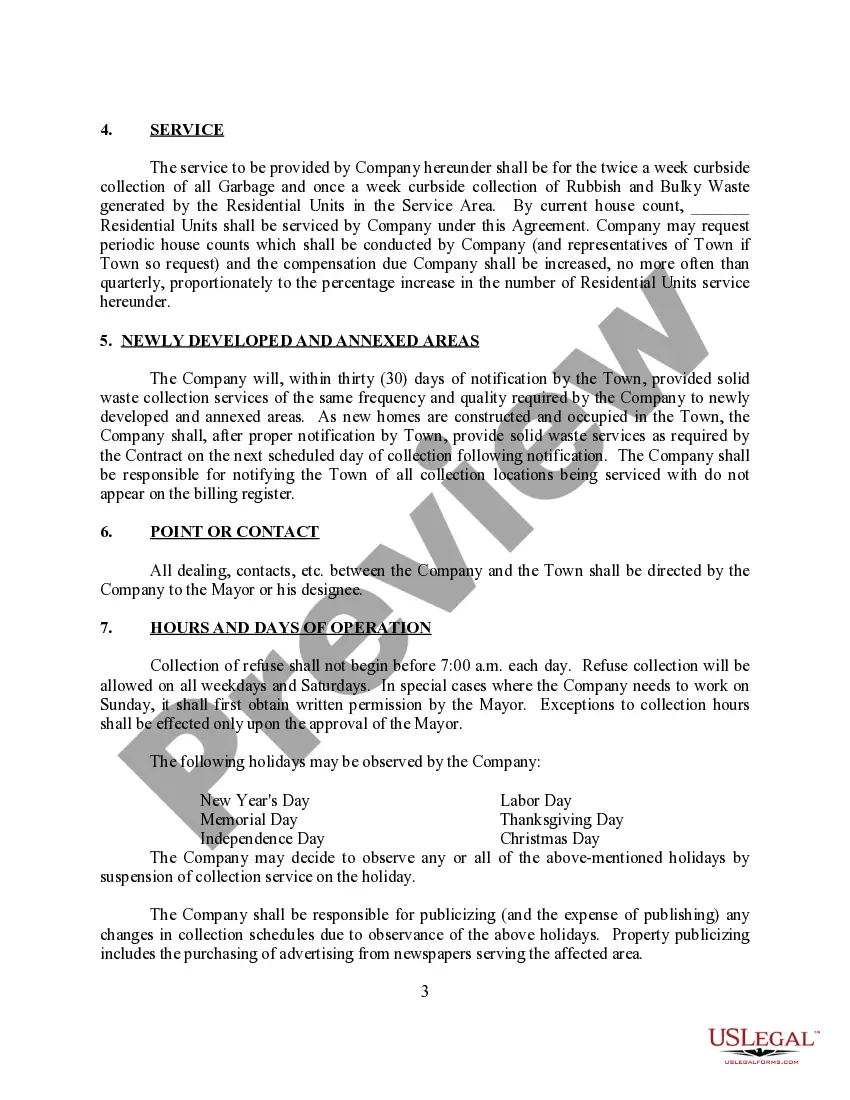
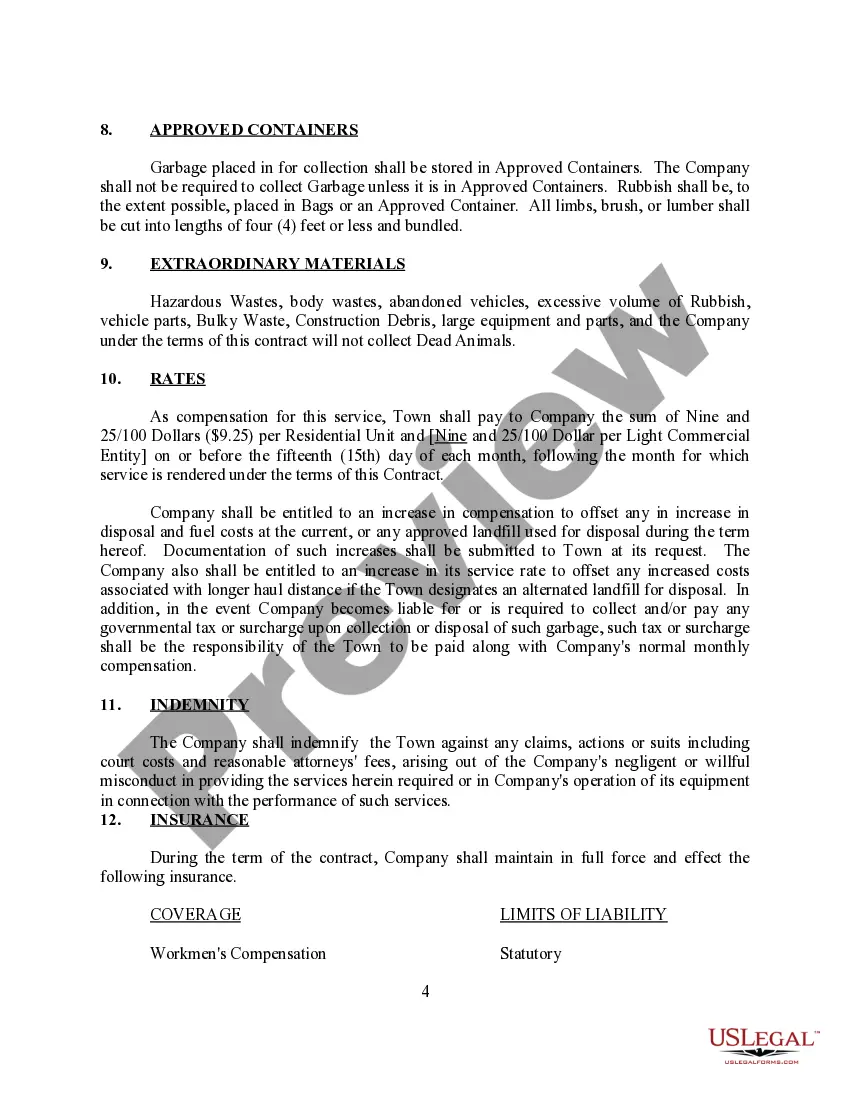
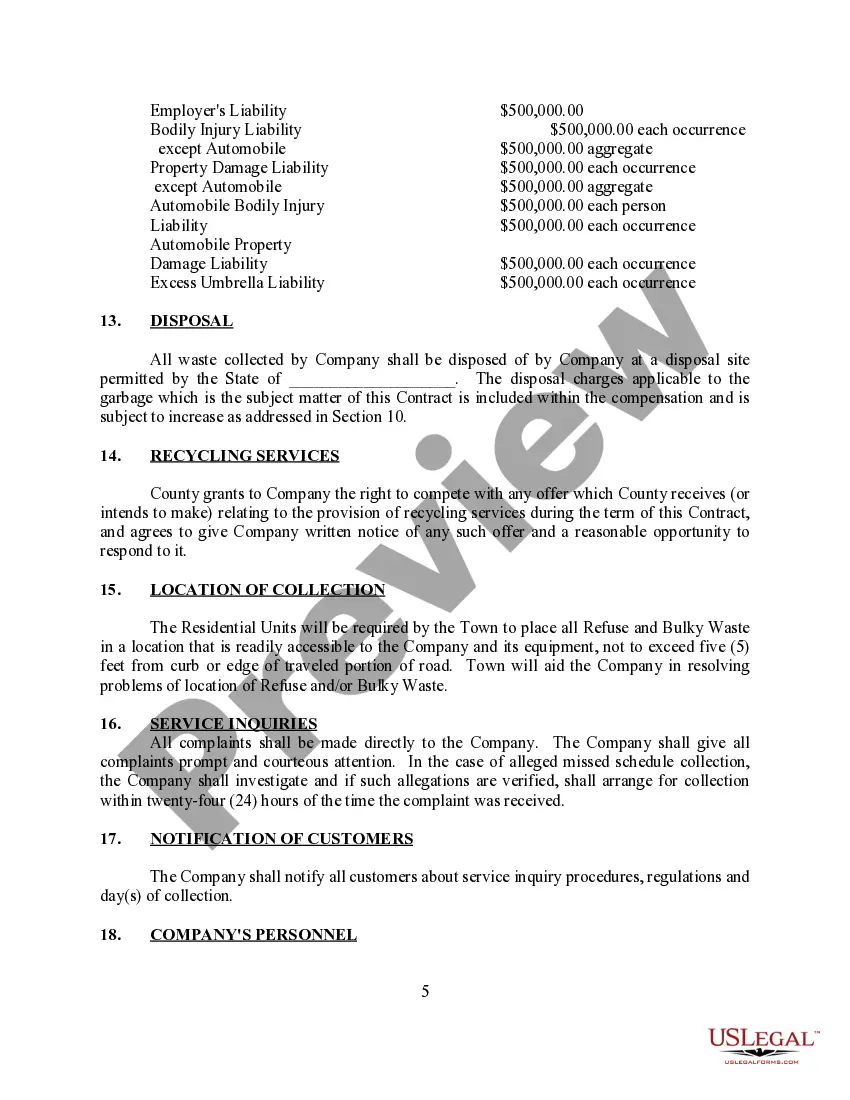
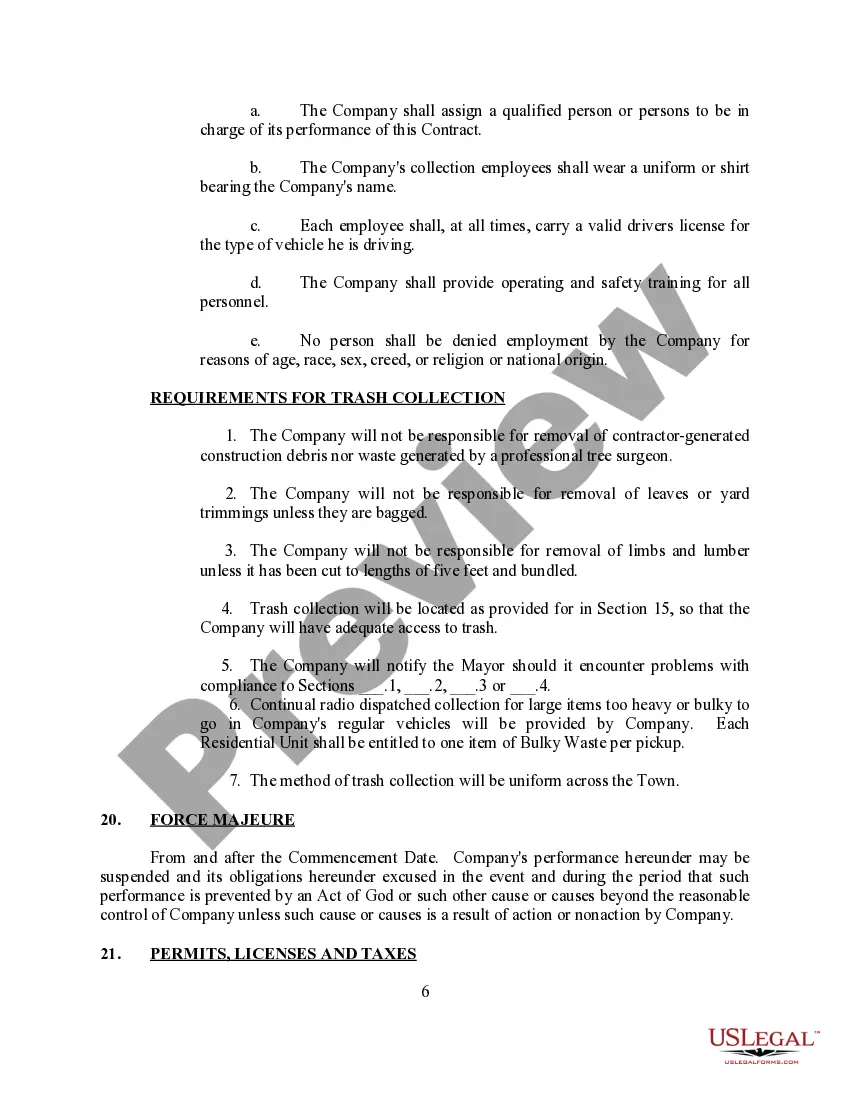
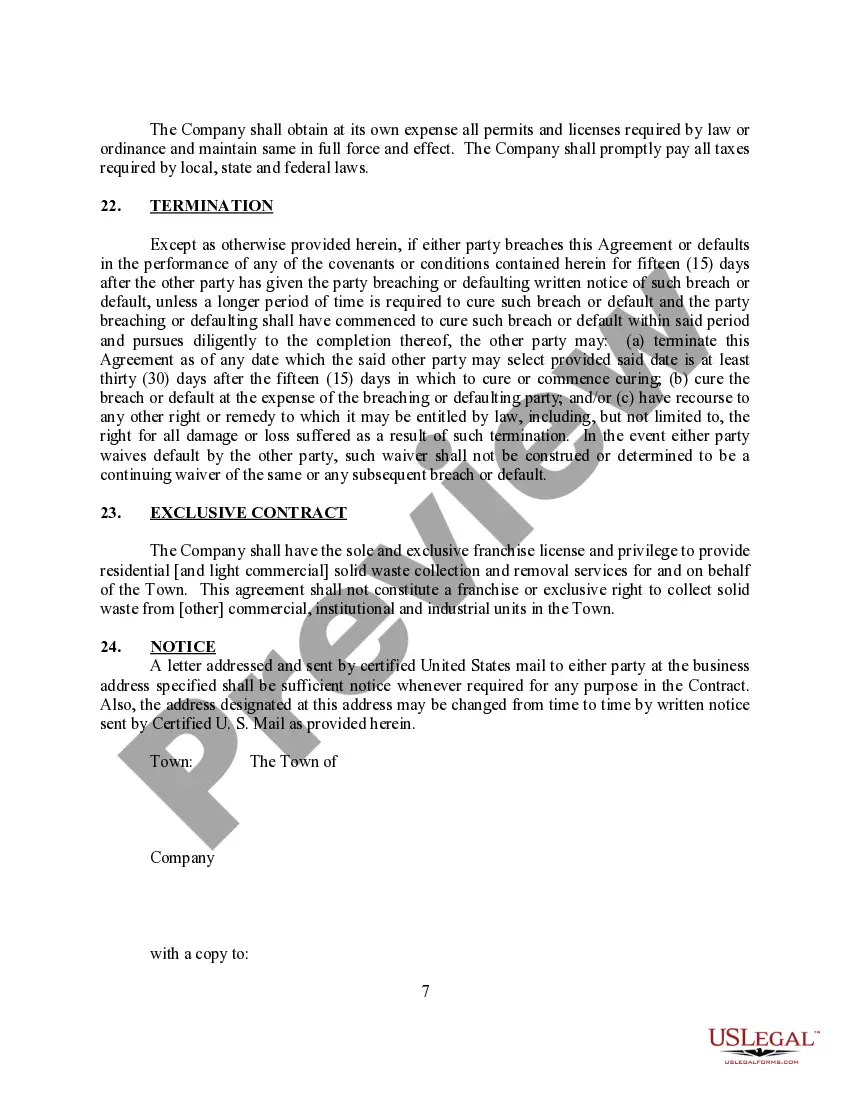


How to fill out Waste Disposal Agreement For Municipality?
Locating the appropriate legal document template can be a challenge. Obviously, there are countless templates accessible online, but how do you locate the legal document you need? Utilize the US Legal Forms website. The service offers a vast array of templates, including the Montana Waste Disposal Agreement for Municipality, which you can utilize for business and personal purposes. All of the forms are reviewed by professionals and comply with federal and state requirements.
If you are already registered, Log In to your account and click the Download button to obtain the Montana Waste Disposal Agreement for Municipality. Use your account to browse the legal forms you may have acquired previously. Visit the My documents tab in your account to retrieve another copy of the document you need.
If you are a new user of US Legal Forms, here are simple instructions that you can follow: First, ensure you have selected the correct form for your region/state. You can examine the form using the Review button and read the form description to confirm this is the right one for you. If the form does not meet your requirements, use the Search field to find the correct form. Once you are confident that the form is suitable, select the Get now button to acquire the form. Choose the payment plan you prefer and enter the necessary information. Create your account and place an order using your PayPal account or credit card. Select the file format and download the legal document template to your device. Complete, modify, print, and sign the acquired Montana Waste Disposal Agreement for Municipality.
With US Legal Forms, you can simplify the process of obtaining the legal documents necessary for your needs.
- US Legal Forms is the largest repository of legal forms that you will find numerous document templates.
- Utilize the service to obtain professionally crafted documents that meet state regulations.
- Access a wide variety of templates for different legal needs.
- Easily navigate through the available forms to find what you need.
- Get expert-reviewed documents that ensure compliance with legal standards.
- Enjoy the convenience of downloading and managing your legal forms online.
Form popularity
FAQ
Section 156(1)(a) of the Constitution, read with Schedule 5, assigns responsibility for refuse removal, refuse dumps, solid waste disposal and cleansing to local government.
Landfills are engineered areas where waste is placed into the land. Landfills usually have liner systems and other safeguards to prevent polluting the groundwater. Energy Recovery from Waste is the conversion of non-recyclable waste materials into useable heat, electricity, or fuel.
First priority should be the source reduction. The second option, Recycling and composting. Disposal in the landfills should be the last option. Generally waste management methods include source reduction and reuse, recycling, composting, vermiculture, engineered landfills, incineration and land application.
First priority should be the source reduction. The second option, Recycling and composting. Disposal in the landfills should be the last option. Generally waste management methods include source reduction and reuse, recycling, composting, vermiculture, engineered landfills, incineration and land application.
The two most common methods of municipal waste disposal are sanitary landfills and incinerators.
Everyday items like food scraps, clothing, furniture, batteries, and appliances ? otherwise known as municipal solid waste ? are disposed of, where it can take one of three paths: sorted and recycled, diverted to a waste-to-energy facility (e.g., incinerator), or tossed in a landfill.
Passed in 1991, the Montana Integrated Waste Management Act establishes integrated waste management as the policy for the state to manage municipal solid waste with the least adverse impact on human health and the environment. The Act is found in Title 75, Chapter 10, Part 8, of Montana Code Annotated (MCA).
Determine the Community Service Area. Collect information on population, households, climate, geography, economy, and natural resources. ... Investigate Waste Management Alternatives. ... Develop Goals and Objectives.